 YardMate


Crape-Myrtle
Lagerstroemia indica
Easy · Beginner friendlyAbout Crape-Myrtle
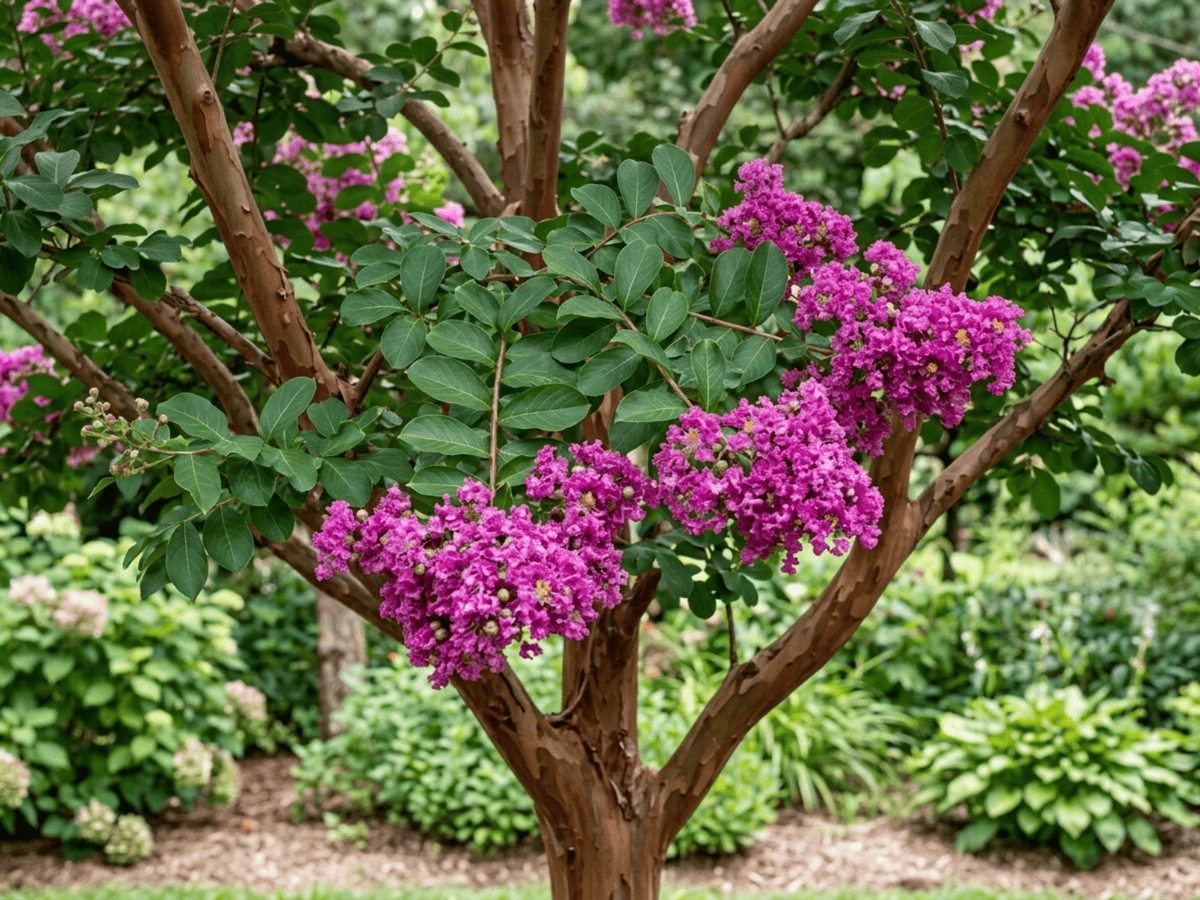
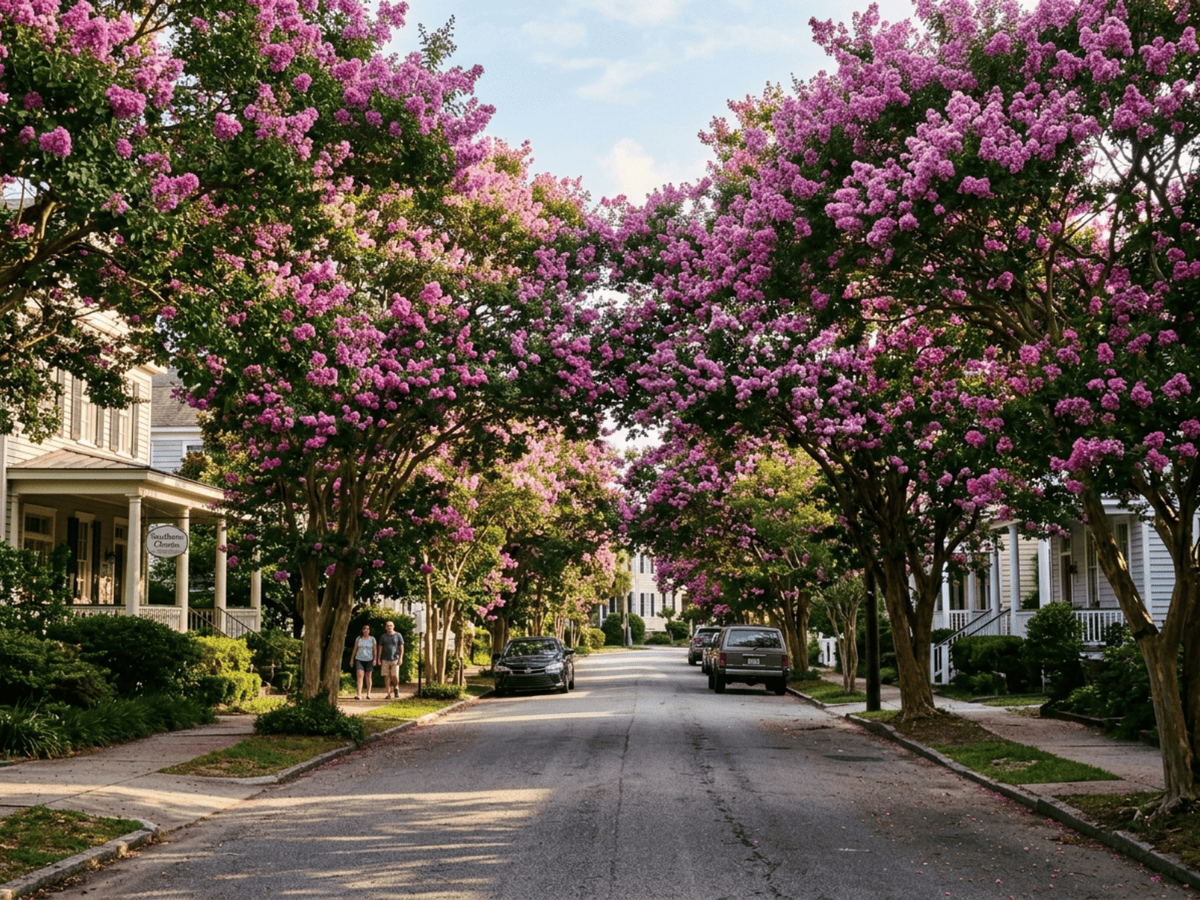
Lagerstroemia indica, the crape myrtle, is a deciduous flowering tree or large shrub native to China, Korea, and the Indian subcontinent. Growing 15 to 25 feet tall, it is celebrated for its profuse summer blooms in shades of pink, red, purple, lavender, and white that last for up to 100 days, earning it the nickname 'the lilac of the South.' The crinkled, crepe-paper-textured petals give the plant its common name. Beyond flowers, crape myrtle offers year-round interest with attractive exfoliating bark in cinnamon, gray, and cream tones, plus brilliant orange-red fall foliage. It thrives in hot, full-sun locations and tolerates drought and poor soil once established. Proper pruning involves removing spent flower heads to encourage reblooming and thinning interior branches for air circulation, rather than the disfiguring practice of 'crape murder' (topping). Powdery mildew was historically a major issue, but modern cultivars bred by the US National Arboretum are highly resistant. It is one of the most widely planted ornamental trees across the American South and warm temperate regions worldwide.
- Drought-tolerant
- Long-blooming
How to care for Crape-Myrtle
Watering
- Springevery 5 days
- Summerevery 4 days
- Fallevery 10 days
- Winterevery 30 days
Soil · Rich & loamy
- Top dressingBark mulch15%
- Main mixRich loam + compost 3:170%
- DrainageGravel15%
Use fully finished compost — fresh compost burns roots.
FERTILIZER
Balanced Feed 14-14-14
An even feed covers all three needs at once, keeping leaves, roots and blooms moving together with nothing pushed out of balance.
- Nitrogen · Leaves
- Phosphorus · Roots + Blooms
- Potassium · Strength
- Springevery 45 days
- Summerevery 45 days
At a Glance
- NativeEast Asia, South Asia
- Height15–25 ft (4.6–7.6 m)
- Spread10–20 ft (3–6.1 m)
- Flower colorPink, Red, White, Purple
- Foliage colorGreen, Red, Bronze, Yellow
- SoilLoamy, Well-drained
- LocationsYard · Indoor · Balcony
Bloom time
BLOOM CYCLE
Peak bloom
Jul–Nov
Blooms on new wood from midsummer to fall; deadhead spent clusters to encourage repeat flowering and avoid topping (crape murder)
Fragrance
NO FRAGRANCE
No notable fragrance.
Toxicity
Pets Safe
None reported
Not reported
EXPOSURE No exposure route is reported.
EFFECT No significant toxicity.
NOTE No human toxicity is reported in this catalog; avoid eating ornamental plants unless confirmed edible.
Safe
EXPOSURE No exposure route is reported.
EFFECT Not listed as toxic by ASPCA.
NOTE Listed as non-toxic for dogs; avoid eating ornamental plants unless confirmed edible.
Safe
EXPOSURE No exposure route is reported.
EFFECT Not listed as toxic by ASPCA.
NOTE Listed as non-toxic for cats; avoid eating ornamental plants unless confirmed edible.
Educational information, not medical or veterinary advice. If exposure is suspected, contact a doctor or veterinarian.
DISTRIBUTION


- Native
- Introduced
- East Asia
- South Asia
History
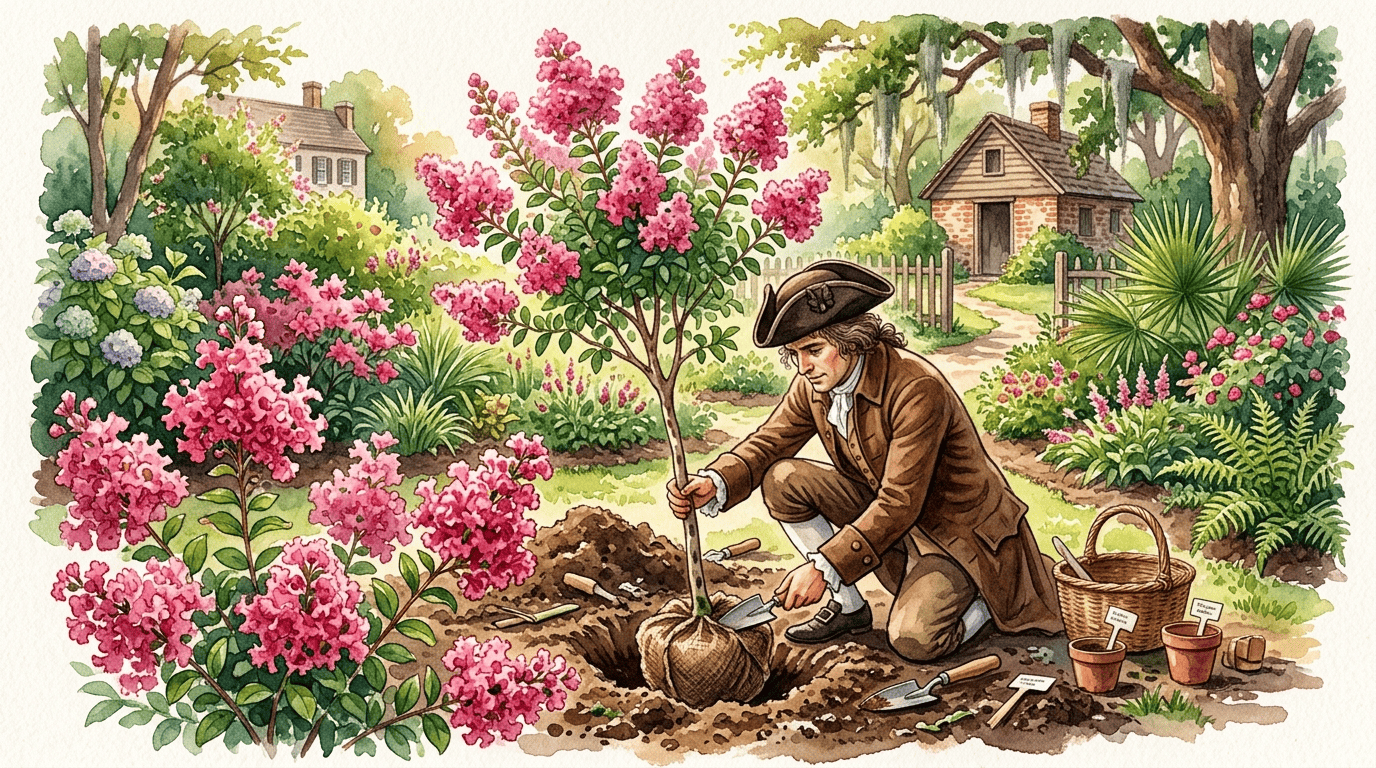
Lagerstroemia indica is native to China, Korea, and Japan, where it has been cultivated for more than a millennium — the Chinese "zi wei" was grown in Tang dynasty (7th-10th century) palace gardens and features in classical poetry. The genus name honors Swedish merchant Magnus von Lagerström, who supplied Linnaeus with plants from Asia. Crape myrtle was introduced to North American horticulture around 1790 by French botanist André Michaux, who planted specimens at his experimental garden near Charleston, South Carolina.
Through the 19th and 20th centuries it spread throughout the American South, earning the nickname "lilac of the South" because its long summer flowering fills the niche that lilacs (Syringa) occupy in the North. The US National Arboretum breeding program led by Dr. Donald Egolf in the 1960s-80s produced disease-resistant hybrids (L. indica x L. fauriei) named after Native American tribes — "Natchez," "Muskogee," "Tuscarora," "Zuni" — which now dominate landscape planting.
The harmful practice known as "crape murder" — severe annual topping pruning — is widely discouraged by horticulturists. Crape myrtle was introduced to England from China in 1759 and brought to Charleston, South Carolina by French botanist André Michaux in 1786, where it quickly became the defining ornamental tree of the American South. The US National Arboretum's breeding program beginning in the 1960s crossed it with the Japanese species L. fauriei to produce mildew-resistant cultivars named after Native American tribes.
Symbolism & meaning
What It Symbolizes
Crape-Myrtle suggests eloquence, its delicate crepe-textured petals representing refined expression and beauty of speech. In Chinese culture it has long been associated with feminine beauty — a tree whose grace and womanly elegance shaped both poetry and palace gardens. The ruffled blooms feel less like flowers and more like a quiet, beautifully composed sentence.
- Eloquence — The delicate crepe-textured petals represent refined expression and beauty of speech
- Feminine beauty — In Chinese culture, associated with grace and womanly elegance
Where the Name Comes From
'Lagerstroemia' honors Magnus von Lagerström, a Swedish merchant and friend of Linnaeus. 'Indica' means 'of India', one of its native regions.
Uses & Fun Facts
- Multi-trunked canopy casts dappled summer shade in patios
- Smooth-barked tree with showy crepe summer blooms
- Long summer bloom and exfoliating bark for Southern landscapes
Related plants
More Lagerstroemia plants

Plants with similar care
 Chinese AbeliaAbelia chinensis
 Fragrant AbeliaAbelia mosanensis
 Large-Flowered AbeliaAbelia uniflora
 Glossy AbeliaAbelia x grandiflora
Frequently asked questions
How often should I water Crape-Myrtle?
In summer, water about every 4 days; in winter, about every 30 days. Adjust for heat, pot size and drainage.
How much light does Crape-Myrtle need?
Full sun: 6+ hrs direct. Watch the leaves — scorching or stretching means the light needs adjusting.
Is Crape-Myrtle toxic to cats or dogs?
Pets Safe (Dogs Safe · Cats Safe) Educational information, not medical or veterinary advice. If exposure is suspected, contact a doctor or veterinarian.
Is Crape-Myrtle easy to grow?
Yes — it is considered an easy, beginner-friendly plant.
Can Crape-Myrtle be grown indoors?
Yes, it adapts well to indoor growing given the right light.
When does Crape-Myrtle bloom?
It typically blooms Jul–Nov in the Northern Hemisphere.
YardMate
Identify any plant in seconds
Snap a photo — YardMate names the plant, diagnoses problems, and reminds you when to water.
Download on the App Store