 YardMate
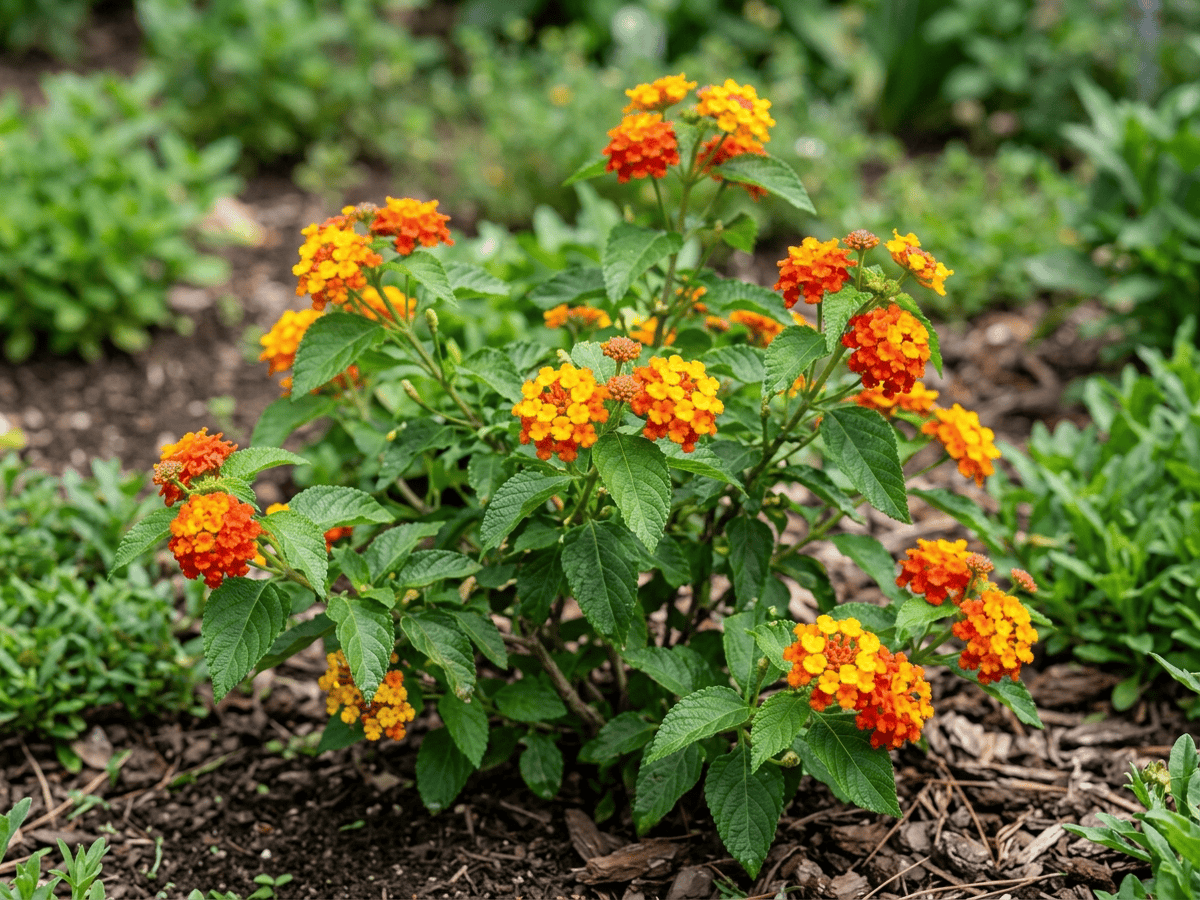


Common Lantana
Lantana camara
Easy · Beginner friendlyAbout Common Lantana
Lantana camara is a vigorous tropical shrub producing clusters of tiny, multi-colored flowers that change color as they age — often showing yellow, orange, pink, and red simultaneously in the same cluster. Native to Central and South America, it blooms year-round in warm climates, attracting butterflies in extraordinary numbers. It is one of the world's most invasive plants, listed in the IUCN's top 100 worst invasive species, having spread across Africa, Asia, and Australia. In gardens, sterile cultivars like the 'Landmark' series offer the beauty without invasive risk.
- Drought-tolerant
- Heat-tolerant
How to care for Common Lantana
Watering
- Springevery 7 days
- Summerevery 5 days
- Fallevery 10 days
- Winterevery 14 days
Soil · Well-draining
- Top dressingPine bark mulch10%
- Main mixPotting soil + perlite 2:170%
- DrainageLECA / gravel20%
Never skip the drainage layer — standing water is the top cause of root rot.
FERTILIZER
Balanced Feed 14-14-14
An even feed covers all three needs at once, keeping leaves, roots and blooms moving together with nothing pushed out of balance.
- Nitrogen · Leaves
- Phosphorus · Roots + Blooms
- Potassium · Strength
- Springevery 30 days
- Summerevery 30 days
At a Glance
- NativeCentral America, South America
- Height2–6 ft (0.6–1.8 m)
- Spread3–6 ft (0.9–1.8 m)
- Flower colorYellow, Orange, Red, Pink
- Foliage colorGreen
- Fruit colorBlack, Blue
- SoilLoamy, Well-drained
- LocationsYard · Balcony
Bloom time
BLOOM CYCLE
Peak bloom
Jun–Aug
Color-changing flower clusters; deadhead or choose sterile varieties to prevent spread
Fragrance
MODERATE FRAGRANCE
Pungent, somewhat acrid herbal aroma when leaves are crushed; flowers mildly sweet.
Toxicity
Humans Toxic · Pets Toxic
lantadenes (pentacyclic triterpenoids) and icterogenin
Toxic
- Fruit
- Leaf
- Ingestion
EXPOSURE Eating fruit and leaves.
EFFECT Green berries especially dangerous: vomiting, diarrhea, photosensitivity, liver damage and fatalities in children reported.
NOTE Documented concern for humans: Green berries especially dangerous: vomiting, diarrhea, photosensitivity, liver damage and fatalities in children reported.
Toxic
- Fruit
- Leaf
- Ingestion
EXPOSURE Eating fruit and leaves.
EFFECT Vomiting, diarrhea, weakness, jaundice, liver failure.
NOTE ASPCA lists Lantana as toxic to dogs, cats, horses. Ripe berries are less toxic than green but still hazardous.
Toxic
- Fruit
- Leaf
- Ingestion
EXPOSURE Eating fruit and leaves.
EFFECT Vomiting, diarrhea, jaundice, liver failure.
NOTE ASPCA lists Lantana as toxic to dogs, cats, horses. Ripe berries are less toxic than green but still hazardous.
Educational information, not medical or veterinary advice. If exposure is suspected, contact a doctor or veterinarian.
DISTRIBUTION

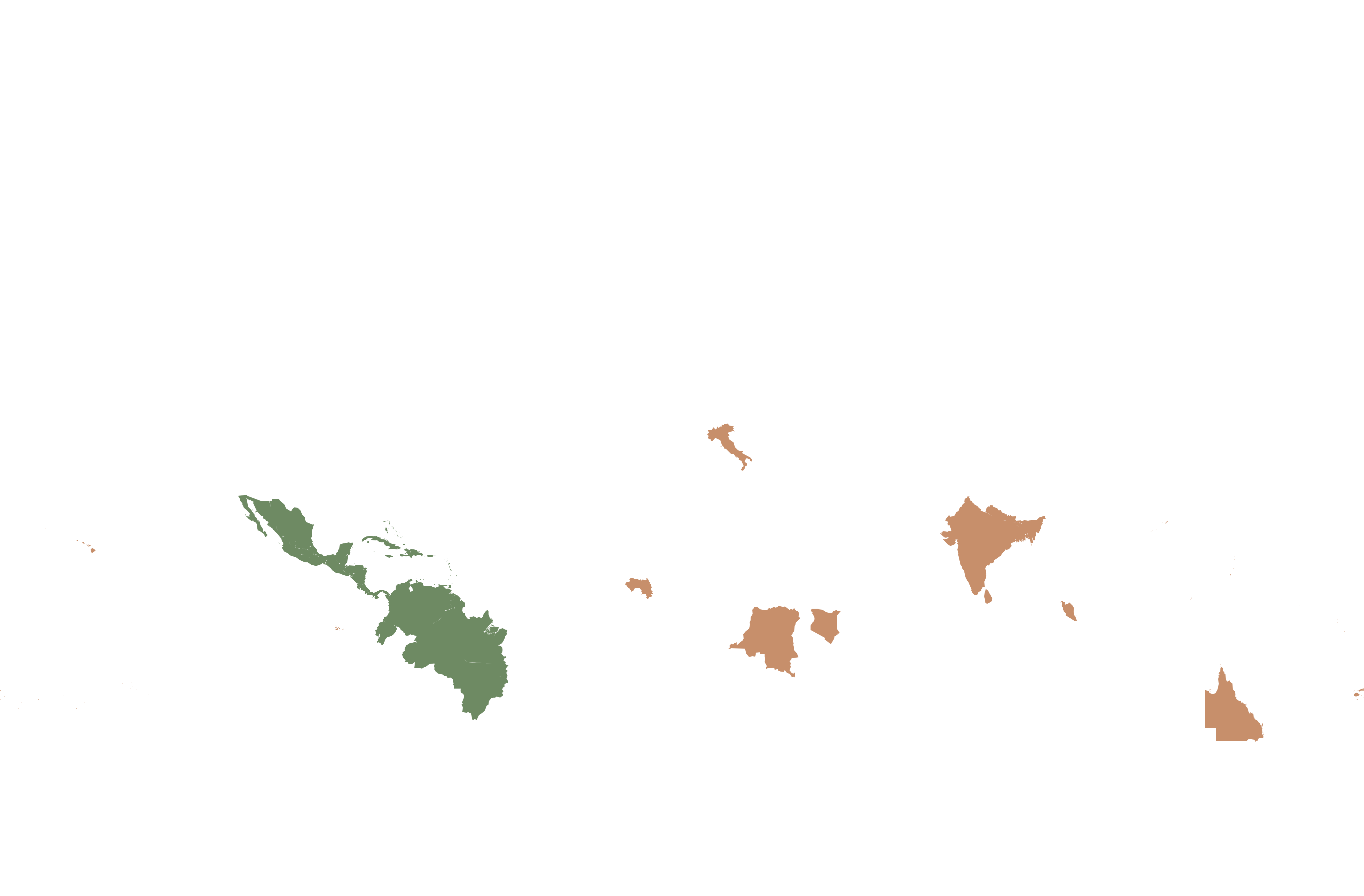
- Native
- Introduced
- Central America
- South America
History
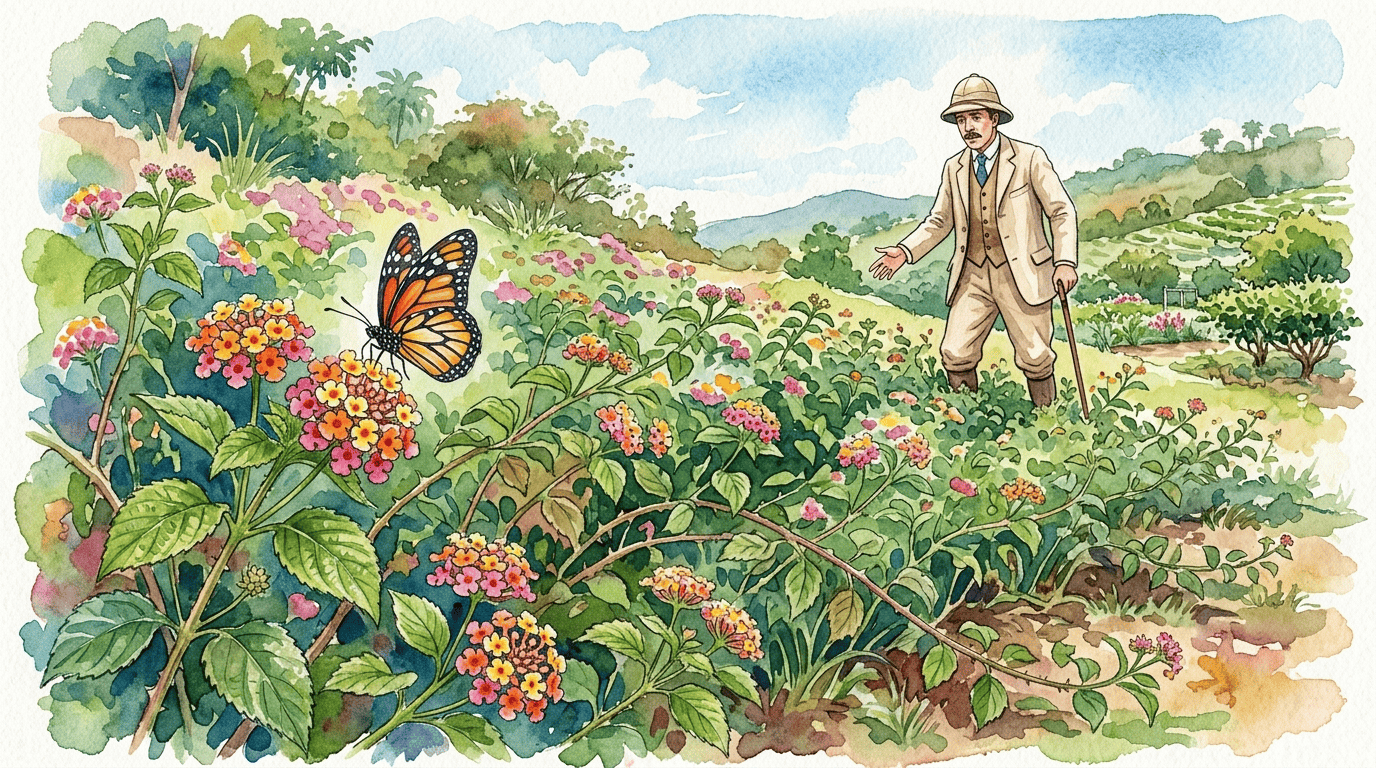
Lantana camara is native to Central America, the Caribbean, and northern South America. Dutch and Spanish plant collectors brought it to European botanical gardens in the 17th century; Dutch explorer Hendrik van Rheede recorded it in India by 1693. Its rapid flowering, ease of cutting propagation, and tolerance of heat made it a popular warm-climate ornamental worldwide.
Unfortunately it proved catastrophically invasive: by the mid-19th century it had escaped cultivation in Ceylon, South Africa, Australia, India, and many Pacific islands. The IUCN lists it among the "100 of the World's Worst Invasive Alien Species," and it is a declared noxious weed across most of Australia and India. Its pentacyclic triterpenoid lantadenes cause fatal photosensitive hepatotoxicity in grazing livestock.
Lantana camara is a cautionary tale of ornamental plants gone wild. Introduced to gardens worldwide in the 17th century for its beautiful multi-colored flowers, it escaped cultivation and invaded over 60 countries across tropical and subtropical regions. In India, it covers over 13 million hectares. In Australia, it is one of the worst environmental weeds. The plant produces allelopathic chemicals that suppress competing vegetation, and birds spread its seeds widely. Despite this, it remains valuable in gardens — the key is using sterile cultivars. Its ability to attract butterflies is unmatched, and it thrives in conditions that kill most plants.
Symbolism & meaning
What It Symbolizes
Common lantana is rigor in plant form — relentless, vigorous, blooming through heat, drought, and neglect with unstoppable determination. In the American South and across the tropics this same toughness has made it controversial, an aggressive spreader as well as a butterfly favorite. The plant offers a complicated lesson: that the same vitality which fills a hot border with color can also overwhelm the land that hosts it.
- Rigor — Its relentless vigor in any condition represents unstoppable determination
Where the Name Comes From
Lantana from an old name for Viburnum, which has similar flower clusters. Camara may be from a Greek word for arch or vault.
Uses & Fun Facts
- Color-changing flower clusters draw butterflies and skippers all summer
- Heat- and drought-tolerant flowering shrub for sunny patio pots
- Multicolor flower heads bloom non-stop through hot weather
Related plants
More Lantana plants

Plants with similar care
 Chinese AbeliaAbelia chinensis
 Fragrant AbeliaAbelia mosanensis
 Large-Flowered AbeliaAbelia uniflora
 Glossy AbeliaAbelia x grandiflora
Frequently asked questions
How often should I water Common Lantana?
In summer, water about every 5 days; in winter, about every 14 days. Adjust for heat, pot size and drainage.
How much light does Common Lantana need?
Full sun: 6+ hrs direct. Watch the leaves — scorching or stretching means the light needs adjusting.
Is Common Lantana toxic to cats or dogs?
Pets Toxic (Dogs Toxic · Cats Toxic) Educational information, not medical or veterinary advice. If exposure is suspected, contact a doctor or veterinarian.
Is Common Lantana easy to grow?
Yes — it is considered an easy, beginner-friendly plant.
When does Common Lantana bloom?
It typically blooms Jun–Aug in the Northern Hemisphere.
YardMate
Identify any plant in seconds
Snap a photo — YardMate names the plant, diagnoses problems, and reminds you when to water.
Download on the App Store