 YardMate


Creeping Lantana
Lantana montevidensis
Easy · Beginner friendlyAbout Creeping Lantana
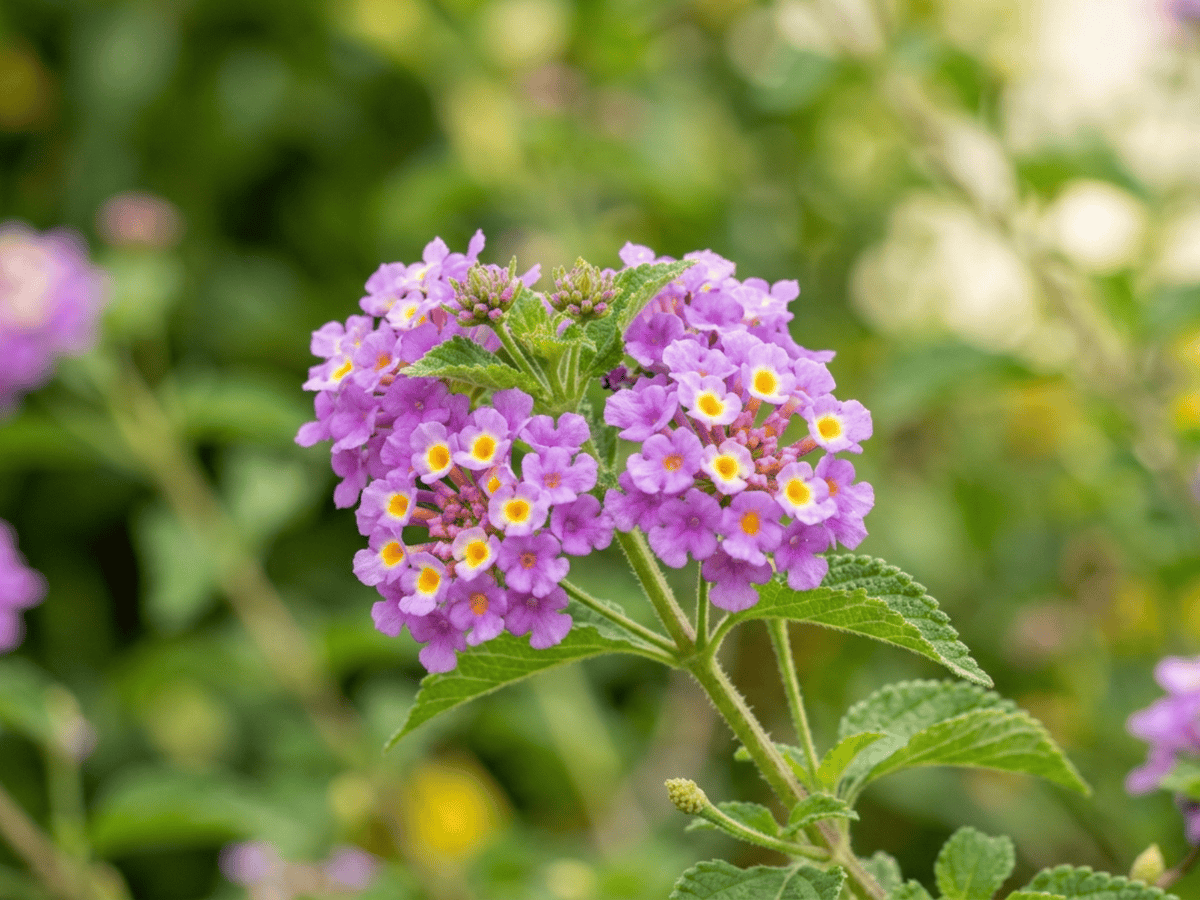
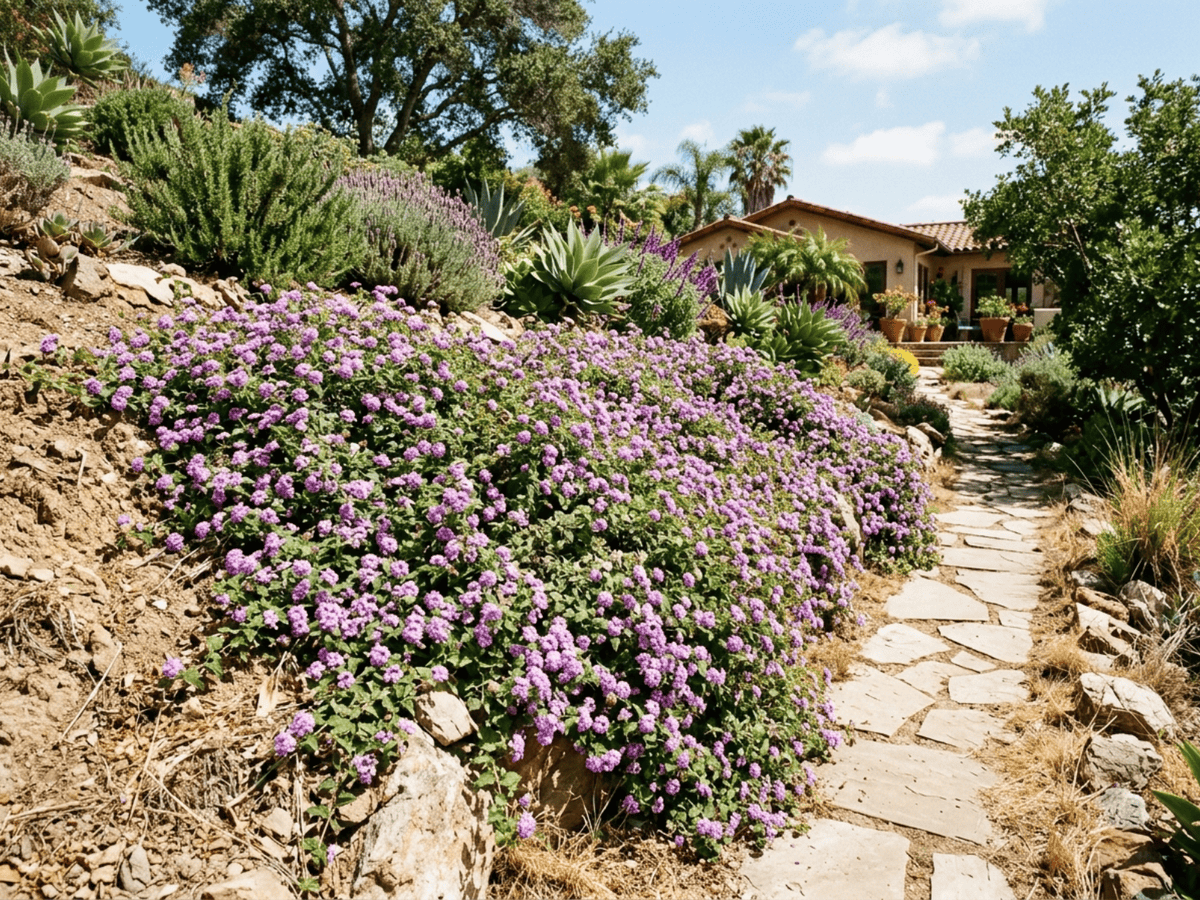
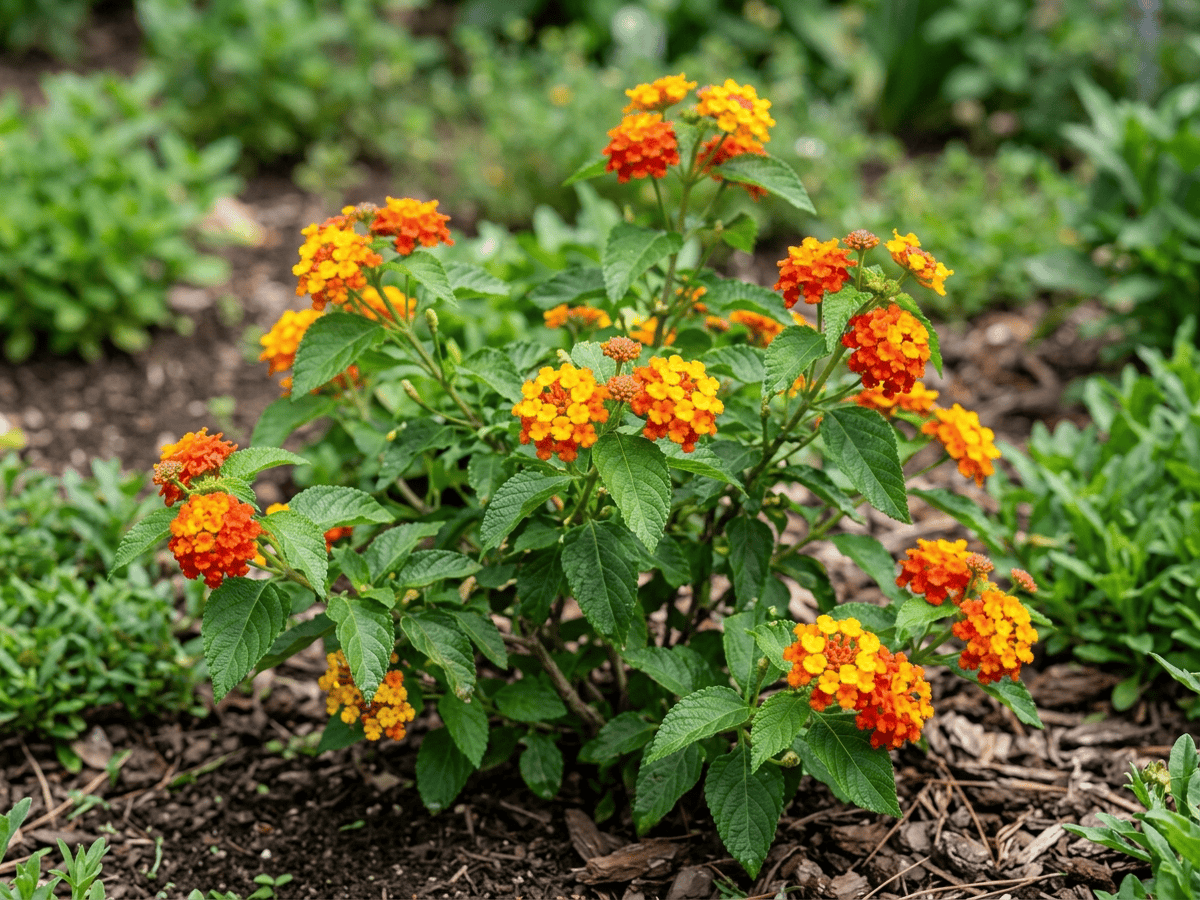
Trailing Lantana is a tender perennial from South America grown as an annual in cold zones and a perennial groundcover in USDA zones 8–11. Stems spread 3–6 feet, covered in clusters of small lavender, white, or yellow flowers from late spring to frost. Heat- and drought-tolerant, butterfly magnet, and widely used in Southern California, Arizona, Texas, and Gulf Coast landscapes as a tough spreading groundcover. Common on freeway plantings across the Sunbelt.
- Drought-tolerant
- Heat-tolerant
- Deer-resistant
- Trailing
How to care for Creeping Lantana
Watering
- Springevery 7 days
- Summerevery 5 days
- Fallevery 14 days
- Winterevery 30 days
Soil · Well-draining
- Top dressingPine bark mulch10%
- Main mixPotting soil + perlite 2:170%
- DrainageLECA / gravel20%
Never skip the drainage layer — standing water is the top cause of root rot.
FERTILIZER
Balanced Feed 14-14-14
An even feed covers all three needs at once, keeping leaves, roots and blooms moving together with nothing pushed out of balance.
- Nitrogen · Leaves
- Phosphorus · Roots + Blooms
- Potassium · Strength
- Springevery 21 days
- Summerevery 21 days
At a Glance
- NativeSouth America
- Height1–2 ft (0.3–0.6 m)
- Spread3–6 ft (0.9–1.8 m)
- Flower colorPurple, Pink, White
- Foliage colorGreen
- Fruit colorBlack
- SoilLoamy, Well-drained
- LocationsYard · Balcony
Bloom time
BLOOM CYCLE
Peak bloom
May–Nov
Lavender or white clusters late spring to frost
Fragrance
STRONG FRAGRANCE
Strong pungent scent from crushed leaves — somewhat divisive; flowers are mildly honey-scented.
Toxicity
Humans Moderate · Pets Moderate
lantadene A, lantadene B, and triterpenoid glycosides
Moderate
- Berry
- Leaf
- Ingestion
EXPOSURE Eating berries and leaves.
EFFECT Unripe berries and leaves contain lantadenes (triterpene toxins) and gI upset, liver damage possible.
NOTE Documented concern for humans: Unripe berries and leaves contain lantadenes (triterpene toxins) and gI upset, liver damage possible.
Moderate
- Leaf
- Berry
- Ingestion
EXPOSURE Eating leaves and berries.
EFFECT Vomiting, diarrhea, weakness, liver damage, photosensitization.
NOTE ASPCA lists Lantana as toxic to dogs, cats, and horses; livestock poisoning is well-documented.
Moderate
- Leaf
- Berry
- Ingestion
EXPOSURE Eating leaves and berries.
EFFECT Same as dogs.
NOTE ASPCA lists Lantana as toxic to dogs, cats, and horses; livestock poisoning is well-documented.
Educational information, not medical or veterinary advice. If exposure is suspected, contact a doctor or veterinarian.
DISTRIBUTION

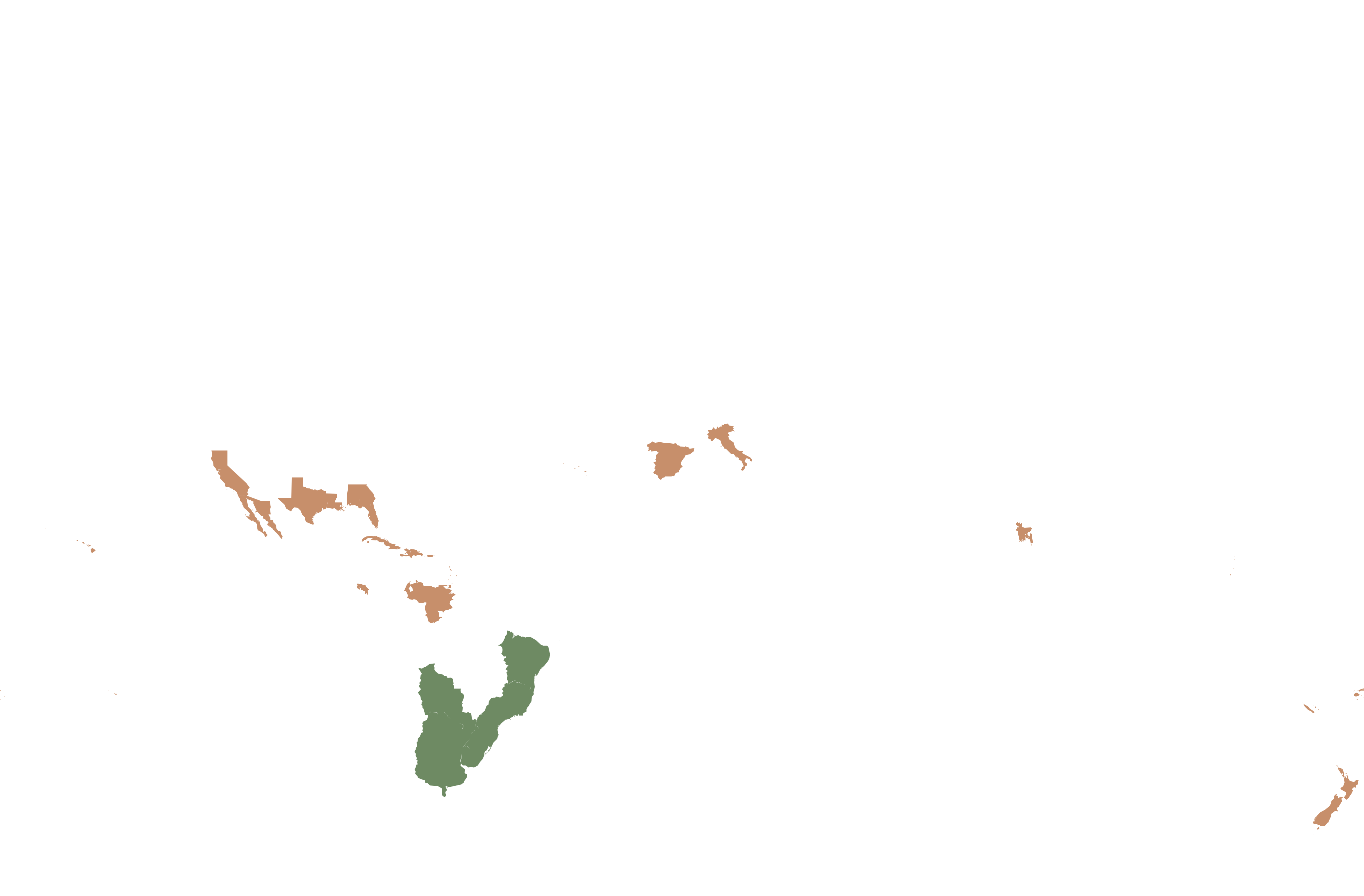
- Native
- Introduced
- South America
History
Lantana montevidensis is native to southern Brazil, Uruguay, and northeastern Argentina, growing in open grasslands, rocky slopes, and disturbed ground of the Pampas and adjacent subtropical grasslands. The species epithet "montevidensis" refers to the Uruguayan capital Montevideo near the center of the species' native range. The plant is a low-spreading trailing perennial 20-40 cm tall with 90-150 cm lateral spread, with small dark-green rough-textured leaves and continuous production of rounded 3-4 cm flower clusters composed of many small tubular five-lobed flowers in the typical wild violet-purple (cultivars add lavender, pink, white, and bicolored forms). Unlike the related shrub lantana (L. camara), which is a notorious pan-tropical invasive, L. montevidensis is substantially better-behaved in most climates, though it has become classified as an invasive weed in parts of Australia (particularly Queensland), southern Africa, and some Pacific islands where it forms thick mat groundcovers that displace native vegetation.
It is exceptionally heat- and drought-tolerant, salt-tolerant, and deer-resistant, and is one of the most widely planted trailing groundcover plants in warm-climate xeriscape design (southern California, Arizona, Florida, southern Texas, Mediterranean Europe, and Australian gardens). Popular cultivars include "Lavender Swirl" (multicolored), "Alba" (white), "White Lightnin'," "Trailing Lavender" (classic violet), and "Rose" (pink). All parts contain pentacyclic triterpenes and are toxic.
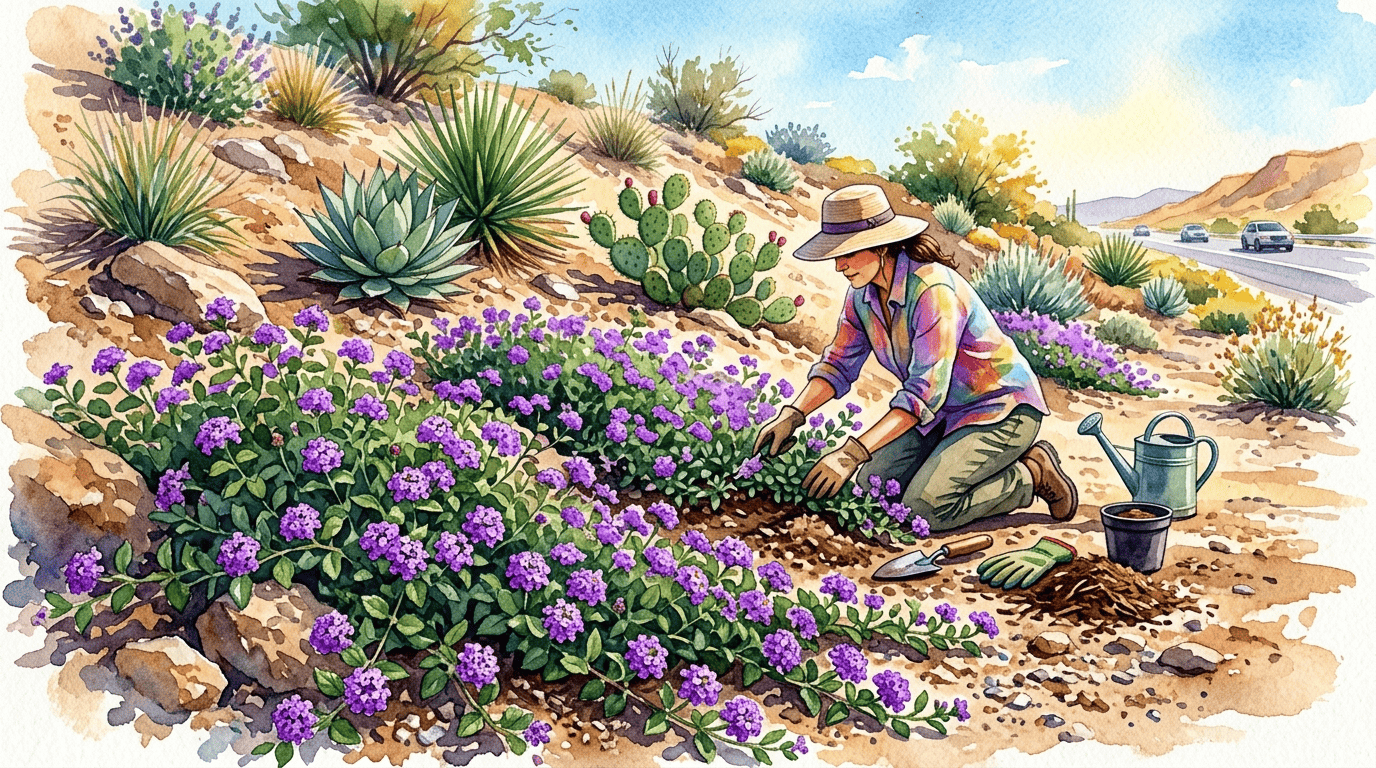
Introduced from Uruguay and southern Brazil in the 1800s, trailing lantana became a staple of California and Southwestern American landscaping in the late 20th century. Widely used on freeway embankments and as residential groundcover in USDA zones 9–11.
Symbolism & meaning
What It Symbolizes
Creeping Lantana expresses rigor, thriving in heat, drought, and poor soils that defeat softer ornamentals. Its continuous bloom feeds butterflies through long summer months, carrying the meaning of vibrance in landscapes where little else is willing to stay in flower. This is the patron groundcover of tough places — a low, sprawling plant that asks for almost nothing and gives bright color in return for the longest part of the year.
- Rigor — thrives in the toughest conditions
- Vibrance — continuous bloom attracts butterflies
Where the Name Comes From
The name Creeping Lantana describes its low, spreading habit. Genus from ancient Latin 'lentana' for a viburnum; 'montevidensis' means 'of Montevideo', Uruguay.
Uses & Fun Facts
- Creeping Lantana perennial used in cottage and naturalistic borders
- Lavender trailing flowers draw butterflies through heat and drought
- Creeping Lantana spreads as low groundcover on banks and slopes
- Trailing stems spill from hot patio pots without constant fuss
Related plants
More Lantana plants
Plants with similar care
 Chinese AbeliaAbelia chinensis
 Fragrant AbeliaAbelia mosanensis
 Large-Flowered AbeliaAbelia uniflora
 Glossy AbeliaAbelia x grandiflora
Frequently asked questions
How often should I water Creeping Lantana?
In summer, water about every 5 days; in winter, about every 30 days. Adjust for heat, pot size and drainage.
How much light does Creeping Lantana need?
Full sun: 6+ hrs direct. Watch the leaves — scorching or stretching means the light needs adjusting.
Is Creeping Lantana toxic to cats or dogs?
Pets Moderate (Dogs Moderate · Cats Moderate) Educational information, not medical or veterinary advice. If exposure is suspected, contact a doctor or veterinarian.
Is Creeping Lantana easy to grow?
Yes — it is considered an easy, beginner-friendly plant.
When does Creeping Lantana bloom?
It typically blooms May–Nov in the Northern Hemisphere.
YardMate
Identify any plant in seconds
Snap a photo — YardMate names the plant, diagnoses problems, and reminds you when to water.
Download on the App Store