 YardMate



Chinese Sweetgum
Liquidambar formosana
Easy · Beginner friendlyAbout Chinese Sweetgum
Formosan Sweetgum is a medium-large deciduous tree native to Taiwan, southern China, and Indochina, reaching 40-60 feet. Three-lobed palmate leaves—distinct from its five-lobed American cousin—emerge purplish, mature glossy green, and turn spectacular shades of red, purple, and yellow in autumn. A refined alternative to American sweetgum for ornamental use, with smaller, less troublesome spiky seed balls.
- Fall-color
How to care for Chinese Sweetgum
Watering
- Springevery 10 days
- Summerevery 7 days
- Fallevery 14 days
- Winterevery 21 days
Soil · Well-draining
- Top dressingPine bark mulch10%
- Main mixPotting soil + perlite 2:170%
- DrainageLECA / gravel20%
Never skip the drainage layer — standing water is the top cause of root rot.
FERTILIZER
Balanced Feed 14-14-14
An even feed covers all three needs at once, keeping leaves, roots and blooms moving together with nothing pushed out of balance.
- Nitrogen · Leaves
- Phosphorus · Roots + Blooms
- Potassium · Strength
- Springevery 60 days
At a Glance
- NativeEast Asia
- Height40–70 ft (12.2–21.3 m)
- Spread25–40 ft (7.6–12.2 m)
- Flower colorGreen, Yellow
- Foliage colorGreen, Red, Purple, Yellow
- Fruit colorBrown
- SoilLoamy, Moisture-retentive, Acidic
- LocationsYard
Bloom time
BLOOM CYCLE
Peak bloom
Mar–May
Inconspicuous greenish flowers in spring
Fragrance
MODERATE FRAGRANCE
Aromatic balsamic resin when bark or leaves are bruised.
Toxicity
Pets Slight
liquidambin and styrene derivatives
Not reported
EXPOSURE No exposure route is reported.
EFFECT No toxic effect is reported.
NOTE No human toxicity is reported in this catalog; avoid eating ornamental plants unless confirmed edible.
Slight
- Fruit
- Ingestion
EXPOSURE Eating fruit.
EFFECT Gastrointestinal upset from spiky capsules.
NOTE Spiky fruit may cause mouth/GI irritation if chewed. Not on ASPCA toxic list.
Slight
- Fruit
- Ingestion
EXPOSURE Eating fruit.
EFFECT Gastrointestinal upset from spiky capsules.
NOTE Spiky fruit may cause mouth/GI irritation if chewed. Not on ASPCA toxic list.
Educational information, not medical or veterinary advice. If exposure is suspected, contact a doctor or veterinarian.
DISTRIBUTION


- Native
- Introduced
- East Asia
History
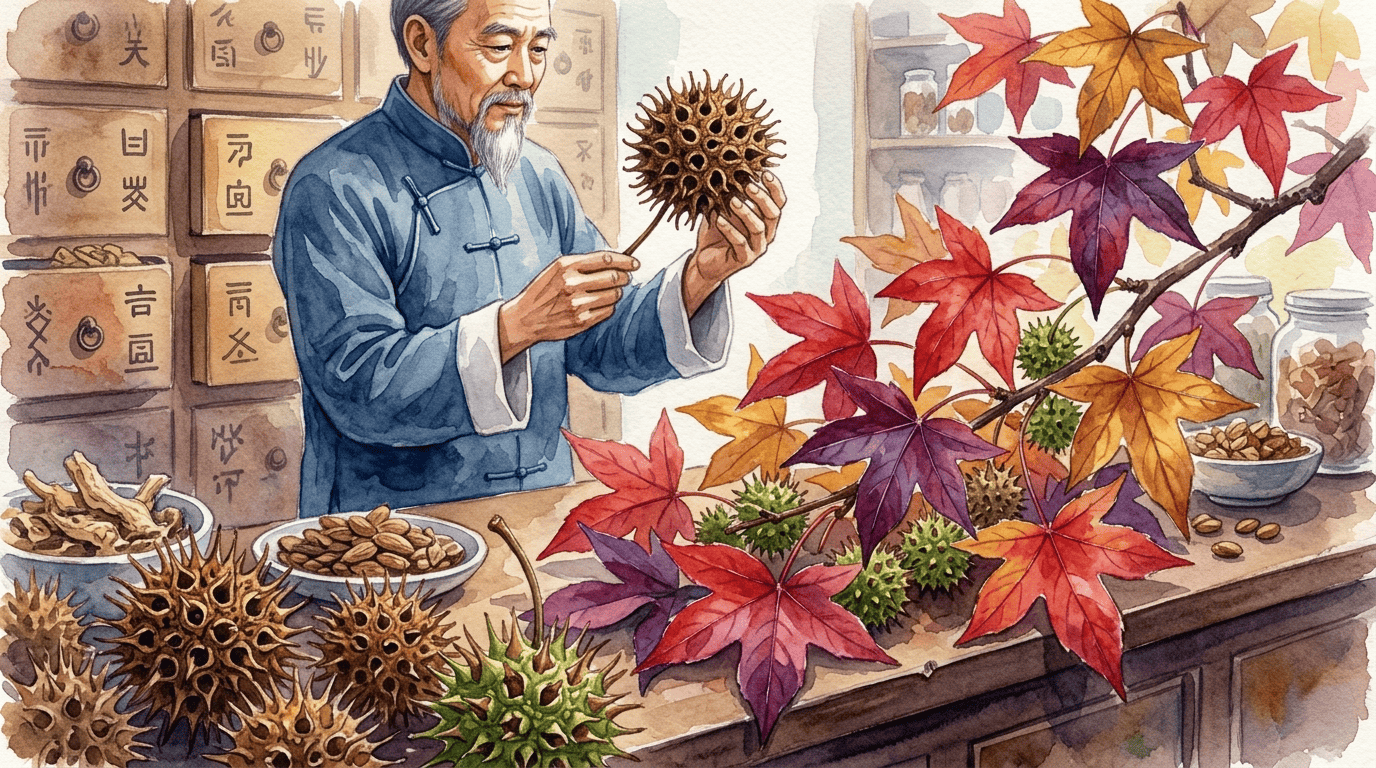
Liquidambar formosana grows in southern and central China, Taiwan, Korea, Laos, and northern Vietnam. Henry Fletcher Hance described it in 1866, using formosana for Taiwan, then known to Europeans as Formosa. The tree differs from American sweetgum in its three-lobed leaves and its greater comfort in warm, mild climates.
In Chinese medicine the dried spiky fruit clusters, called lu lu tong or road-through herb, were used for rheumatic pain, circulation, and menstrual disorders, while aromatic resin from the bark was applied to wounds and skin problems. Ernest Henry Wilson introduced the species to Western cultivation in the late 19th century. Gardeners value it for autumn color - crimson, purple, and plum - especially where American sweetgum fails to color well. Its wood is also used in East Asian furniture, giving the tree a practical afterlife beyond its ornamental display.
Symbolism & meaning
What It Symbolizes
Chinese Sweetgum is transformation made visible. Star-shaped leaves shift through purple, scarlet, orange, and gold as autumn deepens, turning the tree into a slow performance of change. Its resin history adds an old-world layer, but its clearest symbolism is seasonal drama held in a single leaf.
- Transformation — dramatic fall color shifts
- Heritage — traditional Chinese medicine and furniture
Where the Name Comes From
The name Chinese Sweetgum describes its sweet scent or flavor. 'Liquidambar' refers to the aromatic amber-colored resin; 'formosana' means of Formosa (Taiwan).
Uses & Fun Facts
- Pyramidal canopy supplies dense summer shade
- Chinese sweetgum lights up large lawns in autumn
- Maple-like leaves turn purple-red in autumn
Related plants
Plants with similar care
 Chinese AbeliaAbelia chinensis
 Fragrant AbeliaAbelia mosanensis
 Large-Flowered AbeliaAbelia uniflora
 Glossy AbeliaAbelia x grandiflora
Frequently asked questions
How often should I water Chinese Sweetgum?
In summer, water about every 7 days; in winter, about every 21 days. Adjust for heat, pot size and drainage.
How much light does Chinese Sweetgum need?
Full sun: 6+ hrs direct. Watch the leaves — scorching or stretching means the light needs adjusting.
Is Chinese Sweetgum toxic to cats or dogs?
Pets Slight (Dogs Slight · Cats Slight) Educational information, not medical or veterinary advice. If exposure is suspected, contact a doctor or veterinarian.
Is Chinese Sweetgum easy to grow?
Yes — it is considered an easy, beginner-friendly plant.
When does Chinese Sweetgum bloom?
It typically blooms Mar–May in the Northern Hemisphere.
YardMate
Identify any plant in seconds
Snap a photo — YardMate names the plant, diagnoses problems, and reminds you when to water.
Download on the App Store