 YardMate


American Tuliptree
Liriodendron tulipifera
Easy · Beginner friendlyAbout American Tuliptree
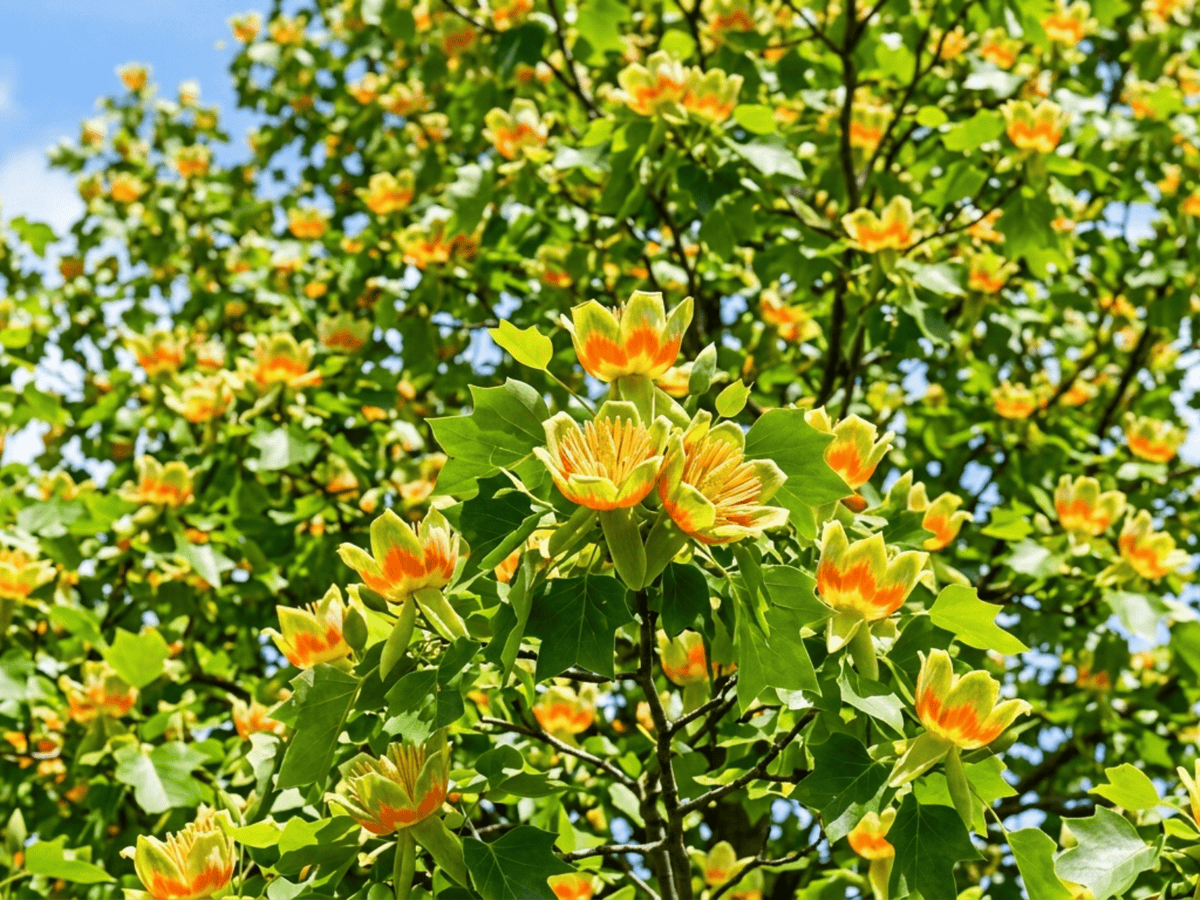
Liriodendron tulipifera, the tulip tree or tulip poplar, is one of North America's tallest and most stately deciduous trees, in the Magnoliaceae family. Growing 25–50 m tall with a straight, columnar trunk, it produces unique four-lobed, square-tipped leaves and tulip-shaped flowers in late spring—greenish-yellow with orange bases—that are often hidden high in the canopy.
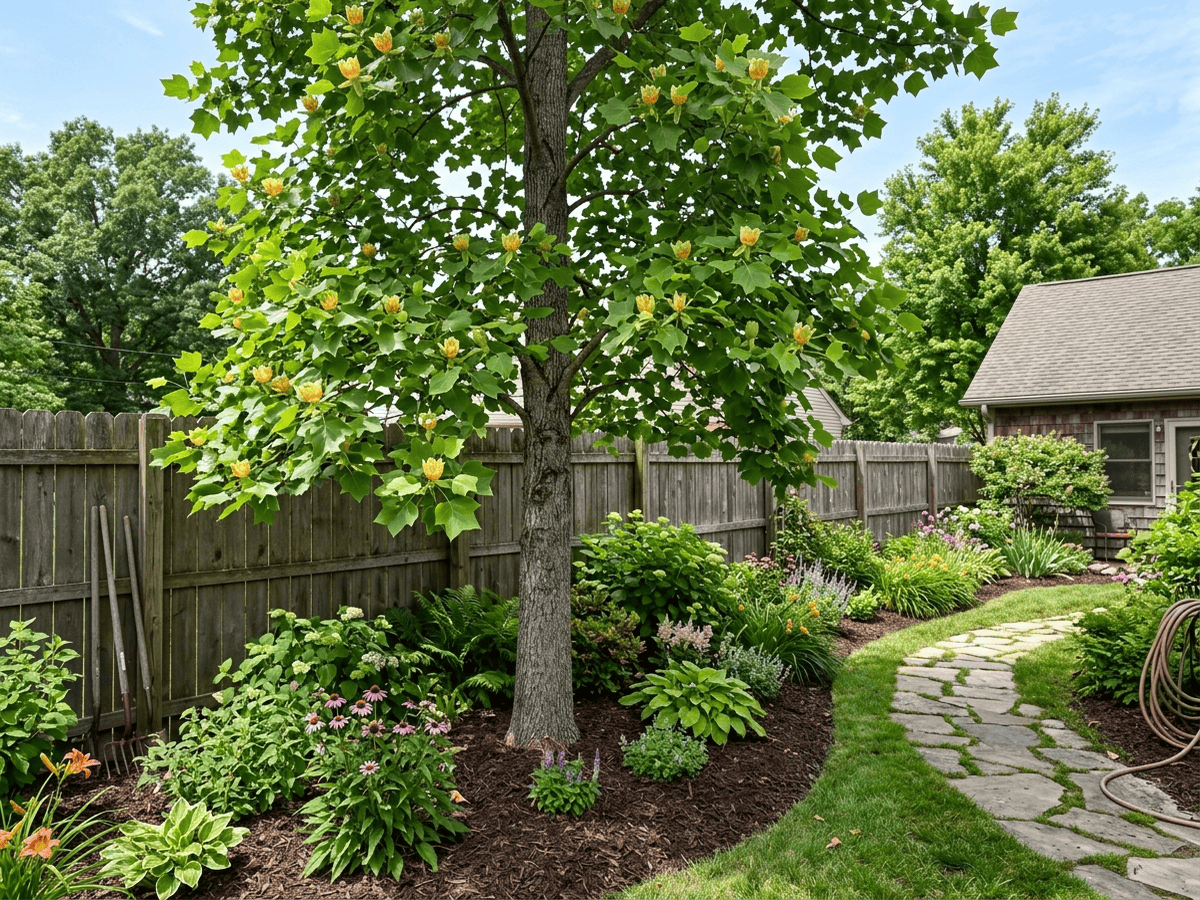
Tulip trees thrive in USDA zones 4–9 in deep, moist, well-drained, slightly acidic soil and full sun. They grow remarkably fast for a hardwood (60–90 cm per year when young) and can live over 300 years. The tree needs ample space—it is not a small-garden tree. Autumn colour is a clean, warm golden yellow.
The tulip tree is the tallest eastern North American hardwood and was prized by Native Americans and colonists alike. Daniel Boone reportedly paddled a 60-foot tulip tree dugout canoe. The wood—commercially called 'yellow poplar'—is one of the most important American hardwoods, used in cabinetry, siding, and general construction. The flowers produce abundant nectar; tulip tree honey is a distinctive, dark, strong-flavoured varietal. The tree is the state tree of Indiana, Kentucky, and Tennessee.
- Cold-hardy
- Fast-growing
- Native
- Pollinator-friendly
How to care for American Tuliptree
Watering
- Springevery 7 days
- Summerevery 5 days
- Fallevery 10 days
- Winterevery 30 days
Soil · Well-draining
- Top dressingPine bark mulch10%
- Main mixPotting soil + perlite 2:170%
- DrainageLECA / gravel20%
Never skip the drainage layer — standing water is the top cause of root rot.
FERTILIZER
Balanced Feed 14-14-14
An even feed covers all three needs at once, keeping leaves, roots and blooms moving together with nothing pushed out of balance.
- Nitrogen · Leaves
- Phosphorus · Roots + Blooms
- Potassium · Strength
- Springevery 60 days
At a Glance
- NativeNorth America
- Height70–100 ft (21.3–30.5 m)
- Spread35–50 ft (10.7–15.2 m)
- Flower colorOrange, Green, Yellow
- Foliage colorGreen, Yellow
- SoilLoamy, Moisture-retentive, Acidic
- LocationsYard
Bloom time
BLOOM CYCLE
Peak bloom
Mar–May
Tulip-shaped flowers appear high in the canopy in late spring; excellent nectar source for bees.
Fragrance
LIGHT FRAGRANCE
Flowers have a light, sweet scent.
Toxicity
No toxicity has been reported for this plant. Still, it is wise to keep pets from chewing on any houseplant.
Educational information, not medical or veterinary advice. If exposure is suspected, contact a doctor or veterinarian.
DISTRIBUTION


- Native
- Introduced
- North America
History
Liriodendron tulipifera is native to eastern North America, from southern Ontario and Michigan south to Florida and west to Louisiana. It is one of the largest and tallest hardwoods in eastern forests, with documented specimens exceeding 60 meters (200 feet). Despite its common names "tulip poplar" and "yellow poplar," it is not a poplar — it is a member of the magnolia family (Magnoliaceae), and its tulip-shaped orange-and-green flowers reveal the kinship.
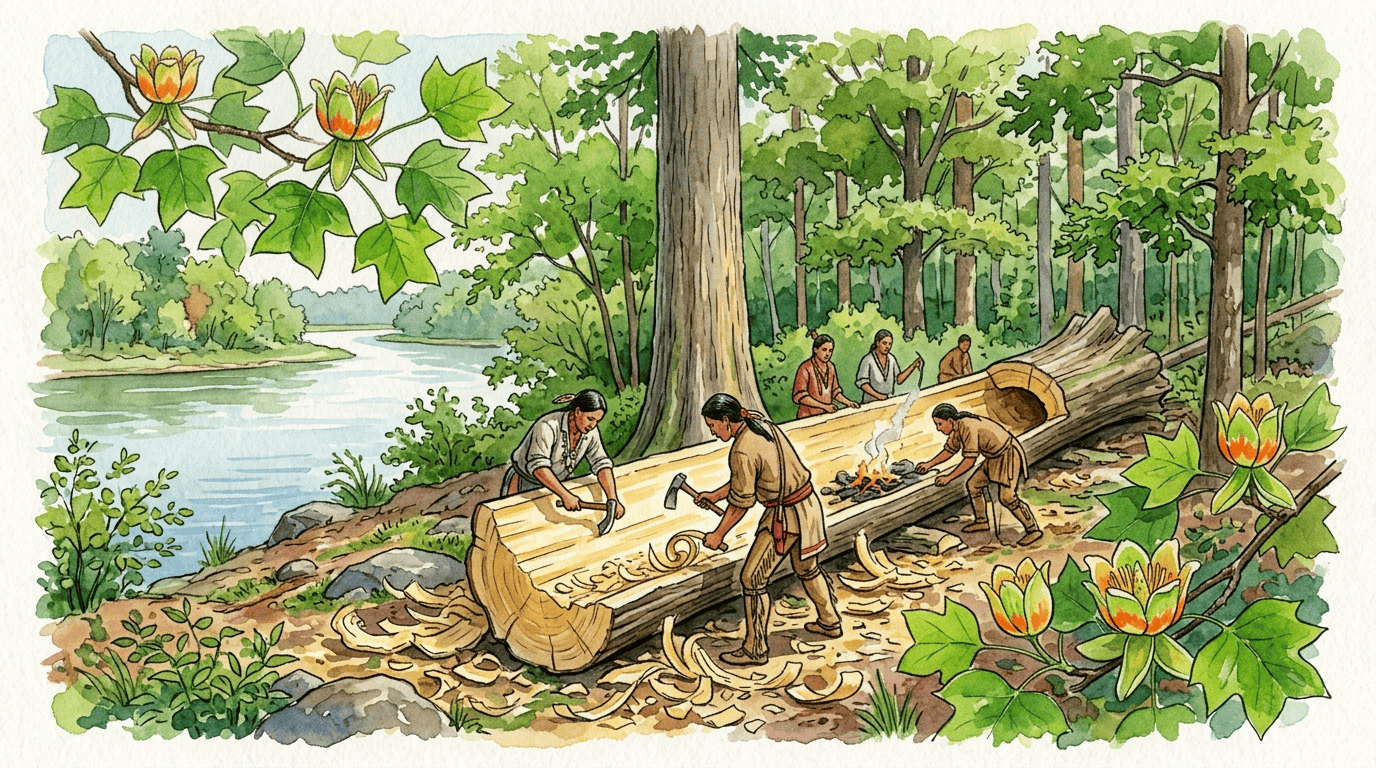
Indigenous Eastern Woodlands peoples including the Cherokee and Haudenosaunee used the tall, straight, buoyant trunks for dugout canoes — a single tulip tree could yield a canoe carrying dozens of people. Daniel Boone reportedly built a 60-foot tulip-tree canoe to move his family west. Its straight-grained, lightweight, workable wood became valuable in colonial and federal American building — much of the original interior trim, paneling, and framing of the White House was tulip poplar.
The tree is the state tree of Indiana, Kentucky, and Tennessee. It is also a critical nectar source for American honeybees. Native Americans made dugout canoes from the massive straight trunks. Colonists used the wood extensively for construction. George Washington planted tulip trees at Mount Vernon that still stand. The tree was one of the first North American species introduced to European gardens (1663).
Symbolism & meaning
What It Symbolizes
The American tuliptree carries ambition in every straight, soaring trunk — the tallest hardwood in eastern North America, climbing to nearly two hundred feet with a speed unusual for a tree of such size. As heritage it stands as state tree of Indiana, Kentucky, and Tennessee, planted by George Washington at Mount Vernon and woven into the iconography of early American forests. Aspiration and identity rise together in its crown.
- Ambition — The tallest hardwood in eastern North America, reaching skyward with remarkable speed, symbolizes aspiration and growth
- Heritage — State tree of three US states and planted by George Washington — deeply connected to American identity
Where the Name Comes From
The name American Tuliptree points to North America. Liriodendron from Greek 'lirion' (lily) + 'dendron' (tree); 'tulipifera' from Latin meaning tulip-bearing — both names reference the tulip-shaped flowers.
Uses & Fun Facts
- Tulip-shaped greenish flowers feed bees high in the canopy
- Tall straight trunk casts deep shade in lawns and parks
- Stately Eastern native with golden-yellow autumn foliage
- Soft straight-grained tulipwood used for furniture and millwork
Related plants
Plants with similar care
 Chinese AbeliaAbelia chinensis
 Fragrant AbeliaAbelia mosanensis
 Large-Flowered AbeliaAbelia uniflora
 Glossy AbeliaAbelia x grandiflora
Frequently asked questions
How often should I water American Tuliptree?
In summer, water about every 5 days; in winter, about every 30 days. Adjust for heat, pot size and drainage.
How much light does American Tuliptree need?
Full sun: 6+ hrs direct. Watch the leaves — scorching or stretching means the light needs adjusting.
Is American Tuliptree toxic to cats or dogs?
No toxicity has been reported for this plant. Still, it is wise to keep pets from chewing on any houseplant. Educational information, not medical or veterinary advice. If exposure is suspected, contact a doctor or veterinarian.
Is American Tuliptree easy to grow?
Yes — it is considered an easy, beginner-friendly plant.
When does American Tuliptree bloom?
It typically blooms Mar–May in the Northern Hemisphere.
YardMate
Identify any plant in seconds
Snap a photo — YardMate names the plant, diagnoses problems, and reminds you when to water.
Download on the App Store