 YardMate


Lithops lesliei
Lithops lesliei
Hard · Experienced growersAbout Lithops lesliei
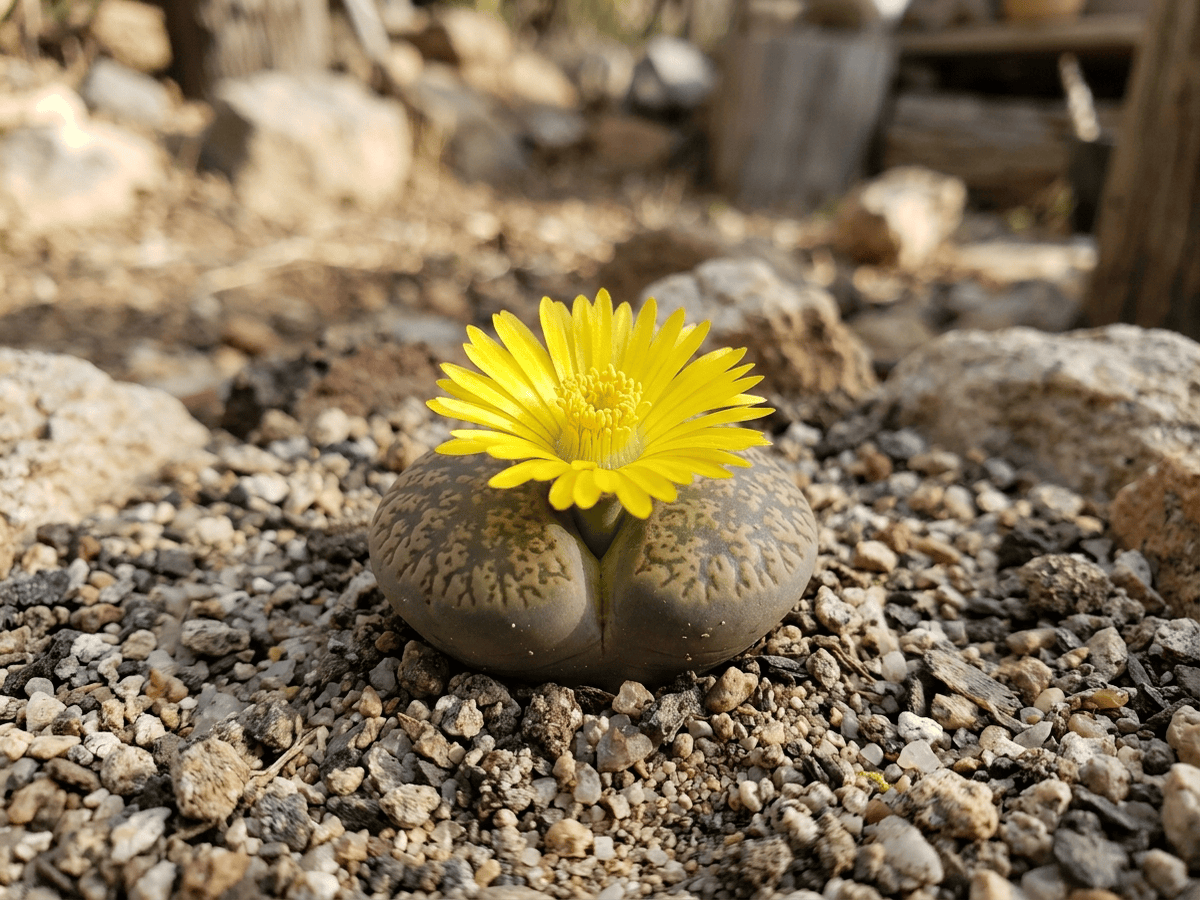
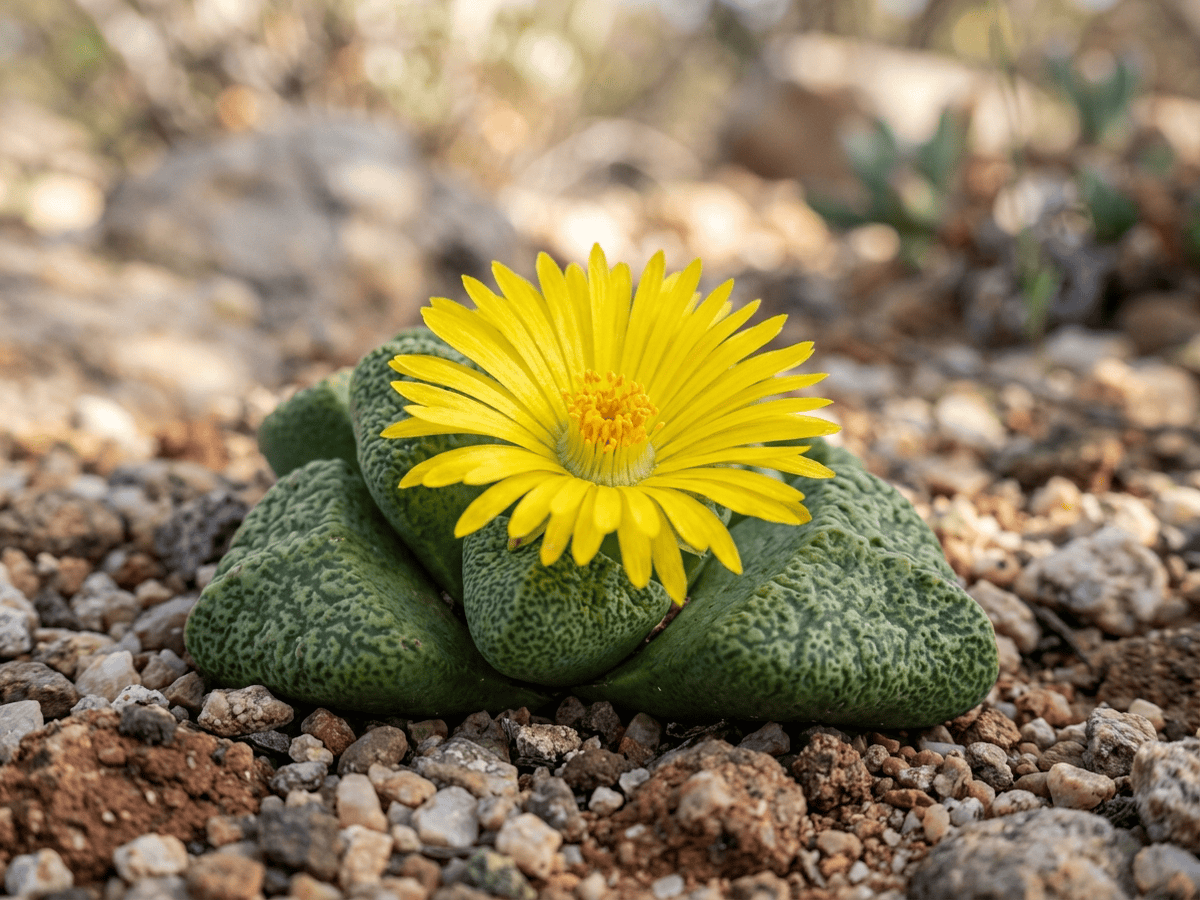
Lithops lesliei, a living stone, is a remarkable succulent that mimics pebbles to avoid being eaten by grazing animals. Each plant consists of a pair of fused, rounded leaves with a flat top bearing intricate brown, green, or rust patterns. Native to South Africa, it grows flush with the soil surface, nearly invisible among real stones. A single yellow or white daisy-like flower emerges from the fissure between the leaves in autumn. Lithops have an unusual growth cycle — old leaf pairs shrivel as new ones emerge from within. They need minimal water and full sun.
- Drought-tolerant
- Compact
How to care for Lithops lesliei
Watering
- Springevery 30 days
- Summerevery 45 days
- Fallevery 21 days
- Winterevery 60 days
Soil · Fast-draining
- Main mixSand + pumice + soil 1:1:150%
- DrainagePumice / gravel50%
Keep grit at half the mix or more — this soil is meant to dry out fast.
FERTILIZER
This plant needs little to no feeding.
At a Glance
- NativeAfrica
- Height0.1–0.2 ft (0–0.1 m)
- Spread0.2–0.3 ft (0.1–0.1 m)
- Flower colorYellow, White
- Foliage colorGreen, Bronze
- SoilSandy, Well-drained
- LocationsIndoor
Bloom time
BLOOM CYCLE
Peak bloom
Sep–Nov
Yellow or white daisy-like flower from center fissure in autumn
Fragrance
LIGHT FRAGRANCE
Flowers have a faint sweet scent.
Toxicity
No toxicity has been reported for this plant. Still, it is wise to keep pets from chewing on any houseplant.
Educational information, not medical or veterinary advice. If exposure is suspected, contact a doctor or veterinarian.
DISTRIBUTION


- Native
- Africa
History
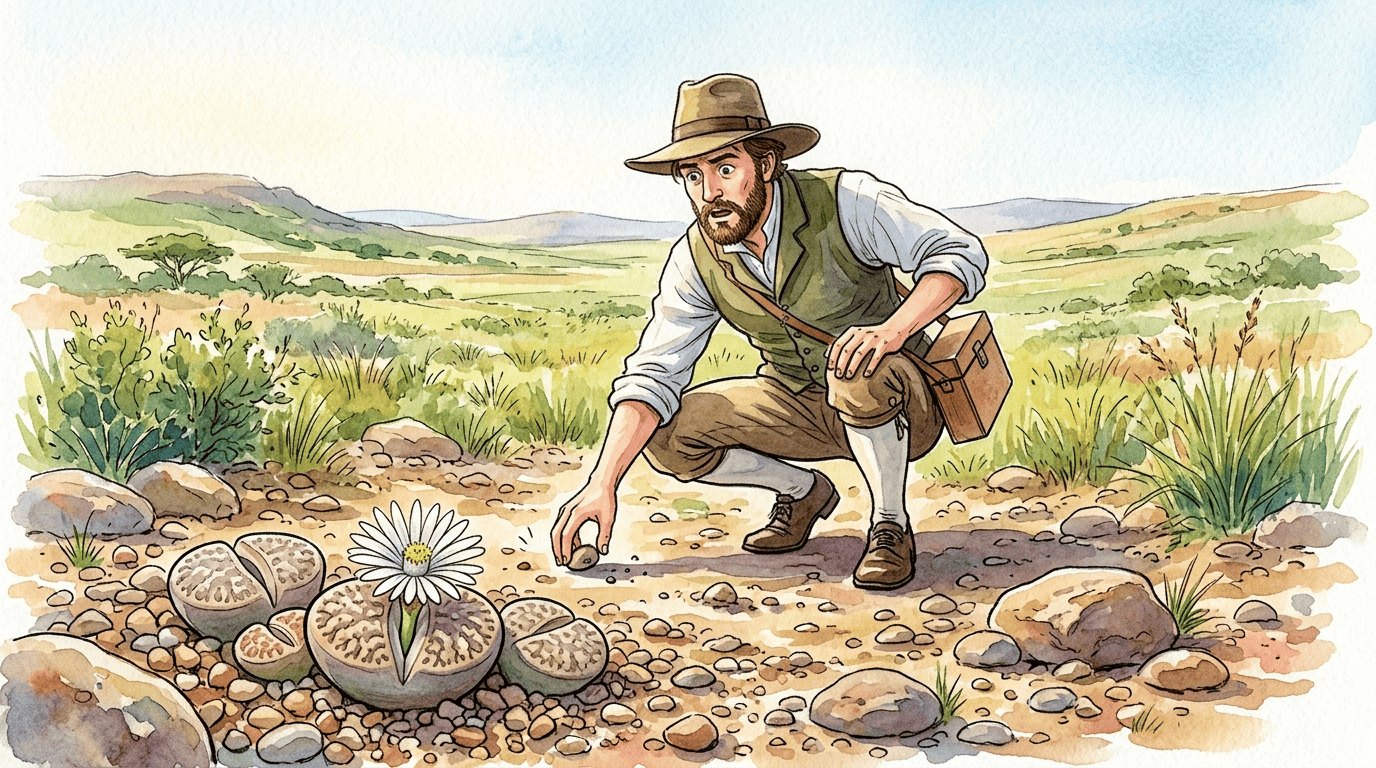
Lithops lesliei is native to South Africa's grasslands and rocky outcrops in the Free State and Gauteng, where it grows partly buried with only its flat-topped leaf surfaces visible at soil level — a form of camouflage that matches the surrounding pebbles so precisely that the entire genus was unknown to European science until 1811. In that year British naturalist William Burchell bent to pick up what he thought was a curiously shaped pebble and discovered it was a plant. The species name honors botanist T. N. Leslie, who collected the type specimen in 1908.
Each plant consists of only two thickened leaves fused into a cone, producing a single daisy-like flower from between them in autumn. Non-toxic and pet-safe. This camouflage adaptation, called mimicry or crypsis, evolved over millions of years to protect against grazing antelope and tortoises.
Each Lithops species matches the specific stone color of its habitat. L. Leslie, who collected the first specimens. There are about 37 recognized species and over 145 varieties, and dedicated collectors grow extensive 'living stone gardens' that resemble alien landscapes.
Symbolism & meaning
What It Symbolizes
Lithops lesliei carries camouflage as its central meaning, its perfect mimicry of pebbles in southern African scree representing hidden strength and the quiet wisdom of blending in. To find its is to feel the desert itself reorganize before your eyes. It is often read as a flower of strategic invisibility, a living stone that flowers briefly each autumn, a reminder that survival sometimes belongs to those who refuse to be seen.
- Camouflage — Its perfect stone mimicry represents hidden strength and the wisdom of blending in
Where the Name Comes From
Lithops from Greek 'lithos' (stone) and 'ops' (face), meaning 'stone face.' Lesliei honors T.N. Leslie who first collected the species.
Uses & Fun Facts
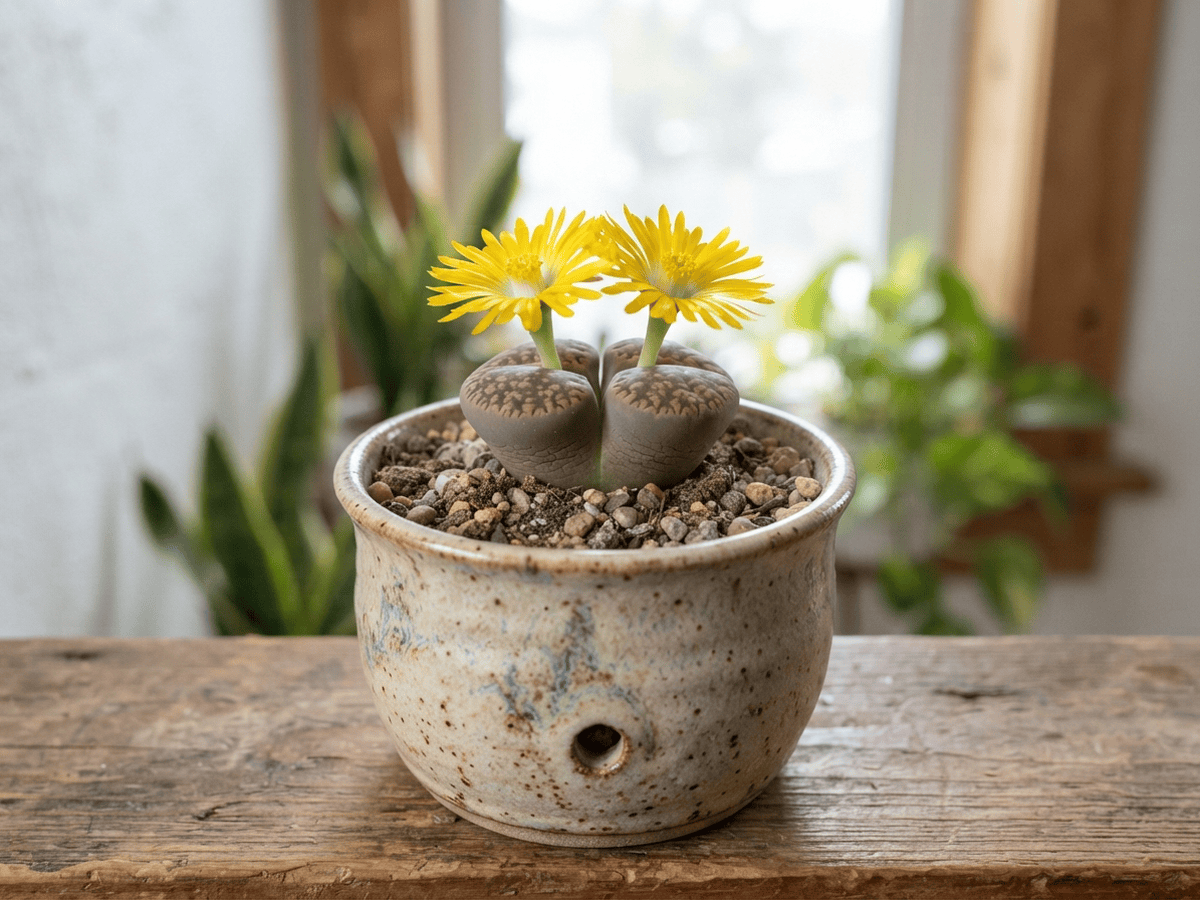
- Pebble-mimicking succulent for novelty windowsill pots
- Living-stone collector plant with patterned tops
Related plants
More Lithops plants
Plants with similar care
 Aji PepperCapsicum chinense
 Bear's PawCotyledon tomentosa
 Abyssinian BananaEnsete ventricosum
 Indian MangoMangifera indica
Frequently asked questions
How often should I water Lithops lesliei?
In summer, water about every 45 days; in winter, about every 60 days. Adjust for heat, pot size and drainage.
How much light does Lithops lesliei need?
Full sun: 6+ hrs direct. Watch the leaves — scorching or stretching means the light needs adjusting.
Is Lithops lesliei toxic to cats or dogs?
No toxicity has been reported for this plant. Still, it is wise to keep pets from chewing on any houseplant. Educational information, not medical or veterinary advice. If exposure is suspected, contact a doctor or veterinarian.
Is Lithops lesliei easy to grow?
It is considered challenging and rewards experienced growers.
Can Lithops lesliei be grown indoors?
Yes, it adapts well to indoor growing given the right light.
When does Lithops lesliei bloom?
It typically blooms Sep–Nov in the Northern Hemisphere.
YardMate
Identify any plant in seconds
Snap a photo — YardMate names the plant, diagnoses problems, and reminds you when to water.
Download on the App Store