 YardMate
Truncate Living Stone
Lithops pseudotruncatella
Hard · Experienced growersAbout Truncate Living Stone
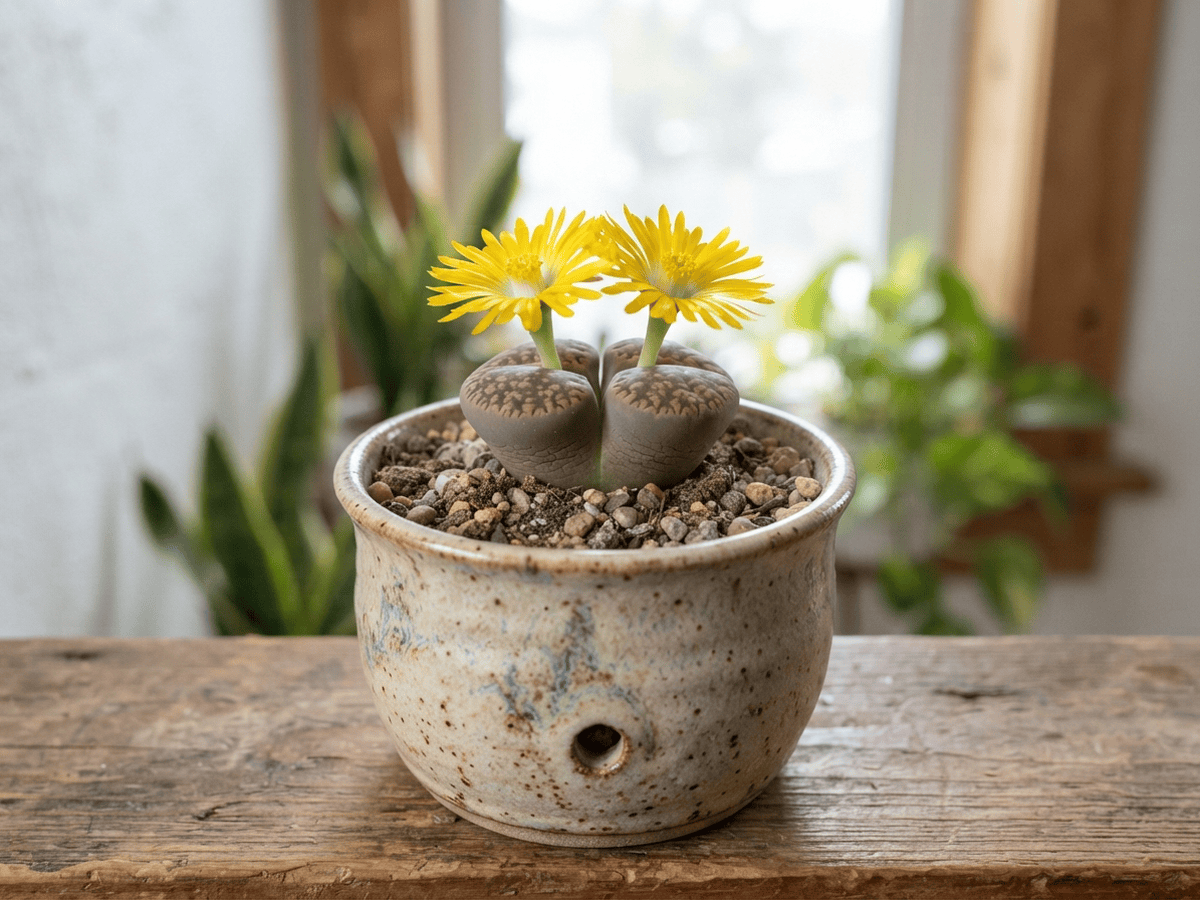
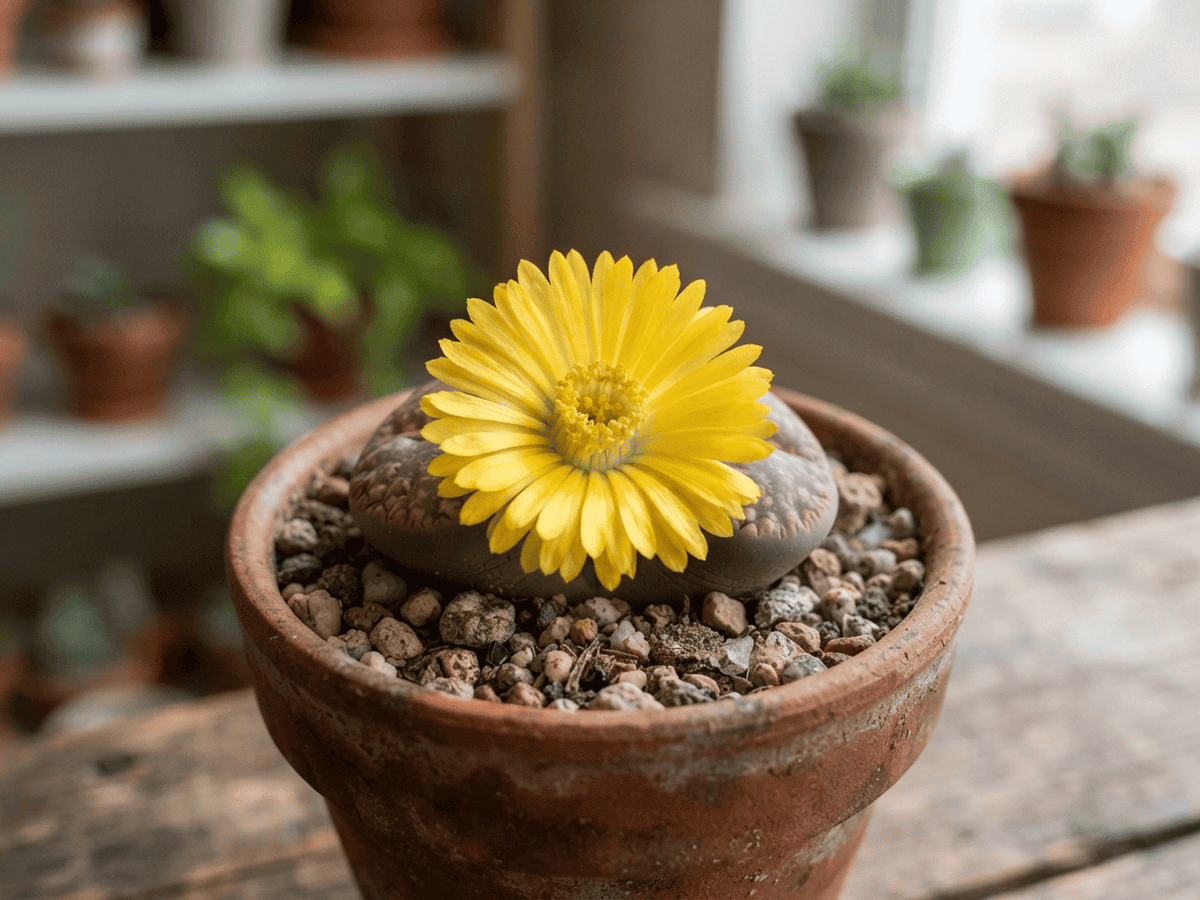
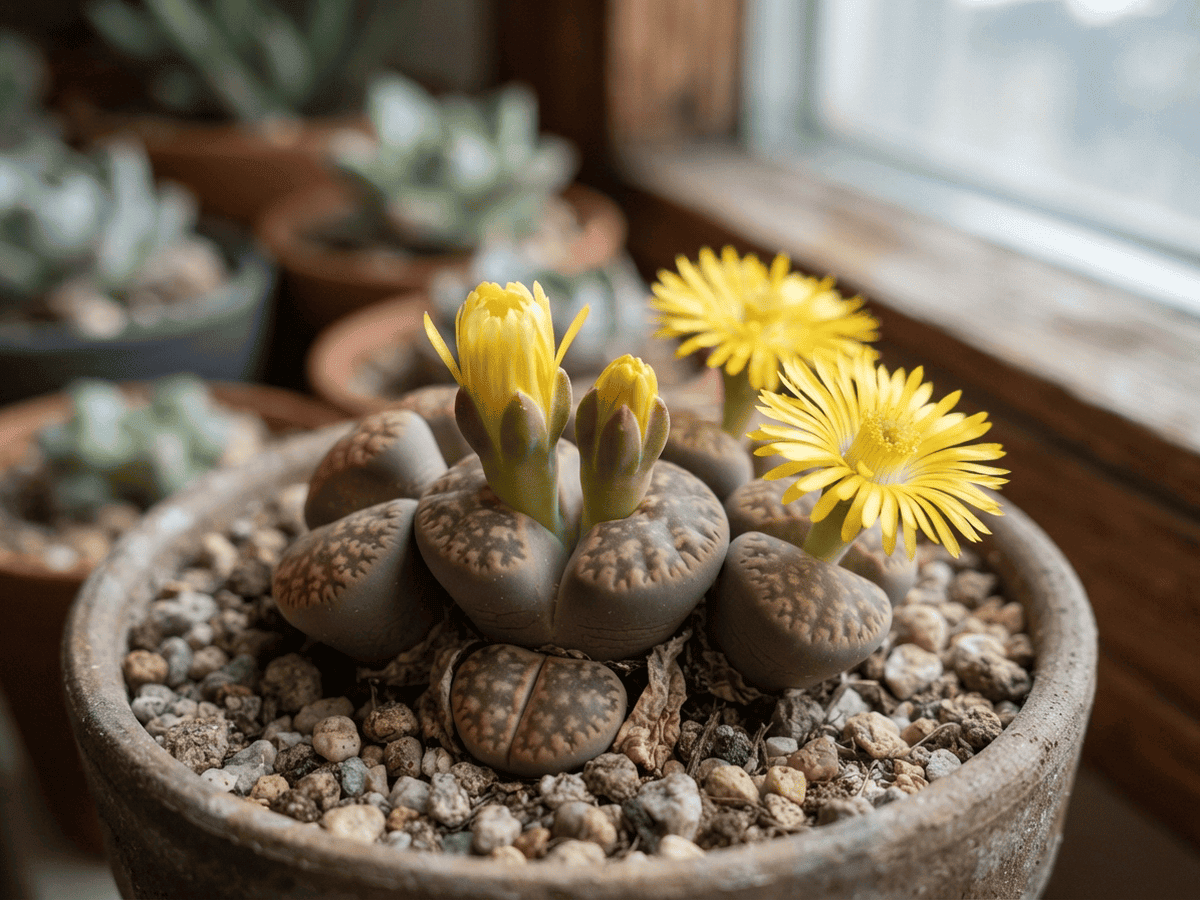
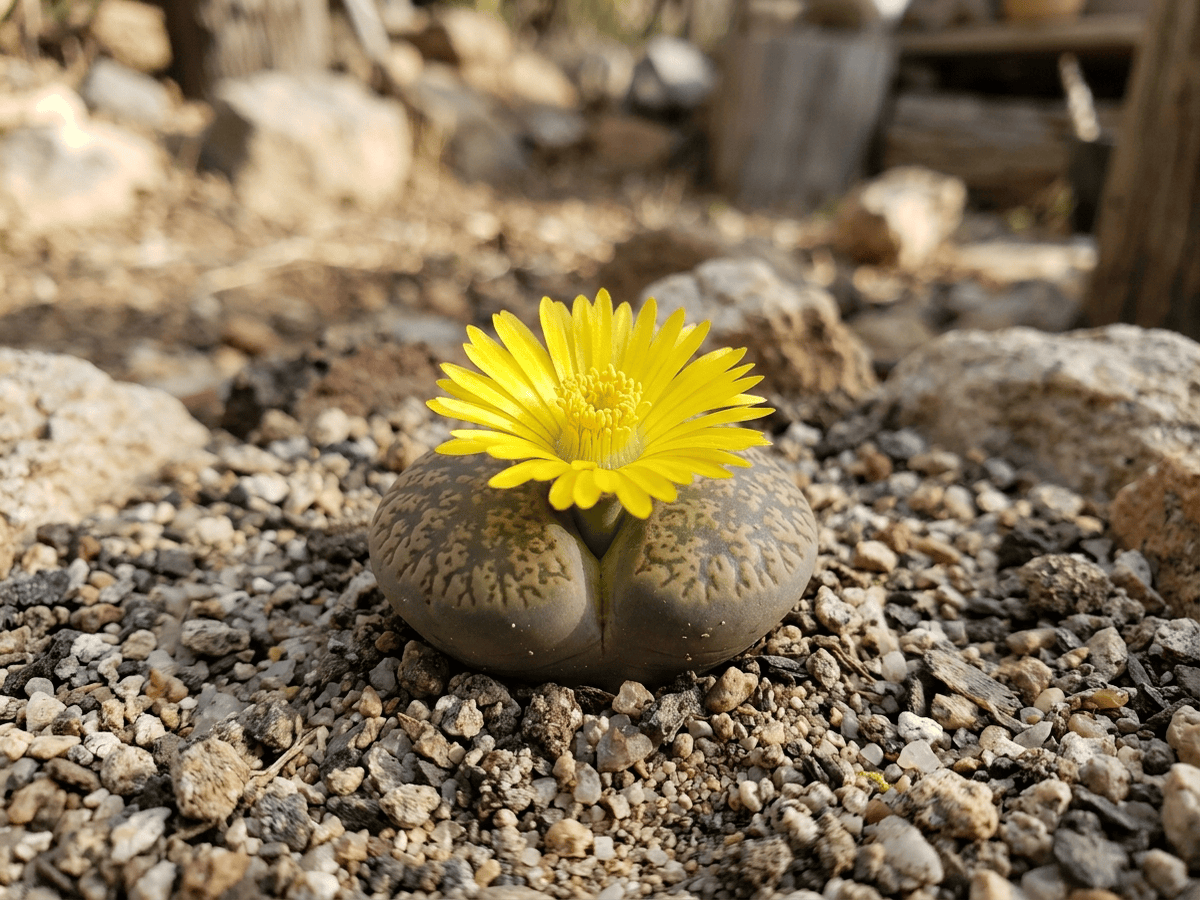
The Truncate Living Stone is a small, stemless succulent from the stony plains of Namibia, where its plump, fused pair of leaves grows flush with the ground, mottled and colored to match the surrounding quartz and dolomite gravel. Rarely taller than an inch, it spends most of the year nearly motionless, drawing on stored moisture through droughts that would wither ordinary plants. In late summer a single daisy-like yellow flower emerges from the narrow fissure between its leaves, opening only in bright sun. Grown in gritty, fast-draining soil and watered sparingly, it rewards patient collectors with slow, quiet growth.
- Drought-tolerant
- Container-friendly
- Slow-growing
- Compact
How to care for Truncate Living Stone
Watering
- Springevery 30 days
- Summerevery 30 days
- Fallevery 30 days
- Winterevery 30 days
Soil · Fast-draining
- Main mixSand + pumice + soil 1:1:150%
- DrainagePumice / gravel50%
Keep grit at half the mix or more — this soil is meant to dry out fast.
FERTILIZER
Cactus & Succulent Feed 2-7-7
Hold the nitrogen back and growth stays compact instead of soft and stretched. Phosphorus and potassium carry the roots and the flowering.
- Nitrogen · Leaves
- Phosphorus · Roots + Blooms
- Potassium · Strength
- Springevery 30 days
- Summerevery 30 days
At a Glance
- NativeSouthern Africa
- Height0.5 ft (0.2 m)
- Spread0.5 ft (0.2 m)
- Flower colorYellow
- Foliage colorGreen
- SoilWell-drained, Sandy
- LocationsIndoor · Patio
Bloom time
BLOOM CYCLE
Peak bloom
Aug
The flowers of this plant bloom in August, spectacular and unique.
Fragrance
LIGHT FRAGRANCE
Its late-summer flowers give off a faint, honey-like scent.
Toxicity
Pets Safe
None reported
Not reported
EXPOSURE No exposure route is reported.
EFFECT No toxic effect is reported.
NOTE No toxicity is reported for humans in this catalog; this is not evidence that the plant is edible or harmless.
Safe
EXPOSURE No exposure route is reported.
EFFECT No toxic effect is reported.
NOTE Authoritative sources report this plant as non-toxic to dogs; this is not evidence that the plant is edible.
Safe
EXPOSURE No exposure route is reported.
EFFECT No toxic effect is reported.
NOTE Authoritative sources report this plant as non-toxic to cats; this is not evidence that the plant is edible.
Educational information, not medical or veterinary advice. If exposure is suspected, contact a doctor or veterinarian.
DISTRIBUTION


- Native
- Southern Africa
History
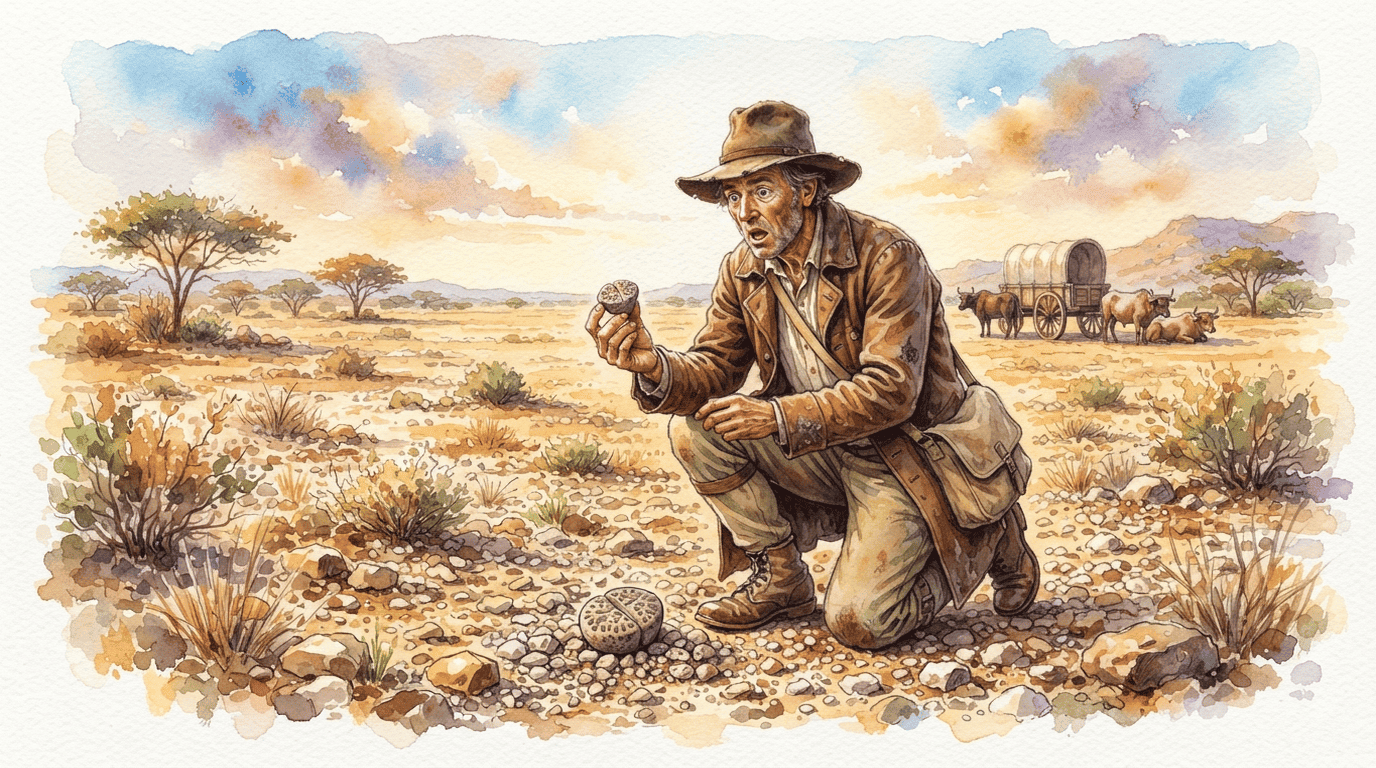
Long before botanists understood what they were looking at, travelers across southern Africa's stony plains occasionally picked up what looked like an ordinary pebble, only to find it was alive. The English explorer William Burchell recorded the first such encounter in 1811, describing a plant so perfectly colored and shaped to match the stones around it that it seemed to vanish into the ground — the discovery that eventually gave the entire genus its name, Lithops, from the Greek for 'stone-faced'.
The particular living stone known today as the Truncate Living Stone came to scientific attention nearly a century later. German botanist Kurt Dinter, who spent decades cataloguing the flora of what was then German South-West Africa, collected specimens on the high, gravelly plains near Windhoek. In 1908, Alwin Berger formally described the plant, naming it pseudotruncatella — 'false-truncated' — to distinguish its rounded, faintly domed leaf-tops from the flatter, sliced-off appearance of its close relative Lithops truncata. The species was later placed in the genus Lithops when botanist N. E. Brown established it in 1922.
Today, gardeners far from the Khomas Plateau grow the Truncate Living Stone on windowsills and in collector's trays, drawn to the same trick of camouflage that once let it slip past the notice of grazing animals and curious travelers alike.
Symbolism & meaning
What It Symbolizes
Unlike flowers bred for spectacle, the Truncate Living Stone survives by disappearing — its mottled, stone-colored leaves blending so completely into gravel and quartz that grazing animals and casual observers alike pass it by. That instinct for unshowy self-preservation has made it, among succulent collectors, a symbol of resilience achieved through patience and restraint rather than display.
- Quiet Endurance — Having evolved to vanish into bare stone rather than stand out, the Truncate Living Stone has come to represent quiet endurance — thriving unnoticed through extremes of heat and drought that would defeat showier plants.
Where the Name Comes From
The genus name Lithops comes from the Greek lithos ('stone') and ops ('face' or 'appearance'), describing how the plants mimic pebbles. The species epithet pseudotruncatella means 'false-truncated,' distinguishing its gently rounded leaf-tops from the flatter, sliced-off appearance of its close relative, Lithops truncata.
Uses & Fun Facts
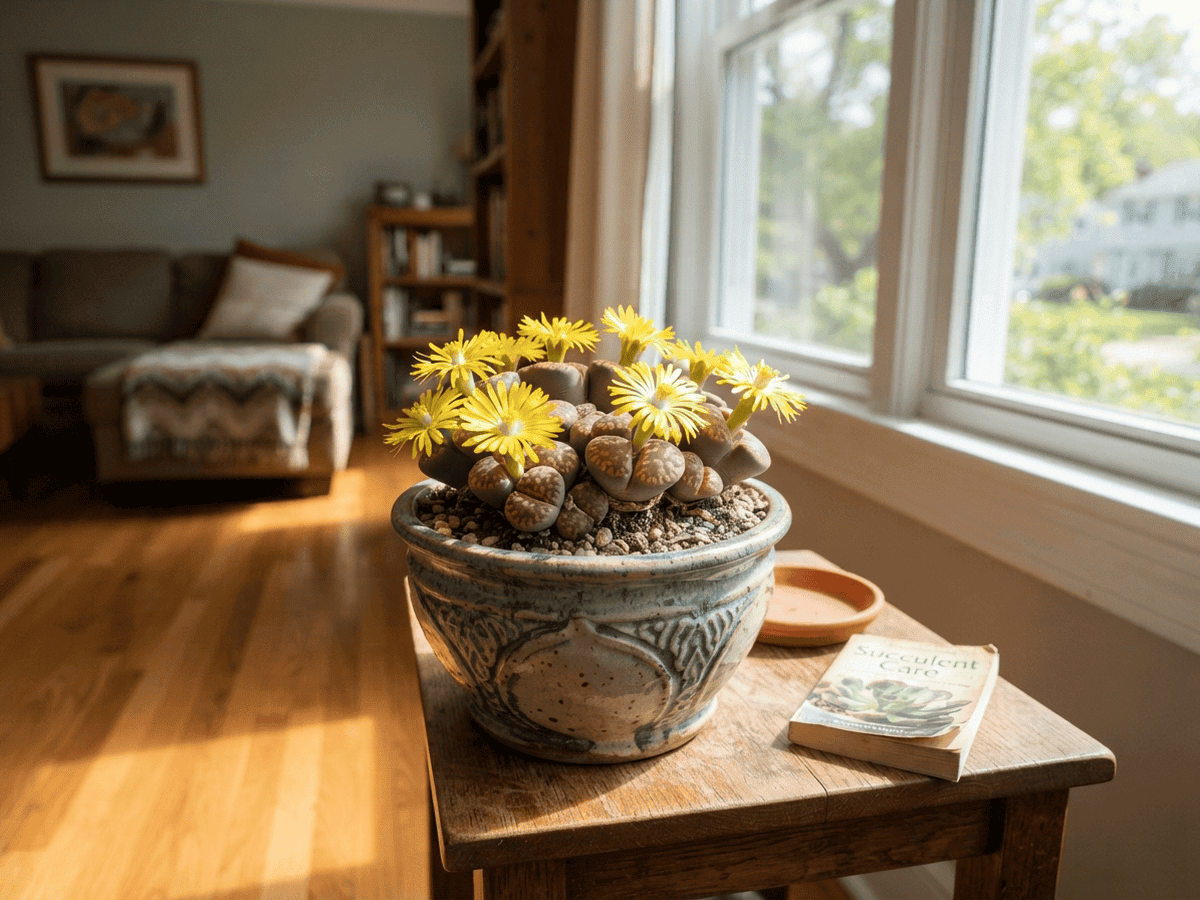
- Grown as a collector's succulent on sunny windowsills and in dish gardens.
- Its late-summer flowers attract bees and other pollinating insects.
Related plants
More Lithops plants
Plants with similar care
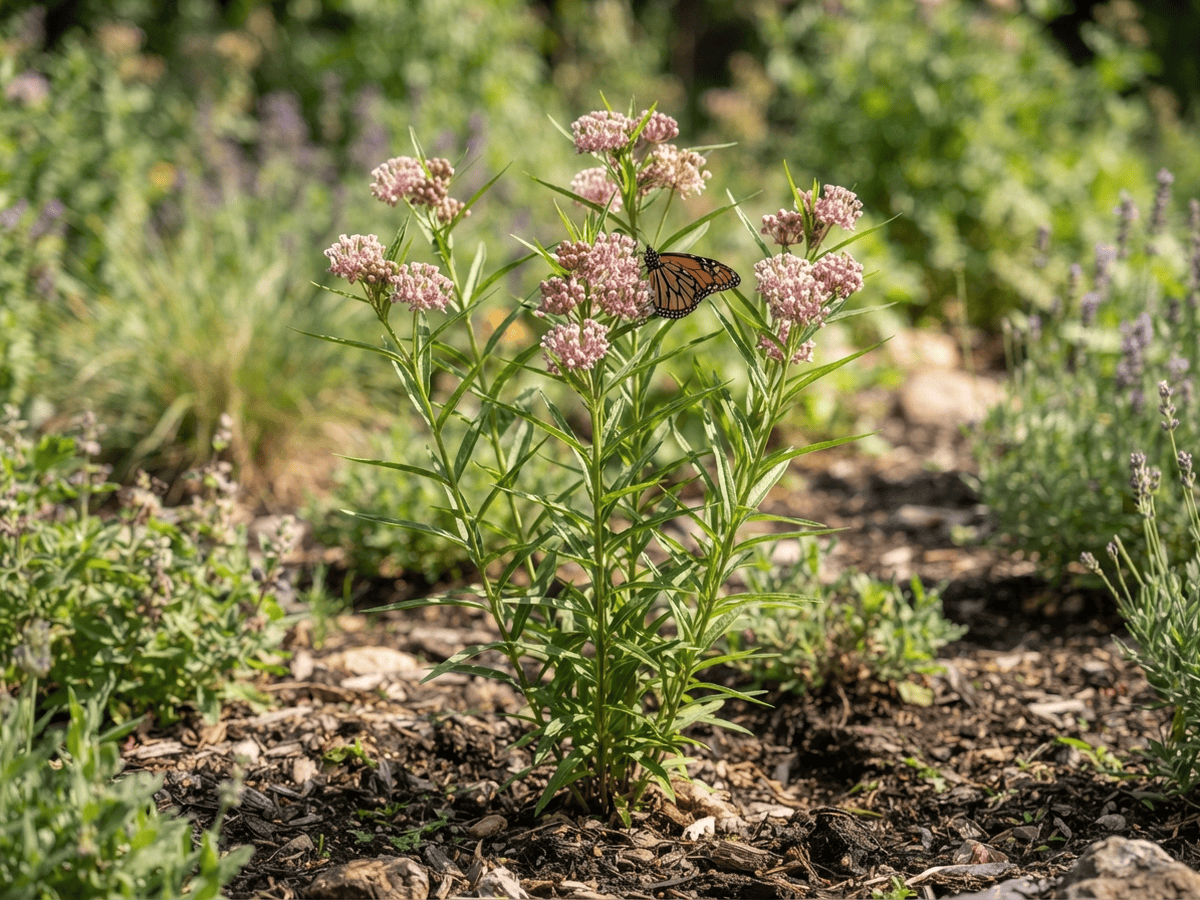 Narrowleaf MilkweedAsclepias fascicularis
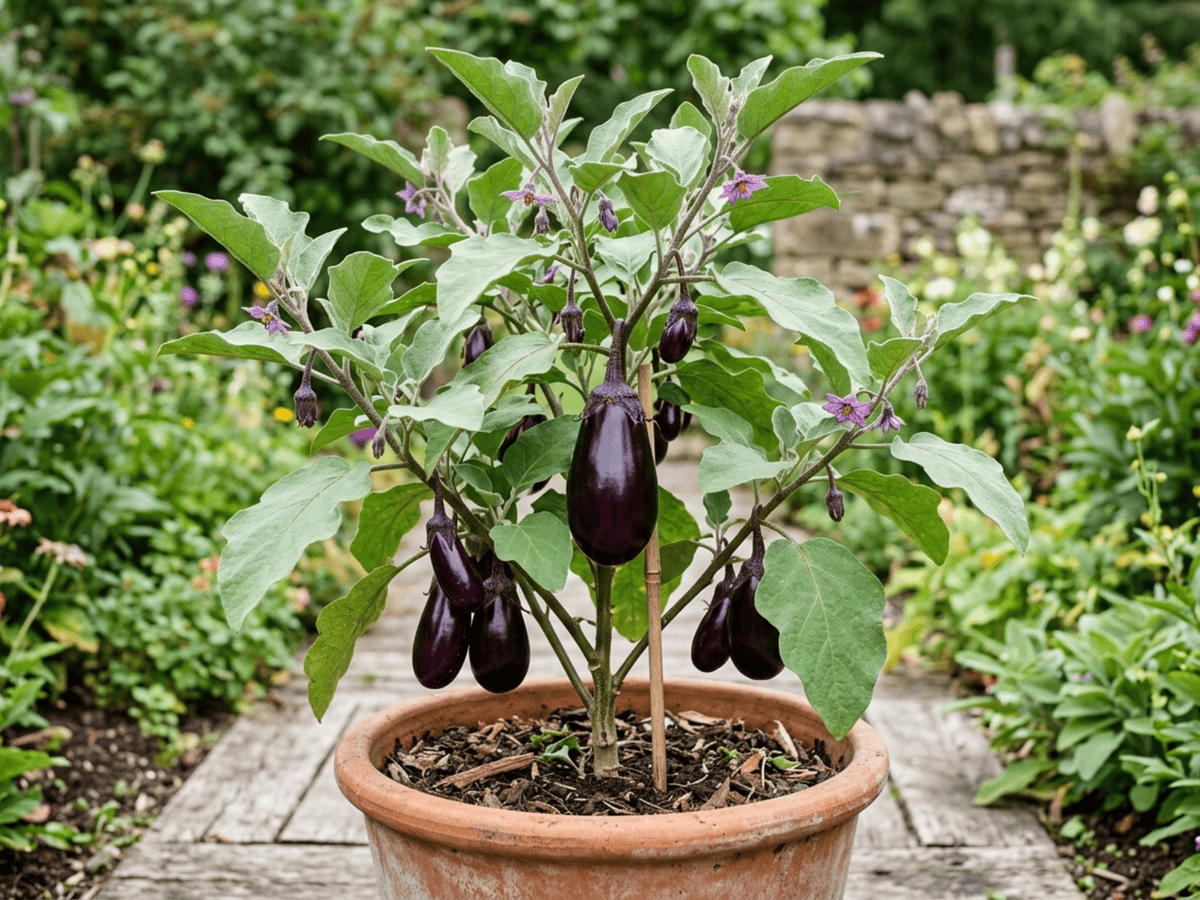 Aji PepperCapsicum chinense
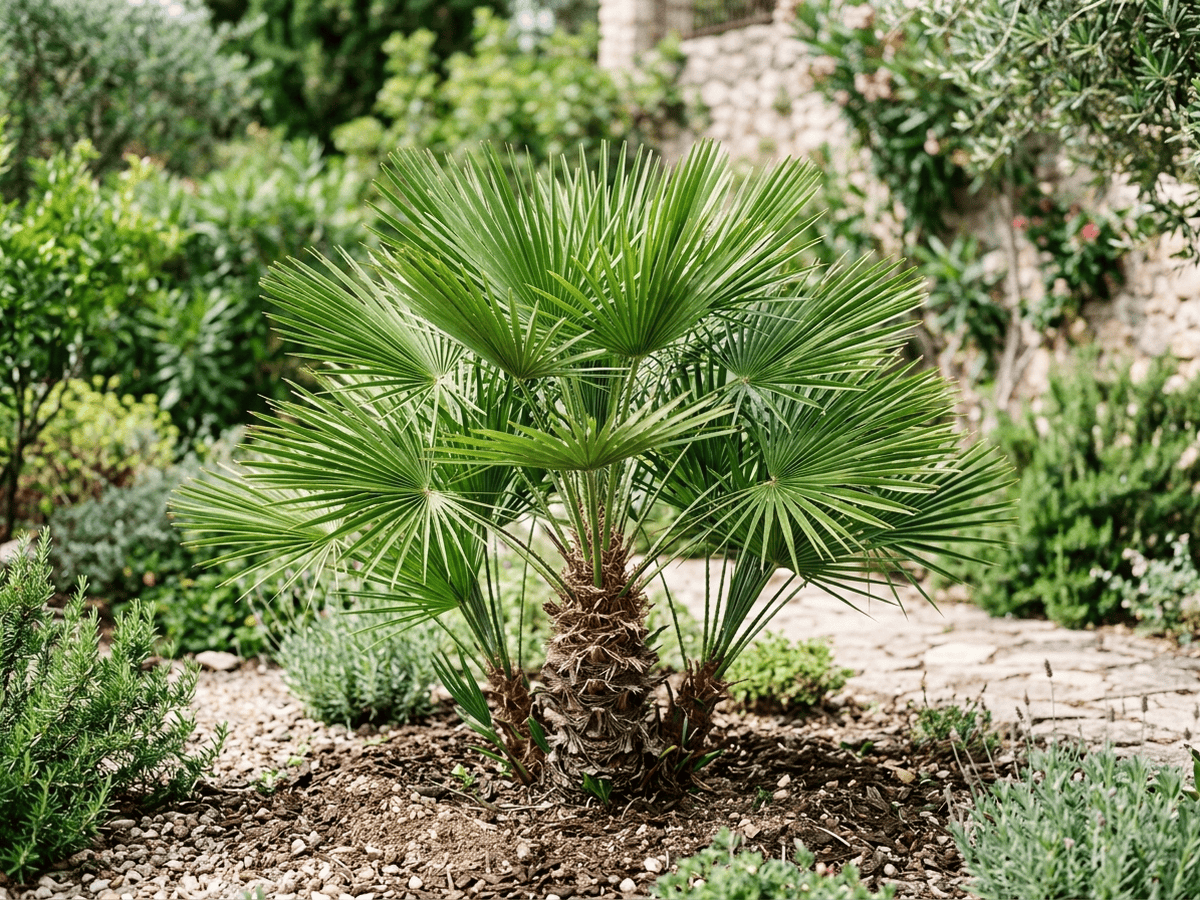 Mediterranean fan palmChamaerops humilis
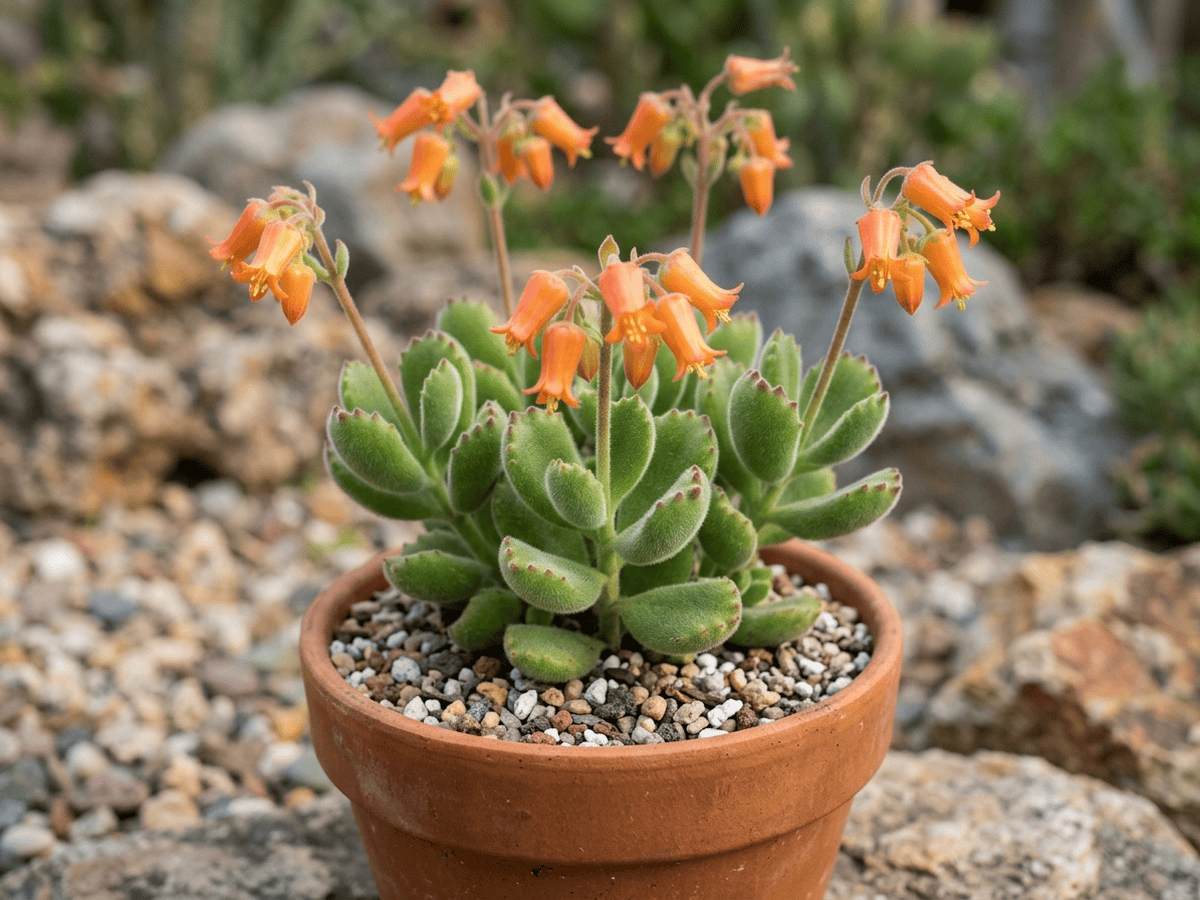 Bear's PawCotyledon tomentosa
Frequently asked questions
How often should I water Truncate Living Stone?
In summer, water about every 30 days; in winter, about every 30 days. Adjust for heat, pot size and drainage.
How much light does Truncate Living Stone need?
Full sun: 6+ hrs direct. Watch the leaves — scorching or stretching means the light needs adjusting.
Is Truncate Living Stone toxic to cats or dogs?
Pets Safe (Dogs Safe · Cats Safe) Educational information, not medical or veterinary advice. If exposure is suspected, contact a doctor or veterinarian.
Is Truncate Living Stone easy to grow?
It is considered challenging and rewards experienced growers.
Can Truncate Living Stone be grown indoors?
Yes, it adapts well to indoor growing given the right light.
When does Truncate Living Stone bloom?
It typically blooms Aug in the Northern Hemisphere.
YardMate
Identify any plant in seconds
Snap a photo — YardMate names the plant, diagnoses problems, and reminds you when to water.
Download on the App Store