 YardMate


Indian Mango
Mangifera indica
Hard · Experienced growersAbout Indian Mango
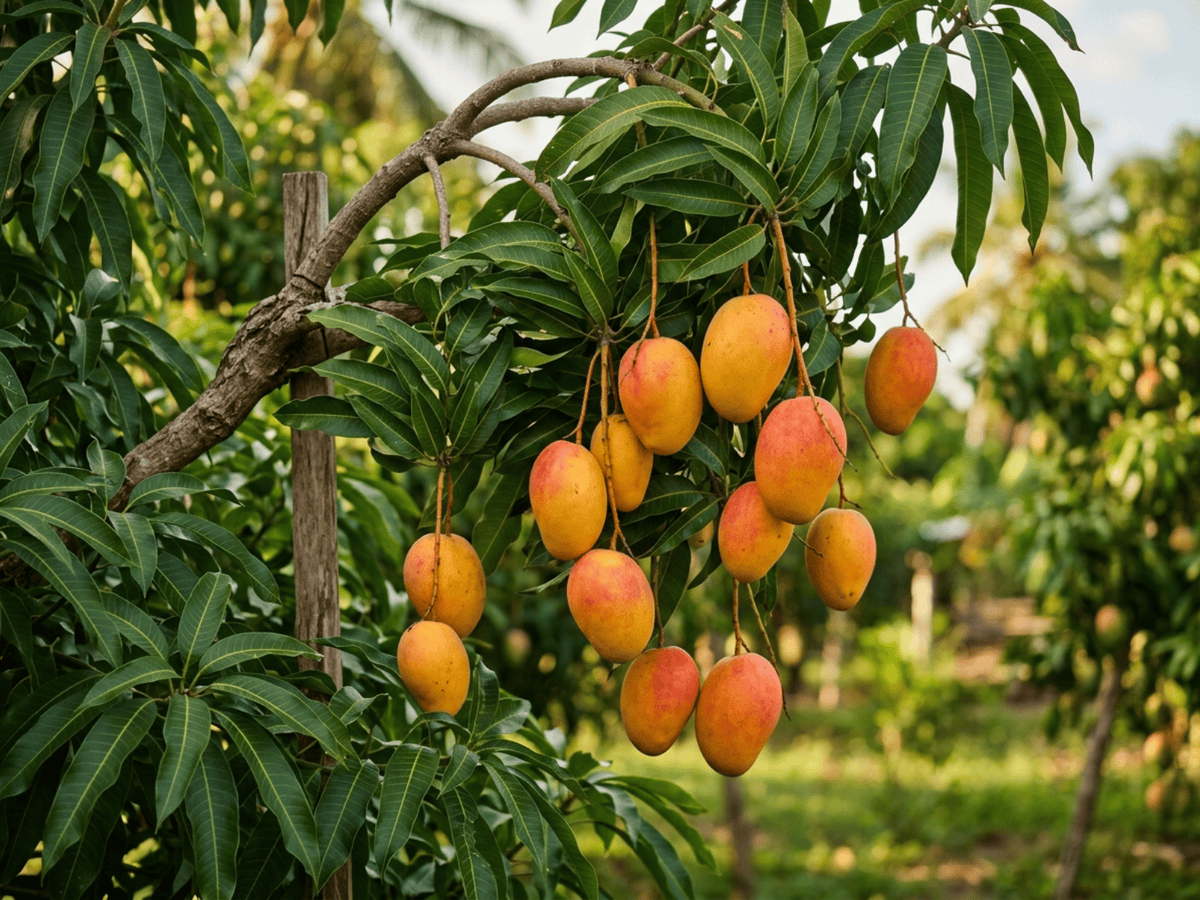
Mangifera indica, the mango, is a large evergreen tree in the Anacardiaceae family native to South and Southeast Asia. In tropical conditions, trees can reach 30–40 m tall and live for centuries. The fruit ranges from small (150 g) to enormous (over 1 kg), with skin colours from green and yellow to brilliant red-orange, and flesh from pale yellow to deep saffron-orange.
Mangoes require USDA zones 10b–11 and are strictly tropical—even brief freezes cause serious damage. They need full sun, well-drained soil, and a distinct dry season to trigger flowering. In subtropical zones like South Florida, dwarf varieties ('Ice Cream,' 'Nam Doc Mai') can be container-grown. The trees are remarkably drought-tolerant once established.
The mango is the national fruit of India, Pakistan, and the Philippines, and arguably the most beloved tropical fruit worldwide—known as the 'king of fruits' in Asia. India alone produces over 50% of global output. Over 1,000 named cultivars exist, each with distinct flavour profiles ranging from honey-sweet Alphonso to tangy-tart Tommy Atkins. Mango is essential in chutneys, lassi, sticky rice, salsas, and curries. The sap and skin contain urushiol-like compounds (related to poison ivy) that cause contact dermatitis in sensitive individuals.
- Edible
- Drought-tolerant
- Evergreen
- Tropical
How to care for Indian Mango
Watering
- Springevery 5 days
- Summerevery 3 days
- Fallevery 7 days
- Winterevery 14 days
Soil · Well-draining
- Main mixLoam + bark + perlite 2:1:175%
- DrainageLECA25%
Bark keeps the mix from compacting under a heavy root ball.
FERTILIZER
Balanced Feed 14-14-14
An even feed covers all three needs at once, keeping leaves, roots and blooms moving together with nothing pushed out of balance.
- Nitrogen · Leaves
- Phosphorus · Roots + Blooms
- Potassium · Strength
- Springevery 30 days
- Summerevery 30 days
- Fallevery 45 days
At a Glance
- NativeSouth Asia
- Height30–60 ft (9.1–18.3 m)
- Spread20–40 ft (6.1–12.2 m)
- Flower colorCream, White, Pink
- Foliage colorGreen
- Fruit colorYellow
- SoilWell-drained, Loamy, Rich
- LocationsYard · Indoor · Balcony
Bloom time
BLOOM CYCLE
Peak bloom
Jun–Aug
Thousands of tiny pink-white flowers in large panicles; only 1–2% set fruit. A dry spell before flowering improves bloom.
Fragrance
STRONG FRAGRANCE
Complex tropical aroma from terpenes and esters, varying dramatically by cultivar.
Toxicity
Humans Slight · Pets Slight
urushiol (skin, sap)
Slight
- Sap
- Peel
- Contact
EXPOSURE Touching sap and peel.
EFFECT Urushiol in peel and sap causes contact dermatitis in people sensitized to poison ivy/oak family (Anacardiaceae).
NOTE Flesh widely considered safe for humans; Anacardiaceae-sensitive people (poison ivy allergic) should have others peel the fruit.
Slight
- Pit
- Leaf
- Ingestion
EXPOSURE Eating pit and leaves.
EFFECT Pit causes intestinal obstruction and urushiol sap can irritate.
NOTE Flesh widely considered safe for humans; Anacardiaceae-sensitive people (poison ivy allergic) should have others peel the fruit.
Slight
- Pit
- Leaf
- Ingestion
EXPOSURE Eating pit and leaves.
EFFECT Pit hazards and sap irritation.
NOTE Flesh widely considered safe for humans; Anacardiaceae-sensitive people (poison ivy allergic) should have others peel the fruit.
Educational information, not medical or veterinary advice. If exposure is suspected, contact a doctor or veterinarian.
DISTRIBUTION

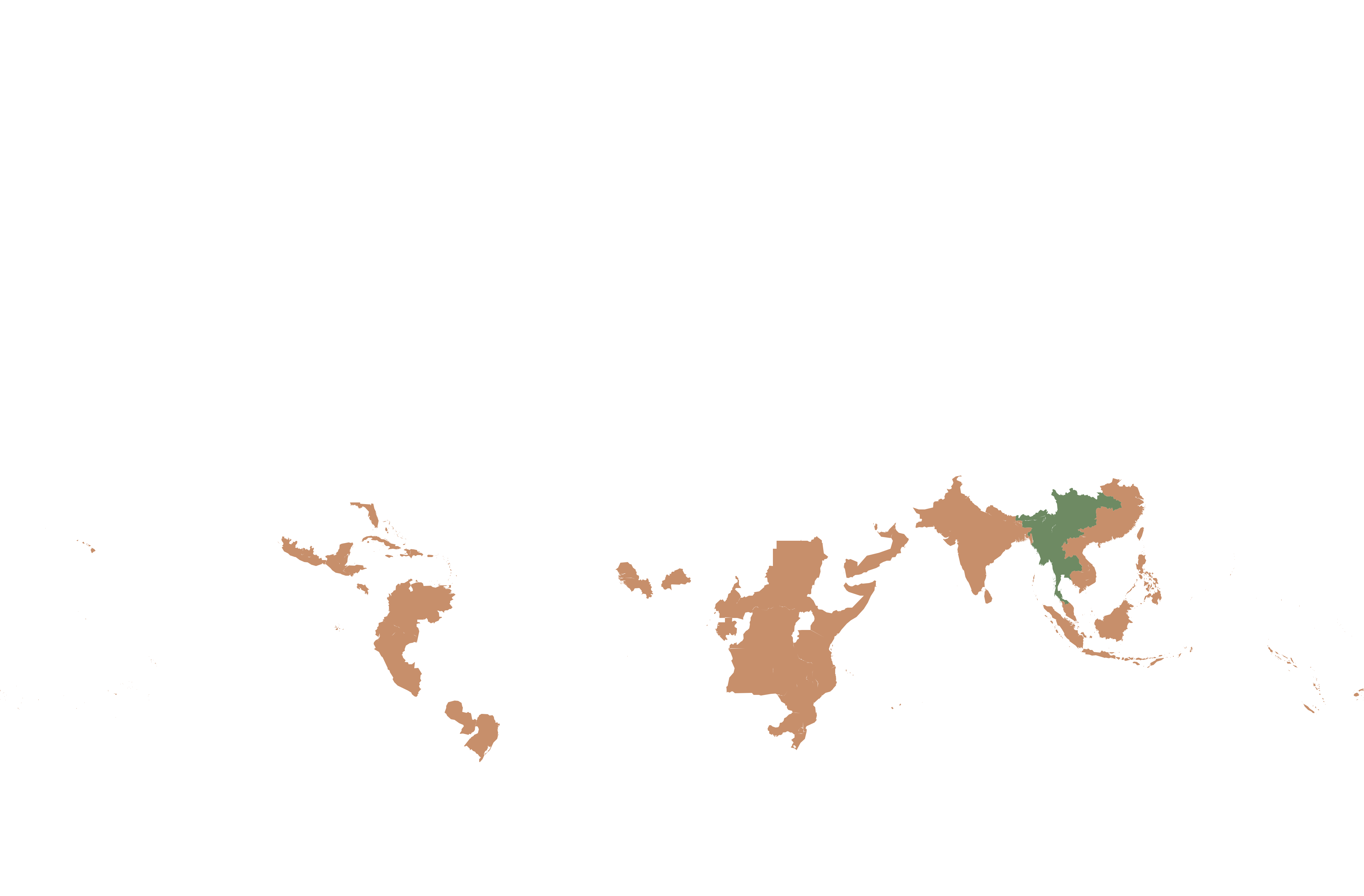
- Native
- Introduced
- South Asia
History
Mangifera indica is native to the Indian subcontinent, particularly the region spanning northeastern India, Bangladesh, and northern Myanmar. It has been cultivated for at least 4,000 years. Sanskrit texts include the word "amra" for mango, and Buddhist scripture mentions that the Buddha was given a mango grove by the courtesan Amrapali for meditation.
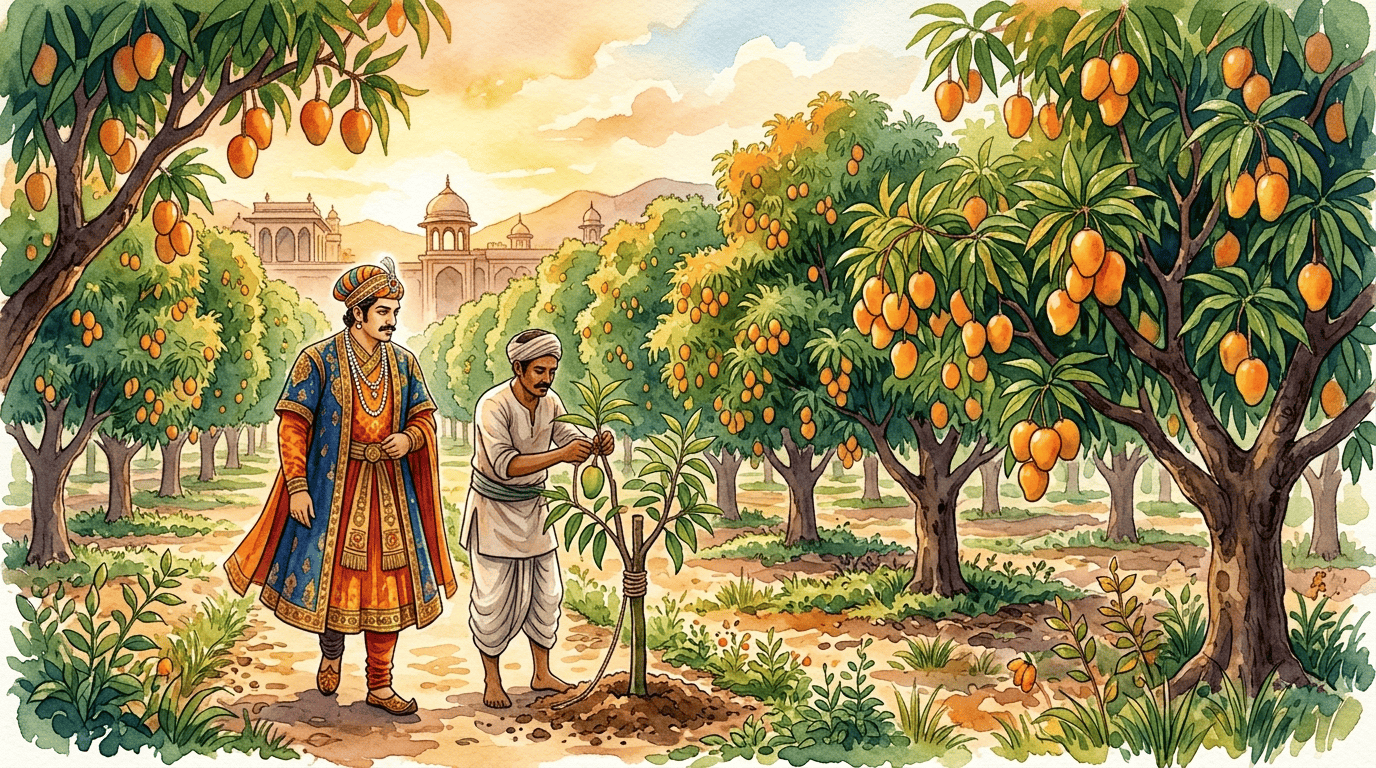
The Mughal emperors of 16th-18th century India were passionate cultivators of mangoes, developing named cultivars through systematic grafting; Akbar reportedly established a 100,000-tree mango orchard at Darbhanga. Mango is the national fruit of India, Pakistan, and the Philippines, and the national tree of Bangladesh. Portuguese explorers spread mango to Africa, the Americas, and beyond in the 16th century.
India remains the world's largest producer, with roughly 40% of global supply, though much remains in domestic consumption. Mexico, Thailand, Indonesia, and Pakistan are other major producers. Commercial cultivars include Alphonso (the Indian "king of mangoes"), Tommy Atkins (the dominant US commercial cultivar), Kent, Keitt, and Ataulfo/Honey. Mango rind contains urushiol — the same compound in poison ivy — causing contact dermatitis in sensitized individuals. Buddhist monks carried it to Southeast Asia in the 4th–5th centuries. The Alphonso mango, named after Portuguese general Afonso de Albuquerque, is considered the world's finest variety.
Symbolism & meaning
What It Symbolizes
The Indian Mango carries Love at the heart of South Asian myth — Kamadeva, the Hindu god of desire, draws his bow with arrows tipped in mango blossom. It is also the fruit of Royalty, the 'king of fruits,' once exchanged between rulers and gathered into the gardens of Mughal emperors. Few fruits are so deeply braided into a continent's idea of devotion and prestige.
- Love — In Hindu tradition, the mango symbolizes love and fertility — Kamadeva (god of love) carries mango-blossom arrows
- Royalty — Known as the 'king of fruits,' mangoes were gifts among rulers and symbols of prosperity in South Asian courts
Where the Name Comes From
Mangifera from Malay 'manga' (mango) + Latin 'ferre' (to bear); 'indica' means of India. 'Mango' from Portuguese 'manga,' from Malay 'mangga,' from Tamil 'mankay.'
Uses & Fun Facts
- Sweet juicy fruit eaten fresh, dried, and in chutneys
- Spreading evergreen canopy shades tropical yards
- Sacred in Hindu rituals; leaves hung at festivals
- Wood used for furniture and musical instruments
Related plants
Plants with similar care
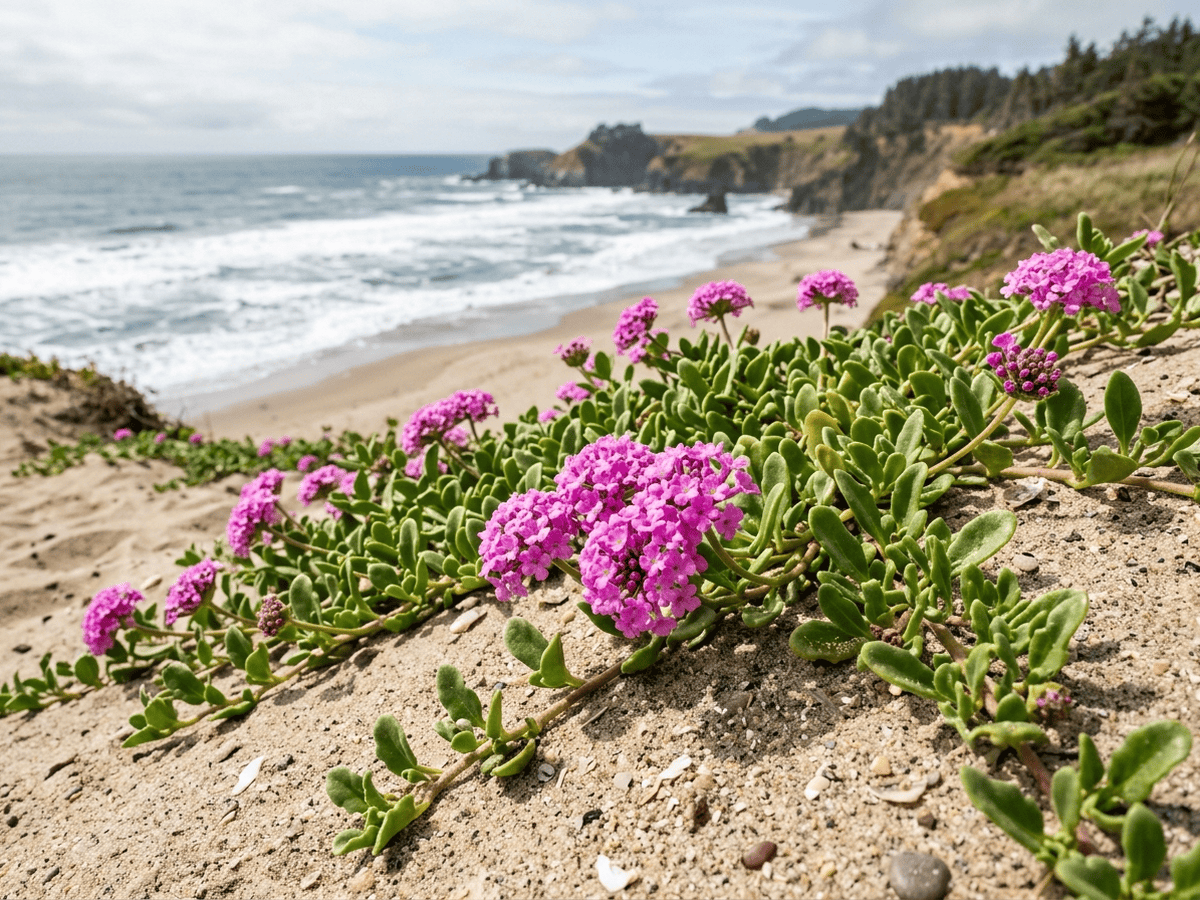 Pink Sand VerbenaAbronia umbellata
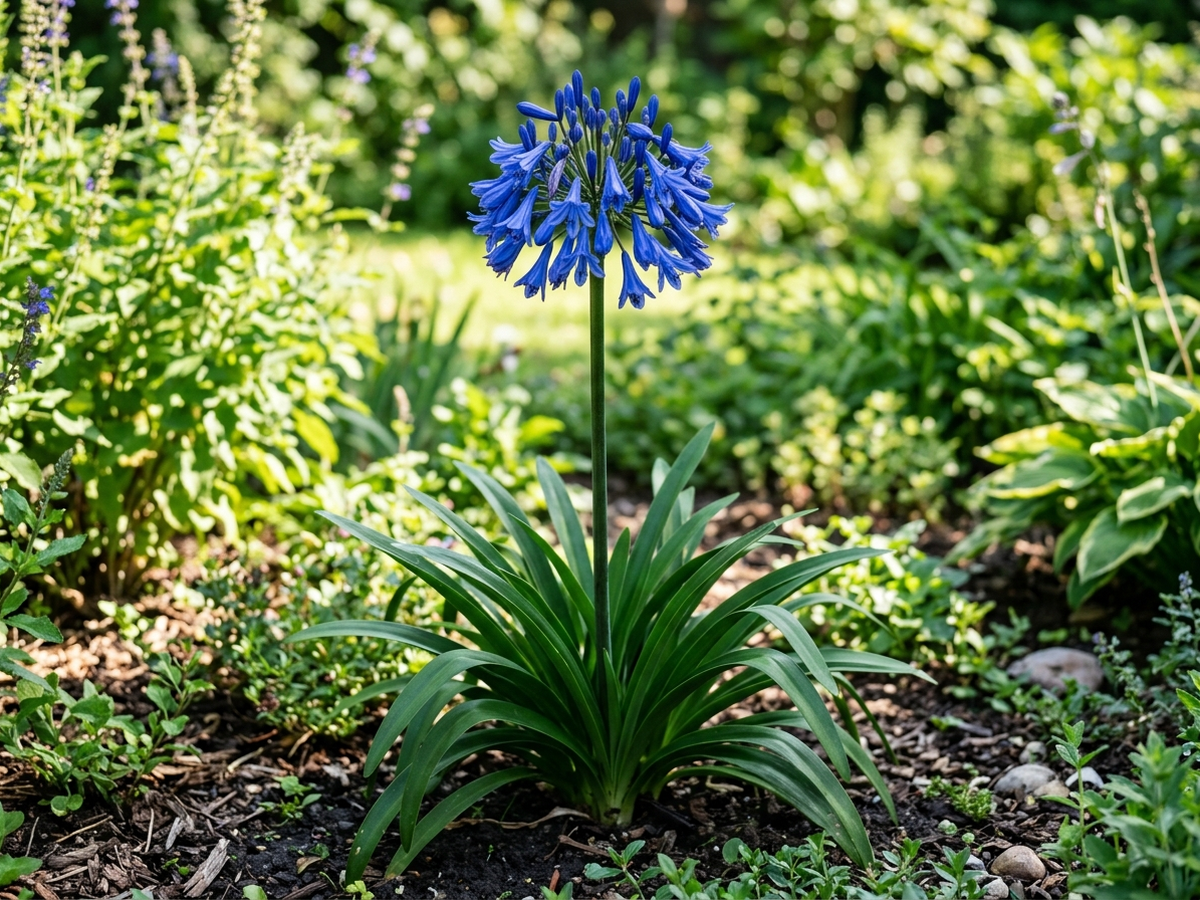 Drooping AgapanthusAgapanthus inapertus
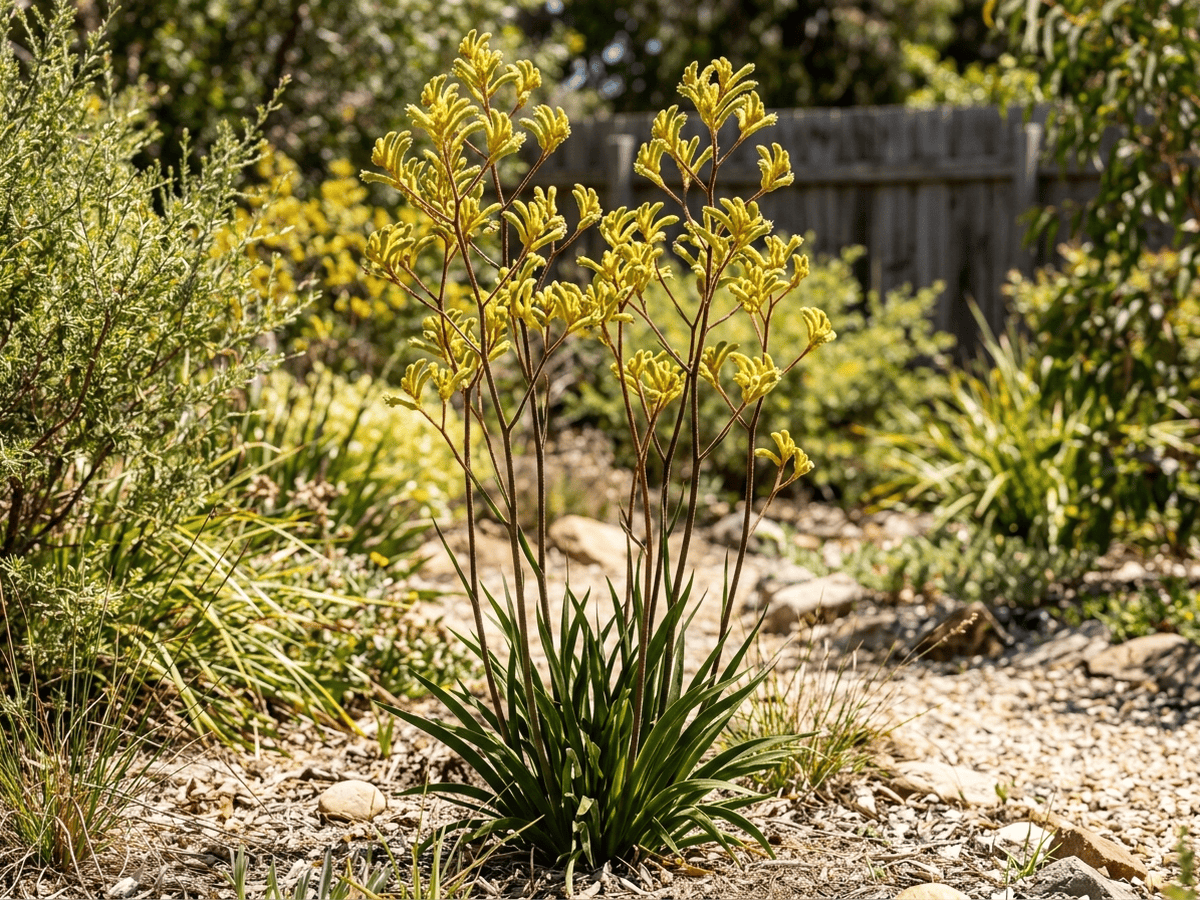 Tall Kangaroo PawAnigozanthos flavidus
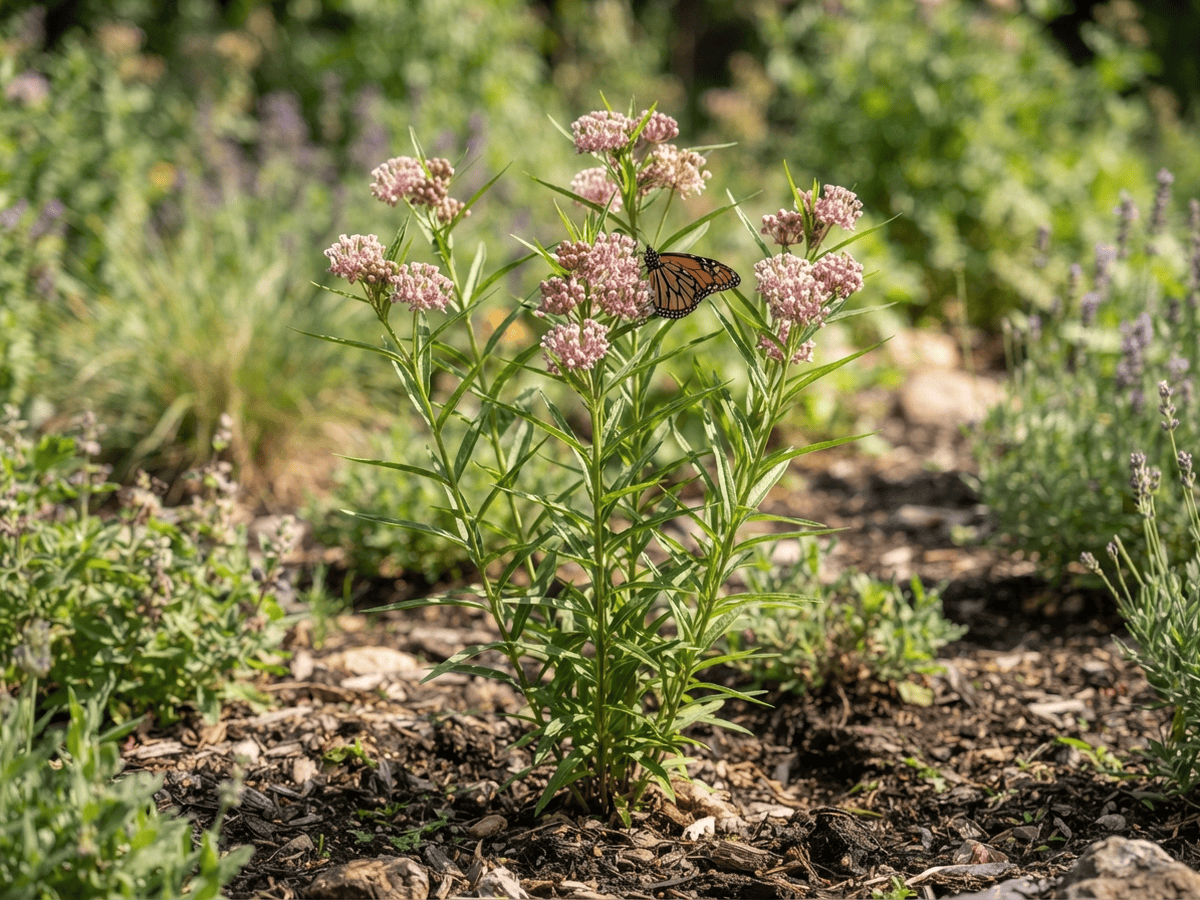 Narrowleaf MilkweedAsclepias fascicularis
Frequently asked questions
How often should I water Indian Mango?
In summer, water about every 3 days; in winter, about every 14 days. Adjust for heat, pot size and drainage.
How much light does Indian Mango need?
Full sun: 6+ hrs direct. Watch the leaves — scorching or stretching means the light needs adjusting.
Is Indian Mango toxic to cats or dogs?
Pets Slight (Dogs Slight · Cats Slight) Educational information, not medical or veterinary advice. If exposure is suspected, contact a doctor or veterinarian.
Is Indian Mango easy to grow?
It is considered challenging and rewards experienced growers.
Can Indian Mango be grown indoors?
Yes, it adapts well to indoor growing given the right light.
When does Indian Mango bloom?
It typically blooms Jun–Aug in the Northern Hemisphere.
YardMate
Identify any plant in seconds
Snap a photo — YardMate names the plant, diagnoses problems, and reminds you when to water.
Download on the App Store