 YardMate


Crystalline Ice Plant
Mesembryanthemum crystallinum
Easy · Beginner friendlyAbout Crystalline Ice Plant
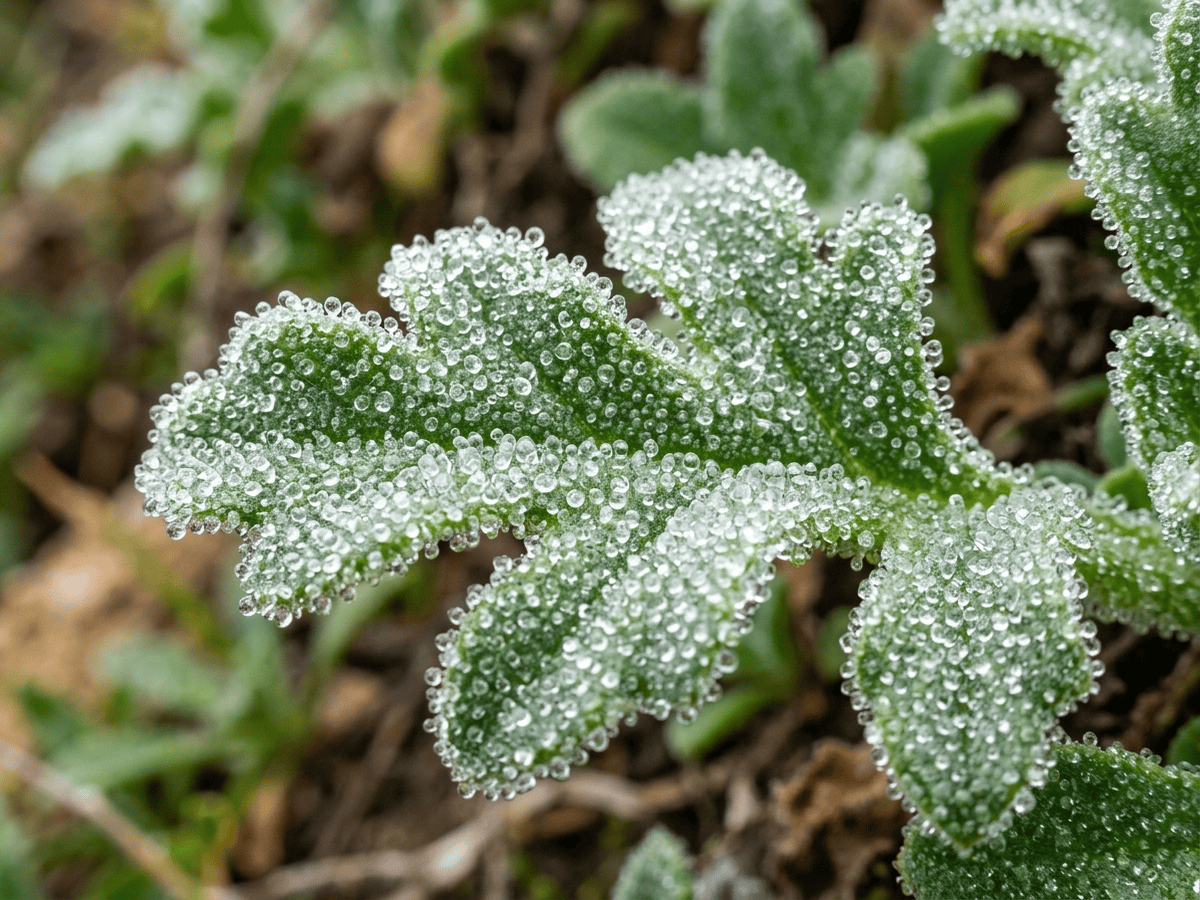
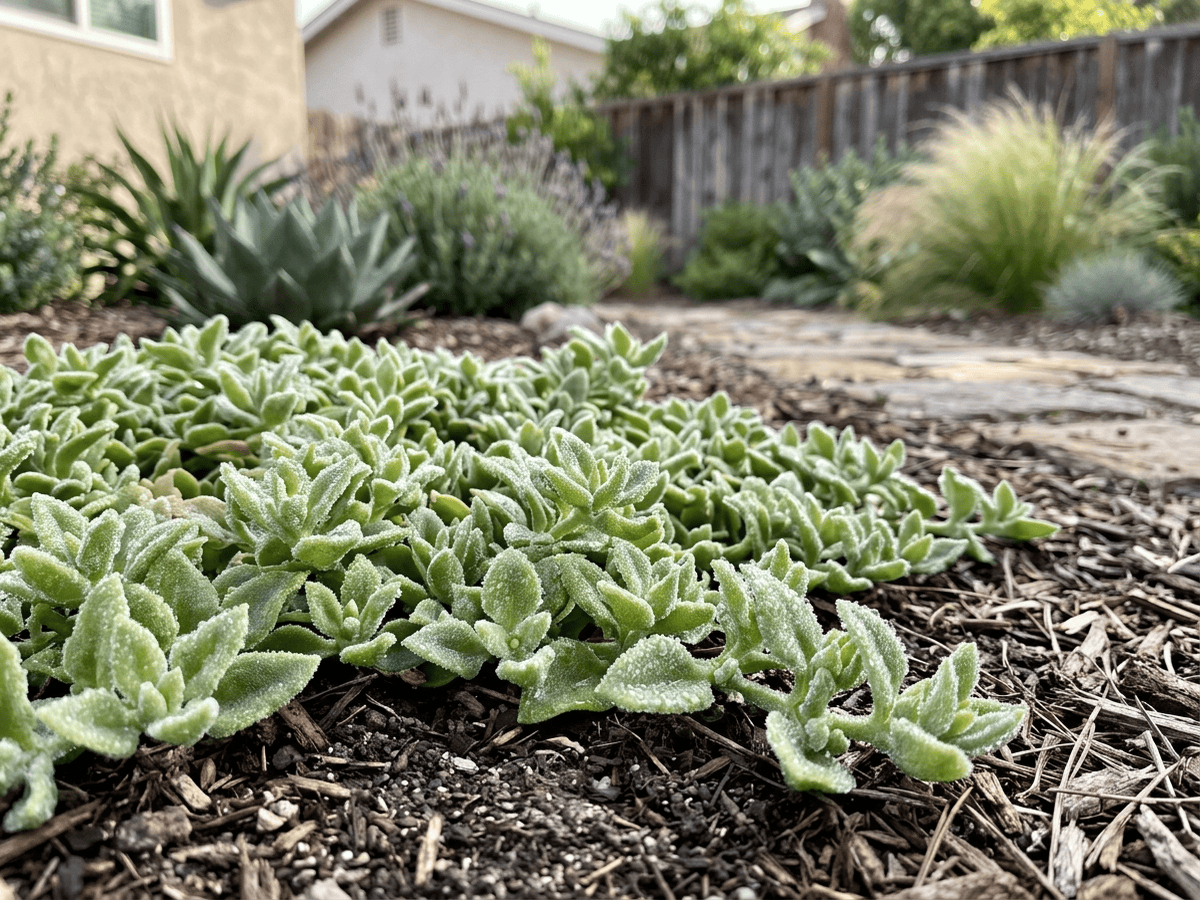
Ice Plant is a South African annual succulent covered in glistening crystal-like bladder cells that give leaves and stems a sparkling appearance. Growing 6 to 12 inches tall and spreading 18 inches, it produces small white to pale pink daisy flowers in summer. Used historically for soda production and as a salt-accumulating soil remediator, and grown as a novelty in American succulent and fairy gardens.
- Drought-tolerant
How to care for Crystalline Ice Plant
Watering
- Springevery 10 days
- Summerevery 7 days
- Fallevery 14 days
- Winterevery 21 days
Soil · Fast-draining
- Main mixSand + pumice + soil 1:1:150%
- DrainagePumice / gravel50%
Keep grit at half the mix or more — this soil is meant to dry out fast.
FERTILIZER
This plant needs little to no feeding.
At a Glance
- NativeAfrica, Mediterranean
- Height0.3–0.6 ft (0.1–0.2 m)
- Spread1–2 ft (0.3–0.6 m)
- Flower colorWhite, Pink, Red
- Foliage colorGreen, Red
- SoilSandy, Well-drained
- LocationsYard · Balcony
Bloom time
BLOOM CYCLE
Peak bloom
Jul–Sep
Small white-pink daisy flowers July to September
Toxicity
No toxicity has been reported for this plant. Still, it is wise to keep pets from chewing on any houseplant.
Educational information, not medical or veterinary advice. If exposure is suspected, contact a doctor or veterinarian.
DISTRIBUTION


- Native
- Introduced
- Africa
- Mediterranean
History
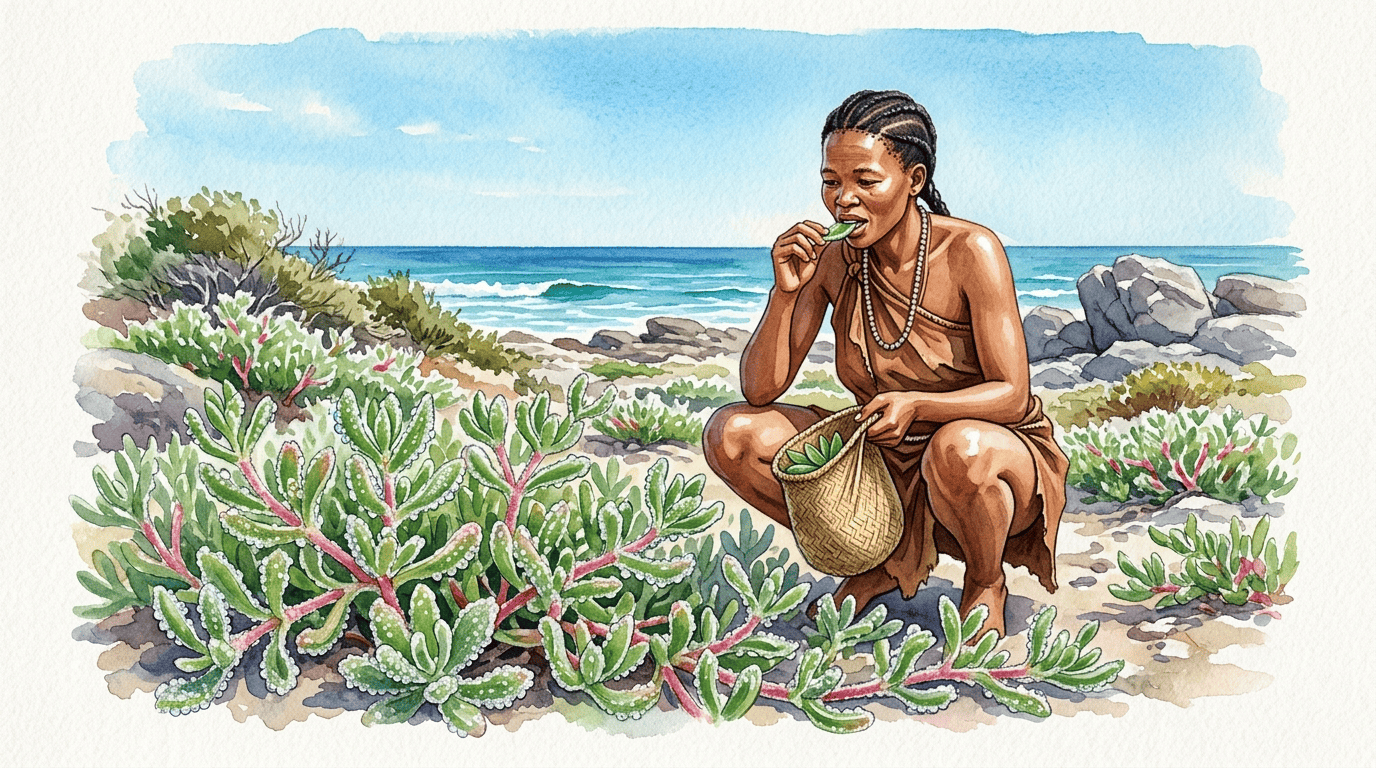
Mesembryanthemum crystallinum, commonly called ice plant or common iceplant, is a sprawling succulent annual native to South Africa, the Mediterranean, and southern Europe. Linnaeus described it in 1753, and the epithet crystallinum refers to glistening bladder-shaped epidermal cells that cover leaves and stems like ice crystals and store water and salt. South African Khoisan peoples and Mediterranean coastal populations historically ate the crisp, briny leaves as a salad vegetable.
Sailors valued it as a scurvy-preventing trail food. In the 19th century it was introduced to California as ornamental ground cover and for erosion control, and has since naturalized aggressively along the Pacific coast, where it alters soil chemistry via salt accumulation. Gourmet salad production has renewed agricultural interest, and it is now grown commercially in Europe.
Native to South Africa and the Mediterranean, introduced to American gardens in the 1800s. Historically burned in Europe to produce soda ash for glass and soap. Modern interest revived as a bioremediation plant for salt-damaged soils and as a novelty ornamental.
Symbolism & meaning
What It Symbolizes
The Crystalline Ice Plant earns its name in light: tiny bladder cells across its leaves glitter like ice or sequined glass under the sun. As a salt survivor, it pulls salt from the soil, sequestering it in those bright vesicles to thrive where other plants would die. Its meaning is crystalline beauty born of difficulty, a plant turning inhospitable ground into shimmering ornament.
- Crystalline sparkle — leaves glitter like ice in sun
- Salt survivor — accumulates salt from difficult soils
Where the Name Comes From
'Mesembryanthemum' from Greek meaning midday-flower, for blooms opening at noon; 'crystallinum' means crystalline, for sparkling bladder cells.
Uses & Fun Facts
- Crystalline succulent mat covers hot dry coastal sites
- Salty leaves eaten as ice plant salad green
Related plants
Plants with similar care
 Chinese AbeliaAbelia chinensis
 Fragrant AbeliaAbelia mosanensis
 Large-Flowered AbeliaAbelia uniflora
 Glossy AbeliaAbelia x grandiflora
Frequently asked questions
How often should I water Crystalline Ice Plant?
In summer, water about every 7 days; in winter, about every 21 days. Adjust for heat, pot size and drainage.
How much light does Crystalline Ice Plant need?
Full sun: 6+ hrs direct. Watch the leaves — scorching or stretching means the light needs adjusting.
Is Crystalline Ice Plant toxic to cats or dogs?
No toxicity has been reported for this plant. Still, it is wise to keep pets from chewing on any houseplant. Educational information, not medical or veterinary advice. If exposure is suspected, contact a doctor or veterinarian.
Is Crystalline Ice Plant easy to grow?
Yes — it is considered an easy, beginner-friendly plant.
When does Crystalline Ice Plant bloom?
It typically blooms Jul–Sep in the Northern Hemisphere.
YardMate
Identify any plant in seconds
Snap a photo — YardMate names the plant, diagnoses problems, and reminds you when to water.
Download on the App Store