 YardMate
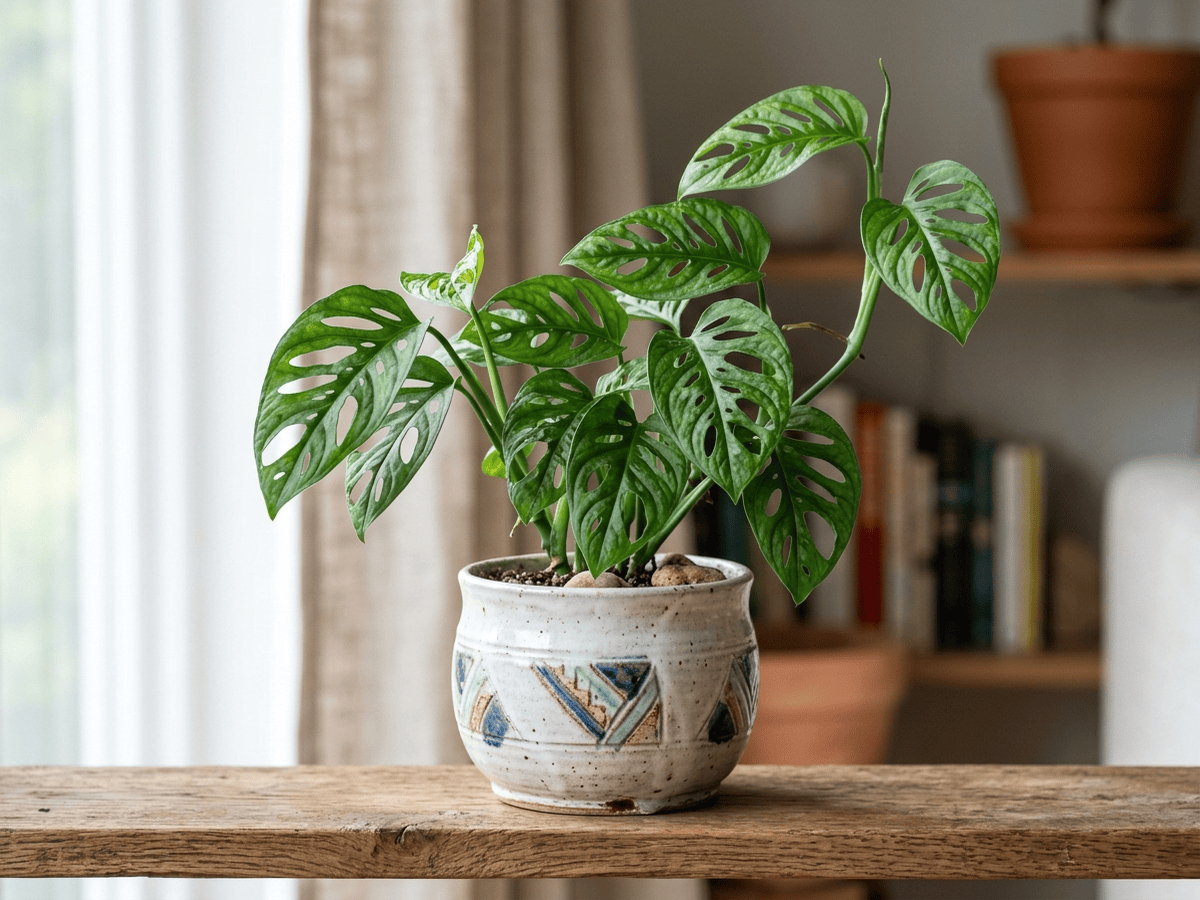

Blanchet's Swiss Cheese Vine
Monstera adansonii blanchetii
Medium · Some experienceAbout Blanchet's Swiss Cheese Vine
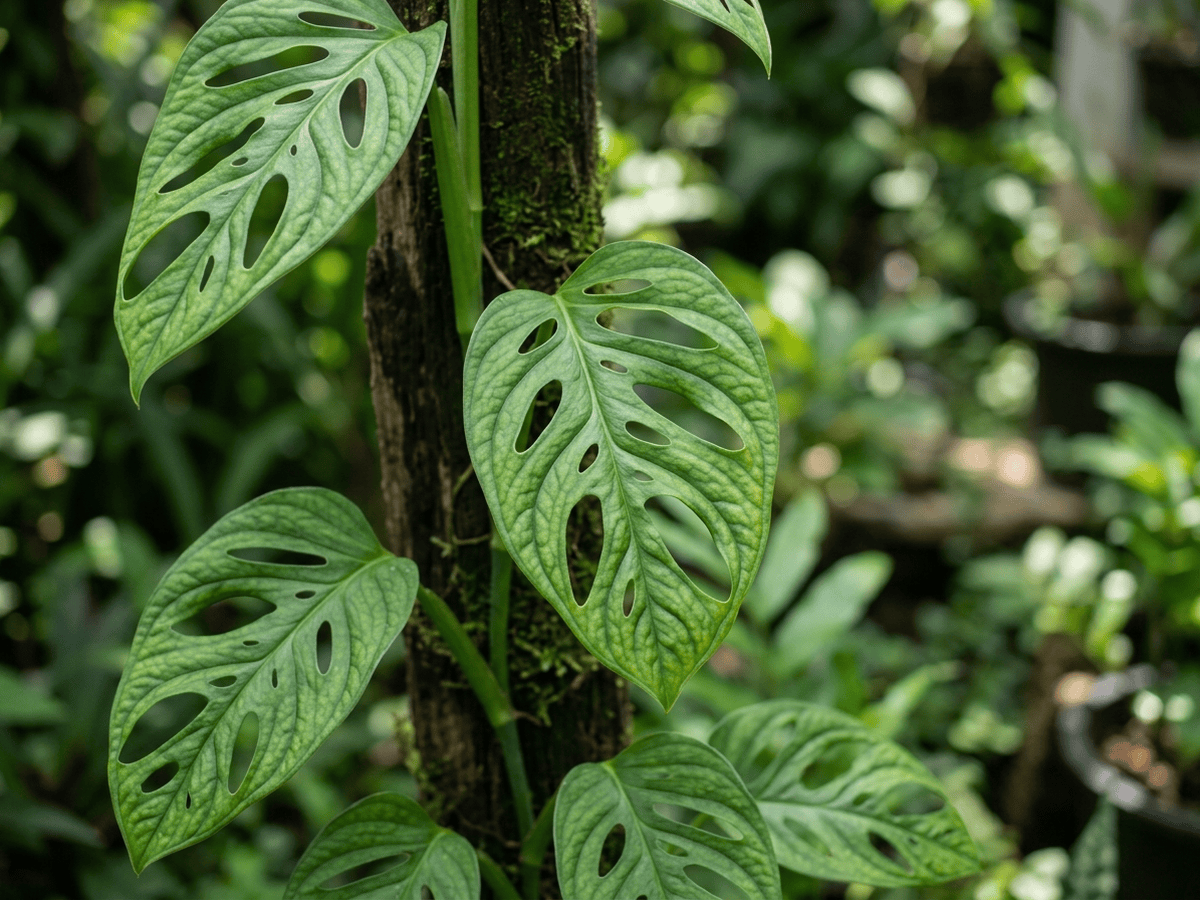
Monstera adansonii subsp. blanchetii is a rare climbing subspecies native to the Atlantic coastal forests of northeastern Brazil, particularly Bahia and Pernambuco—the humid forests that Jacques Samuel Blanchet explored in the mid-19th century. It is distinguished from the nominate adansonii form by its characteristically narrower, more elongated leaves and correspondingly elongated fenestrations, giving it a sleeker silhouette than the broader-leafed forms. Like all Swiss Cheese Vine subspecies, it climbs by aerial roots, tolerates the filtered-light conditions typical of a forest understory, and produces the perforated foliage that made the species a staple of interior plant collections. Blanchetii is rarely seen in commerce outside specialist collections and makes a prized addition for Monstera enthusiasts drawn to subspecific variation.
- Evergreen
- Climbing
- Container-friendly
- Fast-growing
- Shade-tolerant
How to care for Blanchet's Swiss Cheese Vine
Watering
- Springevery 7 days
- Summerevery 7 days
- Fallevery 15 days
- Winterevery 30 days
Soil · Chunky & airy
- Top dressingBark chips10%
- Main mixBark + potting soil + perlite 1:1:170%
- DrainageLECA20%
Chunky pieces hold air pockets open so thick roots don't suffocate.
FERTILIZER
Foliage Feed 24-8-16
Nitrogen leads so the plant spends its energy on dense green growth. Phosphorus and potassium follow just far enough to keep roots and stems up to speed.
- Nitrogen · Leaves
- Phosphorus · Roots + Blooms
- Potassium · Strength
- Springevery 30 days
- Summerevery 30 days
At a Glance
- NativeCentral America, South America
- Height2–6 ft (0.6–1.8 m)
- Spread2–4 ft (0.6–1.2 m)
- Foliage colorGreen
- SoilLoamy, Well-drained
- LocationsIndoor
Fragrance
NO FRAGRANCE
Foliage unscented; flowers rarely produced in cultivation.
Toxicity
Toxicity unknown
None reported
Unknown
EXPOSURE No exposure route is reported.
EFFECT No toxic effect is reported.
NOTE Toxicity for humans is not well documented; use caution until verified.
Unknown
EXPOSURE No exposure route is reported.
EFFECT No toxic effect is reported.
NOTE Toxicity for dogs is not well documented; use caution until verified.
Unknown
EXPOSURE No exposure route is reported.
EFFECT No toxic effect is reported.
NOTE Toxicity for cats is not well documented; use caution until verified.
Educational information, not medical or veterinary advice. If exposure is suspected, contact a doctor or veterinarian.
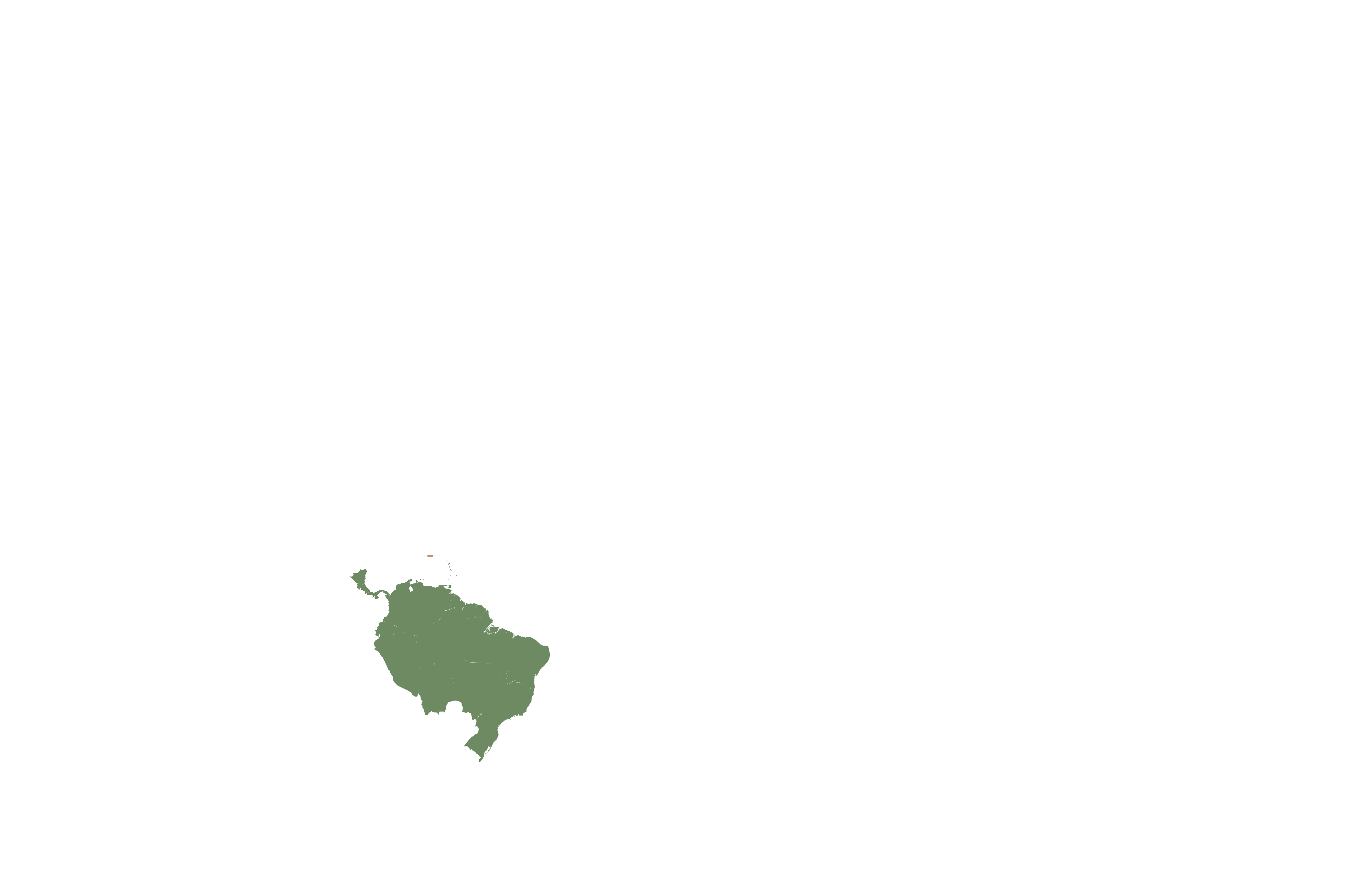
DISTRIBUTION

- Native
- Introduced
- Central America
- South America
History

Jacques Samuel Blanchet was born in Geneva in 1807 and arrived in Brazil in the 1820s, eventually settling in Bahia as a professional plant collector. Over four decades he traversed the Atlantic forests of northeastern Brazil—the humid, biodiversity-rich coastal forests of Bahia and neighboring Pernambuco—collecting thousands of plant specimens and sending them to the leading botanists of the day: Augustin Pyramus de Candolle in Geneva, Carl Friedrich Philipp von Martius in Munich, and others compiling the great floristic works of the 19th century.
Blanchet was not a trained taxonomist but an extraordinary field collector. His specimens were meticulously pressed and labeled, and he had a gift for finding plants that had eluded others. By the time he died in Bahia in 1875—having spent most of his adult life in the region—his collections numbered over 3,500 accession numbers, with many species ultimately described from his gatherings. Dozens of plants bear the epithet blanchetiana or blanchetii in his honor.
The Bahia Atlantic forest where Blanchet worked is one of the most biologically threatened ecosystems on Earth—less than 15 percent of the original forest cover remains. The aroids Blanchet collected there, including the plants that would be recognized as Monstera adansonii subsp. blanchetii, survive in fragments of habitat and in botanical gardens and specialist collections. In naming this subspecies for him, botanists preserved something of the man who spent a lifetime making the flora of that vanishing forest legible to science.
Symbolism & meaning
What It Symbolizes
Blanchet never published a single paper. He pressed plants and shipped them to Europe where others gave them names. The subspecies named for him is itself rarely seen—a variation few people notice or seek out. Together they make a quiet argument: some contributions matter most to the people who know what they're looking at.
- faithful witness — Blanchet spent forty years making one forest legible to science—a quiet faithfulness to place and purpose that few naturalists matched.
- rare variation — Distinguished from its closest relatives only by the elongated shape of its perforations, blanchetii asks us to see value in subtle distinctness.
Where the Name Comes From
Monstera derives from the Latin monstrum (wonder), referring to the extraordinary fenestrated leaves. The species adansonii honors the French botanist Michel Adanson (1727–1806). The subspecies name blanchetii commemorates Jacques Samuel Blanchet (1807–1875), the Geneva-born collector who spent four decades gathering specimens across Brazil's Bahia region.
Uses & Fun Facts
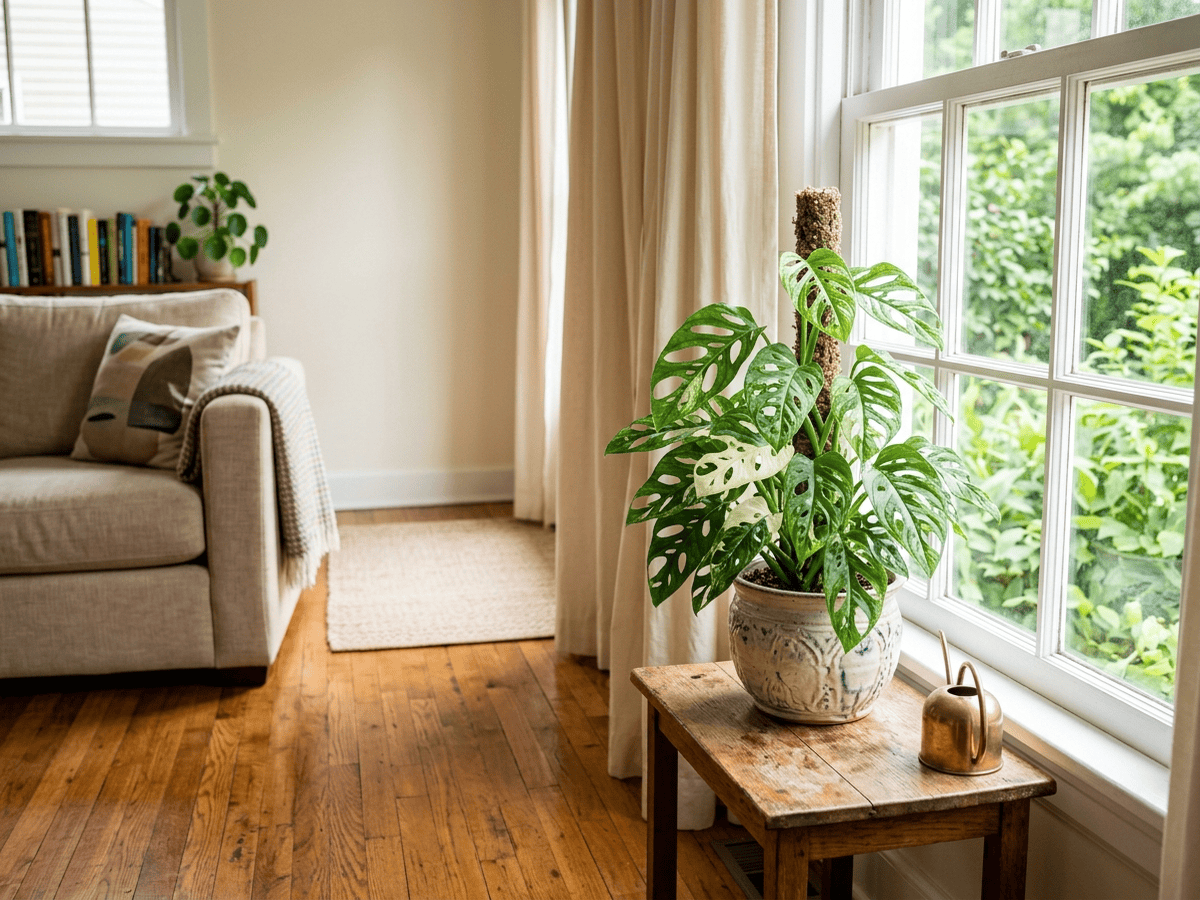
- Rare subspecies with narrow elongated fenestrations prized by Monstera collectors; suited to moss poles, trellises, and hanging baskets in bright indirect light
- In native Bahia Atlantic forest, climbs host trees as part of the understory community; fruits consumed by birds in tropical rainforest habitat
Related plants
More Monstera plants
 Swiss Cheese-PlantMonstera adansonii
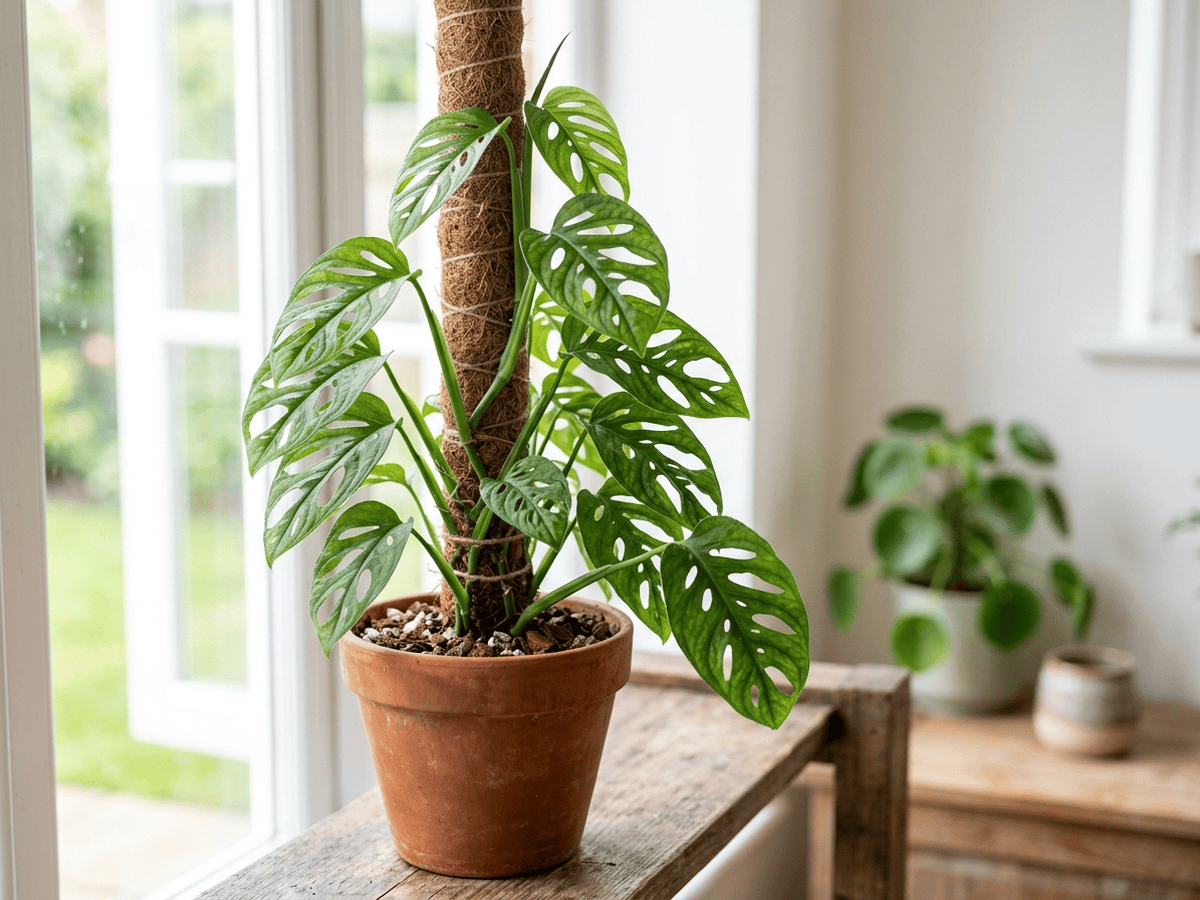 Swiss Cheese VineMonstera adansonii adansonii
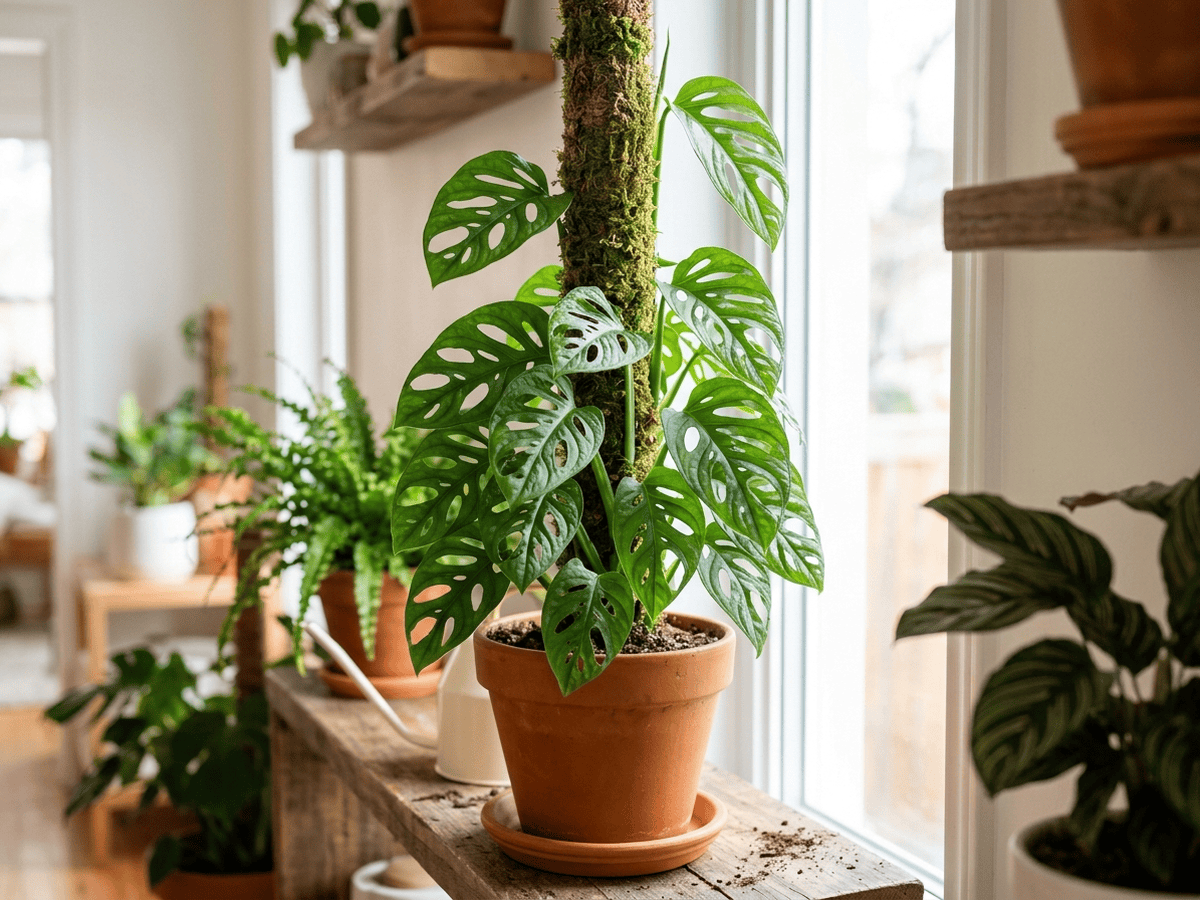 Klotzsch's Swiss Cheese VineMonstera adansonii klotzschiana
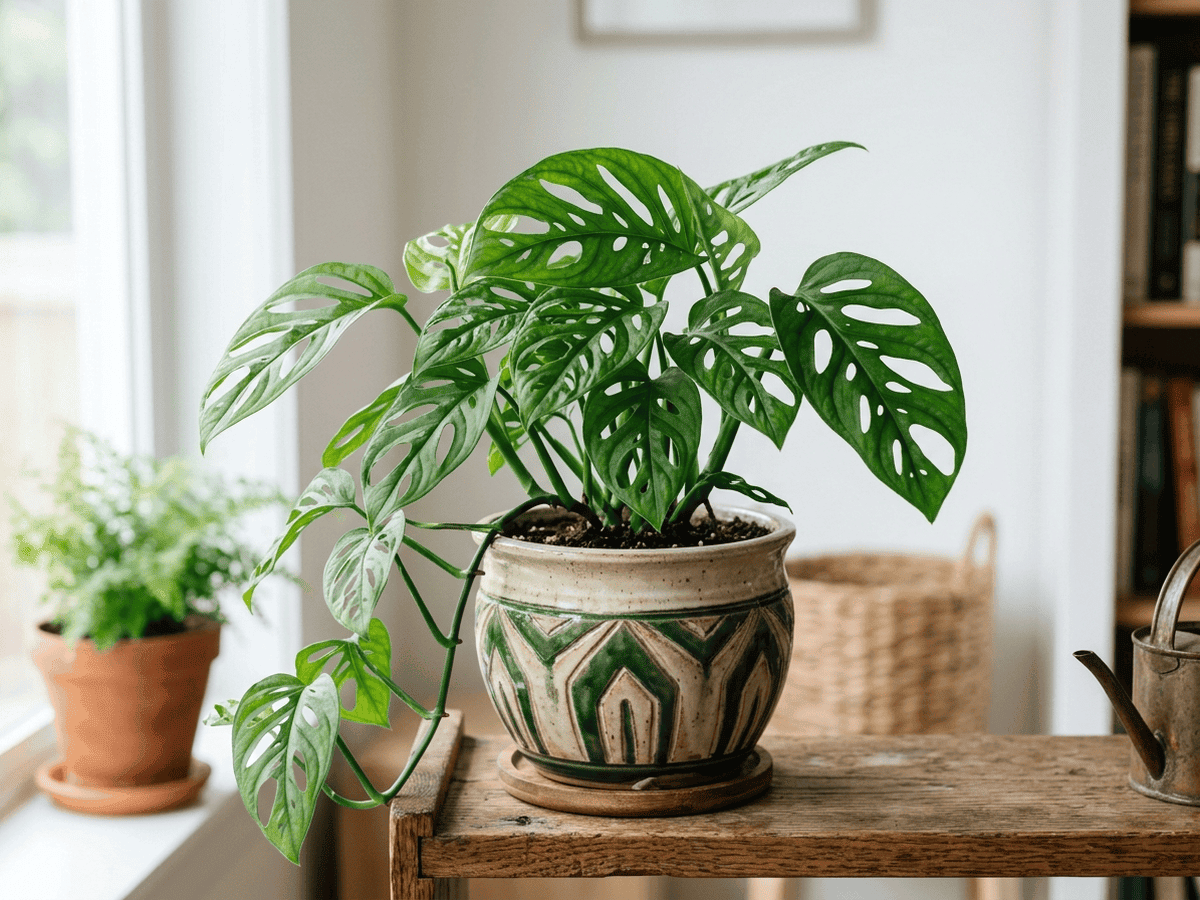 Laniata MonsteraMonstera adansonii laniata
Plants with similar care
Frequently asked questions
How often should I water Blanchet's Swiss Cheese Vine?
In summer, water about every 7 days; in winter, about every 30 days. Adjust for heat, pot size and drainage.
How much light does Blanchet's Swiss Cheese Vine need?
Part sun: 4–6 hrs direct. Watch the leaves — scorching or stretching means the light needs adjusting.
Is Blanchet's Swiss Cheese Vine toxic to cats or dogs?
Pets Unknown (Dogs Unknown · Cats Unknown) Educational information, not medical or veterinary advice. If exposure is suspected, contact a doctor or veterinarian.
Is Blanchet's Swiss Cheese Vine easy to grow?
It is moderately demanding: a good choice once you have a little experience.
Can Blanchet's Swiss Cheese Vine be grown indoors?
Yes, it adapts well to indoor growing given the right light.
YardMate
Identify any plant in seconds
Snap a photo — YardMate names the plant, diagnoses problems, and reminds you when to water.
Download on the App Store