 YardMate
Klotzsch's Swiss Cheese Vine
Monstera adansonii klotzschiana
Hard · Experienced growersAbout Klotzsch's Swiss Cheese Vine
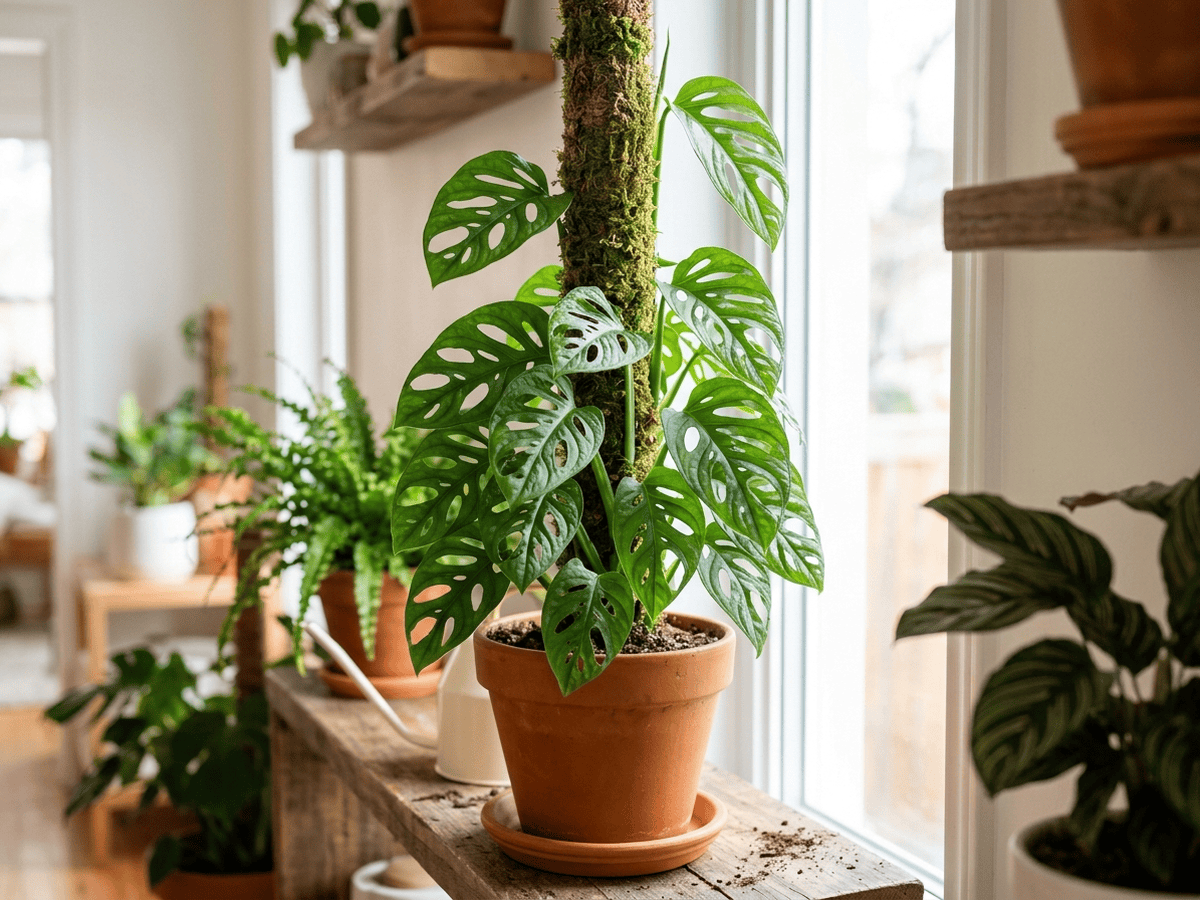
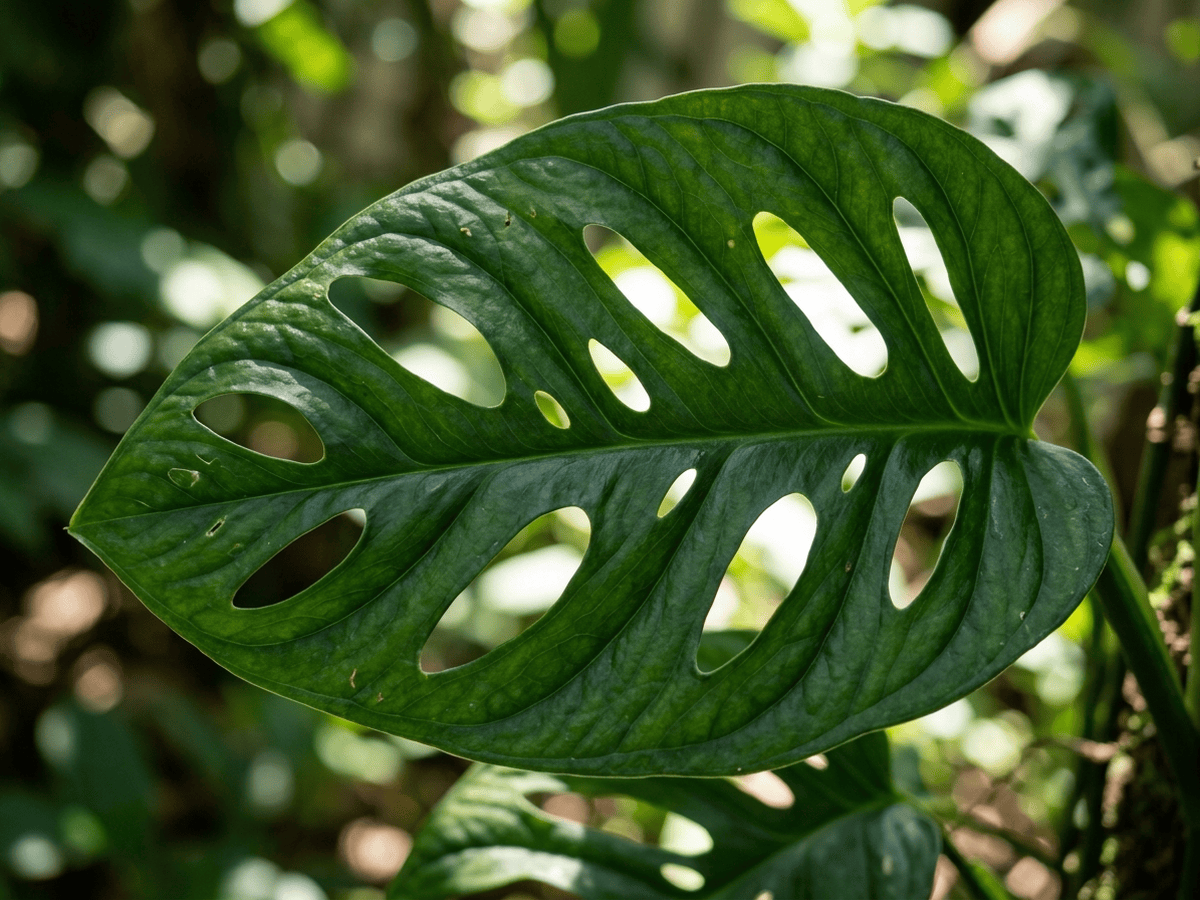
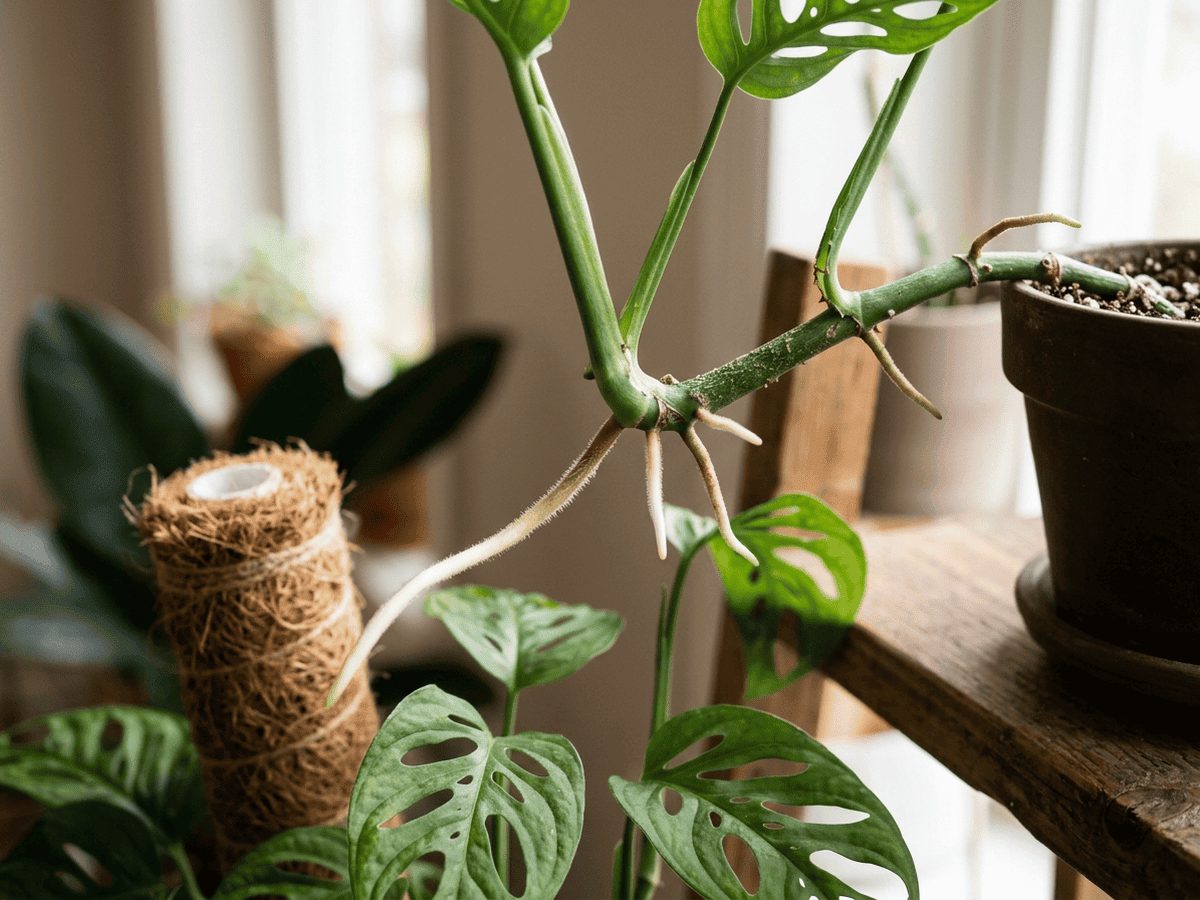
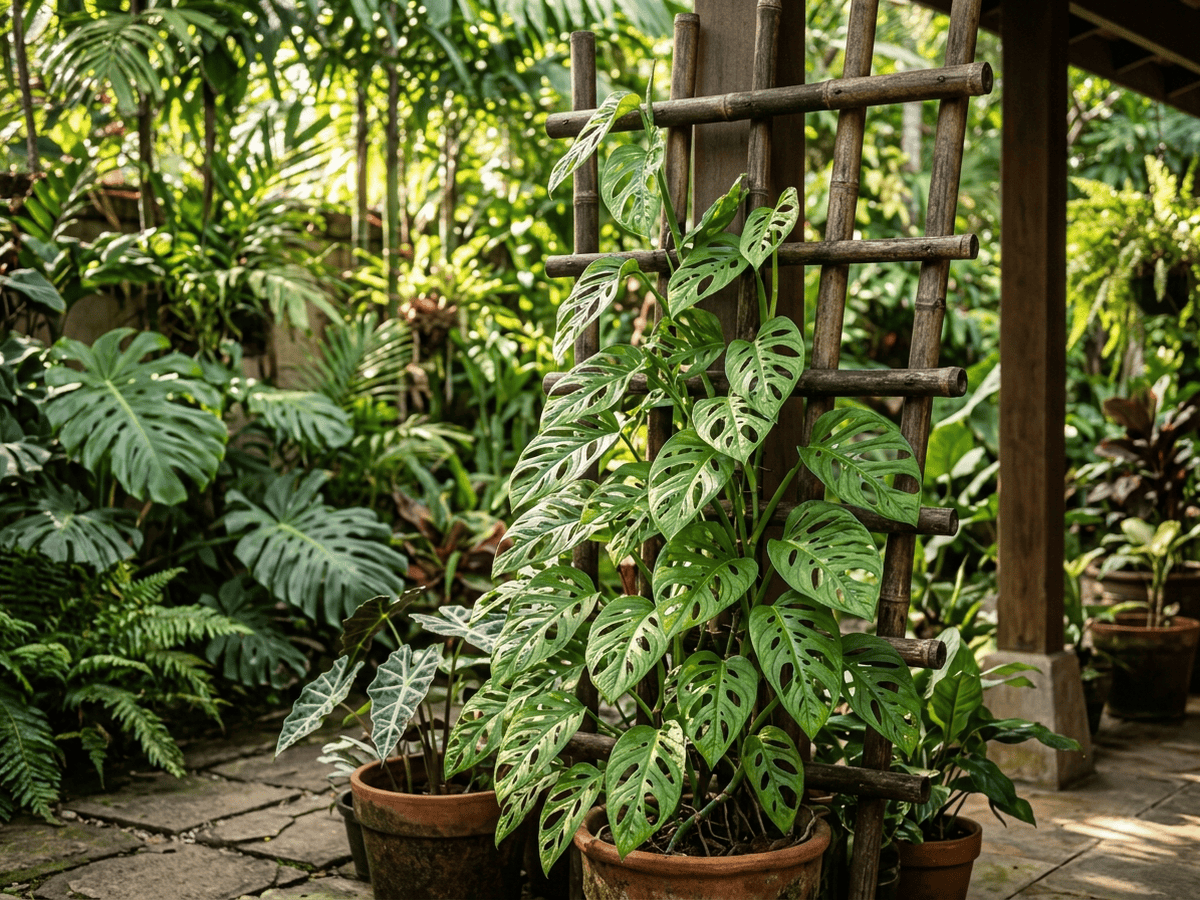
Monstera adansonii subsp. klotzschiana is a climbing tropical vine from the rainforests of Brazil and neighboring South American countries—a subspecies of the beloved Swiss Cheese Vine distinguished by its slightly broader, more rounded leaf form and characteristically larger, more rounded fenestrations compared to the nominate subspecies. Like all Monstera adansonii, it climbs readily on moss poles and trellises, tolerates lower light than most tropical climbers, and produces the perforated leaves that have made the species famous. Klotzschiana makes a lush, fast-growing indoor vine with a more relaxed leaf shape than the standard adansonii form.
- Evergreen
- Climbing
- Container-friendly
- Fast-growing
- Shade-tolerant
How to care for Klotzsch's Swiss Cheese Vine
Watering
- Springevery 7 days
- Summerevery 7 days
- Fallevery 14 days
- Winterevery 21 days
Soil · Chunky & airy
- Top dressingBark chips10%
- Main mixBark + potting soil + perlite 1:1:170%
- DrainageLECA20%
Chunky pieces hold air pockets open so thick roots don't suffocate.
FERTILIZER
Foliage Feed 24-8-16
Nitrogen leads so the plant spends its energy on dense green growth. Phosphorus and potassium follow just far enough to keep roots and stems up to speed.
- Nitrogen · Leaves
- Phosphorus · Roots + Blooms
- Potassium · Strength
- Springevery 30 days
- Summerevery 30 days
- Fallevery 30 days
At a Glance
- NativeCentral America, South America
- Height3–6 ft (0.9–1.8 m)
- Spread2–3 ft (0.6–0.9 m)
- Foliage colorGreen
- SoilWell-drained, Loamy
- LocationsIndoor
Fragrance
NO FRAGRANCE
Flowers rarely produced indoors; foliage unscented.
Toxicity
Toxicity unknown
None reported
Unknown
EXPOSURE No exposure route is reported.
EFFECT No toxic effect is reported.
NOTE Toxicity for humans is not well documented; use caution until verified.
Unknown
EXPOSURE No exposure route is reported.
EFFECT No toxic effect is reported.
NOTE Toxicity for dogs is not well documented; use caution until verified.
Unknown
EXPOSURE No exposure route is reported.
EFFECT No toxic effect is reported.
NOTE Toxicity for cats is not well documented; use caution until verified.
Educational information, not medical or veterinary advice. If exposure is suspected, contact a doctor or veterinarian.
DISTRIBUTION


- Native
- Introduced
- Central America
- South America
History
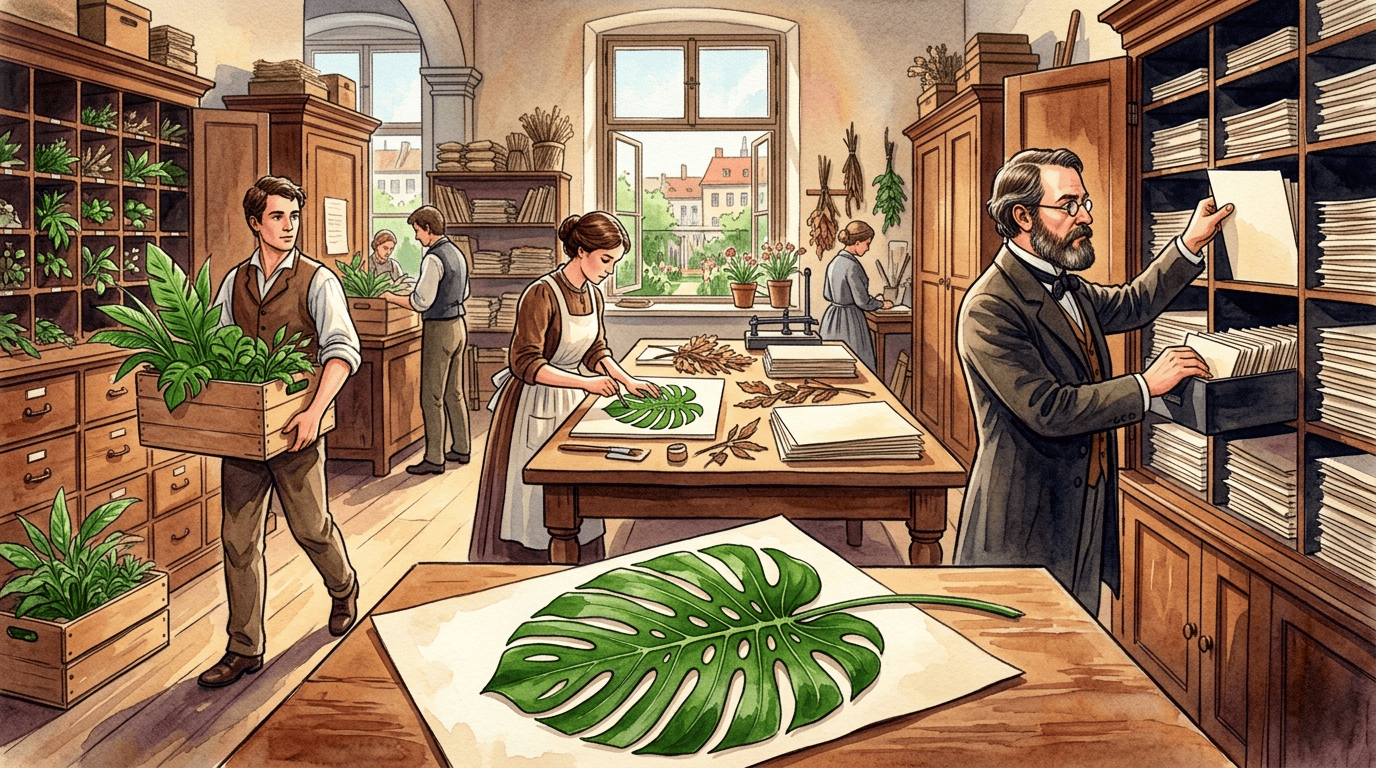
Johann Friedrich Klotzsch (1805–1860) was one of the most prolific plant taxonomists of the 19th century. A botanist at the Royal Herbarium in Berlin, he described hundreds of new plant species collected by explorers and naturalists across Brazil, tropical Africa, and Southeast Asia. His specialty was the Euphorbiaceae family, but his work extended across tropical botany broadly—and it was during his systematic review of South American aroids that he worked with Monstera specimens that would eventually be attributed to what is now called subsp. klotzschiana.
Klotzsch worked during the great era of German natural history museum botany, when thousands of specimens were flowing into European herbaria from the tropics. Figures like Klotzsch, Carl Friedrich Philipp von Martius (who produced the monumental Flora Brasiliensis), and Heinrich Wilhelm Schott (who specialized in aroids, including Monstera) were doing the painstaking work of describing and naming this flood of new material.
The distinction between Monstera adansonii subspecies is subtle enough that it was long debated by taxonomists—the differences in leaf shape and fenestration pattern are real but variable, and the line between subspecies is not always clear in the field. Molecular studies in the 21st century have provided more clarity, but the complex remains one of the more taxonomically intricate groups in tropical aroid botany.
In cultivation, klotzschiana is grown interchangeably with the nominate adansonii subspecies and often sold simply as 'Monstera adansonii' in the houseplant trade, its subtle differences appreciated primarily by specialists and collectors.
Symbolism & meaning
What It Symbolizes
Klotzsch spent his career telling one species from another by increments—a broader hole, a slightly rounded leaf, a different pattern of veins. The subspecies named for him asks the same thing of us: to look closely enough to see the difference.
- botanical legacy — Named for a man who spent his life naming the unnamed—Klotzsch's Swiss Cheese Vine carries the memory of the painstaking work that mapped tropical flora.
- subtle difference — Almost identical to its closest relatives, distinguished by details only experts notice—a reminder that variation exists even where it isn't obvious.
Where the Name Comes From
Monstera derives from the Latin monstrum (wonder), referring to the extraordinary fenestrated leaves. The species adansonii honors the French botanist Michel Adanson. The subspecies name klotzschiana honors Johann Friedrich Klotzsch (1805–1860), the prolific German botanist at the Royal Herbarium in Berlin who described hundreds of new tropical plant species.
Uses & Fun Facts
- Climbing tropical vine with broad, roundly-fenestrated leaves suited to moss poles, trellises, and hanging baskets; adapts well to bright indirect indoor light
- In native South American rainforest, climbs host trees and provides habitat; fruits eaten by birds and bats in the tropical forest canopy
Related plants
More Monstera plants
 Swiss Cheese-PlantMonstera adansonii
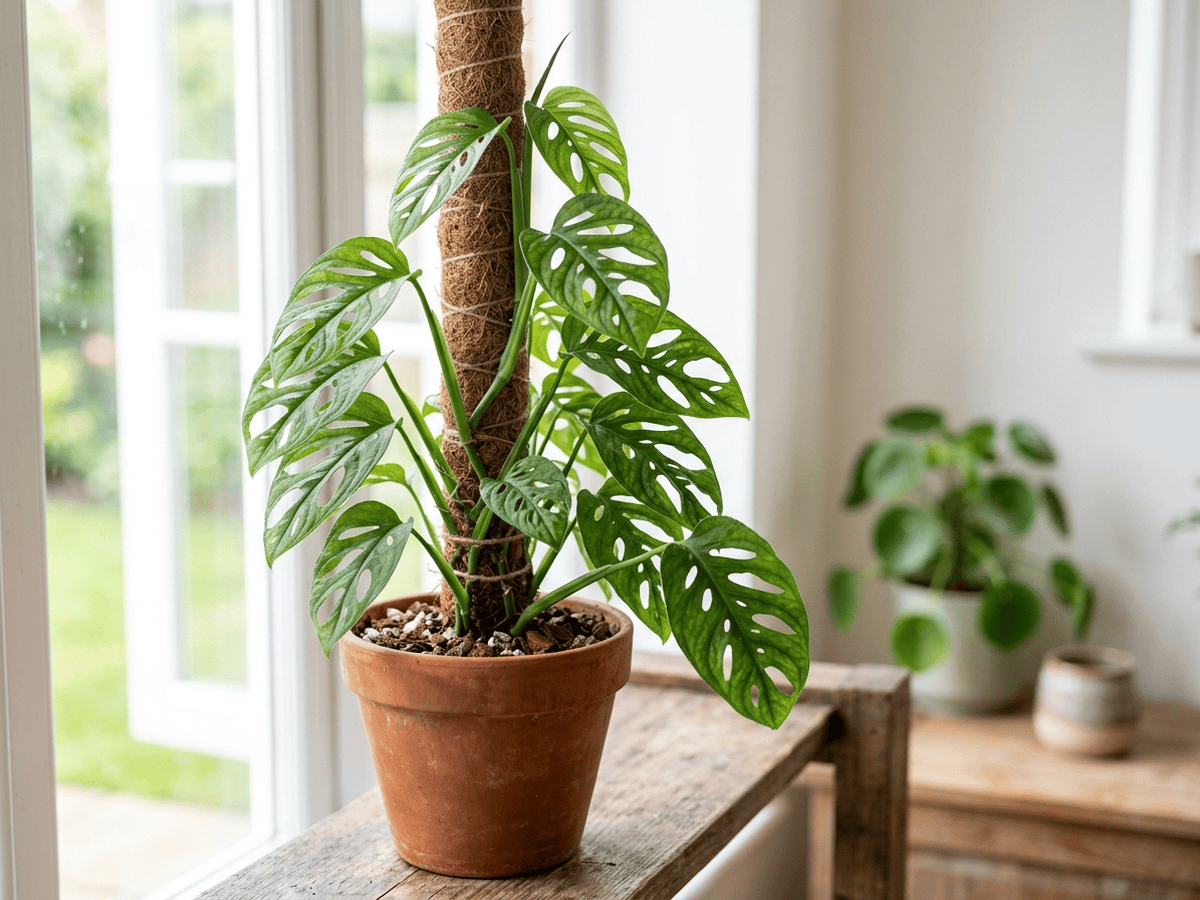 Swiss Cheese VineMonstera adansonii adansonii
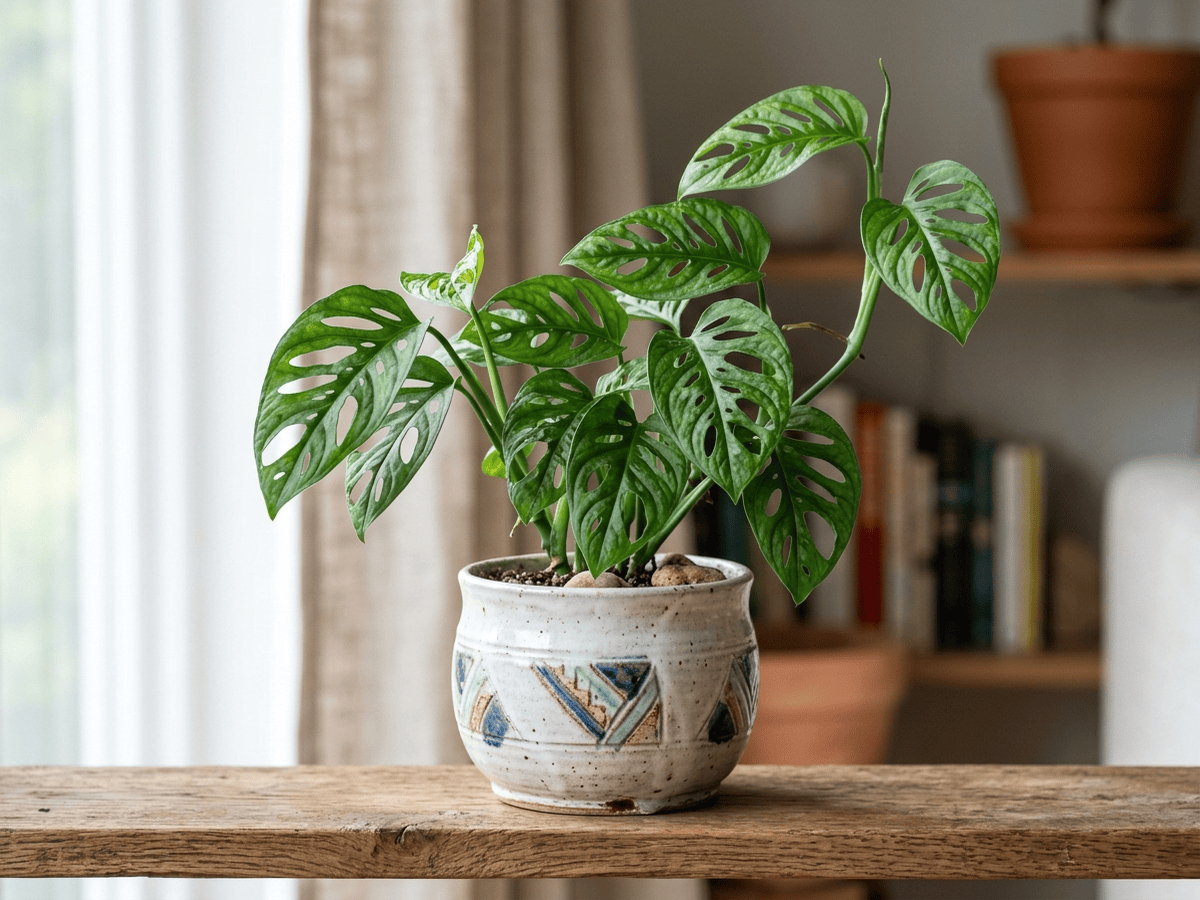 Blanchet's Swiss Cheese VineMonstera adansonii blanchetii
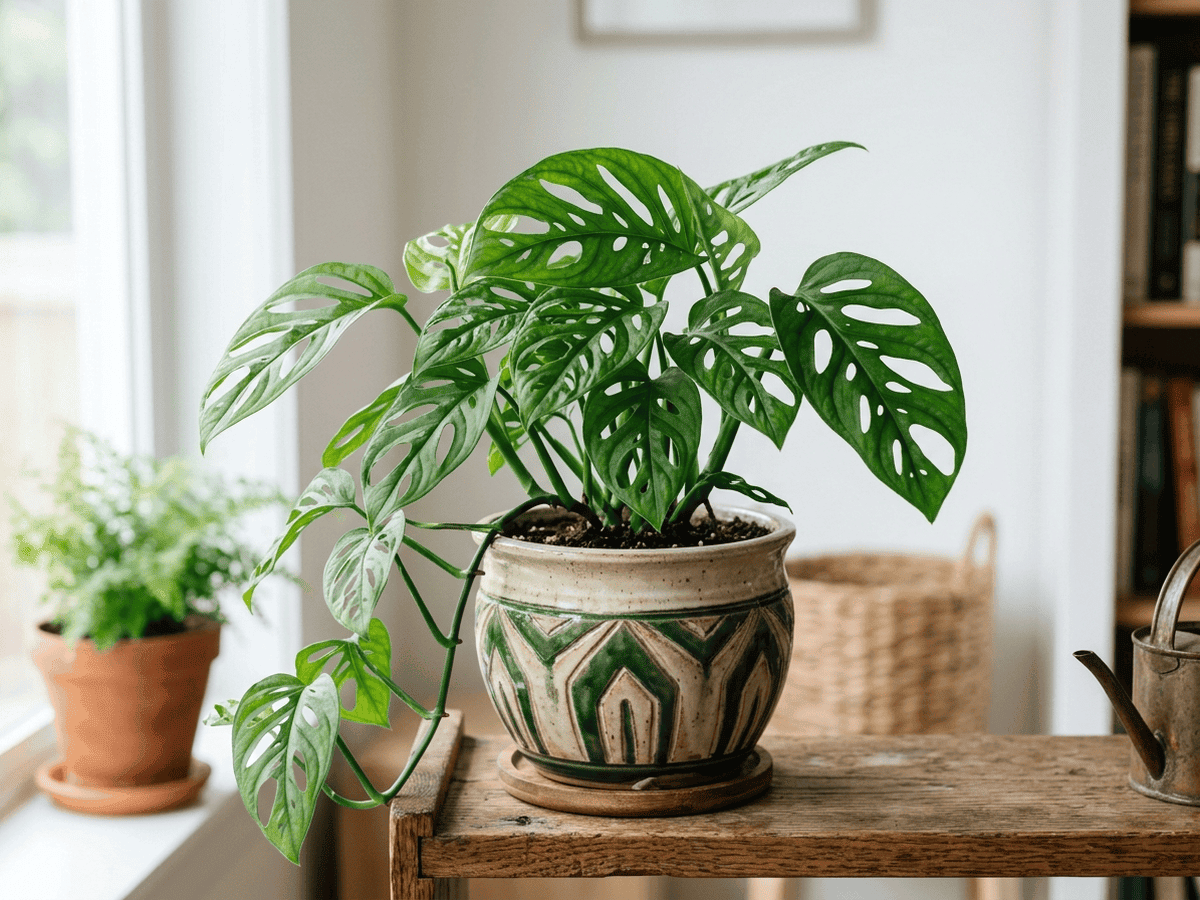 Laniata MonsteraMonstera adansonii laniata
Plants with similar care
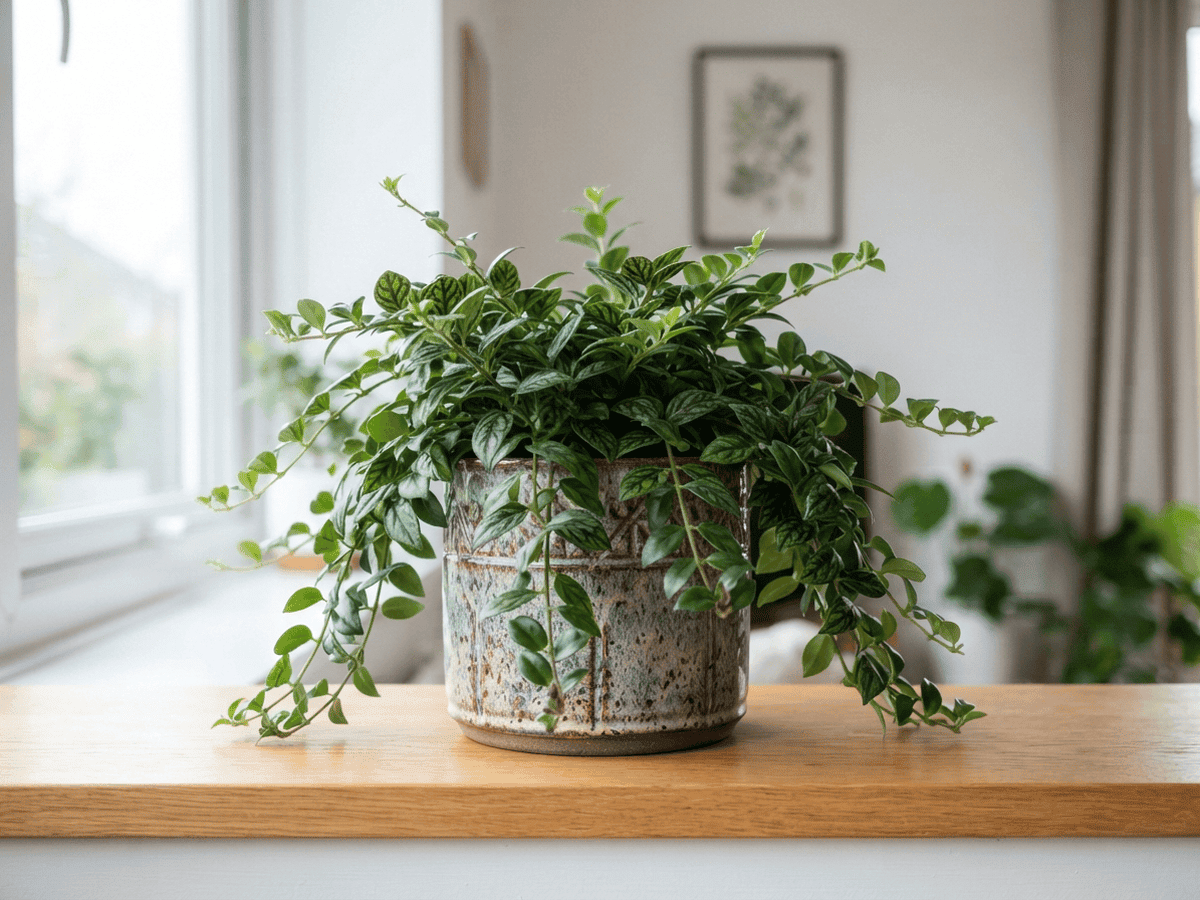 Lipstick PlantAeschynanthus longicaulis
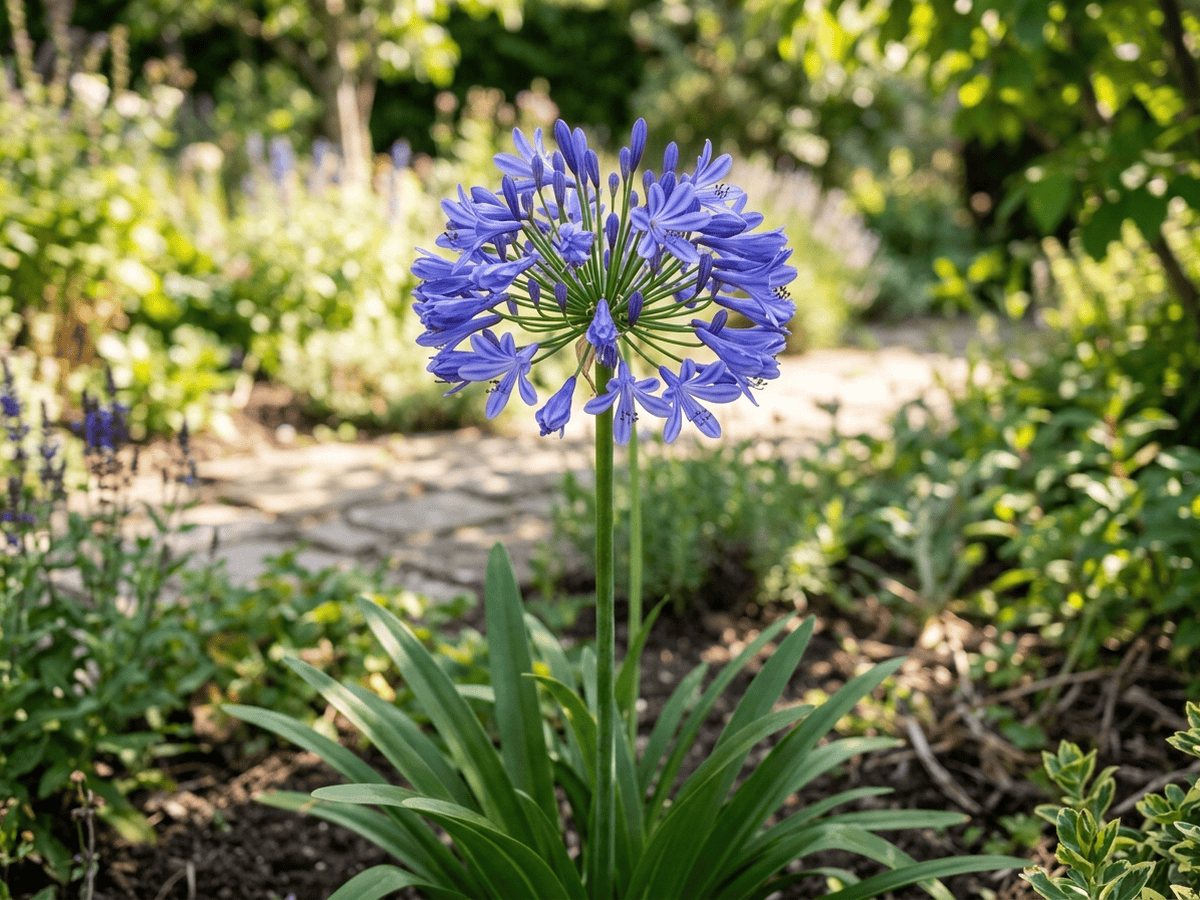 Common AgapanthusAgapanthus praecox
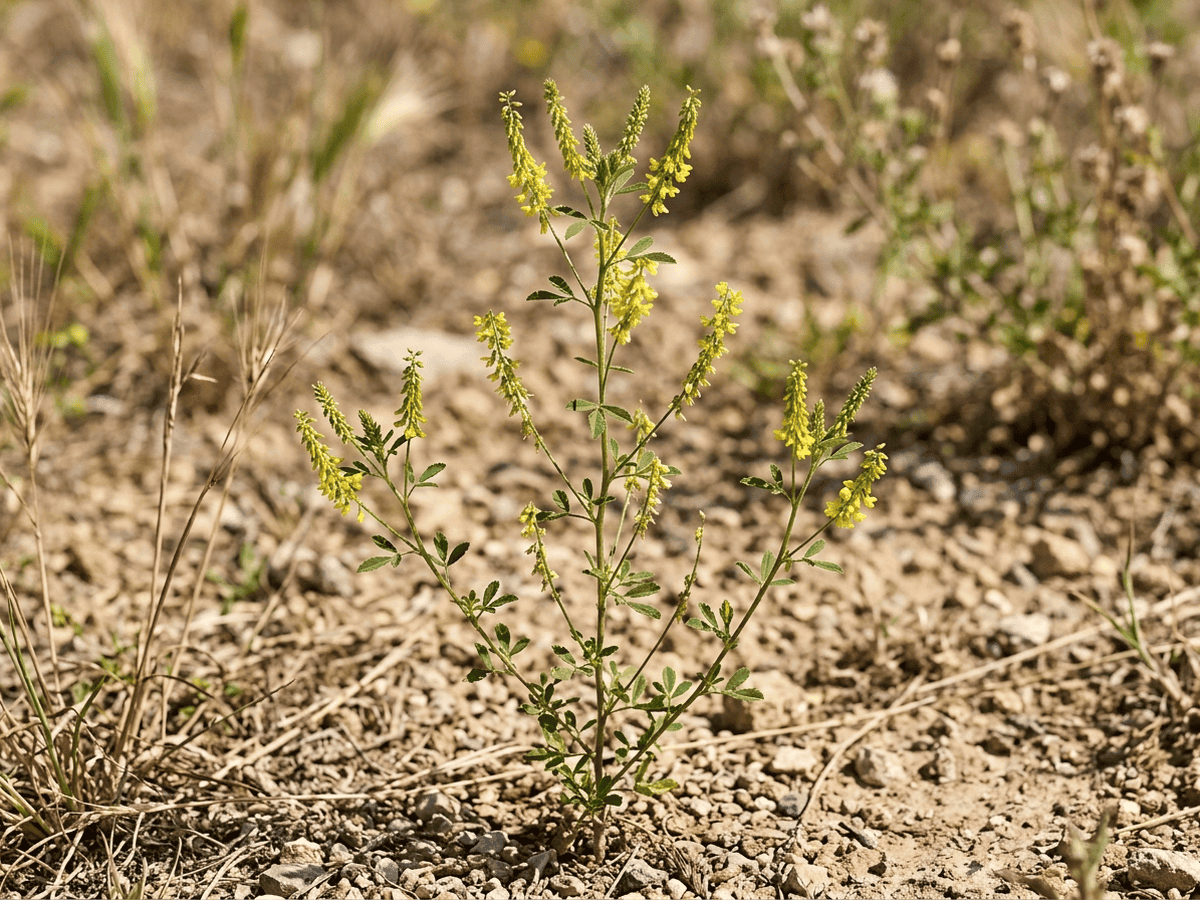 Small MelilotMelilotus indicus
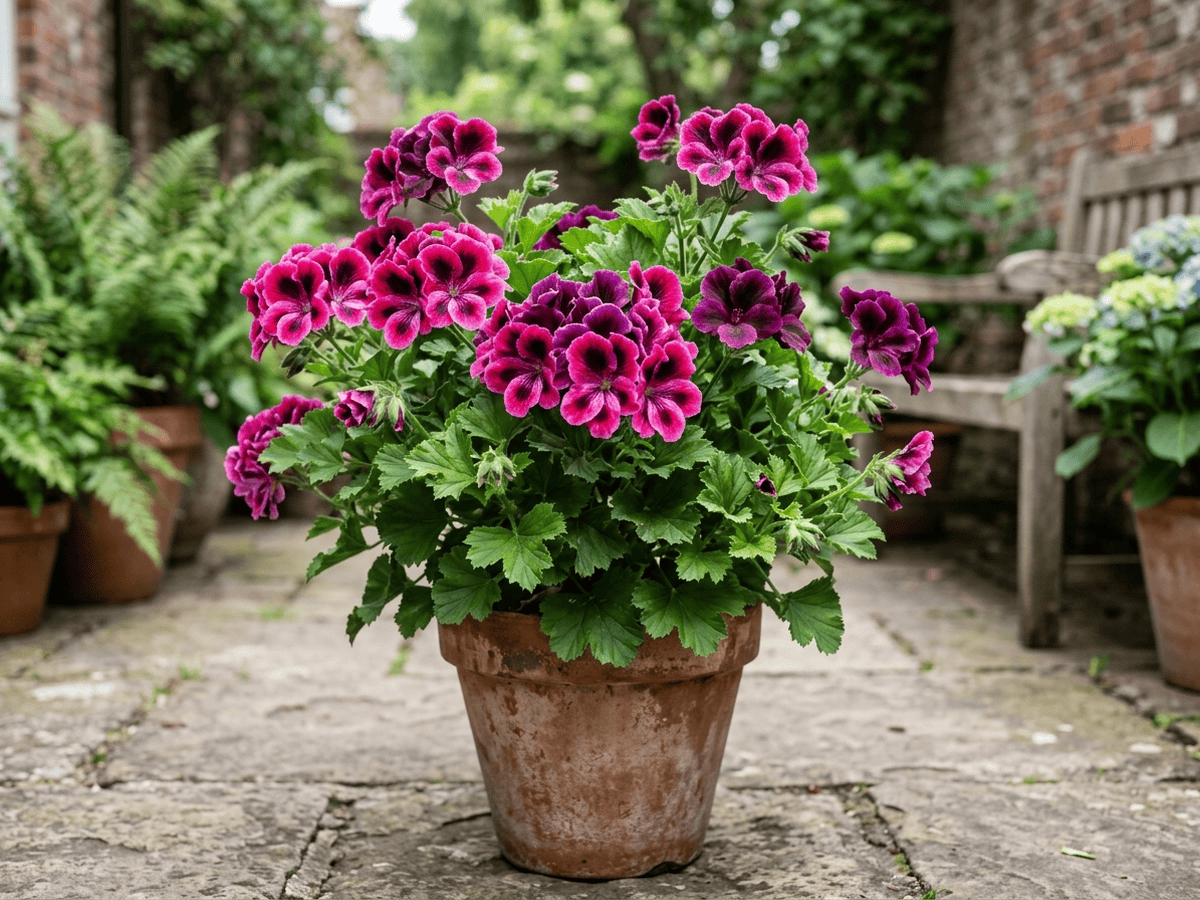 Regal PelargoniumPelargonium × domesticum
Frequently asked questions
How often should I water Klotzsch's Swiss Cheese Vine?
In summer, water about every 7 days; in winter, about every 21 days. Adjust for heat, pot size and drainage.
How much light does Klotzsch's Swiss Cheese Vine need?
Part sun: 4–6 hrs direct. Watch the leaves — scorching or stretching means the light needs adjusting.
Is Klotzsch's Swiss Cheese Vine toxic to cats or dogs?
Pets Unknown (Dogs Unknown · Cats Unknown) Educational information, not medical or veterinary advice. If exposure is suspected, contact a doctor or veterinarian.
Is Klotzsch's Swiss Cheese Vine easy to grow?
It is considered challenging and rewards experienced growers.
Can Klotzsch's Swiss Cheese Vine be grown indoors?
Yes, it adapts well to indoor growing given the right light.
YardMate
Identify any plant in seconds
Snap a photo — YardMate names the plant, diagnoses problems, and reminds you when to water.
Download on the App Store