 YardMate
Lindheimer Muhly
Muhlenbergia lindheimeri
Easy · Beginner friendlyAbout Lindheimer Muhly
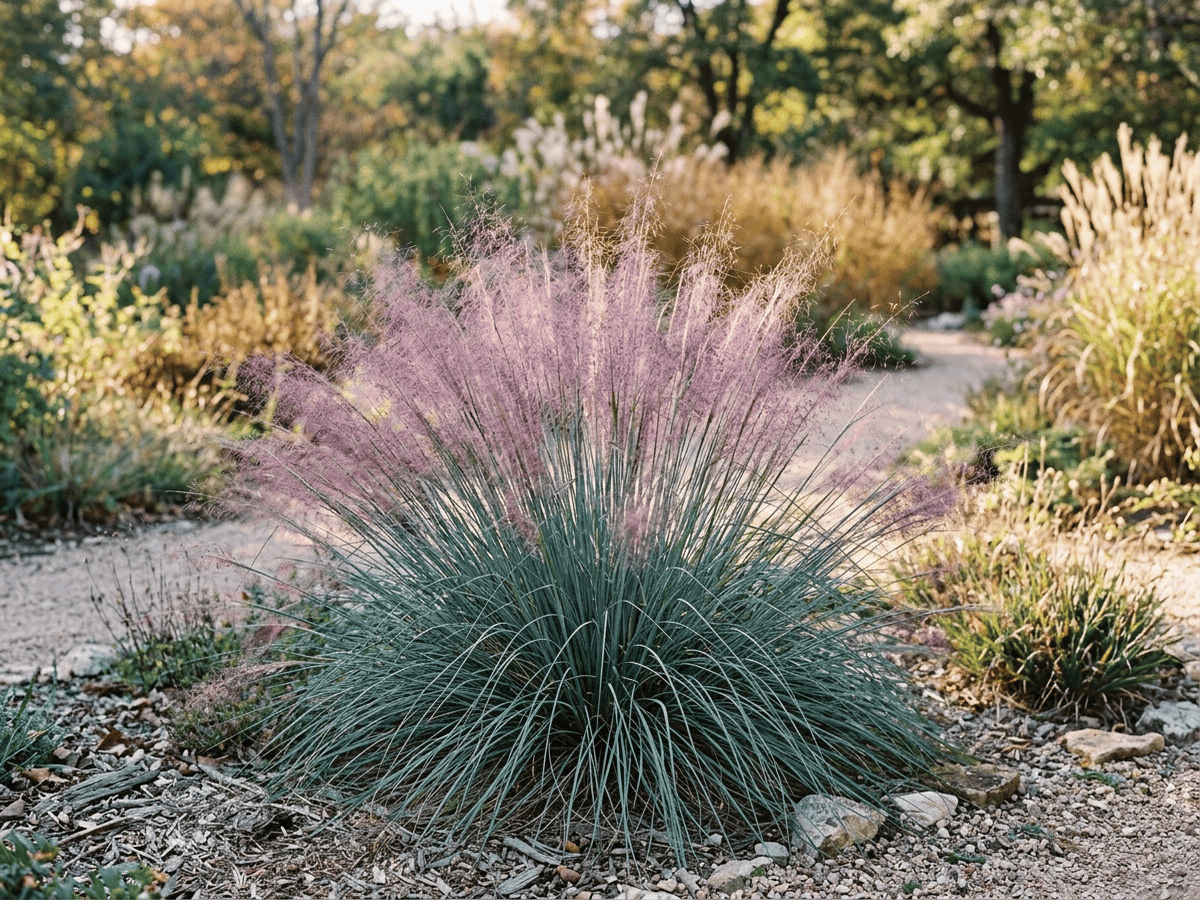
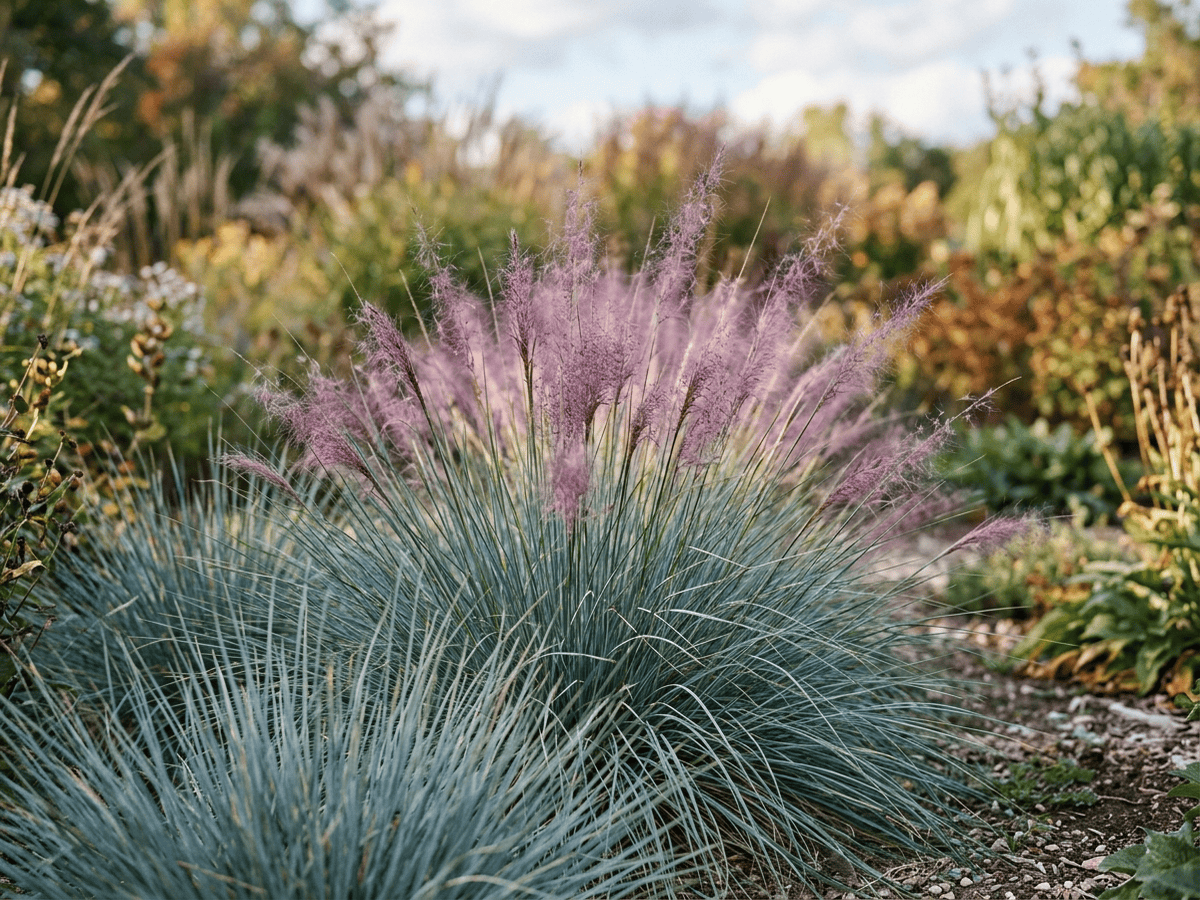
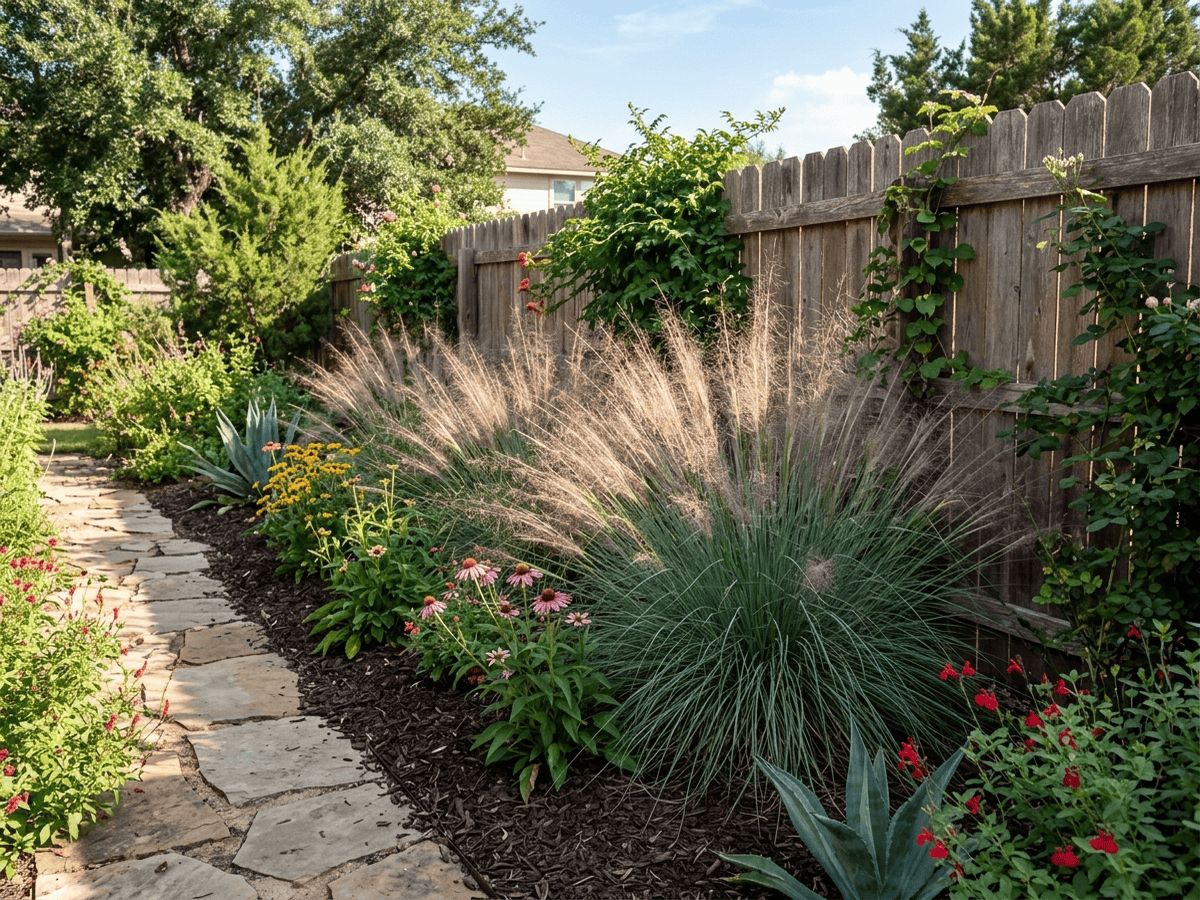
Lindheimer's Muhly is a stately Texas Hill Country native ornamental grass reaching 4-5 feet tall, forming upright fountain-like clumps of fine blue-green foliage topped by dramatic upright silvery-white plumes in fall that persist into winter. Drought-tolerant and tough, it has become one of the most beloved native ornamental grasses for Texas and Southwest landscapes—often used in mass plantings around modern Texas homes.
- Drought-tolerant
- Native
How to care for Lindheimer Muhly
Watering
- Springevery 14 days
- Summerevery 21 days
- Fallevery 21 days
- Winterevery 45 days
Soil · Well-draining
- Top dressingPine bark mulch10%
- Main mixPotting soil + perlite 2:170%
- DrainageLECA / gravel20%
Never skip the drainage layer — standing water is the top cause of root rot.
FERTILIZER
This plant needs little to no feeding.
At a Glance
- NativeNorth America
- Height3–5 ft (0.9–1.5 m)
- Spread3–4 ft (0.9–1.2 m)
- Flower colorWhite, Cream
- Foliage colorGreen, Blue-green
- SoilLoamy, Well-drained
- LocationsYard
Bloom time
BLOOM CYCLE
Peak bloom
Sep–Feb
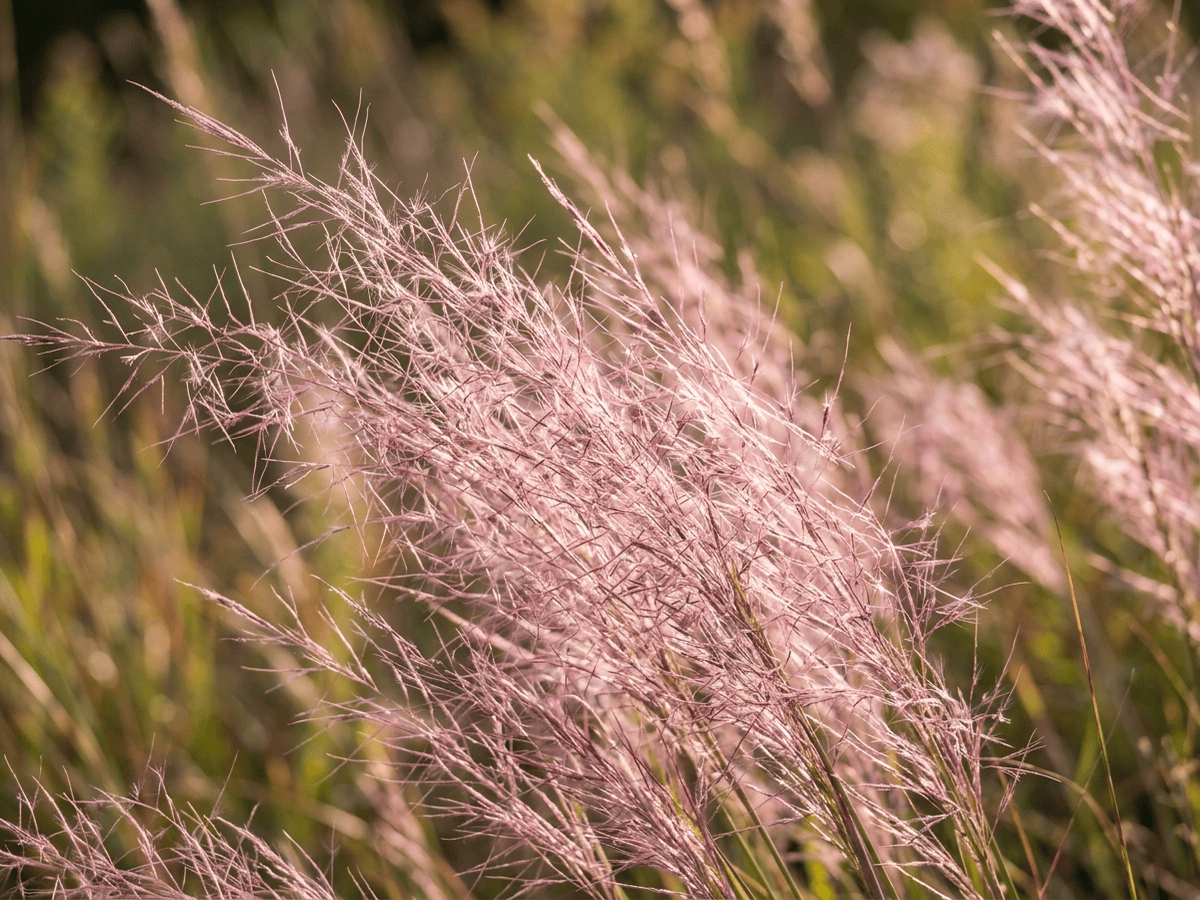
Dramatic upright silvery-white plumes in fall persisting into winter
Toxicity
Humans Safe · Pets Safe
None reported
Safe
EXPOSURE No exposure route is reported.
EFFECT No toxic effect is reported.
NOTE Listed as non-toxic for humans; avoid eating ornamental plants unless confirmed edible.
Safe
EXPOSURE No exposure route is reported.
EFFECT No toxic effect is reported.
NOTE Listed as non-toxic for dogs; avoid eating ornamental plants unless confirmed edible.
Safe
EXPOSURE No exposure route is reported.
EFFECT No toxic effect is reported.
NOTE Listed as non-toxic for cats; avoid eating ornamental plants unless confirmed edible.
Educational information, not medical or veterinary advice. If exposure is suspected, contact a doctor or veterinarian.
DISTRIBUTION


- Native
- North America
History
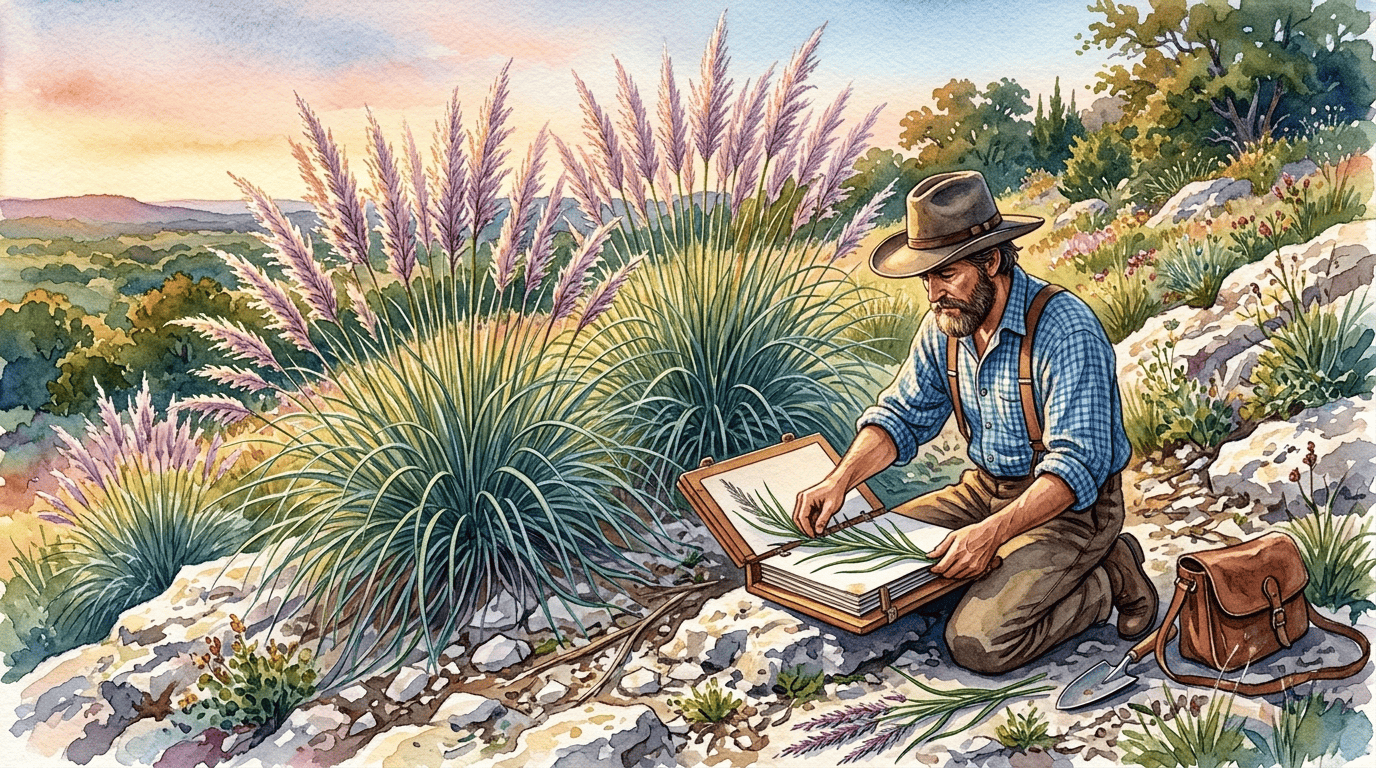
Muhlenbergia lindheimeri, commonly called Lindheimer's muhly or big muhly, is a large warm-season clumping perennial grass in the family Poaceae native to rocky limestone slopes of the Edwards Plateau and Texas Hill Country of central Texas, with populations extending into adjacent northeastern Mexico (Coahuila, Nuevo León). American grass specialist Albert Spear Hitchcock formally described the species in 1913, honoring Ferdinand Jakob Lindheimer (1801-1879), the German-Texan 'Father of Texas botany' who collected extensively in the region and for whom numerous Texas plants are named. Plants form stately 90-120 cm tall basal clumps of narrow arching gray-green to blue-green leaves, sending up dramatic erect flowering stems to 150 cm in late summer topped with narrow silvery-purple to pale tan panicles 30-50 cm long that glow backlit.
Drought-tolerant, deer-resistant, long-lived, and increasingly valued in xeric landscape design throughout the southwestern United States. Often used as specimen grass or in massed plantings.
Named for German-born Texas botanist Ferdinand Lindheimer, the 'Father of Texas Botany'. A defining ornamental grass of modern Texas landscape design—often planted in dramatic masses around new construction in Austin, Houston, and San Antonio.
Symbolism & meaning
What It Symbolizes
Lindheimer muhly is endurance with a feathered crown — thriving through Texas heat and drought that flattens lesser grasses, then opening silvery flower plumes in autumn that catch slanting prairie light. As Texas Hill Country heritage it has been collected since botanist Ferdinand Lindheimer wandered those limestone hills in the 1840s. The grass expresses its country: tough, unflashy most of the year, suddenly luminous when the season turns.
- Endurance — thrives in harsh Texas heat and drought
- Heritage — iconic Texas Hill Country native
Where the Name Comes From
'Lindheimeri' honors Ferdinand Lindheimer (1801-1879), pioneering Texas botanist.
Uses & Fun Facts
- Silvery upright plumes above blue foliage in Texas Hill Country plantings
- Fountain-form native grass for Southwestern mass landscape designs
Related plants
More Muhlenbergia plants
Plants with similar care
 Chinese AbeliaAbelia chinensis
 Fragrant AbeliaAbelia mosanensis
 Large-Flowered AbeliaAbelia uniflora
 Glossy AbeliaAbelia x grandiflora
Frequently asked questions
How often should I water Lindheimer Muhly?
In summer, water about every 21 days; in winter, about every 45 days. Adjust for heat, pot size and drainage.
How much light does Lindheimer Muhly need?
Full sun: 6+ hrs direct. Watch the leaves — scorching or stretching means the light needs adjusting.
Is Lindheimer Muhly toxic to cats or dogs?
Pets Safe (Dogs Safe · Cats Safe) Educational information, not medical or veterinary advice. If exposure is suspected, contact a doctor or veterinarian.
Is Lindheimer Muhly easy to grow?
Yes — it is considered an easy, beginner-friendly plant.
When does Lindheimer Muhly bloom?
It typically blooms Sep–Feb in the Northern Hemisphere.
YardMate
Identify any plant in seconds
Snap a photo — YardMate names the plant, diagnoses problems, and reminds you when to water.
Download on the App Store