 YardMate

Parrot's Feather
Myriophyllum aquaticum
Easy · Beginner friendlyAbout Parrot's Feather
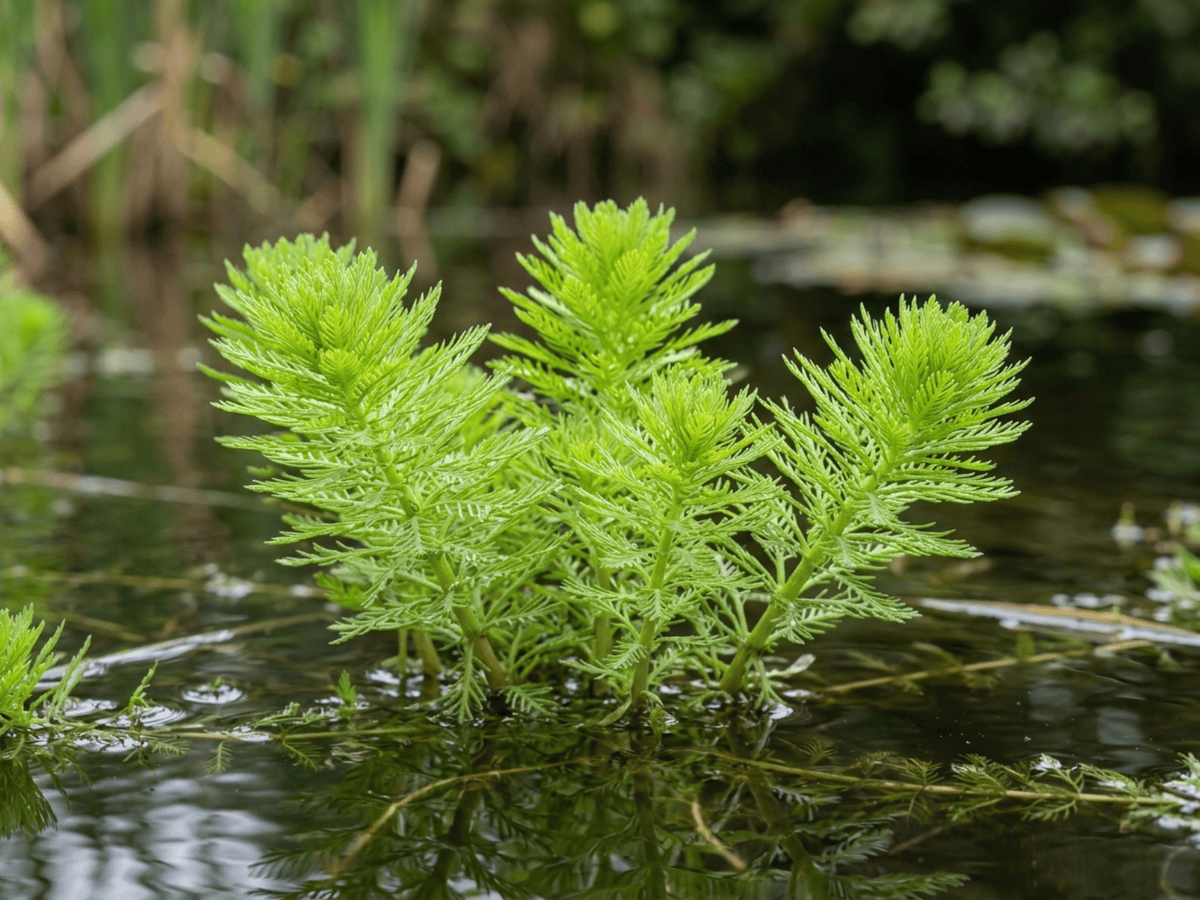
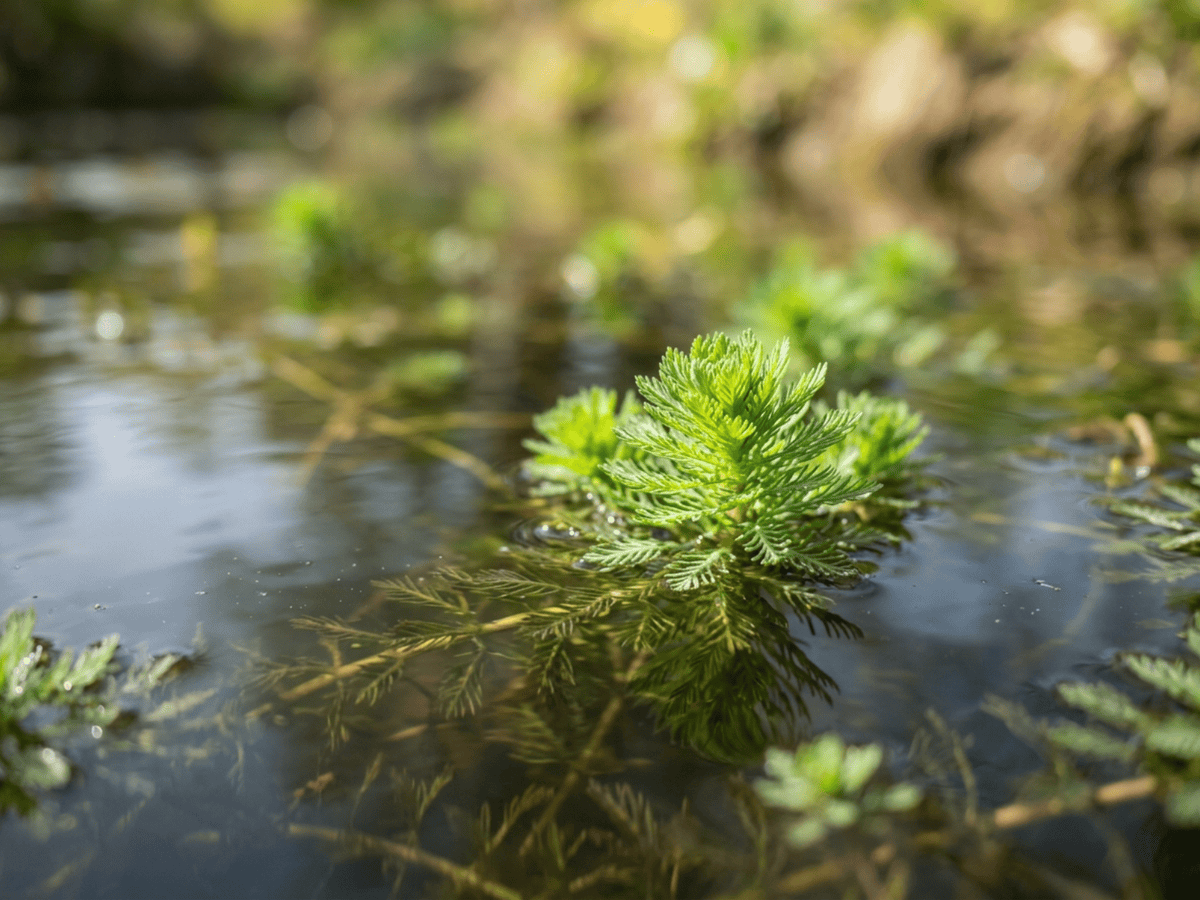
Myriophyllum aquaticum, commonly known as parrot feather or parrot feather watermilfoil, is a submerged to emergent aquatic perennial native to South America's Amazon River basin. Its feathery, bright green whorled leaves rise above the water surface in attractive plume-like formations, giving it a distinctive parrot-feather appearance. Each whorl contains four to six finely divided leaves arranged around the stem. While visually appealing in water features, this plant is classified as a highly invasive species across much of North America, Europe, and Australasia. It reproduces almost entirely vegetatively — even tiny stem fragments can regenerate into new plants, clogging waterways and outcompeting native aquatic vegetation. Dense mats reduce dissolved oxygen, harming fish and invertebrates. It was originally introduced through the aquarium trade in the early 1900s. Many jurisdictions now ban its sale and transport.
- Fast-growing
How to care for Parrot's Feather
Watering
- Springevery 1 days
- Summerevery 1 days
- Fallevery 1 days
- Winterevery 1 days
Soil · Bog-wet
- WaterStanding water above soil20%
- SoilHeavy pond soil80%
No drainage layer — keep water standing above the soil.
FERTILIZER
Balanced Feed 14-14-14
An even feed covers all three needs at once, keeping leaves, roots and blooms moving together with nothing pushed out of balance.
- Nitrogen · Leaves
- Phosphorus · Roots + Blooms
- Potassium · Strength
This plant needs little to no feeding.
At a Glance
- NativeSouth America
- Height0.5–1 ft (0.2–0.3 m)
- Spread2–5 ft (0.6–1.5 m)
- Flower colorWhite
- Foliage colorGreen, Blue-green
- SoilMoisture-retentive
- LocationsYard
Bloom time
BLOOM CYCLE
Tiny inconspicuous white flowers at leaf axils; rarely blooms outside native range
Fragrance
NO FRAGRANCE
No notable fragrance.
Toxicity
No toxicity has been reported for this plant. Still, it is wise to keep pets from chewing on any houseplant.
Educational information, not medical or veterinary advice. If exposure is suspected, contact a doctor or veterinarian.
DISTRIBUTION

- Native
- Introduced
- South America
History
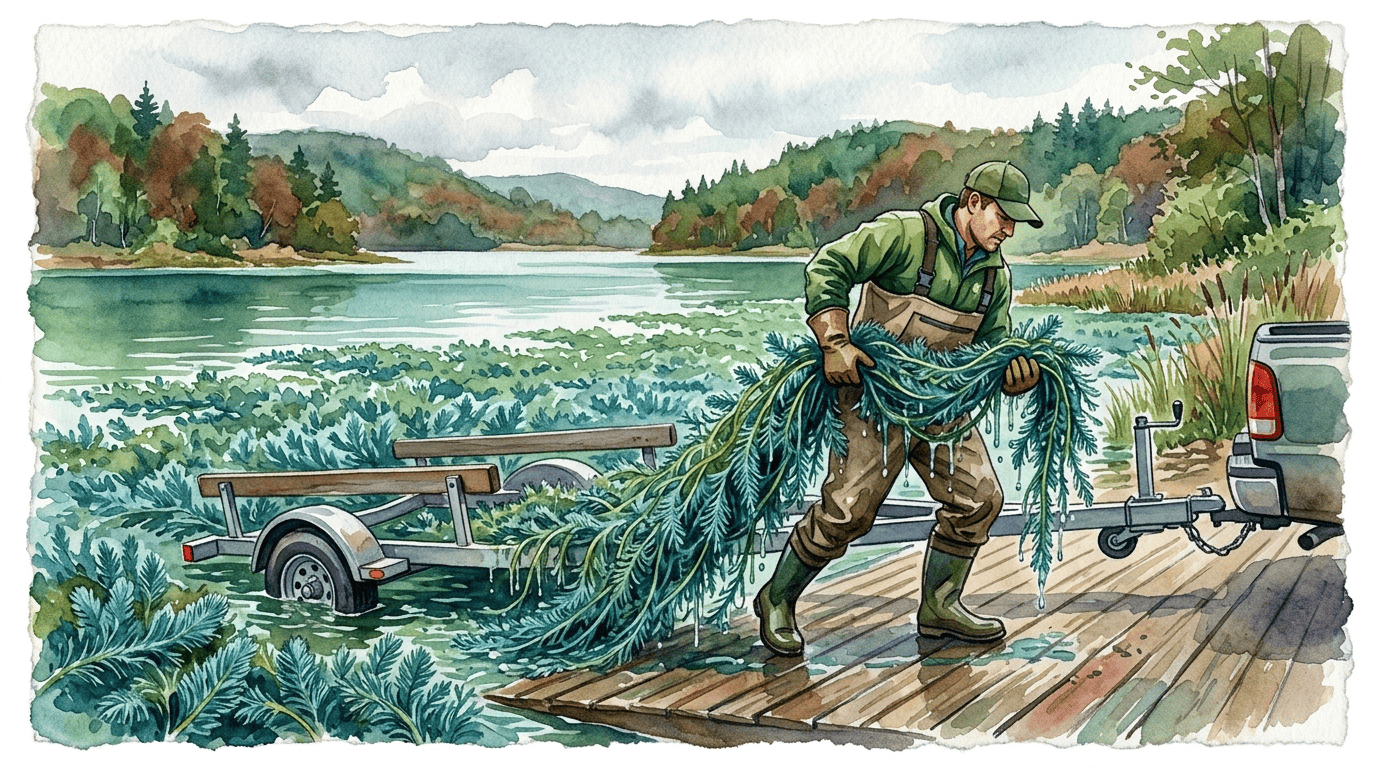
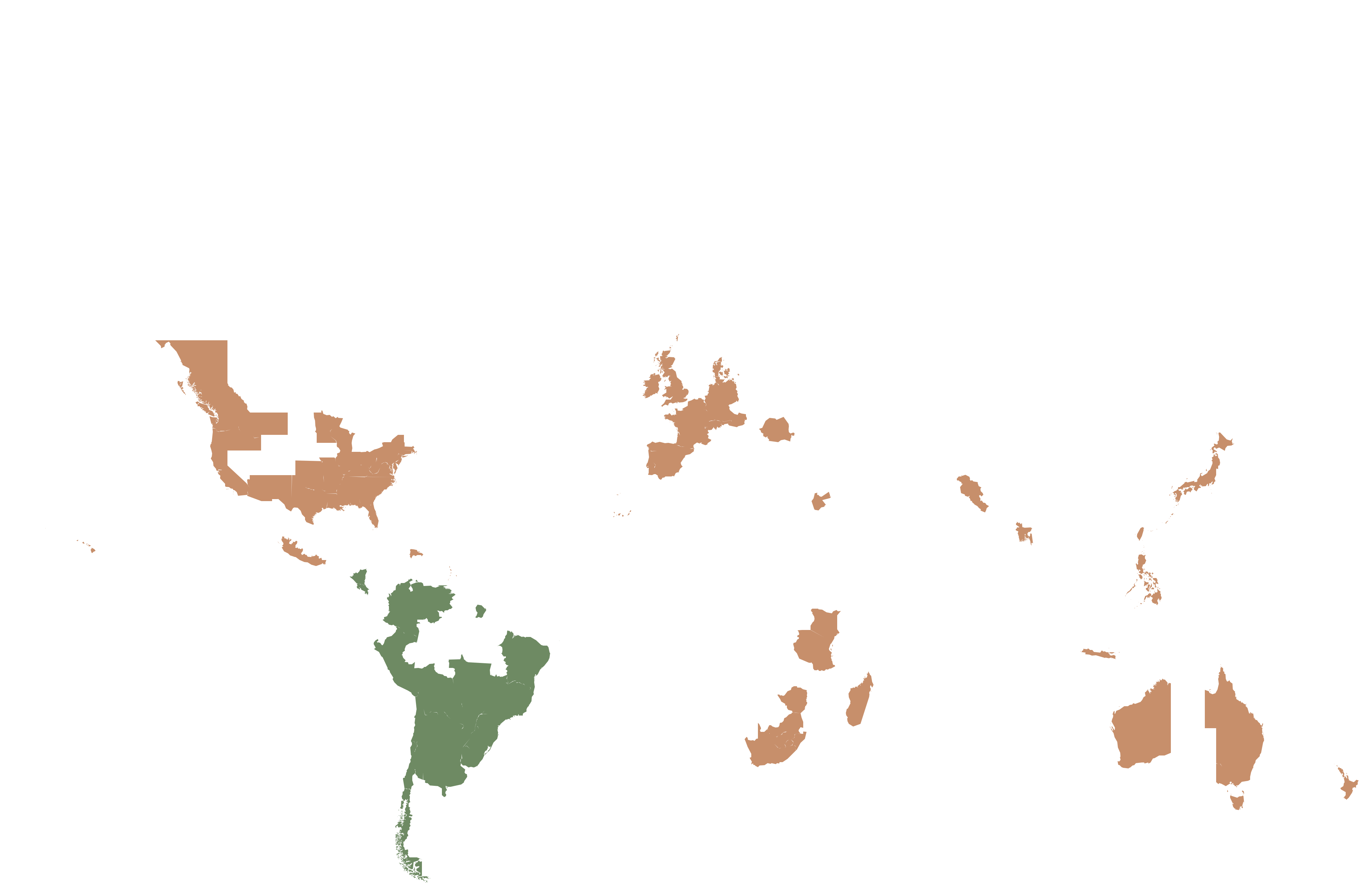
Myriophyllum aquaticum is native to South America, most extensively in the Amazon basin but also in southern South America (Paraguay, southern Brazil, northern Argentina). It grows as a partially-submerged aquatic plant, with fine-textured whorled feathery submerged foliage (often blue-green) and emergent portions of stem rising 10-30 cm above the water surface bearing similar blue-green whorled feathery leaves. Its attractive ornamental appearance led to worldwide distribution in the 19th and 20th centuries as an aquarium plant, ornamental pond plant, and water-garden ornamental. However, the species has become one of the most serious invasive aquatic plants in temperate and subtropical waterways of the United States, Europe, the UK, Australia, New Zealand, South Africa, and Japan.
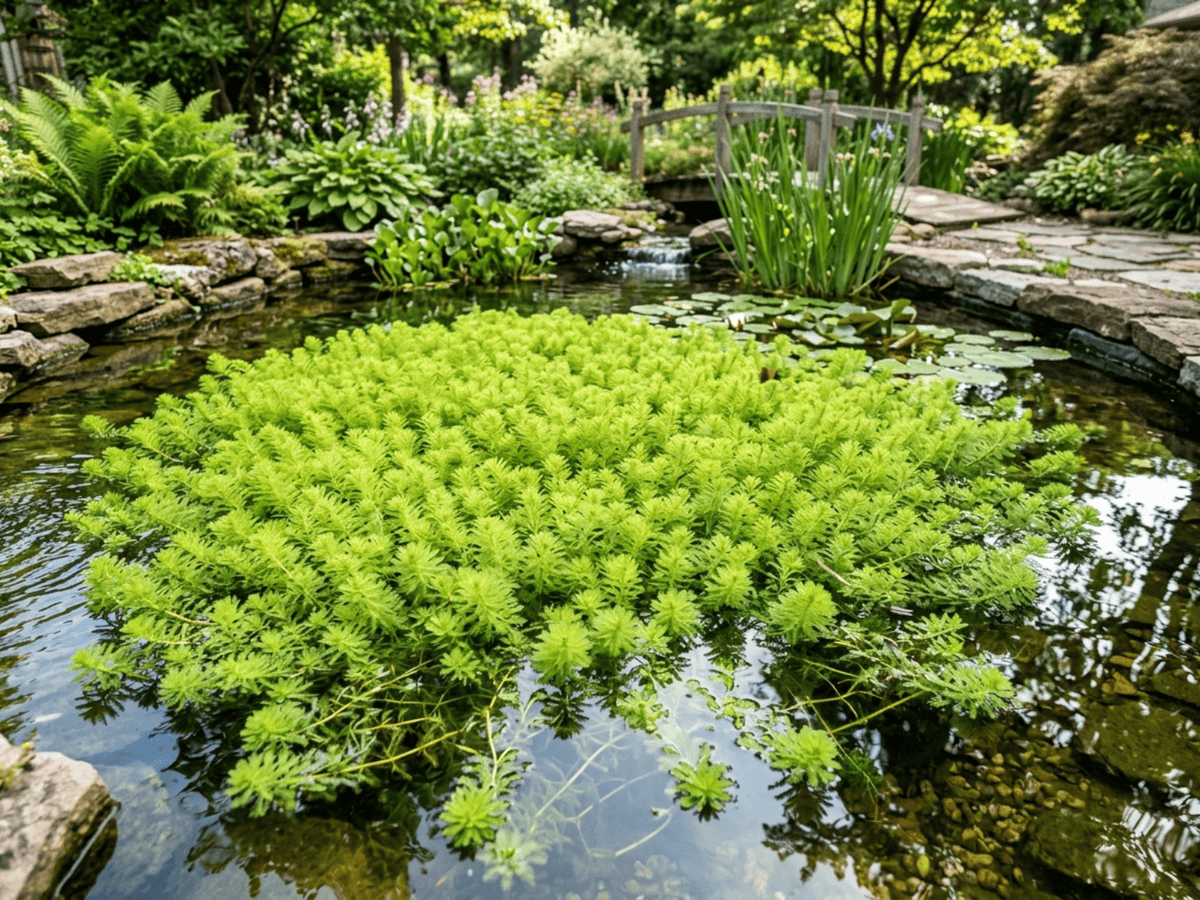
In warm water bodies without winter freezing, it forms dense intergrown mats that block navigation, impede water flow, shade out native submerged plants, reduce dissolved oxygen, and support mosquito-vector breeding. Importantly, only male plants are known outside of South America; the species has reproduced globally only by vegetative stem fragments, which has done nothing to slow its spread. Sale and transport is banned or restricted in the United Kingdom (banned 2014 under the Wildlife and Countryside Act), European Union (listed on the EU List of Invasive Alien Species of Union Concern 2016), Australia, New Zealand, and at least 15 US states.
Correct aquarium and pond stewardship is especially important because fragments hitching a ride on boats or released aquarium material have been the primary vector. Myriophyllum aquaticum was introduced to North America in the 1890s as an ornamental aquarium plant and quickly escaped into waterways. By the 1940s it was established across the southern United States. Its ability to survive in both aquatic and semi-terrestrial conditions made containment nearly impossible. It is now listed as a noxious weed in many countries. Ironically, researchers have studied its exceptional nutrient uptake for phytoremediation — using it to clean wastewater in controlled environments where escape is prevented.
Symbolism & meaning
What It Symbolizes
Parrot's Feather is adaptability run wild, its plumy whorls thriving in any pond, ditch, or sluggish stream it can colonize. Persistence is written into every fragment, since each broken stem can root and reach for the surface again. Beautiful in close view and ecologically problematic at scale, it expresses the tense double meaning of resourcefulness.
- Adaptability — thrives in any aquatic environment, symbolizing resourcefulness
- Persistence — its unstoppable growth represents tenacity and determination
Where the Name Comes From
'Myriophyllum' from Greek 'myrios' (countless) and 'phyllon' (leaf), describing the finely divided foliage. 'Aquaticum' means 'of the water' in Latin.
Uses & Fun Facts
- Feathery emergent foliage softens contained water-garden edges
- Used in phytoremediation to absorb pollutants from constructed wetlands
Related plants
Plants with similar care
 Chinese AbeliaAbelia chinensis
 Fragrant AbeliaAbelia mosanensis
 Large-Flowered AbeliaAbelia uniflora
 Glossy AbeliaAbelia x grandiflora
Frequently asked questions
How often should I water Parrot's Feather?
In summer, water about every 1 days; in winter, about every 1 days. Adjust for heat, pot size and drainage.
How much light does Parrot's Feather need?
Full sun: 6+ hrs direct. Watch the leaves — scorching or stretching means the light needs adjusting.
Is Parrot's Feather toxic to cats or dogs?
No toxicity has been reported for this plant. Still, it is wise to keep pets from chewing on any houseplant. Educational information, not medical or veterinary advice. If exposure is suspected, contact a doctor or veterinarian.
Is Parrot's Feather easy to grow?
Yes — it is considered an easy, beginner-friendly plant.
YardMate
Identify any plant in seconds
Snap a photo — YardMate names the plant, diagnoses problems, and reminds you when to water.
Download on the App Store