 YardMate


Blue-And-White Daisybush
Osteospermum ecklonis
Easy · Beginner friendlyAbout Blue-And-White Daisybush
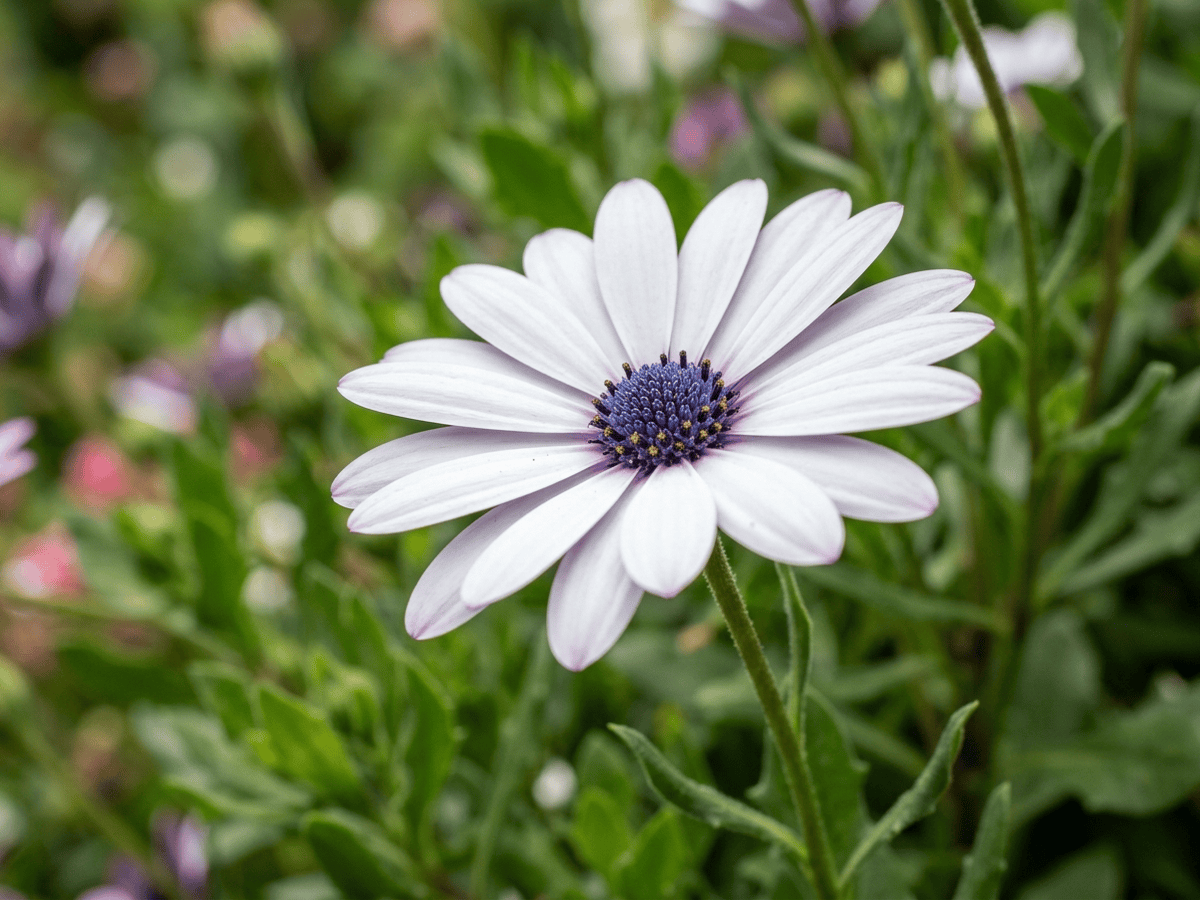
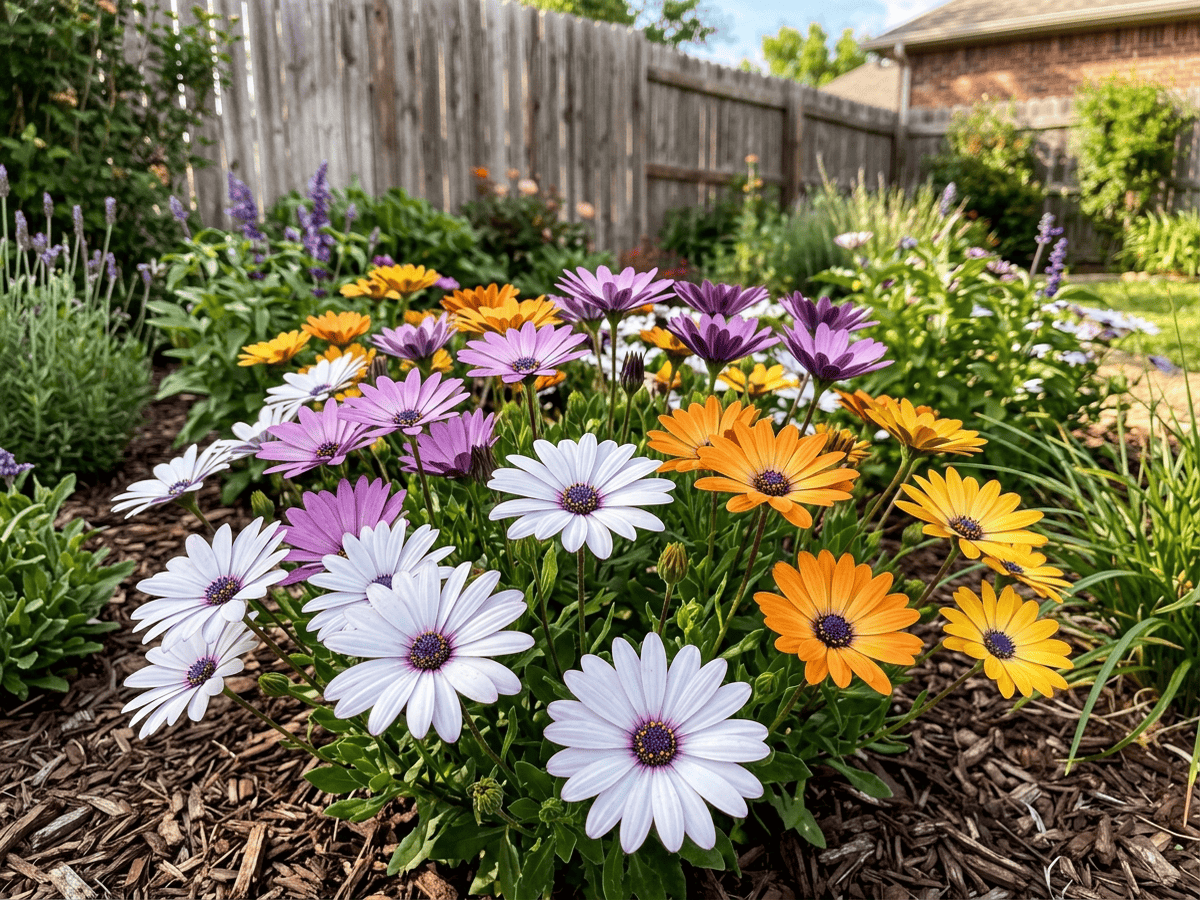
African Daisy or Cape Daisy is a South African tender perennial grown as an annual across most of the US, forming mounded plants covered in 3-inch daisy flowers with dark centers and petals in white, purple, pink, yellow, or bicolors. Growing 12 to 18 inches tall, flowers open in sun and close at night or in cloudy weather. A spring container staple at American garden centers, thriving in cool spring and fall weather.
- Drought-tolerant
- Deer-resistant
- Container-friendly
- Long-blooming
How to care for Blue-And-White Daisybush
Watering
- Springevery 5 days
- Summerevery 4 days
- Fallevery 7 days
- Winterevery 10 days
Soil · Well-draining
- Top dressingPine bark mulch10%
- Main mixPotting soil + perlite 2:170%
- DrainageLECA / gravel20%
Never skip the drainage layer — standing water is the top cause of root rot.
FERTILIZER
Balanced Feed 14-14-14
An even feed covers all three needs at once, keeping leaves, roots and blooms moving together with nothing pushed out of balance.
- Nitrogen · Leaves
- Phosphorus · Roots + Blooms
- Potassium · Strength
- Springevery 30 days
- Summerevery 30 days
At a Glance
- NativeAfrica
- Height1–2 ft (0.3–0.6 m)
- Spread1–2 ft (0.3–0.6 m)
- Flower colorWhite, Purple, Pink, Yellow
- Foliage colorGreen
- SoilLoamy, Well-drained, Sandy
- LocationsBalcony · Yard
Bloom time
BLOOM CYCLE
Peak bloom
Mar, Apr, May, Sep, Oct, Nov
Daisies open in sun from early spring and fall, pause in summer heat
Toxicity
Toxicity unknown
None reported
Unknown
EXPOSURE Unspecified plant material.
EFFECT Toxic effects are not specified.
NOTE Toxicity for humans is not well documented; use caution until verified.
Unknown
EXPOSURE Unspecified plant material.
EFFECT Toxic effects are not specified.
NOTE Toxicity for dogs is not well documented; use caution until verified.
Unknown
EXPOSURE Unspecified plant material.
EFFECT Toxic effects are not specified.
NOTE Toxicity for cats is not well documented; use caution until verified.
Educational information, not medical or veterinary advice. If exposure is suspected, contact a doctor or veterinarian.
DISTRIBUTION


- Native
- Introduced
- Africa
History
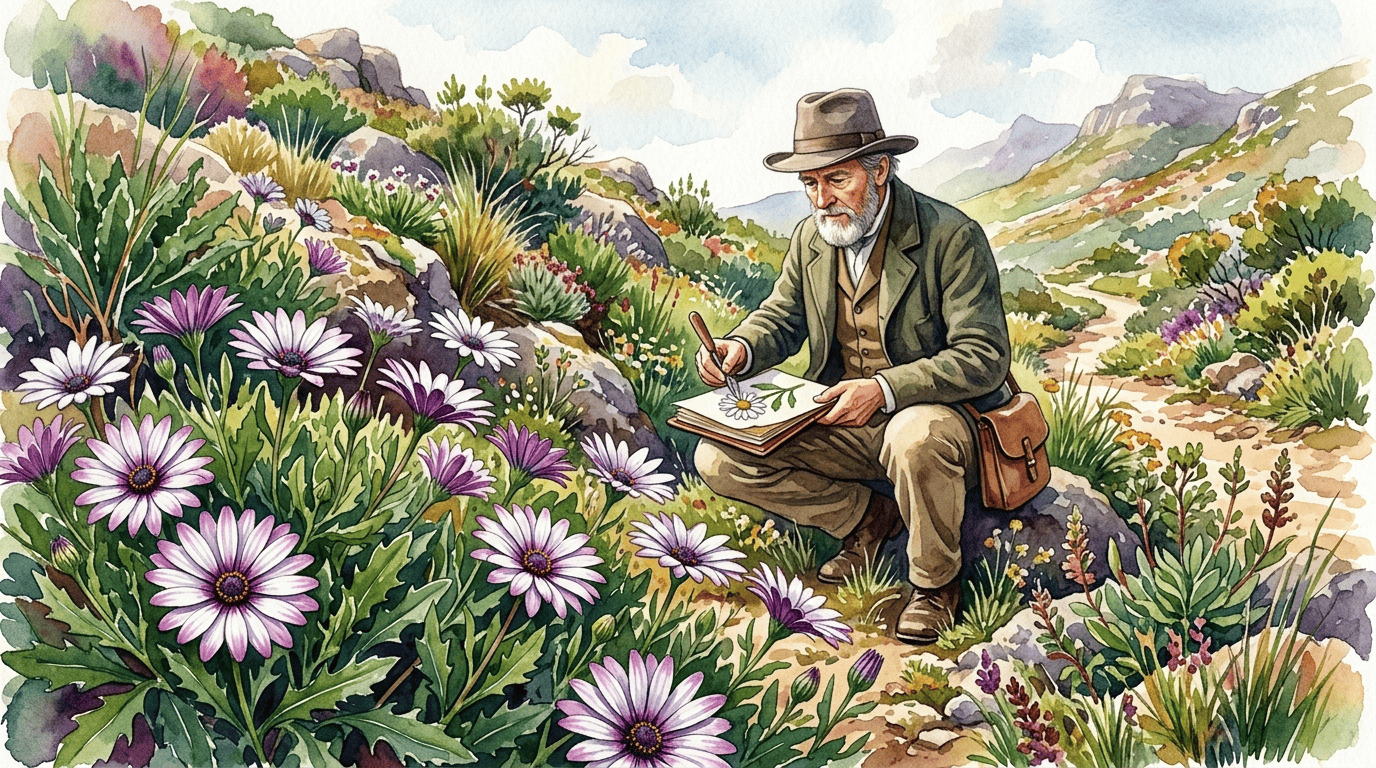
Osteospermum ecklonis, the African daisy or Cape daisy, is an evergreen subshrub native to the Cape Province of South Africa. Danish-born pharmacist and botanist Christian Friedrich Ecklon collected the type during his South African expeditions in the 1820s, and Kurt Polycarp Joachim Sprengel named the species in 1826 to honor him. The plant produces large daisy flowers atop stems held above dark green serrate leaves, in shades of white, purple, pink, yellow, and vivid bicolors.
Modern bedding Osteospermum hybrids derive from crosses with related species and revolutionized spring bedding from the 1990s onward, when Danish and Japanese breeders introduced Passion Mix and later Cape Daisy, Akila, Lemon Symphony, Soprano, and Proven Winners' Bright Lights. The plants flower heaviest in cool weather and pause during heat.
Proven Winners' Soprano and Serenity series transformed it from niche plant to mass-market spring staple at every US garden center by the 2000s.
Symbolism & meaning
What It Symbolizes
Blue-And-White Daisybush can symbolize brave spirit, its flowers opening only in bright morning sun as if welcoming the day on its own terms. One layer is morning sun, the way each blossom shuts at dusk and refuses cloudy weather, and the second is Cape brightness, the clear, almost graphic color palette of its South African heritage. Osteospermum is the daisy that insists on conditions, blooming only when the day is honest about being itself.
- Morning sun — morning-blue daisies unfold only when light is strong
- Cape brightness — South African heritage, bright clear colors
Where the Name Comes From
The name Blue-And-White Daisybush describes its daisy-like flower heads. 'Osteospermum' from Greek 'osteon-sperma' meaning bone-seed, for the hard seeds; 'ecklonis' honors Christian Friedrich Ecklon (1795-1868), South African botanist.
Uses & Fun Facts
- African daisy mounds bloom in patio pots all summer
Related plants
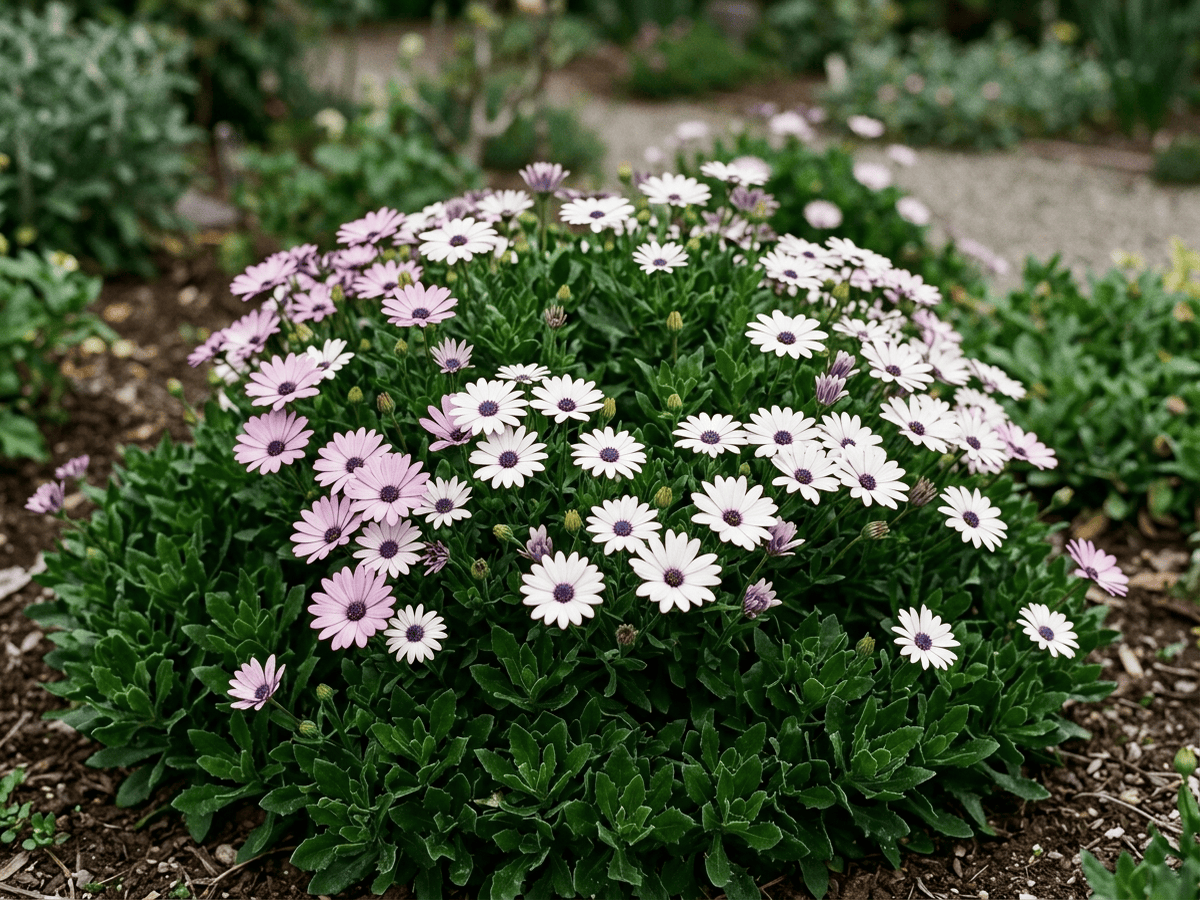
More Osteospermum plants
Plants with similar care
 Chinese AbeliaAbelia chinensis
 Fragrant AbeliaAbelia mosanensis
 Large-Flowered AbeliaAbelia uniflora
 Glossy AbeliaAbelia x grandiflora
Frequently asked questions
How often should I water Blue-And-White Daisybush?
In summer, water about every 4 days; in winter, about every 10 days. Adjust for heat, pot size and drainage.
How much light does Blue-And-White Daisybush need?
Full sun: 6+ hrs direct. Watch the leaves — scorching or stretching means the light needs adjusting.
Is Blue-And-White Daisybush toxic to cats or dogs?
Pets Unknown (Dogs Unknown · Cats Unknown) Educational information, not medical or veterinary advice. If exposure is suspected, contact a doctor or veterinarian.
Is Blue-And-White Daisybush easy to grow?
Yes — it is considered an easy, beginner-friendly plant.
When does Blue-And-White Daisybush bloom?
It typically blooms Mar, Apr, May, Sep, Oct, Nov in the Northern Hemisphere.
YardMate
Identify any plant in seconds
Snap a photo — YardMate names the plant, diagnoses problems, and reminds you when to water.
Download on the App Store