 YardMate
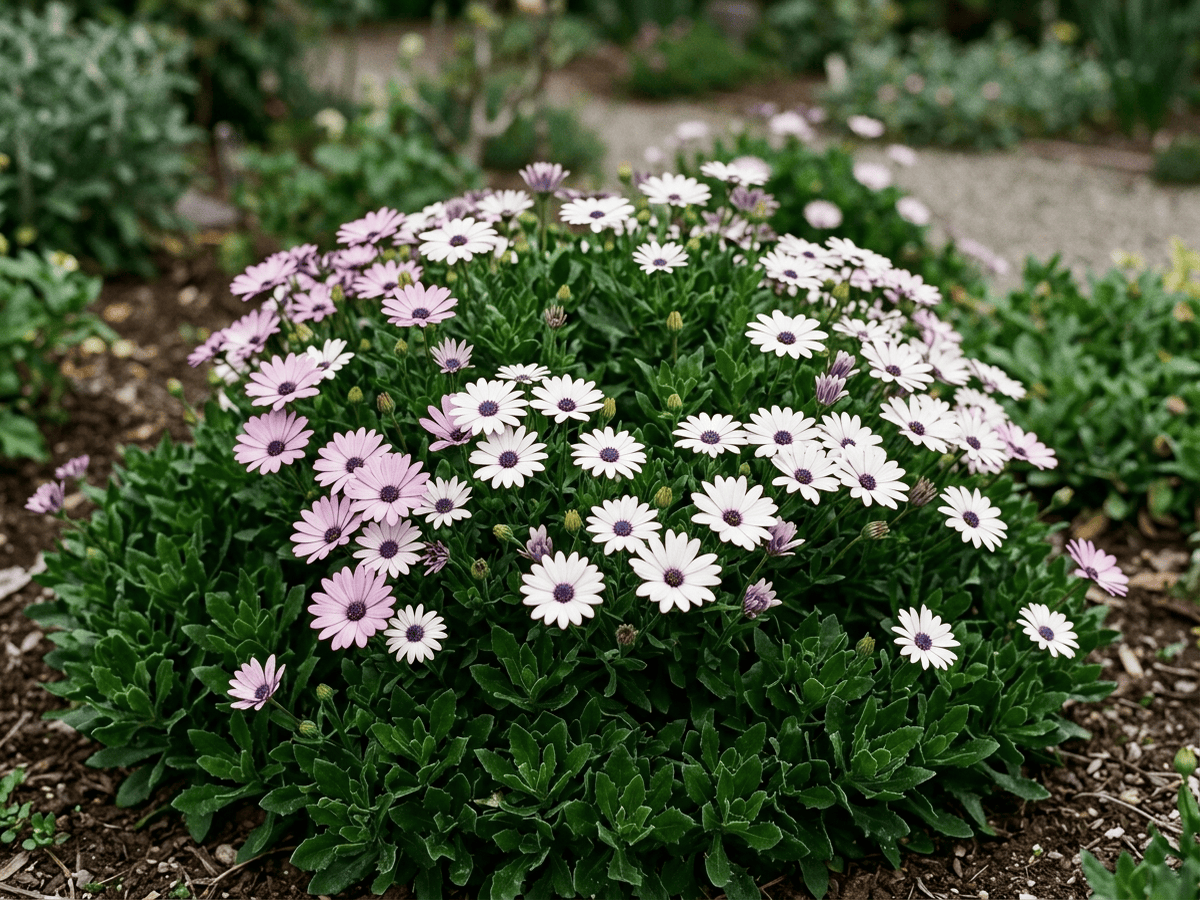


Trailing African Daisy
Osteospermum fruticosum
Easy · Beginner friendlyAbout Trailing African Daisy
Trailing African Daisy is the woody shrubby cousin of Cape Daisy, a South African tender perennial used as a fast-growing groundcover or bank stabilizer in California, Arizona, and other mild-winter US regions. Growing 6 to 12 inches tall and spreading 2 to 4 feet, it produces 2-inch daisy flowers in white, purple, or pink that carpet entire slopes from fall through spring. A signature California freeway and low-water landscape plant.
- Drought-tolerant
- Deer-resistant
- Groundcover
- Evergreen
How to care for Trailing African Daisy
Watering
- Springevery 7 days
- Summerevery 10 days
- Fallevery 7 days
- Winterevery 14 days
Soil · Well-draining
- Top dressingPine bark mulch10%
- Main mixPotting soil + perlite 2:170%
- DrainageLECA / gravel20%
Never skip the drainage layer — standing water is the top cause of root rot.
FERTILIZER
- Springevery 60 days
- Fallevery 60 days
At a Glance
- NativeAfrica
- Height0.5–1 ft (0.2–0.3 m)
- Spread2–4 ft (0.6–1.2 m)
- Flower colorPink, Purple, White
- Foliage colorGreen
- SoilLoamy, Well-drained
- LocationsYard
Bloom time
BLOOM CYCLE
Peak bloom
Mar–Nov
Daisies cover plants fall to late spring, lightly summer
Toxicity
Toxicity unknown
None reported
Unknown
EXPOSURE Unspecified plant material.
EFFECT Toxic effects are not specified.
NOTE Toxicity for humans is not well documented; use caution until verified.
Unknown
EXPOSURE Unspecified plant material.
EFFECT Toxic effects are not specified.
NOTE Toxicity for dogs is not well documented; use caution until verified.
Unknown
EXPOSURE Unspecified plant material.
EFFECT Toxic effects are not specified.
NOTE Toxicity for cats is not well documented; use caution until verified.
Educational information, not medical or veterinary advice. If exposure is suspected, contact a doctor or veterinarian.
DISTRIBUTION


- Native
- Introduced
- Africa
History

Osteospermum fruticosum, commonly called trailing African daisy or shrubby daisybush, is a low spreading evergreen subshrub native to coastal fynbos and dunes of South Africa's Cape and Eastern Cape provinces. Swedish botanist Carl Peter Thunberg described the species in the 18th century. The plant forms dense mats of dark green foliage and produces lavender-pink to white daisy flowers from fall through spring in Mediterranean climates.
Californian horticulturists including Bill Evans of Walt Disney's Imagineering team began mass-planting it on San Diego and Los Angeles highway cuts, hotel grounds, and coastal bluffs in the 1950s and 1960s, making it one of the most recognizable evergreen ground covers in Southern California. It naturalizes in coastal California but remains a mainstay of low-maintenance freeway and slope landscaping.
Introduced to California horticulture in the early 1900s as a low-water evergreen groundcover. Became a ubiquitous California freeway and suburban landscape plant from the 1960s onward, prized for covering slopes with a carpet of flowers through winter and spring when other plants are dormant.
Symbolism & meaning
What It Symbolizes
Trailing African daisy is the California hillside plant par excellence, a classic West Coast freeway and bank cover whose lavender and white flowers carpet slopes from San Diego to the Bay Area. Winter warmth is its quiet specialty — it blooms straight through the cool months when much of the garden has paused. Few imports have so thoroughly defined the look of cultivated California ground.
- California hillside — classic West Coast freeway plant
- Winter warmth — blooms through cool months
Where the Name Comes From
The name Trailing African Daisy describes its trailing stems. 'fruticosum' from Latin 'frutex' meaning shrub, for the woody perennial growth habit.
Uses & Fun Facts
- Trailing stems form flowering carpets across coastal California slopes
- Lavender daisies cover the foliage through cool seasons
Related plants
More Osteospermum plants

Plants with similar care
 Chinese AbeliaAbelia chinensis
 Fragrant AbeliaAbelia mosanensis
 Large-Flowered AbeliaAbelia uniflora
 Glossy AbeliaAbelia x grandiflora
Frequently asked questions
How often should I water Trailing African Daisy?
In summer, water about every 10 days; in winter, about every 14 days. Adjust for heat, pot size and drainage.
How much light does Trailing African Daisy need?
Full sun: 6+ hrs direct. Watch the leaves — scorching or stretching means the light needs adjusting.
Is Trailing African Daisy toxic to cats or dogs?
Pets Unknown (Dogs Unknown · Cats Unknown) Educational information, not medical or veterinary advice. If exposure is suspected, contact a doctor or veterinarian.
Is Trailing African Daisy easy to grow?
Yes — it is considered an easy, beginner-friendly plant.
When does Trailing African Daisy bloom?
It typically blooms Mar–Nov in the Northern Hemisphere.
YardMate
Identify any plant in seconds
Snap a photo — YardMate names the plant, diagnoses problems, and reminds you when to water.
Download on the App Store