 YardMate


Bitter Panicgrass
Panicum amarum
Easy · Beginner friendlyAbout Bitter Panicgrass
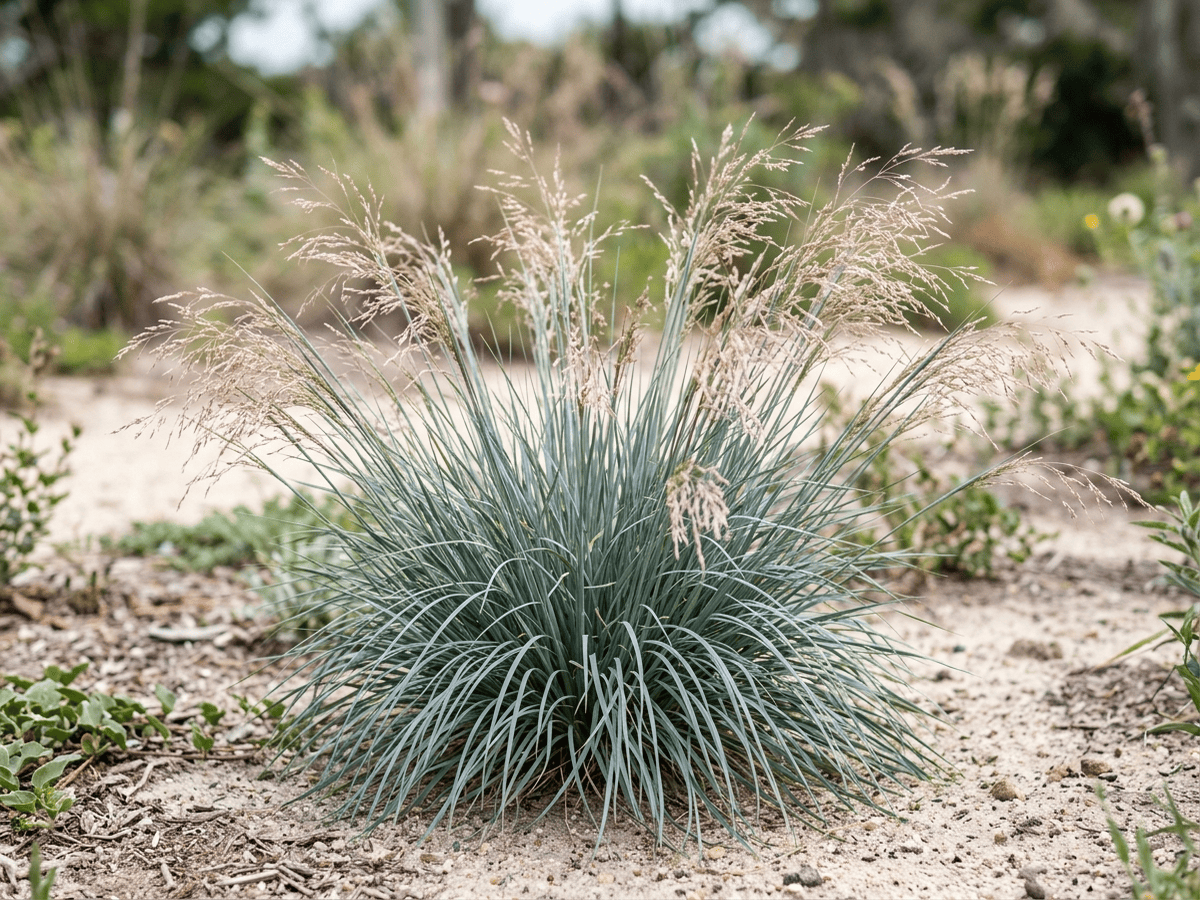
Bitter Panic Grass is an Atlantic and Gulf coastal native grass reaching 2-6 feet tall, with sturdy upright blue-green stems and airy panicles of small flowers in late summer. Native to coastal sand dunes from New England to Texas, it is a critical species for dune stabilization and restoration along the eastern seaboard. The cultivar 'Dewey Blue' has gained popularity in waterwise American gardens for its striking blue foliage.
- Drought-tolerant
- Native
How to care for Bitter Panicgrass
Watering
- Springevery 14 days
- Summerevery 21 days
- Fallevery 21 days
- Winterevery 45 days
Soil · Well-draining
- Top dressingPine bark mulch10%
- Main mixPotting soil + perlite 2:170%
- DrainageLECA / gravel20%
Never skip the drainage layer — standing water is the top cause of root rot.
FERTILIZER
This plant needs little to no feeding.
At a Glance
- Height3–6 ft (0.9–1.8 m)
- Spread2–3 ft (0.6–0.9 m)
- Flower colorWhite, Cream
- Foliage colorBlue-green
- SoilSandy, Well-drained
- LocationsYard
Bloom time
BLOOM CYCLE
Peak bloom
Jun–Sep
Airy panicles of small flowers in late summer
Toxicity
Humans Safe · Pets Safe
None reported
Safe
EXPOSURE No exposure route is reported.
EFFECT No toxic effect is reported.
NOTE Listed as non-toxic for humans; avoid eating ornamental plants unless confirmed edible.
Safe
EXPOSURE No exposure route is reported.
EFFECT No toxic effect is reported.
NOTE Listed as non-toxic for dogs; avoid eating ornamental plants unless confirmed edible.
Safe
EXPOSURE No exposure route is reported.
EFFECT No toxic effect is reported.
NOTE Listed as non-toxic for cats; avoid eating ornamental plants unless confirmed edible.
Educational information, not medical or veterinary advice. If exposure is suspected, contact a doctor or veterinarian.
DISTRIBUTION


- Native
History
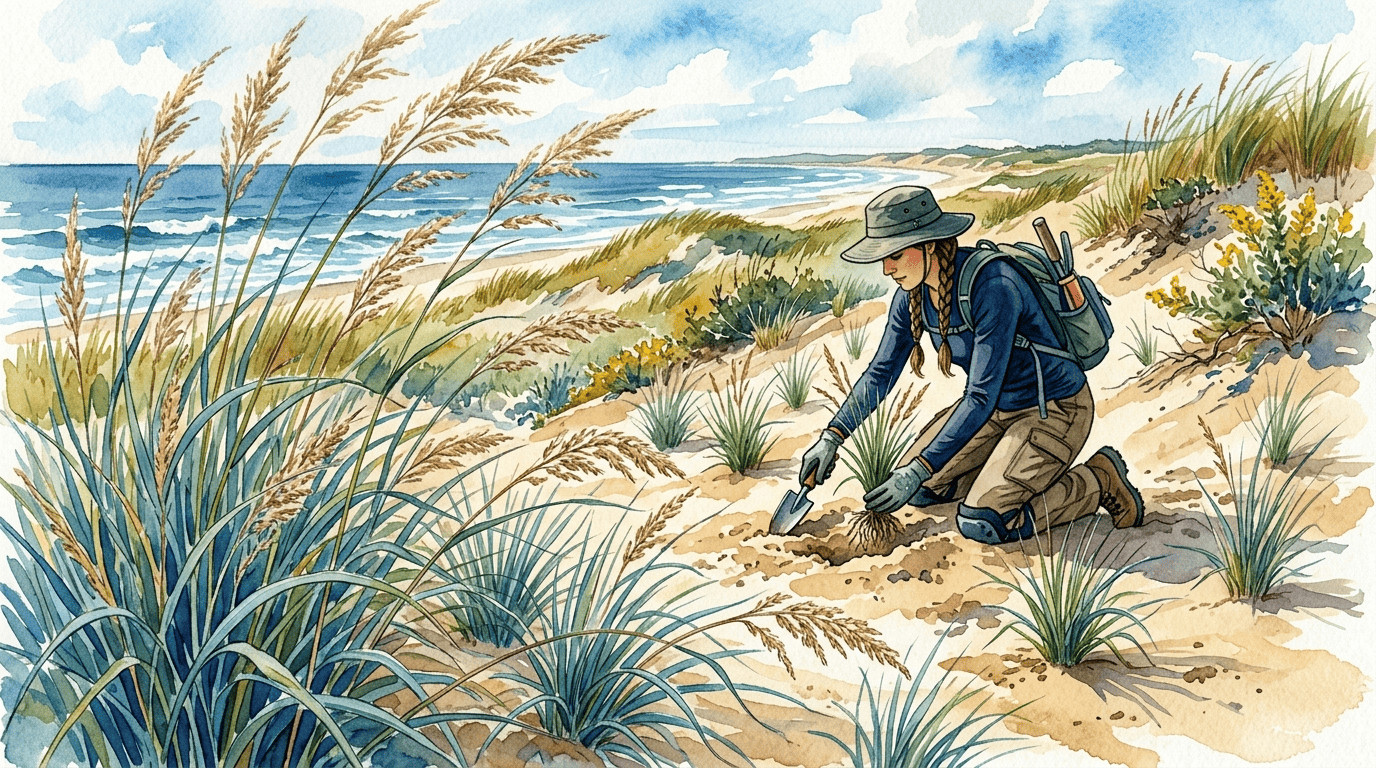
Panicum amarum, commonly called bitter panicum or coastal panicgrass, is a warm-season rhizomatous perennial grass in the family Poaceae native to Atlantic and Gulf Coast beach dunes and maritime sands of eastern North America from Connecticut south through Florida and west to Texas, with disjunct inland populations. American botanist Stephen Elliott described the species in 1816 in his Sketch of the Botany of South Carolina and Georgia. The epithet amarum (bitter) refers to the bitter taste of the foliage, which discourages grazing by livestock and wildlife.
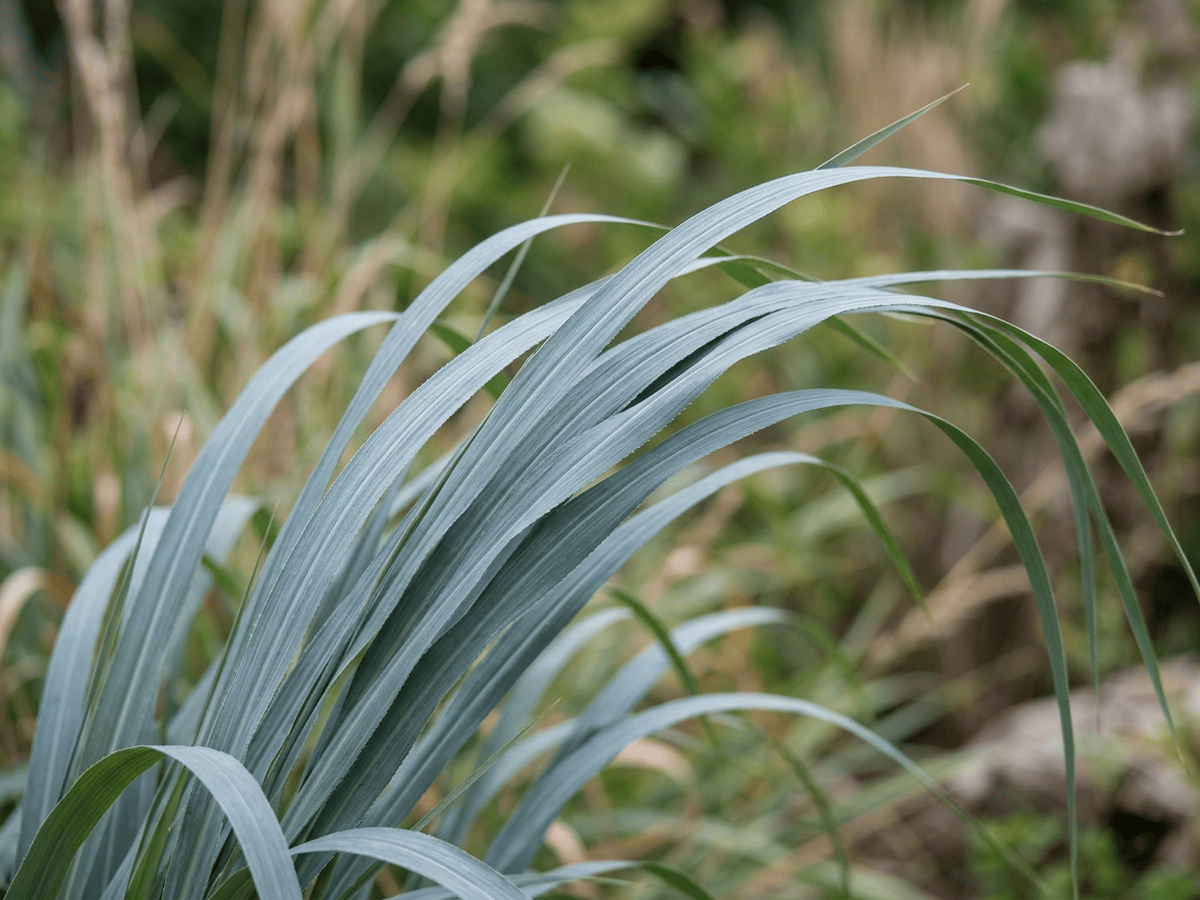
Plants form rhizomatous loose-spreading colonies 90-180 cm tall with upright stems clothed in narrow blue-green or glaucous leaves. Open airy panicles of small spikelets appear in late summer, fading to tan in fall and persisting through winter. Critical for natural dune stabilization and widely used in coastal restoration plantings.
The cultivar 'Dewey Blue', selected by Dale Hendricks of North Creek Nurseries around 2000 for especially intense blue-glaucous foliage, has become a popular ornamental for gardens beyond the coast. Critical for dune stabilization and storm protection along beaches from Cape Cod to South Padre Island. The 'Dewey Blue' cultivar emerged from selections at Mt. Cuba Center and has popularized this beach grass in waterwise inland gardens.
Symbolism & meaning
What It Symbolizes
Bitter Panicgrass embodies Endurance — bending without breaking under salt spray, hurricane wind, and shifting sand on the Atlantic shore. It offers Protection at a continental scale, its deep fibrous roots stabilizing the dunes that shelter the entire Eastern Seaboard. A grass whose modest blue-gray clumps quietly hold a coastline together against every passing storm.
- Endurance — withstands salt spray and shifting sand
- Protection — essential dune stabilizer along the Eastern Seaboard
Where the Name Comes From
'Panicum' from Latin meaning panicle; 'amarum' means bitter, referring to the foliage taste.
Uses & Fun Facts
- Blue-green coastal grass with airy autumn seed plumes
- Stabilizes dunes and sandy disturbed sites
- Seeds and cover support coastal birds and mammals
Related plants
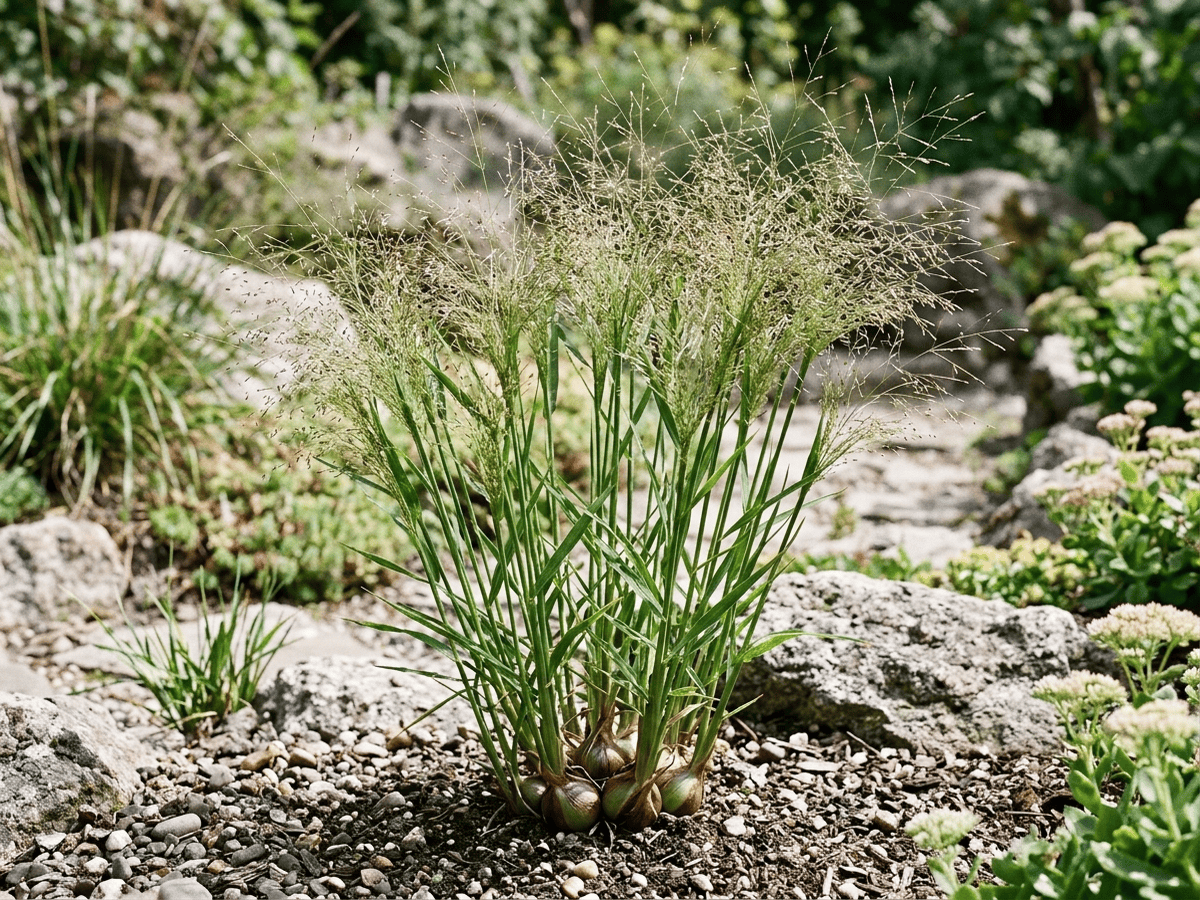
More Panicum plants
Plants with similar care
 Chinese AbeliaAbelia chinensis
 Fragrant AbeliaAbelia mosanensis
 Large-Flowered AbeliaAbelia uniflora
 Glossy AbeliaAbelia x grandiflora
Frequently asked questions
How often should I water Bitter Panicgrass?
In summer, water about every 21 days; in winter, about every 45 days. Adjust for heat, pot size and drainage.
How much light does Bitter Panicgrass need?
Full sun: 6+ hrs direct. Watch the leaves — scorching or stretching means the light needs adjusting.
Is Bitter Panicgrass toxic to cats or dogs?
Pets Safe (Dogs Safe · Cats Safe) Educational information, not medical or veterinary advice. If exposure is suspected, contact a doctor or veterinarian.
Is Bitter Panicgrass easy to grow?
Yes — it is considered an easy, beginner-friendly plant.
When does Bitter Panicgrass bloom?
It typically blooms Jun–Sep in the Northern Hemisphere.
YardMate
Identify any plant in seconds
Snap a photo — YardMate names the plant, diagnoses problems, and reminds you when to water.
Download on the App Store