 YardMate

Yellow Groove Bamboo
Phyllostachys aureosulcata
Medium · Some experienceAbout Yellow Groove Bamboo
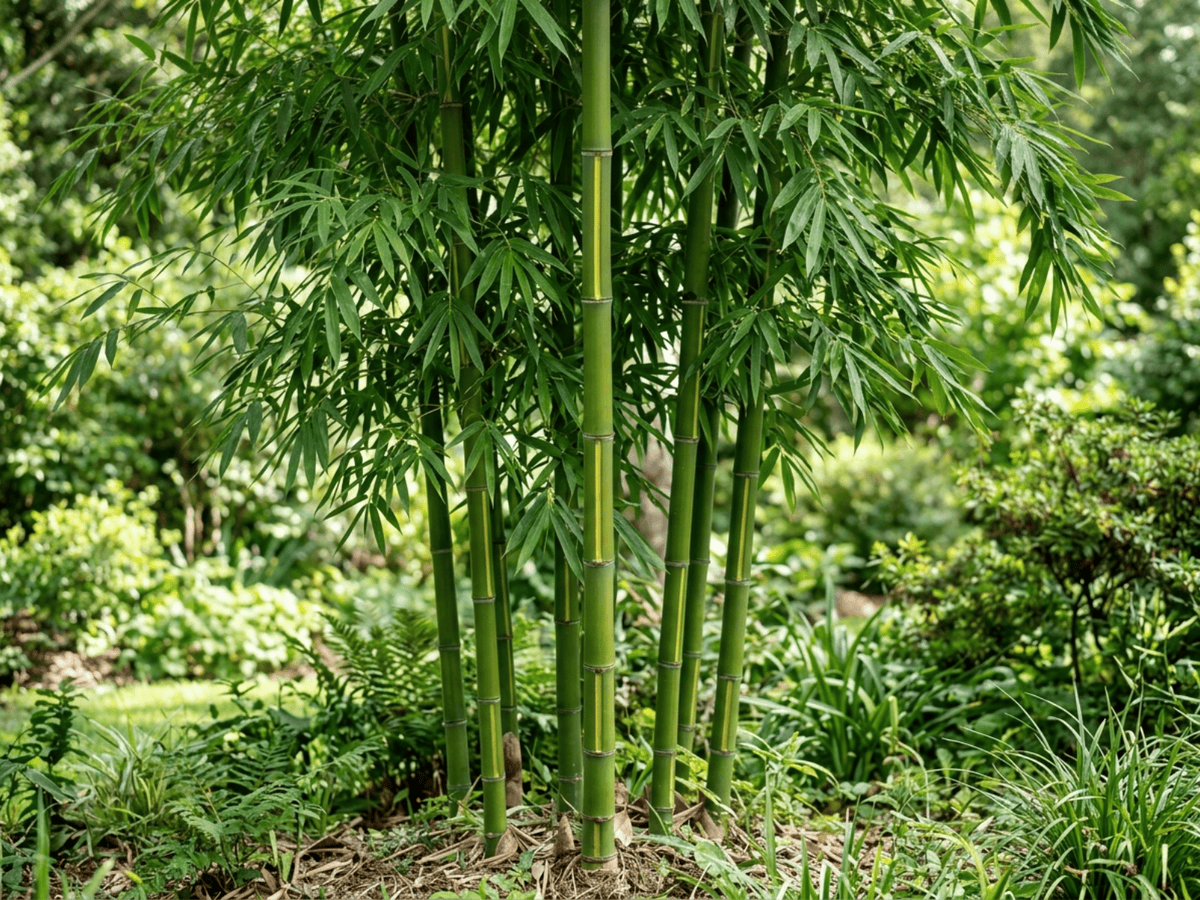
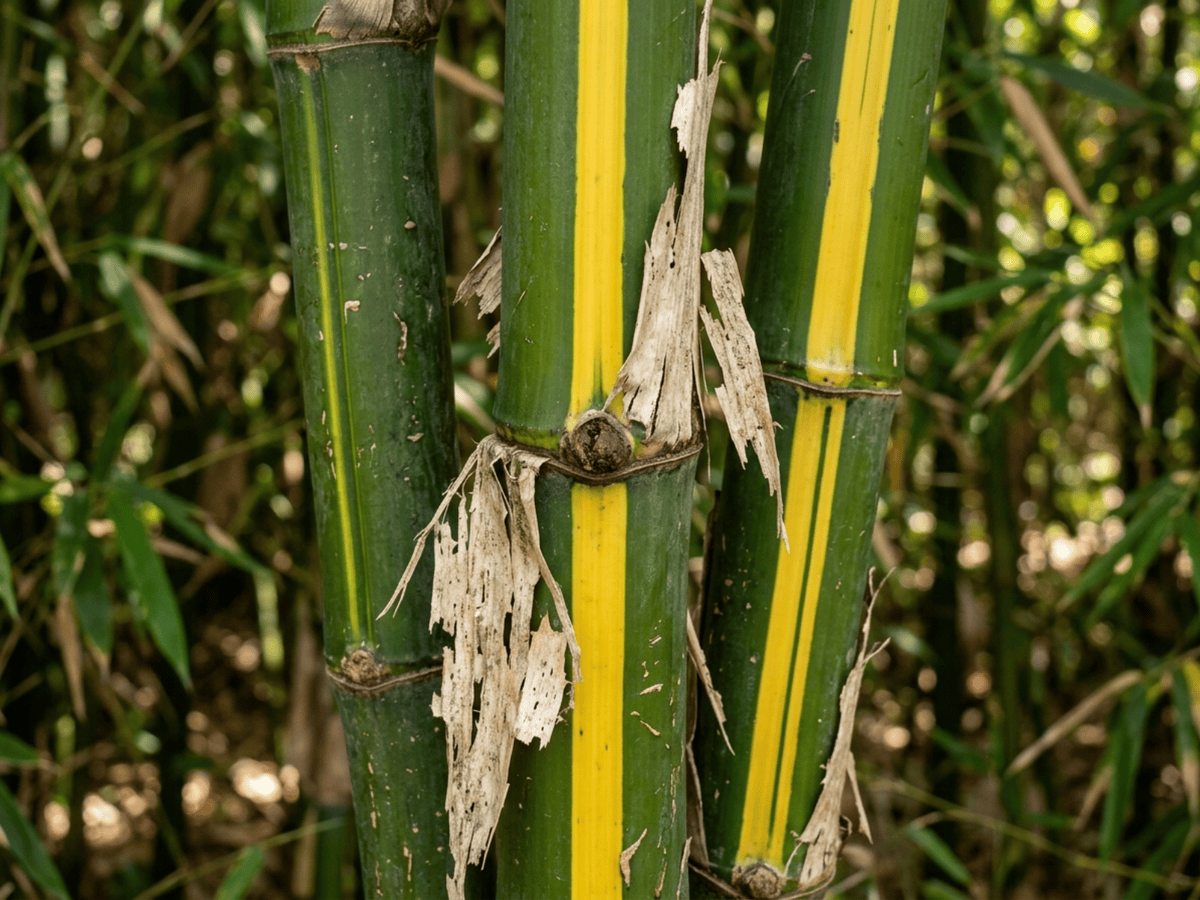
Phyllostachys aureosulcata, the yellow groove bamboo, is a cold-hardy running bamboo native to eastern China. It is named for the distinctive yellow groove that runs along the internodes of its green culms, which can reach 7–10 meters tall. Some culms develop charming zigzag bends at the base, a unique trait prized by collectors. It is one of the hardiest bamboos available, tolerating temperatures down to minus 25 degrees Celsius, making it suitable for temperate gardens worldwide. As a running bamboo, it spreads vigorously by underground rhizomes and requires a root barrier or regular rhizome pruning to control. The young shoots are edible and considered good quality. In the garden, it creates an effective privacy screen or windbreak in just a few seasons. The cultivar 'Spectabilis' has entirely golden-yellow culms and is especially ornamental.
- Cold-hardy
How to care for Yellow Groove Bamboo
Watering
- Springevery 3 days
- Summerevery 2 days
- Fallevery 5 days
- Winterevery 14 days
Soil · Well-draining
- Top dressingPine bark mulch10%
- Main mixPotting soil + perlite 2:170%
- DrainageLECA / gravel20%
Never skip the drainage layer — standing water is the top cause of root rot.
FERTILIZER
Foliage Feed 24-8-16
Nitrogen leads so the plant spends its energy on dense green growth. Phosphorus and potassium follow just far enough to keep roots and stems up to speed.
- Nitrogen · Leaves
- Phosphorus · Roots + Blooms
- Potassium · Strength
- Springevery 45 days
- Summerevery 45 days
At a Glance
- NativeEast Asia
- Height20–35 ft (6.1–10.7 m)
- Spread10–20 ft (3–6.1 m)
- Foliage colorGreen, Yellow, Variegated
- SoilRich, Loamy, Well-drained
- LocationsYard
Bloom time
BLOOM CYCLE
Peak bloom
May
Extremely rare flowering; may not bloom for over 50 years
Fragrance
NO FRAGRANCE
No notable fragrance.
Toxicity
Humans Slight
taxiphyllin (in raw shoots)
Slight
- Shoot
- Ingestion
EXPOSURE Eating shoot.
EFFECT Raw shoots contain cyanogenic glycosides and must be boiled to consume.
NOTE Documented concern for humans: Raw shoots contain cyanogenic glycosides and must be boiled to consume.
Safe
EXPOSURE No exposure route is reported.
EFFECT Not listed as toxic.
NOTE Listed as non-toxic for dogs; avoid eating ornamental plants unless confirmed edible.
Safe
EXPOSURE No exposure route is reported.
EFFECT Not listed as toxic.
NOTE Listed as non-toxic for cats; avoid eating ornamental plants unless confirmed edible.
Educational information, not medical or veterinary advice. If exposure is suspected, contact a doctor or veterinarian.
DISTRIBUTION


- Native
- Introduced
- East Asia
History

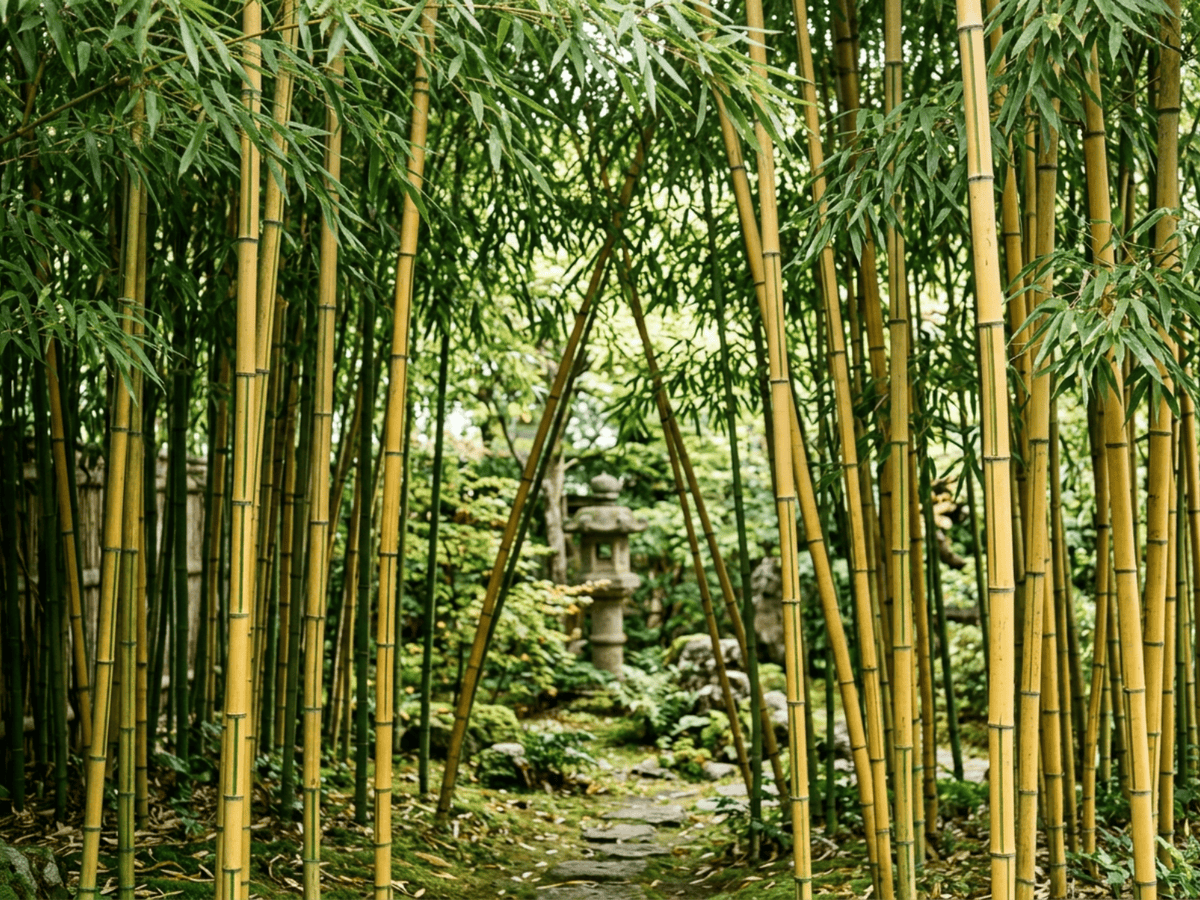
Phyllostachys aureosulcata is native to Zhejiang Province on the east coast of China. The species epithet refers to the distinctive yellow sulcus (the longitudinal groove on one side of the culm between successive branches) running down the otherwise green culm — a subtle but reliable identification character. It was introduced to the United States around 1907 via the USDA plant introduction program. Modern horticultural use is dominated by the forms "Spectabilis" (green groove on yellow culm — the inverse of the wild type) and "Aureocaulis" (entirely yellow culm with small green stripes), both of which are extremely popular as specimen bamboos.
The species is one of the most cold-hardy Phyllostachys, reliable to USDA Zone 5 (-29°C), reaching 6-9 meters tall with culms 3-5 cm diameter in favorable conditions, less in cold zones. Like all running Phyllostachys bamboos, it spreads by aggressive horizontal leptomorph rhizomes that can travel 3-6 meters or more per year through untreated soil — requiring HDPE root-barrier installation at least 75 cm deep (often 100 cm is specified) to contain plantings. Uncontained plantings can invade lawns, neighboring properties, and foundations.
Sometimes shoots emerge "zigzag" from the ground ("crooked stem" growth) — a distinctive trait. Phyllostachys aureosulcata was introduced to the West in the early 20th century and quickly became one of the most popular bamboos for temperate gardens. In China, bamboo has been a cornerstone of culture for millennia — it is one of the 'Four Gentlemen' in Chinese painting alongside plum blossom, orchid, and chrysanthemum, each representing a season and a virtue. The yellow groove bamboo's zigzag culms are considered especially auspicious in Chinese garden design. Its remarkable cold hardiness made bamboo gardening possible in northern climates where it was previously thought impossible.
Symbolism & meaning
What It Symbolizes
Yellow Groove Bamboo stands straight and true through harsh winters, its golden-grooved canes representing integrity in the face of cold and storm. Friendship is its second virtue — dense groves grow shoulder to shoulder, supporting one another against the wind in a literal image of mutual reliance. Its meaning is upright honesty held within close community, a small forest of moral and social uprightness.
- Integrity — Stands straight and true through harsh winters, representing moral uprightness
- Friendship — Dense groves growing together symbolize close bonds and mutual support
Where the Name Comes From
Phyllostachys from Greek 'phyllon' (leaf) and 'stachys' (spike). Aureosulcata means 'golden-grooved' in Latin, describing the yellow sulcus on the culm.
Uses & Fun Facts
- Tender young shoots harvested as spring bamboo vegetable
- Tall yellow-grooved canes form striking privacy screens
- Strong canes used for stakes fencing and craft projects
Related plants
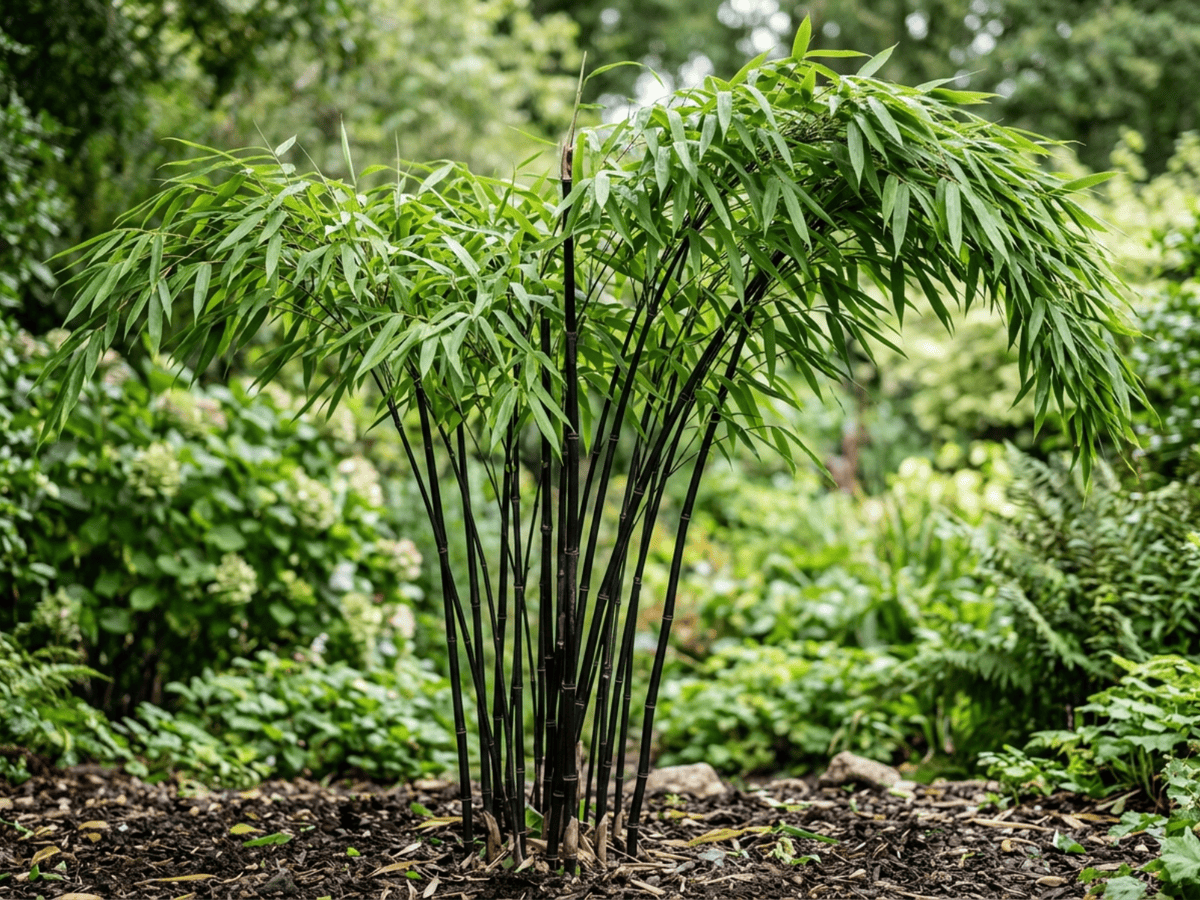
More Phyllostachys plants
Plants with similar care
 Mexican AbeliaAbelia floribunda
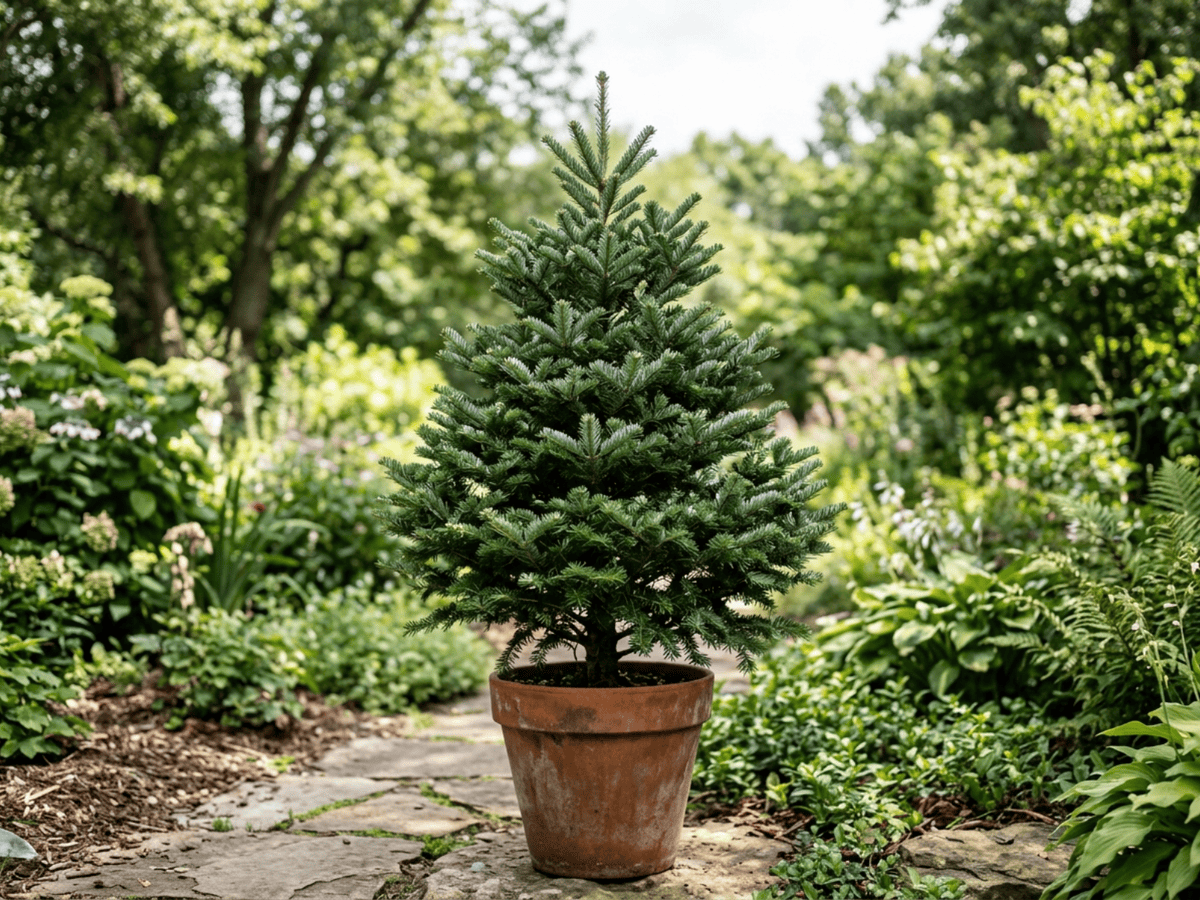 Fraser FirAbies fraseri
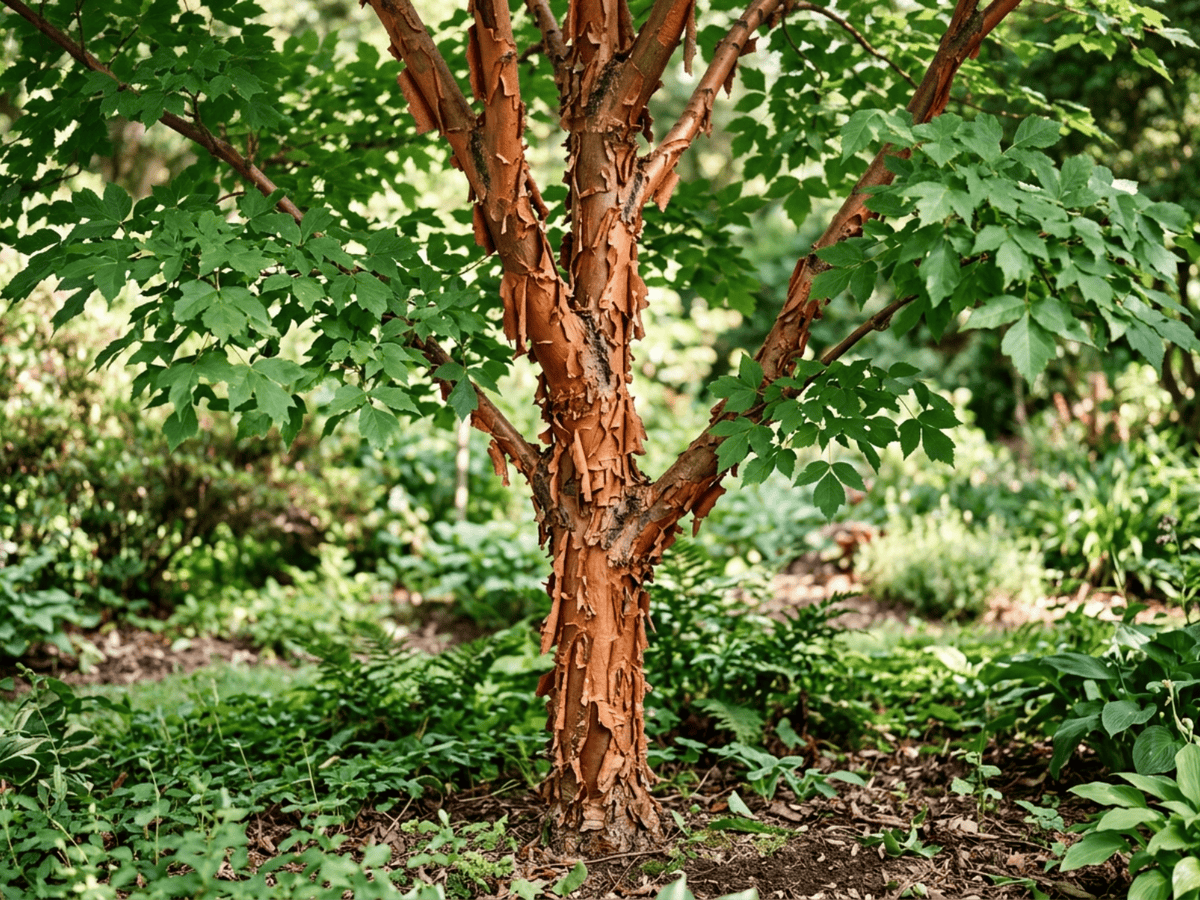 Paperbark MapleAcer griseum
 Sugar MapleAcer saccharum
Frequently asked questions
How often should I water Yellow Groove Bamboo?
In summer, water about every 2 days; in winter, about every 14 days. Adjust for heat, pot size and drainage.
How much light does Yellow Groove Bamboo need?
Full sun: 6+ hrs direct. Watch the leaves — scorching or stretching means the light needs adjusting.
Is Yellow Groove Bamboo toxic to cats or dogs?
Pets Safe (Dogs Safe · Cats Safe) Educational information, not medical or veterinary advice. If exposure is suspected, contact a doctor or veterinarian.
Is Yellow Groove Bamboo easy to grow?
It is moderately demanding: a good choice once you have a little experience.
When does Yellow Groove Bamboo bloom?
It typically blooms May in the Northern Hemisphere.
YardMate
Identify any plant in seconds
Snap a photo — YardMate names the plant, diagnoses problems, and reminds you when to water.
Download on the App Store