 YardMate

Common Ninebark
Physocarpus opulifolius
Easy · Beginner friendlyAbout Common Ninebark
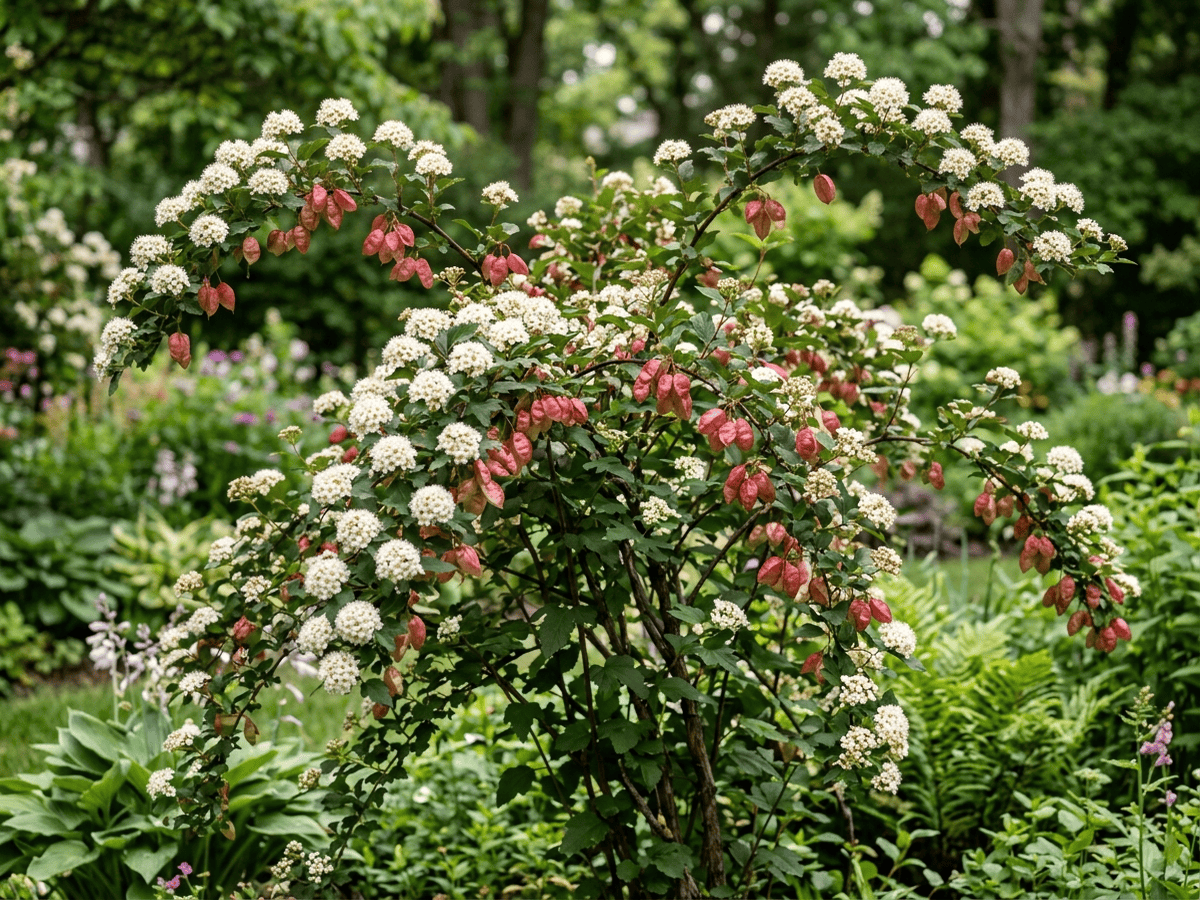
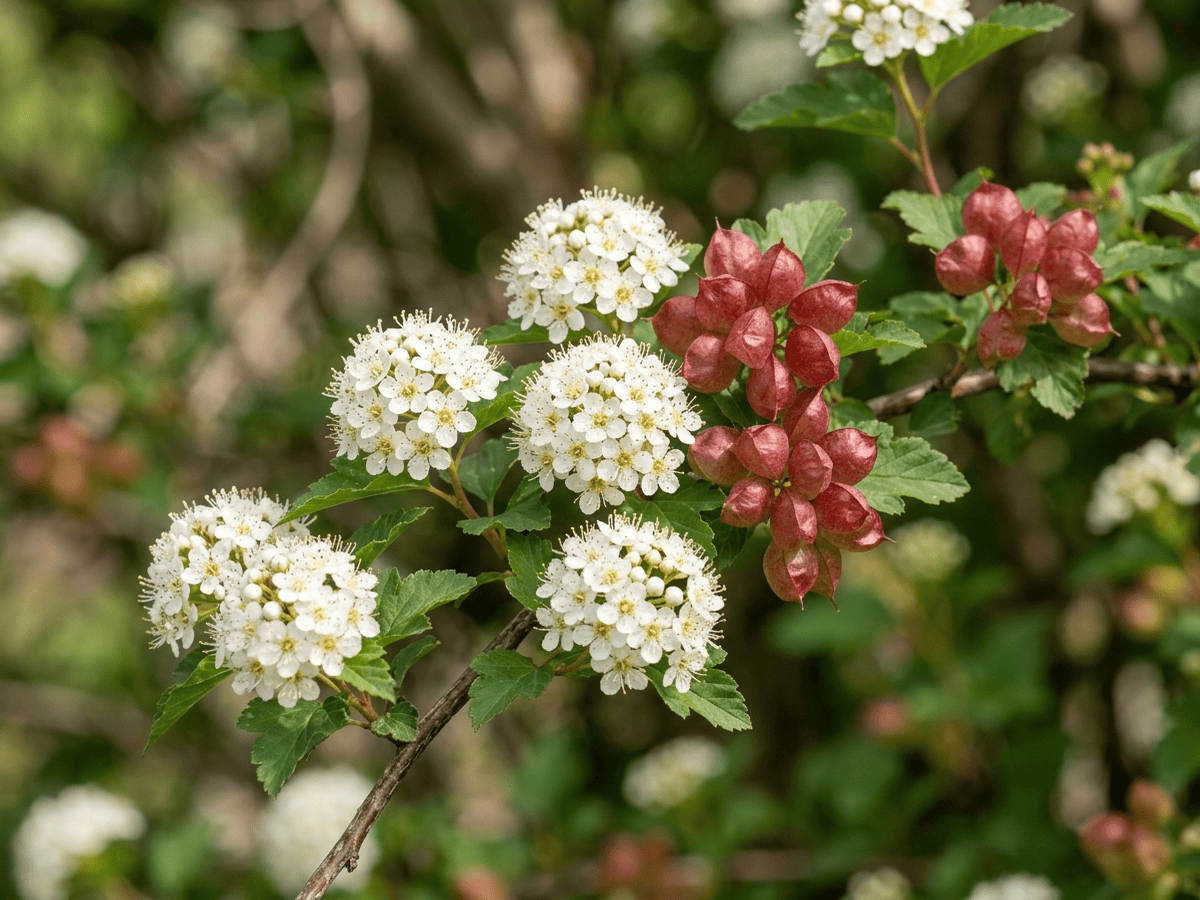
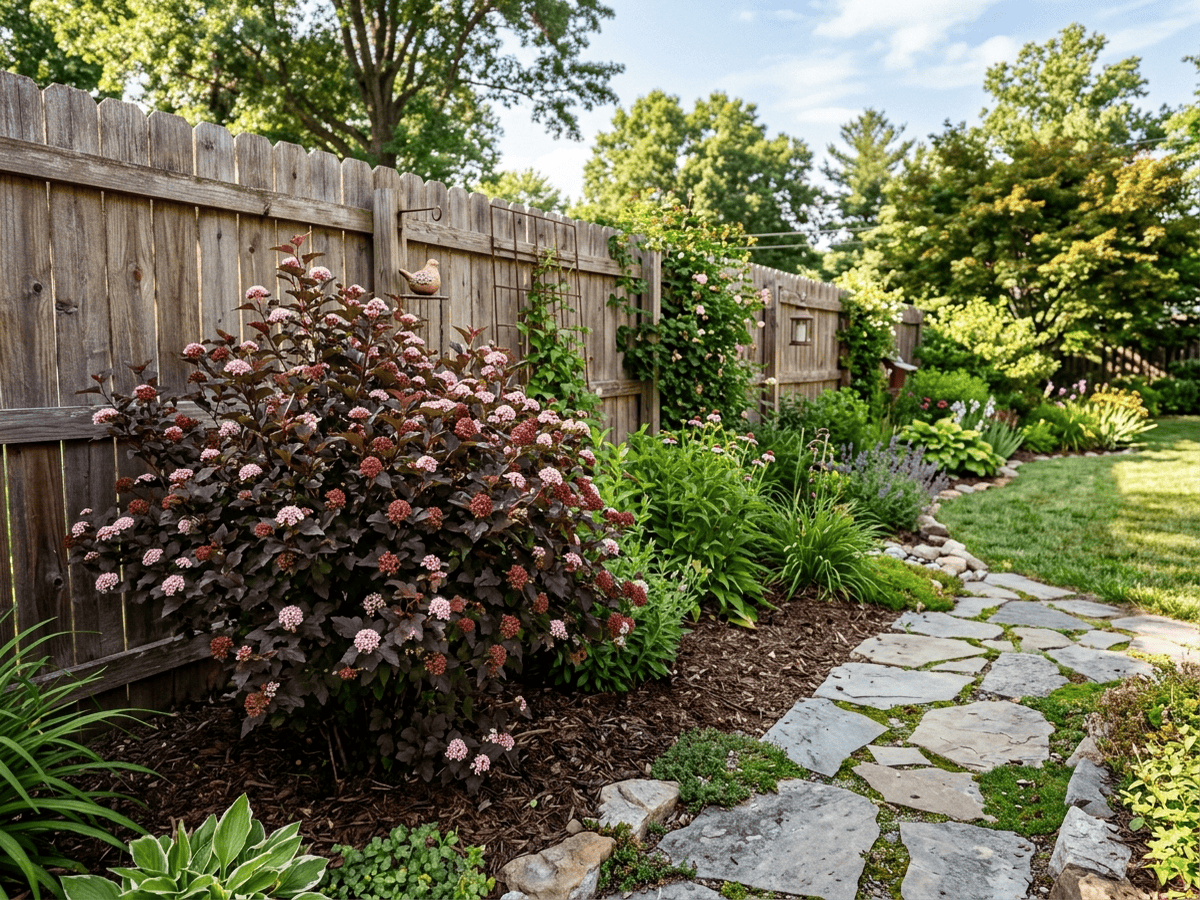
Common Ninebark is a native North American deciduous shrub growing 5 to 8 feet tall, with exfoliating multi-layered bark and rounded clusters of white or pink flowers in late spring followed by reddish seed heads. The ornamental dark purple-leaf cultivars like 'Diabolo' and 'Summer Wine' dominate modern American plantings for dramatic foliage contrast, while native green forms fit wildlife and native gardens.
- Drought-tolerant
- Cold-hardy
- Native
- Pollinator-friendly
How to care for Common Ninebark
Watering
- Springevery 7 days
- Summerevery 5 days
- Fallevery 10 days
- Winterevery 21 days
Soil · Well-draining
- Top dressingPine bark mulch10%
- Main mixPotting soil + perlite 2:170%
- DrainageLECA / gravel20%
Never skip the drainage layer — standing water is the top cause of root rot.
FERTILIZER
Balanced Feed 14-14-14
An even feed covers all three needs at once, keeping leaves, roots and blooms moving together with nothing pushed out of balance.
- Nitrogen · Leaves
- Phosphorus · Roots + Blooms
- Potassium · Strength
- Springevery 45 days
- Summerevery 60 days
At a Glance
- NativeNorth America
- Height5–10 ft (1.5–3 m)
- Spread5–10 ft (1.5–3 m)
- Flower colorWhite, Pink
- Foliage colorGreen, Purple, Yellow, Bronze
- Fruit colorRed
- SoilLoamy, Well-drained
- LocationsYard
Bloom time
BLOOM CYCLE
Peak bloom
May
White or pink flower clusters late spring
Fragrance
LIGHT FRAGRANCE
The flowers have a mildly honey-scented scent.
Toxicity
No toxicity has been reported for this plant. Still, it is wise to keep pets from chewing on any houseplant.
Educational information, not medical or veterinary advice. If exposure is suspected, contact a doctor or veterinarian.
DISTRIBUTION

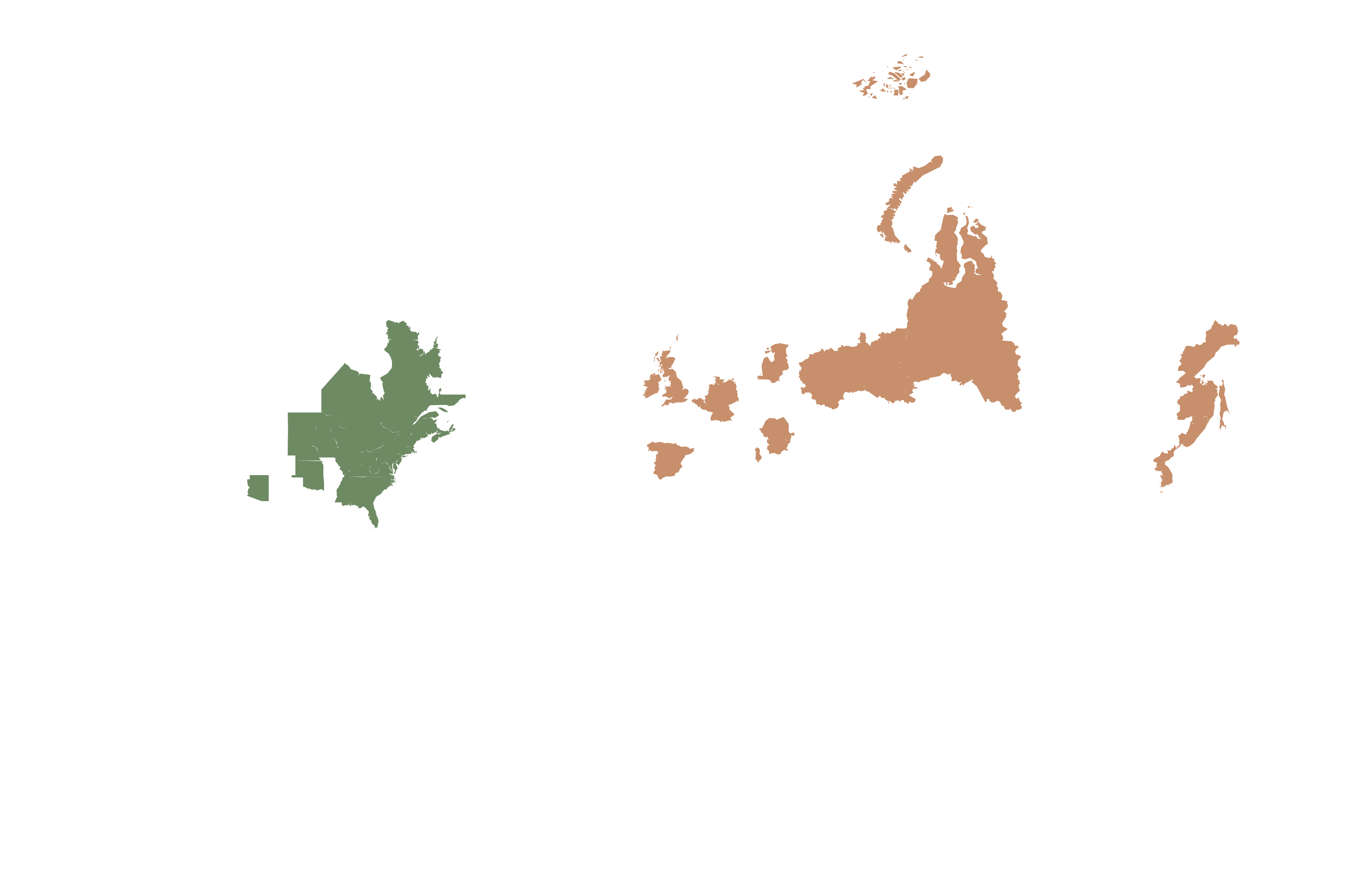
- Native
- Introduced
- North America
History
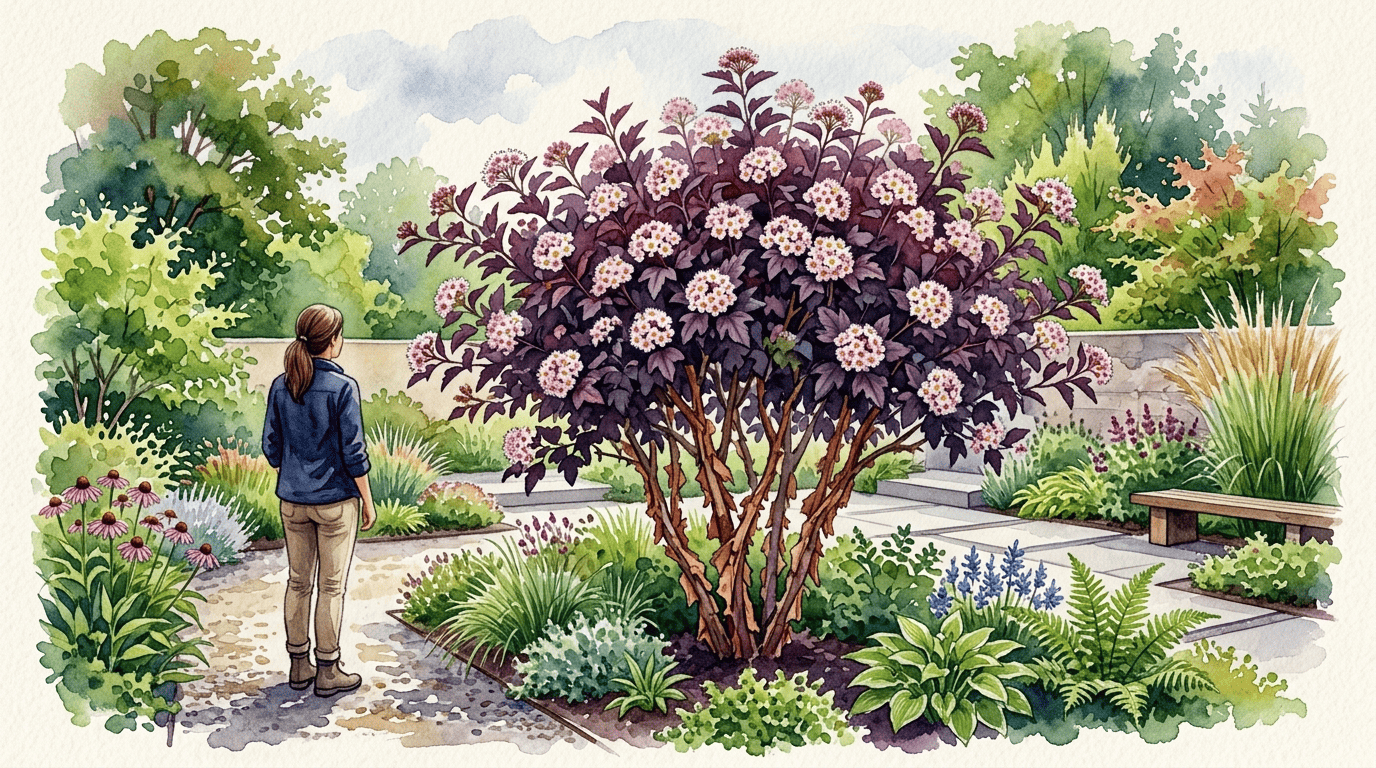
Physocarpus opulifolius grows in moist thickets, stream banks, and rocky slopes from Quebec south to Georgia and west to Minnesota. Linnaeus first described the species as Spiraea opulifolia in 1753; Carl Maximowicz transferred it to Physocarpus in 1879. The common name 'ninebark' refers to its multiple thin layers of exfoliating bark, which early settlers noted peeled away in up to nine distinct sheets.
Indigenous peoples, including the Cherokee, used root decoctions for stomach and tuberculosis complaints. Its horticultural revival came with the Canadian introduction of the gold-leaved 'Dart's Gold' (1969) and German breeder Kordes's dramatic purple-leaved 'Diabolo' (1968, US patent 1998), which became a worldwide landscape staple.
Later cultivars include 'Summer Wine', 'Little Devil', 'Coppertina', and 'Ginger Wine'. Native across eastern and central North America from Quebec to Florida and west to Wyoming. The 'Diabolo' purple-leaf cultivar introduced from Germany in 1999 revolutionized American garden design, followed by many improved forms like 'Summer Wine' and 'Coppertina' that dominate modern landscape plantings.
Symbolism & meaning
What It Symbolizes
Common Ninebark is layered resilience made shrub, its old bark peeling in many thin sheets that earned the plant its old folk name. Modern purple-leaved cultivars revolutionized contemporary garden design, turning a humble native into a foundation of color theory. In its many-skinned trunks, the plant quietly insists that beauty can be both heritage and reinvention.
- Layered resilience — bark peels in many layers, hence 'nine-bark'
- Modern drama — purple-leaf cultivars revolutionized design
Where the Name Comes From
'Physocarpus' from Greek 'physa-karpos' meaning bladder-fruit, for inflated seed pods; 'opulifolius' means guelder-rose-leaved, for Viburnum opulus-like foliage.
Uses & Fun Facts
- Dark purple-leaf cultivars dominate cold-climate mixed borders
- Spring flower clusters feed native bees and beneficial insects
- Exfoliating bark and seedheads provide bird habitat year-round
- Tough native shrub used for foundation screens and windbreaks
Related plants
More Physocarpus plants

Plants with similar care
 Chinese AbeliaAbelia chinensis
 Fragrant AbeliaAbelia mosanensis
 Large-Flowered AbeliaAbelia uniflora
 Glossy AbeliaAbelia x grandiflora
Frequently asked questions
How often should I water Common Ninebark?
In summer, water about every 5 days; in winter, about every 21 days. Adjust for heat, pot size and drainage.
How much light does Common Ninebark need?
Full sun: 6+ hrs direct. Watch the leaves — scorching or stretching means the light needs adjusting.
Is Common Ninebark toxic to cats or dogs?
No toxicity has been reported for this plant. Still, it is wise to keep pets from chewing on any houseplant. Educational information, not medical or veterinary advice. If exposure is suspected, contact a doctor or veterinarian.
Is Common Ninebark easy to grow?
Yes — it is considered an easy, beginner-friendly plant.
When does Common Ninebark bloom?
It typically blooms May in the Northern Hemisphere.
YardMate
Identify any plant in seconds
Snap a photo — YardMate names the plant, diagnoses problems, and reminds you when to water.
Download on the App Store