 YardMate


Mountain Andromeda
Pieris floribunda
Medium · Some experienceAbout Mountain Andromeda
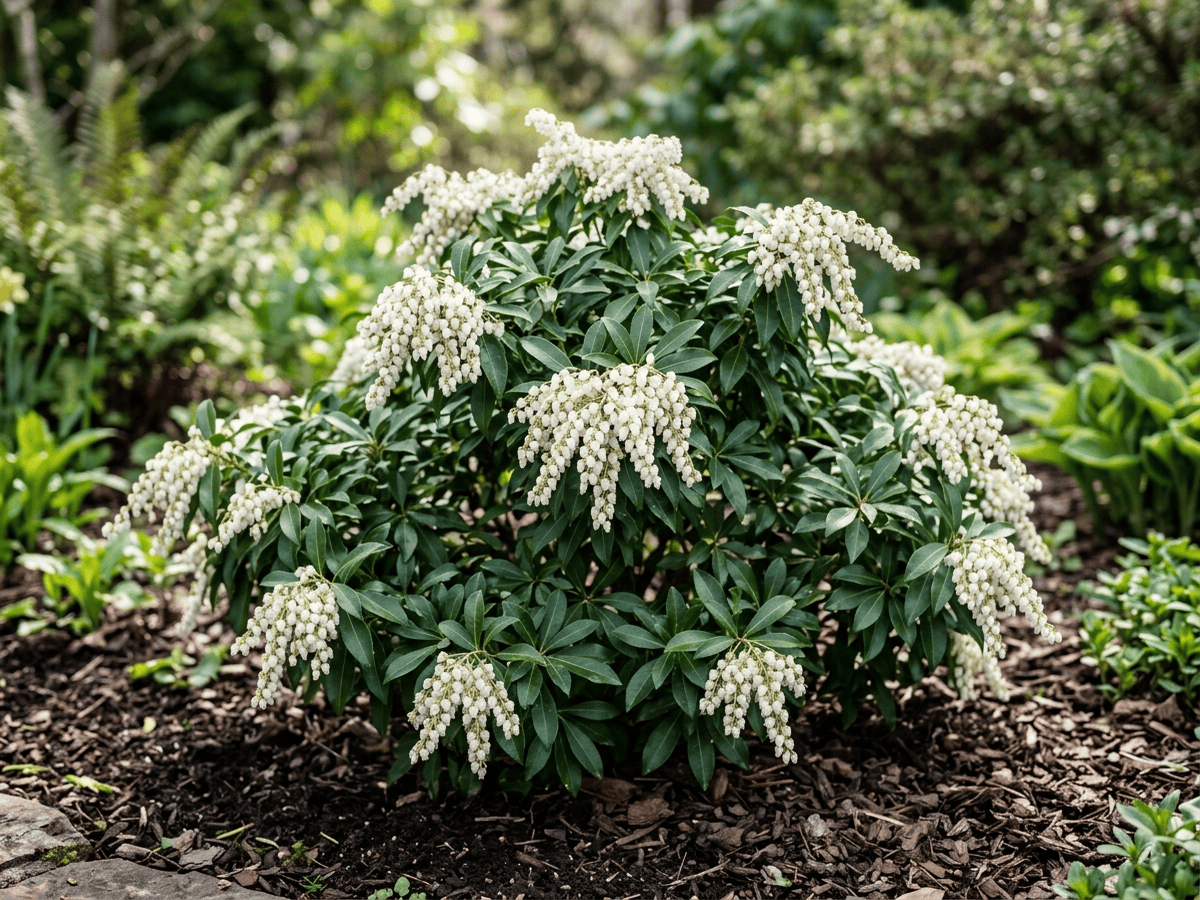
Mountain Pieris is an evergreen native shrub of the Appalachian Mountains, growing 2-6 feet tall with dense clusters of upright white urn-shaped flowers in early spring. Unlike its more commonly planted Japanese relative P. japonica, this species holds its flower buds upright rather than drooping, and is notably more resistant to lace bugs and the fungal disease Phytophthora. Native from Virginia to Georgia at higher elevations, it is an underused gem for foundation plantings in the eastern United States.
- Cold-hardy
- Deer-resistant
- Compact
- Evergreen
How to care for Mountain Andromeda
Watering
- Springevery 5 days
- Summerevery 3 days
- Fallevery 7 days
- Winterevery 14 days
Soil · Acidic · pH 4.5–6
- Top dressingPine needle mulch10%
- Main mixAcid-lover mix + peat 3:175%
- DrainageGravel15%
Never add lime or wood ash — it cancels out the acidity.
FERTILIZER
Acid-Loving Feed 4-3-4
One bag does both jobs. An acid feed carries the usual nitrogen, phosphorus and potassium, plus the sulfur and iron that keep the soil sour enough for the roots to take them up at all.
- Nitrogen · Leaves
- Phosphorus · Roots + Blooms
- Potassium · Strength
- Springevery 30 days
At a Glance
- NativeNorth America
- Height3–6 ft (0.9–1.8 m)
- Spread3–6 ft (0.9–1.8 m)
- Flower colorWhite
- Foliage colorDark-green, Green, Red
- SoilLoamy, Moisture-retentive, Acidic
- LocationsYard
Bloom time
BLOOM CYCLE
Peak bloom
Mar–Apr
White urn-shaped flowers in upright clusters March to April
Fragrance
LIGHT FRAGRANCE
Mild sweet lily-of-the-valley-like scent to some noses.
Toxicity
Humans Toxic · Pets Toxic
grayanotoxins
Toxic
- Leaf
- Flower
- Nectar
- Ingestion
EXPOSURE Eating leaves, flowers, and nectar.
EFFECT Nausea, vomiting, bradycardia, hypotension from grayanotoxins.
NOTE Documented concern for humans: Nausea, vomiting, bradycardia, hypotension from grayanotoxins.
Toxic
- Leaf
- Flower
- Ingestion
EXPOSURE Eating leaves and flowers.
EFFECT Vomiting, diarrhea, weakness, cardiac arrhythmia.
NOTE ASPCA lists Pieris as toxic to dogs, cats, horses. Shares the severe grayanotoxin toxicity of Rhododendron.
Toxic
- Leaf
- Flower
- Ingestion
EXPOSURE Eating leaves and flowers.
EFFECT Vomiting, diarrhea, weakness, cardiac arrhythmia.
NOTE ASPCA lists Pieris as toxic to dogs, cats, horses. Shares the severe grayanotoxin toxicity of Rhododendron.
Educational information, not medical or veterinary advice. If exposure is suspected, contact a doctor or veterinarian.
DISTRIBUTION


- Native
- Introduced
- North America
History
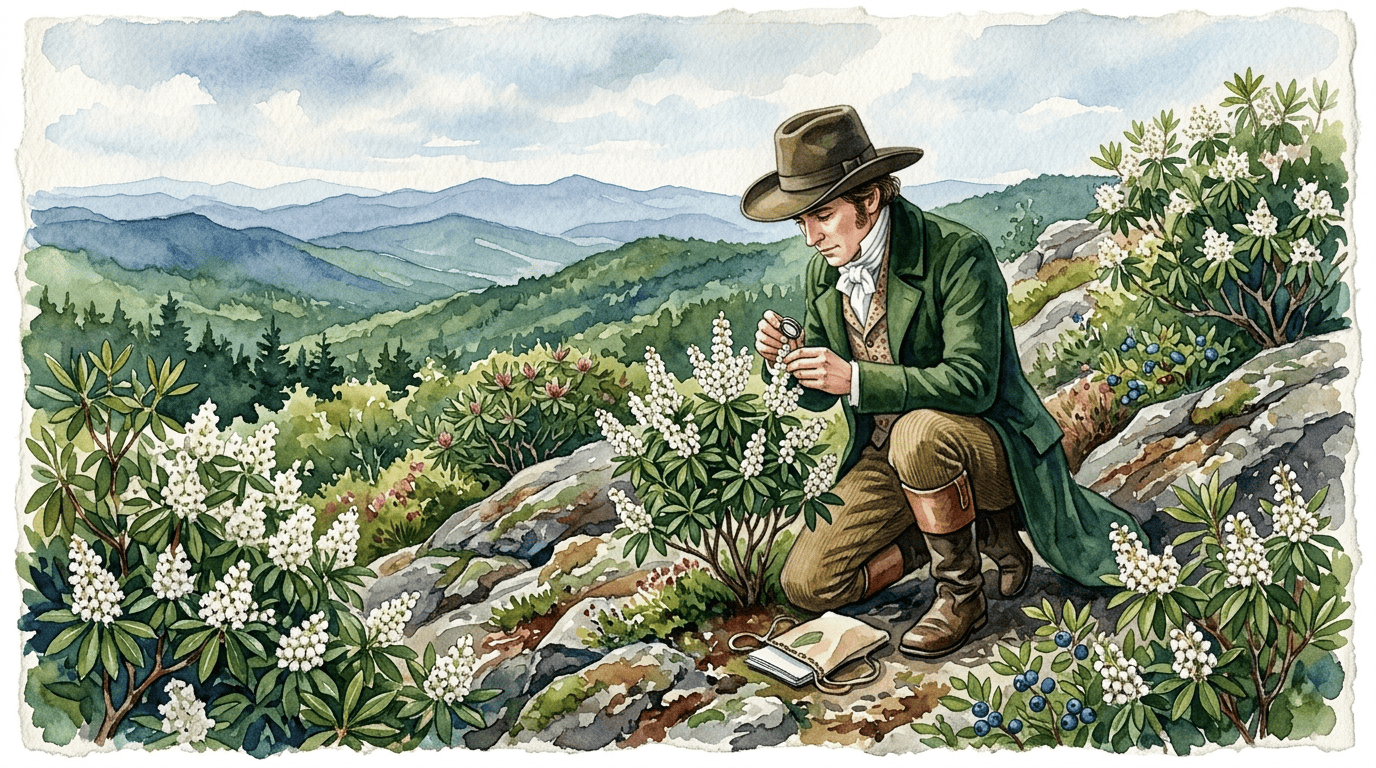
Pieris floribunda is endemic to the southern Appalachian mountains from Virginia to Georgia, typically on rocky slopes and heath balds at middle to high elevations. German-American botanist Frederick Pursh first described it as Andromeda floribunda in 1814 in his Flora Americae Septentrionalis, the epithet floribunda meaning abundantly flowering. British botanists George Bentham and Joseph Dalton Hooker transferred it to Pieris in 1876.
The genus Pieris honors the Pierides (the Greek muses). Unlike its commonly cultivated Japanese cousin P. japonica, which can suffer in southeastern US summer heat and in alkaline soils, P. floribunda is remarkably heat- and cold-tolerant, more compact (typically 1-1.5 meters), and its white flower panicles are held stiffly upright rather than drooping. It blooms earlier than P. japonica, often in March-April, and has some resistance to lace bug—the main pest of P. japonica.
Crosses between the two gave the hybrid P. x 'Brouwer's Beauty', released in the 1960s. Found wild on rocky mountain slopes and cliff faces in the central and southern Appalachians. Named 'floribunda' for its exceptionally heavy flowering. Largely overlooked in favor of showier Japanese Pieris, it has gained renewed attention as P. japonica suffers increasingly from lace bug damage and Phytophthora across the eastern US. Its natural habitat includes some of the most ancient and biodiverse forest ecosystems in North America.
Symbolism & meaning
What It Symbolizes
Mountain Andromeda makes visible protection, a tough native adapted to the harsh wind and cold of southern Appalachian summits. It also evokes steadfastness — a reliable evergreen carrying its drooping white bell flowers through Appalachian winters with quiet dignity. A native andromeda for gardeners who value plants that stay put and stay green when conditions go hard.
- Protection — tough native adapted to harsh mountain conditions
- Steadfastness — reliable evergreen through Appalachian winters
Where the Name Comes From
The name Mountain Andromeda points to mountain habitats. 'Pieris' from Greek mythology, the Muses' birthplace; 'floribunda' means 'many-flowered' in Latin.
Uses & Fun Facts
- Native Mountain Andromeda with white spring flower panicles
- Evergreen mound trimmed into low informal screens
- Urn-shaped white flowers feed early-season bumblebees
Related plants
More Pieris plants

Plants with similar care
 Japanese MapleAcer palmatum
 Azure MonkshoodAconitum carmichaelii
 Florida HobblebushAgarista populifolia
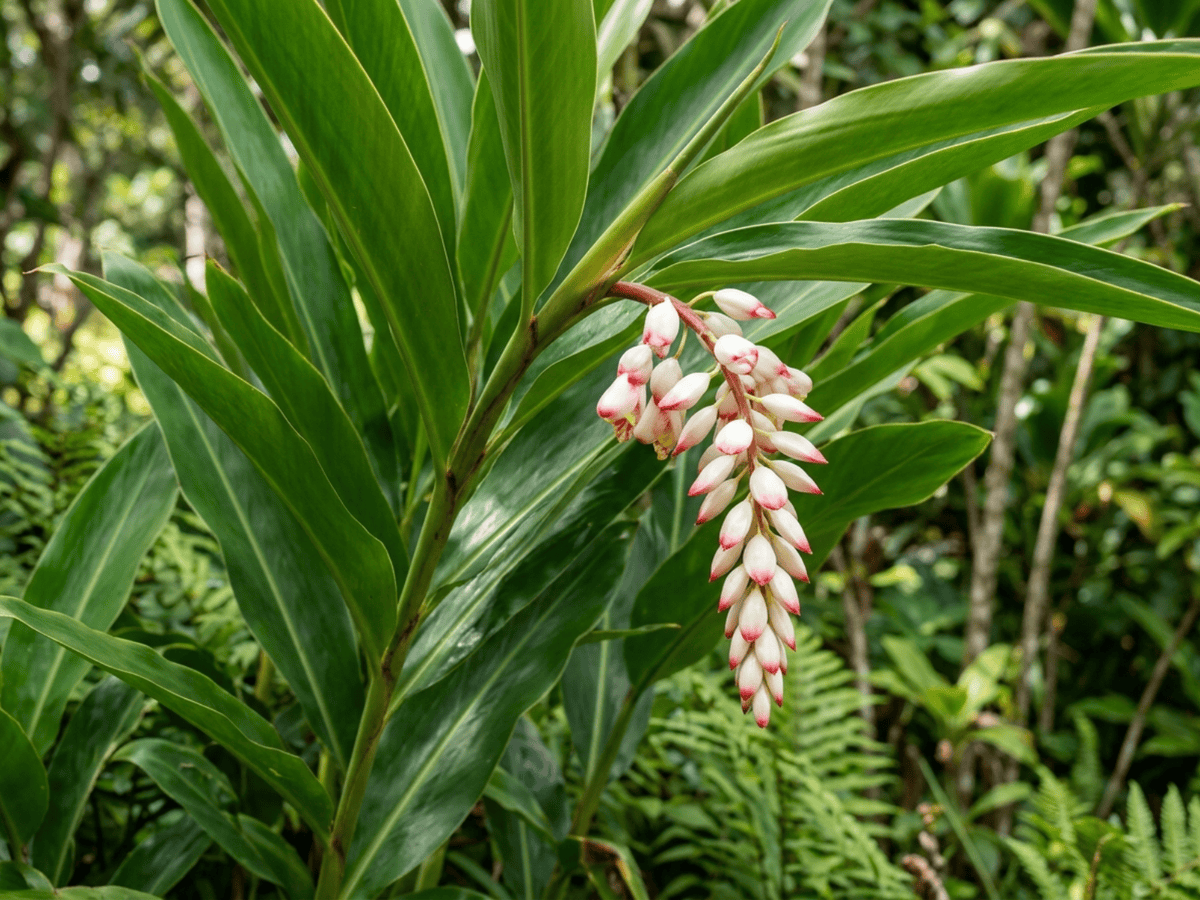 Shell GingerAlpinia zerumbet
Frequently asked questions
How often should I water Mountain Andromeda?
In summer, water about every 3 days; in winter, about every 14 days. Adjust for heat, pot size and drainage.
How much light does Mountain Andromeda need?
Part shade: 2–4 hrs direct. Watch the leaves — scorching or stretching means the light needs adjusting.
Is Mountain Andromeda toxic to cats or dogs?
Pets Toxic (Dogs Toxic · Cats Toxic) Educational information, not medical or veterinary advice. If exposure is suspected, contact a doctor or veterinarian.
Is Mountain Andromeda easy to grow?
It is moderately demanding: a good choice once you have a little experience.
When does Mountain Andromeda bloom?
It typically blooms Mar–Apr in the Northern Hemisphere.
YardMate
Identify any plant in seconds
Snap a photo — YardMate names the plant, diagnoses problems, and reminds you when to water.
Download on the App Store