 YardMate


American Sycamore
Platanus occidentalis
Easy · Beginner friendlyAbout American Sycamore
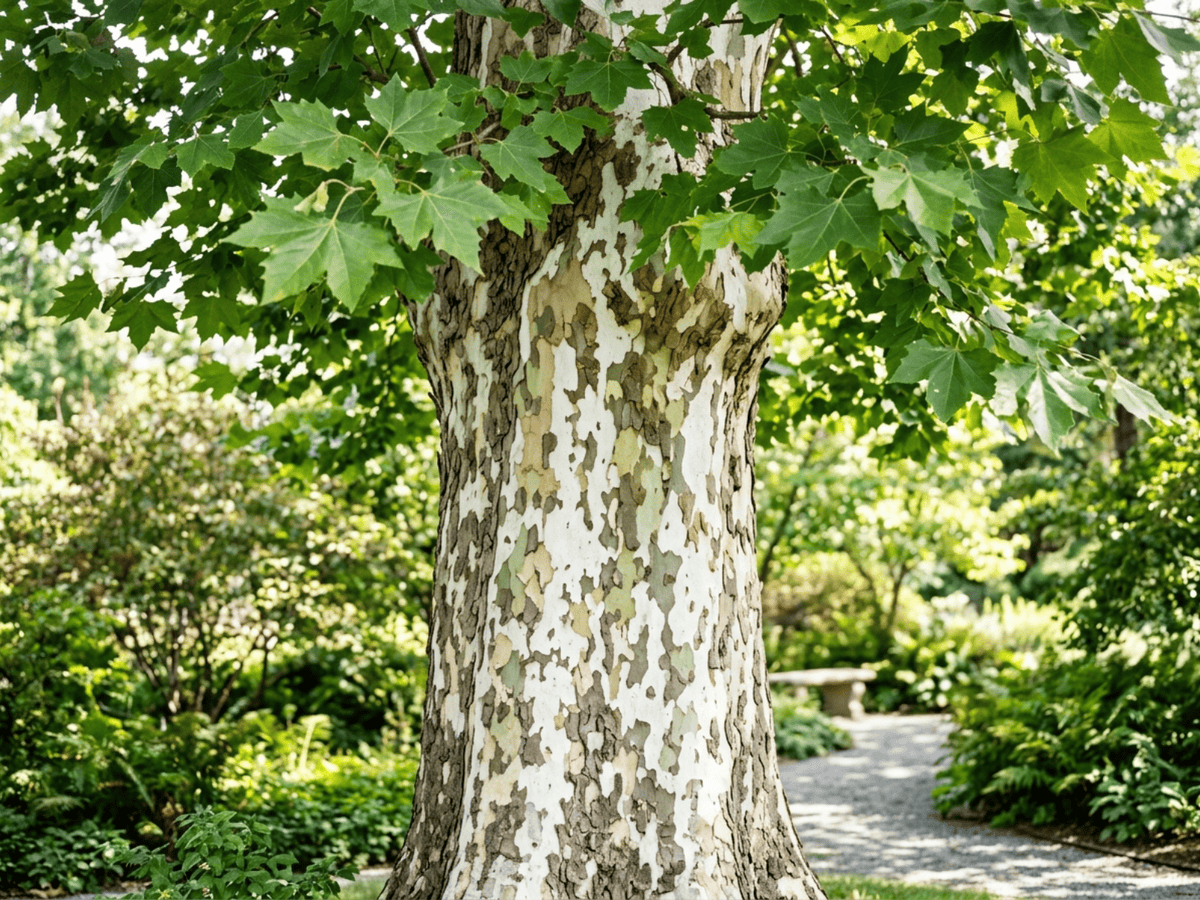
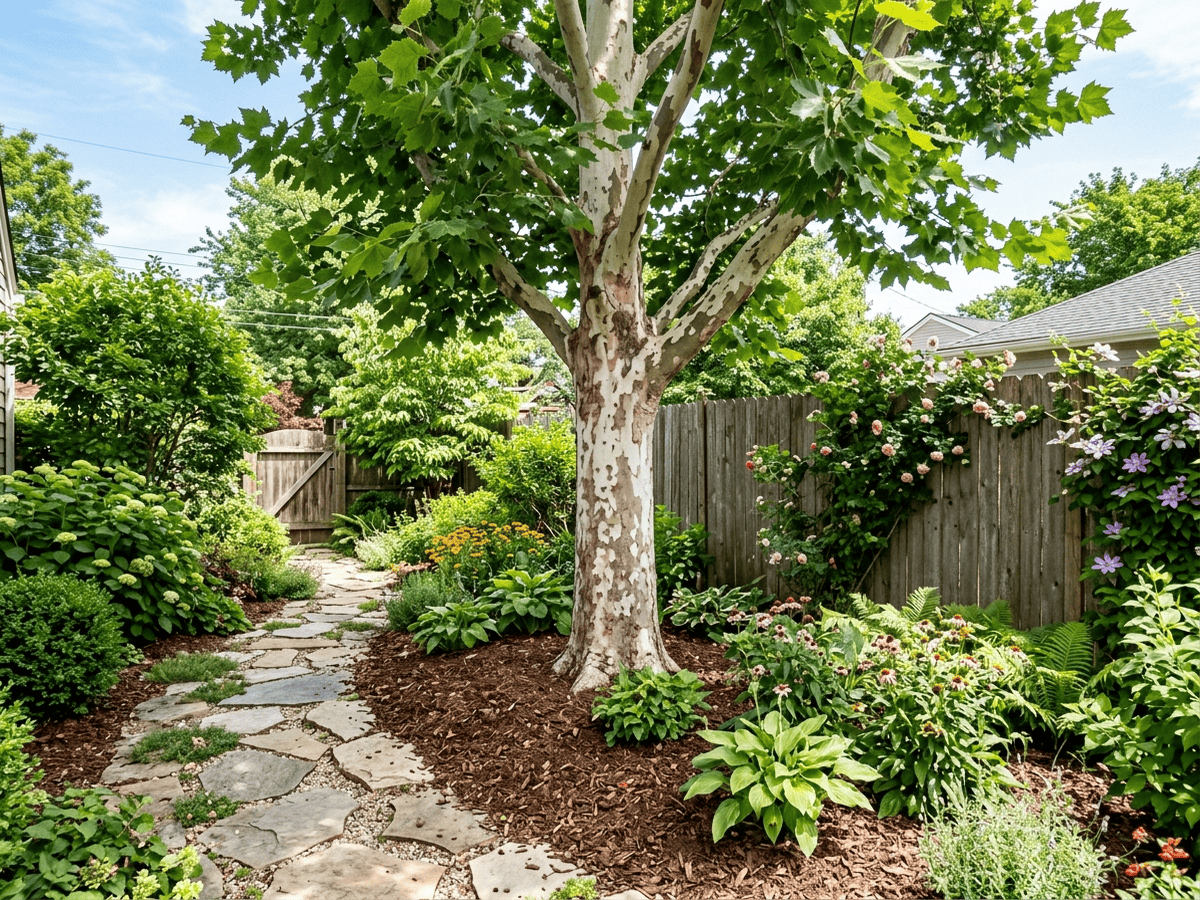
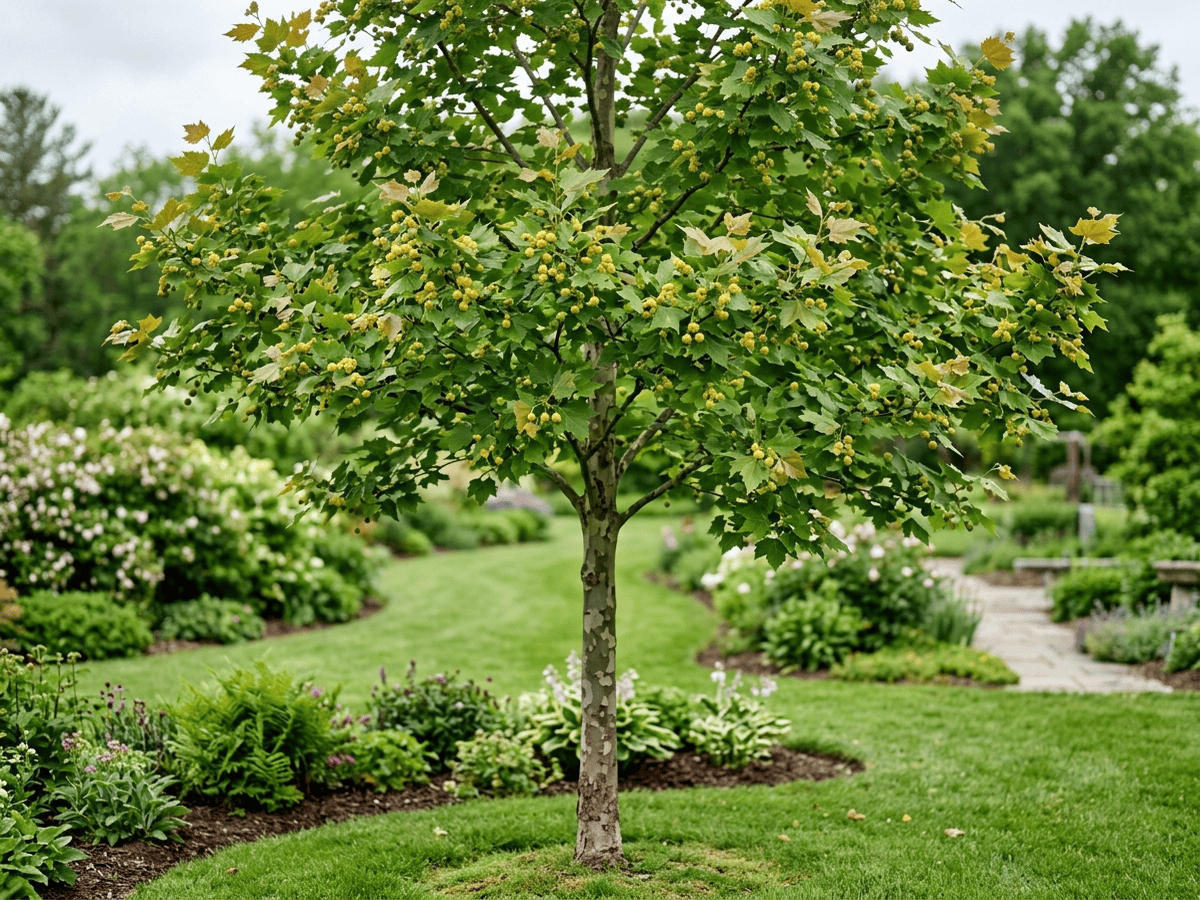
American Sycamore is one of the largest deciduous trees native to the eastern US, reaching 75-100 feet with massive trunks up to 10 feet across. Instantly recognizable by its mottled, peeling bark—camouflage patches of cream, tan, olive, and gray. Huge maple-like leaves and spherical seed balls dangling from long stalks complete its bold presence. A signature tree of eastern US riverbanks and one of the most massive native American trees.
- Fast-growing
- Native
How to care for American Sycamore
Watering
- Springevery 7 days
- Summerevery 5 days
- Fallevery 10 days
- Winterpause watering
Soil · Well-draining
- Top dressingPine bark mulch10%
- Main mixPotting soil + perlite 2:170%
- DrainageLECA / gravel20%
Never skip the drainage layer — standing water is the top cause of root rot.
FERTILIZER
Balanced Feed 14-14-14
An even feed covers all three needs at once, keeping leaves, roots and blooms moving together with nothing pushed out of balance.
- Nitrogen · Leaves
- Phosphorus · Roots + Blooms
- Potassium · Strength
- Springevery 60 days
- Summerevery 60 days
At a Glance
- NativeNorth America
- Height70–100 ft (21.3–30.5 m)
- Spread60–80 ft (18.3–24.4 m)
- Flower colorGreen
- Foliage colorGreen, Bronze
- Fruit colorBrown
- SoilLoamy, Moisture-retentive
- LocationsYard
Bloom time
BLOOM CYCLE
Peak bloom
Mar–May
Small spherical flower clusters in spring
Toxicity
Humans Slight
Unknown toxic principle
Slight
- Trichomes
- Contact
- Inhalation
EXPOSURE Touching trichomes. Inhaling trichomes.
EFFECT Respiratory irritation and contact dermatitis.
NOTE Leaf trichomes may cause respiratory irritation in humans; not listed as toxic to pets.
Not reported
EXPOSURE No exposure route is reported.
EFFECT No toxic effect is reported.
NOTE No toxicity is reported for dogs in this catalog; this is not evidence that the plant is edible or harmless.
Not reported
EXPOSURE No exposure route is reported.
EFFECT No toxic effect is reported.
NOTE No toxicity is reported for cats in this catalog; this is not evidence that the plant is edible or harmless.
Educational information, not medical or veterinary advice. If exposure is suspected, contact a doctor or veterinarian.
DISTRIBUTION

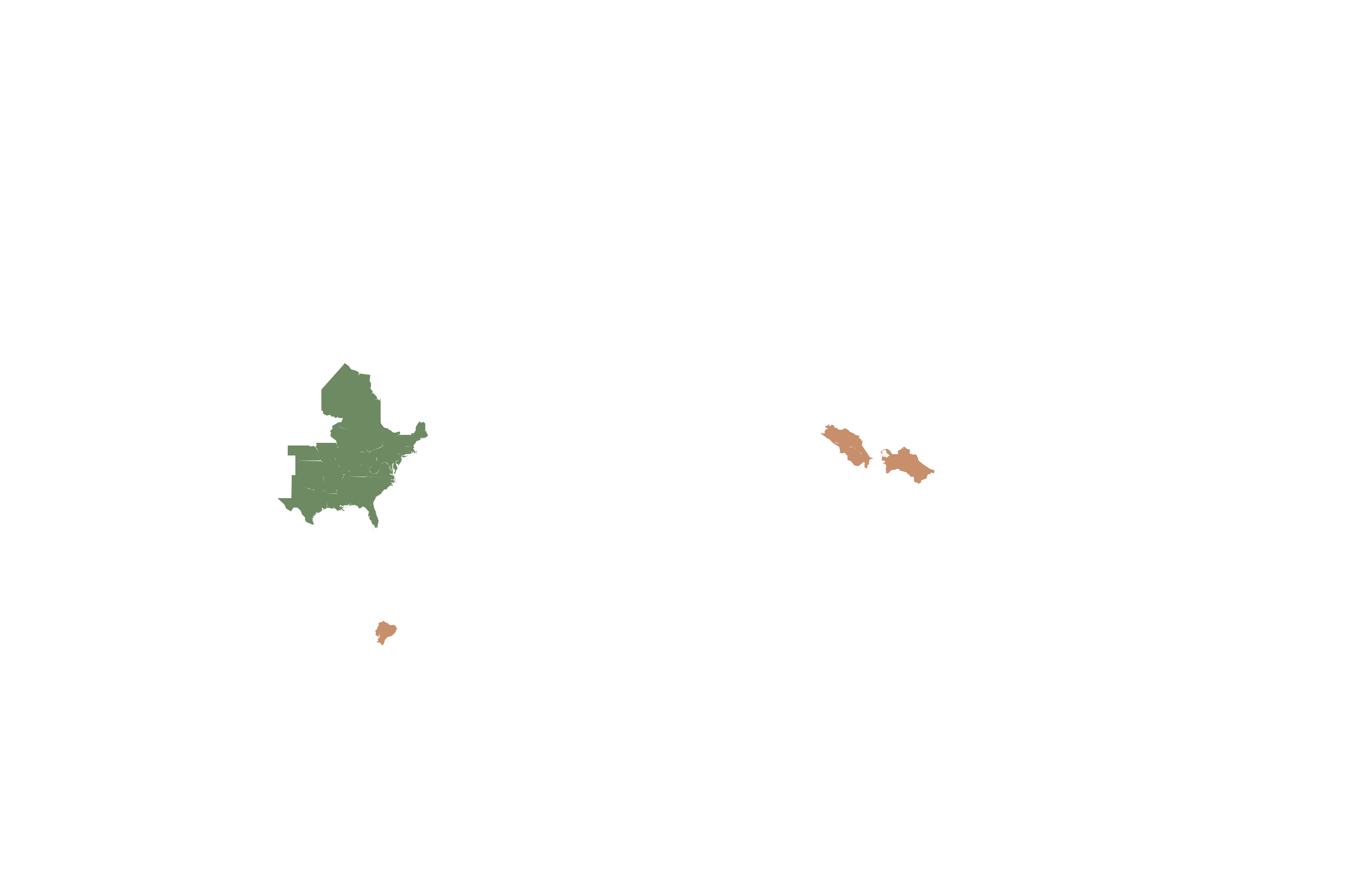
- Native
- Introduced
- North America
History
Platanus occidentalis ranges across eastern North America from Ontario to Florida and west to Nebraska and Texas. Linnaeus described it in 1753. Mature specimens are among the largest deciduous trees of eastern North America—reaching 100-175 feet tall with 4-10 foot trunk diameters, and exceptionally living 500-600 years.
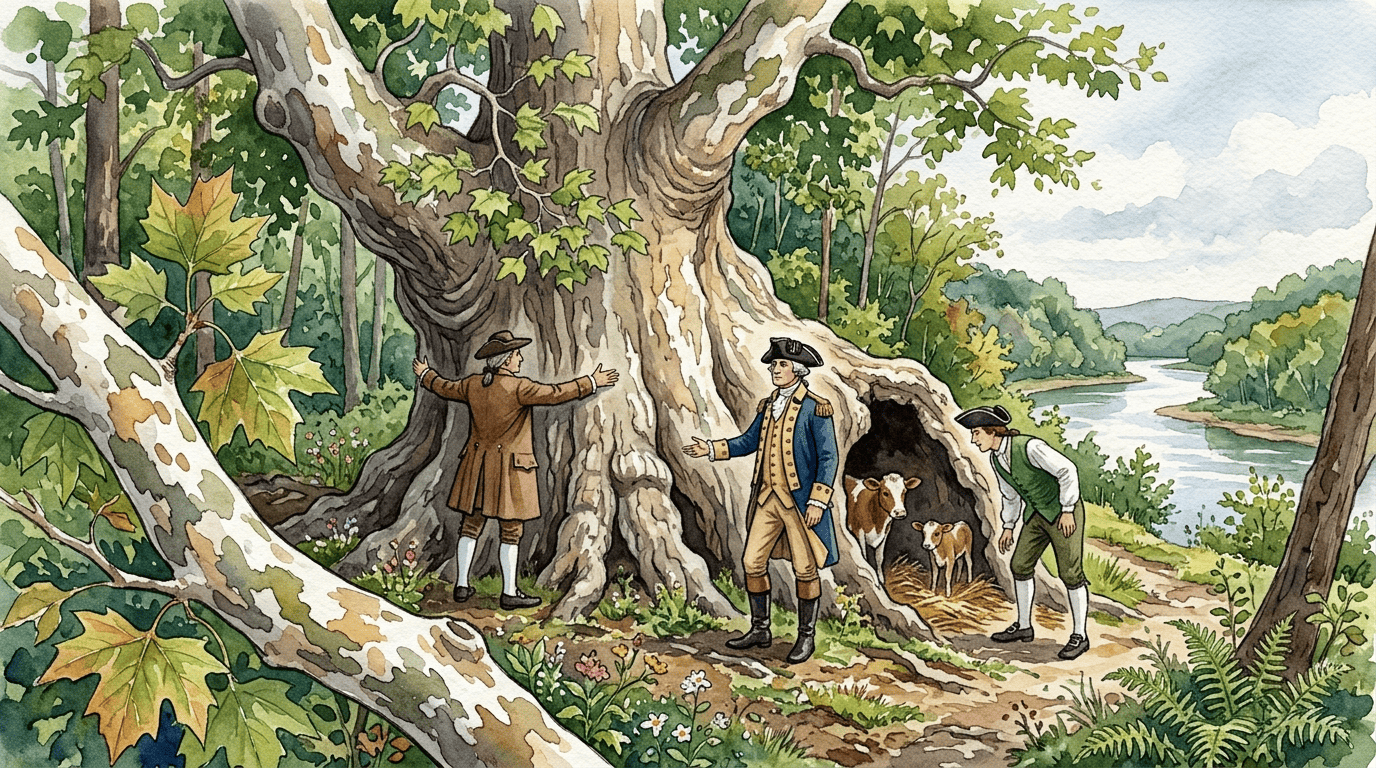
Old hollow sycamore trunks became legendary shelters for wildlife and historical figures: George Washington recorded a sycamore hollow that sheltered a cow with her calf, and Daniel Boone reputedly hollowed a sycamore as a camp. The exfoliating bark peels in irregular patches revealing a striking patchwork of white, olive-gray, and tan camouflage pattern that is especially dramatic against winter snow. Dust-like hairs from the fruit ball can cause respiratory irritation, giving the tree a mixed urban reputation.
Anthracnose disease causes spring defoliation in wet years. The London plane (P. x acerifolia) is a hybrid of this species with P. orientalis. A tree of American legend—George Washington admired a massive specimen on the Ohio River measured at 45 feet in circumference.
Symbolism & meaning
What It Symbolizes
The American Sycamore can symbolize curiosity, its mottled bark peeling in patches of cream, olive and gray so endlessly varied that no two trunks are alike. Another layer is grandeur, for it is one of the largest native trees of the eastern United States, with massive specimens marking river bottoms and old farmsteads. To stand beneath a sycamore is to feel both registers at once, a tree that rewards close inspection and humbles the gaze in the same breath.
- Curiosity — mottled bark endlessly varied
- Grandeur — one of largest eastern native trees
Where the Name Comes From
The name American Sycamore points to North America. 'Platanus' is classical Greek for plane tree; 'occidentalis' means western.
Uses & Fun Facts
- American sycamore casts huge cooling canopy along streams
- Mottled white-cream peeling bark stands out year-round
Related plants
More Platanus plants
Plants with similar care
 Chinese AbeliaAbelia chinensis
 Fragrant AbeliaAbelia mosanensis
 Large-Flowered AbeliaAbelia uniflora
 Glossy AbeliaAbelia x grandiflora
Frequently asked questions
How often should I water American Sycamore?
Water about every 7 days during the growing season, and always let excess water drain away.
How much light does American Sycamore need?
Full sun: 6+ hrs direct. Watch the leaves — scorching or stretching means the light needs adjusting.
Is American Sycamore toxic to cats or dogs?
Pets Not reported (Dogs Not reported · Cats Not reported) Educational information, not medical or veterinary advice. If exposure is suspected, contact a doctor or veterinarian.
Is American Sycamore easy to grow?
Yes — it is considered an easy, beginner-friendly plant.
When does American Sycamore bloom?
It typically blooms Mar–May in the Northern Hemisphere.
YardMate
Identify any plant in seconds
Snap a photo — YardMate names the plant, diagnoses problems, and reminds you when to water.
Download on the App Store