 YardMate
Split Rock
Pleiospilos nelii
Hard · Experienced growersAbout Split Rock
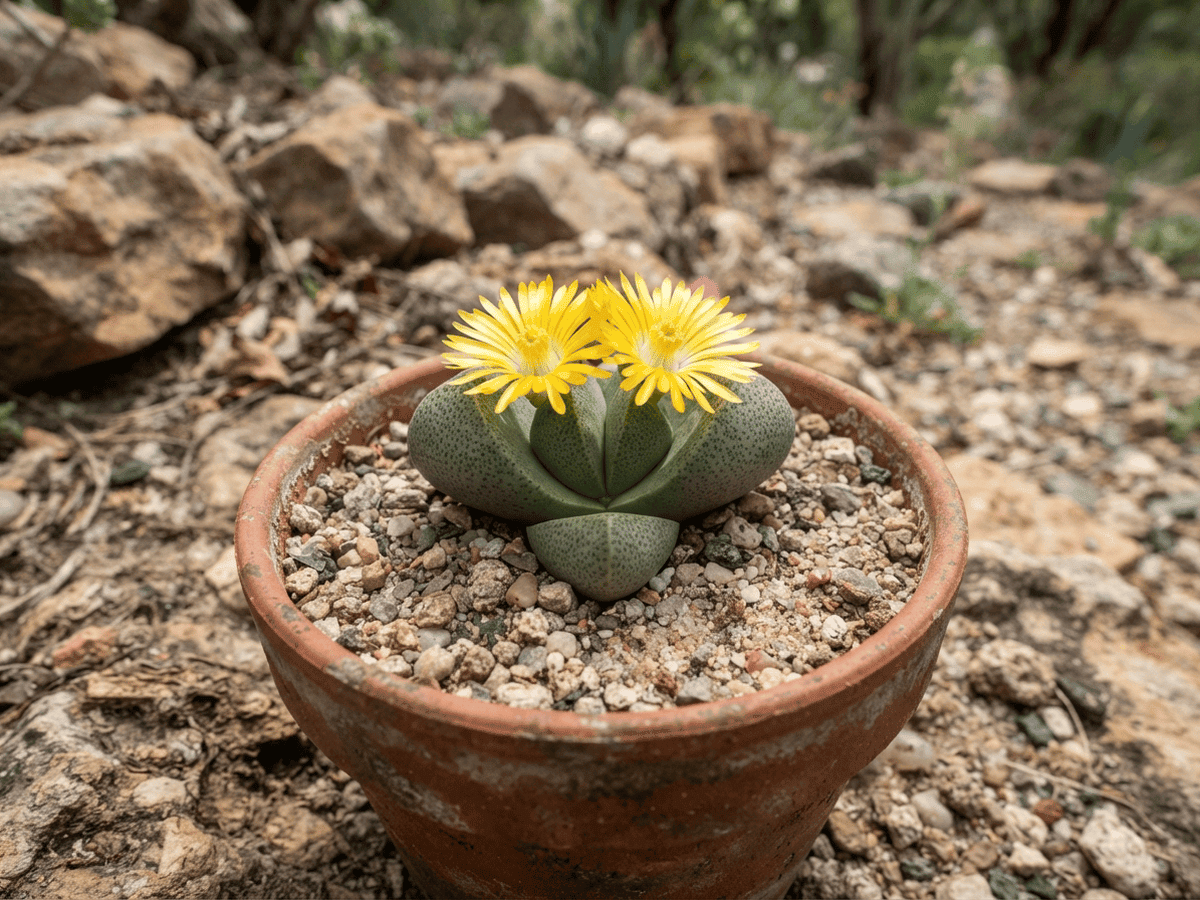
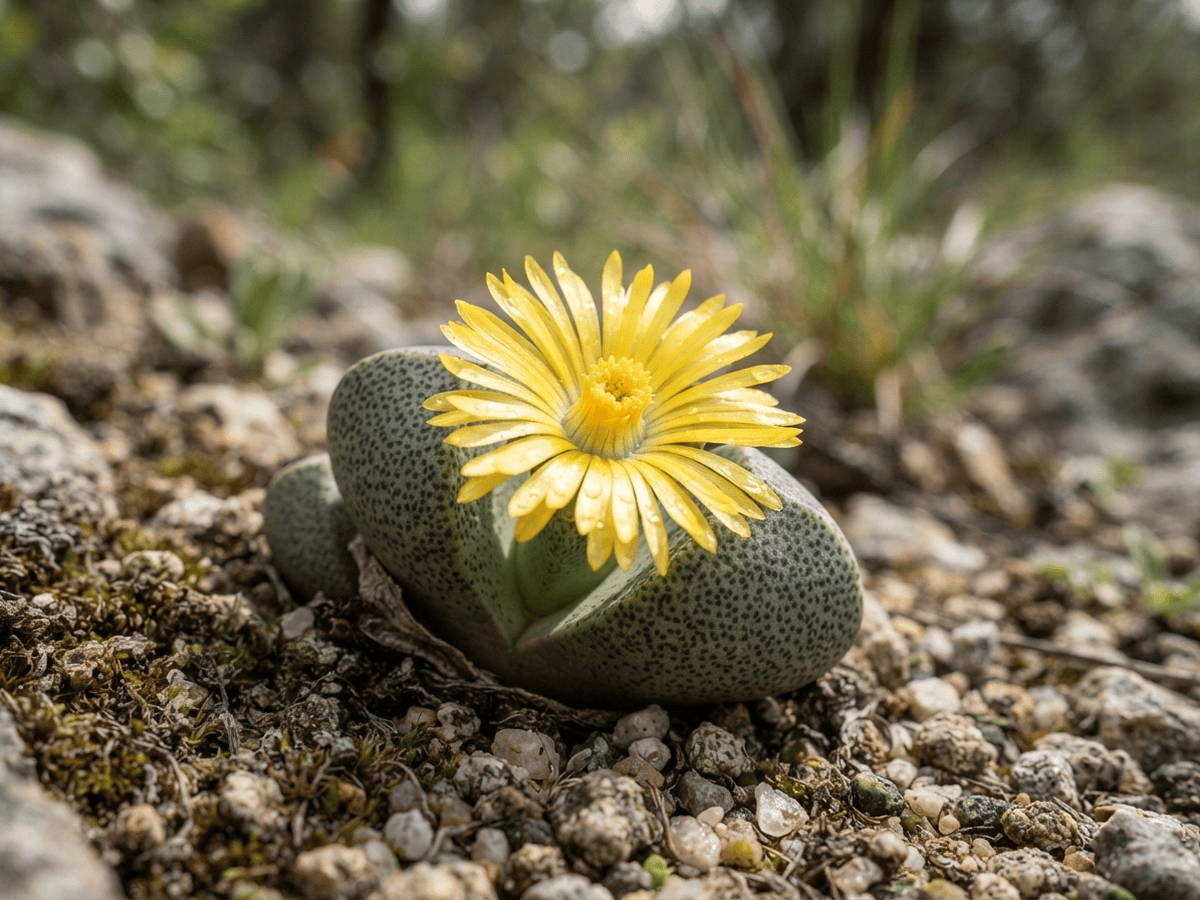
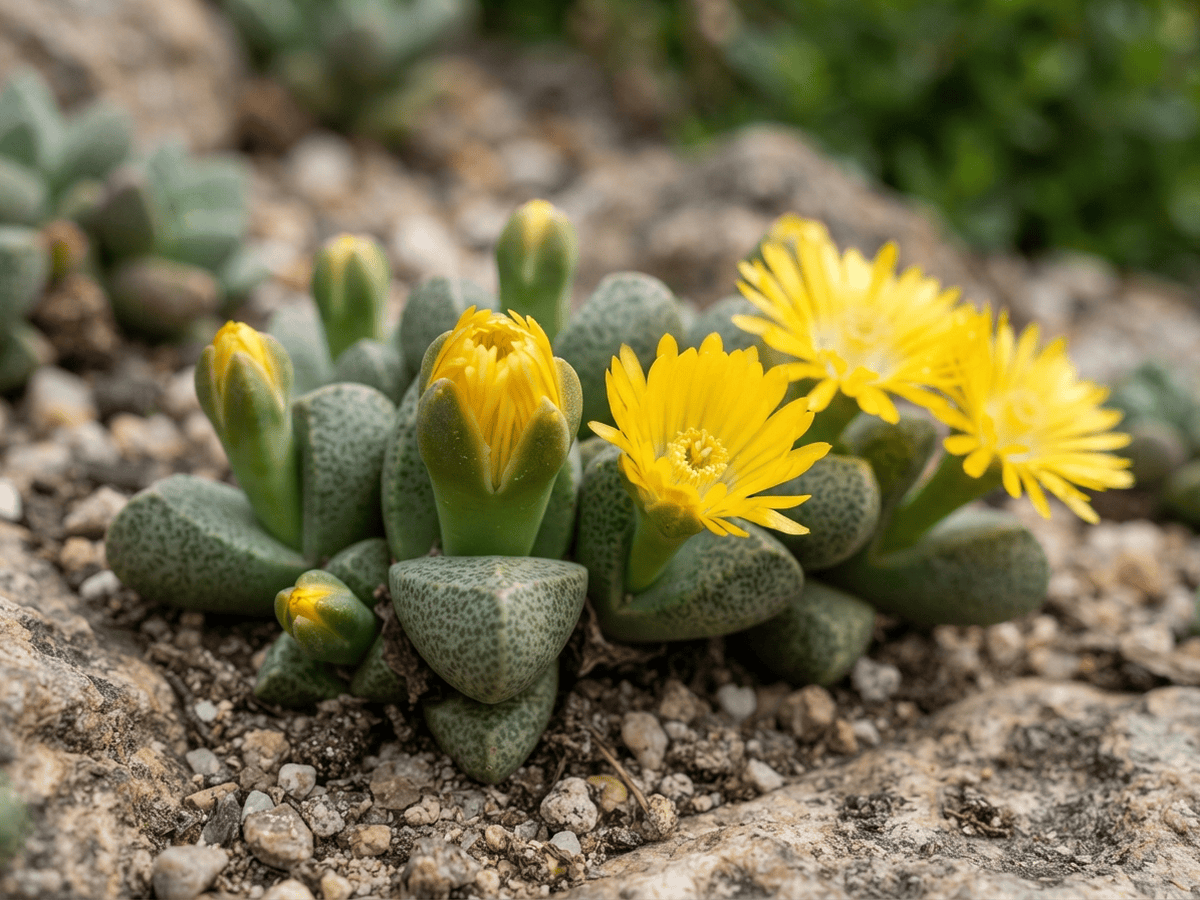
The Split Rock is a compact, stemless succulent native to South Africa's Karoo, where its paired, hemispherical leaves grow half-buried in gravel near the Swartberg Mountains, mottled to match the surrounding granite so closely that a resting plant is nearly impossible to spot. Each year it renews itself from within: a fresh leaf pair emerges from the fissure between the old ones, drawing on their stored moisture until the old pair withers away. In autumn, a single daisy-like flower in yellow or coppery orange opens only in afternoon sun, releasing a surprising scent of coconut before closing at dusk. Grown in gritty, fast-draining soil and watered sparingly, it thrives on neglect and rewards patient growers with a quiet, rock-like presence.
- Drought-tolerant
- Container-friendly
- Slow-growing
- Compact
How to care for Split Rock
Watering
- Springevery 15 days
- Summerevery 30 days
- Fallevery 30 days
- Winterpause watering
Soil · Fast-draining
- Main mixSand + pumice + soil 1:1:150%
- DrainagePumice / gravel50%
Keep grit at half the mix or more — this soil is meant to dry out fast.
FERTILIZER
Cactus & Succulent Feed 2-7-7
Hold the nitrogen back and growth stays compact instead of soft and stretched. Phosphorus and potassium carry the roots and the flowering.
- Nitrogen · Leaves
- Phosphorus · Roots + Blooms
- Potassium · Strength
- Springevery 30 days
At a Glance
- NativeSouth Africa
- Height0.1–0.5 ft (0–0.2 m)
- Spread0.5–1 ft (0.2–0.3 m)
- Flower colorYellow
- Foliage colorGreen
- SoilWell-drained, Sandy, Moist
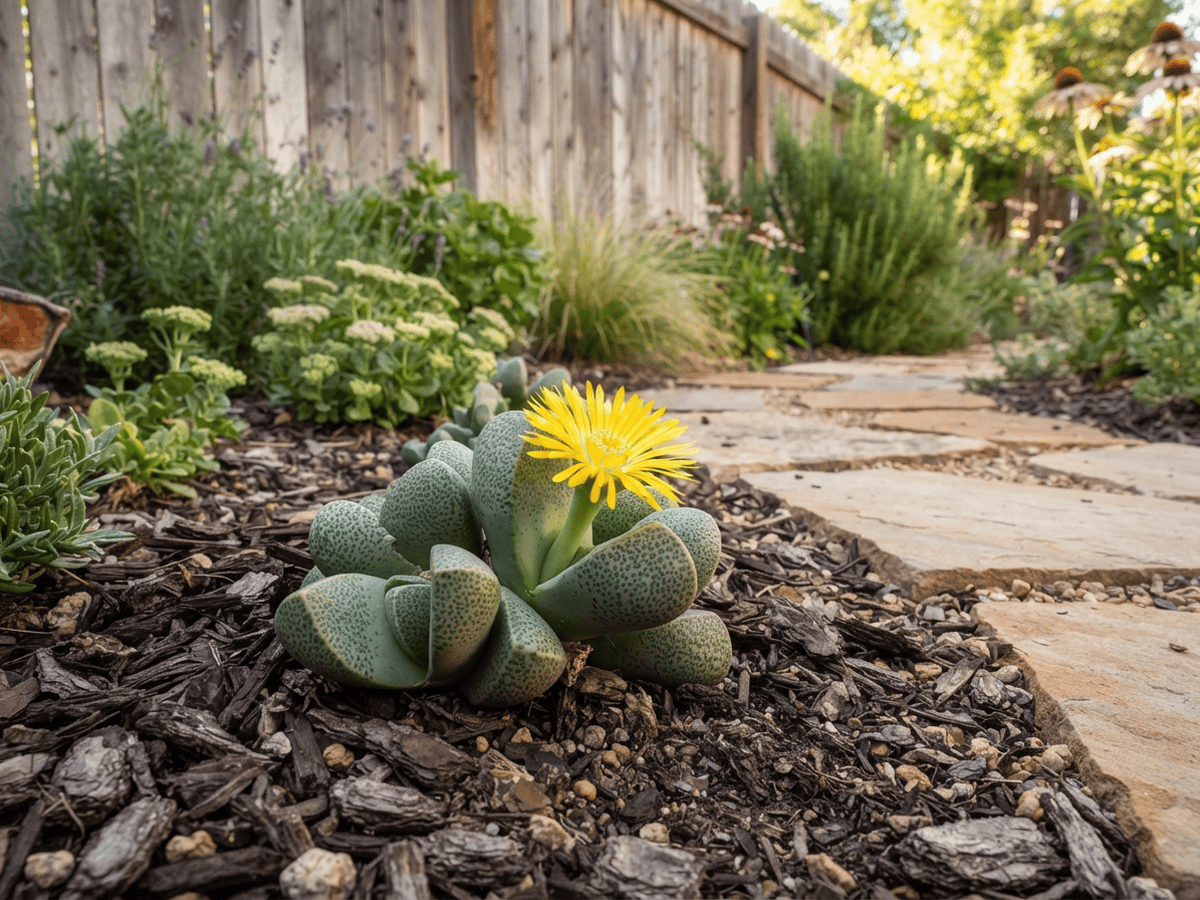
- LocationsYard · Patio
Bloom time
BLOOM CYCLE
Peak bloom
Feb–Apr
This plant blooms in spring, with vibrant and attractive flowers.
Fragrance
MODERATE FRAGRANCE
Its single afternoon flower releases a distinct, sweet scent of coconut.
Toxicity
No toxicity has been reported for this plant. Still, it is wise to keep pets from chewing on any houseplant.
Educational information, not medical or veterinary advice. If exposure is suspected, contact a doctor or veterinarian.
DISTRIBUTION


- Native
- South Africa
History

In the early twentieth century, the succulent-rich Karoo of South Africa was still yielding new discoveries to botanists willing to crouch down and look closely at what seemed like ordinary gravel. Among them was Gert Cornelius Nel, a professor of botany at Stellenbosch University who spent years studying the region's stone-mimicking plants and would go on to write the first full monograph on the related genus Lithops. Nel's fieldwork and specimens, gathered from the sparse scrub on either side of the Swartberg Mountains, drew the attention of Gustav Schwantes, a German taxonomist who specialized in classifying South Africa's mimicry succulents from a distance, corresponding with collectors and describing new species from pressed and living material sent to him in Europe.
In 1930, Schwantes formally described this small, two-leaved succulent as a new species and named it nelii, in honor of Nel's contribution to the study of the region's living stones. Unlike its smoother relatives, this species stood out for its uncannily convincing resemblance to a fractured piece of granite, complete with a shallow cleft running down its center and a dusting of dark speckles across each half — camouflage so effective that even trained collectors sometimes needed a second look to be sure they hadn't simply picked up a rock.
Today, growers around the world know it by a name that needs no translation: the Split Rock. Each autumn it still performs the same quiet trick that first caught Nel's eye — sending up a single coconut-scented flower in the afternoon sun, then withering its old leaves away to nothing as a new, identical pair of leaves takes their place.
Symbolism & meaning
What It Symbolizes
Where other plants shed leaves outward, the Split Rock renews itself from within, drawing every reserve from last year's leaves until nothing remains but a fresh, identical pair of stones. That private, self-contained cycle — repeated year after year beneath an unassuming rocky disguise — has made it a quiet symbol of renewal achieved without spectacle or waste.
- Silent Renewal — Each year the Split Rock consumes its own leaves to fuel the growth of the next pair, a private act of transformation hidden beneath its stony disguise — making it, among succulent collectors, an emblem of quiet renewal and self-sufficient resilience.
Where the Name Comes From
The genus name Pleiospilos combines the Greek pleios ('many' or 'full') and spilos ('spot'), describing the dense speckling across its leaf surface. The species epithet nelii honors Gert Cornelius Nel, the South African botanist who wrote the first monograph on the related genus Lithops.
Uses & Fun Facts
- Grown as a collector's succulent prized for its uncanny resemblance to split granite.
- Its coconut-scented afternoon flowers attract bees and other pollinating insects.
Related plants
Plants with similar care
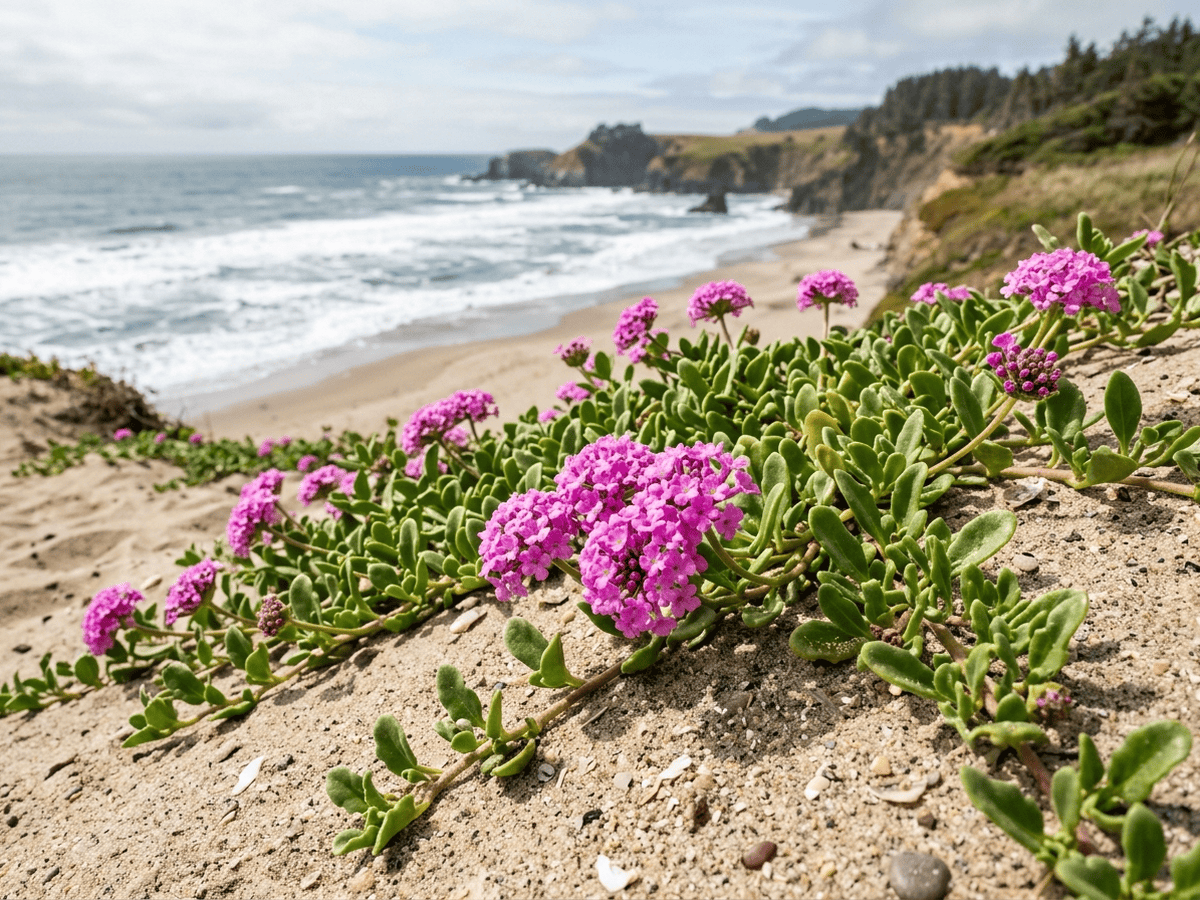 Pink Sand VerbenaAbronia umbellata
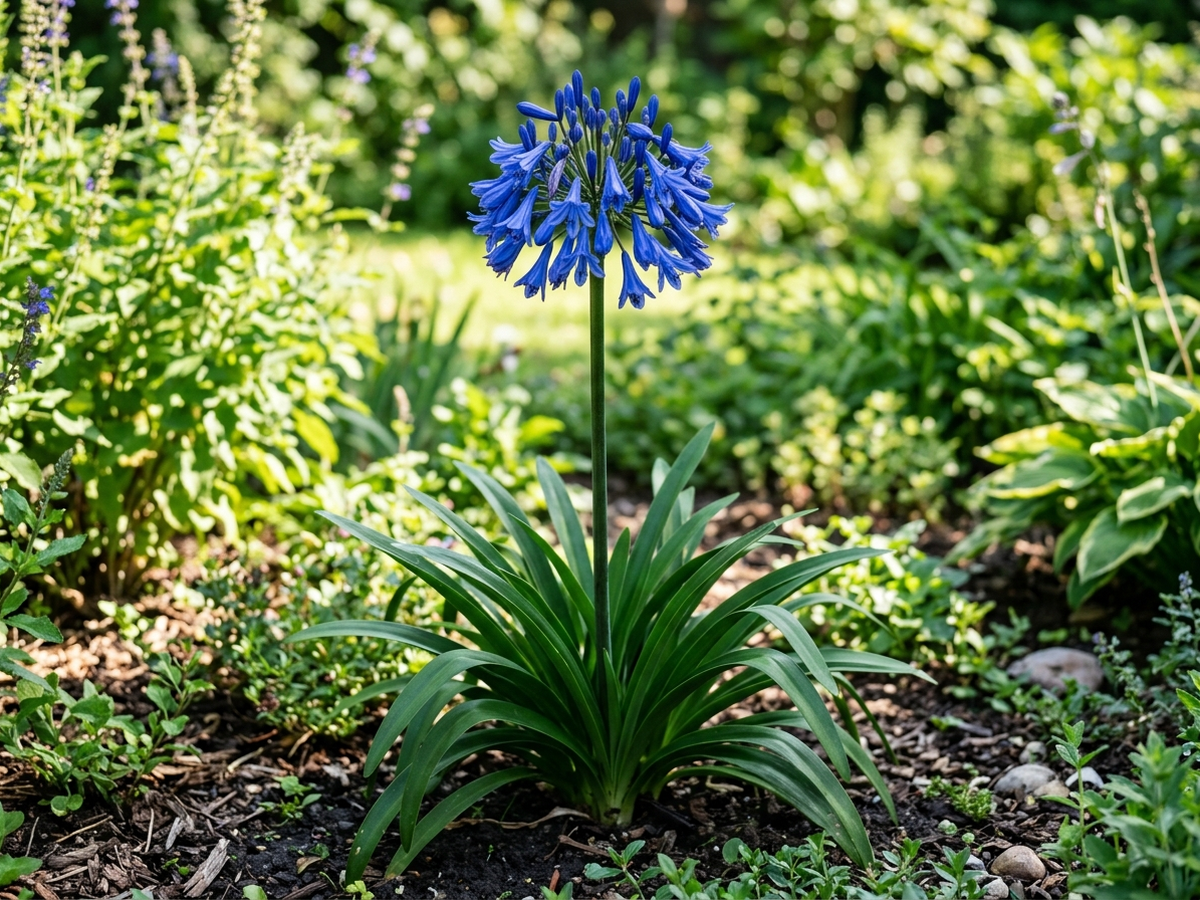 Drooping AgapanthusAgapanthus inapertus
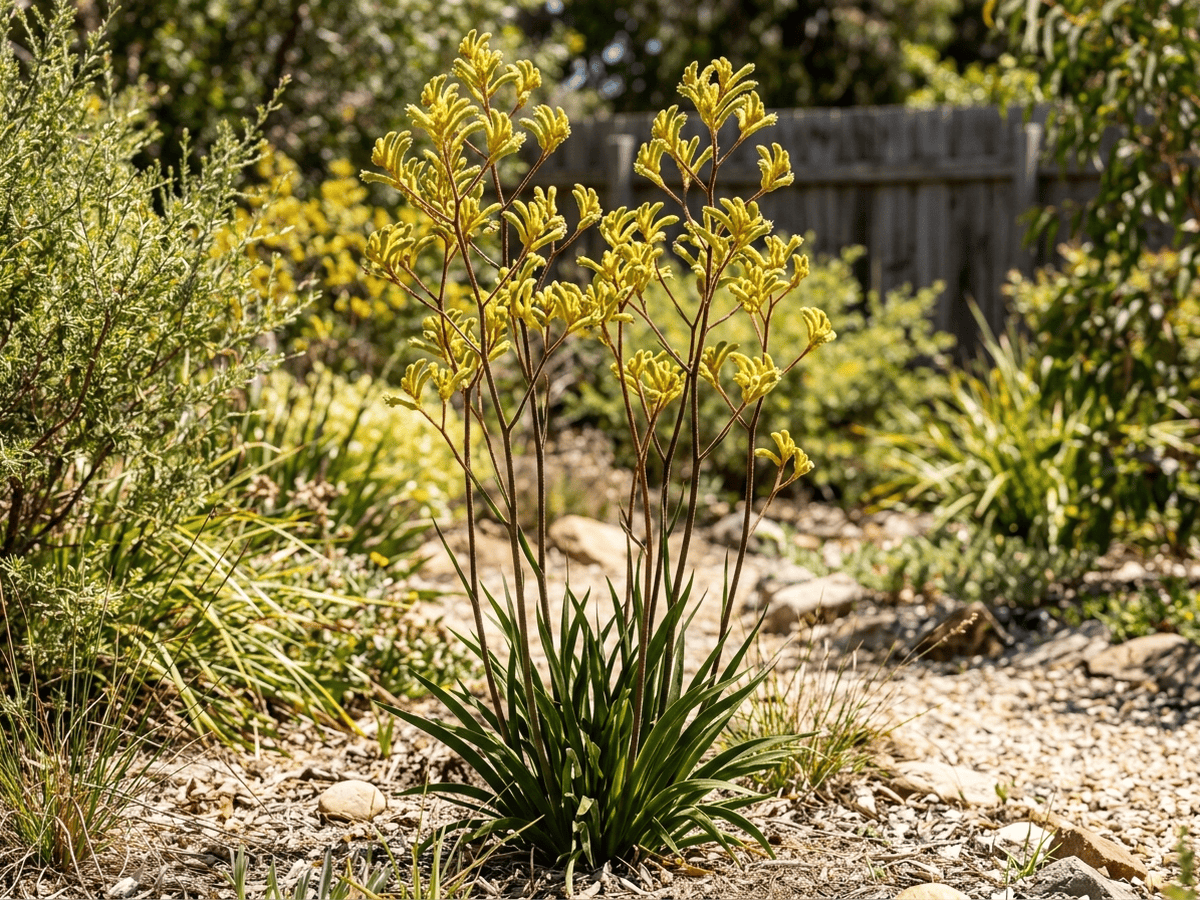 Tall Kangaroo PawAnigozanthos flavidus
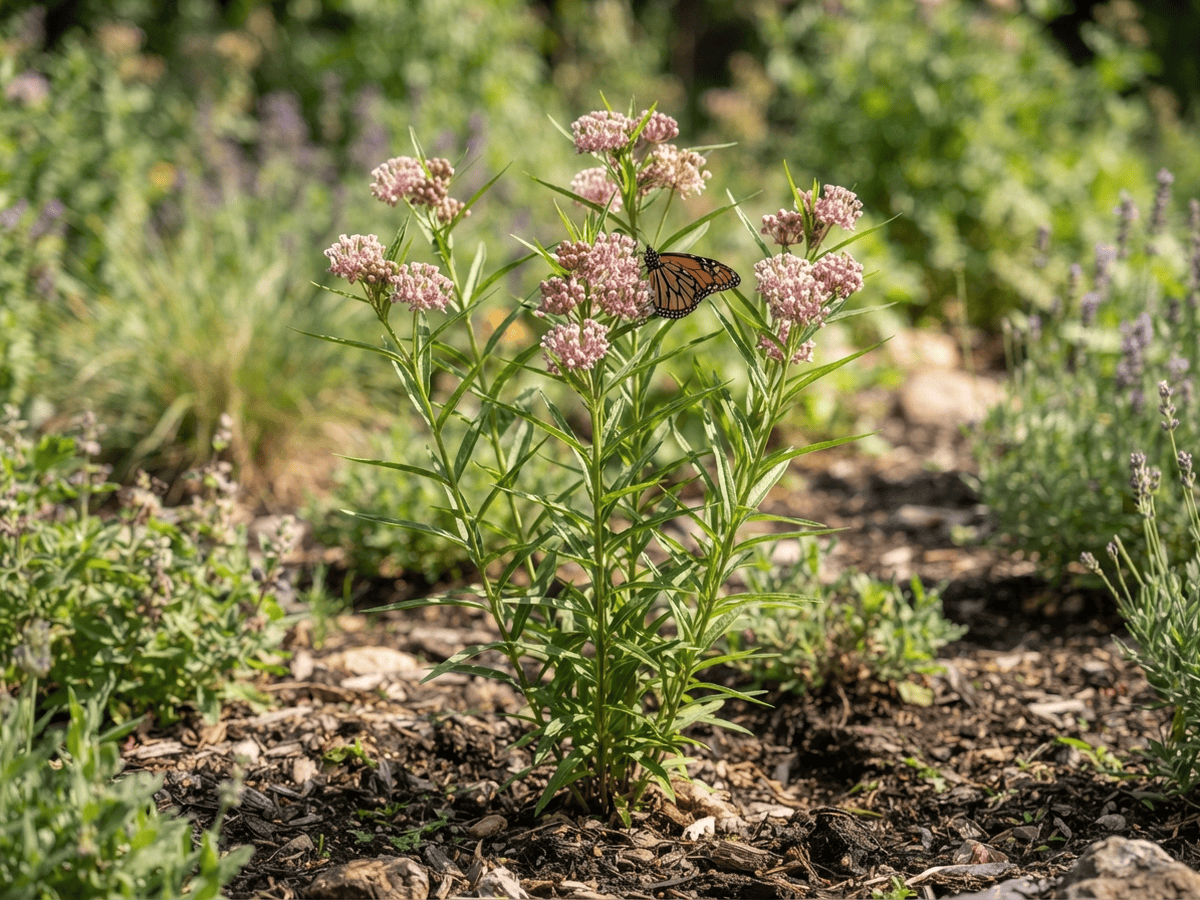 Narrowleaf MilkweedAsclepias fascicularis
Frequently asked questions
How often should I water Split Rock?
Water about every 15 days during the growing season, and always let excess water drain away.
How much light does Split Rock need?
Full sun: 6+ hrs direct. Watch the leaves — scorching or stretching means the light needs adjusting.
Is Split Rock toxic to cats or dogs?
No toxicity has been reported for this plant. Still, it is wise to keep pets from chewing on any houseplant. Educational information, not medical or veterinary advice. If exposure is suspected, contact a doctor or veterinarian.
Is Split Rock easy to grow?
It is considered challenging and rewards experienced growers.
When does Split Rock bloom?
It typically blooms Feb–Apr in the Northern Hemisphere.
YardMate
Identify any plant in seconds
Snap a photo — YardMate names the plant, diagnoses problems, and reminds you when to water.
Download on the App Store