 YardMate


Blue Plumbago
Plumbago auriculata
Easy · Beginner friendlyAbout Blue Plumbago
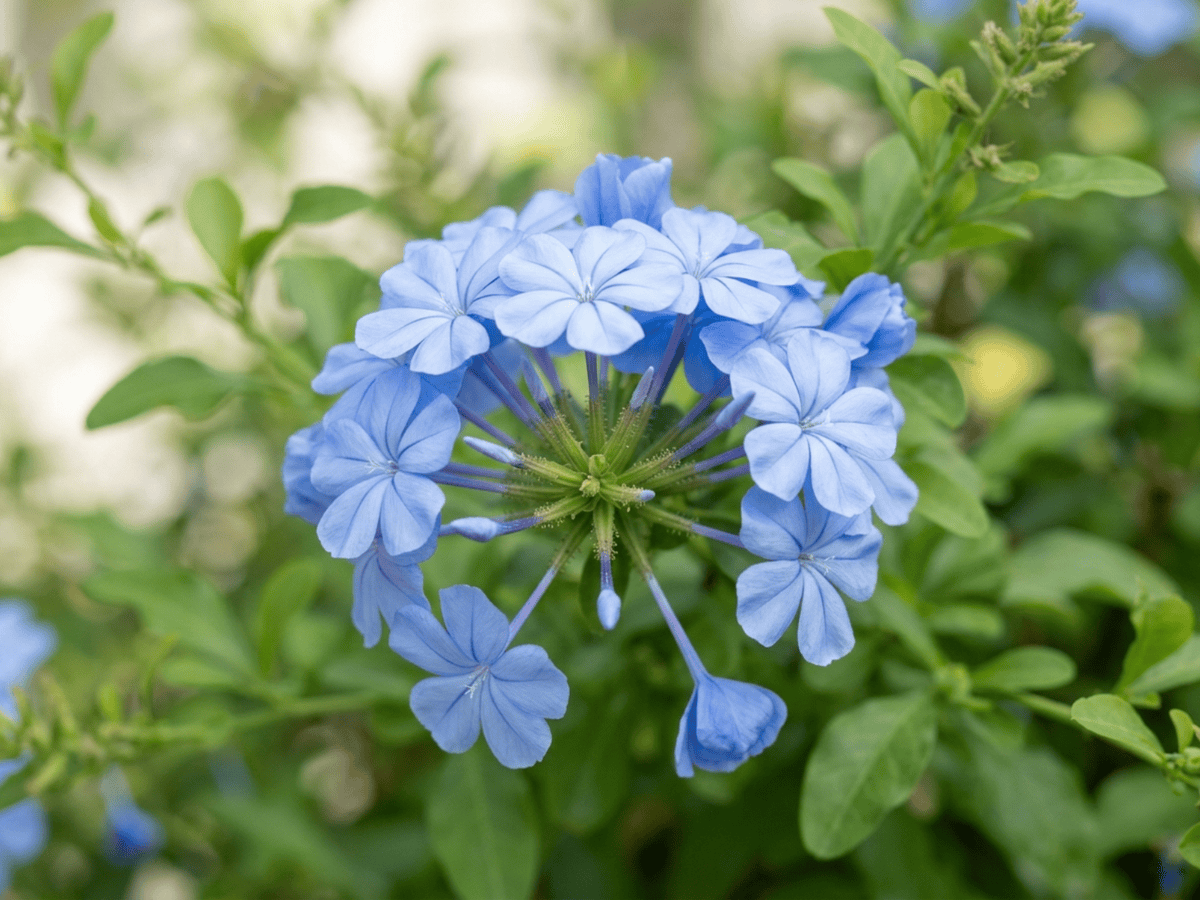
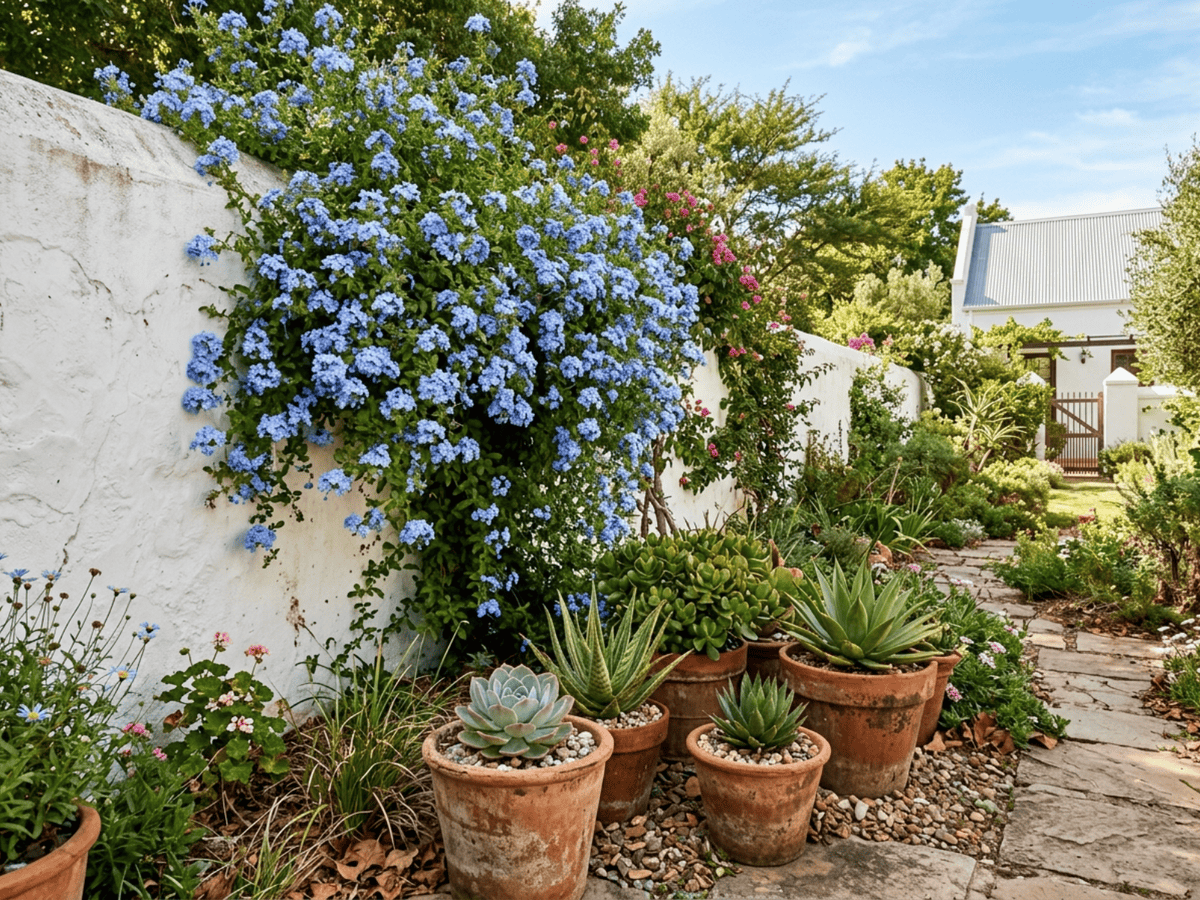
Plumbago auriculata, blue plumbago, is a scrambling evergreen shrub from South Africa with sky-blue phlox-like flower clusters over a long warm season. It can be grown as a loose hedge, trained against a wall, or allowed to spill over banks and containers. The plant thrives in sun, heat, and well-drained soil, flowering on new growth and responding well to pruning. Its sticky calyxes can cling to clothing and pets, a small nuisance that helps the plant disperse. The root appears in South African ethnobotanical records, but gardeners mainly prize plumbago for a rare clear blue that stays generous through summer. It is tender to frost but rebounds quickly in mild climates.
- Drought-tolerant
- Heat-tolerant
- Long-blooming
How to care for Blue Plumbago
Watering
- Springevery 5 days
- Summerevery 4 days
- Fallevery 10 days
- Winterevery 21 days
Soil · Rich & loamy
- Top dressingBark mulch15%
- Main mixRich loam + compost 3:170%
- DrainageGravel15%
Use fully finished compost — fresh compost burns roots.
FERTILIZER
Balanced Feed 14-14-14
An even feed covers all three needs at once, keeping leaves, roots and blooms moving together with nothing pushed out of balance.
- Nitrogen · Leaves
- Phosphorus · Roots + Blooms
- Potassium · Strength
- Springevery 45 days
- Summerevery 45 days
At a Glance
- NativeAfrica
- Height4–8 ft (1.2–2.4 m)
- Spread4–8 ft (1.2–2.4 m)
- Flower colorBlue, White
- Foliage colorGreen
- SoilLoamy, Well-drained
- LocationsYard · Indoor · Balcony
Bloom time
BLOOM CYCLE
Peak bloom
Jan–Dec
Sky-blue flower clusters nearly year-round in warm climates; prune to encourage repeat blooming
Fragrance
NO FRAGRANCE
No notable fragrance.
Toxicity
Humans Slight · Pets Slight
plumbagin (naphthoquinone)
Slight
- Leaf
- Flower
- Contact
EXPOSURE Touching leaves and flowers.
EFFECT Plumbagin content in leaves and roots can cause contact dermatitis and mild GI irritation.
NOTE Documented concern for humans: Plumbagin content in leaves and roots can cause contact dermatitis and mild GI irritation.
Slight
- Leaf
- Ingestion
EXPOSURE Eating leaves.
EFFECT Mild GI upset possible.
NOTE Not prominently listed by ASPCA. Plumbagin is a low-level irritant.
Slight
- Leaf
- Ingestion
EXPOSURE Eating leaves.
EFFECT Mild GI upset possible.
NOTE Not prominently listed by ASPCA. Plumbagin is a low-level irritant.
Educational information, not medical or veterinary advice. If exposure is suspected, contact a doctor or veterinarian.
DISTRIBUTION


- Native
- Introduced
- Africa
History

Plumbago auriculata is native to the southern African Cape region — particularly the Eastern Cape and KwaZulu-Natal provinces of South Africa, with some extension into Mozambique. It is a sprawling evergreen shrub, 1.5-3 meters tall, producing its signature loose clusters of pale sky-blue (occasionally white, in var. alba) phlox-like tubular flowers almost continuously from spring through fall in warm climates. The genus name Plumbago comes from Latin "plumbum" (lead) — the name derives from a medieval European belief that the root of the Mediterranean species P. europaea could cure lead poisoning — though modern evidence does not support this. Cape leadwort was introduced to European horticulture from South Africa in the 18th century and rapidly became one of the key ornamentals of Mediterranean-climate garden design, valued for its exceptionally long bloom period, pollinator attractiveness, deer resistance, and drought tolerance.
It is now ubiquitous in California (particularly Southern California), the French and Italian Rivieras, Australia, and warm-climate gardens worldwide. The seeds have sticky glandular hairs that can adhere to clothing and animal fur as a dispersal mechanism. The specific epithet "auriculata" ("with small ear-like appendages") refers to small auricles at the leaf base.
The cultivar "Royal Cape" has a deeper, more intense blue flower color than the species form. Plumbago auriculata was first collected near the Cape of Good Hope and described in 1818. It quickly became a staple of Mediterranean gardens in southern Europe and was carried to warm-climate gardens worldwide by the mid-19th century. The genus name 'Plumbago' refers to the historical use of related species to treat lead poisoning. In South Africa, the plant is called 'blousyselbos' in Afrikaans and remains a cornerstone of local garden design. Its rare true-blue flower color has made it one of the most widely planted flowering shrubs in warm climates globally.
Symbolism & meaning
What It Symbolizes
Blue Plumbago expresses serenity, its sky-blue flowers evoking the calm of clear afternoon skies and bringing a sense of tranquility to subtropical gardens. It also suggests freedom — its scrambling, untamed growth habit stands for wild spirit and a refusal to be neatly contained. A shrub for gardeners who appreciate calm color delivered with a little ungovernable enthusiasm.
- Serenity — the sky-blue flowers evoke calm, clear skies and tranquility
- Freedom — the scrambling, untamed growth habit represents wild spirit and liberty
Where the Name Comes From
'Plumbago' comes from Latin 'plumbum' (lead), as the plant was once linked with lead-related ailments. 'Auriculata' means eared, referring to the small ear-like lobes at the base of the leaves.
Uses & Fun Facts
- Scrambling stems trained on warm walls, fences, and arbors
- Sky-blue phlox-like flowers attract butterflies and bees
- Long bloom of clear blue flowers for warm-climate gardens
Related plants
Plants with similar care
 Chinese AbeliaAbelia chinensis
 Fragrant AbeliaAbelia mosanensis
 Large-Flowered AbeliaAbelia uniflora
 Glossy AbeliaAbelia x grandiflora
Frequently asked questions
How often should I water Blue Plumbago?
In summer, water about every 4 days; in winter, about every 21 days. Adjust for heat, pot size and drainage.
How much light does Blue Plumbago need?
Full sun: 6+ hrs direct. Watch the leaves — scorching or stretching means the light needs adjusting.
Is Blue Plumbago toxic to cats or dogs?
Pets Slight (Dogs Slight · Cats Slight) Educational information, not medical or veterinary advice. If exposure is suspected, contact a doctor or veterinarian.
Is Blue Plumbago easy to grow?
Yes — it is considered an easy, beginner-friendly plant.
Can Blue Plumbago be grown indoors?
Yes, it adapts well to indoor growing given the right light.
When does Blue Plumbago bloom?
It typically blooms Jan–Dec in the Northern Hemisphere.
YardMate
Identify any plant in seconds
Snap a photo — YardMate names the plant, diagnoses problems, and reminds you when to water.
Download on the App Store