 YardMate


Blue Jacob's Ladder
Polemonium caeruleum
Medium · Some experienceAbout Blue Jacob's Ladder
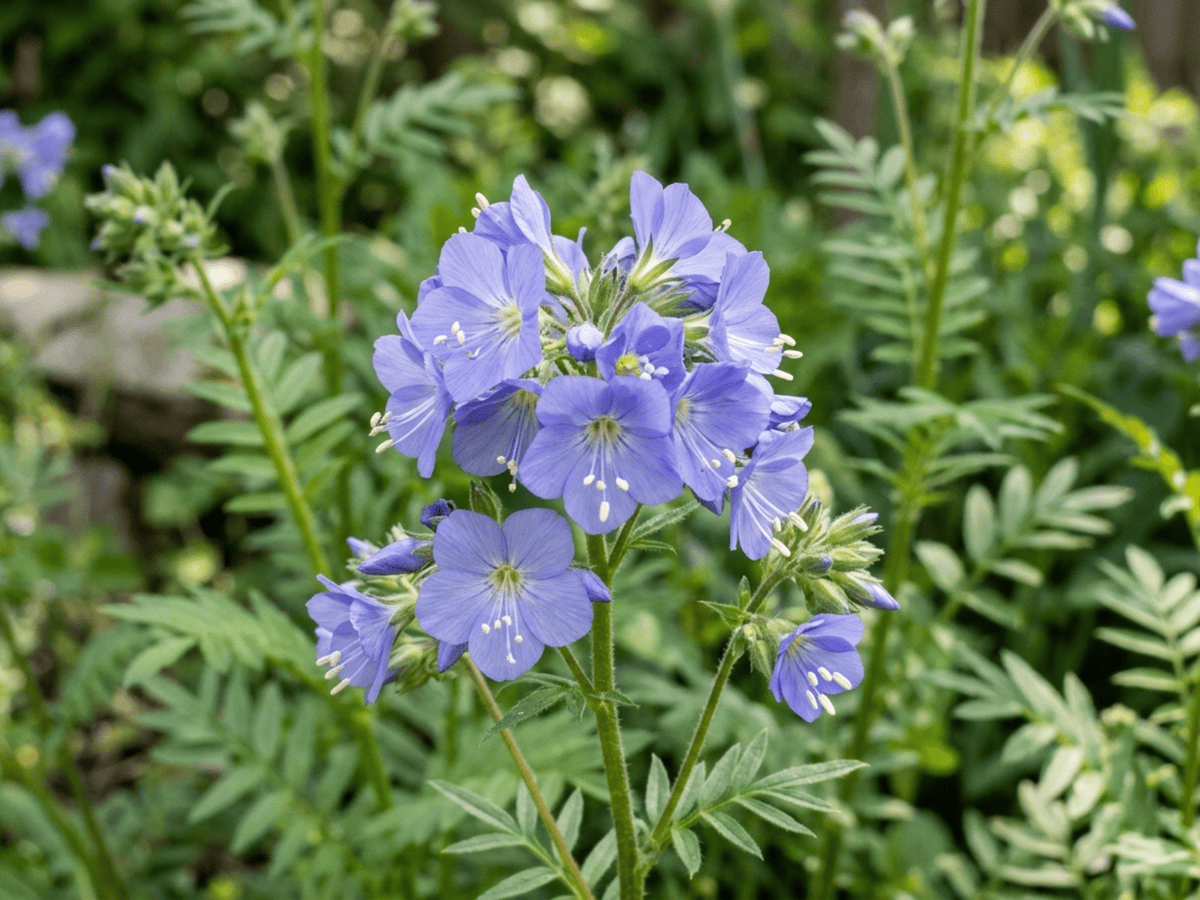
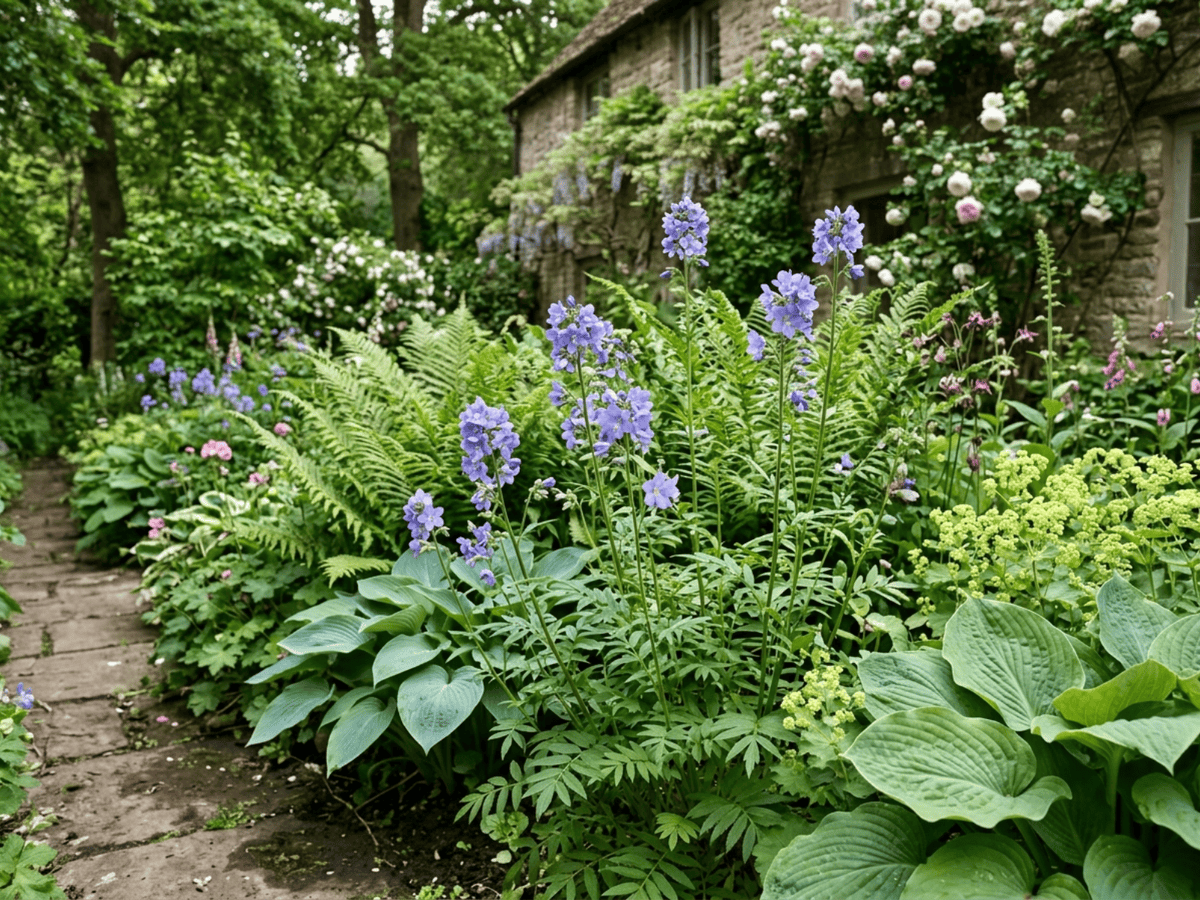
Polemonium caeruleum, Jacob's ladder, is an elegant perennial native to temperate Europe and northern Asia, with closely related species in North America. The common name comes from the distinctive pinnate leaves, whose neatly arranged leaflets resemble the rungs of a ladder climbing the stem. In late spring to early summer, it produces loose clusters of cup-shaped lavender-blue flowers with contrasting orange stamens — a sophisticated color combination prized by cottage gardeners. Growing 45 to 75 cm tall, the plant forms attractive clumps of fine-textured foliage that remains ornamental even after flowering. It prefers cool, moist conditions in partial shade and struggles in hot, humid summers, making it best suited for northern gardens or shaded woodland settings. The cultivar 'Brise d'Anjou' features striking cream-edged foliage. Jacob's ladder is an ancient garden plant with centuries of cultivation history in European monastery and cottage gardens. It attracts bees and other pollinators with its open, accessible flowers.
- Pollinator-friendly
How to care for Blue Jacob's Ladder
Watering
- Springevery 3 days
- Summerevery 2 days
- Fallevery 7 days
- Winterevery 30 days
Soil · Well-draining
- Top dressingPine bark mulch10%
- Main mixPotting soil + perlite 2:170%
- DrainageLECA / gravel20%
Never skip the drainage layer — standing water is the top cause of root rot.
FERTILIZER
Balanced Feed 14-14-14
An even feed covers all three needs at once, keeping leaves, roots and blooms moving together with nothing pushed out of balance.
- Nitrogen · Leaves
- Phosphorus · Roots + Blooms
- Potassium · Strength
- Springevery 60 days
At a Glance
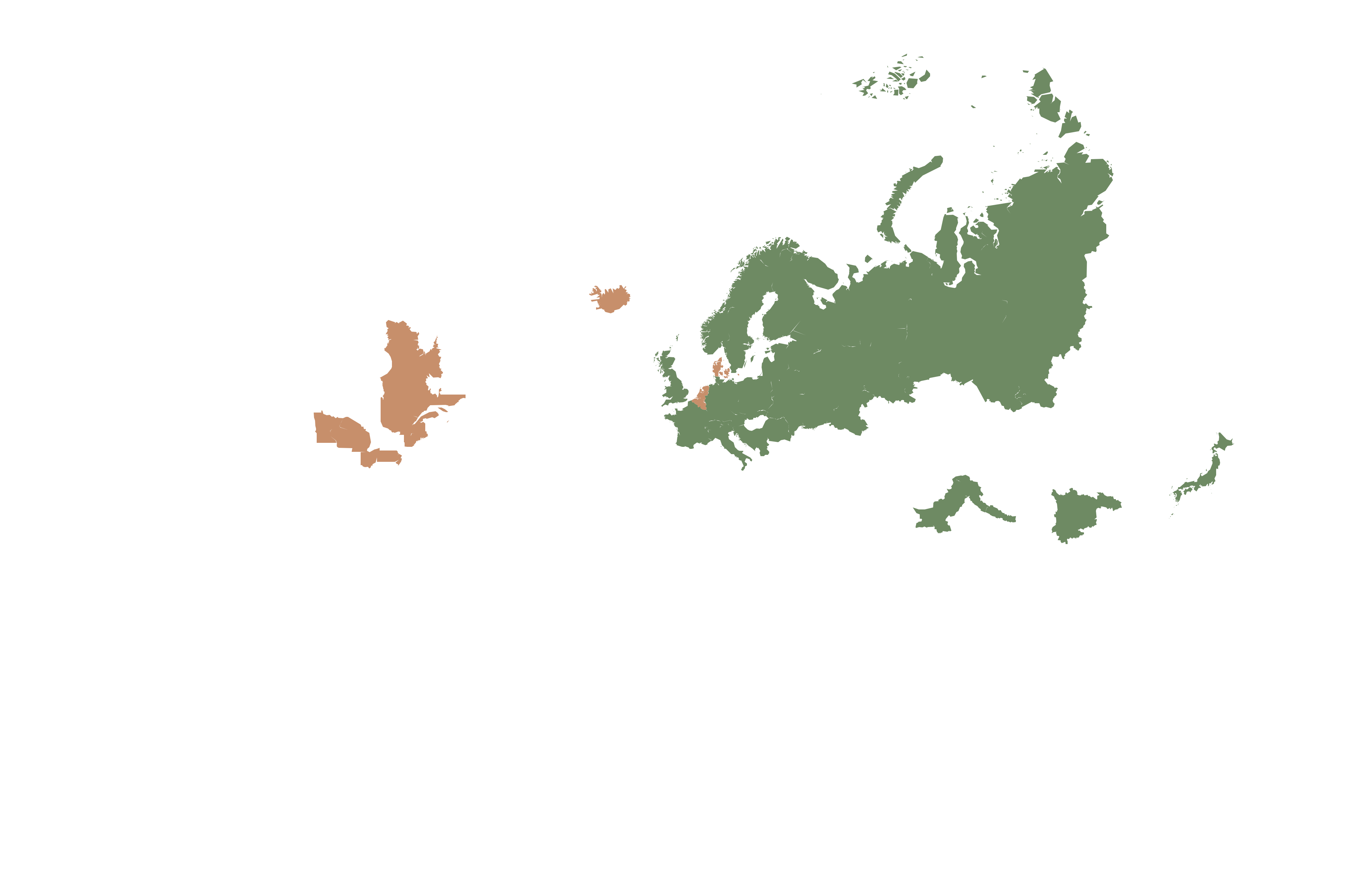
- NativeEurope, East Asia
- Height1.5–3 ft (0.5–0.9 m)
- Spread1–2 ft (0.3–0.6 m)
- Flower colorBlue, Purple, White
- Foliage colorGreen, Variegated
- SoilLoamy, Moisture-retentive
- LocationsYard
Bloom time
BLOOM CYCLE
Peak bloom
May–Jul
Deadhead promptly to prevent self-sowing and extend bloom; prefers cool summers and afternoon shade
Fragrance
NO FRAGRANCE
No notable fragrance.
Toxicity
No toxicity has been reported for this plant. Still, it is wise to keep pets from chewing on any houseplant.
Educational information, not medical or veterinary advice. If exposure is suspected, contact a doctor or veterinarian.
DISTRIBUTION

- Native
- Introduced
- Europe
- East Asia
History
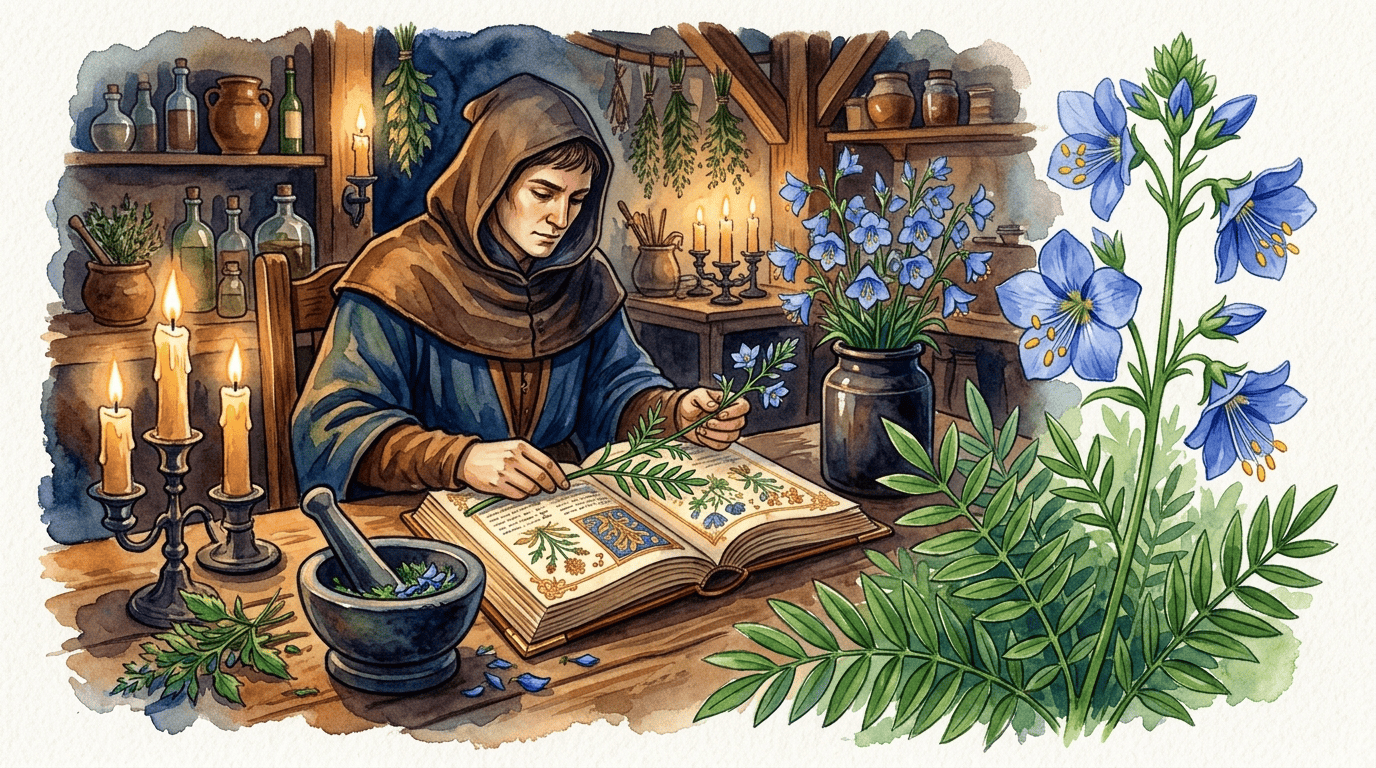
Polemonium caeruleum is native to cool-temperate Europe and northern Asia, from the British Isles and Scandinavia east through northern Russia, and grows in moist meadows, wet mountain slopes, and streamside habitats. It is an upright clump-forming perennial, 60-90 cm tall, producing loose clusters of open bell-shaped blue (occasionally white) five-petaled flowers with prominent yellow stamens in late spring and early summer. The most distinctive feature is the pinnate leaves with paired opposite leaflets arranged symmetrically along a central rachis — a structure that strongly suggests a ladder, giving rise to the common name "Jacob's ladder" through European Christian folk associations with the biblical story (Genesis 28:10-22) of the patriarch Jacob's dream of a ladder (or stairway) reaching from earth to heaven with angels ascending and descending. Medieval European herbalists regarded Jacob's ladder as having magical and medicinal properties; it was used for headaches, toothache, and as a nerve tonic.
Modern garden horticulture includes several popular variegated cultivars including "Brise d'Anjou" (cream-edged leaves), "Stairway to Heaven" (white-edged with pink spring tints; 2005 Perennial Plant Association Plant of the Year), and "Touch of Class." These variegated forms made Polemonium a significantly more popular ornamental than the straight species. The related P. reptans (creeping Jacob's ladder) is a native eastern North American species.
The Biblical common name 'Jacob's ladder' references the dream of the patriarch Jacob in Genesis 28:12, where he saw a ladder reaching from earth to heaven with angels ascending and descending. The plant appears in many Renaissance herbals and was a staple of traditional English cottage gardens. In Victorian flower language, it symbolized 'come down to me,' connecting to the ladder imagery.
Symbolism & meaning
What It Symbolizes
Blue Jacob's Ladder can symbolize hope, its leaves arranged in ascending pairs like the rungs of the heavenward ladder of the Genesis dream. Another layer is faith, drawn from that same Biblical name and connecting the plant to ideas of divine promise and trust in providence. In the cottage garden, polemonium is the small spiritual emblem of the spring border, a plant whose ordinary form carries an extraordinary, ladder-shaped story for those who happen to know it.
- Hope — The heavenward ladder of leaves symbolizes aspiration and spiritual ascent
- Faith — Its Biblical name connects it to divine promise and trust in providence
Where the Name Comes From
Polemonium may derive from Greek 'polemos' (war), as ancient writers claimed kings fought over who discovered its properties. Caeruleum means sky-blue in Latin.
Uses & Fun Facts
- Jacob's ladder attracts native bumblebees and hoverflies
- Blue bell clusters work in casual cottage bouquets
- Ladder-like foliage and sky-blue spring flowers
Related plants
Plants with similar care
 Japanese MapleAcer palmatum
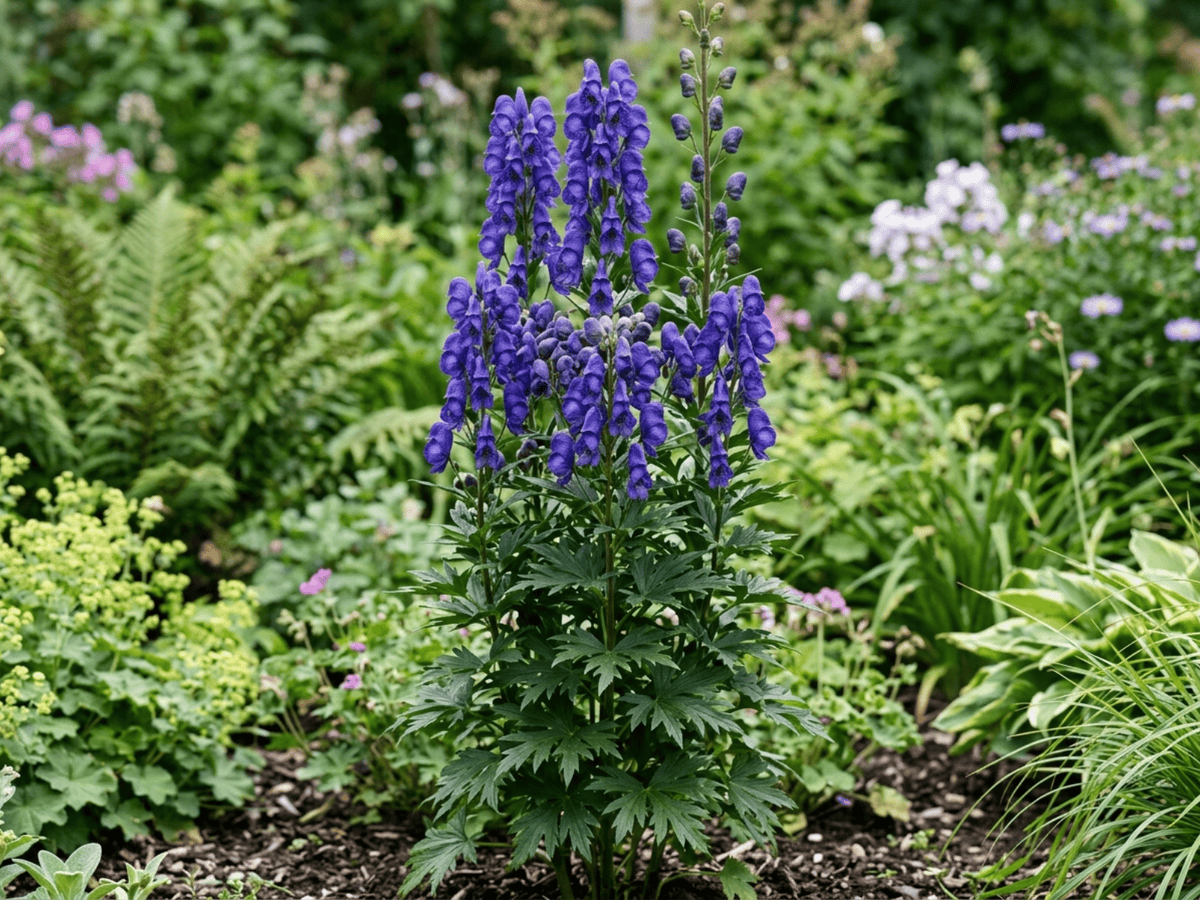 Azure MonkshoodAconitum carmichaelii
 Florida HobblebushAgarista populifolia
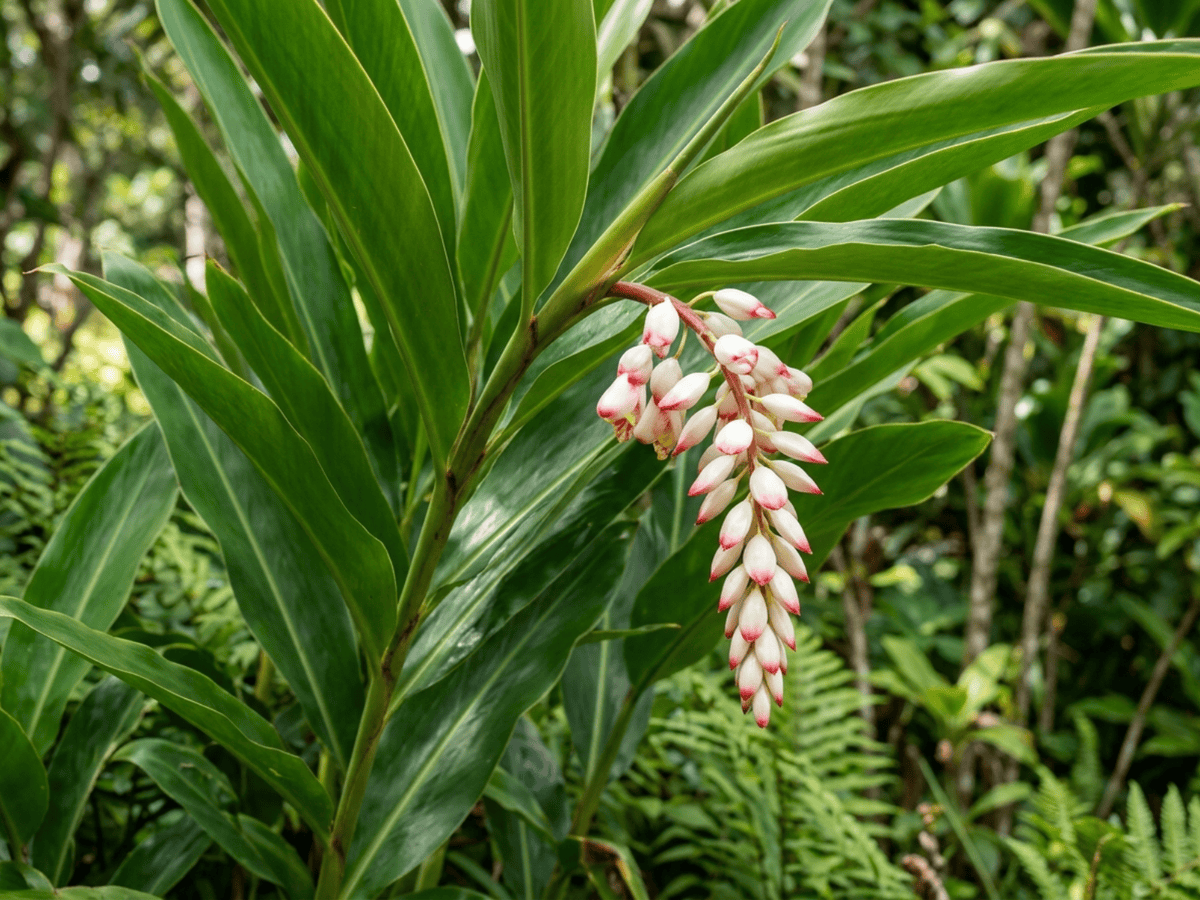 Shell GingerAlpinia zerumbet
Frequently asked questions
How often should I water Blue Jacob's Ladder?
In summer, water about every 2 days; in winter, about every 30 days. Adjust for heat, pot size and drainage.
How much light does Blue Jacob's Ladder need?
Part shade: 2–4 hrs direct. Watch the leaves — scorching or stretching means the light needs adjusting.
Is Blue Jacob's Ladder toxic to cats or dogs?
No toxicity has been reported for this plant. Still, it is wise to keep pets from chewing on any houseplant. Educational information, not medical or veterinary advice. If exposure is suspected, contact a doctor or veterinarian.
Is Blue Jacob's Ladder easy to grow?
It is moderately demanding: a good choice once you have a little experience.
When does Blue Jacob's Ladder bloom?
It typically blooms May–Jul in the Northern Hemisphere.
YardMate
Identify any plant in seconds
Snap a photo — YardMate names the plant, diagnoses problems, and reminds you when to water.
Download on the App Store