 YardMate


Pickerelweed
Pontederia cordata
Easy · Beginner friendlyAbout Pickerelweed
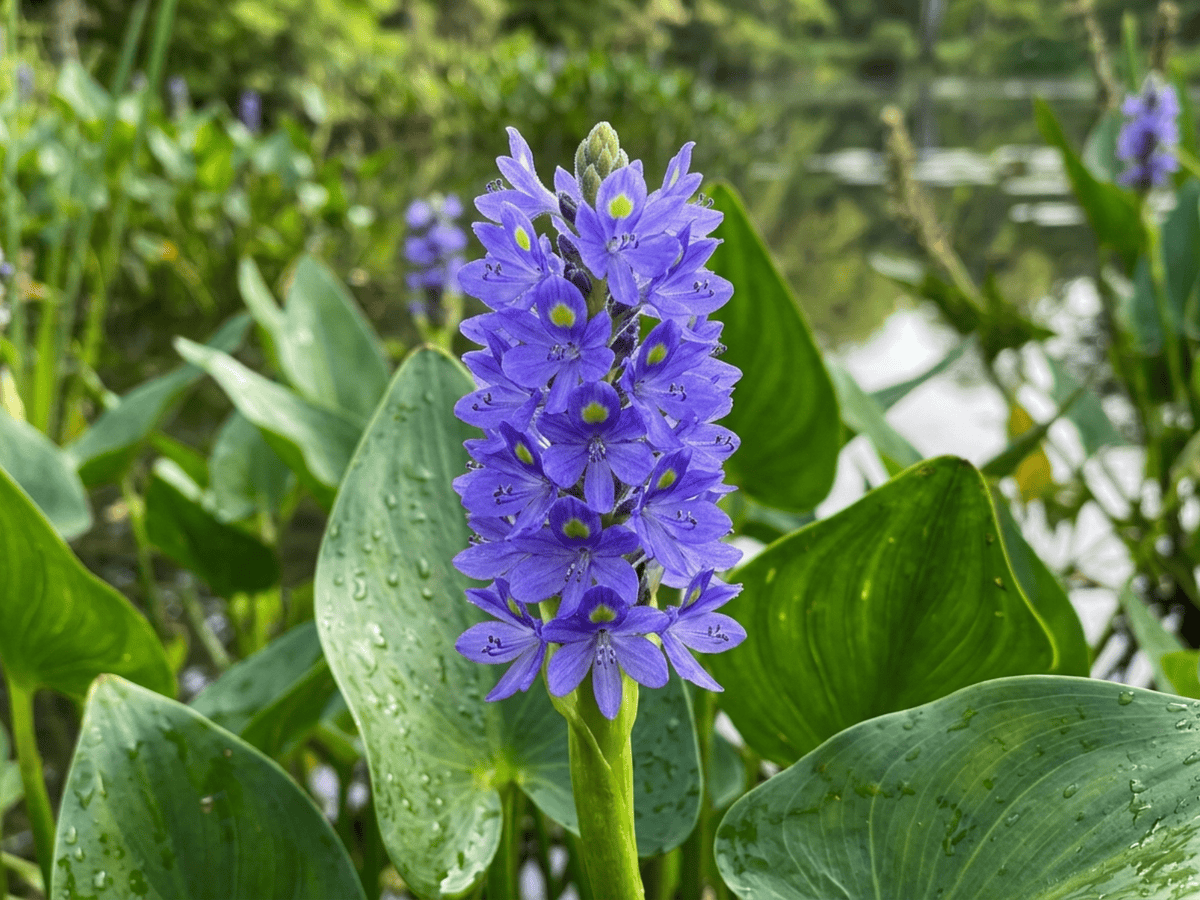
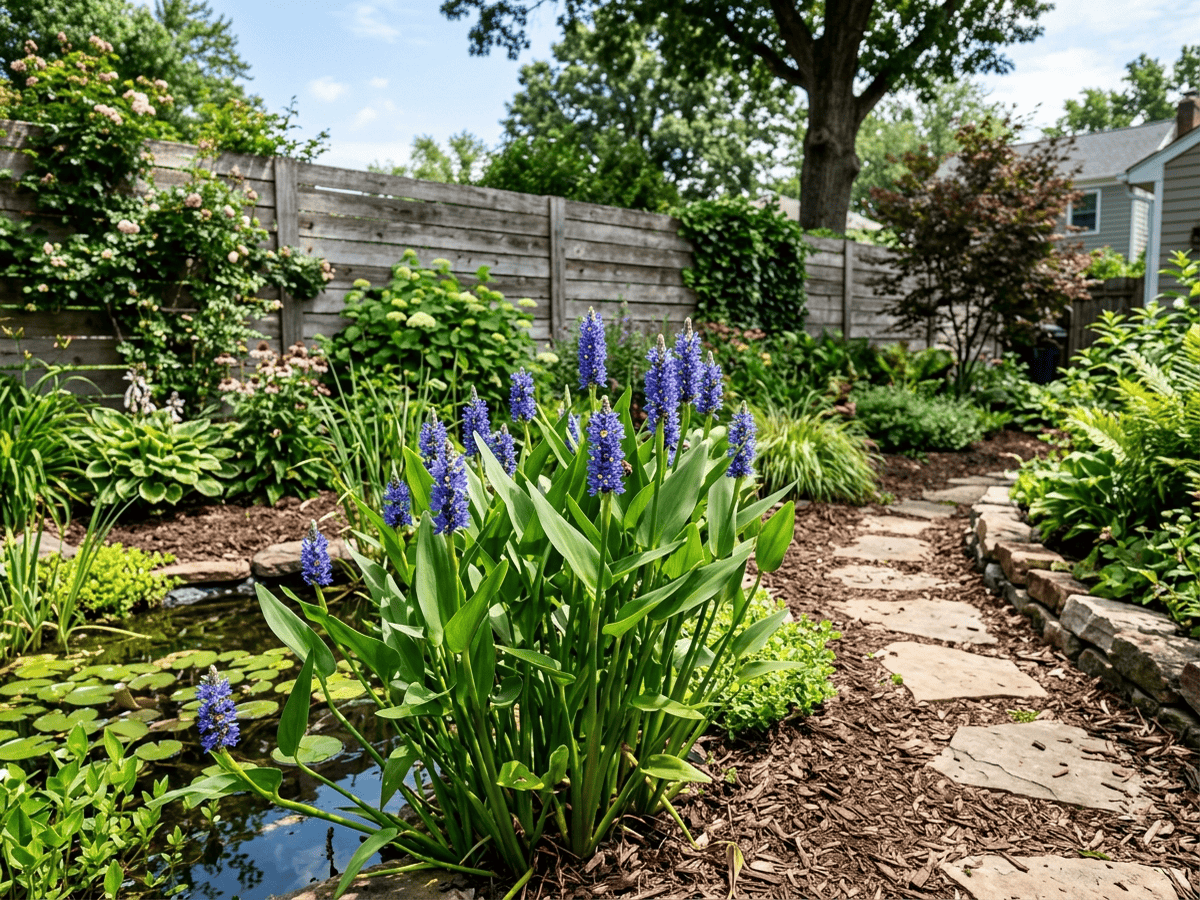
Pontederia cordata, the pickerelweed, is a native North American aquatic perennial found along the margins of ponds, lakes, streams, and marshes from eastern Canada to Argentina. It produces dense clumps of glossy, heart-shaped leaves on sturdy stems reaching 60–120 cm tall, topped by striking spikes of violet-blue flowers that bloom continuously from early summer to frost. The flowers are highly attractive to bees, butterflies, and other pollinators, making it one of the best aquatic plants for pollinator gardens. It grows in shallow water up to 30 cm deep or in saturated bog soil, spreading steadily by rhizomes to form substantial colonies. It is easy to grow, low-maintenance, and provides excellent cover and food for aquatic wildlife — the seeds are eaten by ducks and other waterfowl. A white-flowered form is occasionally available.
- Native
- Pollinator-friendly
How to care for Pickerelweed
Watering
- Springevery 1 days
- Summerevery 1 days
- Fallevery 1 days
- Winterevery 1 days
Soil · Bog-wet
- WaterStanding water above soil20%
- SoilHeavy pond soil80%
No drainage layer — keep water standing above the soil.
FERTILIZER
Balanced Feed 14-14-14
An even feed covers all three needs at once, keeping leaves, roots and blooms moving together with nothing pushed out of balance.
- Nitrogen · Leaves
- Phosphorus · Roots + Blooms
- Potassium · Strength
This plant needs little to no feeding.
At a Glance
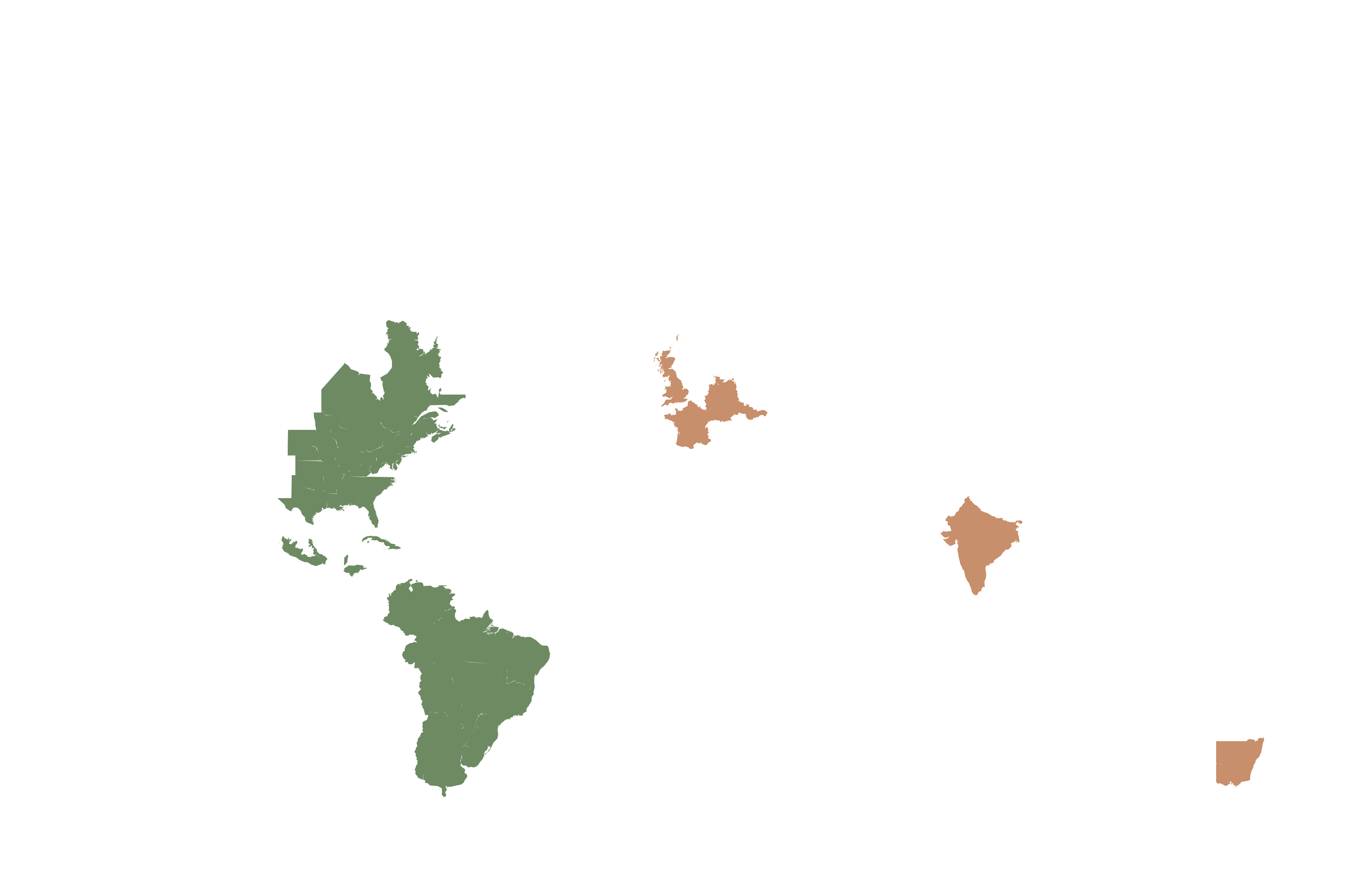
- NativeNorth America, Central America, South America
- Height2–4 ft (0.6–1.2 m)
- Spread1.5–2 ft (0.5–0.6 m)
- Flower colorBlue, Purple, White
- Foliage colorGreen
- SoilMoisture-retentive, Loamy
- LocationsYard
Bloom time
BLOOM CYCLE
Peak bloom
Jun–Nov
Violet-blue flower spikes bloom continuously June through frost; deadhead for neatness
Fragrance
NO FRAGRANCE
No notable fragrance.
Toxicity
No toxicity has been reported for this plant. Still, it is wise to keep pets from chewing on any houseplant.
Educational information, not medical or veterinary advice. If exposure is suspected, contact a doctor or veterinarian.
DISTRIBUTION

- Native
- Introduced
- North America
- Central America
- South America
History
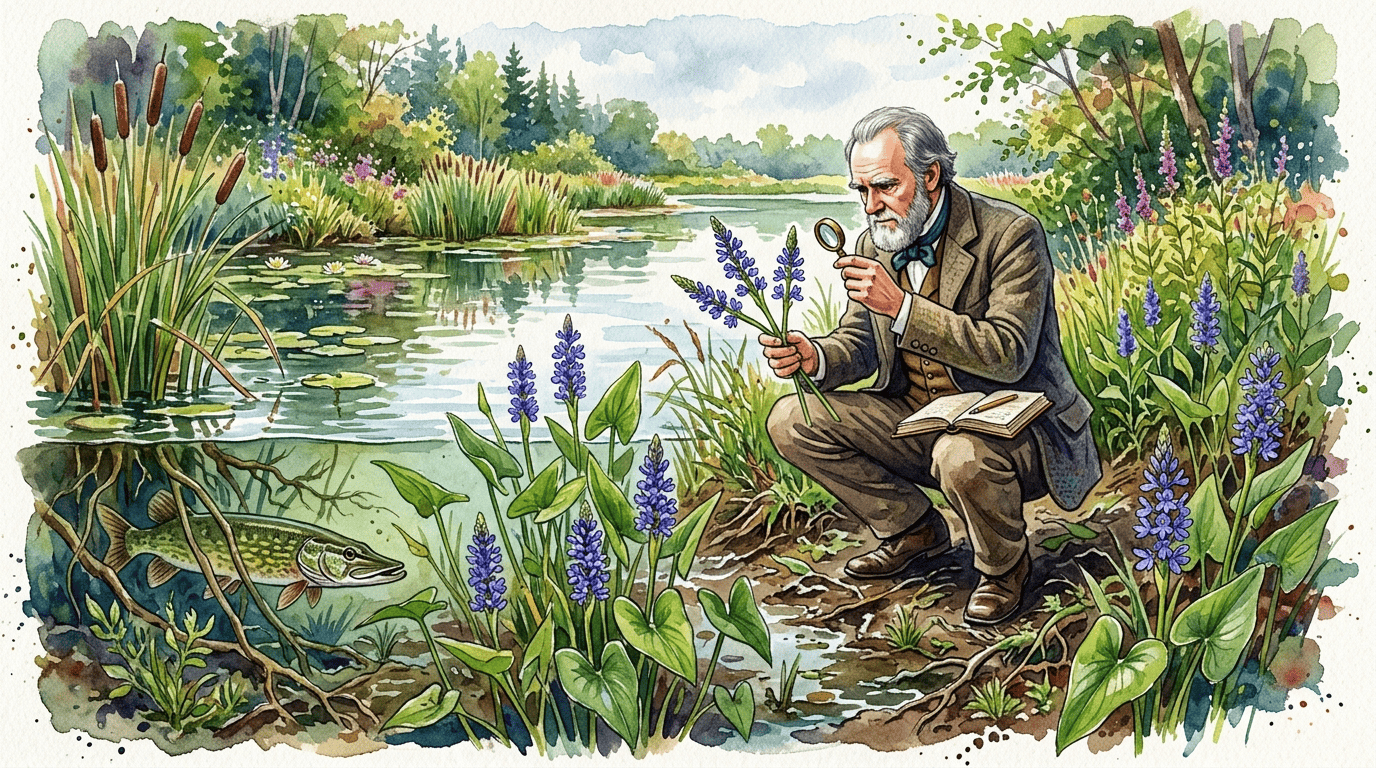
Pontederia cordata is native to a remarkable latitudinal range across the Americas — from southeastern Canada south through the eastern and central United States, the Caribbean, Central America, and into the Amazon basin, south to Argentina. It grows as an emergent marginal plant in slow-moving freshwater — shallow lake edges, pond margins, beaver ponds, ditches, and slow streams — forming colonies that produce upright spikes 30-90 cm tall of small tubular blue-purple (occasionally white) flowers from midsummer through fall. The common name "pickerelweed" refers to the freshwater pickerel (Esox species) that frequents the same slow-water habitats and that reportedly disperses the plant's seeds by passage through the gut. The flowers are tristylous (three different style lengths in different individuals) — an unusual floral morph system studied extensively by evolutionary biologists as a model for breeding system evolution; Charles Darwin described pickerelweed's floral dimorphism as an important early case in his work on heterostyly.
The species is an important nectar and pollen source for many native North American bees and bumblebees, which perform the majority of pollination, and is increasingly recommended for use in native landscape pond and rain garden installations. Pontederia cordata was named by Linnaeus in honor of Giulio Pontedera, an 18th-century Italian botanist and professor at the University of Padua. The common name 'pickerelweed' comes from its association with pickerel fish, which are often found hiding among the plant's submerged stems.
Native American peoples ate the seeds raw or roasted and used the young leaves as a cooked green. The plant plays a crucial role in shoreline stabilization — its dense root systems prevent erosion along pond and lake margins. It is increasingly used in constructed wetlands and bioswales for natural stormwater management.
Symbolism & meaning
What It Symbolizes
Pickerelweed expresses devotion, blooming faithfully all summer long along pond edges with violet-blue flower spikes that never seem to take a real break. It also suggests community, growing in dense colonies that stabilize shorelines together rather than alone. A native wetland plant that quietly demonstrates how steady, communal effort holds a muddy edge in place.
- Devotion — Blooms faithfully all summer long, symbolizing steadfast dedication
- Community — Grows in dense, supportive colonies that stabilize shorelines together
Where the Name Comes From
Pontederia honors Giulio Pontedera, an Italian botanist. Cordata is Latin for 'heart-shaped,' describing the leaf form.
Uses & Fun Facts
- Violet-blue flower spikes feed bumblebees and pollen-foraging bees
- Marginal cover and seed for ducks and marsh songbirds
- Native Pickerelweed for pond margins and bog gardens
Related plants
Plants with similar care
 Chinese AbeliaAbelia chinensis
 Fragrant AbeliaAbelia mosanensis
 Large-Flowered AbeliaAbelia uniflora
 Glossy AbeliaAbelia x grandiflora
Frequently asked questions
How often should I water Pickerelweed?
In summer, water about every 1 days; in winter, about every 1 days. Adjust for heat, pot size and drainage.
How much light does Pickerelweed need?
Full sun: 6+ hrs direct. Watch the leaves — scorching or stretching means the light needs adjusting.
Is Pickerelweed toxic to cats or dogs?
No toxicity has been reported for this plant. Still, it is wise to keep pets from chewing on any houseplant. Educational information, not medical or veterinary advice. If exposure is suspected, contact a doctor or veterinarian.
Is Pickerelweed easy to grow?
Yes — it is considered an easy, beginner-friendly plant.
When does Pickerelweed bloom?
It typically blooms Jun–Nov in the Northern Hemisphere.
YardMate
Identify any plant in seconds
Snap a photo — YardMate names the plant, diagnoses problems, and reminds you when to water.
Download on the App Store