 YardMate


Lungwort
Pulmonaria officinalis
Easy · Beginner friendlyAbout Lungwort
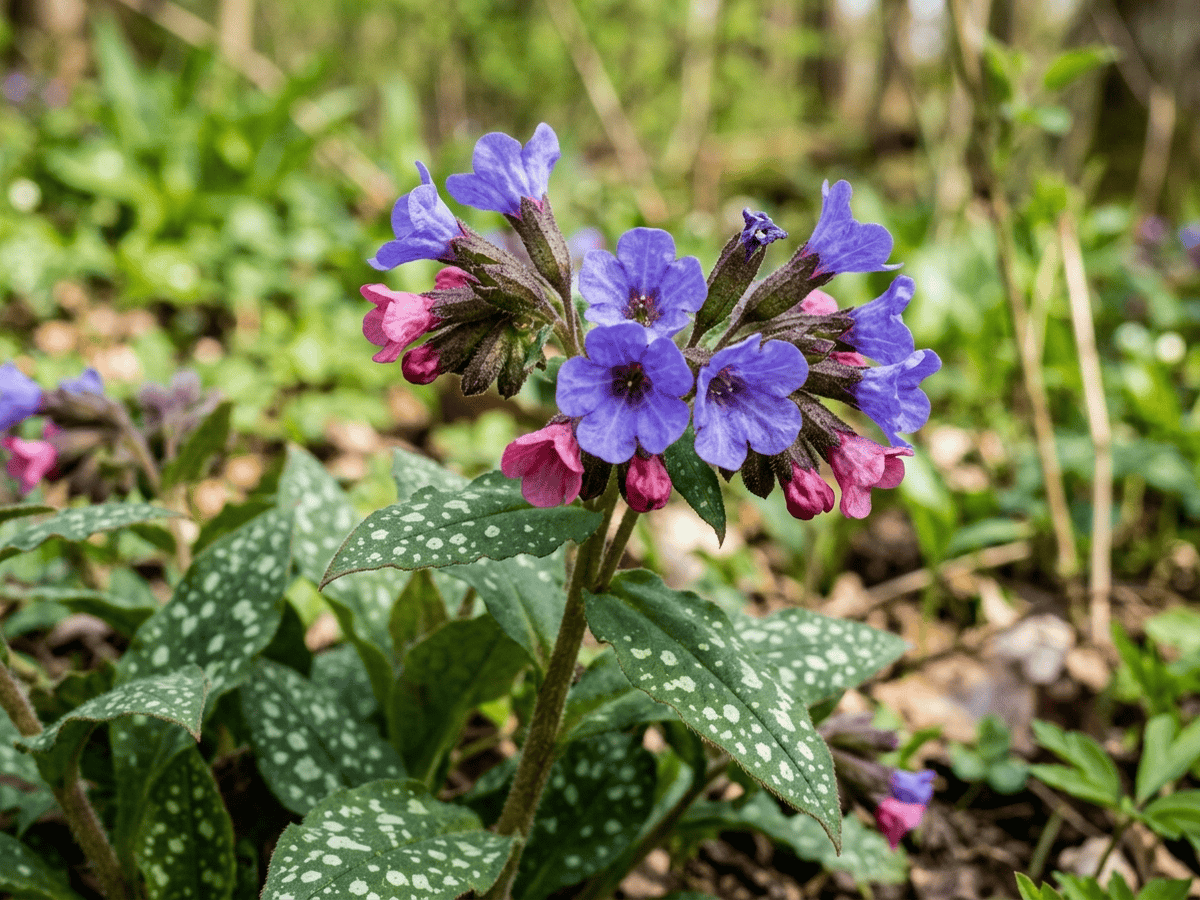
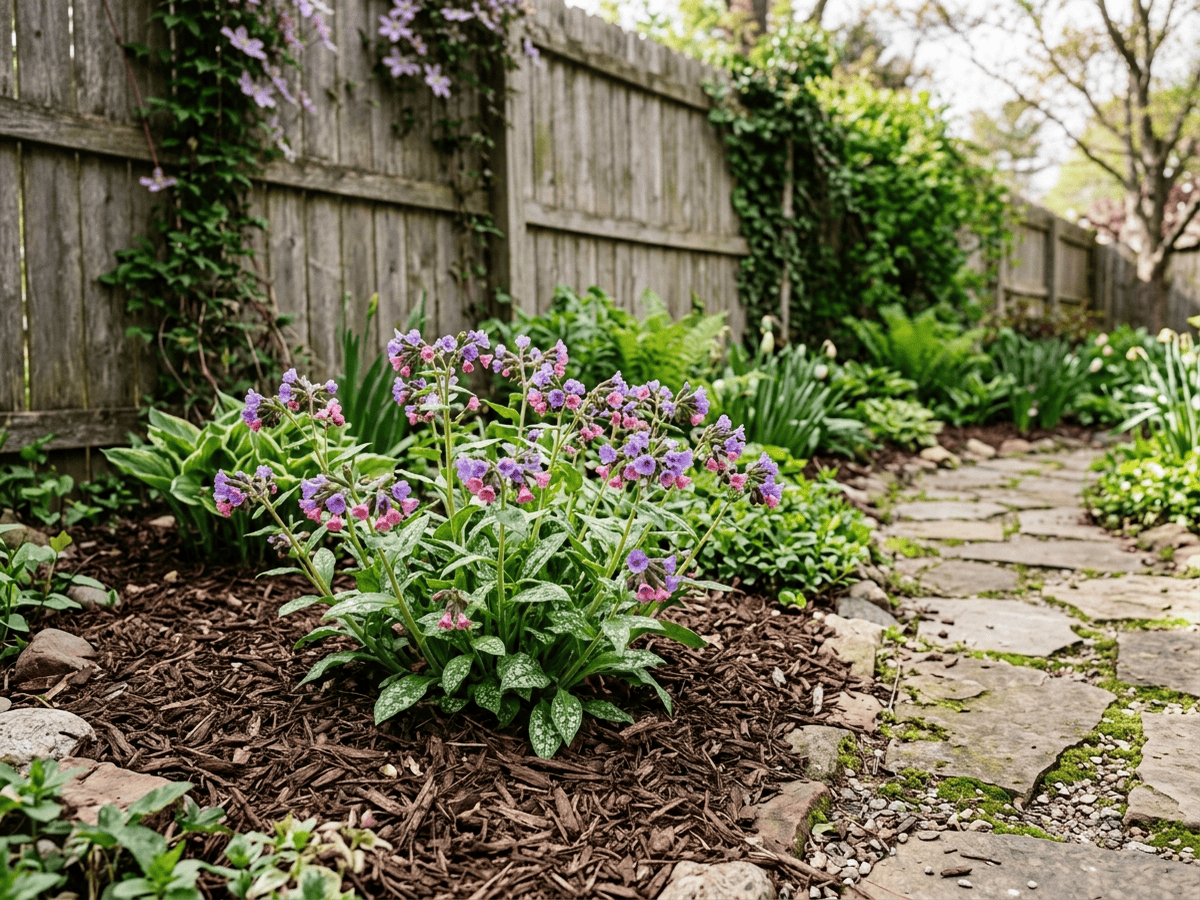
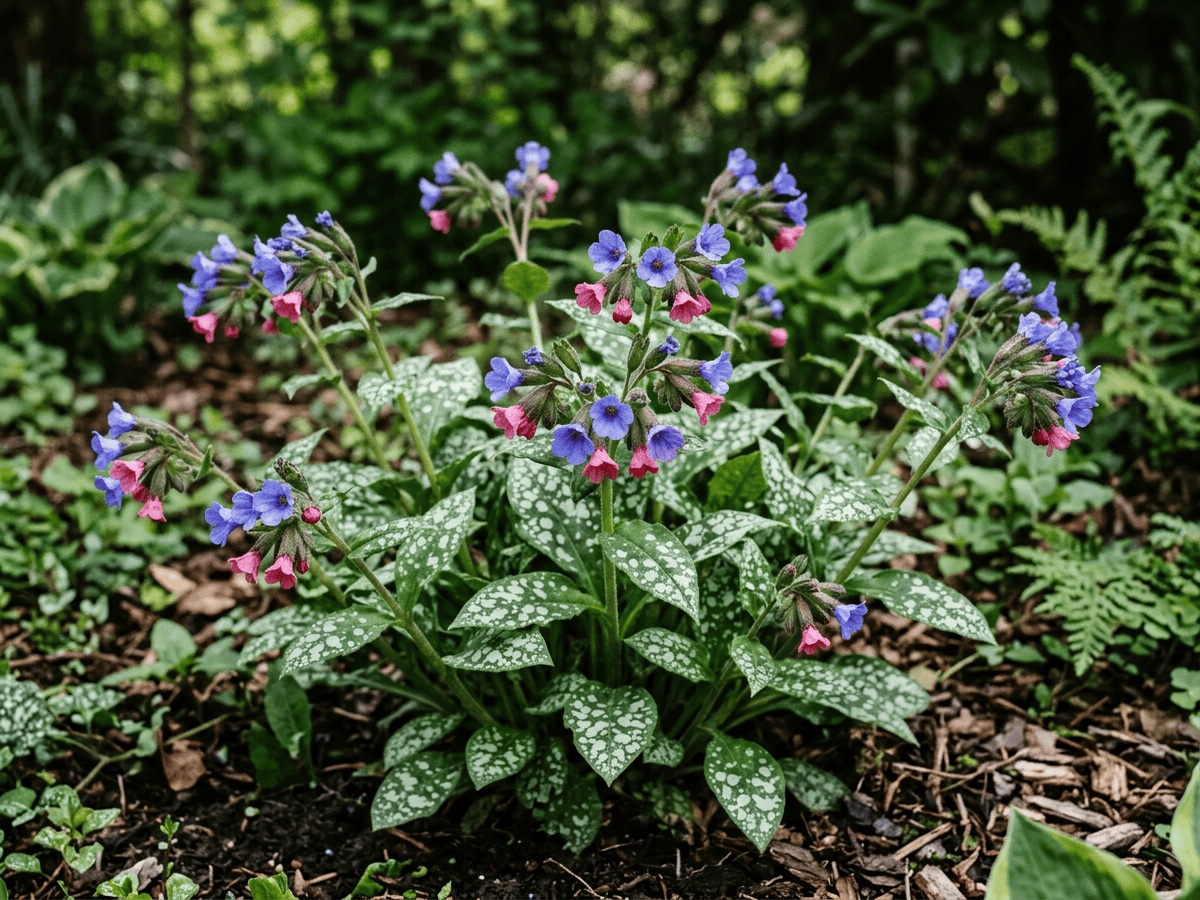
Pulmonaria officinalis, common lungwort, is a European woodland perennial grown for early spring flowers and silver-speckled leaves. The blossoms often open pink and age toward violet or blue as their chemistry shifts, creating several colors on one plant at once. Low clumps stay about 25-40 cm tall and suit the front of shade borders, woodland gardens, and paths where the spotted foliage can be seen up close. Its common name comes from the doctrine of signatures, the old idea that leaf markings resembling lungs hinted at human use. Modern gardeners value it more simply: it wakes early, feeds early bees, and keeps handsome foliage after many spring flowers have disappeared.
- Cold-hardy
- Shade-tolerant
- Deer-resistant
How to care for Lungwort
Watering
- Springevery 3 days
- Summerevery 2 days
- Fallevery 5 days
- Winterevery 10 days
Soil · Well-draining
- Top dressingPine bark mulch10%
- Main mixPotting soil + perlite 2:170%
- DrainageLECA / gravel20%
Never skip the drainage layer — standing water is the top cause of root rot.
FERTILIZER
Balanced Feed 14-14-14
An even feed covers all three needs at once, keeping leaves, roots and blooms moving together with nothing pushed out of balance.
- Nitrogen · Leaves
- Phosphorus · Roots + Blooms
- Potassium · Strength
- Springevery 30 days
- Summerevery 45 days
At a Glance
- NativeEurope
- Height0.5–1 ft (0.2–0.3 m)
- Spread1–2 ft (0.3–0.6 m)
- Flower colorPink, Blue, Purple
- Foliage colorGreen, Silver
- SoilLoamy, Moisture-retentive
- LocationsYard
Bloom time
BLOOM CYCLE
Peak bloom
Mar–May
Pink-to-blue clusters in early spring
Toxicity
Humans Slight · Pets Slight
pyrrolizidine alkaloids (trace) and allantoin
Slight
- Leaf
- Flower
- Ingestion
EXPOSURE Eating leaves and flowers.
EFFECT Long-term use may cause liver toxicity.
NOTE Trace pyrrolizidine alkaloids make prolonged internal use inadvisable. Not acutely toxic.
Slight
- Leaf
- Ingestion
EXPOSURE Eating leaves.
EFFECT Vomiting and drooling.
NOTE Trace pyrrolizidine alkaloids make prolonged internal use inadvisable. Not acutely toxic.
Slight
- Leaf
- Ingestion
EXPOSURE Eating leaves.
EFFECT Vomiting and drooling.
NOTE Trace pyrrolizidine alkaloids make prolonged internal use inadvisable. Not acutely toxic.
Educational information, not medical or veterinary advice. If exposure is suspected, contact a doctor or veterinarian.
DISTRIBUTION


- Native
- Introduced
- Europe
History
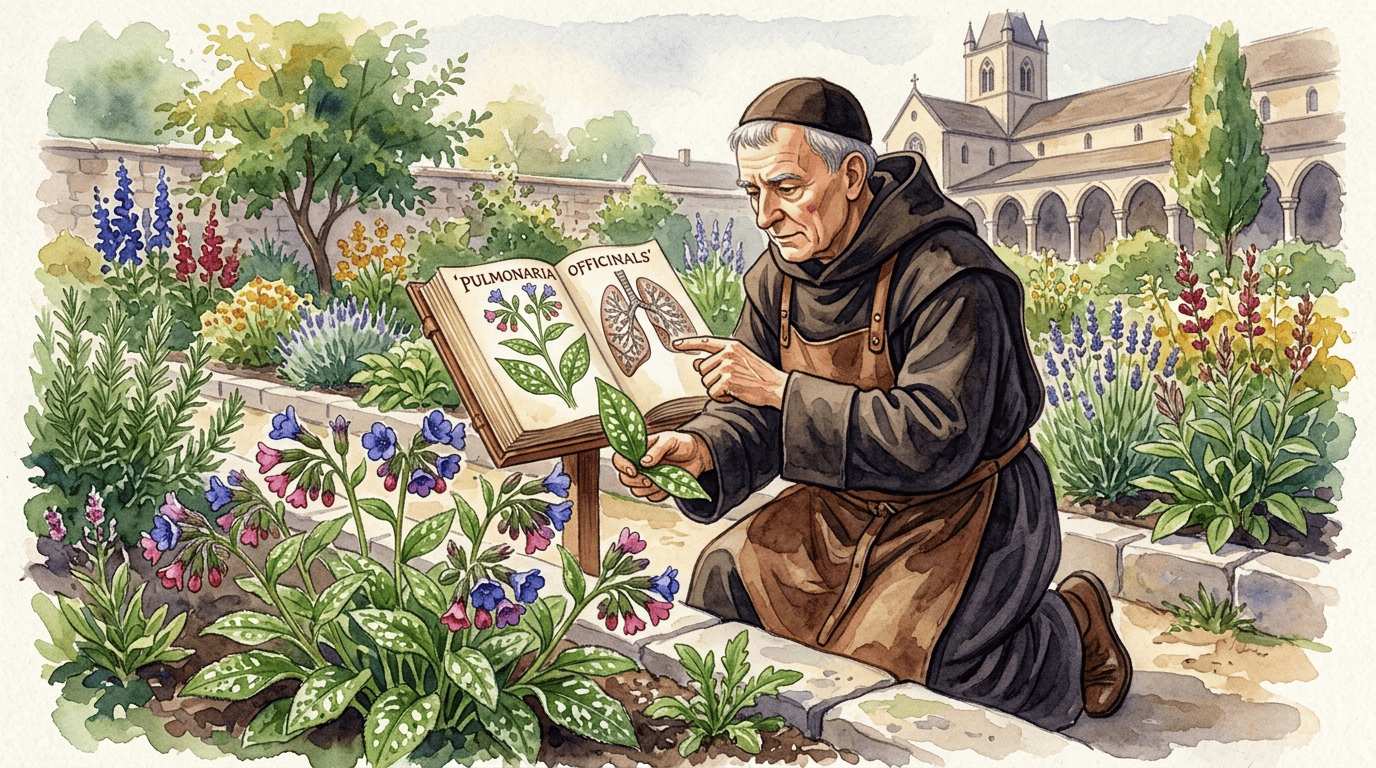
Pulmonaria officinalis is native to deciduous forests across central and northern Europe. Linnaeus included it in Species Plantarum (1753). The species has one of the longest documented medicinal histories in European herbalism: Hildegard von Bingen mentioned it in the 12th century, and herbalists John Gerard and Nicholas Culpeper prescribed infusions for coughs, asthma, and tuberculosis based on the visual resemblance of its spotted leaves to diseased lungs.
The 'officinalis' epithet marks it as an official pharmacopeia plant. Though later shown to be mildly expectorant at best, and unsafe for prolonged internal use due to pyrrolizidine alkaloids, it remained a cottage-garden staple. Brought to American colonial herb gardens in the 1600s. Today it is valued as an early-spring pollinator plant whose pink flowers turn blue with age.
Symbolism & meaning
What It Symbolizes
Lungwort is a lesson in how people once read plants as signs. Its spotted leaves suggested lungs to medieval eyes, while its flowers shift from pink to blue as they age. Modern gardeners value the quieter symbolism: spring transition, early bees, and beauty emerging from shade before the canopy closes.
- Healing tradition — medieval monastery medicinal plant
- Spring change — flowers shift from pink to blue
Where the Name Comes From
'Officinalis' from Latin means of the apothecary shop, marking recognition in old pharmacopeias.
Uses & Fun Facts
- Historic doctrine-of-signatures Lungwort tea for respiratory complaints
- Spotted-leaf clumps carpet shaded woodland borders
- Pink-to-blue spring flowers feed early emerging bumblebees
Related plants
More Pulmonaria plants
Plants with similar care
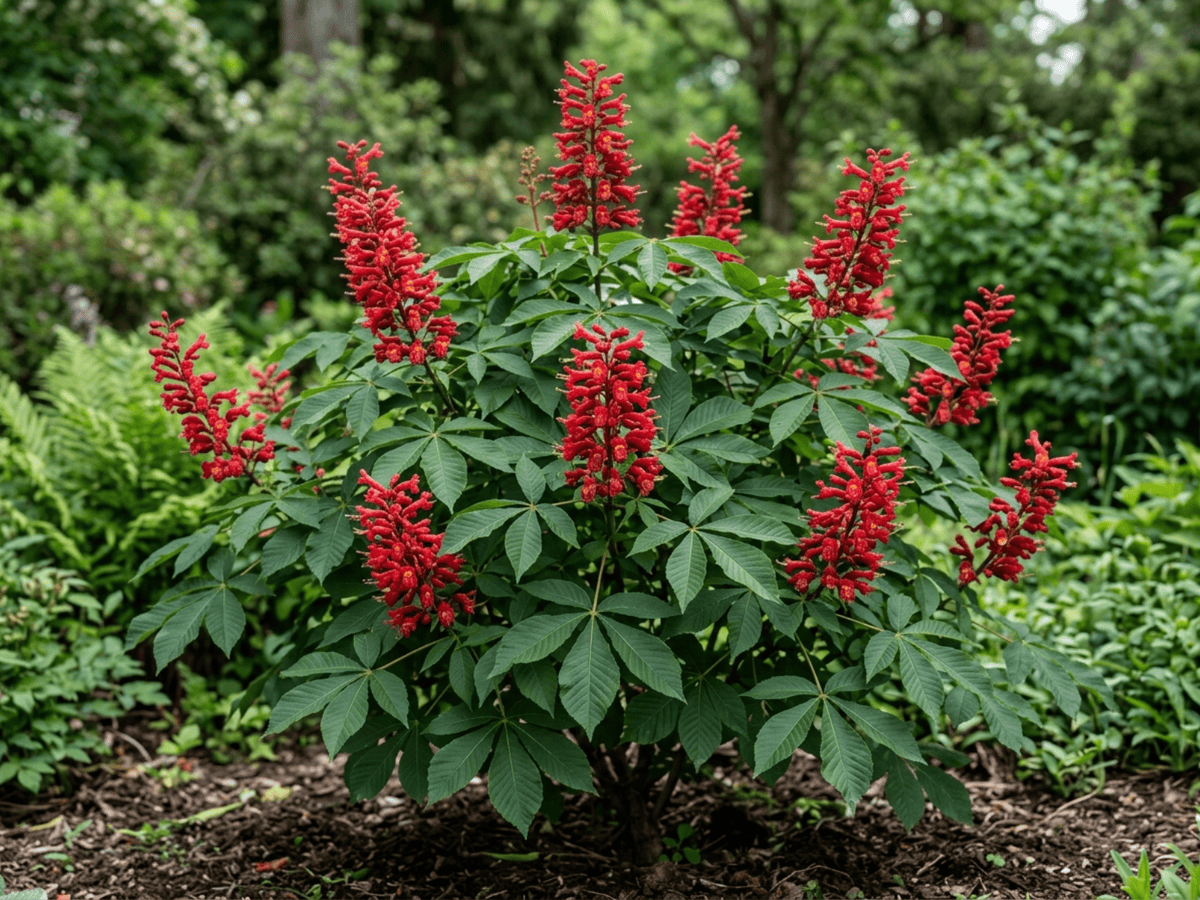 Red BuckeyeAesculus pavia
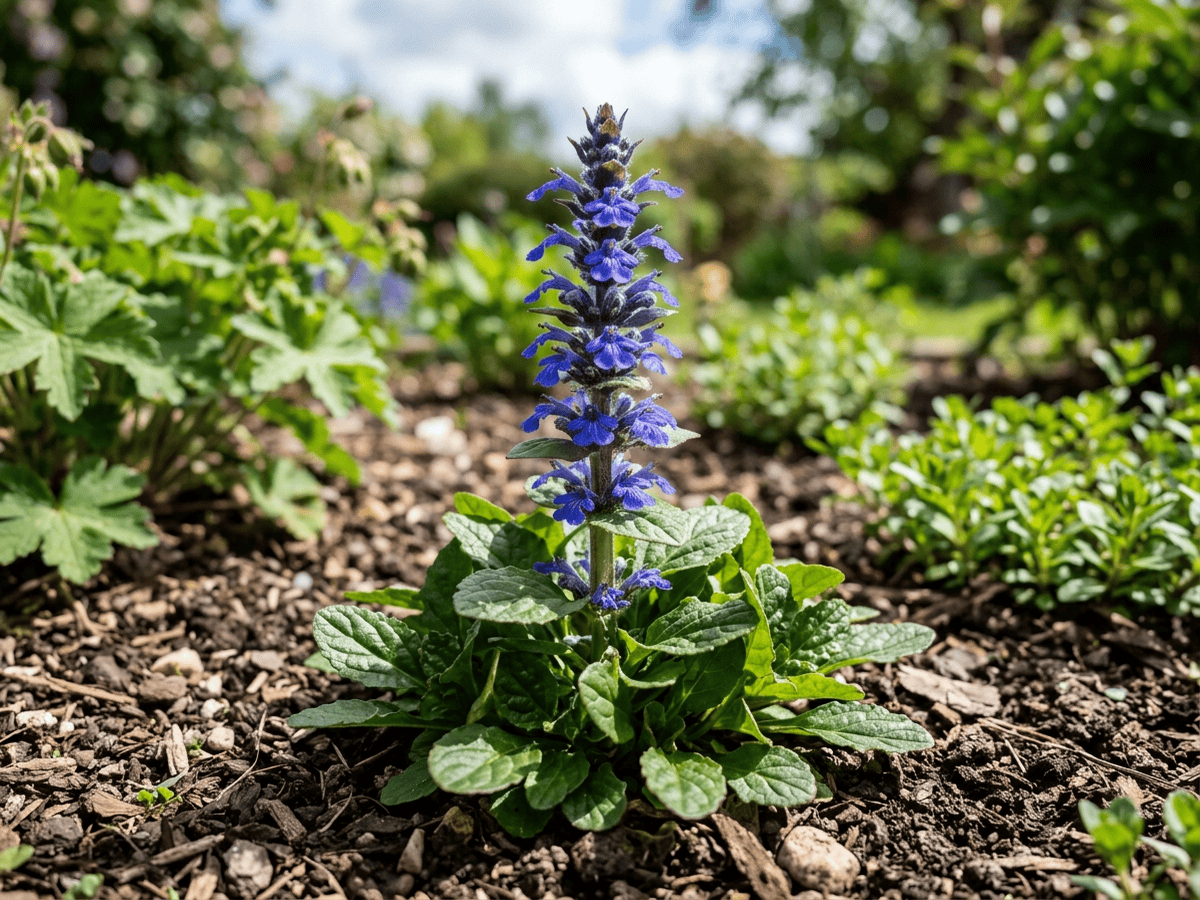 Blue BugleAjuga genevensis
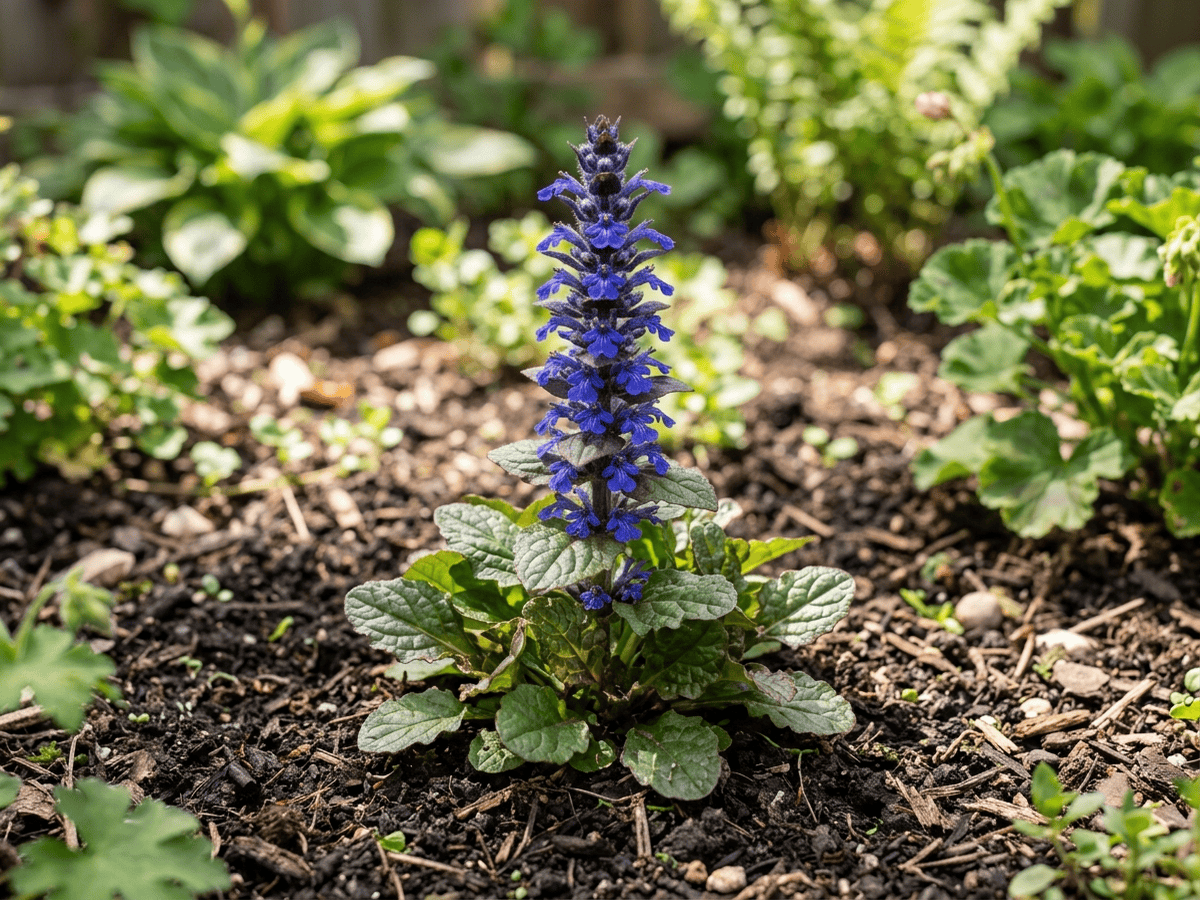 Pyramidal BugleAjuga pyramidalis
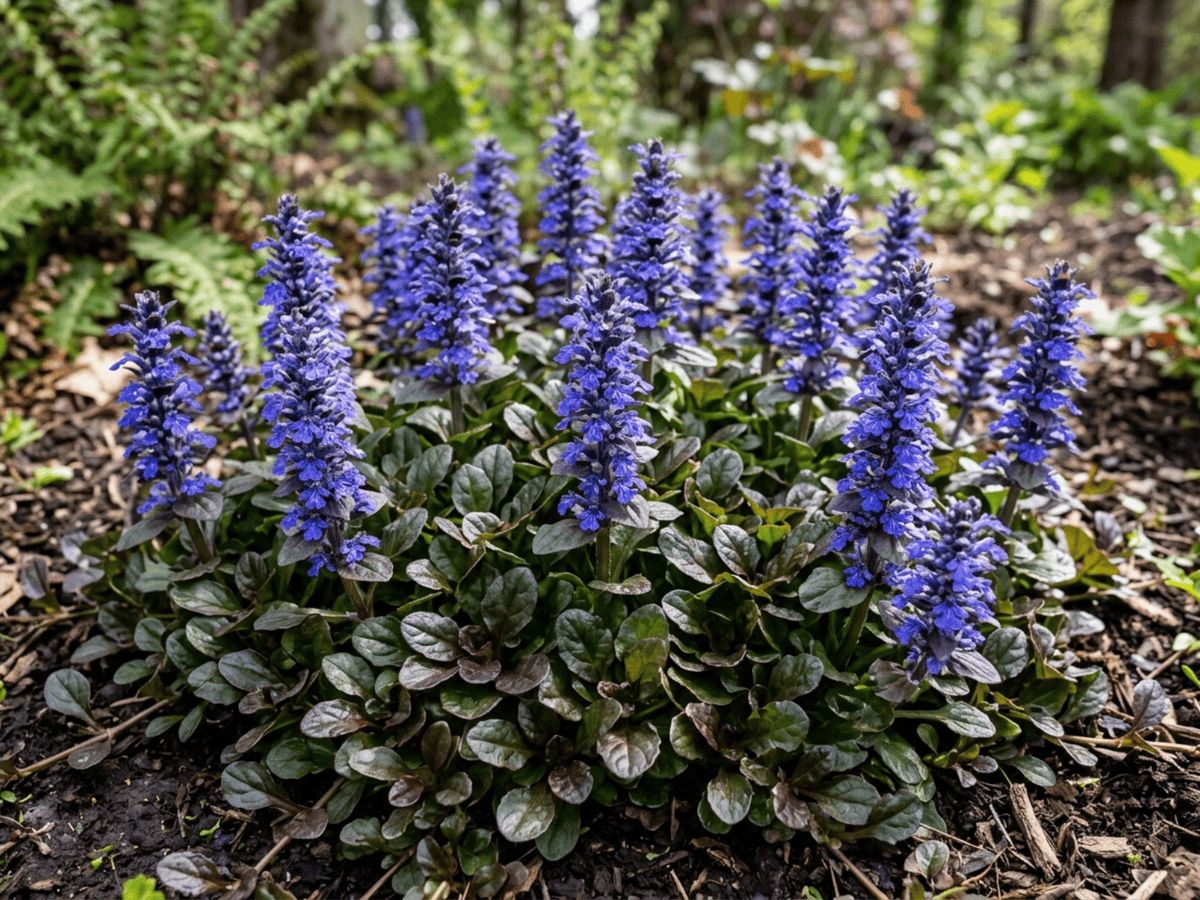 Carpet BugleAjuga reptans
Frequently asked questions
How often should I water Lungwort?
In summer, water about every 2 days; in winter, about every 10 days. Adjust for heat, pot size and drainage.
How much light does Lungwort need?
Part shade: 2–4 hrs direct. Watch the leaves — scorching or stretching means the light needs adjusting.
Is Lungwort toxic to cats or dogs?
Pets Slight (Dogs Slight · Cats Slight) Educational information, not medical or veterinary advice. If exposure is suspected, contact a doctor or veterinarian.
Is Lungwort easy to grow?
Yes — it is considered an easy, beginner-friendly plant.
When does Lungwort bloom?
It typically blooms Mar–May in the Northern Hemisphere.
YardMate
Identify any plant in seconds
Snap a photo — YardMate names the plant, diagnoses problems, and reminds you when to water.
Download on the App Store