 YardMate


Rue
Ruta graveolens
Easy · Beginner friendlyAbout Rue
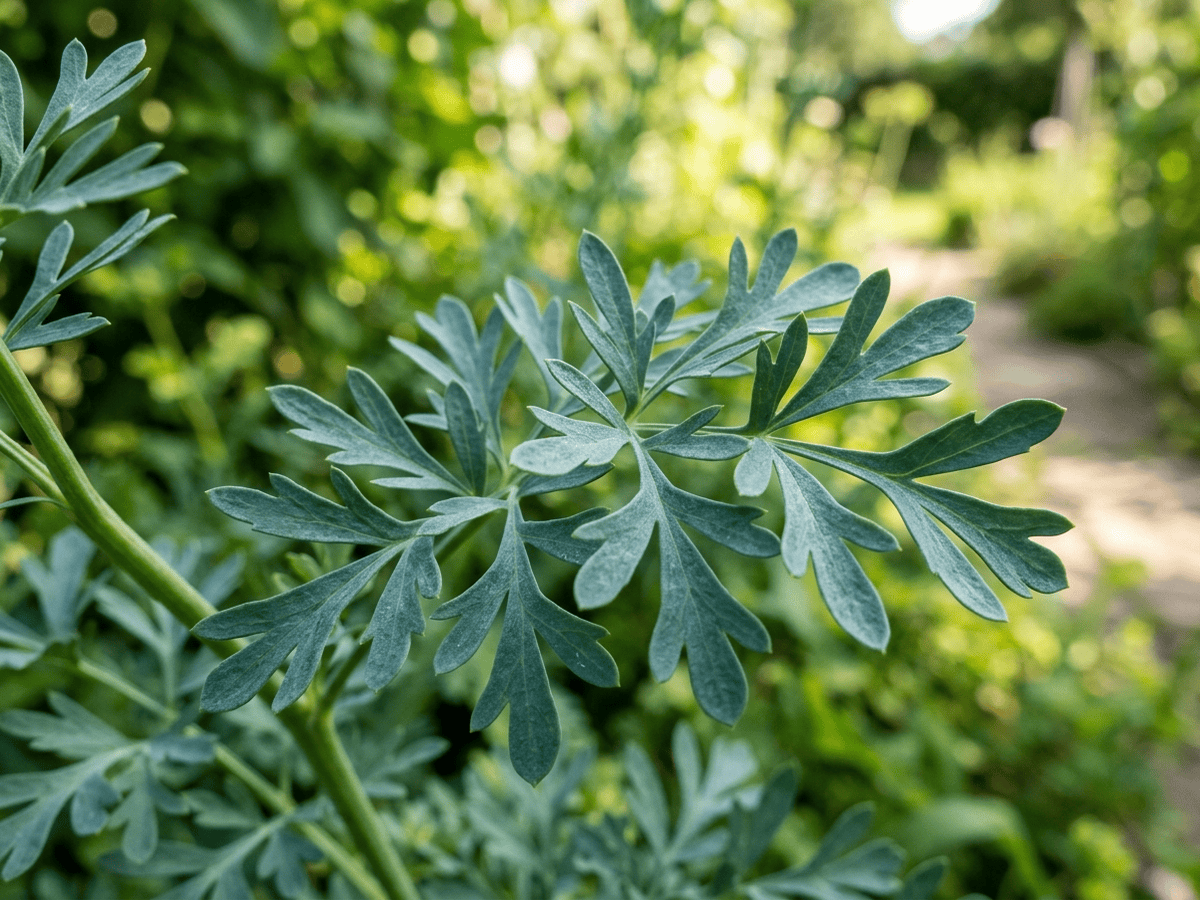
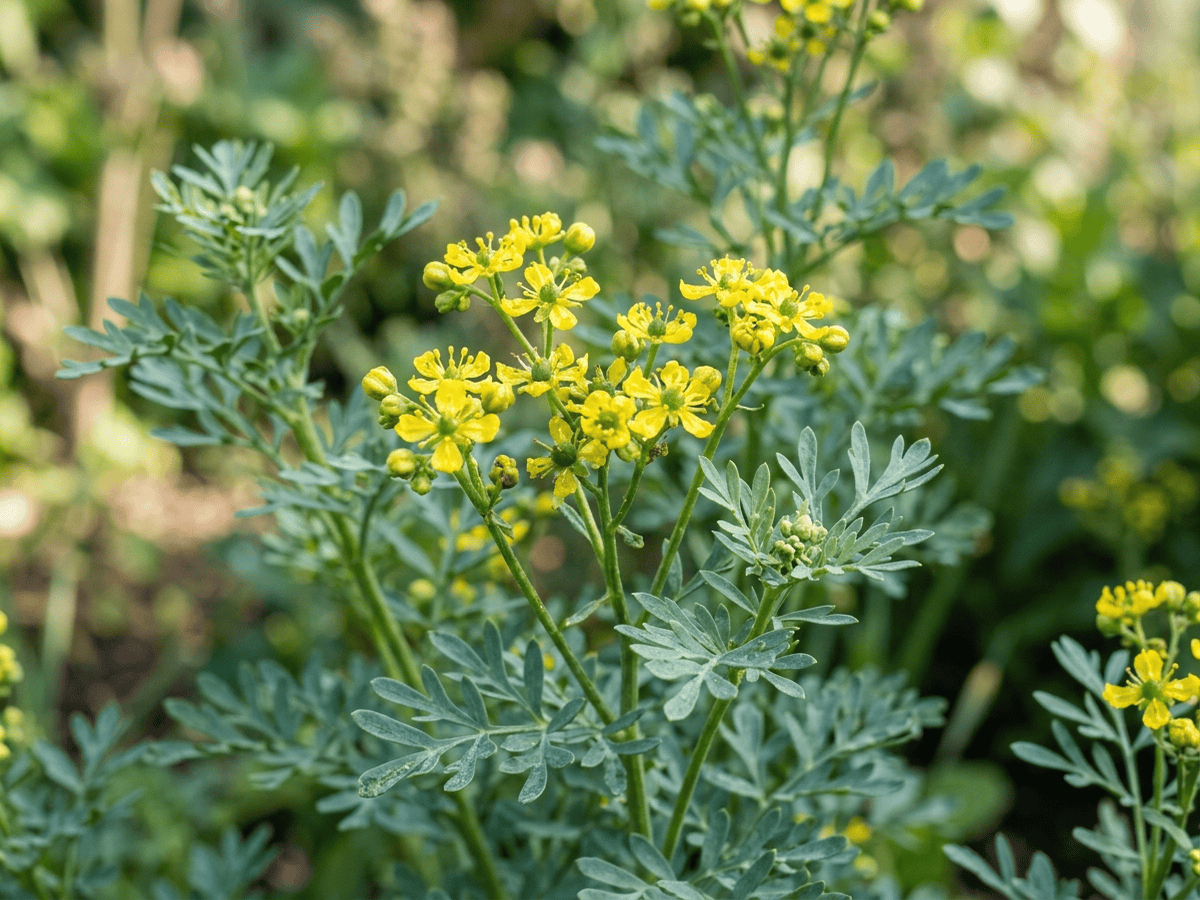
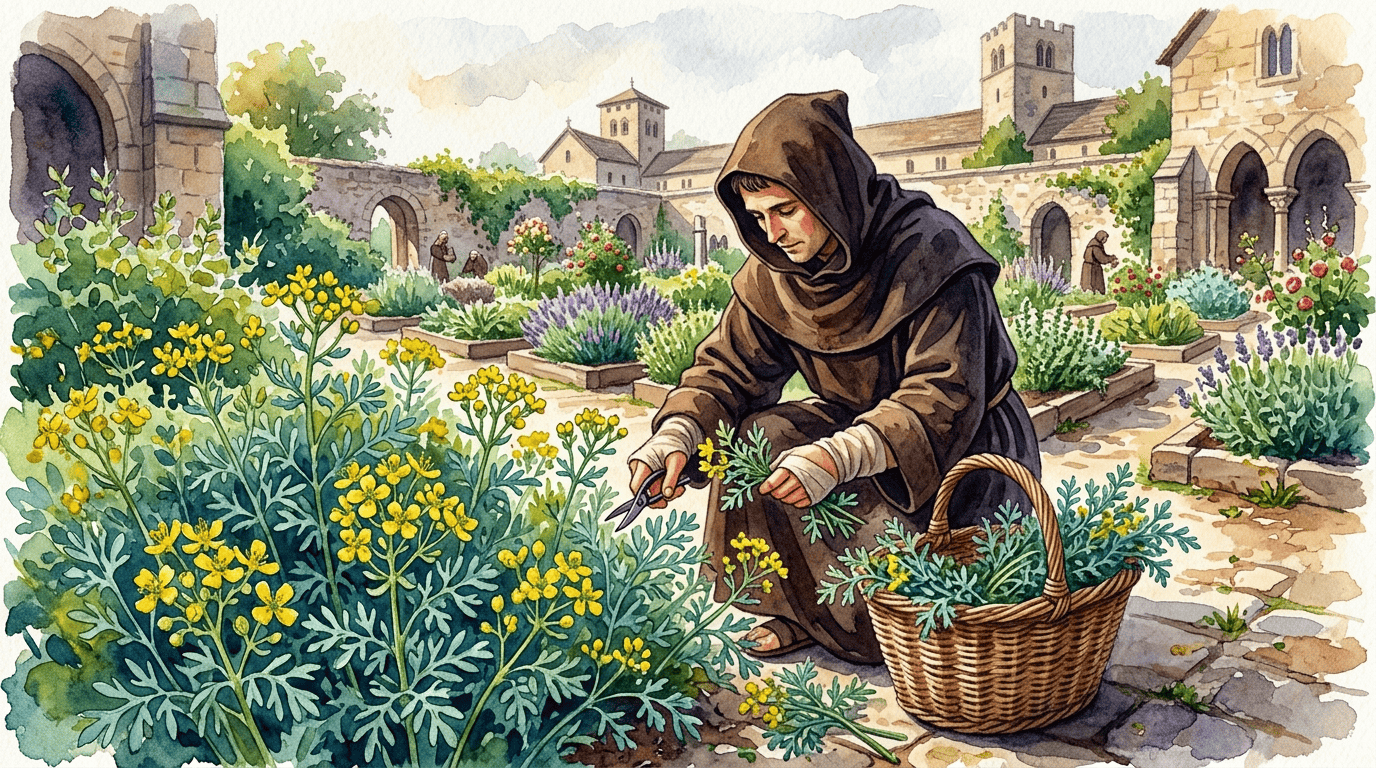
Ruta graveolens, rue or herb of grace, is a small Mediterranean evergreen subshrub with blue-green, deeply lobed aromatic leaves and clusters of yellow summer flowers. Once common in monastery gardens, apothecary plots, and old kitchens, rue now earns its place mostly as a foliage plant and historical herb. The scent is strong, bitter, and resinous, and the plant's chemistry demands respect: sap can cause severe photosensitive skin reactions, especially in bright sun. Handle with gloves and keep it away from casual grazing. In dry gardens it is handsome, drought-tolerant, and useful as a host plant for swallowtail butterflies. Its beauty is cool and blue; its temperament is not casual.
- Fragrant
- Drought-tolerant
- Evergreen
- Pollinator-friendly
How to care for Rue
Watering
- Springevery 14 days
- Summerevery 21 days
- Fallevery 21 days
- Winterevery 45 days
Soil · Well-draining
- Top dressingPine bark mulch10%
- Main mixPotting soil + perlite 2:170%
- DrainageLECA / gravel20%
Never skip the drainage layer — standing water is the top cause of root rot.
FERTILIZER
This plant needs little to no feeding.
At a Glance
- NativeEurope, North America
- Height2–3 ft (0.6–0.9 m)
- Spread1.5–2.5 ft (0.5–0.8 m)
- Flower colorYellow
- Foliage colorBlue-green
- SoilLoamy, Well-drained, Alkaline
- LocationsYard
Bloom time
BLOOM CYCLE
Peak bloom
Jun–Aug
Small yellow flowers in summer
Fragrance
STRONG FRAGRANCE
Sharp pungent aroma—acrid to many people.
Toxicity
Humans Toxic · Pets Moderate
furanocoumarins (psoralens), rutin, and quinoline alkaloids
Toxic
- Leaf
- Sap
- Contact
- Ingestion
EXPOSURE Touching leaves and sap. Eating leaves and sap.
EFFECT Severe phytophotodermatitis, blistering, hepatotoxicity (ingested), and abortifacient.
NOTE Documented concern for humans: Severe phytophotodermatitis, blistering, hepatotoxicity (ingested), and abortifacient.
Moderate
- Leaf
- Sap
- Contact
- Ingestion
EXPOSURE Touching leaves and sap. Eating leaves and sap.
EFFECT Phytophotodermatitis and vomiting.
NOTE Extremely photosensitizing—wear gloves and handle only in low light. ASPCA lists rue as toxic.
Moderate
- Leaf
- Sap
- Contact
- Ingestion
EXPOSURE Touching leaves and sap. Eating leaves and sap.
EFFECT Phytophotodermatitis and vomiting.
NOTE Extremely photosensitizing—wear gloves and handle only in low light. ASPCA lists rue as toxic.
Educational information, not medical or veterinary advice. If exposure is suspected, contact a doctor or veterinarian.
DISTRIBUTION


- Native
- Introduced
- Europe
- North America
History
Ruta graveolens, commonly called common rue or herb-of-grace, is an evergreen aromatic subshrub in the citrus family (Rutaceae) native to the Balkans, southeastern Europe, and parts of southwestern Asia. Carl Linnaeus described it in Species Plantarum in 1753. The epithet graveolens means strong-smelling.
The plant has a millennia-long history in European and Middle Eastern medicine and herbalism—mentioned in the Bible (Luke 11:42), used by Ancient Greek and Roman physicians, valued in medieval monastic herb gardens, listed in the 8th-century Capitulare de Villis of Charlemagne, and prescribed against plague in the 'Four Thieves Vinegar'. Plants grow 60-90 cm tall with distinctive pinnately divided glaucous blue-green leaves and terminal clusters of small yellow four-petaled flowers with green central discs in summer. Contains furanocoumarins (psoralens) that cause severe phytophotodermatitis—skin contact with the sap plus sunlight produces painful burns and long-lasting dark pigmentation.
Also carries significant internal toxicity and was historically used as an abortifacient. Important larval host for giant swallowtail butterflies in North America. Native to the Balkan Peninsula. Used since antiquity in Mediterranean medicine and cuisine. Mentioned by Pliny, Hippocrates, and in the Bible.
Symbolism & meaning
What It Symbolizes
Rue can symbolize repentance, Shakespeare's 'herb of grace' offered for sorrow and remembrance in scenes of grief and madness. Another layer is protection, for it was a medieval guardian against witchcraft and evil, hung in doorways and tucked into ritual bouquets. Few herbs so completely braid Christian penitence with older folk magic, and to grow ruta graveolens is to keep a small piece of that double inheritance, equally at home in a sermon and in a charm.
- Repentance — Shakespearean 'herb of grace' for sorrow and remembrance
- Protection — medieval guardian against witchcraft and evil
Where the Name Comes From
'Ruta' from Greek 'rhyte', the ancient name; 'graveolens' means strong-smelling.
Uses & Fun Facts
- Historical herb-of-grace used in folk medicine
- Blue-green foliage releases pungent bitter scent
- Yellow flowers host swallowtail butterfly caterpillars
- Traditional protective herb in Mediterranean folklore
Related plants
Plants with similar care
 Chinese AbeliaAbelia chinensis
 Fragrant AbeliaAbelia mosanensis
 Large-Flowered AbeliaAbelia uniflora
 Glossy AbeliaAbelia x grandiflora
Frequently asked questions
How often should I water Rue?
In summer, water about every 21 days; in winter, about every 45 days. Adjust for heat, pot size and drainage.
How much light does Rue need?
Full sun: 6+ hrs direct. Watch the leaves — scorching or stretching means the light needs adjusting.
Is Rue toxic to cats or dogs?
Pets Moderate (Dogs Moderate · Cats Moderate) Educational information, not medical or veterinary advice. If exposure is suspected, contact a doctor or veterinarian.
Is Rue easy to grow?
Yes — it is considered an easy, beginner-friendly plant.
When does Rue bloom?
It typically blooms Jun–Aug in the Northern Hemisphere.
YardMate
Identify any plant in seconds
Snap a photo — YardMate names the plant, diagnoses problems, and reminds you when to water.
Download on the App Store