 YardMate



Heath Pearlwort
Sagina subulata
Medium · Some experienceAbout Heath Pearlwort
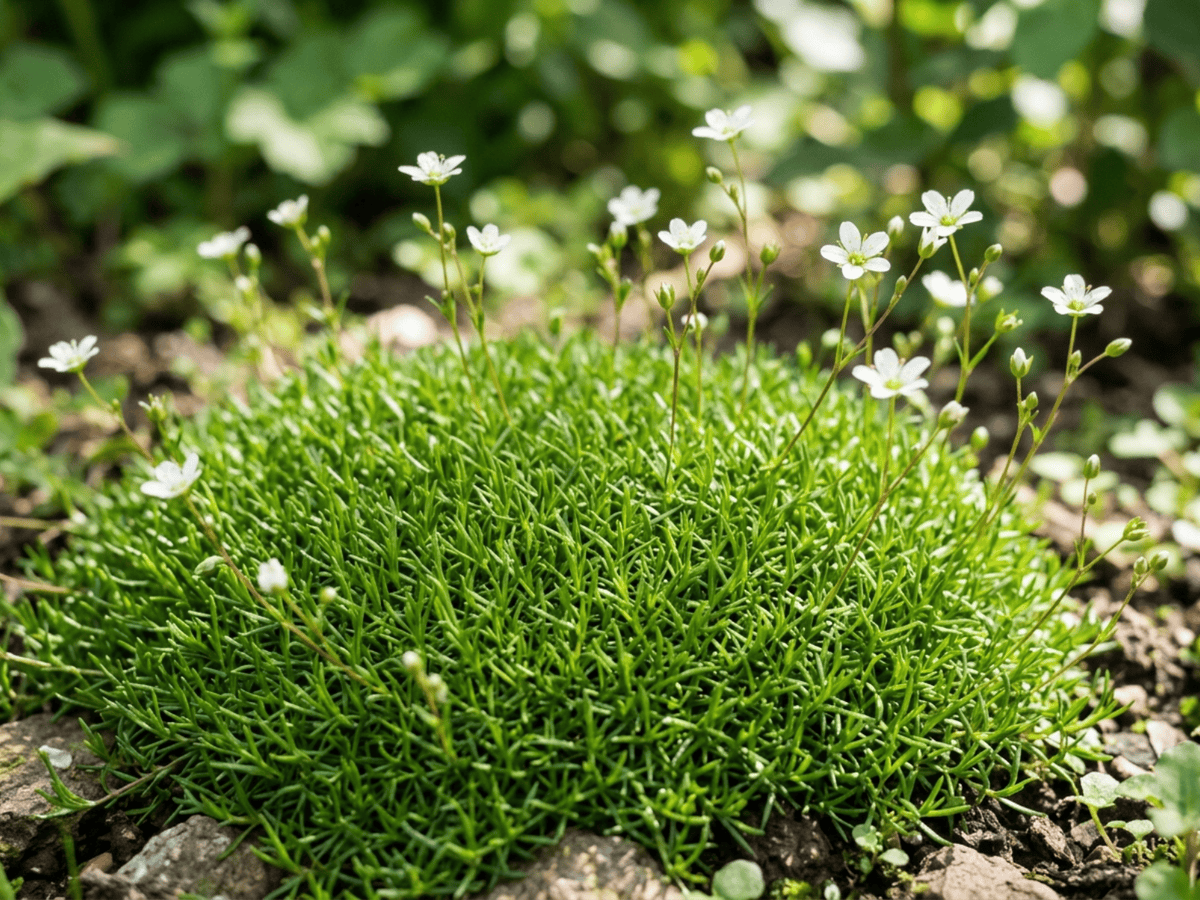
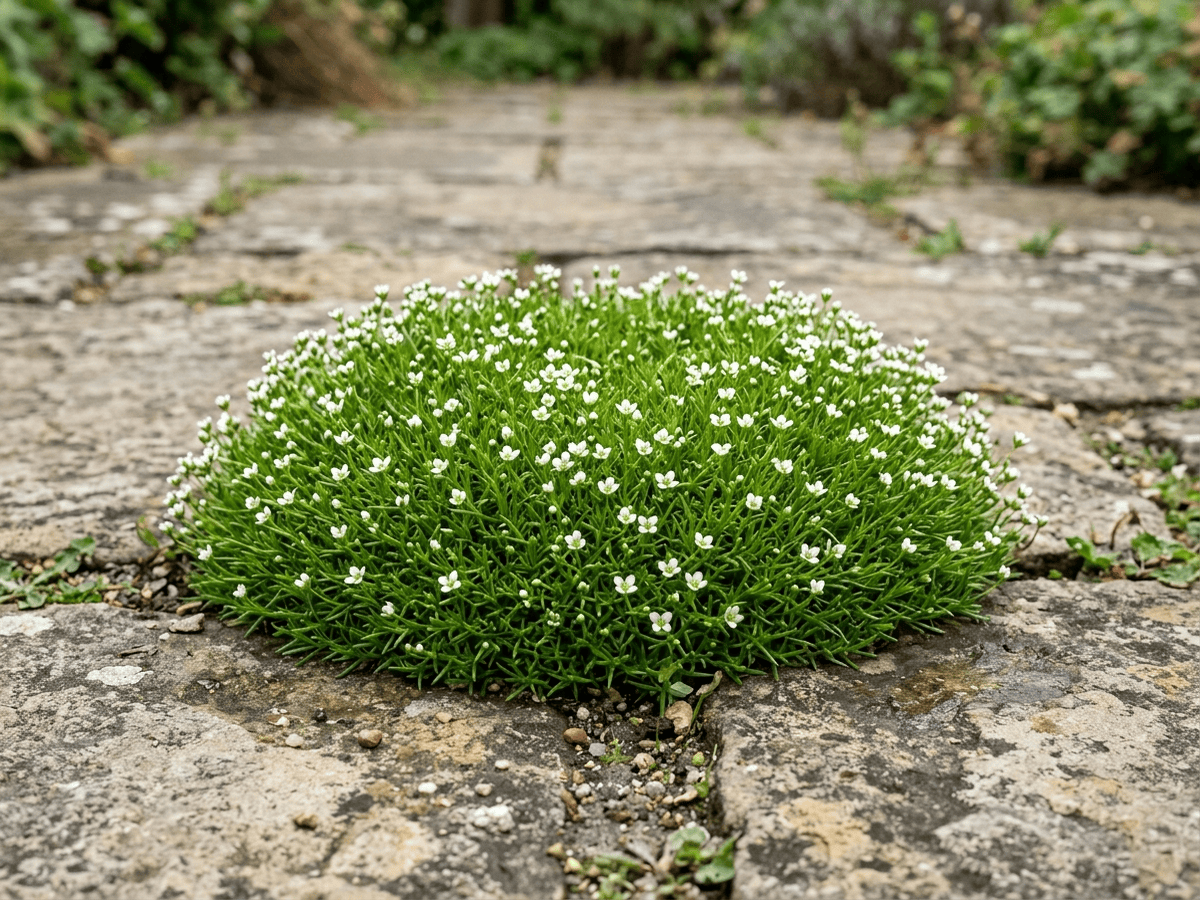
Sagina subulata, Irish moss or Scotch moss, is a tiny creeping perennial that forms dense emerald-green cushions resembling true moss. Despite its common name, it is not a moss but a flowering plant in the carnation family. Native to western and southern Europe, it grows just 1–2 centimeters tall and produces a carpet of fine needle-like leaves dotted with miniature white flowers in summer. It is cherished for filling gaps between stepping stones, creating living pathways, and covering small areas where a soft moss-like texture is desired. It tolerates light foot traffic and prefers cool moist conditions with partial shade, though it handles full sun in cooler climates. In hot summers it can brown in patches but usually recovers with watering. The golden-leaved cultivar 'Aurea' is equally popular, providing a lime-green alternative. It works beautifully in fairy gardens, miniature landscapes, and Japanese-inspired designs.
- Groundcover
- Compact
- Evergreen
How to care for Heath Pearlwort
Watering
- Springevery 3 days
- Summerevery 2 days
- Fallevery 7 days
- Winterevery 21 days
Soil · Well-draining
- Top dressingPine bark mulch10%
- Main mixPotting soil + perlite 2:170%
- DrainageLECA / gravel20%
Never skip the drainage layer — standing water is the top cause of root rot.
FERTILIZER
- Springevery 60 days
At a Glance
- NativeEurope
- Height0.5 ft (0.2 m)
- Spread1–1.5 ft (0.3–0.5 m)
- Flower colorWhite
- Foliage colorGreen, Yellow
- SoilLoamy, Well-drained
- LocationsYard
Bloom time
BLOOM CYCLE
Peak bloom
Jun–Aug
Tiny white star flowers in summer; ornamental value is in the moss-like carpet
Fragrance
NO FRAGRANCE
No notable fragrance.
Toxicity
No toxicity has been reported for this plant. Still, it is wise to keep pets from chewing on any houseplant.
Educational information, not medical or veterinary advice. If exposure is suspected, contact a doctor or veterinarian.
DISTRIBUTION


- Native
- Introduced
- Europe
History

Sagina subulata is native to western Europe, from Iceland and northern Scandinavia south through the British Isles (where "Irish moss" as a common name is established), France, Iberia, and into parts of the western Mediterranean. Despite its common names — "Irish moss," "Scotch moss," "pearlwort" — it is not a true moss but a flowering plant in the carnation family (Caryophyllaceae). It forms a low dense mat (typically 2-5 cm tall) of fine awl-shaped leaves with tiny five-petaled white flowers in summer.
In horticulture, the term "Irish moss" is typically applied to the green form of S. subulata, while "Scotch moss" is often applied to the golden-yellow cultivar S. subulata "Aurea" — though the distinction is horticultural rather than botanical. The plant is widely used between stepping stones, over bulb plantings, in rock gardens, as a miniature fairy-garden groundcover, and as a small-area lawn substitute. It tolerates light foot traffic, prefers cool climates with consistent moisture, and can decline in hot summer areas.
Sagina subulata gained enormous popularity with the fairy garden craze of the 2010s, becoming one of the top-selling miniature landscape plants. In Japanese garden design philosophy, it serves a similar role to actual moss, creating the serene green ground plane that is fundamental to the aesthetic. The completely unrelated edible seaweed "Irish moss" (Chondrus crispus, used for carrageenan) shares only the common name.
Symbolism & meaning
What It Symbolizes
Heath Pearlwort evokes serenity, its soft moss-like carpet of tiny green leaves creating a sense of calm and quiet beauty between stepping stones. Paired with patience, it grows slowly and steadily into a perfect miniature landscape, asking the gardener to wait. It is a groundcover whose meaning lives in stillness — small, low, and gently inviting the eye to slow down.
- Serenity — its soft moss-like carpet creates a sense of calm and quiet beauty
- Patience — grows slowly and steadily to form a perfect miniature landscape
Where the Name Comes From
Sagina from Latin 'sagina' (fattening/nourishment), an obscure reference. Subulata means 'awl-shaped', describing the fine pointed leaves.
Uses & Fun Facts
- Mossy Irish-moss mats fill gaps between stepping stones
- Bright green moss-like cushions star tiny white spring flowers
Related plants
More Sagina plants
Plants with similar care
 Japanese MapleAcer palmatum
 Azure MonkshoodAconitum carmichaelii
 Florida HobblebushAgarista populifolia
 Shell GingerAlpinia zerumbet
Frequently asked questions
How often should I water Heath Pearlwort?
In summer, water about every 2 days; in winter, about every 21 days. Adjust for heat, pot size and drainage.
How much light does Heath Pearlwort need?
Part shade: 2–4 hrs direct. Watch the leaves — scorching or stretching means the light needs adjusting.
Is Heath Pearlwort toxic to cats or dogs?
No toxicity has been reported for this plant. Still, it is wise to keep pets from chewing on any houseplant. Educational information, not medical or veterinary advice. If exposure is suspected, contact a doctor or veterinarian.
Is Heath Pearlwort easy to grow?
It is moderately demanding: a good choice once you have a little experience.
When does Heath Pearlwort bloom?
It typically blooms Jun–Aug in the Northern Hemisphere.
YardMate
Identify any plant in seconds
Snap a photo — YardMate names the plant, diagnoses problems, and reminds you when to water.
Download on the App Store