 YardMate
Peruvian Pepper Tree
Schinus molle
Hard · Experienced growersAbout Peruvian Pepper Tree
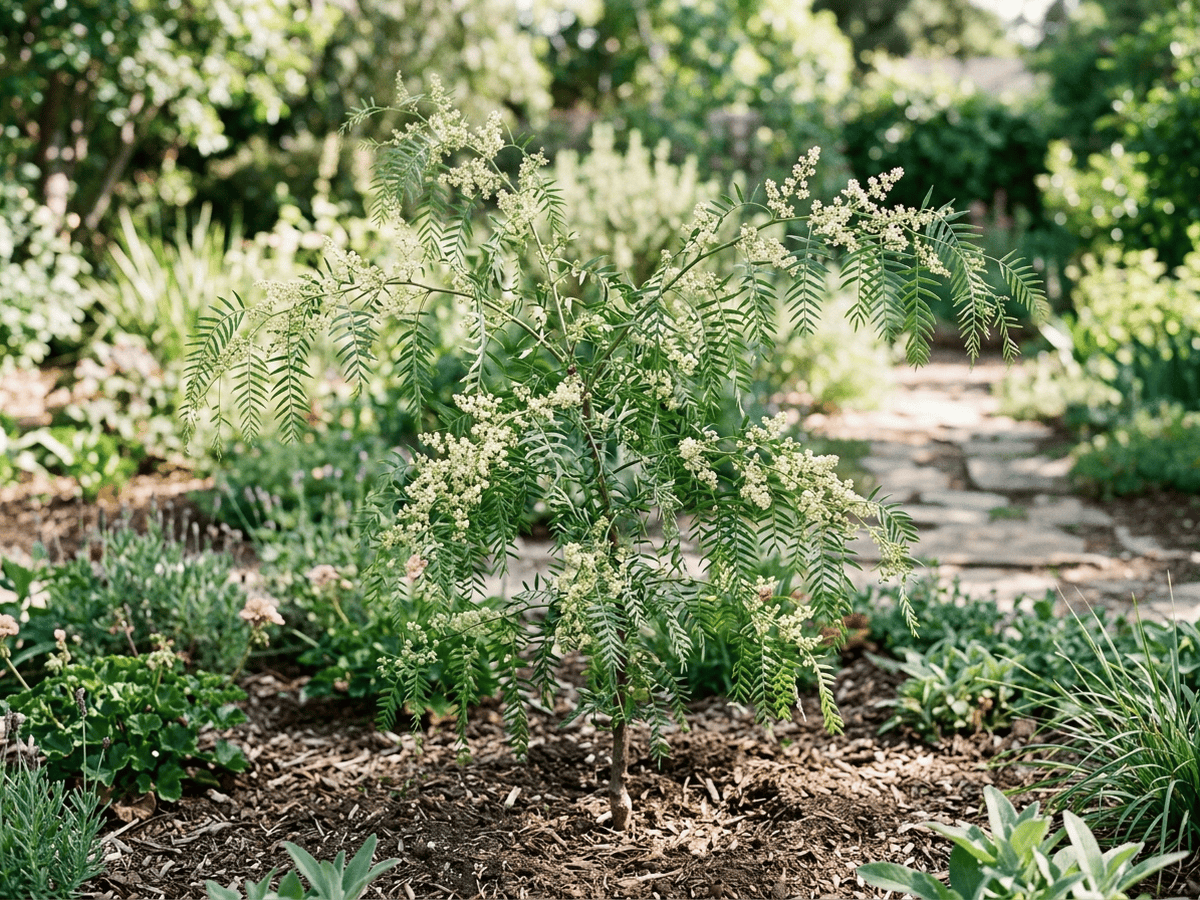
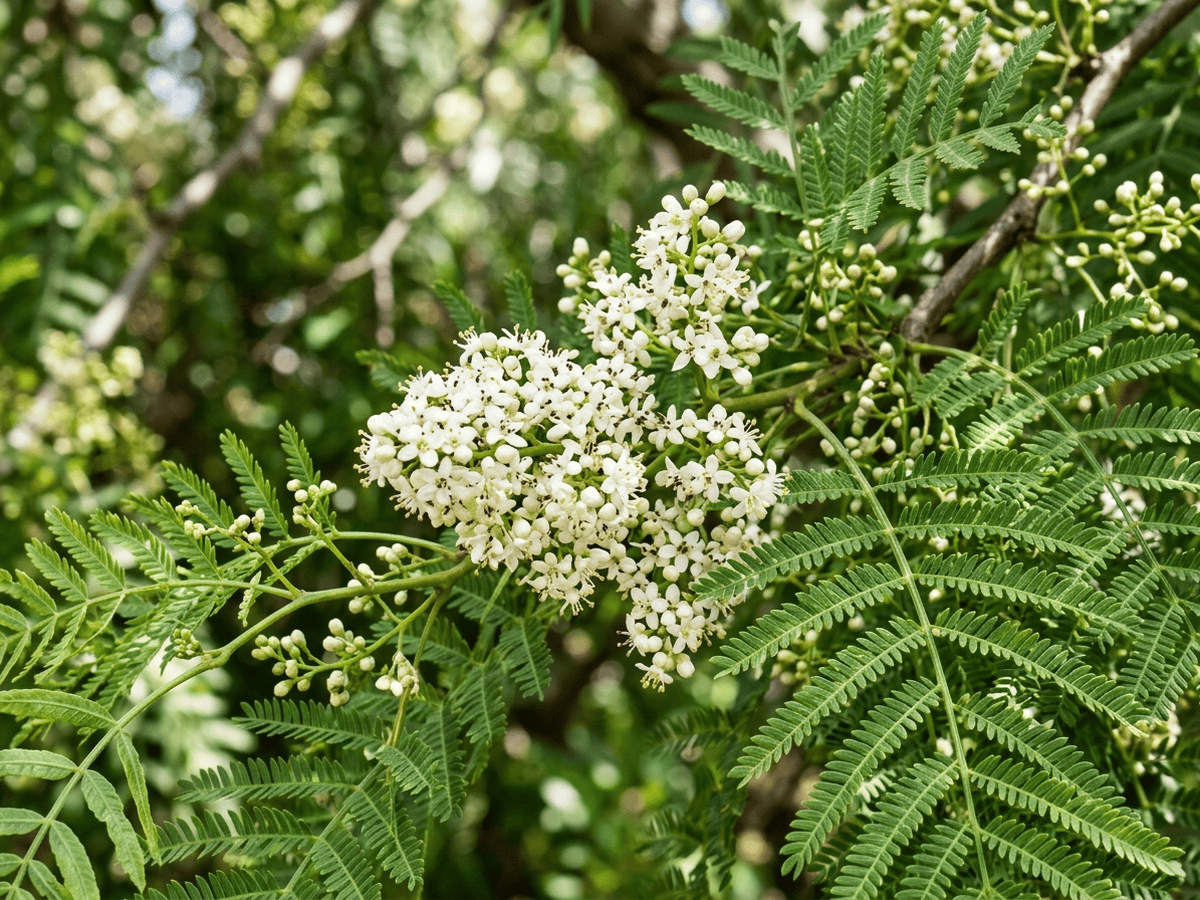
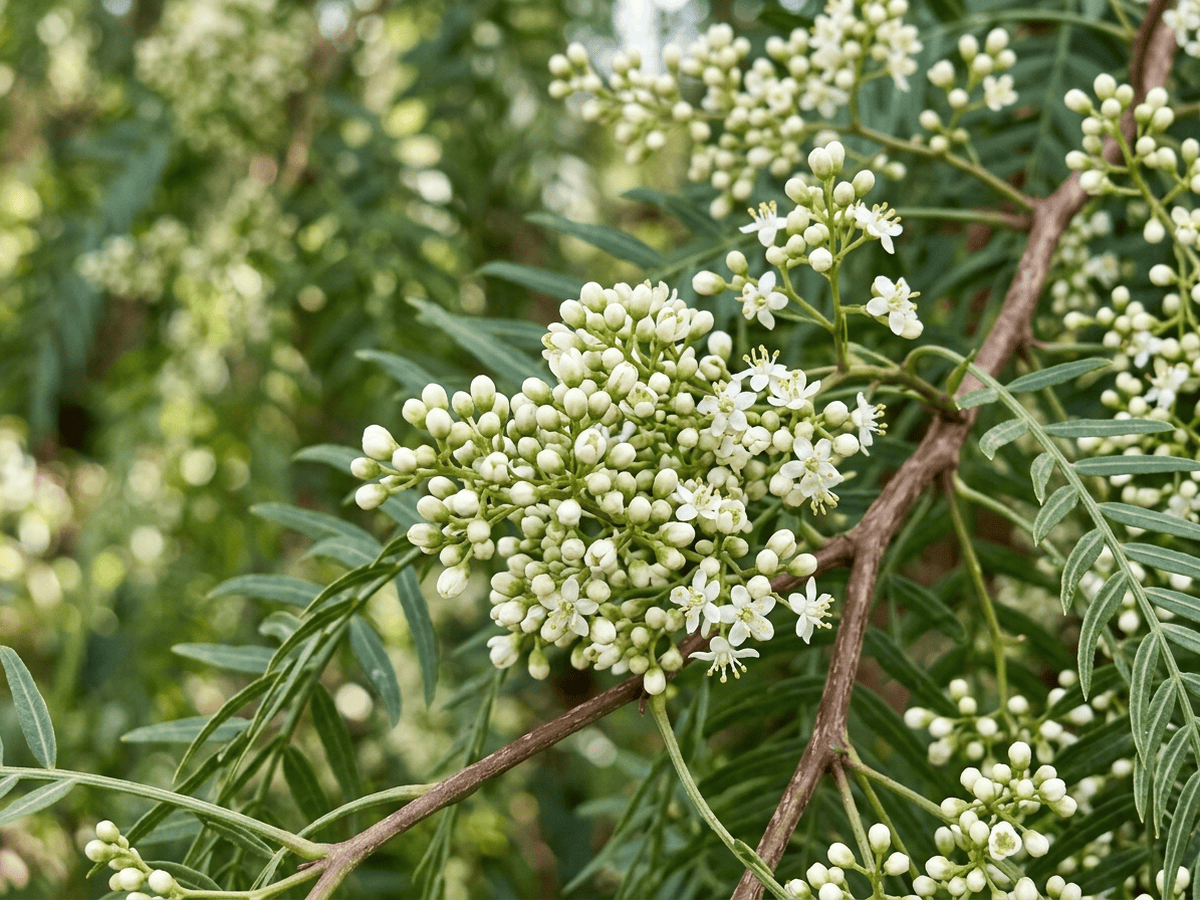
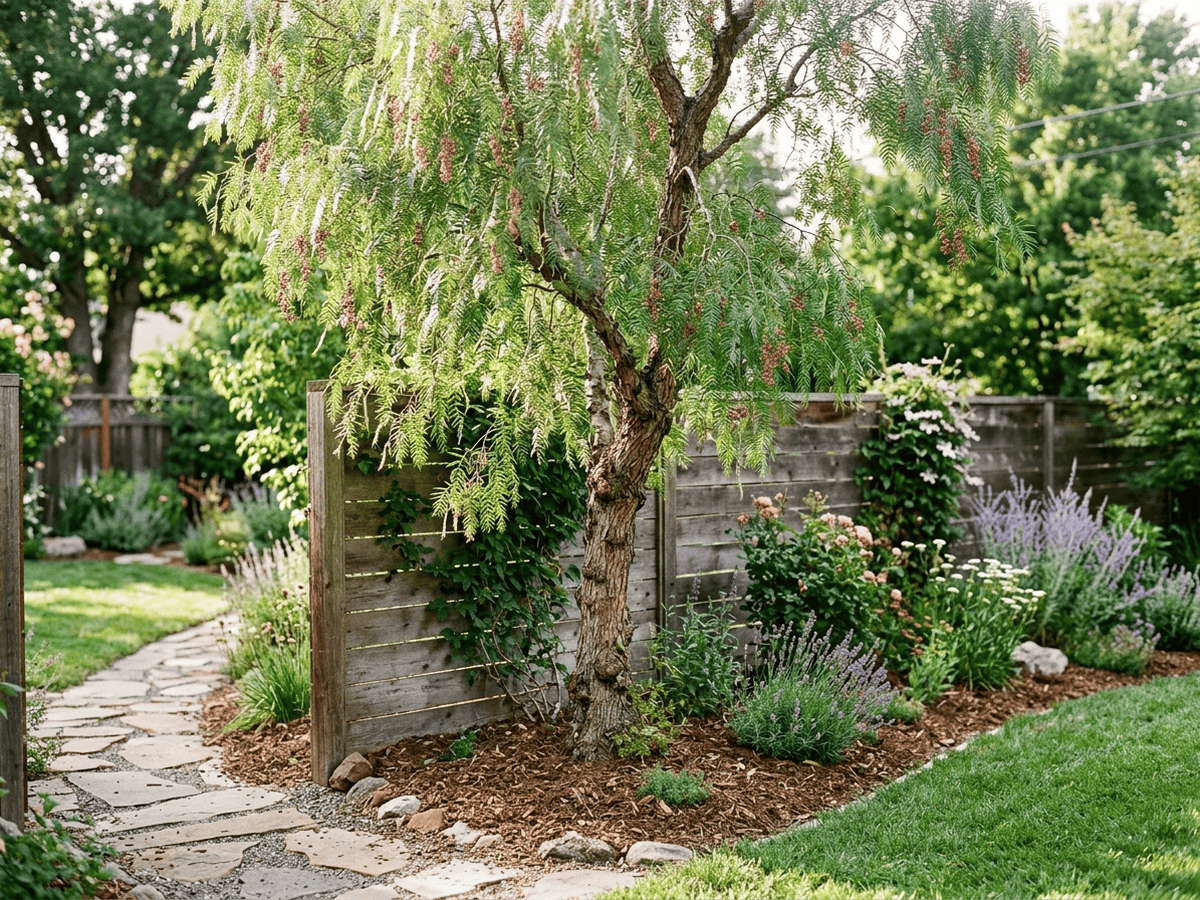
Schinus molle, the Peruvian Pepper Tree, is a graceful evergreen native to the Andes of South America. Its weeping branches carry feathery, aromatic pinnate leaves that release a peppery fragrance when crushed. Summer brings tiny cream-white flower clusters that attract pollinators, followed by rosy-red berries hanging through autumn. Remarkably drought-tolerant, it thrives in poor soils and intense sun, making it one of the world's most widely planted shade trees in warm, dry climates. The dried berries are the prized pink peppercorns of gourmet kitchens worldwide.
- Drought-tolerant
- Evergreen
- Fragrant
- Fast-growing
- Showy-fruit
How to care for Peruvian Pepper Tree
Watering
- Springevery 15 days
- Summerevery 10 days
- Fallevery 20 days
- Winterevery 30 days
Soil · Well-draining
- Top dressingPine bark mulch10%
- Main mixPotting soil + perlite 2:170%
- DrainageLECA / gravel20%
Never skip the drainage layer — standing water is the top cause of root rot.
FERTILIZER
- Springevery 30 days
- Summerevery 30 days
- Fallevery 30 days
- Winterevery 30 days
At a Glance
- NativeSouth America
- Height15–30 ft (4.6–9.1 m)
- Spread15–30 ft (4.6–9.1 m)
- Flower colorWhite
- Foliage colorGreen
- Fruit colorRed
- SoilWell-drained, Sandy
- LocationsYard · Balcony
Bloom time
BLOOM CYCLE
Peak bloom
May–Aug
Its flowers bloom in summer, emitting a charming fragrance.
Fragrance
MODERATE FRAGRANCE
Peppery, resinous scent released from crushed leaves and dried berries.
Toxicity
Toxicity unknown
None reported
Unknown
EXPOSURE No exposure route is reported.
EFFECT No toxic effect is reported.
NOTE Toxicity for humans is not well documented; use caution until verified.
Unknown
EXPOSURE No exposure route is reported.
EFFECT No toxic effect is reported.
NOTE Toxicity for dogs is not well documented; use caution until verified.
Unknown
EXPOSURE No exposure route is reported.
EFFECT No toxic effect is reported.
NOTE Toxicity for cats is not well documented; use caution until verified.
Educational information, not medical or veterinary advice. If exposure is suspected, contact a doctor or veterinarian.
DISTRIBUTION

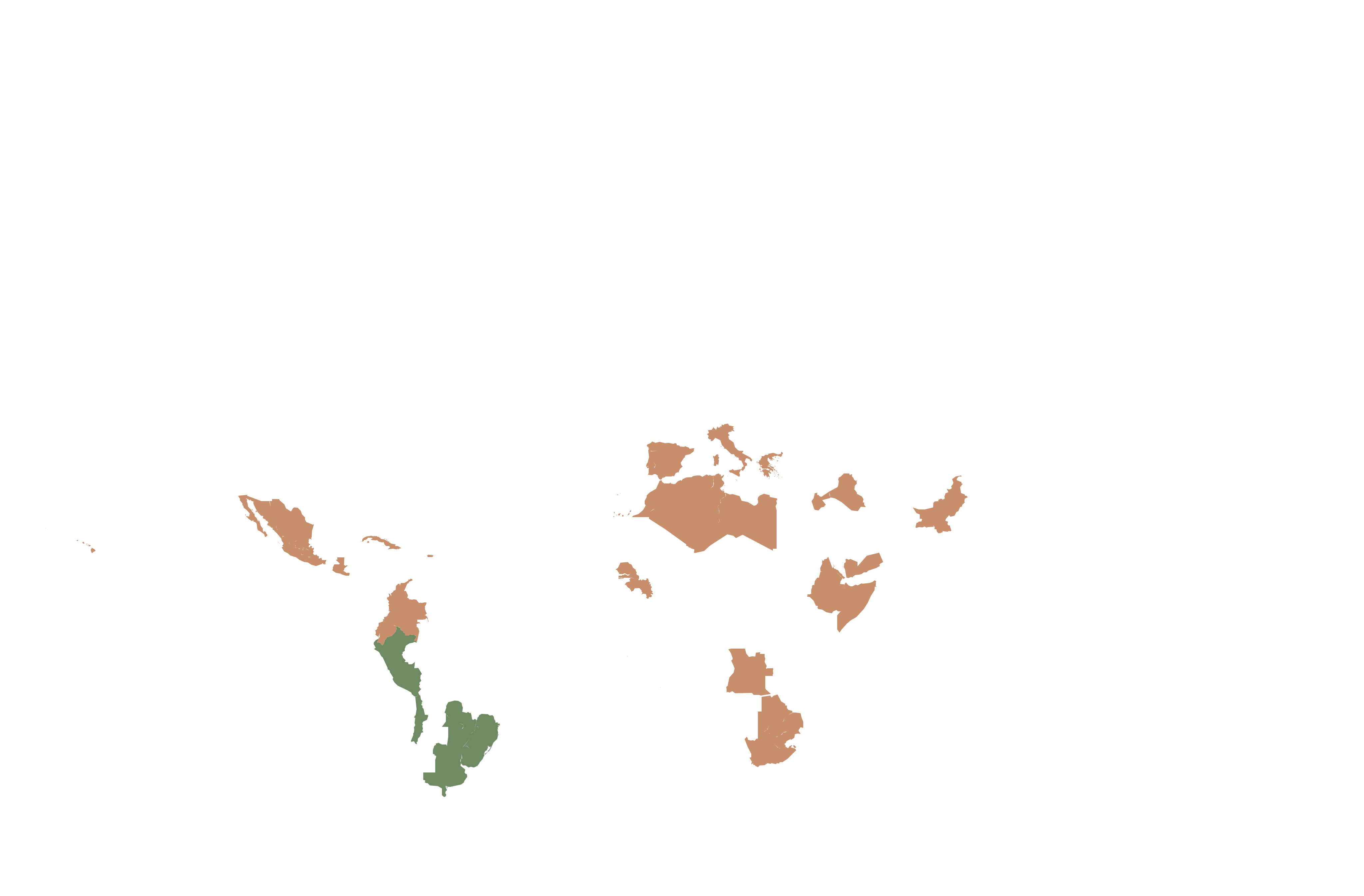
- Native
- Introduced
- South America
History
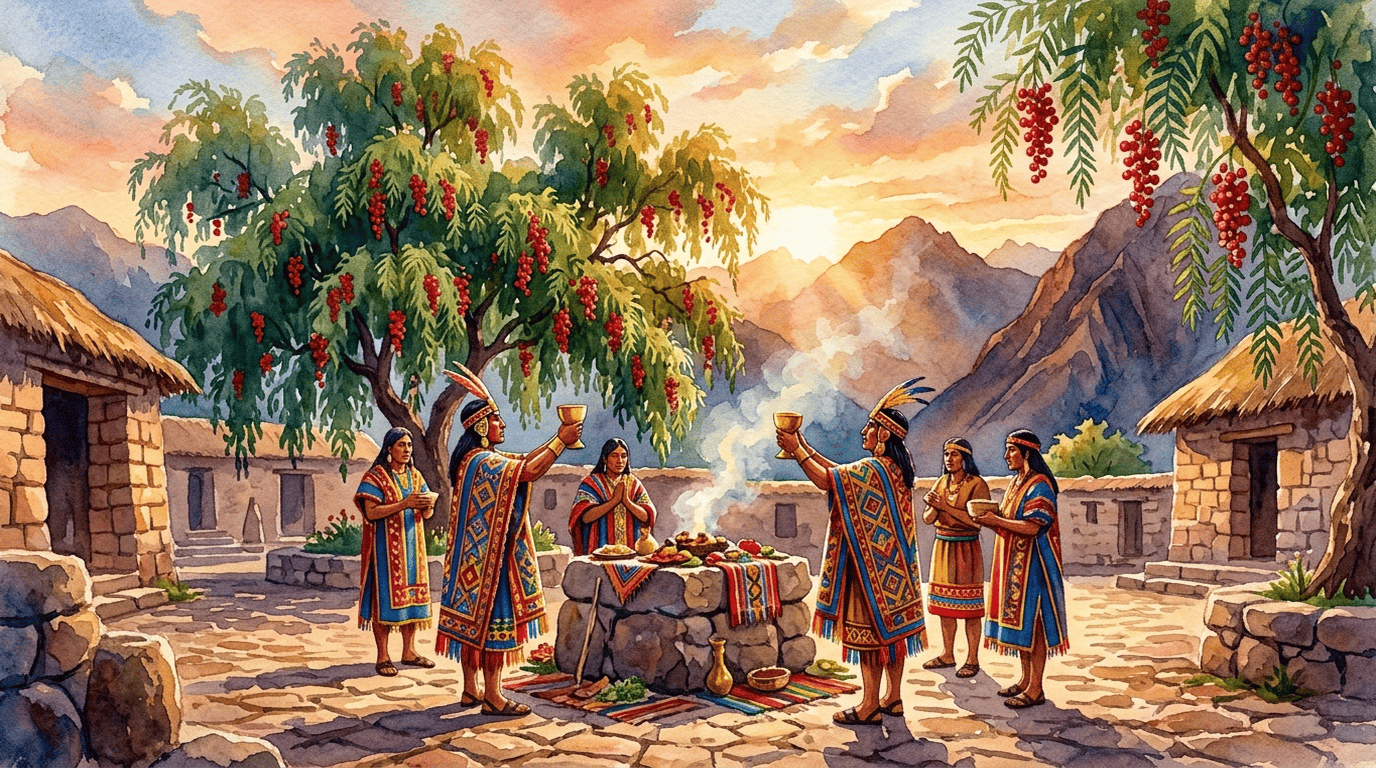
Schinus molle has been woven into Andean life for thousands of years. The Inca considered it sacred, dedicating groves to their sun god Inti and burning its resin as temple incense during religious ceremonies. The bark and leaves yielded astringent compounds that Andean healers applied to wounds and skin ailments, while the berries were fermented into chicha de molle, a ceremonial beer consumed at festivals and royal banquets.
When Spanish conquistadors arrived in the 16th century, they were captivated by its grace and hardiness and carried seeds back to Europe and beyond. By the 1800s, rows of pepper trees lined California mission roads, shaded early rail depots, and graced estates across the Mediterranean, South Africa, and Australia—always prized for fast growth and weeping shade in sun-baked landscapes.
In the American West the tree became iconic, synonymous with old California ranchos and Spanish colonial charm. Its vigorous self-seeding, however, earned it invasive status in parts of Australia and South Africa where it displaced native dryland vegetation.
Today the dried rosy-red berries are harvested commercially as pink peppercorns—milder and more aromatic than true pepper—featured in gourmet spice blends and Peruvian haute cuisine. The essential oil from its leaves is prized in perfumery for its warm, camphoraceous lift.
Symbolism & meaning
What It Symbolizes
To the Inca, Schinus molle was no ordinary tree—it was the sacred molle, beloved of Inti the sun god. Its resin perfumed temples, its berries sanctified royal feasts, and its weeping grace was seen as a living prayer arching toward the sky. When Spanish explorers carried it across the world it adapted everywhere it landed, cementing its identity as a symbol of resilience and far-reaching adventure.
- resilience — Thrives in harsh, arid landscapes where little else survives, standing as a symbol of endurance.
- sacred heritage — Revered by the Inca as holy to Inti the sun god, carrying deep spiritual meaning across millennia.
- adventure — Carried by conquistadors across oceans, it colonized continents and reshaped landscapes far from its origin.
Where the Name Comes From
The genus name Schinus was borrowed from the Greek name for the mastic tree (Pistacia lentiscus), whose aromatic resin this tree also produces. The species epithet molle comes from the Quechua word 'mulli' or 'molle'—the Inca name for this sacred tree.
Uses & Fun Facts
- Dried berries sold as pink peppercorns, a prized gourmet spice
- Traditional wound-healing, anti-inflammatory, and antimicrobial uses
- Graceful weeping canopy prized as a shade tree in hot, dry climates
- Summer flower clusters attract bees and butterflies
- Berries attract birds and small wildlife
Related plants
Plants with similar care
 African LilyAgapanthus africanus
 Bell AgapanthusAgapanthus campanulatus
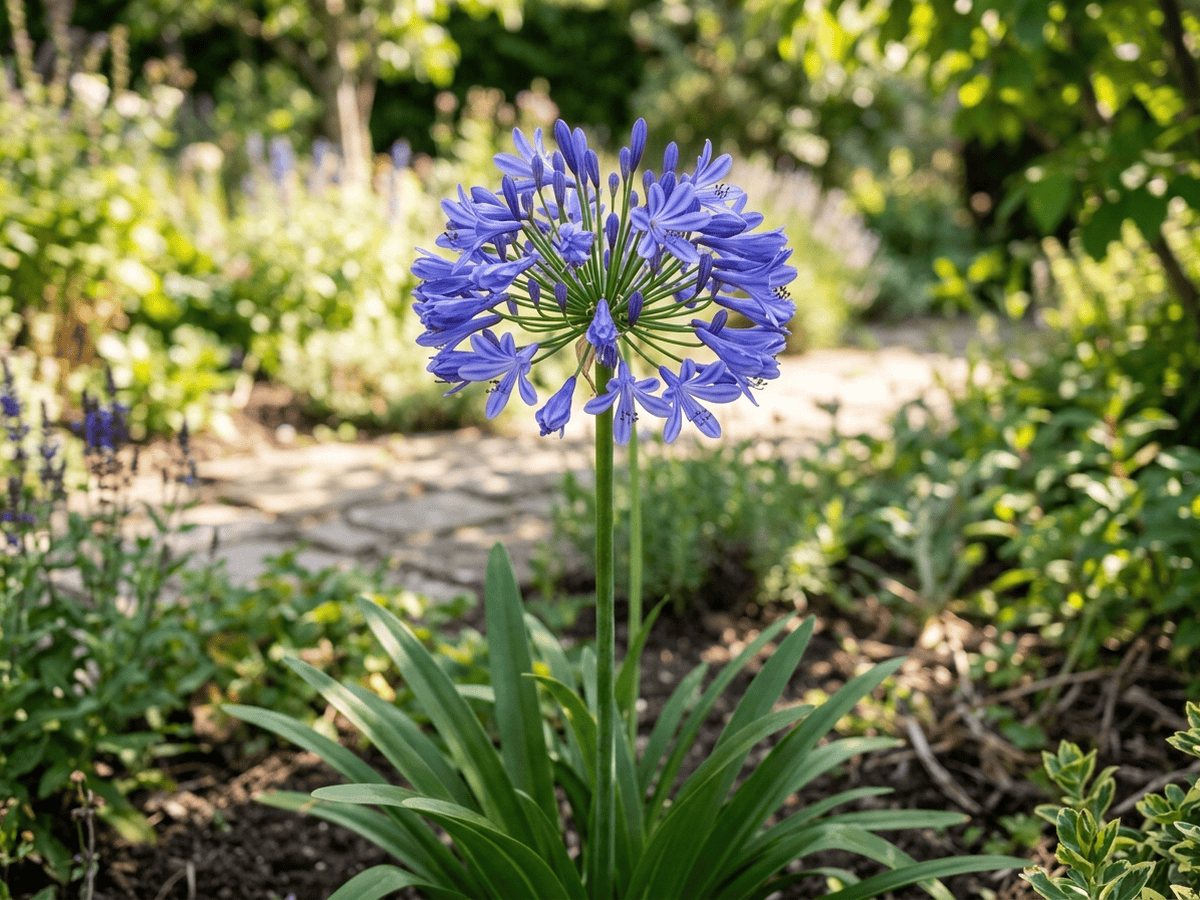 Common AgapanthusAgapanthus praecox
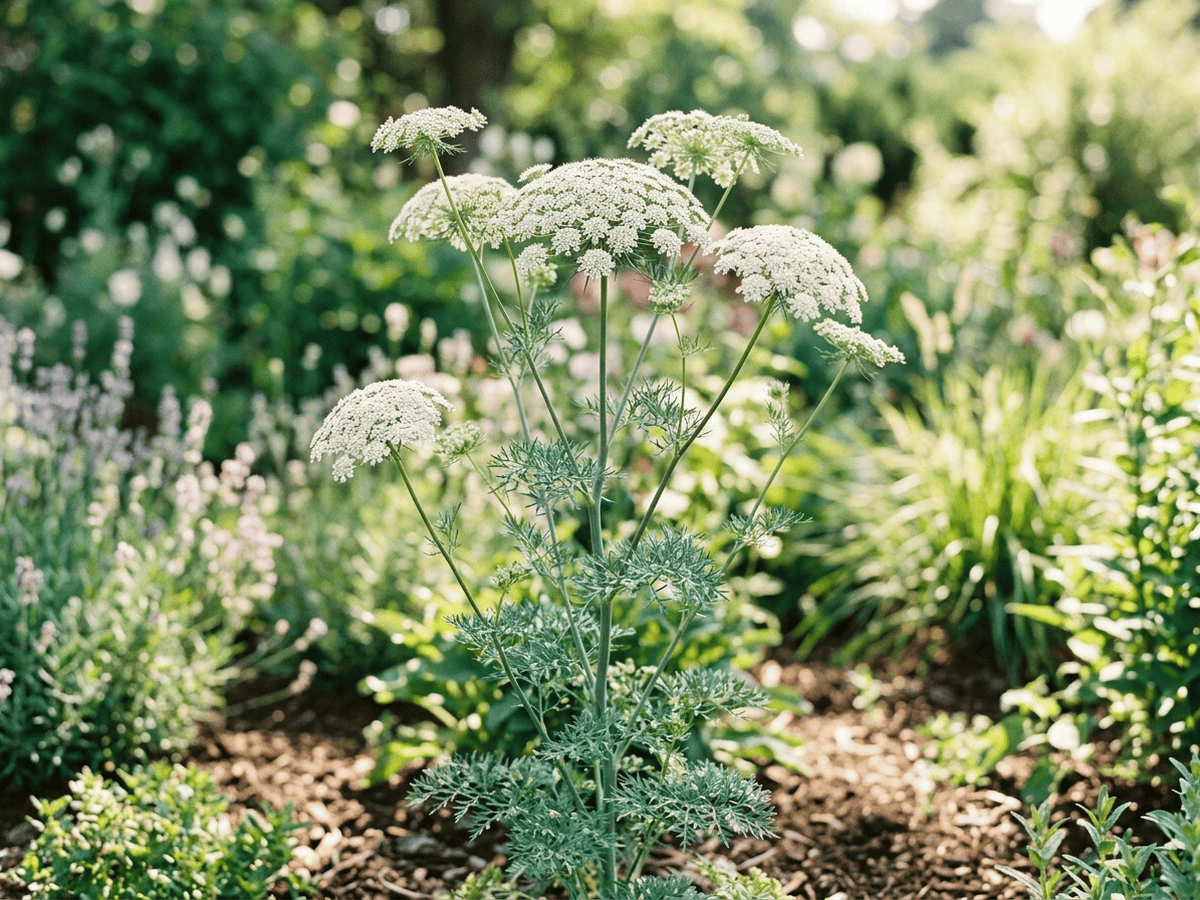 False Queen Anne's LaceAmmi majus glaucifolium
Frequently asked questions
How often should I water Peruvian Pepper Tree?
In summer, water about every 10 days; in winter, about every 30 days. Adjust for heat, pot size and drainage.
How much light does Peruvian Pepper Tree need?
Part sun: 4–6 hrs direct. Watch the leaves — scorching or stretching means the light needs adjusting.
Is Peruvian Pepper Tree toxic to cats or dogs?
Pets Unknown (Dogs Unknown · Cats Unknown) Educational information, not medical or veterinary advice. If exposure is suspected, contact a doctor or veterinarian.
Is Peruvian Pepper Tree easy to grow?
It is considered challenging and rewards experienced growers.
When does Peruvian Pepper Tree bloom?
It typically blooms May–Aug in the Northern Hemisphere.
YardMate
Identify any plant in seconds
Snap a photo — YardMate names the plant, diagnoses problems, and reminds you when to water.
Download on the App Store