 YardMate

Cobweb Houseleek
Sempervivum arachnoideum
Easy · Beginner friendlyAbout Cobweb Houseleek
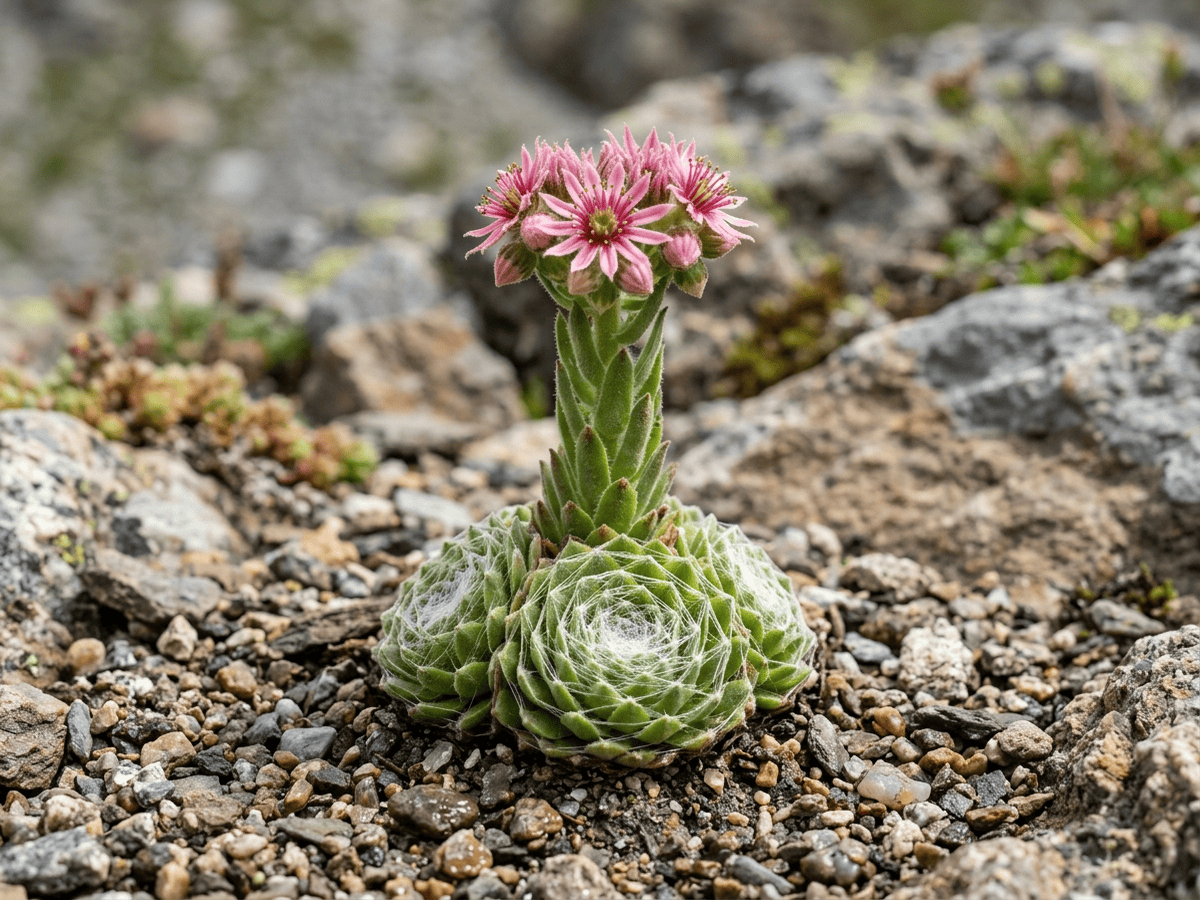
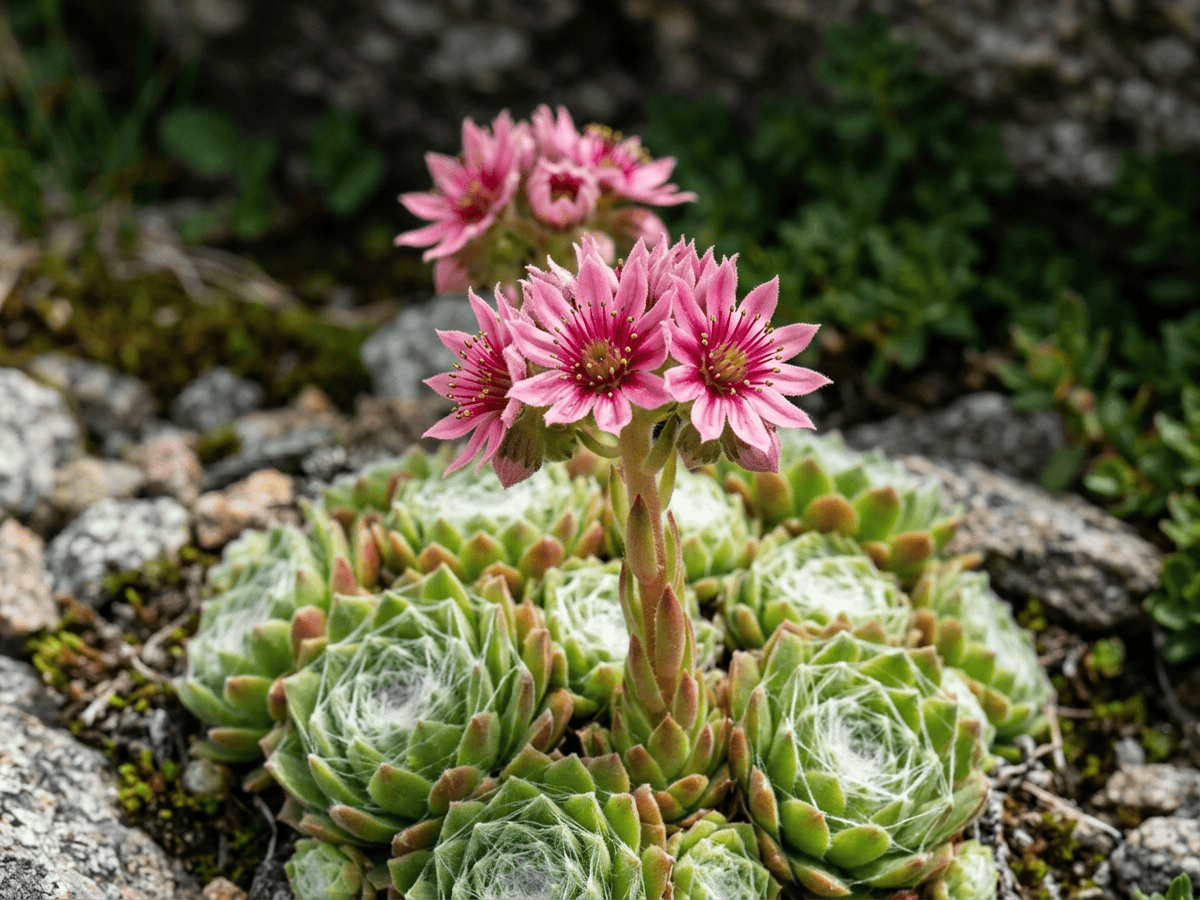
Sempervivum arachnoideum, the cobweb houseleek, is a miniature alpine succulent whose rosettes are draped in fine white threads stretching between leaf tips, resembling spider webs. Each rosette is only 2–4 cm across, forming dense mats of dozens to hundreds of connected offsets. Native to the Alps and Pyrenees, it is incredibly cold-hardy and drought-tolerant. The cobwebbing varies with cultivar and conditions — more prominent in dry, sunny weather. Pink star-shaped flowers appear in summer on rosettes that then die. It is one of the most charming alpine succulents.
- Drought-tolerant
- Cold-hardy
- Compact
How to care for Cobweb Houseleek
Watering
- Springevery 14 days
- Summerevery 10 days
- Fallevery 21 days
- Winterevery 30 days
Soil · Fast-draining
- Main mixSand + pumice + soil 1:1:150%
- DrainagePumice / gravel50%
Keep grit at half the mix or more — this soil is meant to dry out fast.
FERTILIZER
- Springevery 60 days
At a Glance
- NativeEurope
- Height0.2–0.4 ft (0.1–0.1 m)
- Spread0.5–1 ft (0.2–0.3 m)
- Flower colorPink, Red
- Foliage colorGreen, Red
- SoilSandy, Well-drained
- LocationsYard · Balcony
Bloom time
BLOOM CYCLE
Peak bloom
Jun–Jul
Pink star flowers; cobwebbing most prominent in dry sunny conditions
Fragrance
NO FRAGRANCE
No notable fragrance.
Toxicity
Humans Safe · Pets Safe
None reported
Safe
EXPOSURE No exposure route is reported.
EFFECT No significant toxicity.
NOTE Listed as non-toxic for humans; avoid eating ornamental plants unless confirmed edible.
Safe
EXPOSURE No exposure route is reported.
EFFECT Not listed as toxic.
NOTE Listed as non-toxic for dogs; avoid eating ornamental plants unless confirmed edible.
Safe
EXPOSURE No exposure route is reported.
EFFECT Not listed as toxic.
NOTE Listed as non-toxic for cats; avoid eating ornamental plants unless confirmed edible.
Educational information, not medical or veterinary advice. If exposure is suspected, contact a doctor or veterinarian.
DISTRIBUTION

- Native
- Introduced
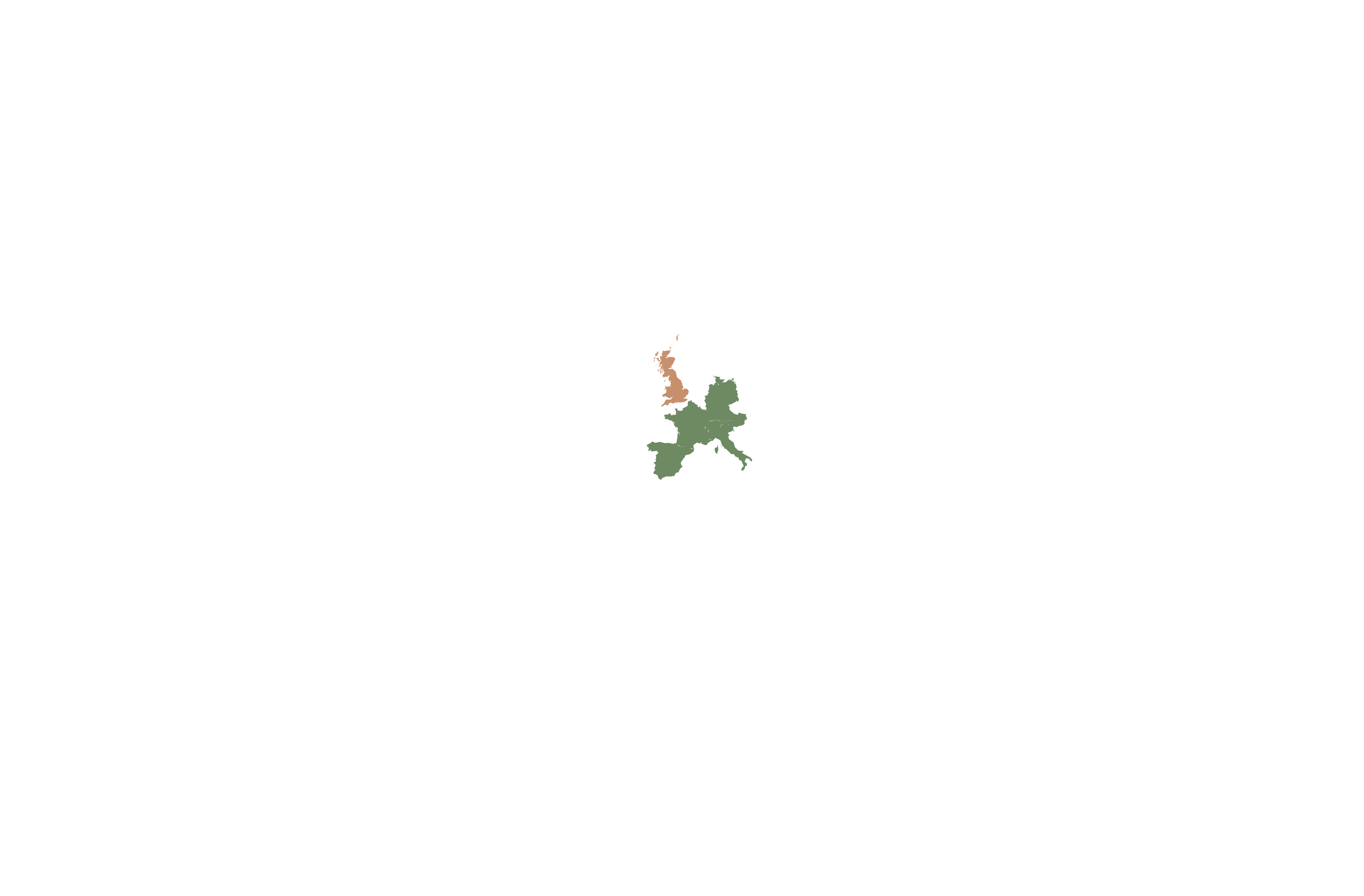
- Europe
History
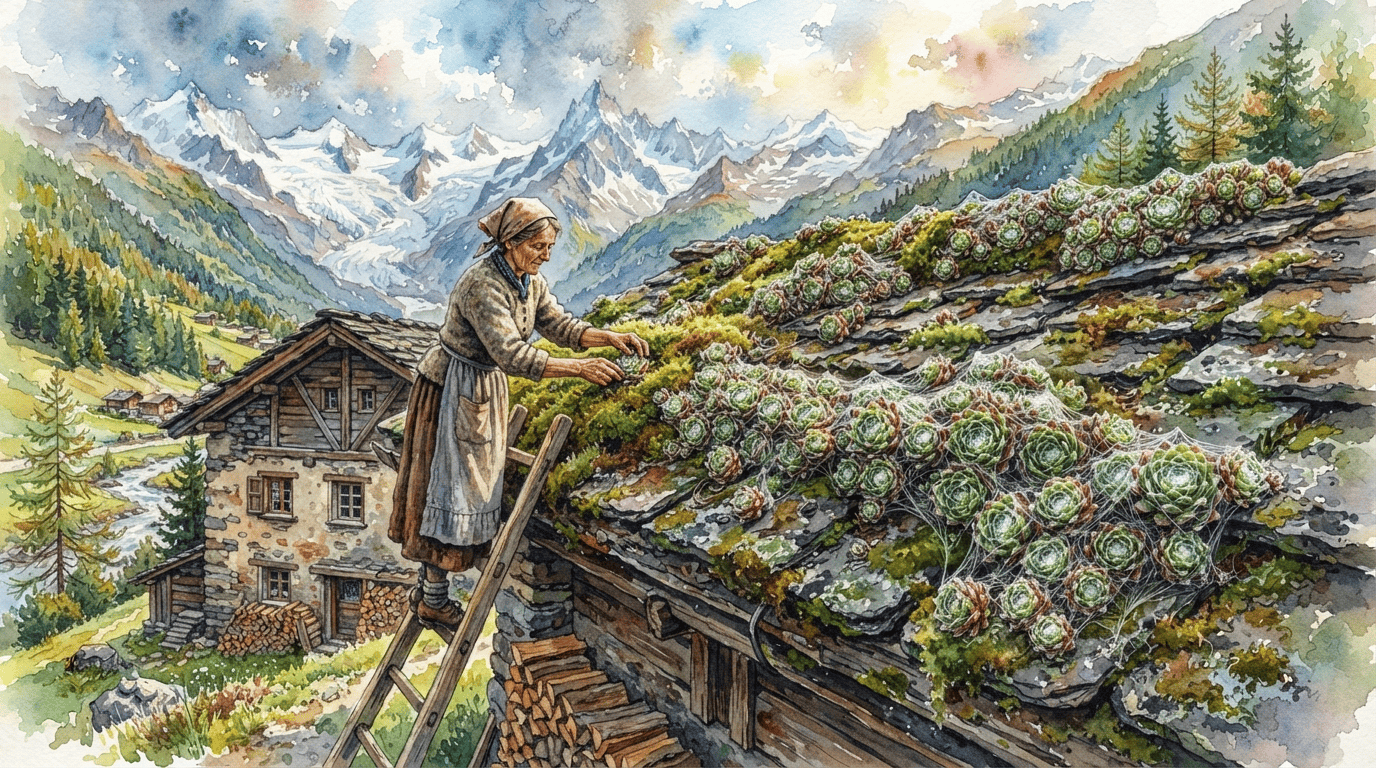
Sempervivum arachnoideum grows wild in rocky sites of the Alps, Pyrenees, Apennines, and Carpathians, typically between 1,500 and 3,000 meters. The distinctive silk-like webs that stretch across the rosette tips are made of fine hairs produced by each leaf; they trap moisture and buffer temperature extremes, likely serving both frost and UV protection. Linnaeus named the species in 1753, inspired by the cobweb appearance ("arachnoideum" from the Greek for spider).
Like S. tectorum it was planted on traditional European roofs in folk-magic protection rituals, and the two species commonly hybridized in cultivation to produce hundreds of named garden cultivars. It is small, cold-hardy to zone 3, and tolerates extreme summer heat when kept dry, making it one of the most durable trough and green-roof succulents.
Symbolism & meaning
What It Symbolizes
The Cobweb Houseleek can symbolize resourcefulness, spinning fine white threads of silk-like hairs from its own rosette to protect itself from sun and wind. The very gesture of weaving its own veil from its own body is the symbol made literal, a small succulent whose creative self-reliance is built into its appearance. In the rock garden, sempervivum arachnoideum is the plant that improvises, asking little of the gardener and inventing, on the spot, its own quiet armour.
- Resourcefulness — Spinning protective silk from its own body represents creative self-reliance
Where the Name Comes From
Sempervivum from Latin 'always alive.' Arachnoideum means 'cobweb-like,' from Greek 'arachne' (spider).
Uses & Fun Facts
- Cobwebbed alpine rosettes form dense cold-hardy mats in troughs
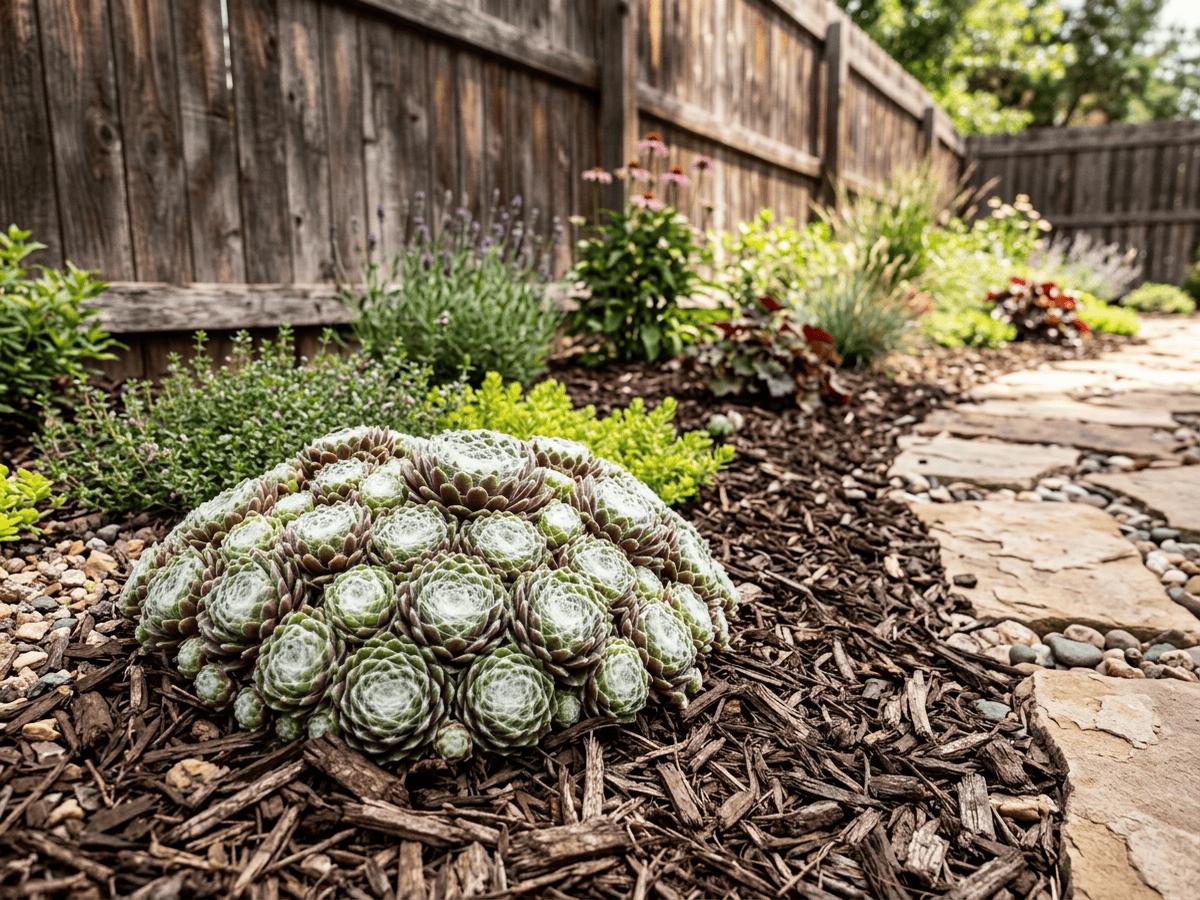
- Spreading mat for green roofs and dry stone walls
- Classic hen-and-chicks for shallow alpine pots
Related plants
More Sempervivum plants

Plants with similar care
 Chinese AbeliaAbelia chinensis
 Fragrant AbeliaAbelia mosanensis
 Large-Flowered AbeliaAbelia uniflora
 Glossy AbeliaAbelia x grandiflora
Frequently asked questions
How often should I water Cobweb Houseleek?
In summer, water about every 10 days; in winter, about every 30 days. Adjust for heat, pot size and drainage.
How much light does Cobweb Houseleek need?
Full sun: 6+ hrs direct. Watch the leaves — scorching or stretching means the light needs adjusting.
Is Cobweb Houseleek toxic to cats or dogs?
Pets Safe (Dogs Safe · Cats Safe) Educational information, not medical or veterinary advice. If exposure is suspected, contact a doctor or veterinarian.
Is Cobweb Houseleek easy to grow?
Yes — it is considered an easy, beginner-friendly plant.
When does Cobweb Houseleek bloom?
It typically blooms Jun–Jul in the Northern Hemisphere.
YardMate
Identify any plant in seconds
Snap a photo — YardMate names the plant, diagnoses problems, and reminds you when to water.
Download on the App Store