 YardMate


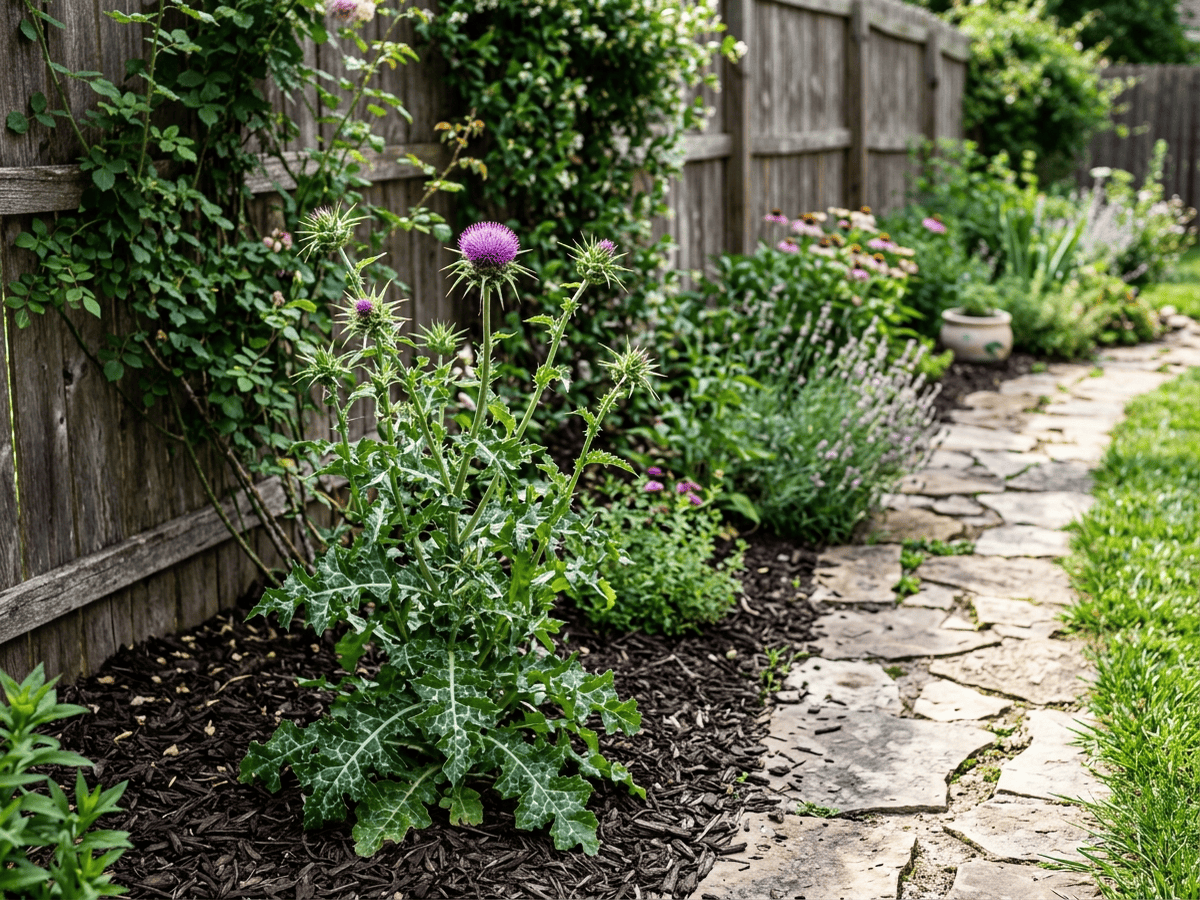
Milk Thistle
Silybum marianum
Easy · Beginner friendlyAbout Milk Thistle
Silybum marianum, milk thistle, is a Mediterranean biennial with glossy green leaves boldly marbled white and armed with fierce spines. In its second year it can reach 1-2.5 meters and produce large purple thistle heads that set abundant seed. The seed contains silymarin, a compound group that made the plant important in herbal commerce and research. In the landscape, though, milk thistle is complicated: dramatic, architectural, and useful to pollinators, but also invasive or listed as noxious in several western US states. Grow it only where permitted and where seed spread can be controlled. Its beauty is real, but so is its capacity to move beyond the garden.
- Medicinal
How to care for Milk Thistle
Watering
- Springevery 14 days
- Summerevery 10 days
- Fallevery 14 days
- Winterevery 30 days
Soil · Well-draining
- Top dressingPine bark mulch10%
- Main mixPotting soil + perlite 2:170%
- DrainageLECA / gravel20%
Never skip the drainage layer — standing water is the top cause of root rot.
FERTILIZER
- Springevery 45 days
At a Glance
- NativeMediterranean
- Height3–6 ft (0.9–1.8 m)
- Spread2–4 ft (0.6–1.2 m)
- Flower colorPurple
- Foliage colorGreen, Variegated
- SoilLoamy, Well-drained
- LocationsYard
Bloom time
BLOOM CYCLE
Peak bloom
Jun–Aug
Large purple thistle flowers summer of second year
Fragrance
LIGHT FRAGRANCE
The flowers have a light sweet scent.
Toxicity
Humans Slight · Pets Slight
silymarin, silibinin, and potassium nitrate
Slight
- Leaf
- Stem
- Contact
EXPOSURE Touching leaves and stems.
EFFECT Pricks from spines.
NOTE Seeds used medicinally; foliage can accumulate nitrates, occasional livestock poisoning.
Slight
- Leaf
- Ingestion
EXPOSURE Eating leaves.
EFFECT Nitrate toxicity with large quantities.
NOTE Seeds used medicinally; foliage can accumulate nitrates, occasional livestock poisoning.
Slight
- Leaf
- Ingestion
EXPOSURE Eating leaves.
EFFECT Nitrate toxicity with large quantities.
NOTE Seeds used medicinally; foliage can accumulate nitrates, occasional livestock poisoning.
Educational information, not medical or veterinary advice. If exposure is suspected, contact a doctor or veterinarian.
DISTRIBUTION

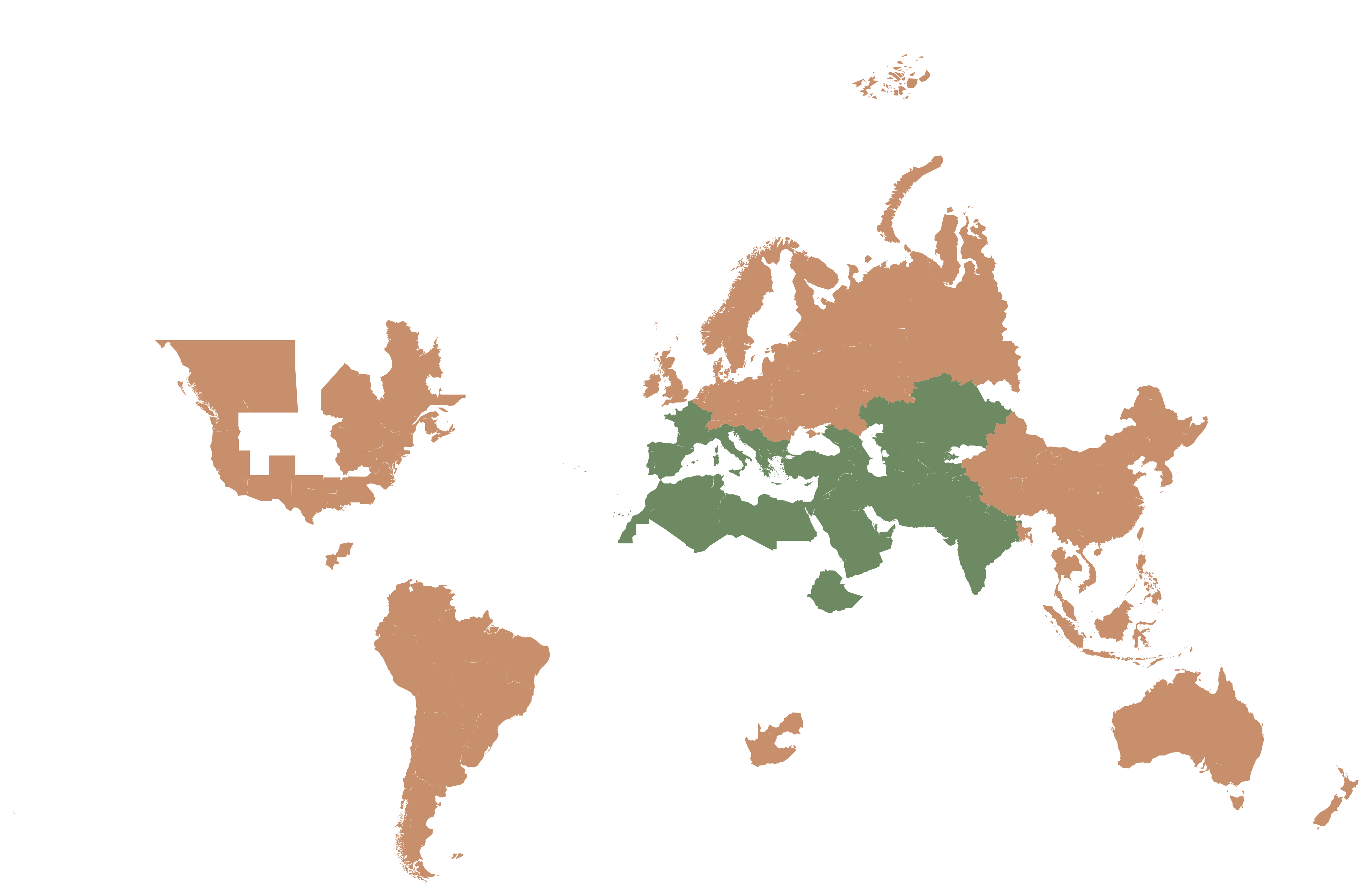
- Native
- Introduced
- Mediterranean
History
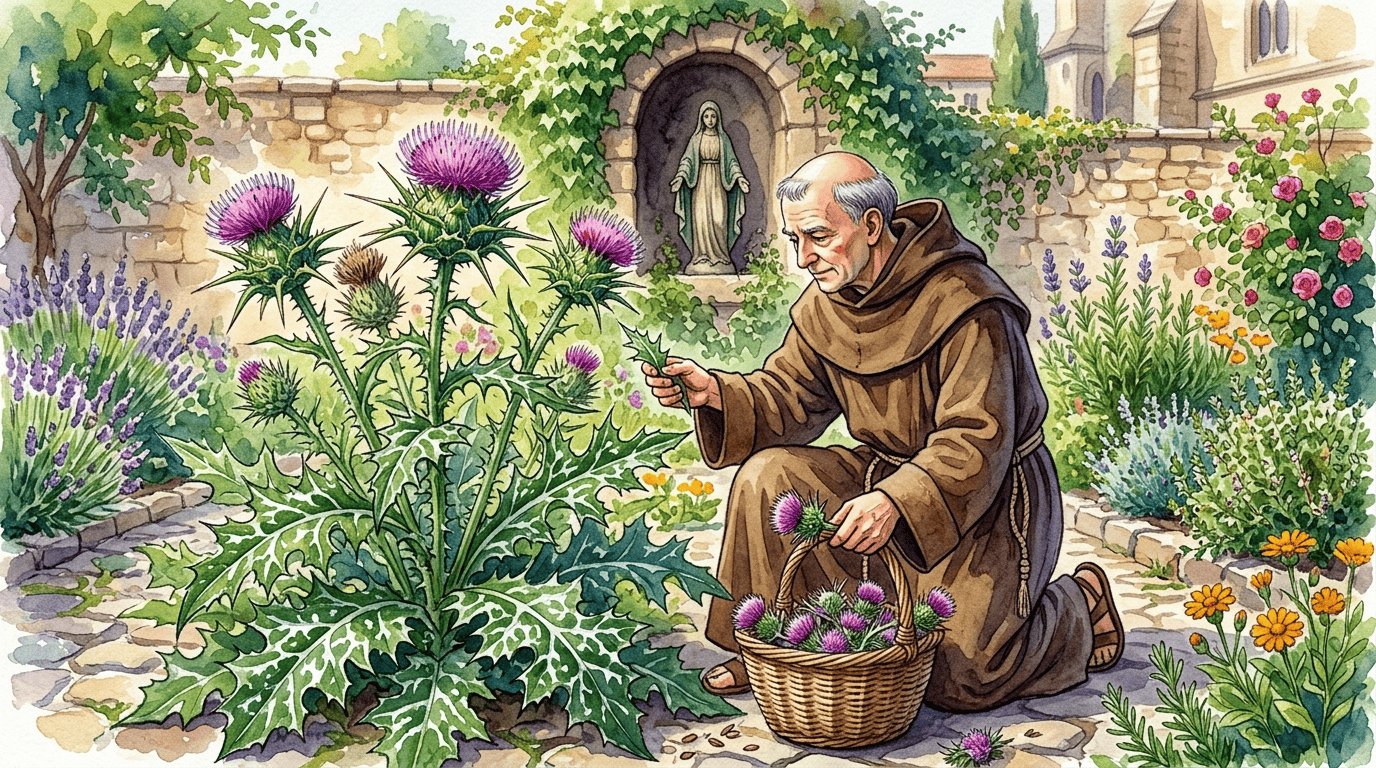
Silybum marianum, milk thistle or blessed milk thistle, is a robust annual or biennial composite native to the Mediterranean basin and widely naturalized across temperate regions. The striking white veining on its dark green leaves gave rise to the medieval legend that the Virgin Mary's milk had fallen upon them, and Christian herbalists used the seeds for liver complaints and jaundice as early as the first century CE, when Dioscorides recorded them. Modern pharmacology has validated the tradition: the seeds contain silymarin, a complex of flavonolignans that protects hepatocyte membranes and stimulates liver regeneration, and standardized extracts are widely used today for toxic mushroom poisoning and chronic liver disease.
The plant is now a serious rangeland weed in California, Australia, and South America where livestock occasionally suffer nitrate poisoning from heavy infestations. Native to Mediterranean Europe, Milk Thistle arrived in California with Spanish missionaries and is now a listed noxious weed across the American West while simultaneously being cultivated commercially for silymarin, a top-selling liver-supporting herbal supplement.
Symbolism & meaning
What It Symbolizes
Milk Thistle is dramatic contradiction. White-marbled leaves and purple thistle heads are striking enough for an ornamental border, yet the plant can also escape and trouble pastureland. Its symbolism is guarded usefulness: beauty armed with spines, valuable in human history, but never entirely tame.
- Mary's milk — legend says veins were from Virgin Mary's milk
- Healing thistle — top-selling herb for liver health
Where the Name Comes From
'Silybum' from Greek name for thistles; 'marianum' references the Virgin Mary in the leaf-veining legend.
Uses & Fun Facts
- Seeds yield silymarin used in liver-support herbal supplements
Related plants
Plants with similar care
 Chinese AbeliaAbelia chinensis
 Fragrant AbeliaAbelia mosanensis
 Large-Flowered AbeliaAbelia uniflora
 Glossy AbeliaAbelia x grandiflora
Frequently asked questions
How often should I water Milk Thistle?
In summer, water about every 10 days; in winter, about every 30 days. Adjust for heat, pot size and drainage.
How much light does Milk Thistle need?
Full sun: 6+ hrs direct. Watch the leaves — scorching or stretching means the light needs adjusting.
Is Milk Thistle toxic to cats or dogs?
Pets Slight (Dogs Slight · Cats Slight) Educational information, not medical or veterinary advice. If exposure is suspected, contact a doctor or veterinarian.
Is Milk Thistle easy to grow?
Yes — it is considered an easy, beginner-friendly plant.
When does Milk Thistle bloom?
It typically blooms Jun–Aug in the Northern Hemisphere.
YardMate
Identify any plant in seconds
Snap a photo — YardMate names the plant, diagnoses problems, and reminds you when to water.
Download on the App Store