 YardMate


Narrow-Leaved Blue-Eyed Grass
Sisyrinchium angustifolium
Easy · Beginner friendlyAbout Narrow-Leaved Blue-Eyed Grass
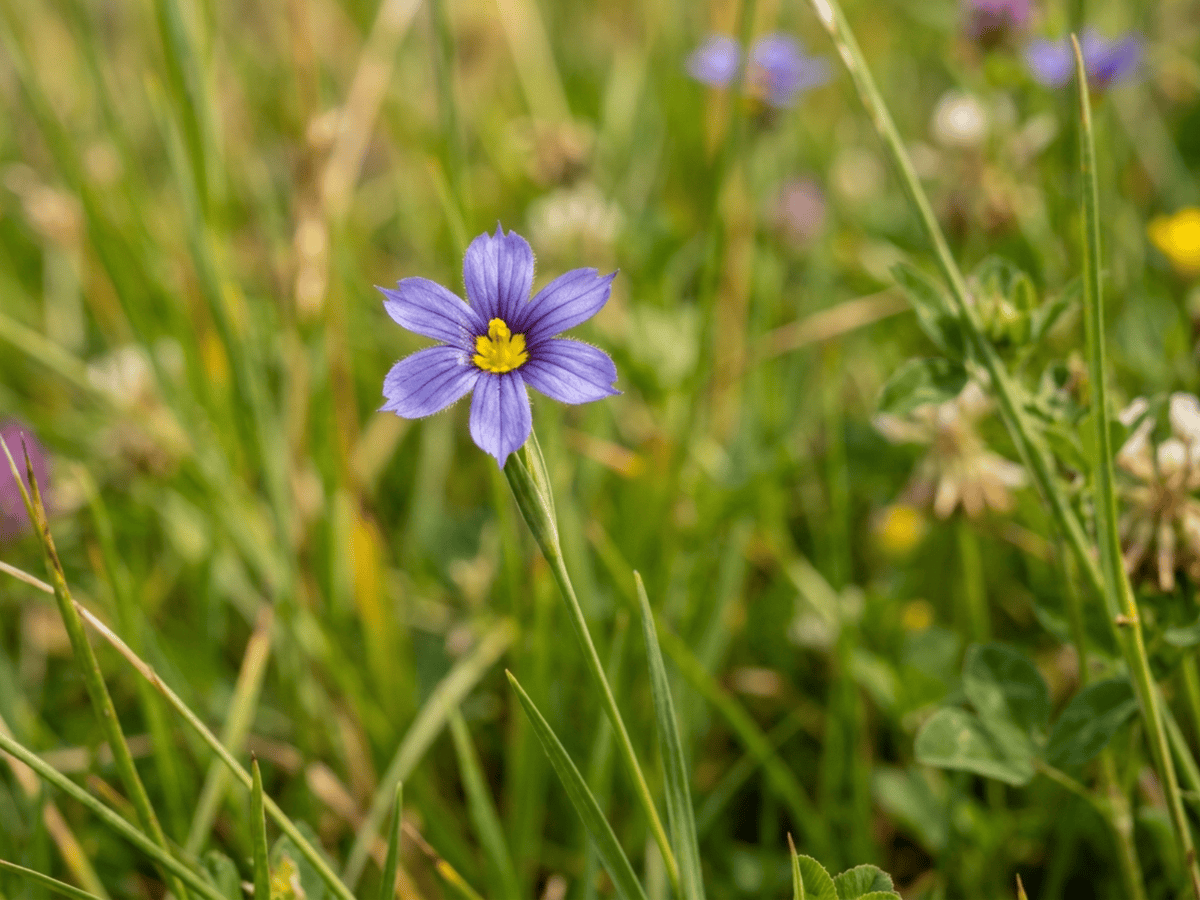
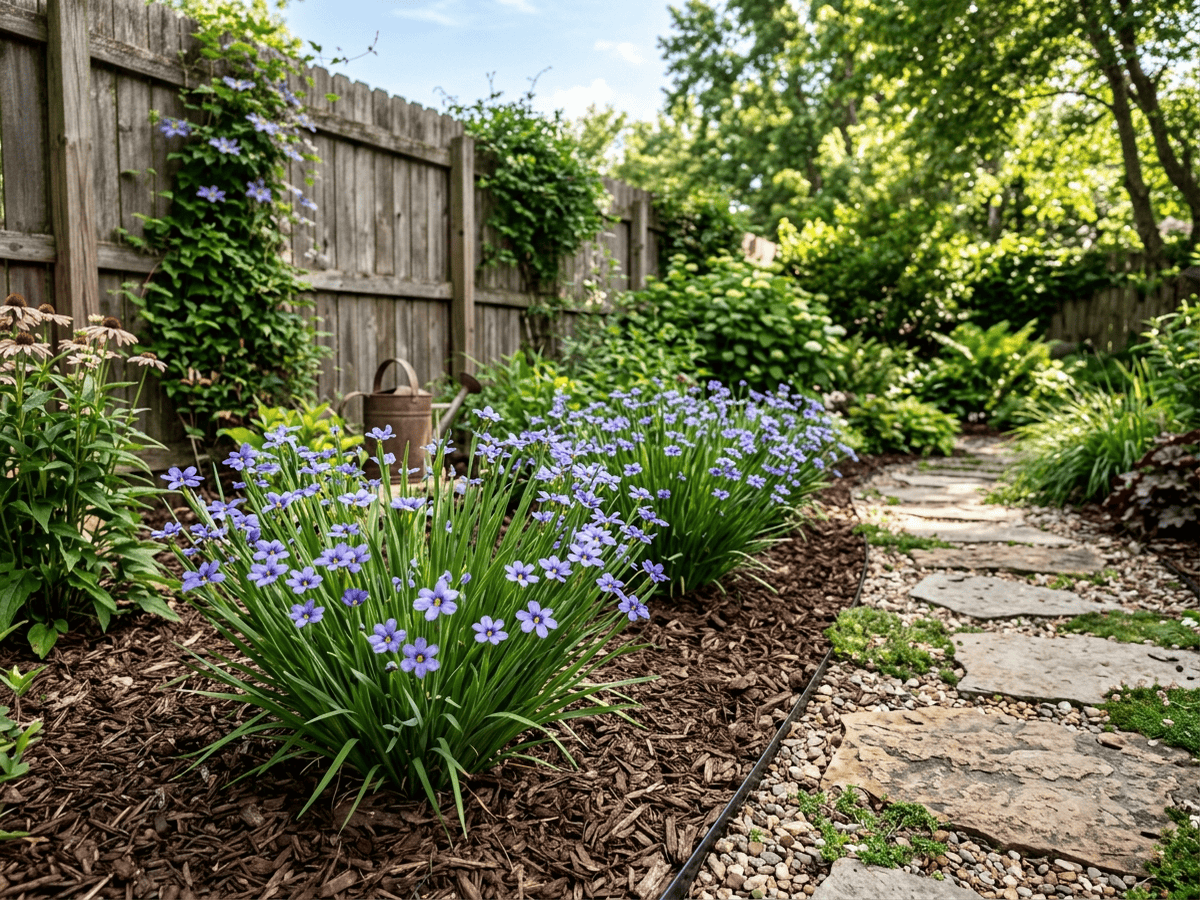
Sisyrinchium angustifolium, blue-eyed grass, is a diminutive native perennial that belongs to the iris family despite its grass-like appearance. Growing only 15 to 40 cm tall, it produces dainty star-shaped flowers of violet-blue with a cheerful yellow eye that open on sunny mornings and close by afternoon. The narrow, blade-like foliage blends seamlessly with lawn grasses, and the plant often goes unnoticed until it bursts into bloom in late spring. Native across much of eastern North America, it thrives in meadows, open woodlands, and even mowed lawns where it persists as a charming wildflower. Despite its delicate appearance, blue-eyed grass is tough and adaptable, tolerating a range of soil types from clay to sandy loam. It self-sows gently and forms attractive tufted clumps over time. The plant is excellent for rock gardens, between stepping stones, or as a border edging where its small scale is an asset. It is one of the earliest native wildflowers to bloom, often appearing alongside violets and spring beauties.
- Compact
- Native
How to care for Narrow-Leaved Blue-Eyed Grass
Watering
- Springevery 5 days
- Summerevery 4 days
- Fallevery 10 days
- Winterevery 30 days
Soil · Well-draining
- Top dressingPine bark mulch10%
- Main mixPotting soil + perlite 2:170%
- DrainageLECA / gravel20%
Never skip the drainage layer — standing water is the top cause of root rot.
FERTILIZER
- Springevery 60 days
At a Glance
- NativeNorth America
- Height0.5–1.5 ft (0.2–0.5 m)
- Spread0.5–1 ft (0.2–0.3 m)
- Flower colorBlue, Purple, White
- Foliage colorGreen
- SoilLoamy, Moisture-retentive
- LocationsYard
Bloom time
BLOOM CYCLE
Peak bloom
Jun–Aug
Flowers open only on sunny mornings; plant in masses for best visual impact in rock gardens or borders
Fragrance
NO FRAGRANCE
No notable fragrance.
Toxicity
No toxicity has been reported for this plant. Still, it is wise to keep pets from chewing on any houseplant.
Educational information, not medical or veterinary advice. If exposure is suspected, contact a doctor or veterinarian.
DISTRIBUTION

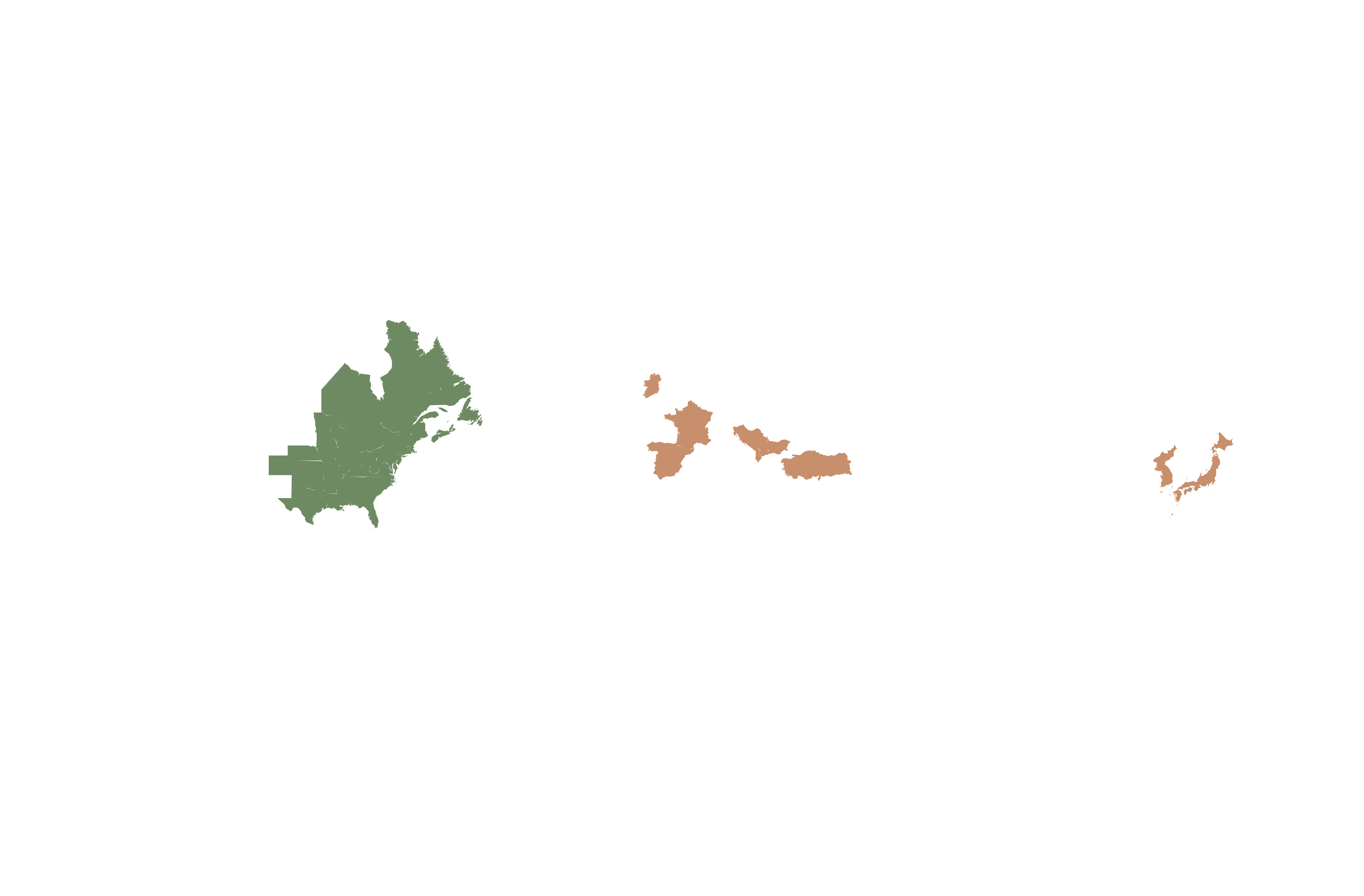
- Native
- Introduced
- North America
History

Sisyrinchium angustifolium is native to moist meadows, open woodland edges, and prairie habitats of eastern and central North America, from Nova Scotia west to Minnesota and south to Texas and Florida. Despite the name "blue-eyed grass" it is not a true grass but a small member of the iris family (Iridaceae) — the narrow grass-like leaves are arranged in flat fans identical to those of miniature iris, not the rounded stems of true grasses (Poaceae). It produces small bright sky-blue six-petaled flowers 1-2 cm across, each with a contrasting yellow center, on 15-30 cm stems from late spring through early summer. Individual flowers last only one day and close by late afternoon, but plants bloom successively for several weeks.
The species is a modest but cheerful native wildflower that has gained in native-garden popularity since the 2000s, used in rock gardens, meadow plantings, and as edging in native borders. It is particularly valuable as a small-scale native lawn alternative in eastern North America and performs well in mass plantings under large oak trees. Named cultivars include "Lucerne" (larger flowers, more vigorous), "Devon Skies," and "Suwannee."
The plant has a short root system, relatively weak competitive ability, and benefits from low-competition planting conditions. Despite its common name, blue-eyed grass is not a grass at all — it belongs to the iris family (Iridaceae), as revealed by the six-petaled flower structure and the flat, iris-like leaves. Early American settlers were charmed by the tiny flowers appearing in their lawn grasses and left patches unmowed. Henry David Thoreau mentioned blue-eyed grass in his nature journals, noting its ephemeral daily blooming cycle. The genus Sisyrinchium contains about 200 species distributed across the Americas, making it one of the most species-rich genera in the iris family. Some Native American tribes used the roots medicinally as a laxative.
Symbolism & meaning
What It Symbolizes
Narrow-Leaved Blue-Eyed Grass makes visible simplicity, its tiny, unassuming sky-blue flowers celebrating beauty found in humble, quiet things. It also carries the gentle gift of surprise — appearing unexpectedly in lawns and meadows, a small hidden gem hidden among ordinary grasses. A native flower for gardeners who like to be reminded that wonder often arrives at ankle height.
- Simplicity — Its tiny, unassuming flowers celebrate the beauty found in humble, quiet things
- Surprise — Appears unexpectedly in lawns and meadows, a hidden gem among grasses
Where the Name Comes From
Sisyrinchium is an ancient Greek name used by Theophrastus, originally for a different plant related to iris. Angustifolium means 'narrow-leaved' in Latin.
Uses & Fun Facts
- Tufts of blue-violet star flowers brighten spring meadows
- Small native bees forage tiny blue iris-like flowers
Related plants
Plants with similar care
 Chinese AbeliaAbelia chinensis
 Fragrant AbeliaAbelia mosanensis
 Large-Flowered AbeliaAbelia uniflora
 Glossy AbeliaAbelia x grandiflora
Frequently asked questions
How often should I water Narrow-Leaved Blue-Eyed Grass?
In summer, water about every 4 days; in winter, about every 30 days. Adjust for heat, pot size and drainage.
How much light does Narrow-Leaved Blue-Eyed Grass need?
Full sun: 6+ hrs direct. Watch the leaves — scorching or stretching means the light needs adjusting.
Is Narrow-Leaved Blue-Eyed Grass toxic to cats or dogs?
No toxicity has been reported for this plant. Still, it is wise to keep pets from chewing on any houseplant. Educational information, not medical or veterinary advice. If exposure is suspected, contact a doctor or veterinarian.
Is Narrow-Leaved Blue-Eyed Grass easy to grow?
Yes — it is considered an easy, beginner-friendly plant.
When does Narrow-Leaved Blue-Eyed Grass bloom?
It typically blooms Jun–Aug in the Northern Hemisphere.
YardMate
Identify any plant in seconds
Snap a photo — YardMate names the plant, diagnoses problems, and reminds you when to water.
Download on the App Store