 YardMate

Common Bird-Of-Paradise Flower
Strelitzia reginae
Medium · Some experienceAbout Common Bird-Of-Paradise Flower
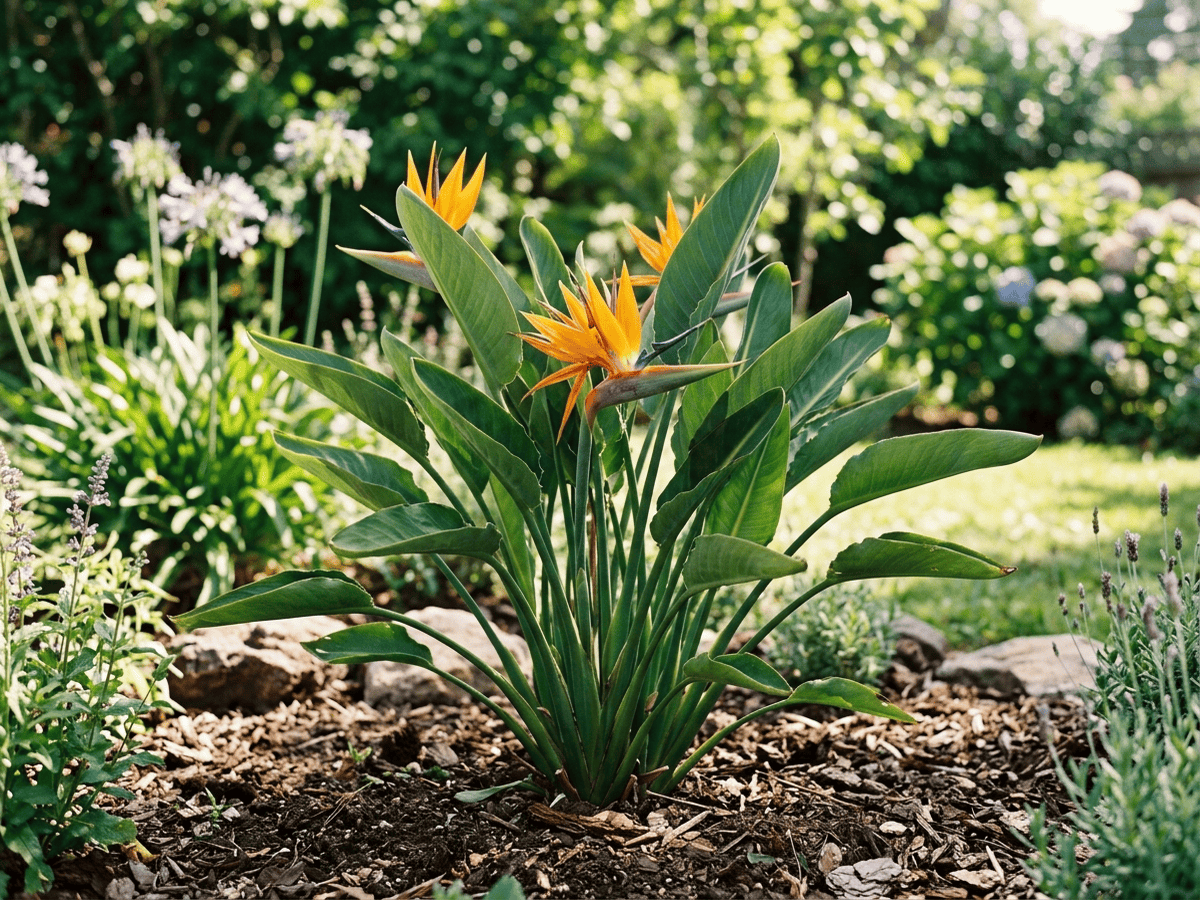
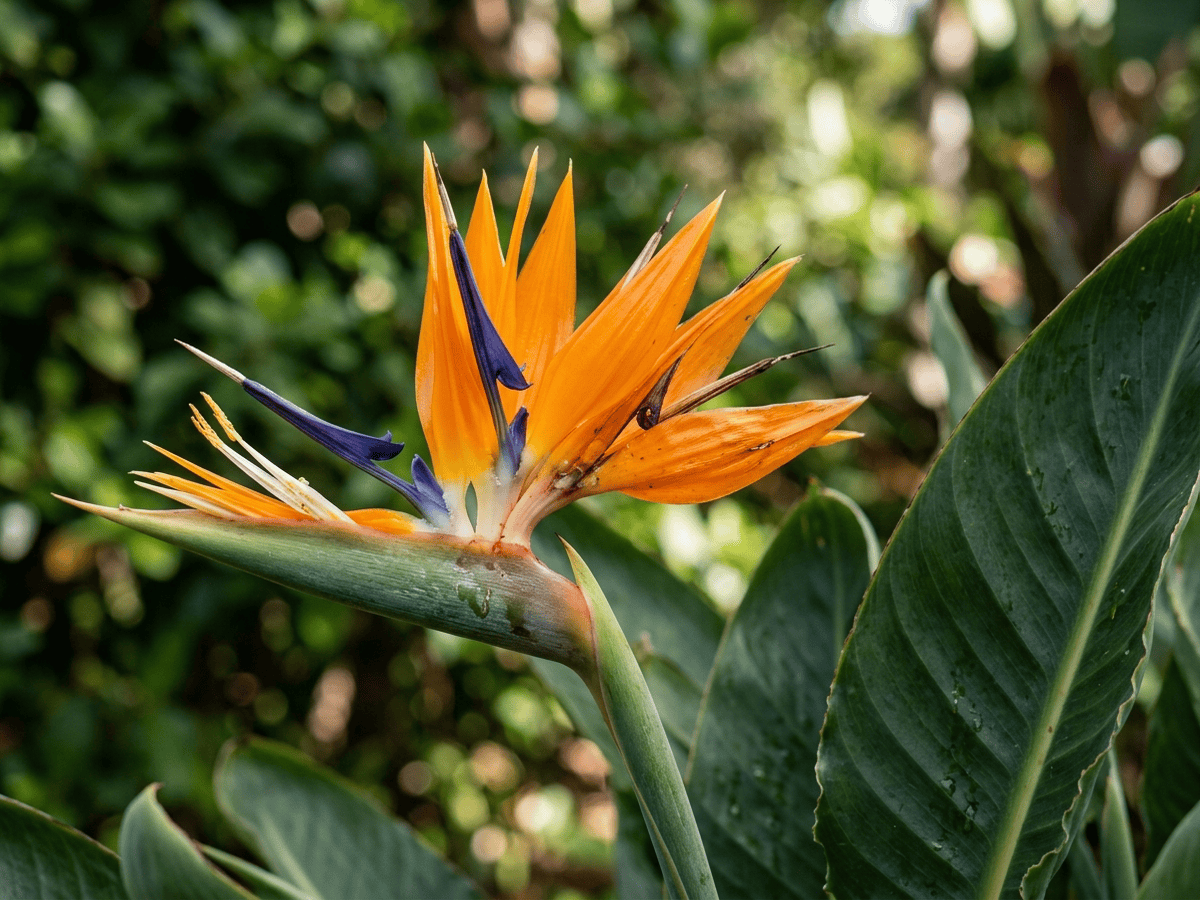
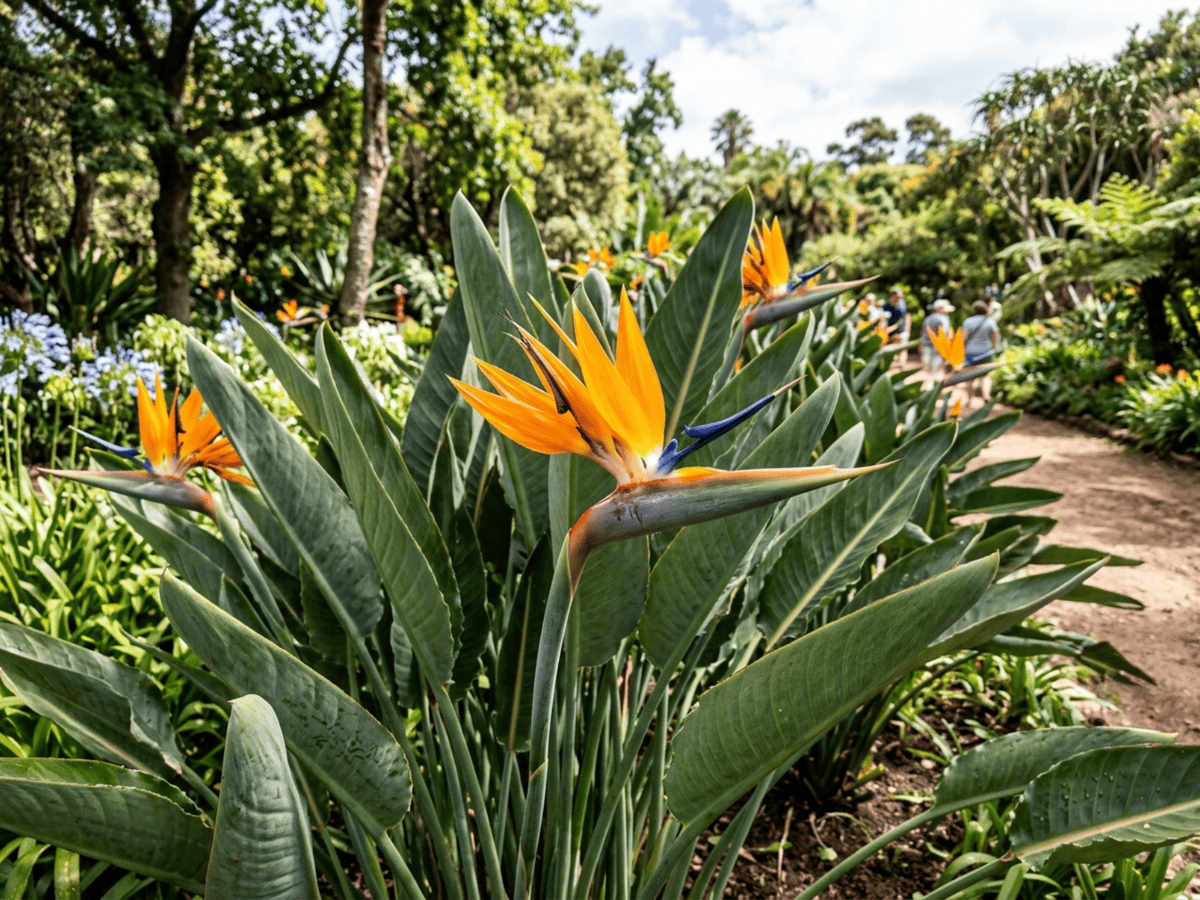
The Bird of Paradise is a striking South African perennial whose flowers uncannily resemble a tropical bird in flight. Each bloom features a boat-shaped bract from which bright orange sepals and blue petals emerge like a crested bird's head. In the wild, it's pollinated by sunbirds that perch on the sturdy flower stalk. A bold architectural plant that brings an exotic, sculptural quality to any garden or interior.
- Pollinator-friendly
How to care for Common Bird-Of-Paradise Flower
Watering
- Springevery 7 days
- Summerevery 5 days
- Fallevery 10 days
- Winterevery 14 days
Soil · Well-draining
- Main mixLoam + bark + perlite 2:1:175%
- DrainageLECA25%
Bark keeps the mix from compacting under a heavy root ball.
FERTILIZER
Balanced Feed 14-14-14
An even feed covers all three needs at once, keeping leaves, roots and blooms moving together with nothing pushed out of balance.
- Nitrogen · Leaves
- Phosphorus · Roots + Blooms
- Potassium · Strength
- Springevery 30 days
- Summerevery 30 days
- Fallevery 60 days
At a Glance
- NativeAfrica
- Height4–6 ft (1.2–1.8 m)
- Spread3–4 ft (0.9–1.2 m)
- Flower colorOrange, Blue
- Foliage colorGreen
- SoilLoamy, Well-drained
- LocationsYard · Indoor
Bloom time
BLOOM CYCLE
Peak bloom
Jun–Aug
Bird-like orange bloom
Fragrance
NO FRAGRANCE
Not fragrant.
Toxicity
Humans Slight · Pets Slight
tannins and hydrocyanic acid (trace, in seeds)
Slight
- Seed
- Flower
- Ingestion
EXPOSURE Eating seeds and flowers.
EFFECT GI upset, nausea and seeds contain tannic acid.
NOTE Flowers and seeds are the hazardous parts.
Slight
- Flower
- Fruit
- Seed
- Ingestion
EXPOSURE Eating flowers, fruit, and seeds.
EFFECT Nausea, vomiting, drowsiness and per ASPCA.
NOTE Flowers and seeds are the hazardous parts.
Slight
- Flower
- Fruit
- Seed
- Ingestion
EXPOSURE Eating flowers, fruit, and seeds.
EFFECT Nausea, vomiting, drowsiness and per ASPCA.
NOTE Flowers and seeds are the hazardous parts.
Educational information, not medical or veterinary advice. If exposure is suspected, contact a doctor or veterinarian.
DISTRIBUTION


- Native
- Introduced
- Africa
History

Strelitzia reginae is native to the thickets and river mouths of South Africa's Eastern Cape, where it grows as a clumping rhizomatous perennial. It was introduced to Europe in 1773 by Francis Masson, collector for Kew Gardens, and named by the director Joseph Banks in honor of Queen Charlotte, whose family were dukes of Mecklenburg-Strelitz. The species name 'reginae' means 'of the queen'.
Its unmistakable orange-and-blue flowers — a perfect silhouette of a tropical bird in profile — made it the defining exotic cut flower of the 20th century, particularly important to the California floriculture industry. Los Angeles designated it the official flower of the city in 1952.
It is pollinated in the wild by sunbirds that perch on the horizontal blue petal 'beak'. Named in honor of Queen Charlotte of Mecklenburg-Strelitz, wife of King George III, who was a passionate botanist. Mildly toxic to pets.
Symbolism & meaning
What It Symbolizes
The Bird-of-Paradise suggests freedom, its bird-shaped bloom seeming to take flight straight from the spear of its leaf. Paired with joy, the bright orange and blue colors evoke paradise and tropical happiness. And as magnificence, it carries its royal name — 'reginae' — for the queen it was christened after, a regal bloom in every lift of its crested form.
- Freedom — its bird-like bloom represents liberty and flight
- Joy — bright colors symbolize paradise and happiness
- Magnificence — named for a queen, representing regal beauty
Where the Name Comes From
'Strelitzia' honors the Duchy of Mecklenburg-Strelitz, Queen Charlotte's birthplace. 'Reginae' means 'of the queen.'
Uses & Fun Facts
- Iconic orange-and-blue bird-of-paradise blooms central to tropical bouquets
- Native blooms perch-pollinated by sunbirds in South Africa
- Bold blade leaves and sculptural flowers as tropical focal point
Related plants
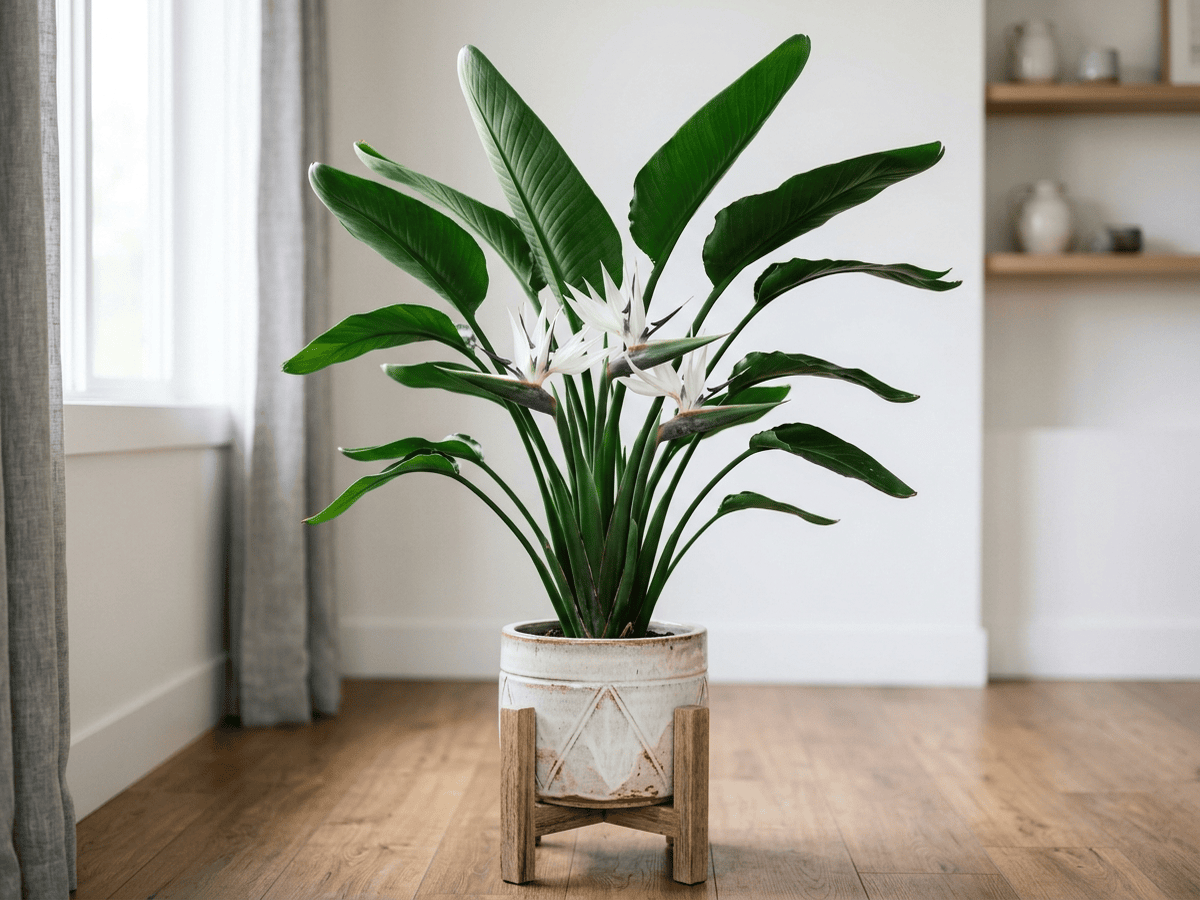
More Strelitzia plants
Plants with similar care
 Mexican AbeliaAbelia floribunda
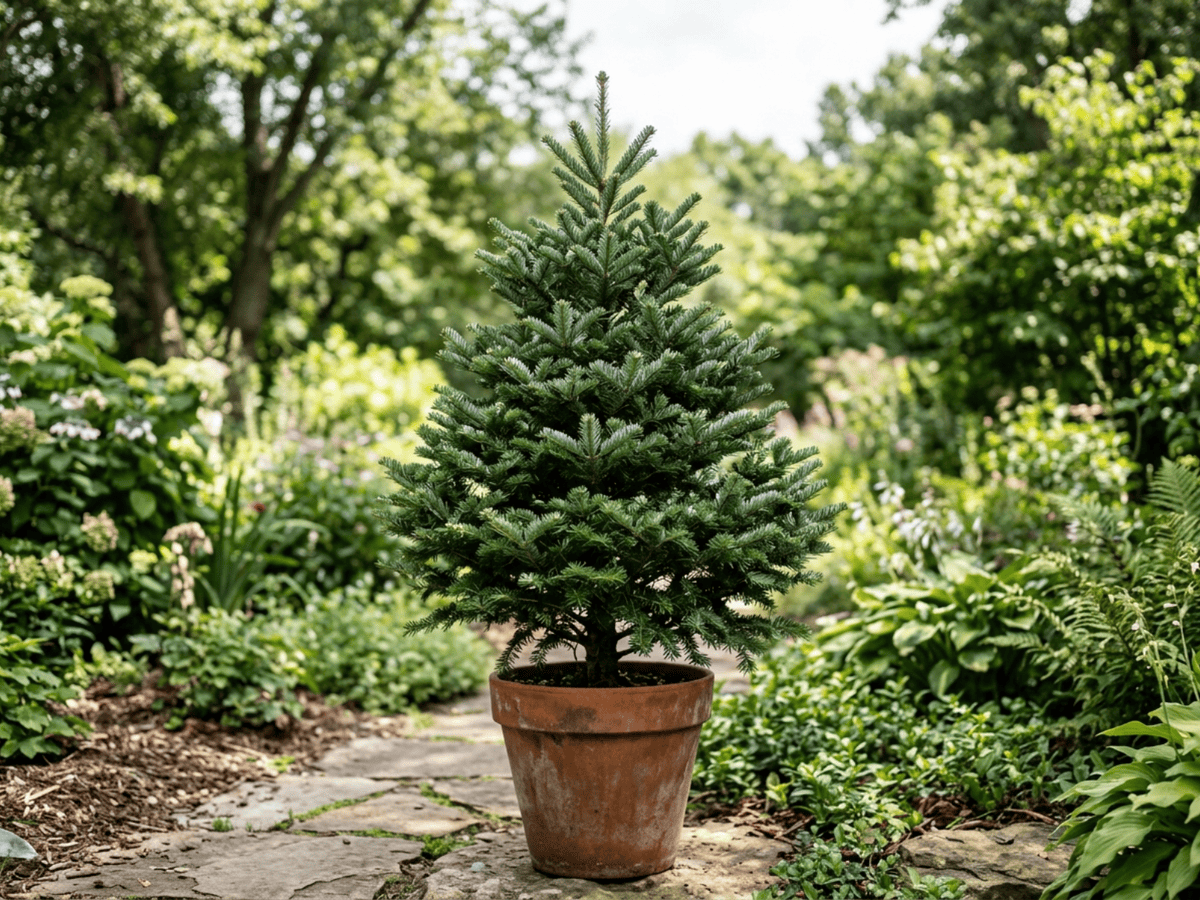 Fraser FirAbies fraseri
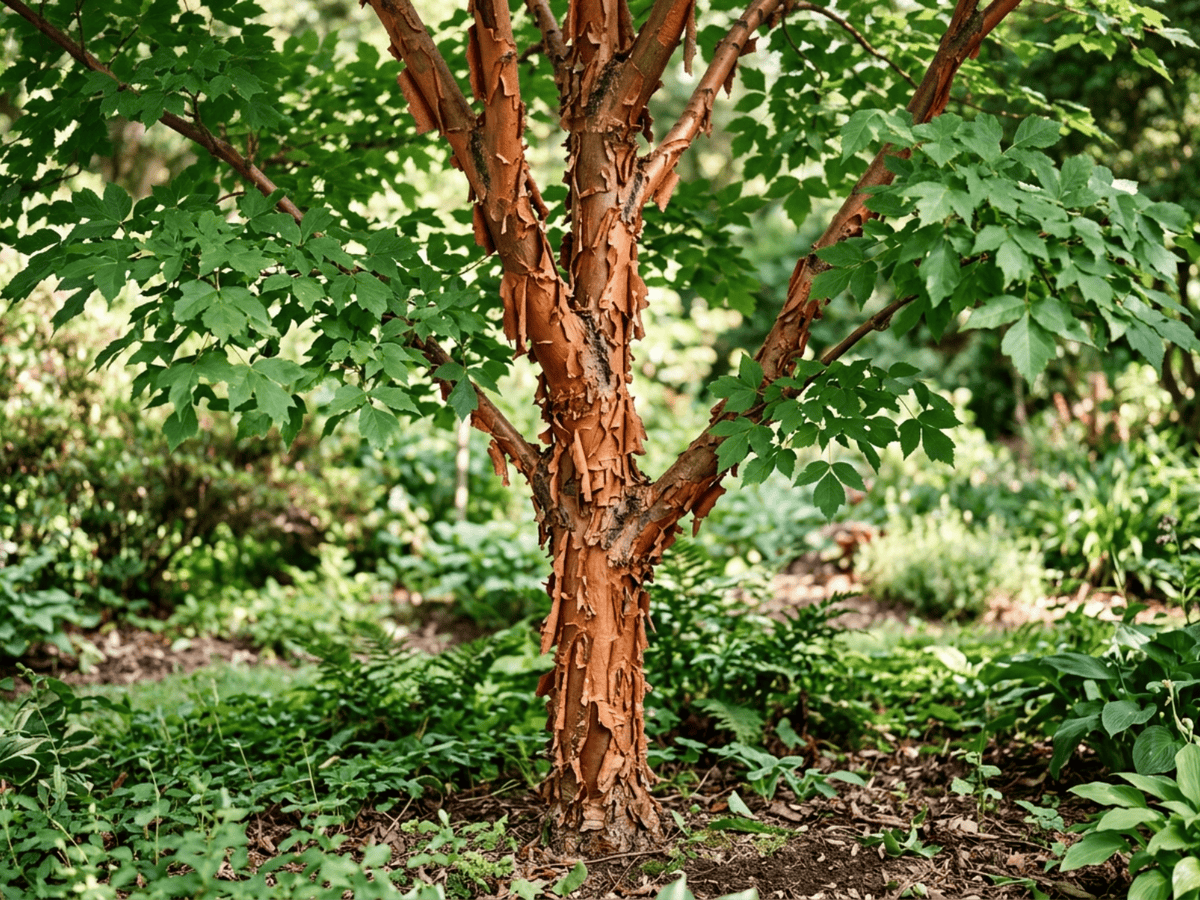 Paperbark MapleAcer griseum
 Sugar MapleAcer saccharum
Frequently asked questions
How often should I water Common Bird-Of-Paradise Flower?
In summer, water about every 5 days; in winter, about every 14 days. Adjust for heat, pot size and drainage.
How much light does Common Bird-Of-Paradise Flower need?
Full sun: 6+ hrs direct. Watch the leaves — scorching or stretching means the light needs adjusting.
Is Common Bird-Of-Paradise Flower toxic to cats or dogs?
Pets Slight (Dogs Slight · Cats Slight) Educational information, not medical or veterinary advice. If exposure is suspected, contact a doctor or veterinarian.
Is Common Bird-Of-Paradise Flower easy to grow?
It is moderately demanding: a good choice once you have a little experience.
Can Common Bird-Of-Paradise Flower be grown indoors?
Yes, it adapts well to indoor growing given the right light.
When does Common Bird-Of-Paradise Flower bloom?
It typically blooms Jun–Aug in the Northern Hemisphere.
YardMate
Identify any plant in seconds
Snap a photo — YardMate names the plant, diagnoses problems, and reminds you when to water.
Download on the App Store