 YardMate


Triostar Stromanthe
Stromanthe sanguinea
Medium · Some experienceAbout Triostar Stromanthe
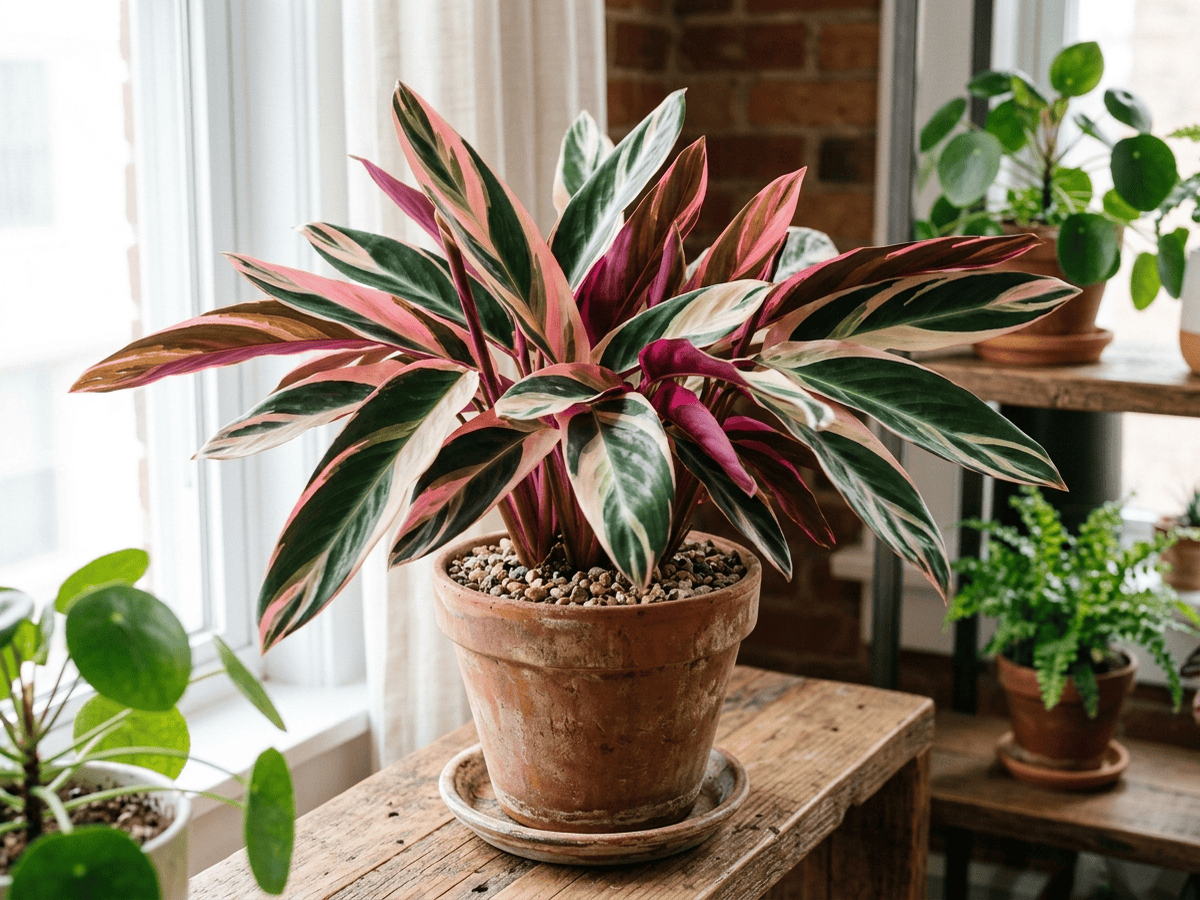
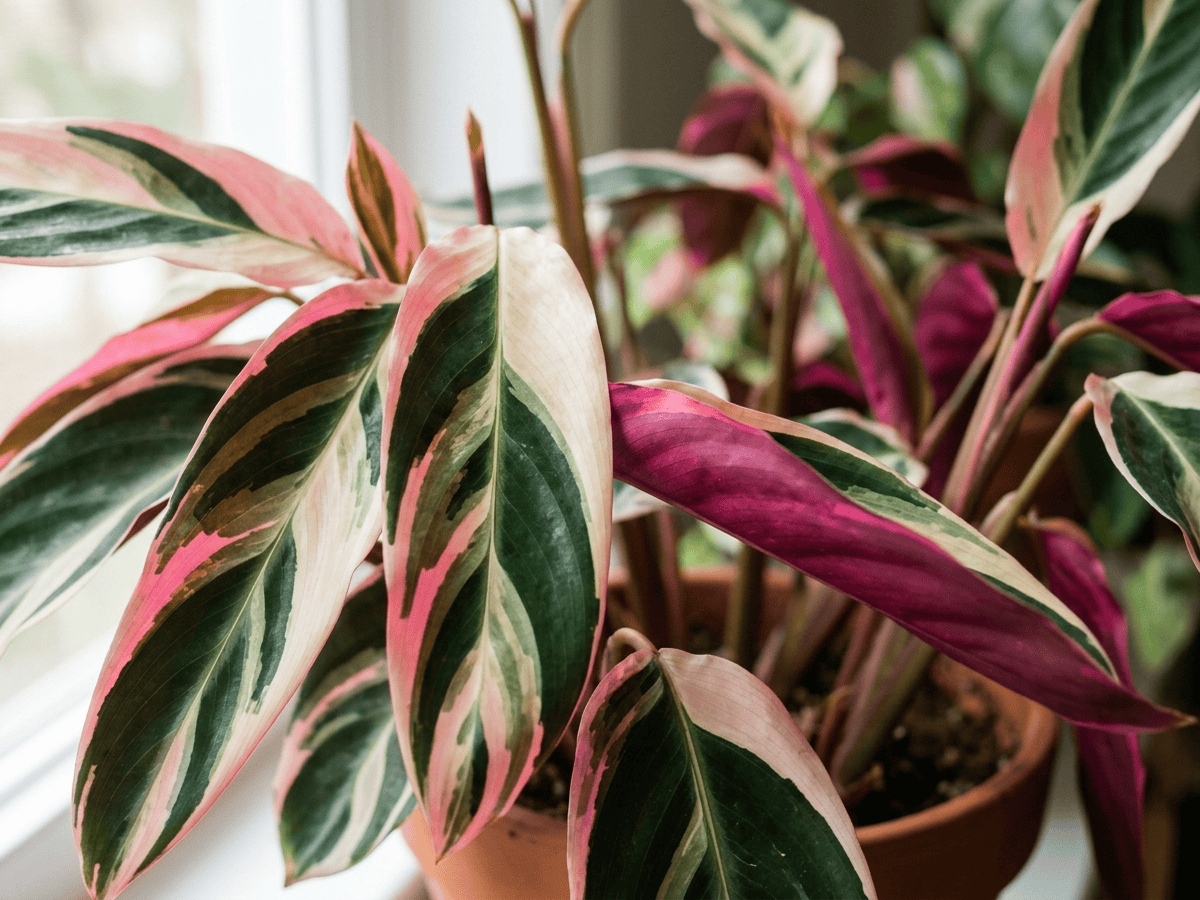
Stromanthe sanguinea 'Triostar' is one of the most colorful foliage plants available, with leaves painted in pink, cream, and green on top and deep magenta underneath. A member of the prayer plant family (Marantaceae), it performs nightly leaf movements. Native to Brazilian rainforests, it grows 60–90 cm tall and prefers humid conditions with filtered light. The dramatic color combination — especially the shocking pink undersides revealed during evening prayer movement — makes it a showstopper. It is more tolerant than Calatheas but still appreciates humidity above 50%.
- Tropical
- Shade-tolerant
- Air-purifying
- Container-friendly
How to care for Triostar Stromanthe
Watering
- Springevery 5 days
- Summerevery 5 days
- Fallevery 7 days
- Winterevery 10 days
Soil · Moisture-retentive
- Top dressingSphagnum moss10%
- Main mixPeat + coco coir 1:180%
- DrainagePerlite / gravel10%
Keep it evenly moist — but the drainage layer still matters.
FERTILIZER
Balanced Feed 14-14-14
An even feed covers all three needs at once, keeping leaves, roots and blooms moving together with nothing pushed out of balance.
- Nitrogen · Leaves
- Phosphorus · Roots + Blooms
- Potassium · Strength
- Springevery 30 days
- Summerevery 30 days
- Fallevery 60 days
At a Glance
- NativeSouth America
- Height2–3 ft (0.6–0.9 m)
- Spread1–2 ft (0.3–0.6 m)
- Flower colorWhite, Red, Pink
- Foliage colorGreen, Red, Variegated
- SoilLoamy, Moisture-retentive, Rich
- LocationsIndoor
Bloom time
BLOOM CYCLE
Peak bloom
Mar–May
Small red-orange flowers on stalks in spring
Fragrance
NO FRAGRANCE
Not fragrant.
Toxicity
Pets Safe
None reported
Not reported
EXPOSURE No exposure route is reported.
EFFECT No toxic effect is reported.
NOTE No human toxicity is reported in this catalog; avoid eating ornamental plants unless confirmed edible.
Safe
EXPOSURE No exposure route is reported.
EFFECT No toxic effect is reported.
NOTE Listed as non-toxic for dogs; avoid eating ornamental plants unless confirmed edible.
Safe
EXPOSURE No exposure route is reported.
EFFECT No toxic effect is reported.
NOTE Listed as non-toxic for cats; avoid eating ornamental plants unless confirmed edible.
Educational information, not medical or veterinary advice. If exposure is suspected, contact a doctor or veterinarian.
DISTRIBUTION


- Native
- South America
History

Stromanthe sanguinea is native to the Atlantic rainforest of eastern Brazil, where it forms clumps of broad lanceolate leaves with burgundy undersides on the humid forest floor. Formally described in 1847, it was a specialist conservatory plant through most of the 20th century. The variegated sport 'Triostar' (also marketed as 'Tricolor' or 'Magicstar'), with three-tone pink, cream, and green foliage, was introduced in the late 1990s and rapidly became one of the best-selling Marantaceae houseplants of the 2000s and 2010s.
Like its Calathea and Maranta relatives it performs nightly leaf folding, and like them it is considered non-toxic to cats and dogs. In winter — day-length triggered — it produces upright inflorescences of red bracts and small white flowers. Stromanthe sanguinea gained mainstream popularity through its cultivar 'Triostar' (also sold as 'Tricolor'), which amplifies the species' natural pink and cream variegation to dramatic levels.
In the Brazilian Atlantic Forest, the wild green form grows in dense colonies on the forest floor. The species name 'sanguinea' (blood-red) refers to the vibrant magenta leaf undersides. The entire Marantaceae family — about 550 species — is almost exclusively tropical, with the highest diversity in the Americas. Brazilians call the family 'maranta,' and many species are used in indigenous crafts and traditional medicine.
Symbolism & meaning
What It Symbolizes
Stromanthe Thalia carries passion, its vivid magenta undersides and pink-streaked upper leaves representing intense emotion and unrestrained enthusiasm. It is a houseplant of theatrical color, refusing the muted greens that dominate indoor jungles. It is often read as a flower of emotional saturation, a tropical foliage plant whose meaning is the permission to feel things in full color, the conviction that some plants exist to remind us how vivid living indoors can become.
- Passion — Its vivid magenta and pink coloring represents intense emotion and enthusiasm
Where the Name Comes From
Stromanthe from Greek 'stroma' (bed/mattress) and 'anthos' (flower), describing the flower arrangement. Sanguinea means 'blood-red' for the leaf undersides.
Uses & Fun Facts
- Pink-cream-magenta painted foliage as houseplant accent
- Tropical prayer-plant relative for shaded indoor pots
Related plants
More Stromanthe plants
Plants with similar care
 Aglaonema AroidAglaonema pictum
 Aglaonema rotundumAglaonema rotundum
 AlocasiaAlocasia polly
 Black Velvet AlocasiaAlocasia reginula
Frequently asked questions
How often should I water Triostar Stromanthe?
In summer, water about every 5 days; in winter, about every 10 days. Adjust for heat, pot size and drainage.
How much light does Triostar Stromanthe need?
Indirect: Filtered light. Watch the leaves — scorching or stretching means the light needs adjusting.
Is Triostar Stromanthe toxic to cats or dogs?
Pets Safe (Dogs Safe · Cats Safe) Educational information, not medical or veterinary advice. If exposure is suspected, contact a doctor or veterinarian.
Is Triostar Stromanthe easy to grow?
It is moderately demanding: a good choice once you have a little experience.
Can Triostar Stromanthe be grown indoors?
Yes, it adapts well to indoor growing given the right light.
When does Triostar Stromanthe bloom?
It typically blooms Mar–May in the Northern Hemisphere.
YardMate
Identify any plant in seconds
Snap a photo — YardMate names the plant, diagnoses problems, and reminds you when to water.
Download on the App Store