 YardMate
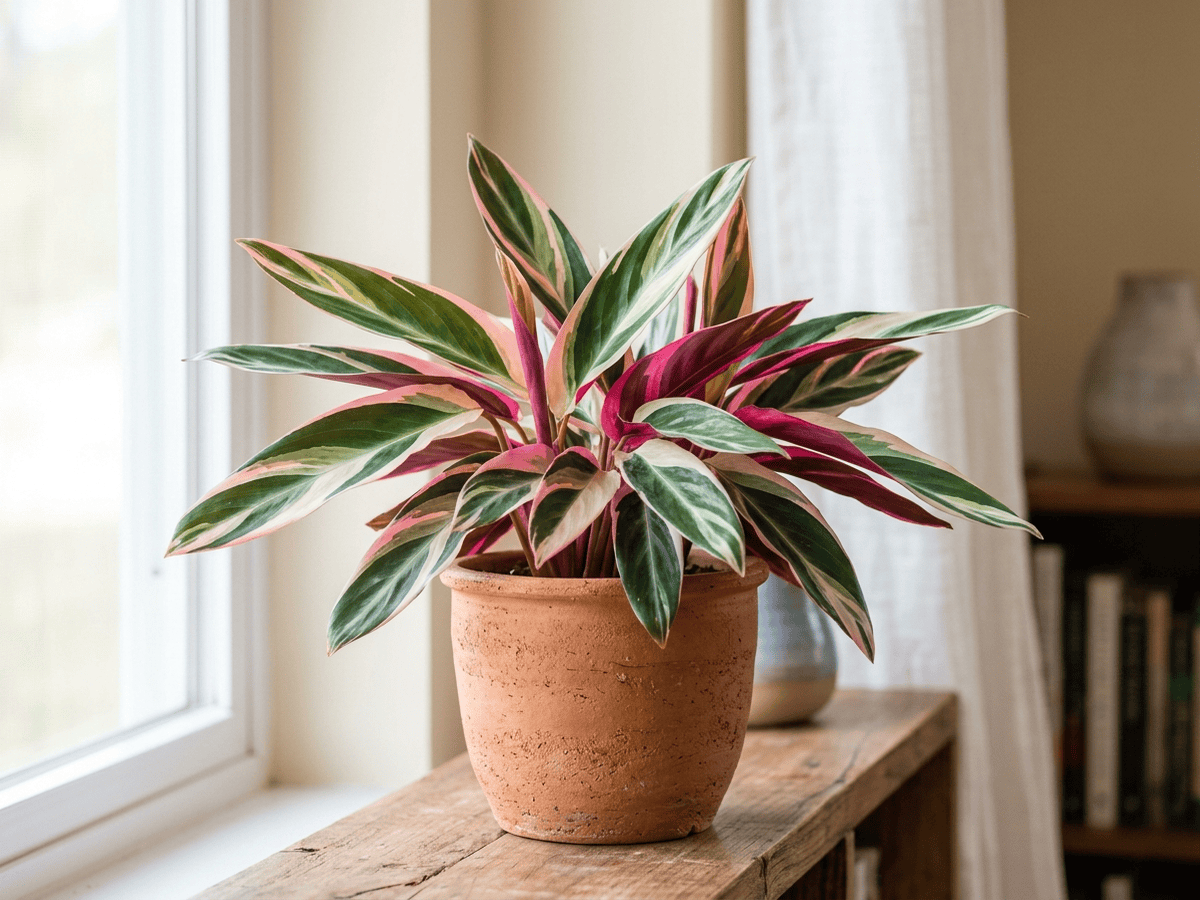


Magenta Triostar
Stromanthe thalia
Medium · Some experienceAbout Magenta Triostar
Triostar Stromanthe is a striking Brazilian rainforest perennial in the prayer plant family, featuring lance-shaped leaves variegated in green, cream, white, and pink with brilliant deep-pink undersides. Reaching 18-30 inches, the cultivar 'Triostar' (also sold as 'Tricolor') is one of the most colorful foliage houseplants in cultivation. Like its Calathea relatives, it demands humidity and filtered light, but rewards growers with vivid color and pet-safe non-toxicity.
- Evergreen
How to care for Magenta Triostar
Watering
- Springevery 5 days
- Summerevery 5 days
- Fallevery 7 days
- Winterevery 10 days
Soil · Moisture-retentive
- Top dressingSphagnum moss10%
- Main mixPeat + coco coir 1:180%
- DrainagePerlite / gravel10%
Keep it evenly moist — but the drainage layer still matters.
FERTILIZER
Balanced Feed 14-14-14
An even feed covers all three needs at once, keeping leaves, roots and blooms moving together with nothing pushed out of balance.
- Nitrogen · Leaves
- Phosphorus · Roots + Blooms
- Potassium · Strength
- Springevery 30 days
- Summerevery 30 days
- Fallevery 60 days
At a Glance
- NativeSouth America
- Height2–3 ft (0.6–0.9 m)
- Spread1–2 ft (0.3–0.6 m)
- Flower colorWhite, Red, Pink
- Foliage colorGreen, Red, Variegated
- SoilLoamy, Moisture-retentive, Rich
- LocationsIndoor
Bloom time
BLOOM CYCLE
Peak bloom
Mar–May
Small reddish-pink bracted flowers (rare indoors)
Toxicity
Pets Safe
None reported
Not reported
EXPOSURE No exposure route is reported.
EFFECT No toxic effect is reported.
NOTE No human toxicity is reported in this catalog; avoid eating ornamental plants unless confirmed edible.
Safe
EXPOSURE No exposure route is reported.
EFFECT No toxic effect is reported.
NOTE Listed as non-toxic for dogs; avoid eating ornamental plants unless confirmed edible.
Safe
EXPOSURE No exposure route is reported.
EFFECT No toxic effect is reported.
NOTE Listed as non-toxic for cats; avoid eating ornamental plants unless confirmed edible.
Educational information, not medical or veterinary advice. If exposure is suspected, contact a doctor or veterinarian.
DISTRIBUTION


- Native
- South America
History

Stromanthe thalia is a clumping tropical foliage perennial in the prayer-plant family (Marantaceae) native to the Atlantic rainforests of eastern Brazil. Brazilian naturalist José Mariano da Conceição Veloso described it as Maranta thalia in 1829; Swedish botanists Lennart Andersson and M. Engström transferred it to Stromanthe in 1988. The species is most familiar in horticulture through the spectacularly variegated cultivar 'Triostar' (also sold as 'Tricolor'), which was introduced from Brazilian nurseries in the late 20th century and has become one of the most striking variegated foliage plants in modern tropical horticulture.
Plants form erect 60-90 cm clumps of lanceolate leaves 20-30 cm long on long petioles, with variegation showing dramatic patches and sectors of pink, cream, pale green, and dark green on the upper surface and burgundy-purple undersides. Leaves fold upward at night like all Marantaceae. Clusters of small white flowers surrounded by showy orange-red bracts appear in winter to spring.
Non-toxic to pets. Native to Brazilian Atlantic Forest. Often sold under the older name Stromanthe sanguinea. The 'Triostar' cultivar with its multicolored variegation has become an icon of modern American houseplant culture, defining bold tropical interiors of the 2010s-2020s.
Symbolism & meaning
What It Symbolizes
Magenta Triostar embodies vivacity, its vivid pink, cream, and green variegation enlivening any indoor space with painterly stripes. Joy follows close behind — the flashing pink undersides of its leaves are revealed by the daily prayer movement, as foliage lifts and lowers with the light. A houseplant that performs a quiet daily celebration on the corner of your shelf.
- Vivacity — vivid pink and cream variegation enlivens any space
- Joy — colorful undersides revealed by daily prayer movement
Where the Name Comes From
'Stromanthe' from Greek 'stroma' (bed) and 'anthos' (flower); 'thalia' from Greek mythology, one of the Three Graces.
Uses & Fun Facts
- Pink, cream, and green variegated leaves with magenta undersides
- Humidity-loving prayer plant for bright bathrooms and terrariums
Related plants
More Stromanthe plants
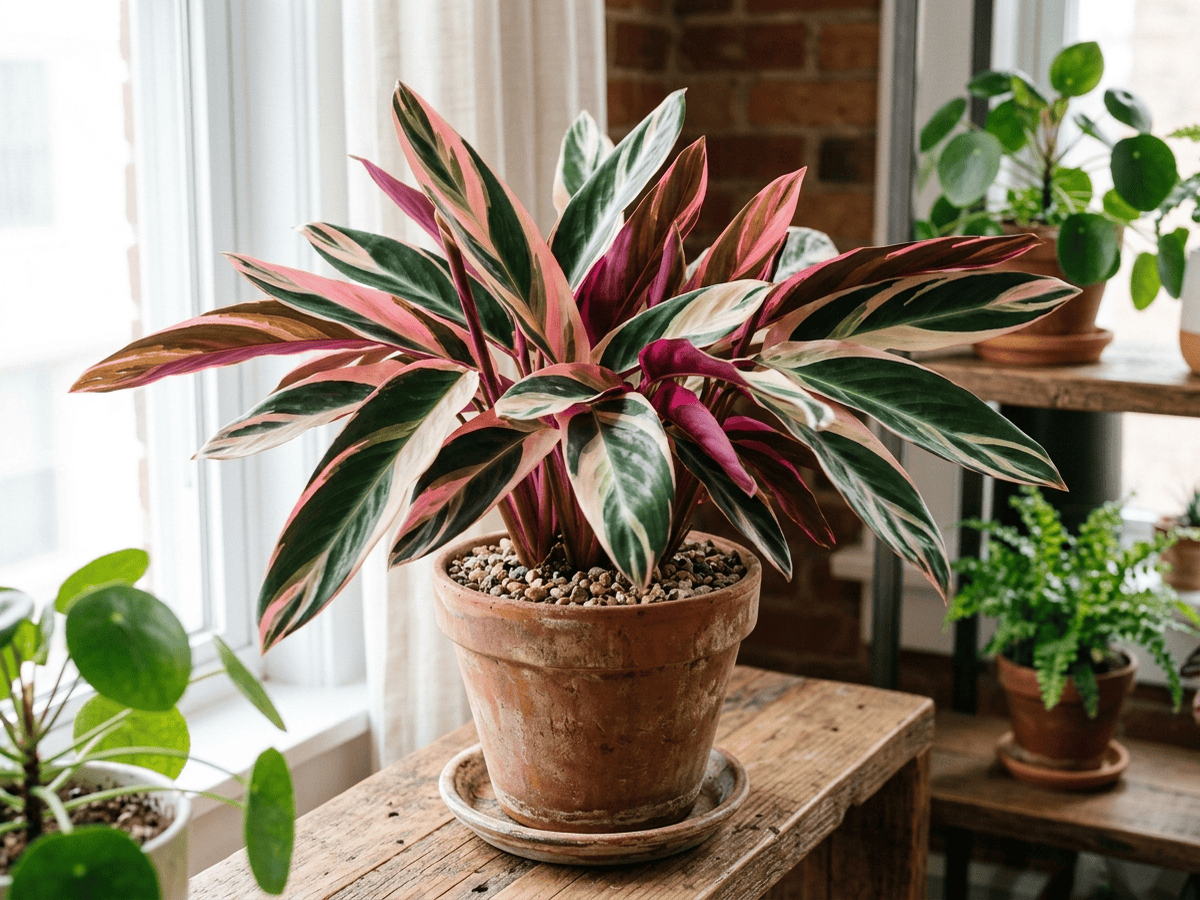
Plants with similar care
 Aglaonema AroidAglaonema pictum
 Aglaonema rotundumAglaonema rotundum
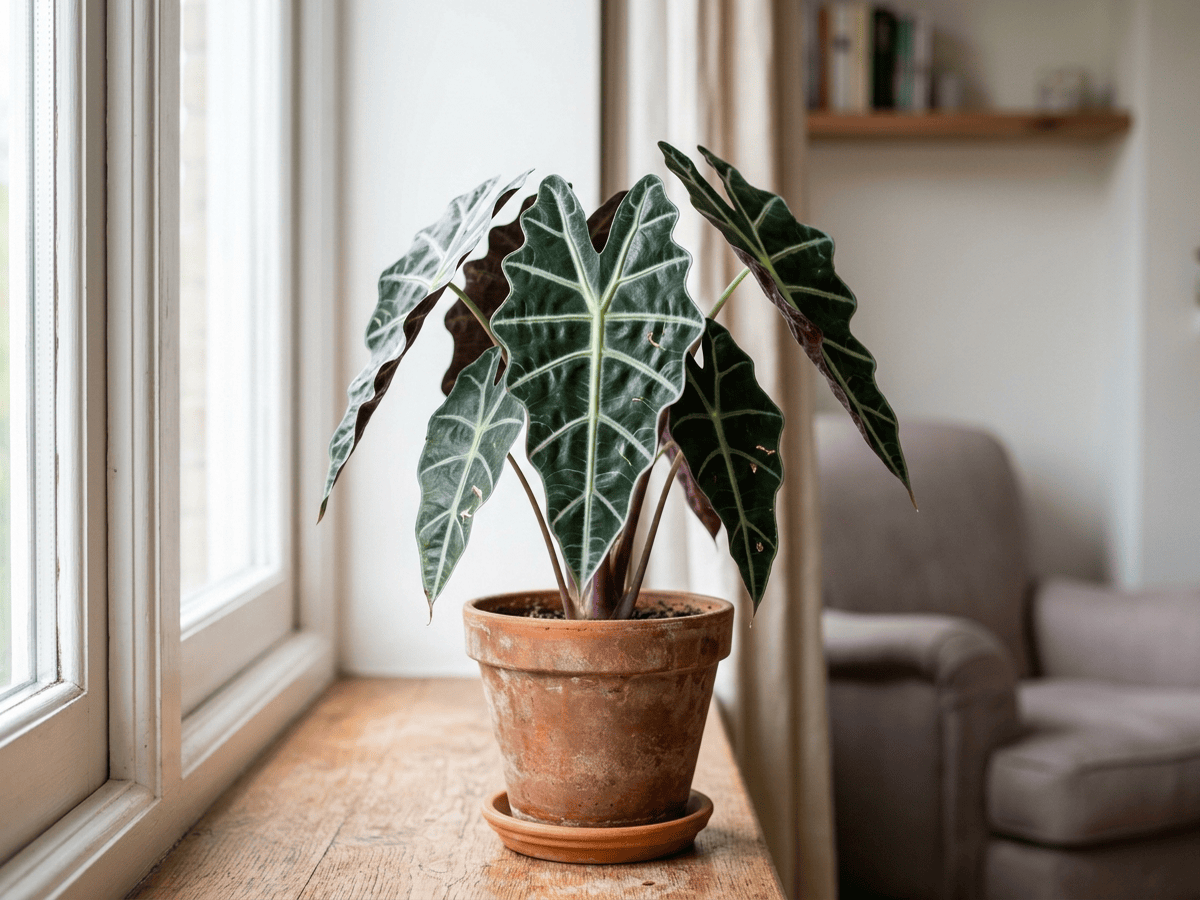 AlocasiaAlocasia polly
 Black Velvet AlocasiaAlocasia reginula
Frequently asked questions
How often should I water Magenta Triostar?
In summer, water about every 5 days; in winter, about every 10 days. Adjust for heat, pot size and drainage.
How much light does Magenta Triostar need?
Indirect: Filtered light. Watch the leaves — scorching or stretching means the light needs adjusting.
Is Magenta Triostar toxic to cats or dogs?
Pets Safe (Dogs Safe · Cats Safe) Educational information, not medical or veterinary advice. If exposure is suspected, contact a doctor or veterinarian.
Is Magenta Triostar easy to grow?
It is moderately demanding: a good choice once you have a little experience.
Can Magenta Triostar be grown indoors?
Yes, it adapts well to indoor growing given the right light.
When does Magenta Triostar bloom?
It typically blooms Mar–May in the Northern Hemisphere.
YardMate
Identify any plant in seconds
Snap a photo — YardMate names the plant, diagnoses problems, and reminds you when to water.
Download on the App Store