 YardMate


Goosefoot-Plant
Syngonium podophyllum
Easy · Beginner friendlyAbout Goosefoot-Plant
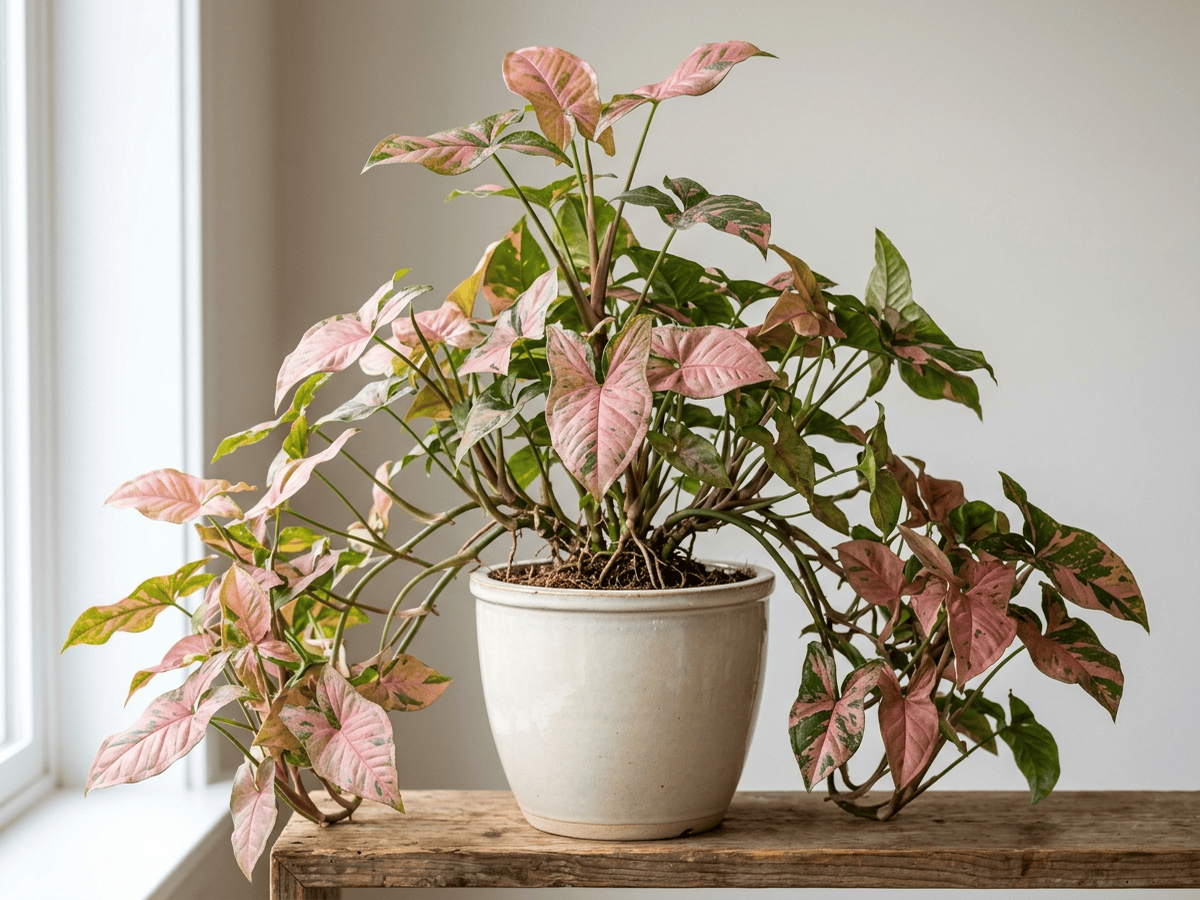
Syngonium podophyllum, the arrowhead vine, is a versatile tropical plant whose leaves transform dramatically as it matures — juvenile leaves are arrow-shaped and compact, while mature climbing leaves develop into deeply lobed palmate forms. Native to Central and South America, it comes in numerous cultivars from classic green to pink ('Pink Allusion'), white ('White Butterfly'), and even nearly black varieties. Young plants form tidy bushes perfect for desks; given a moss pole, they develop into impressive climbers with larger, more complex leaves.
- Air-purifying
- Trailing
How to care for Goosefoot-Plant
Watering
- Springevery 7 days
- Summerevery 5 days
- Fallevery 10 days
- Winterevery 14 days
Soil · Chunky & airy
- Top dressingBark chips10%
- Main mixBark + potting soil + perlite 1:1:170%
- DrainageLECA20%
Chunky pieces hold air pockets open so thick roots don't suffocate.
FERTILIZER
Balanced Feed 14-14-14
An even feed covers all three needs at once, keeping leaves, roots and blooms moving together with nothing pushed out of balance.
- Nitrogen · Leaves
- Phosphorus · Roots + Blooms
- Potassium · Strength
- Springevery 30 days
- Summerevery 30 days
- Fallevery 60 days
At a Glance
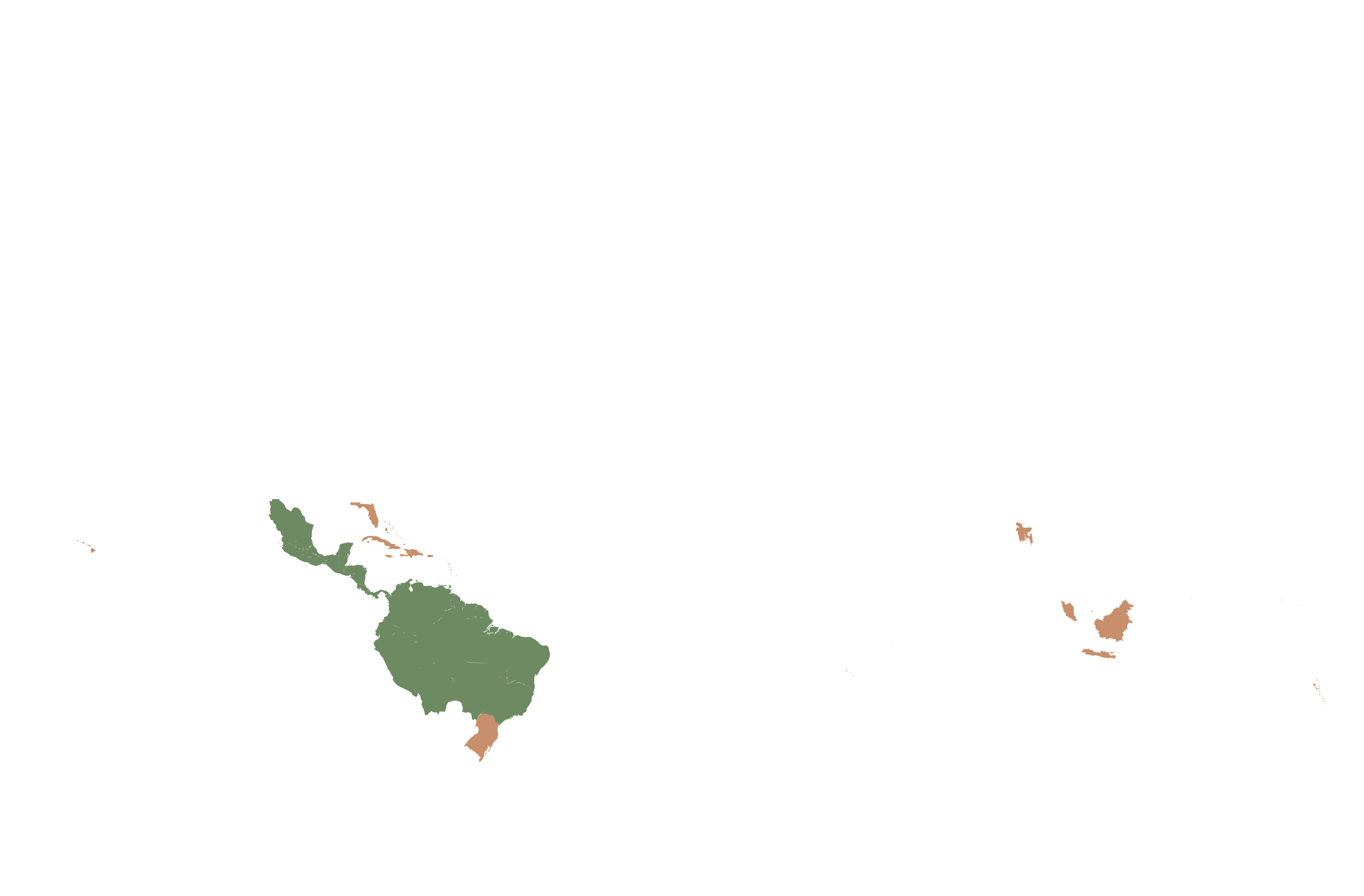
- NativeNorth America, Central America, South America
- Height2–4 ft (0.6–1.2 m)
- Spread1–2 ft (0.3–0.6 m)
- Flower colorGreen, Cream
- Foliage colorGreen, Variegated, Red
- SoilLoamy, Well-drained, Rich
- LocationsIndoor
Bloom time
BLOOM CYCLE
Peak bloom
Jun–Aug
Green spathe; extremely rare indoors
Fragrance
NO FRAGRANCE
Not fragrant.
Toxicity
Humans Slight · Pets Slight
insoluble calcium oxalate crystals (raphides)
Slight
- Leaf
- Stem
- Sap
- Contact
- Ingestion
EXPOSURE Touching leaves, stems, and sap. Eating leaves, stems, and sap.
EFFECT Oral burning, lip swelling, drooling and mild skin irritation.
NOTE Typical mild aroid toxicity.
Slight
- Leaf
- Stem
- Ingestion
EXPOSURE Eating leaves and stems.
EFFECT Oral irritation, intense burning, drooling, vomiting, difficulty swallowing and per ASPCA.
NOTE Typical mild aroid toxicity.
Slight
- Leaf
- Stem
- Ingestion
EXPOSURE Eating leaves and stems.
EFFECT Oral irritation, intense burning, drooling, vomiting, difficulty swallowing and per ASPCA.
NOTE Typical mild aroid toxicity.
Educational information, not medical or veterinary advice. If exposure is suspected, contact a doctor or veterinarian.
DISTRIBUTION

- Native
- Introduced
- North America
- Central America
- South America
History
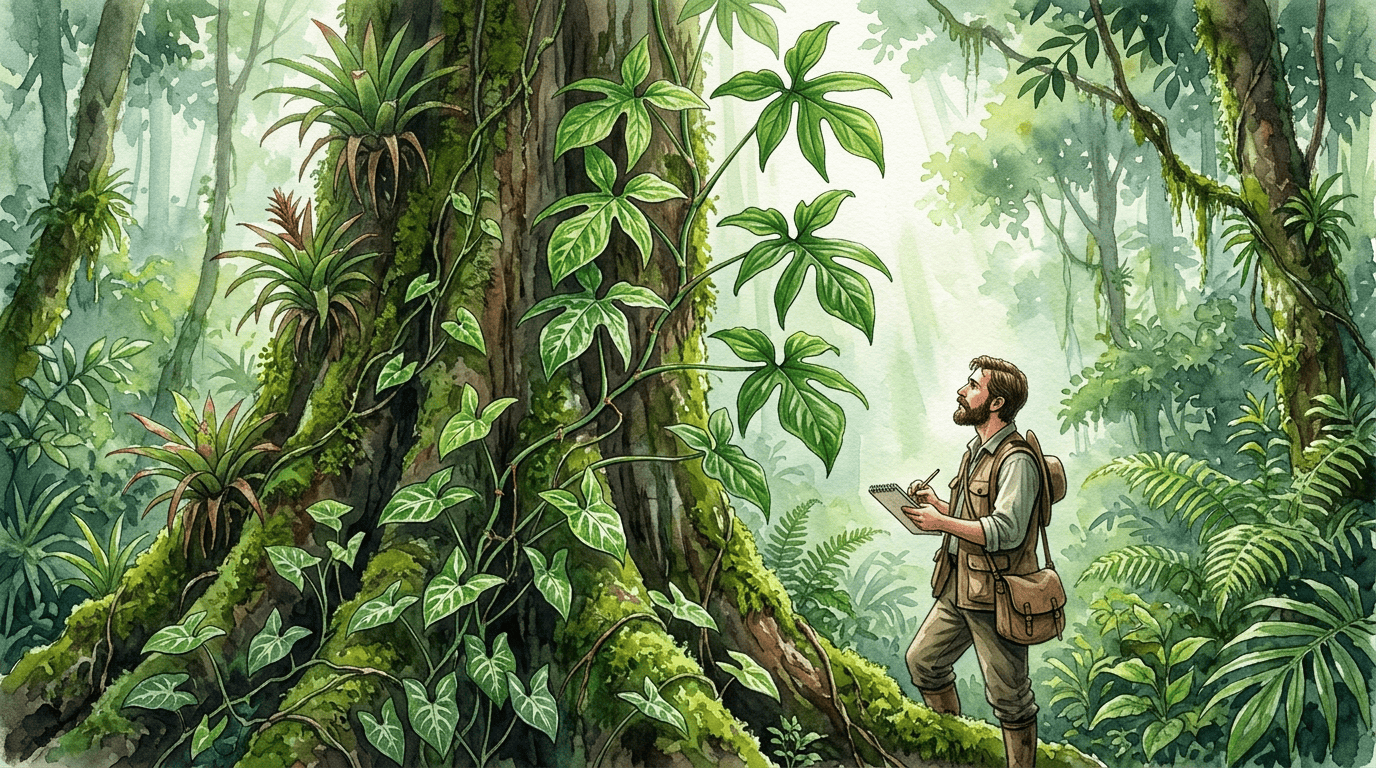
Syngonium podophyllum ranges naturally from southern Mexico through Central America to Bolivia and Brazil, where it climbs forest trees as a hemi-epiphyte. 19th-century botanists initially described juvenile and mature forms as separate species because the arrowhead-shaped juvenile leaves transform into deeply lobed five- to eleven-fingered adult leaves as the vine climbs — a trait not fully reconciled until the early 20th century. It has naturalized widely in tropical Florida, Hawaii, Singapore, and much of the humid tropics, where it can become an invasive smothering ground-cover.
As a houseplant it has been popular since the 1960s, and recent breeding has produced pink, maroon, and variegated cultivars ('Neon', 'Pink Splash', 'Albo'). Like its aroid relatives it is oxalate-toxic.
Syngonium podophyllum is one of the most morphologically variable houseplants — the juvenile and adult leaf forms are so different that early botanists classified them as separate species. In its native Central American rainforests, the vine begins life on the dark forest floor and climbs toward the canopy, its leaves growing larger and more complex with each meter of height gained. In Feng Shui, the five-lobed mature leaf represents the five elements (wood, fire, earth, metal, water), making it a popular plant for balancing energy.
Symbolism & meaning
What It Symbolizes
The Goosefoot-Plant expresses transformation, its arrow-shaped juvenile leaves morphing dramatically as it matures into deeply lobed, almost five-fingered adult foliage. It signals personal evolution, growth that visibly changes shape over time rather than simply scaling up. It is often read as a flower of becoming, a tropical climber whose meaning is the reassurance that early forms are not final, and that patient growth often produces a self that looks quite different from the one we started with.
- Transformation — Its dramatically changing leaf shapes represent growth and personal evolution
Where the Name Comes From
Syngonium from Greek 'syn' (together) and 'gone' (seed/ovary), referring to the fused ovaries. Podophyllum means 'foot-shaped leaf.'
Uses & Fun Facts
- Climbs moss poles or trails from shelves indoors
- Versatile arrowhead vine for terrariums and pots
- Color-shifting arrow-shaped leaves in many cultivars
Related plants
More Syngonium plants
Plants with similar care
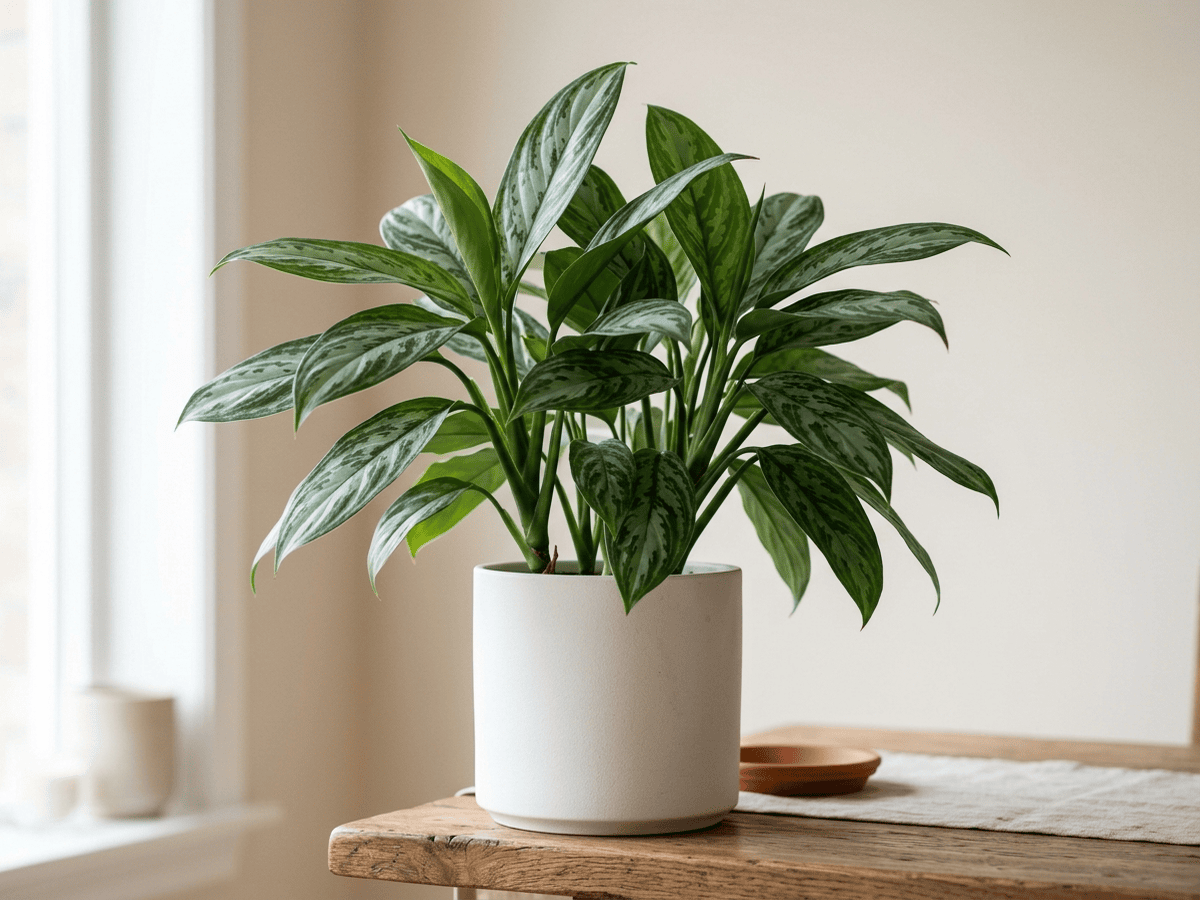 Philippine EvergreenAglaonema commutatum
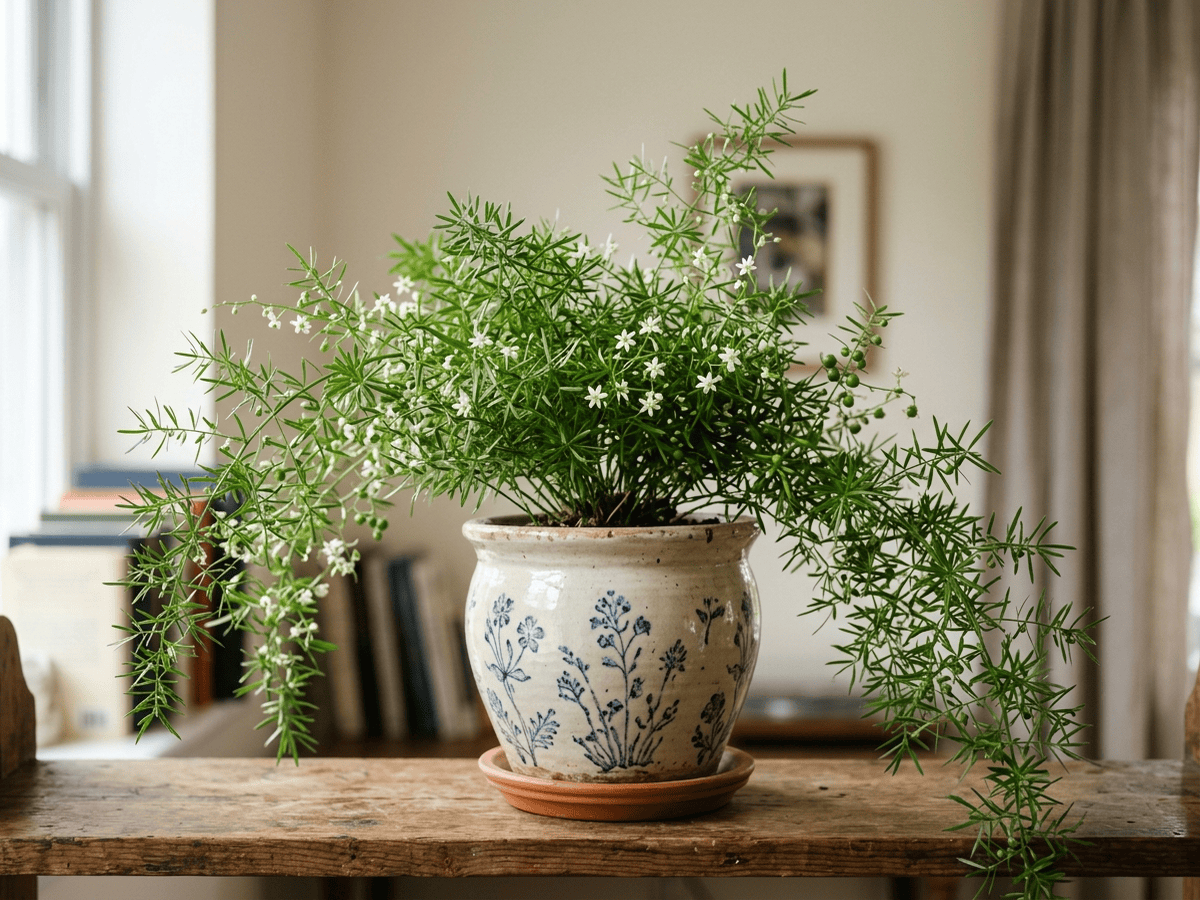 Sprenger's AsparagusAsparagus densiflorus
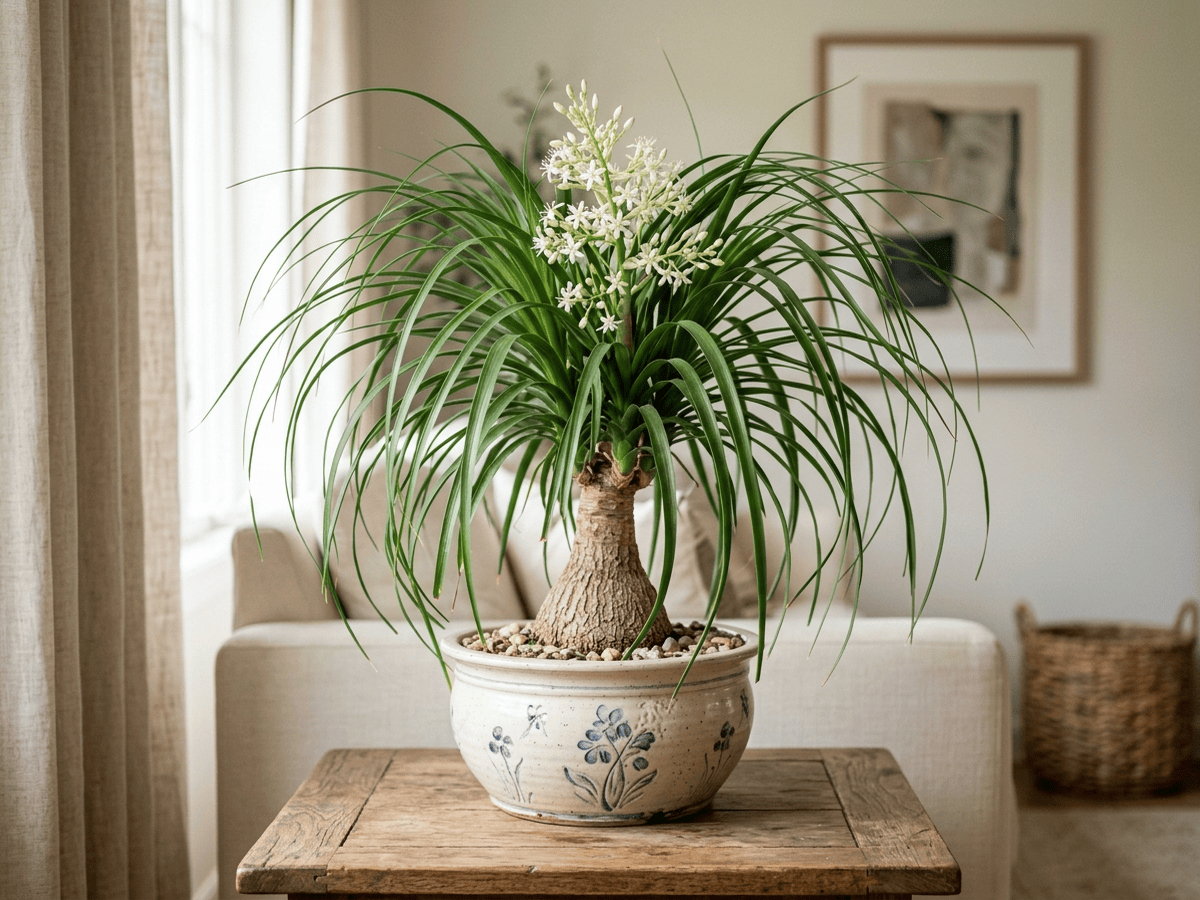 Ponytail PalmBeaucarnea recurvata
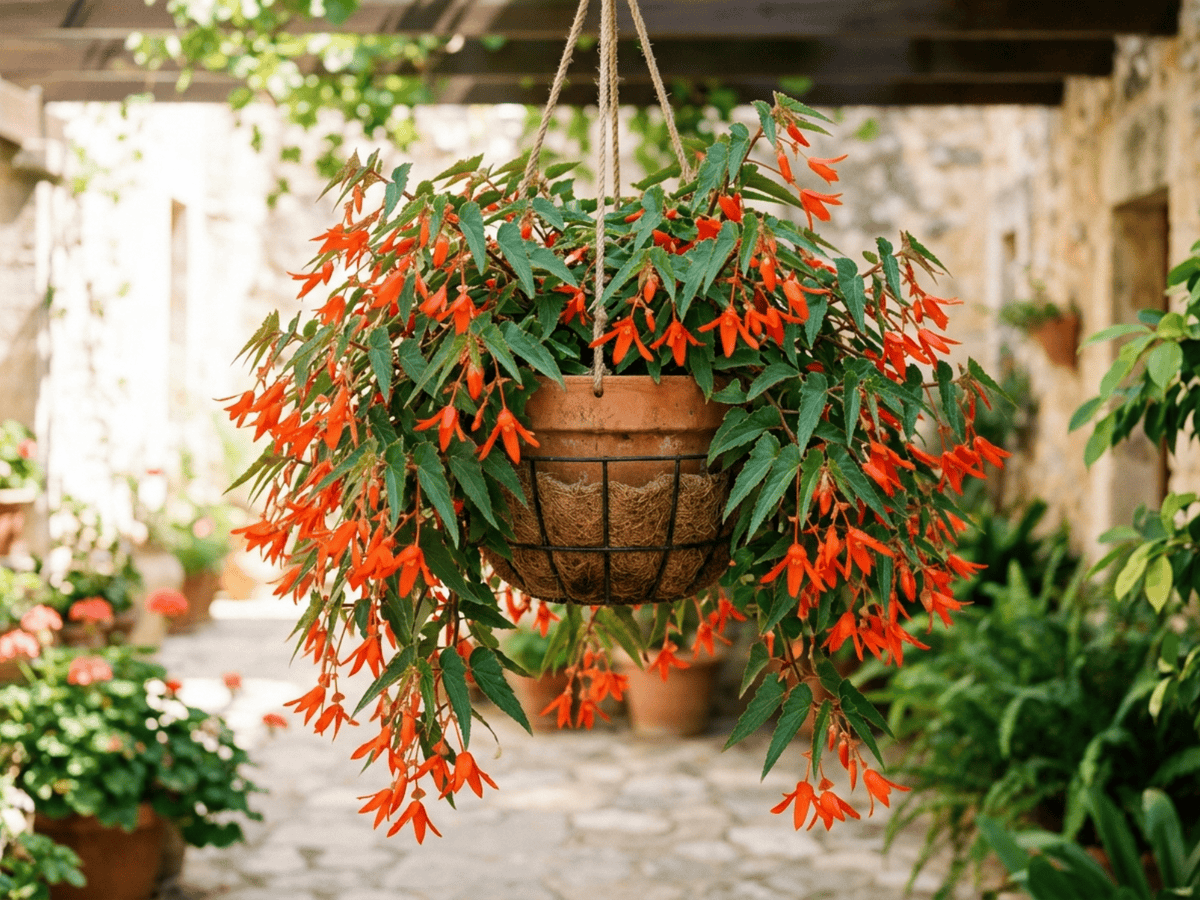 Tuberous BegoniaBegonia boliviensis
Frequently asked questions
How often should I water Goosefoot-Plant?
In summer, water about every 5 days; in winter, about every 14 days. Adjust for heat, pot size and drainage.
How much light does Goosefoot-Plant need?
Part shade: 2–4 hrs direct. Watch the leaves — scorching or stretching means the light needs adjusting.
Is Goosefoot-Plant toxic to cats or dogs?
Pets Slight (Dogs Slight · Cats Slight) Educational information, not medical or veterinary advice. If exposure is suspected, contact a doctor or veterinarian.
Is Goosefoot-Plant easy to grow?
Yes — it is considered an easy, beginner-friendly plant.
Can Goosefoot-Plant be grown indoors?
Yes, it adapts well to indoor growing given the right light.
When does Goosefoot-Plant bloom?
It typically blooms Jun–Aug in the Northern Hemisphere.
YardMate
Identify any plant in seconds
Snap a photo — YardMate names the plant, diagnoses problems, and reminds you when to water.
Download on the App Store