 YardMate


Common Yew
Taxus baccata
Easy · Beginner friendlyAbout Common Yew
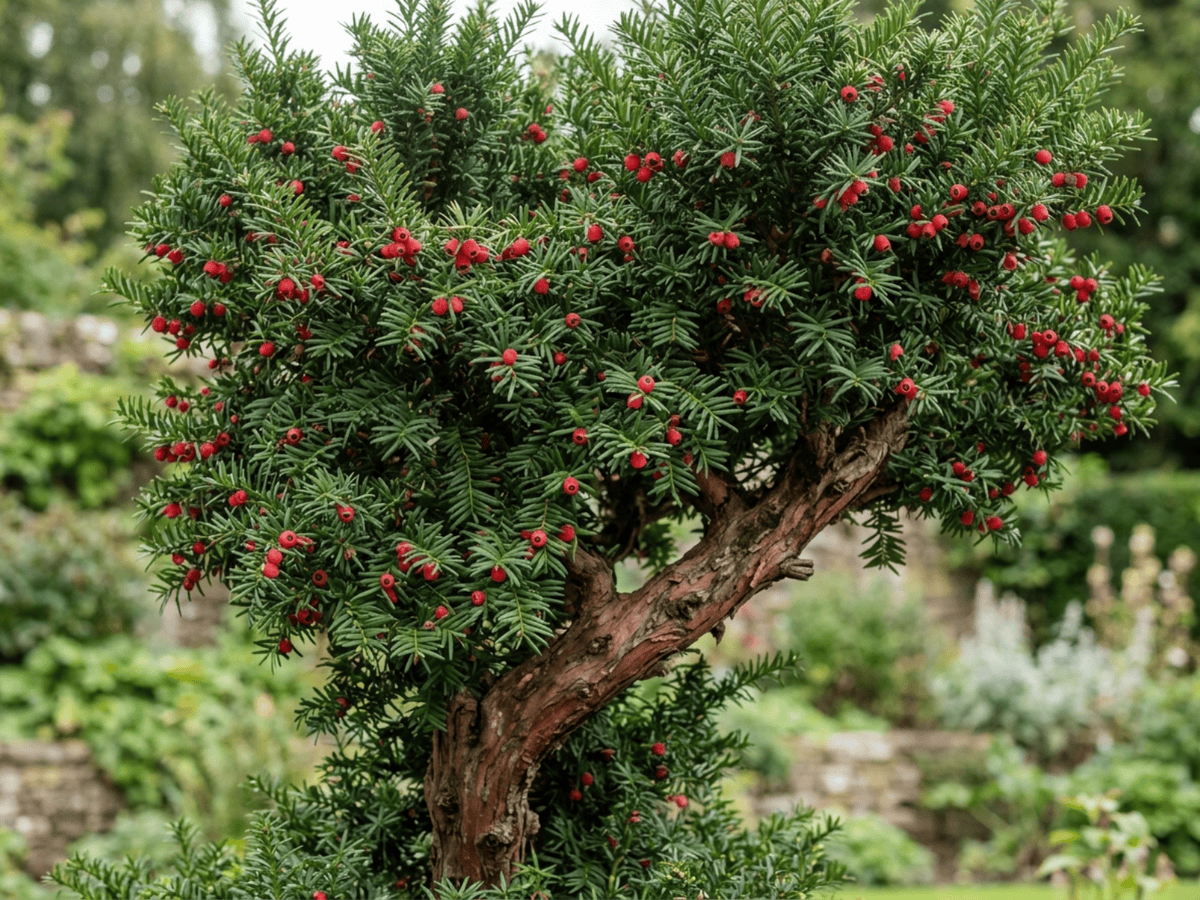
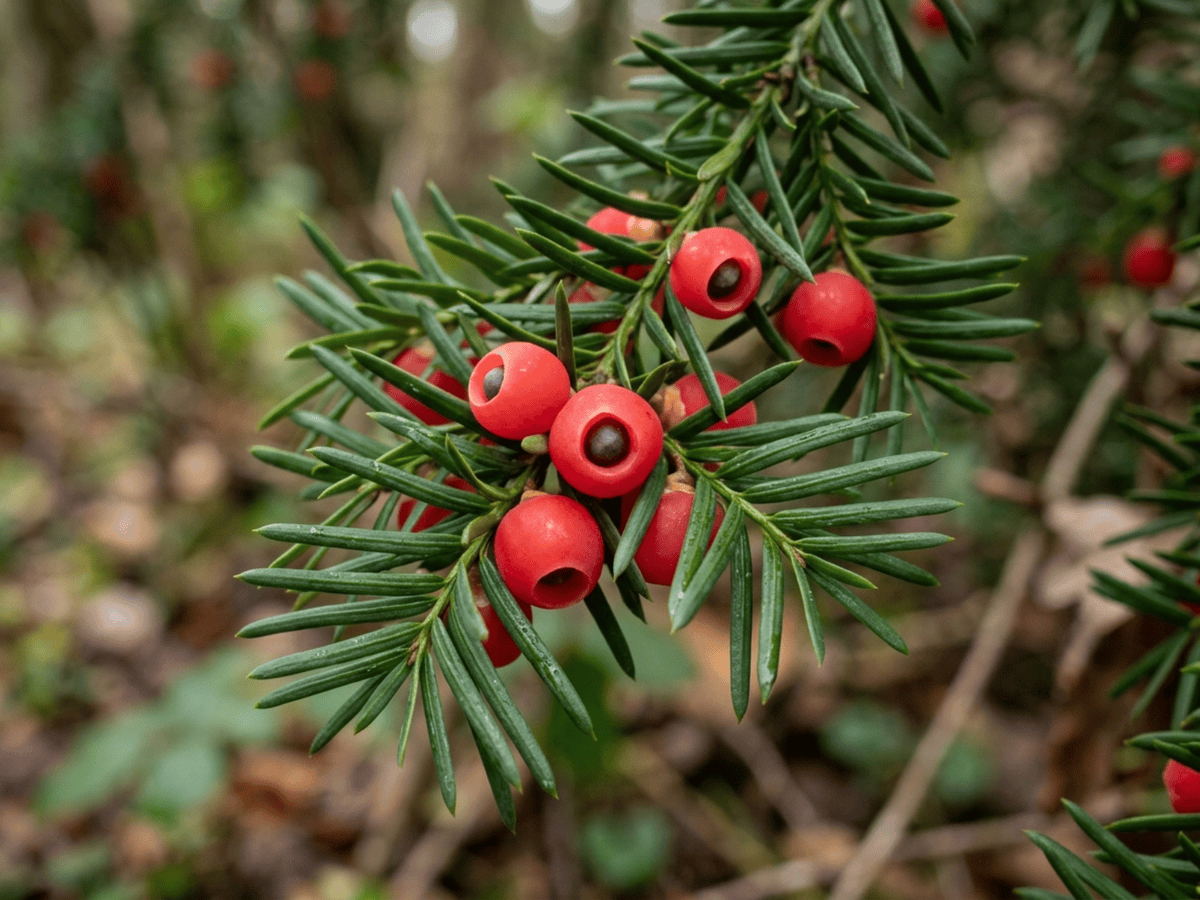
Taxus baccata, English yew, is one of Europe's most ancient and symbolically charged trees, with some churchyard specimens estimated at more than 2,000 years old. This evergreen conifer grows slowly into a dense dark tree with flat needles, reddish peeling bark, and red fleshy arils on female plants. The red aril flesh is the only non-toxic part; seeds, foliage, bark, and wood contain dangerous taxine alkaloids. Yew's chemistry also led to paclitaxel, one of the most important plant-derived compounds in modern oncology. In gardens, its practical genius is tolerance: shade, pruning, old wood, chalky soils, and centuries of clipping into hedges, topiary, and solemn green architecture.
- Shade-tolerant
- Evergreen
How to care for Common Yew
Watering
- Springevery 5 days
- Summerevery 4 days
- Fallevery 10 days
- Winterevery 21 days
Soil · Well-draining
- Top dressingPine bark mulch10%
- Main mixPotting soil + perlite 2:170%
- DrainageLECA / gravel20%
Never skip the drainage layer — standing water is the top cause of root rot.
FERTILIZER
Balanced Feed 14-14-14
An even feed covers all three needs at once, keeping leaves, roots and blooms moving together with nothing pushed out of balance.
- Nitrogen · Leaves
- Phosphorus · Roots + Blooms
- Potassium · Strength
- Springevery 45 days
At a Glance
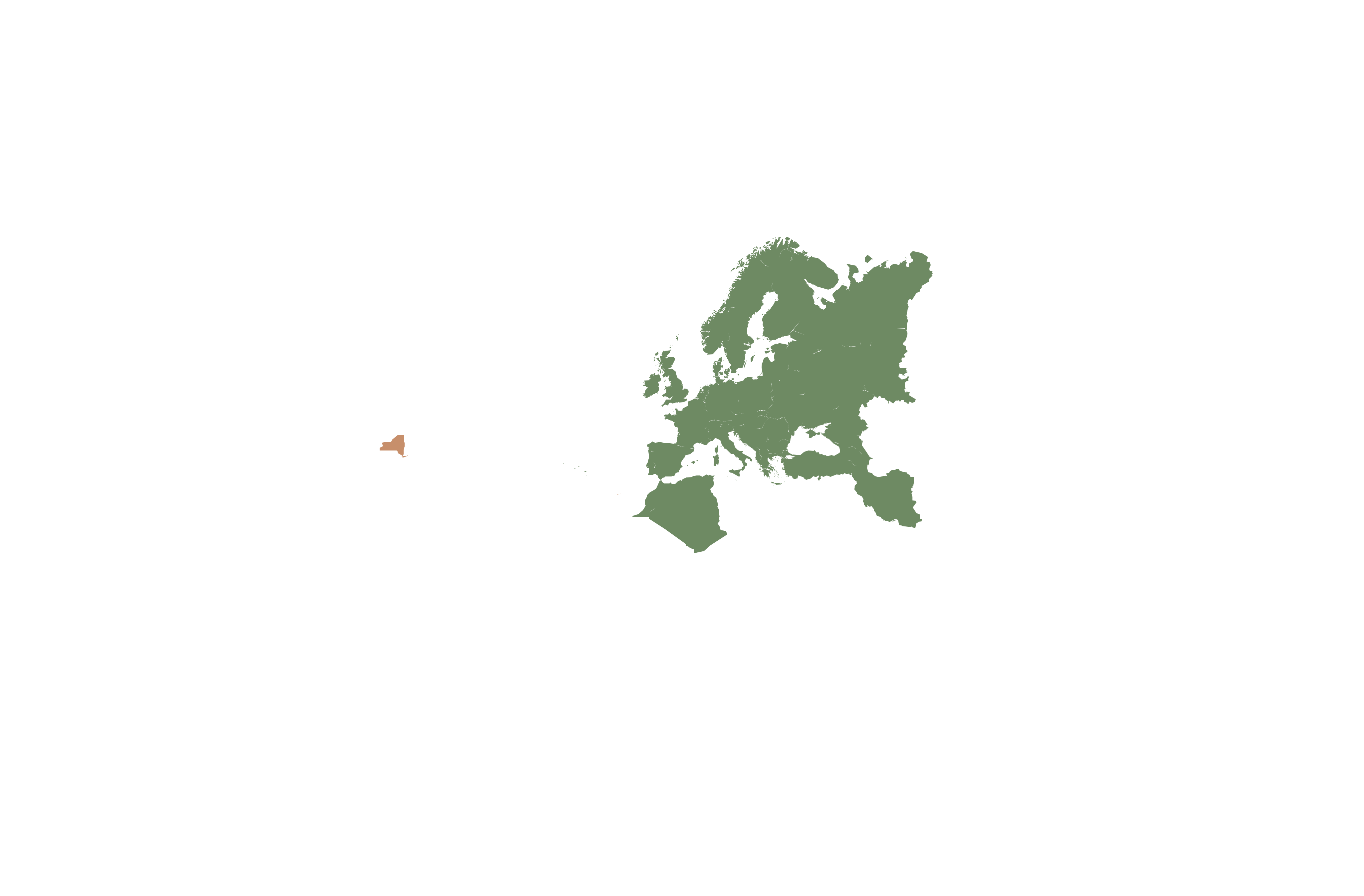
- NativeEurope, Africa, Western Asia
- Height30–60 ft (9.1–18.3 m)
- Spread15–25 ft (4.6–7.6 m)
- Flower colorYellow, Green
- Foliage colorGreen, Yellow
- SoilLoamy, Well-drained
- LocationsYard
Bloom time
BLOOM CYCLE
Inconspicuous wind-pollinated flowers in spring; female trees produce red arils in autumn if a male is nearby
Fragrance
NO FRAGRANCE
No notable fragrance.
Toxicity
Humans Toxic · Pets Toxic
taxine alkaloids (taxine A and B)
Toxic
- Leaf
- Seed
- Bark
- Stem
- Ingestion
EXPOSURE Eating leaves, seeds, bark, and stems.
EFFECT Taxine alkaloids: cardiac arrhythmia, collapse, sudden death and red aril flesh is non-toxic but seeds inside are lethal.
NOTE Documented concern for humans: Taxine alkaloids: cardiac arrhythmia, collapse, sudden death and red aril flesh is non-toxic but seeds inside are lethal.
Toxic
- Leaf
- Seed
- Stem
- Ingestion
EXPOSURE Eating leaves, seeds, and stems.
EFFECT Tremors, seizures, cardiac failure, sudden death.
NOTE ASPCA lists yew as extremely toxic to dogs, cats, and horses. Horses are especially vulnerable — small amounts of clippings can cause sudden death.
Toxic
- Leaf
- Seed
- Stem
- Ingestion
EXPOSURE Eating leaves, seeds, and stems.
EFFECT Same as dogs and cardiac toxicity often fatal.
NOTE ASPCA lists yew as extremely toxic to dogs, cats, and horses. Horses are especially vulnerable — small amounts of clippings can cause sudden death.
Educational information, not medical or veterinary advice. If exposure is suspected, contact a doctor or veterinarian.
DISTRIBUTION

- Native
- Introduced
- Europe
- Africa
- Western Asia
History
Taxus baccata is native across Europe, North Africa, and southwest Asia. It is one of the longest-lived trees in Europe — the Fortingall Yew in Perthshire, Scotland, is estimated at 2,000-3,000 years old, and the Ankerwycke Yew in Runnymede (by the site of the Magna Carta signing) is approximately 2,500 years old. Celtic and pre-Christian European cultures considered the yew sacred and immortality-associated because of its longevity and evergreen habit; many early Christian churchyards in Britain and Ireland were sited on pre-existing sacred yew groves, and yews planted within them have often outlived the church buildings themselves.
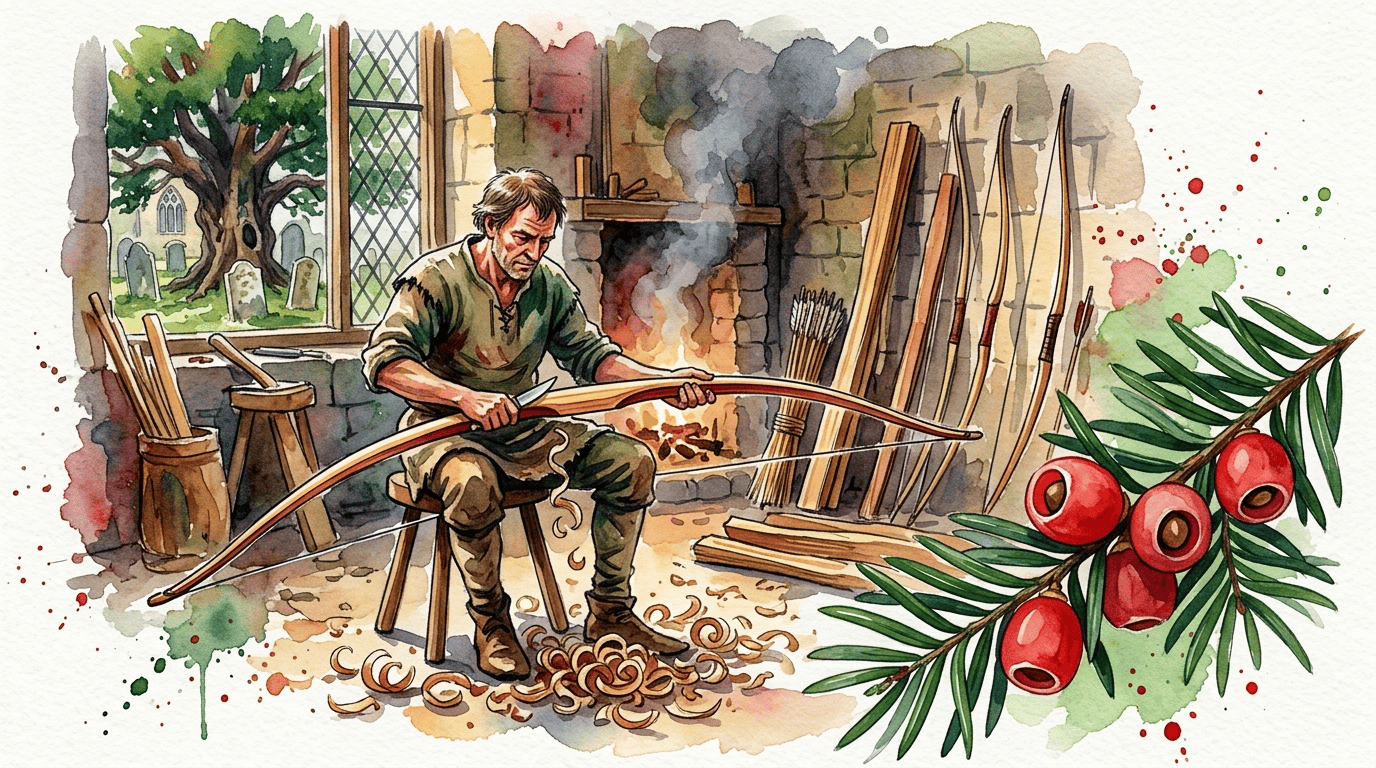
The English longbow, the weapon that defeated the French at Crécy (1346) and Agincourt (1415), was made from a single stave of yew heartwood and sapwood combined, and medieval European demand for bow-stave yew was so intense it may have substantially depleted European yew forests. All parts of the plant except the red fleshy aril surrounding the seed are highly toxic, containing taxine alkaloids; horses and cattle are particularly vulnerable and even small amounts of yew clippings can kill them.
Paradoxically, the closely related Pacific yew (T. brevifolia) yielded paclitaxel (Taxol), one of the most important modern cancer chemotherapy drugs.
Symbolism & meaning
What It Symbolizes
Common Yew is ancient gravity in evergreen form. Churchyards, clipped hedges, and millennia-old trunks have made it one of Europe's deepest symbols of death, endurance, and return. Modern science also found remarkable compounds in yew, but the tree's first language remains older: shade, silence, and time.
- Immortality — Yew's extreme longevity and ability to regenerate from ancient stumps symbolize eternal life
- Death and rebirth — Its churchyard association and lethal toxicity paired with cancer-curing Taxol embody the cycle of life and death
Where the Name Comes From
Taxus is the classical Latin name for yew, possibly from Greek 'taxon' (bow), reflecting its use in archery. Baccata means 'bearing berries' in Latin, referring to the fleshy red arils.
Uses & Fun Facts
- Slow dense evergreen long the classic clipped formal hedge
- Ancient yew shaped into topiary as long-lived garden centerpiece
- Strong elastic timber historically prized for English longbows
- Long planted in churchyards across Britain and Europe
Related plants
More Taxus plants
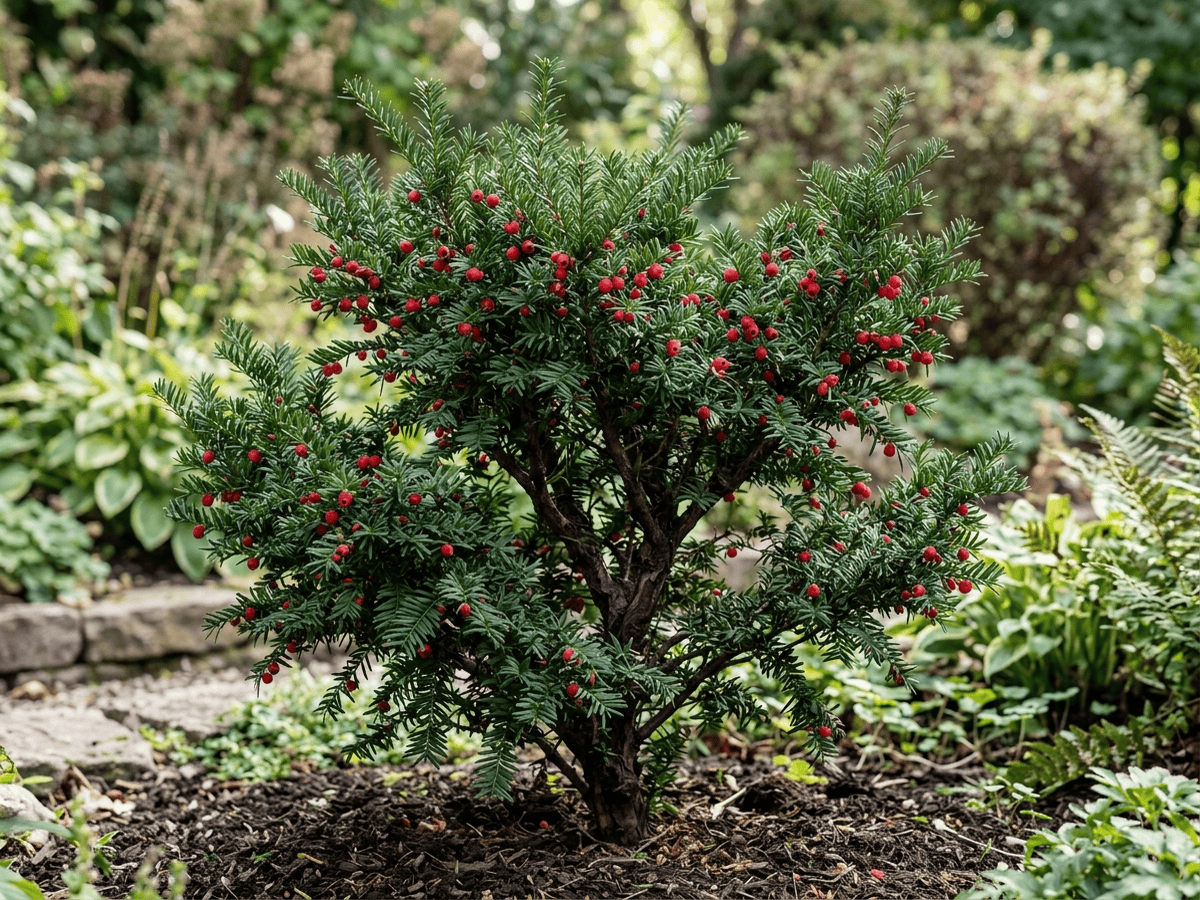
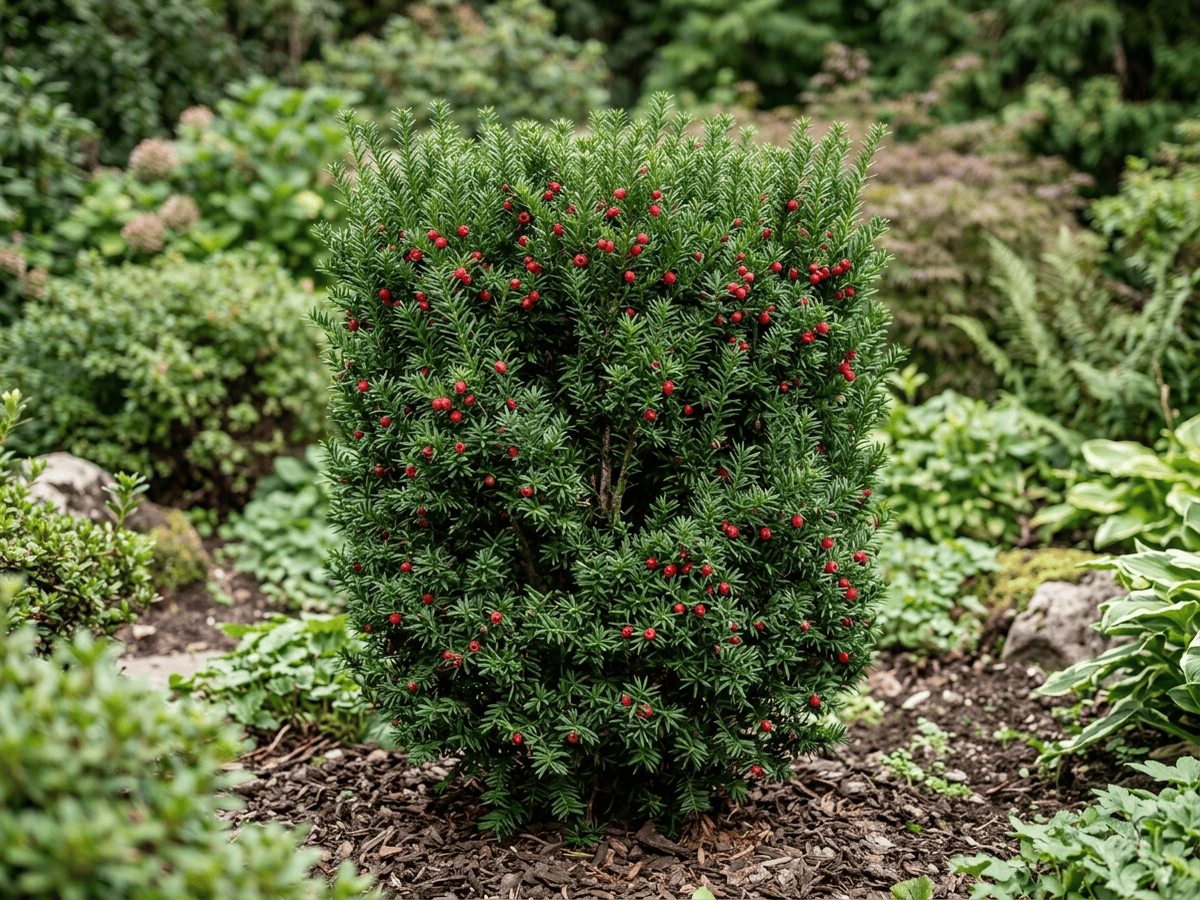
Plants with similar care
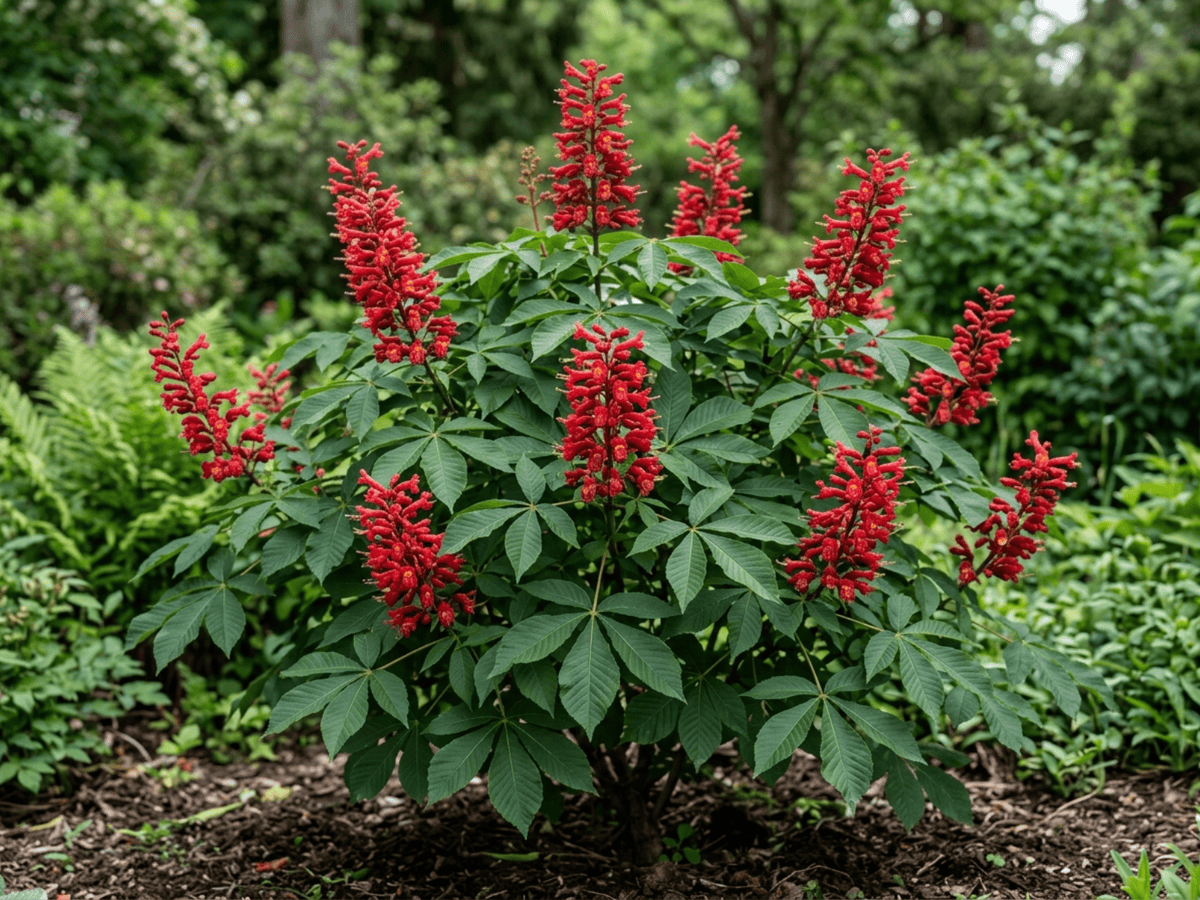 Red BuckeyeAesculus pavia
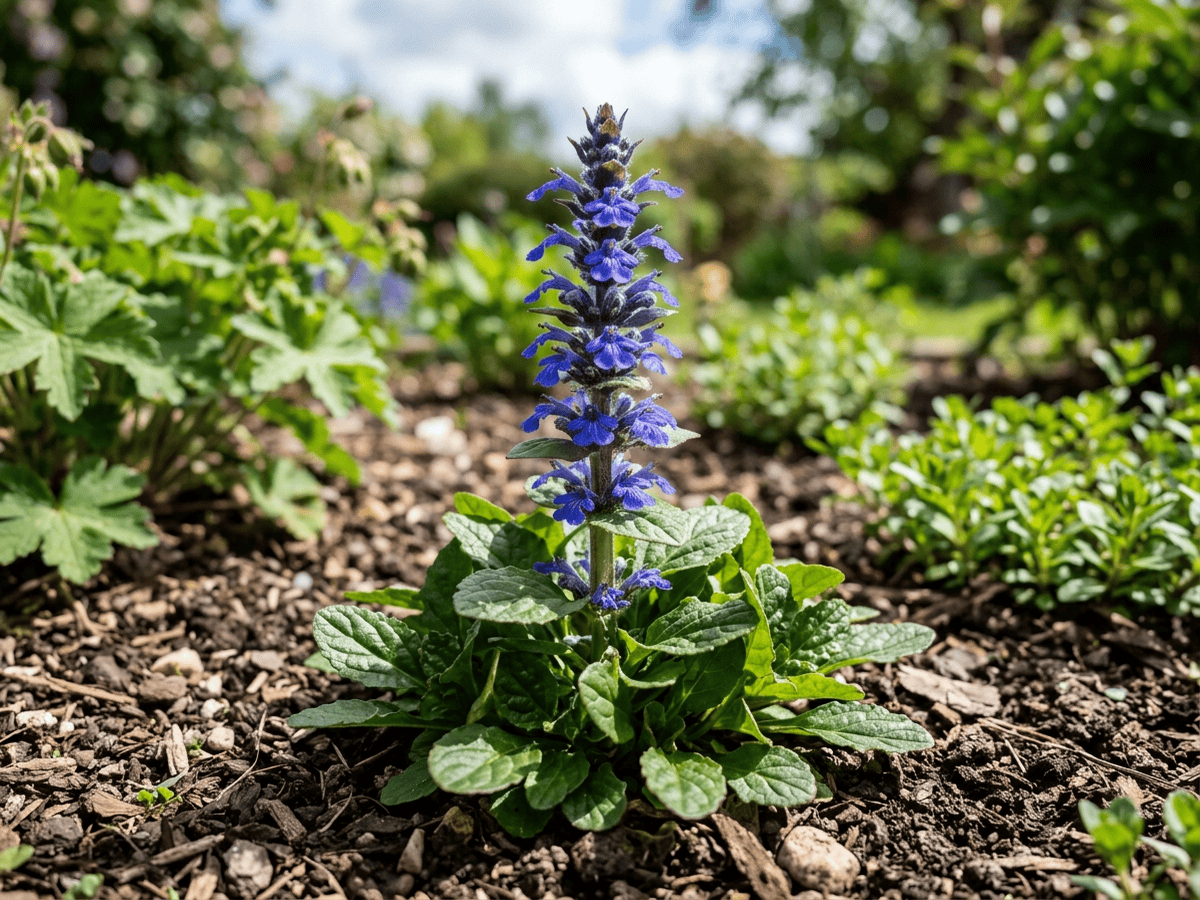 Blue BugleAjuga genevensis
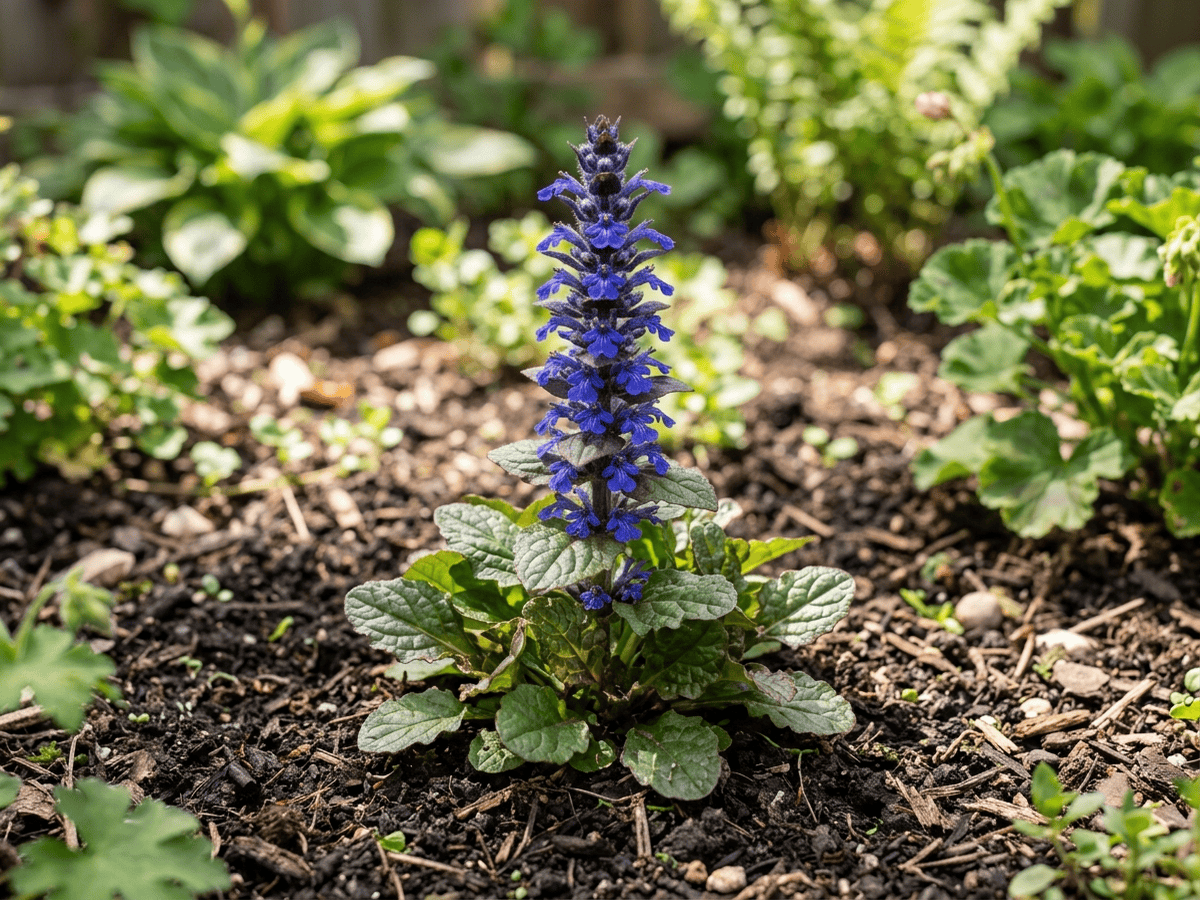 Pyramidal BugleAjuga pyramidalis
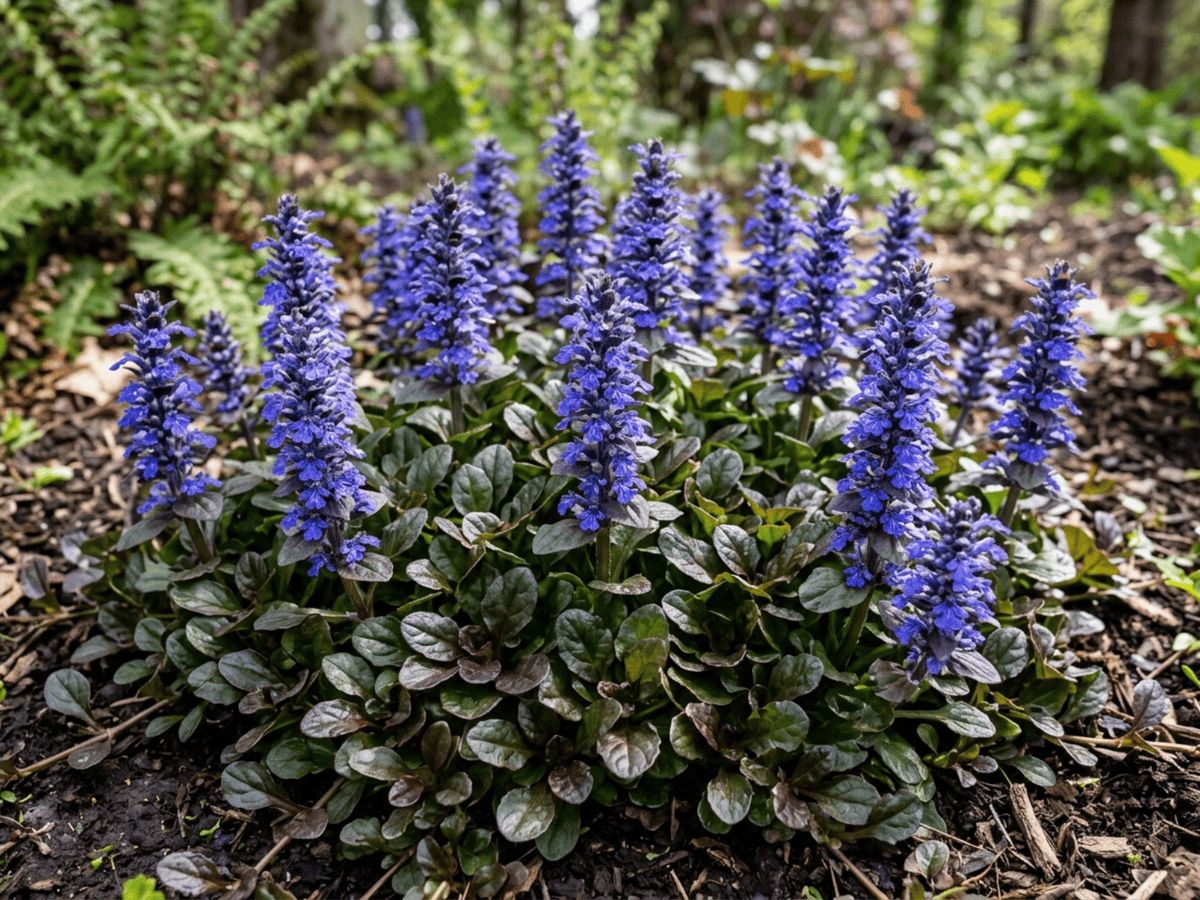 Carpet BugleAjuga reptans
Frequently asked questions
How often should I water Common Yew?
In summer, water about every 4 days; in winter, about every 21 days. Adjust for heat, pot size and drainage.
How much light does Common Yew need?
Part shade: 2–4 hrs direct. Watch the leaves — scorching or stretching means the light needs adjusting.
Is Common Yew toxic to cats or dogs?
Pets Toxic (Dogs Toxic · Cats Toxic) Educational information, not medical or veterinary advice. If exposure is suspected, contact a doctor or veterinarian.
Is Common Yew easy to grow?
Yes — it is considered an easy, beginner-friendly plant.
YardMate
Identify any plant in seconds
Snap a photo — YardMate names the plant, diagnoses problems, and reminds you when to water.
Download on the App Store