 YardMate
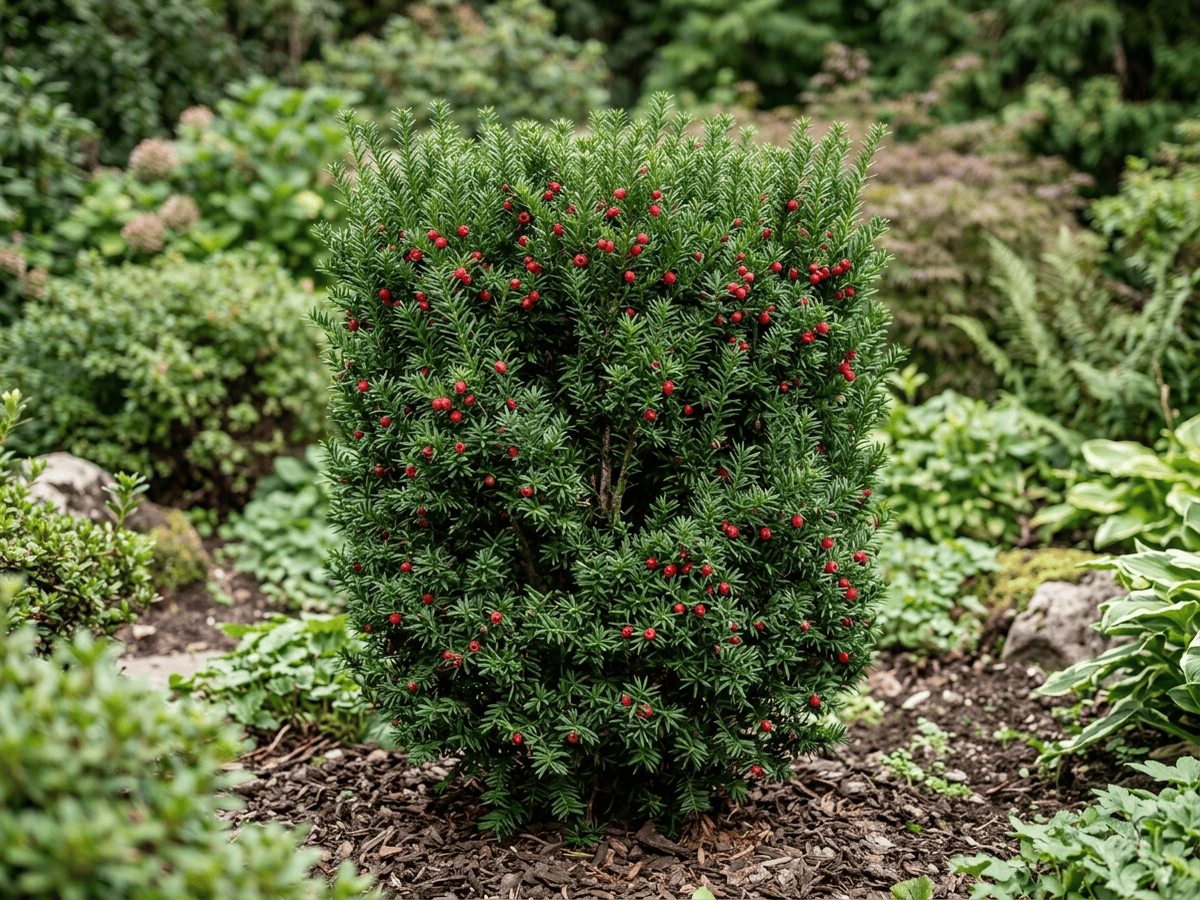


Anglo-Japanese Yew
Taxus x media
Easy · Beginner friendlyAbout Anglo-Japanese Yew
Anglo-Japanese Yew is a vigorous hybrid evergreen between Japanese and English yews, reaching 4-20 feet depending on cultivar, combining cold hardiness with upright dense form. The narrow columnar cultivar 'Hicksii' and the broad-spreading 'Densiformis' are American landscape staples. Adaptable to sun or heavy shade, poor soils, and regular shearing, it is perhaps the single most common evergreen foundation plant across the eastern and midwestern US.
- Shade-tolerant
- Evergreen
How to care for Anglo-Japanese Yew
Watering
- Springevery 10 days
- Summerevery 7 days
- Fallevery 14 days
- Winterevery 30 days
Soil · Well-draining
- Top dressingPine bark mulch10%
- Main mixPotting soil + perlite 2:170%
- DrainageLECA / gravel20%
Never skip the drainage layer — standing water is the top cause of root rot.
FERTILIZER
Balanced Feed 14-14-14
An even feed covers all three needs at once, keeping leaves, roots and blooms moving together with nothing pushed out of balance.
- Nitrogen · Leaves
- Phosphorus · Roots + Blooms
- Potassium · Strength
- Springevery 60 days
At a Glance
- Height6–20 ft (1.8–6.1 m)
- Spread6–12 ft (1.8–3.7 m)
- Flower colorYellow, Green
- Foliage colorDark-green, Green
- Fruit colorRed
- SoilLoamy, Well-drained
- LocationsYard
Bloom time
BLOOM CYCLE
Inconspicuous
Toxicity
Humans Toxic · Pets Toxic
taxine A and B alkaloids
Toxic
- Leaf
- Seed
- Stem
- Root
- Ingestion
EXPOSURE Eating leaves, seeds, stems, and roots.
EFFECT Cardiac arrhythmia, respiratory failure, sudden death.
NOTE Documented concern for humans: Cardiac arrhythmia, respiratory failure, sudden death.
Toxic
- Leaf
- Seed
- Stem
- Ingestion
EXPOSURE Eating leaves, seeds, and stems.
EFFECT Tremors, difficulty breathing, cardiac failure, sudden death.
NOTE ASPCA toxic to dogs, cats, horses. All Taxus hybrids are deadly; horses are especially vulnerable to clippings in pasture.
Toxic
- Leaf
- Seed
- Stem
- Ingestion
EXPOSURE Eating leaves, seeds, and stems.
EFFECT Tremors, difficulty breathing, cardiac failure, sudden death.
NOTE ASPCA toxic to dogs, cats, horses. All Taxus hybrids are deadly; horses are especially vulnerable to clippings in pasture.
Educational information, not medical or veterinary advice. If exposure is suspected, contact a doctor or veterinarian.
History

Taxus x media is a horticultural hybrid of Taxus cuspidata (Japanese yew) and Taxus baccata (English yew), originated around 1900 by T.D. Hatfield, superintendent of the Hunnewell Estate in Hatfield (Wellesley), Massachusetts, when seedlings of Japanese yew fertilized by nearby English yew showed intermediate characteristics. The cross combined the cold-hardiness and tight habit of T. cuspidata with the refined form and darker color of T. baccata. Alfred Rehder of the Arnold Arboretum formally described the hybrid in 1923.
The hybrid's vigor, hardiness (to zone 4 or 5), tolerance of shearing, and adaptability to various light conditions quickly made it the preferred landscape yew across northeastern and midwestern North America. Important cultivars include the upright 'Hicksii' (a columnar female selection used for hedging), the broad-spreading 'Densiformis', 'Brownii', 'Hatfieldii', 'Wardii', and the golden 'Nova'. Like all yews, needles, bark, and seeds are severely toxic to humans and livestock.
Developed around 1900 at the Hunnewell estate in Massachusetts by Thomas Hicks, who crossed English and Japanese yews to produce hardier forms for American gardens. The cultivar 'Hicksii' remains one of the most planted narrow evergreens in the US. The cultivated yew industry supplies much of the raw material for taxane pharmaceutical production.
Symbolism & meaning
What It Symbolizes
Anglo-Japanese Yew expresses endurance, the foundation evergreen of countless mid-century American homes where it has anchored porch corners for decades. Its adaptability is equally remarkable — thriving from full sun to deep shade with quiet uniformity. A hybrid yew that has done the slow, unglamorous work of framing American front yards through several generations of homeowners.
- Endurance — century-old foundation evergreen
- Adaptability — thrives sun to deep shade
Where the Name Comes From
'Taxus x media' denotes the hybrid between Taxus baccata and Taxus cuspidata.
Uses & Fun Facts
- Dense evergreen growth trimmed into formal sheared hedges
- Long-lived dark-green yew sculpted into topiary forms
- Reliable foundation evergreen for shaded northern gardens
Related plants
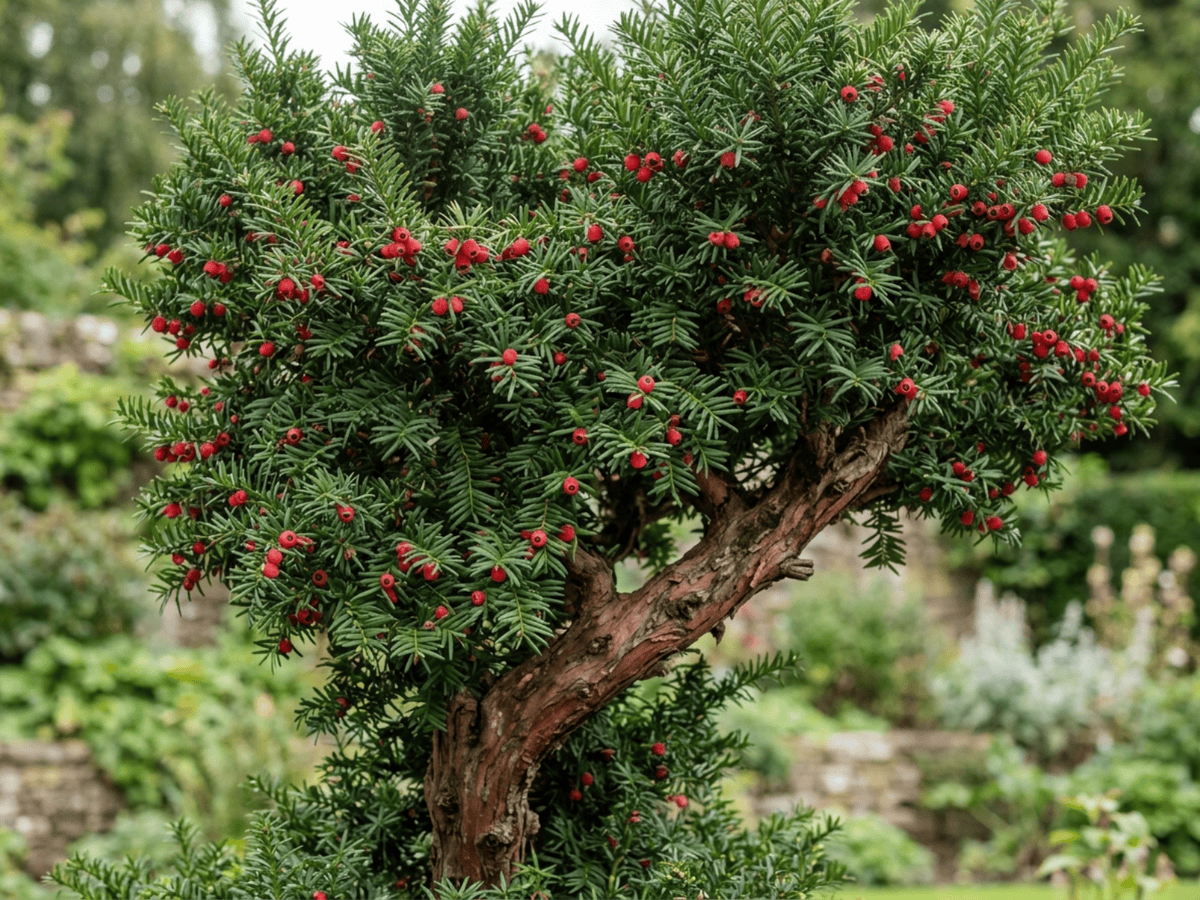
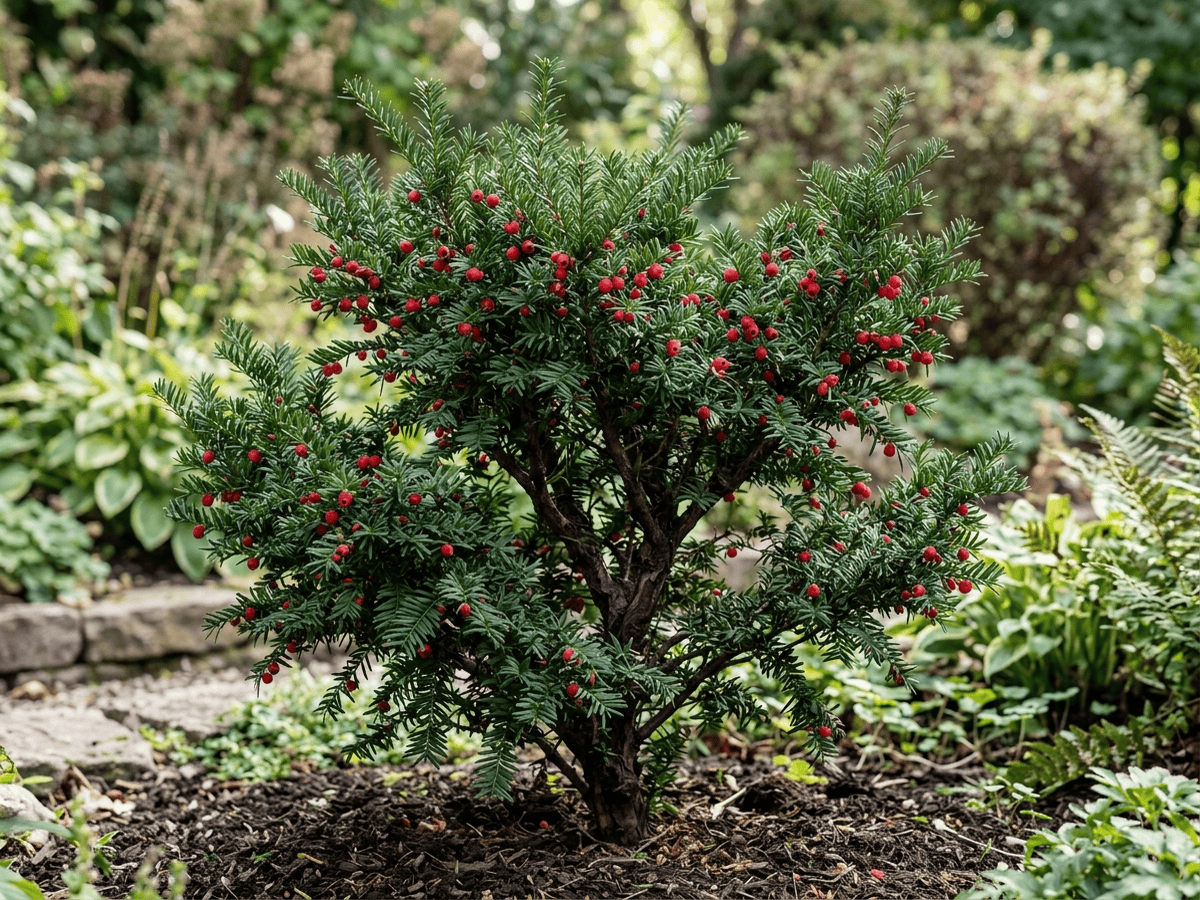
More Taxus plants
Plants with similar care
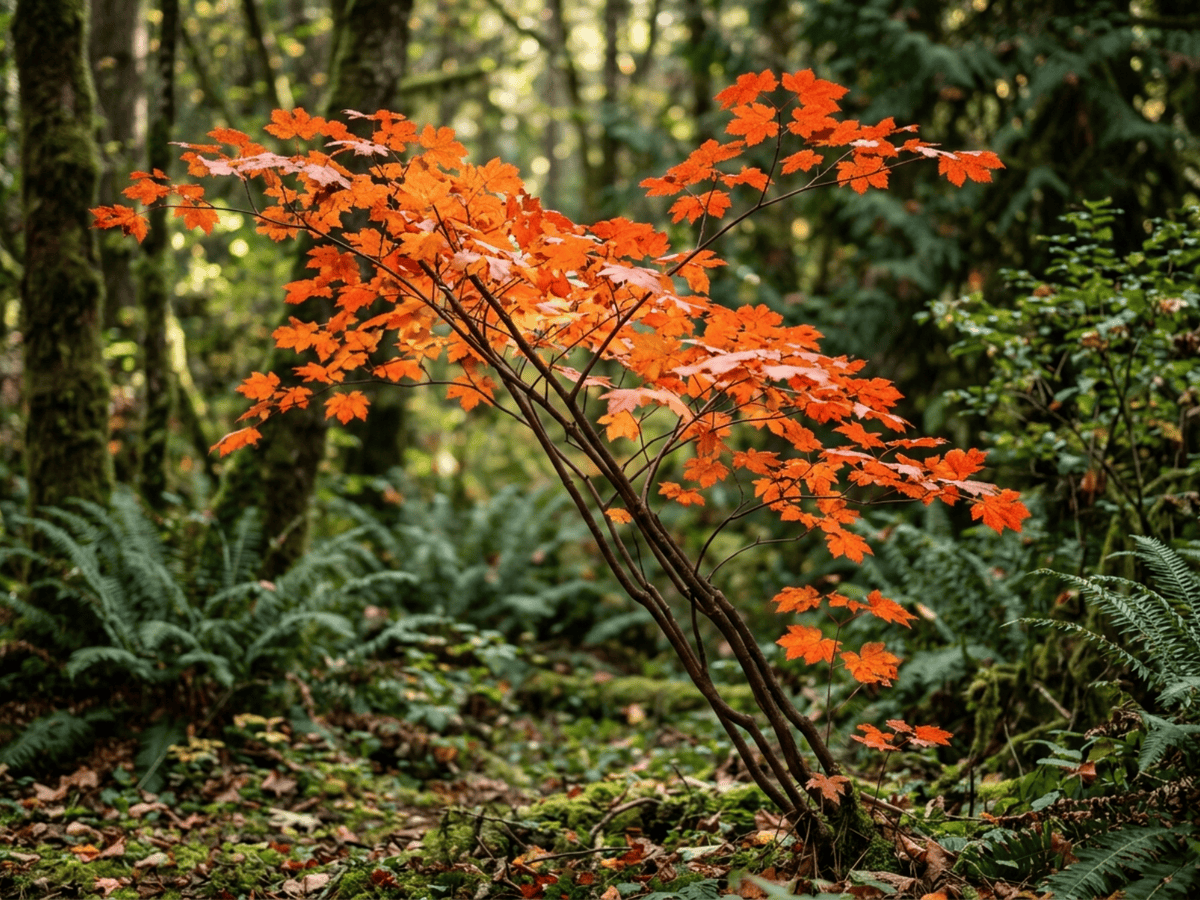 Vine MapleAcer circinatum
 Smooth ShadbushAmelanchier laevis
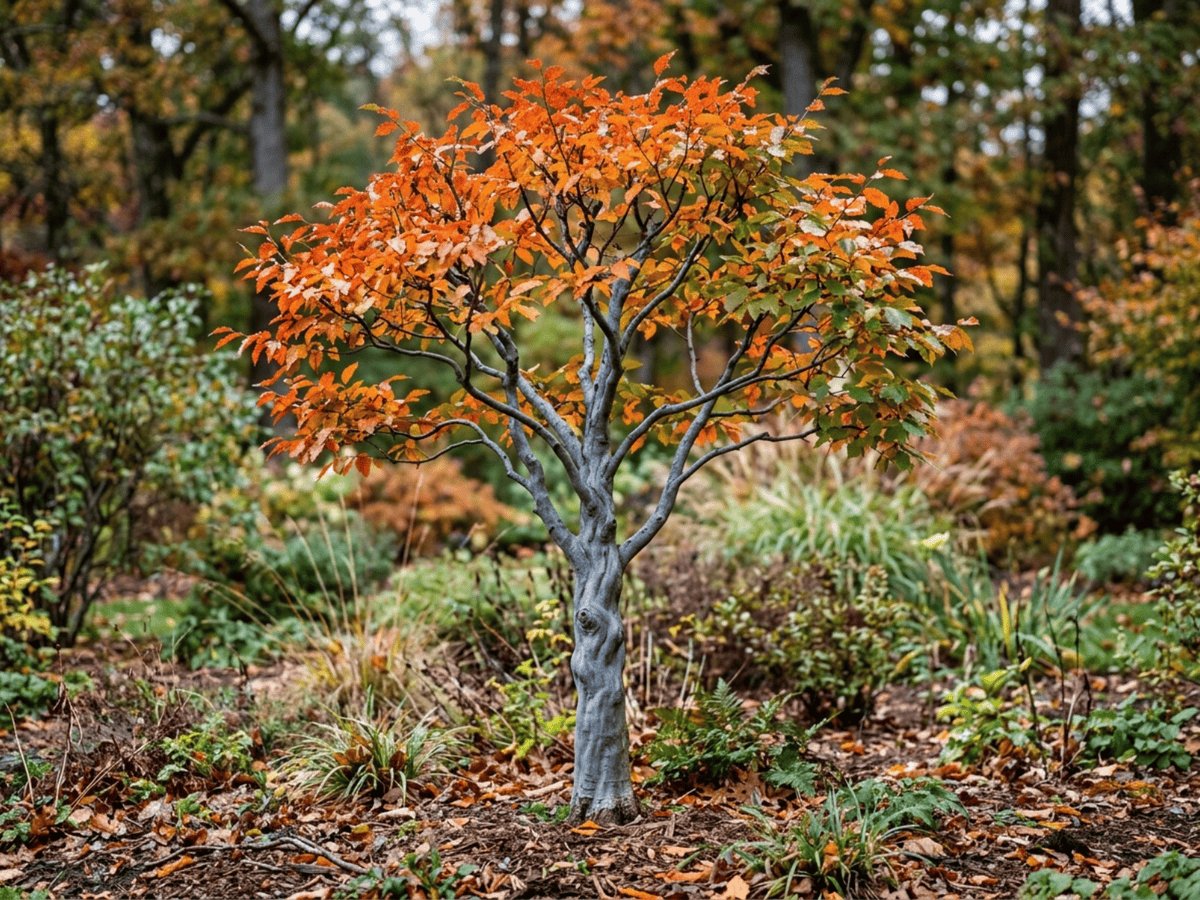 American HornbeamCarpinus caroliniana
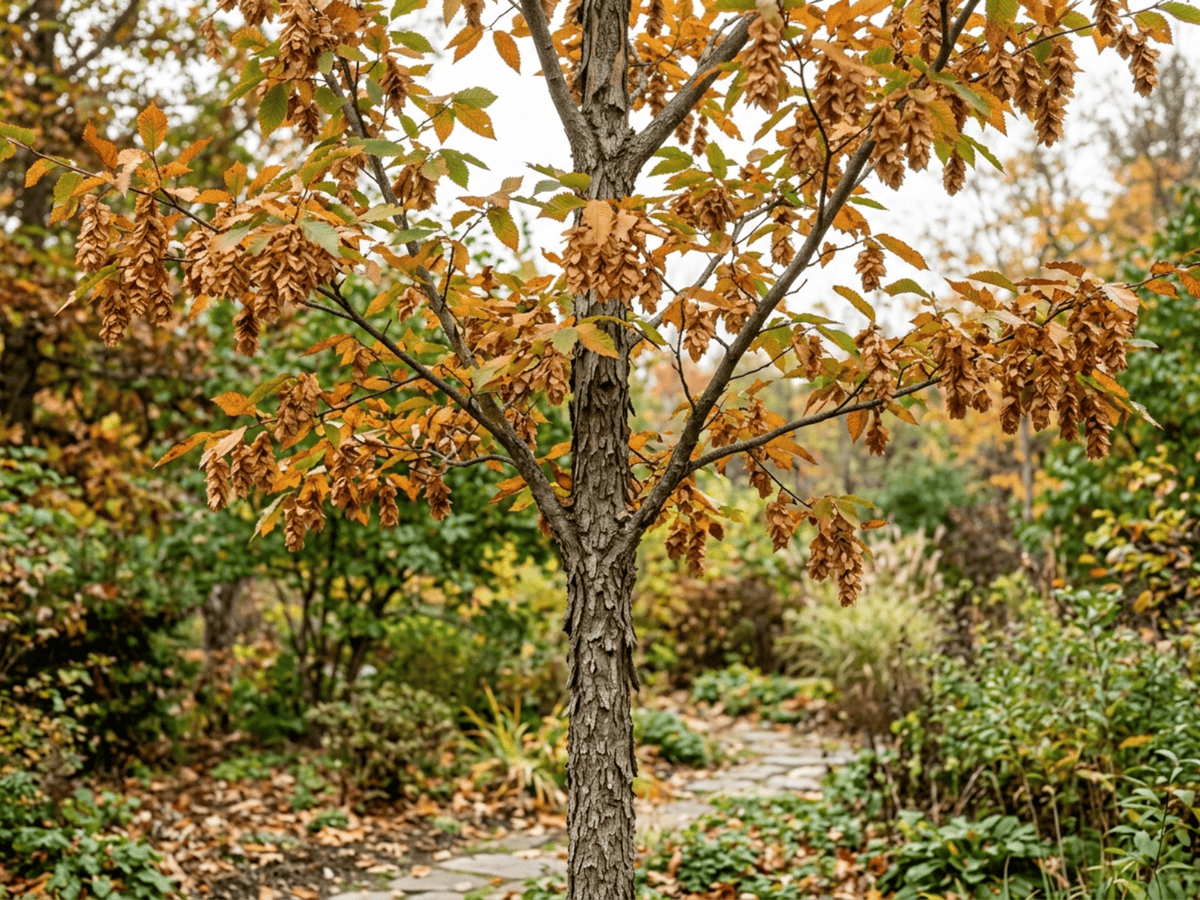 American HophornbeamOstrya virginiana
Frequently asked questions
How often should I water Anglo-Japanese Yew?
In summer, water about every 7 days; in winter, about every 30 days. Adjust for heat, pot size and drainage.
How much light does Anglo-Japanese Yew need?
Part sun: 4–6 hrs direct. Watch the leaves — scorching or stretching means the light needs adjusting.
Is Anglo-Japanese Yew toxic to cats or dogs?
Pets Toxic (Dogs Toxic · Cats Toxic) Educational information, not medical or veterinary advice. If exposure is suspected, contact a doctor or veterinarian.
Is Anglo-Japanese Yew easy to grow?
Yes — it is considered an easy, beginner-friendly plant.
YardMate
Identify any plant in seconds
Snap a photo — YardMate names the plant, diagnoses problems, and reminds you when to water.
Download on the App Store