 YardMate

Tecoma alata
Tecoma alata
Easy · Beginner friendlyAbout Tecoma alata
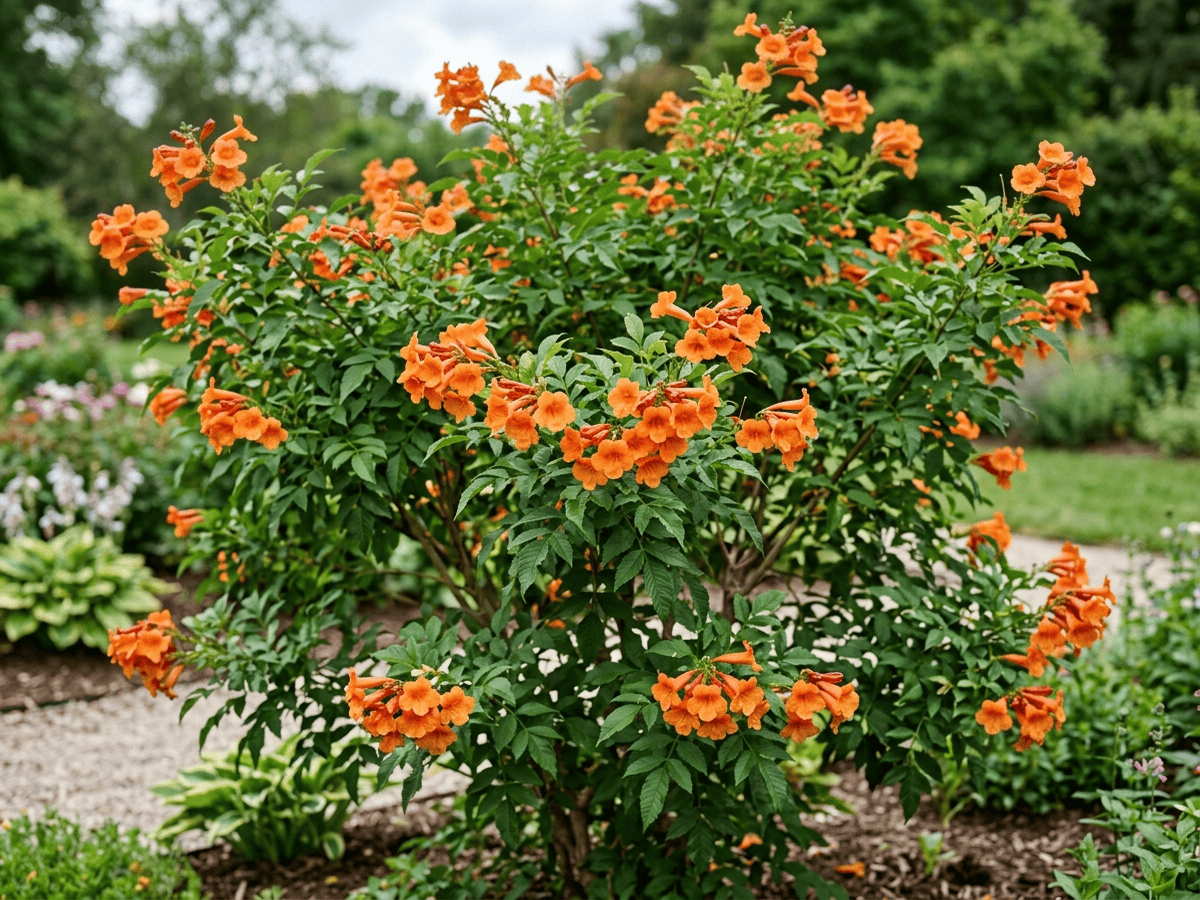
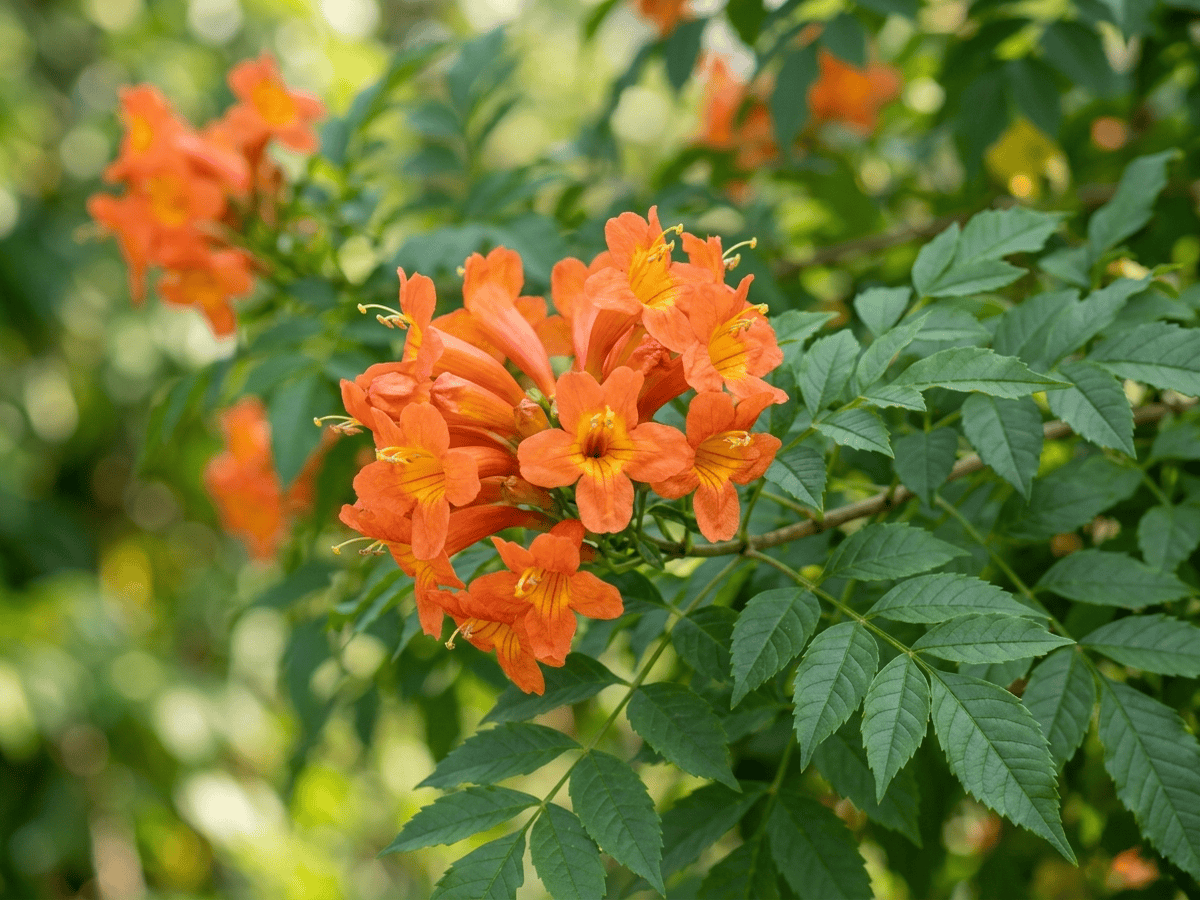
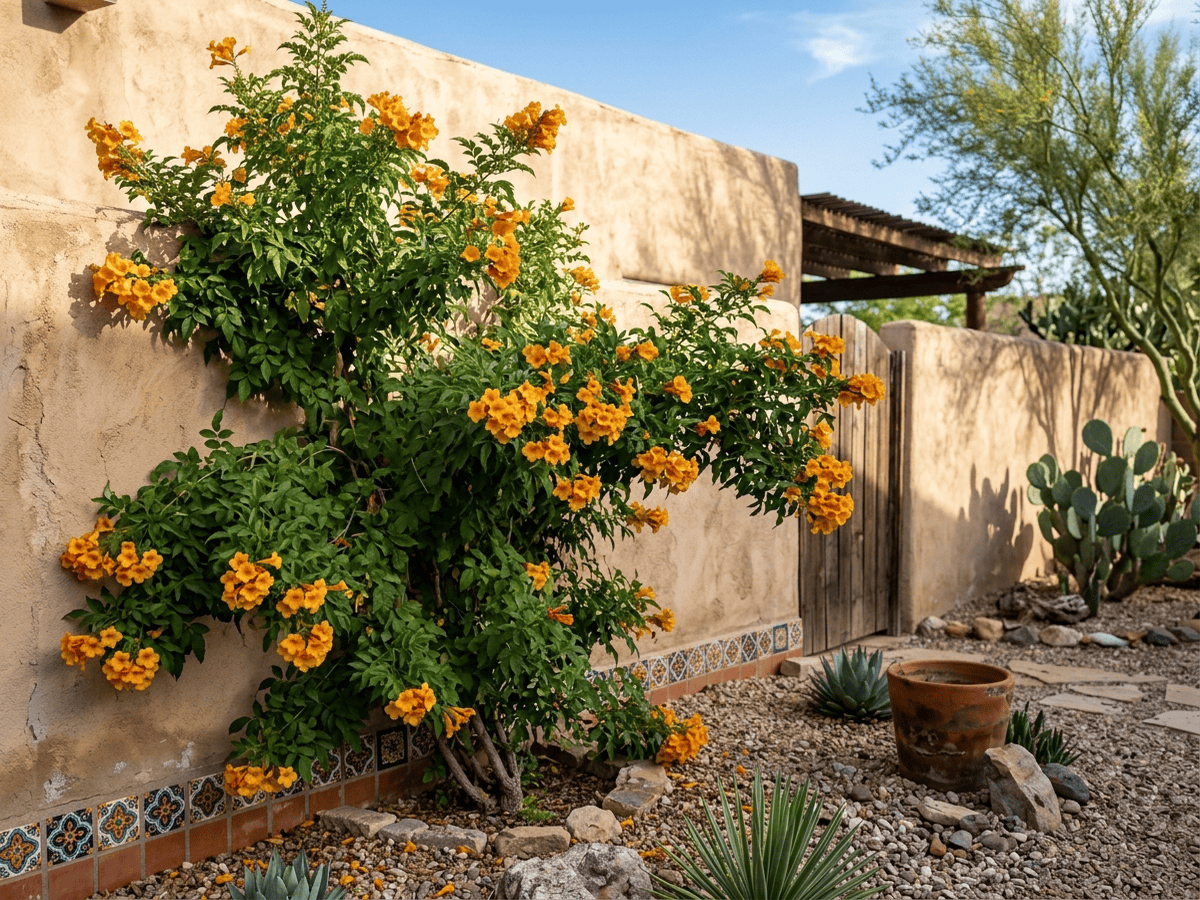
Orange Bells, also called Orange Esperanza, is a vibrant flowering shrub native to the Andes of South America that has become a beloved heat-loving landscape plant across the American Southwest. Growing 6 to 10 feet tall, it bears glossy compound leaves and showers of brilliant orange trumpet-shaped flowers from spring through fall. Tough, fast-growing, and hummingbird-magnetizing, it is a staple of Phoenix, Tucson, and southern California landscapes.
- Drought-tolerant
- Heat-tolerant
- Fast-growing
- Long-blooming
How to care for Tecoma alata
Watering
- Springevery 7 days
- Summerevery 5 days
- Fallevery 10 days
- Winterevery 21 days
Soil · Well-draining
- Top dressingPine bark mulch10%
- Main mixPotting soil + perlite 2:170%
- DrainageLECA / gravel20%
Never skip the drainage layer — standing water is the top cause of root rot.
FERTILIZER
Balanced Feed 14-14-14
An even feed covers all three needs at once, keeping leaves, roots and blooms moving together with nothing pushed out of balance.
- Nitrogen · Leaves
- Phosphorus · Roots + Blooms
- Potassium · Strength
- Springevery 60 days
- Summerevery 45 days
At a Glance
- NativeSouth America
- Height8–15 ft (2.4–4.6 m)
- Spread6–10 ft (1.8–3 m)
- Flower colorOrange, Yellow, Red
- Foliage colorGreen
- SoilSandy, Well-drained
- LocationsYard
Bloom time
BLOOM CYCLE
Peak bloom
Mar–Nov
Orange trumpet-shaped flowers spring through fall
Fragrance
LIGHT FRAGRANCE
Flowers have a light, subtle scent.
Toxicity
Toxicity unknown
None reported
Unknown
EXPOSURE Unspecified plant material.
EFFECT Toxic effects are not specified.
NOTE Toxicity for humans is not well documented; use caution until verified.
Unknown
EXPOSURE Unspecified plant material.
EFFECT Toxic effects are not specified.
NOTE Toxicity for dogs is not well documented; use caution until verified.
Unknown
EXPOSURE Unspecified plant material.
EFFECT Toxic effects are not specified.
NOTE Toxicity for cats is not well documented; use caution until verified.
Educational information, not medical or veterinary advice. If exposure is suspected, contact a doctor or veterinarian.
DISTRIBUTION


- Native
- South America
History

Tecoma alata, sometimes called orange bells or orange jubilee, is a warm-climate shrub or small tree native to Bolivia, southern Peru, and northern Argentina, often in dry Andean canyons. Swiss botanist Augustin-Pyramus de Candolle described it in 1838. Its pendant clusters of tubular flowers flush in two-tone orange and yellow and attract hummingbirds throughout the growing season.
In the 1980s and 1990s American southwestern horticulturists, particularly at the University of Arizona and Desert Botanical Garden, began hybridizing T. alata with the yellow-flowered T. stans to produce vigorous shrubs marketed as Orange Jubilee, Crimson Flare, and Bells of Fire. These crosses are now dominant landscape shrubs in Phoenix, Tucson, and southern California urban design, offering reliable summer color and drought tolerance.
Native to the Andes of Bolivia and Argentina, Orange Bells was introduced to Southwest American gardens in the late 20th century. Modern hybrids with the native yellow-flowered Tecoma stans have produced the popular Esperanza series in many warm colors.
Symbolism & meaning
What It Symbolizes
Tecoma alata carries bright hope under the Spanish name esperanza, its fiery yellow-orange trumpets blooming through the long Southwest summer. Desert sunshine pours from each cluster, defying heat that silences other flowers. Its meaning is exactly what its common name suggests — hope rendered as bloom, a shrub offering steady optimism in bright color through the hardest months of the desert year.
- Bright hope — name 'esperanza' means hope in Spanish
- Desert sunshine — fiery blooms through long Southwest summer
Where the Name Comes From
'Tecoma' is from a Mexican Indigenous name; 'alata' means winged, referring to the seed pods.
Uses & Fun Facts
- Yellow-orange trumpets attract hummingbirds and large butterflies
- Heat-tough flowering shrub forms informal screens
- Continuous tropical bloom for warm dry climate gardens
Related plants
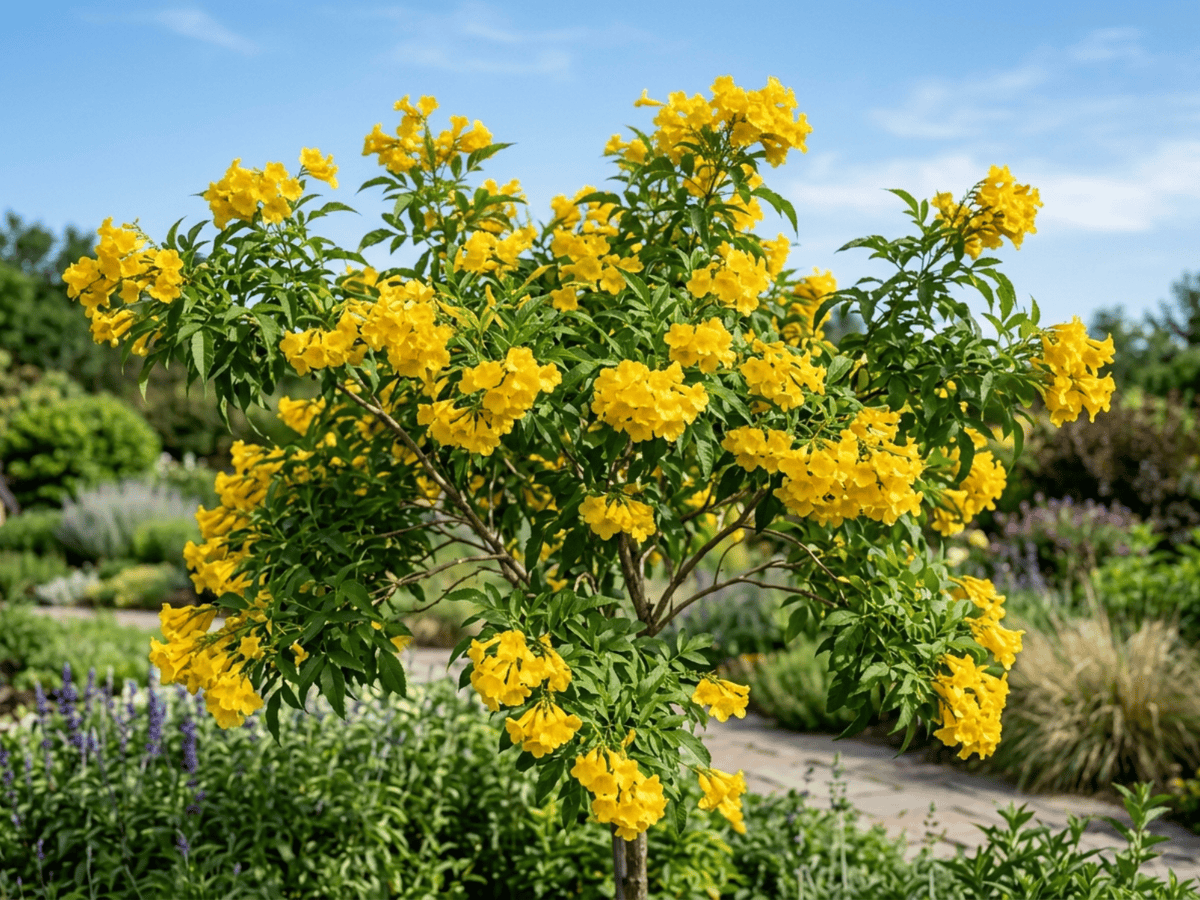
More Tecoma plants
Plants with similar care
 Chinese AbeliaAbelia chinensis
 Fragrant AbeliaAbelia mosanensis
 Large-Flowered AbeliaAbelia uniflora
 Glossy AbeliaAbelia x grandiflora
Frequently asked questions
How often should I water Tecoma alata?
In summer, water about every 5 days; in winter, about every 21 days. Adjust for heat, pot size and drainage.
How much light does Tecoma alata need?
Full sun: 6+ hrs direct. Watch the leaves — scorching or stretching means the light needs adjusting.
Is Tecoma alata toxic to cats or dogs?
Pets Unknown (Dogs Unknown · Cats Unknown) Educational information, not medical or veterinary advice. If exposure is suspected, contact a doctor or veterinarian.
Is Tecoma alata easy to grow?
Yes — it is considered an easy, beginner-friendly plant.
When does Tecoma alata bloom?
It typically blooms Mar–Nov in the Northern Hemisphere.
YardMate
Identify any plant in seconds
Snap a photo — YardMate names the plant, diagnoses problems, and reminds you when to water.
Download on the App Store