 YardMate

Yellow Trumpet Flower
Tecoma stans
Easy · Beginner friendlyAbout Yellow Trumpet Flower
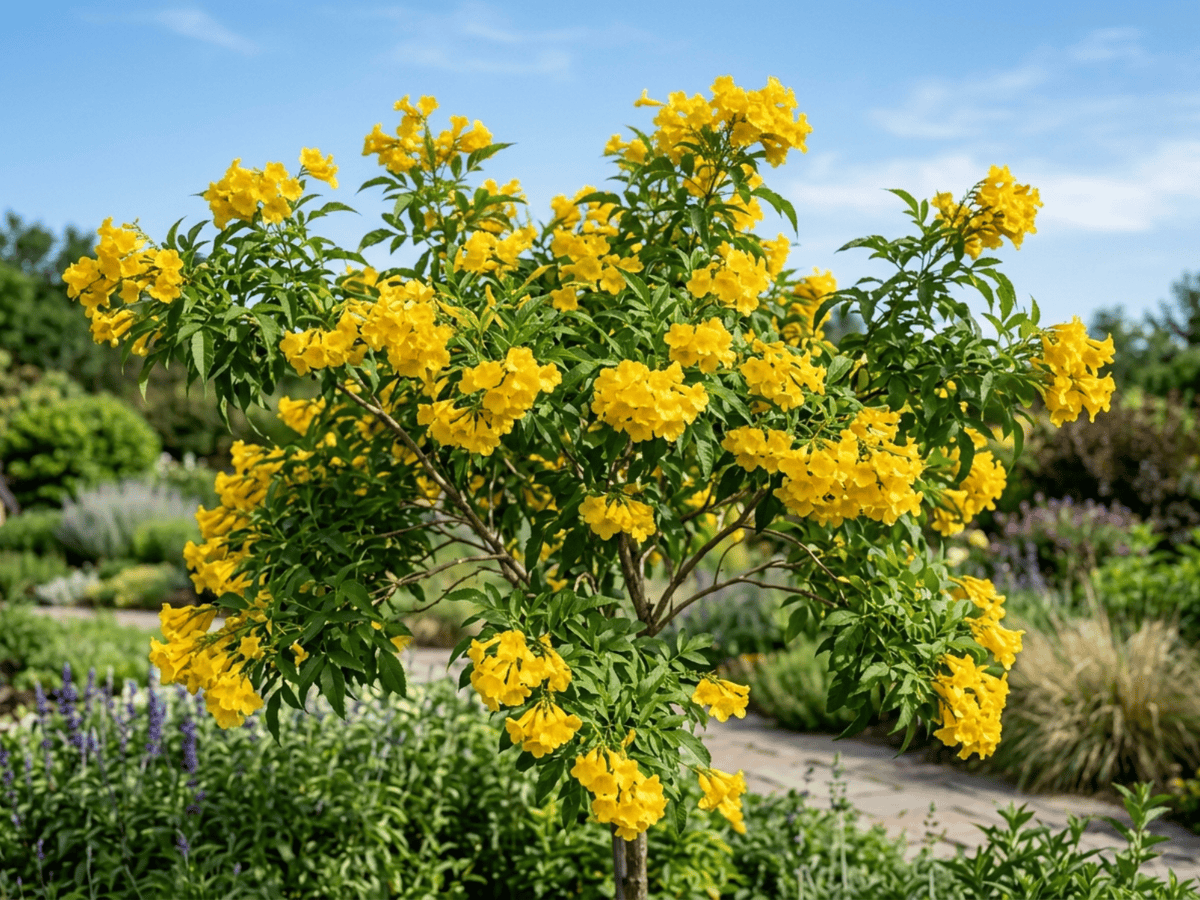
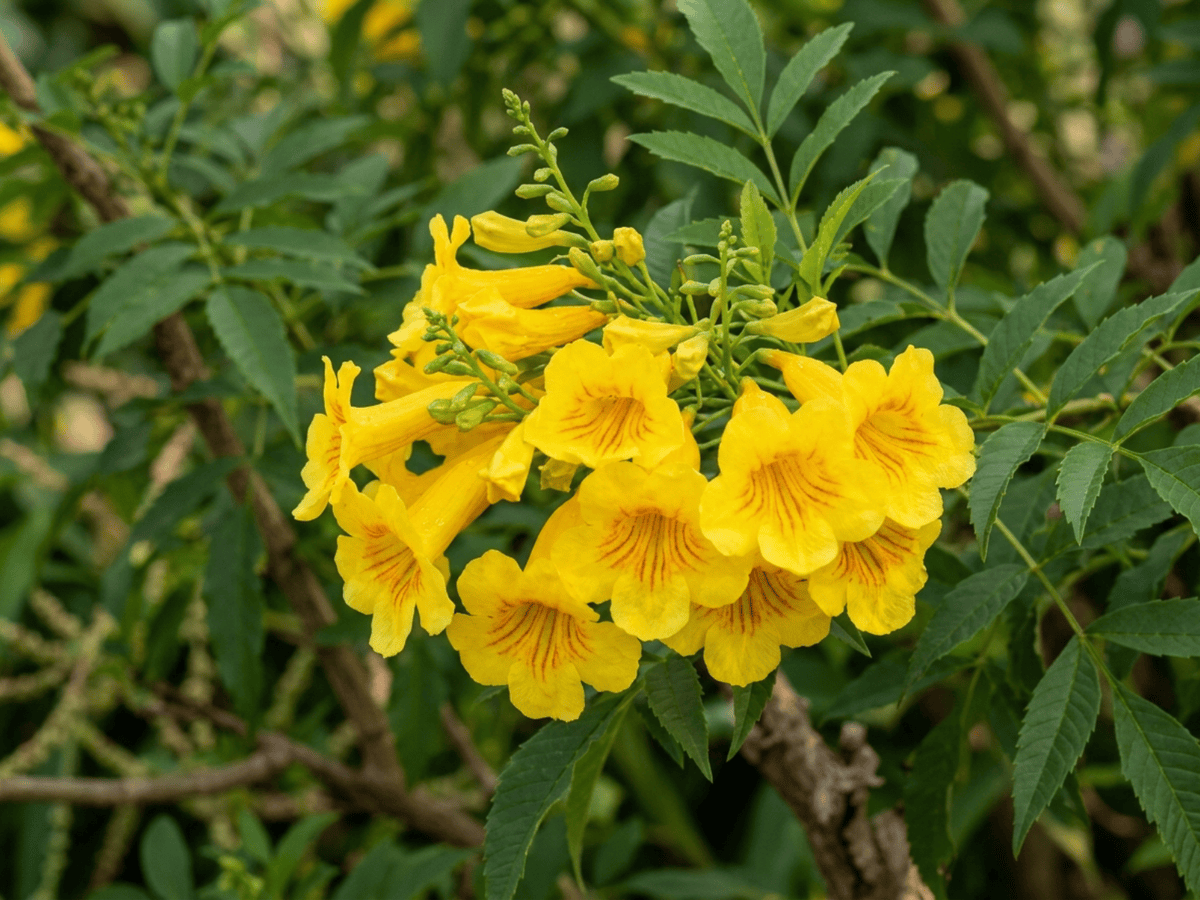
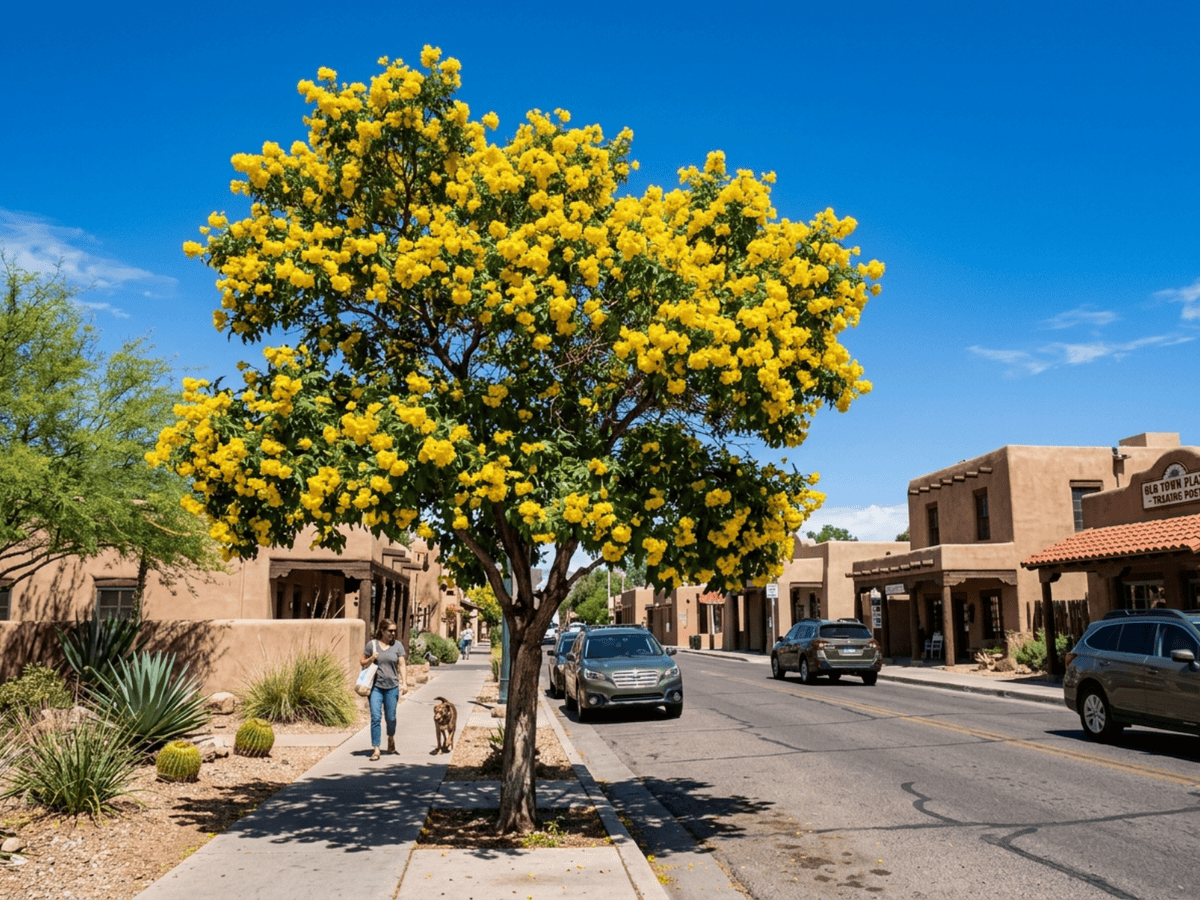
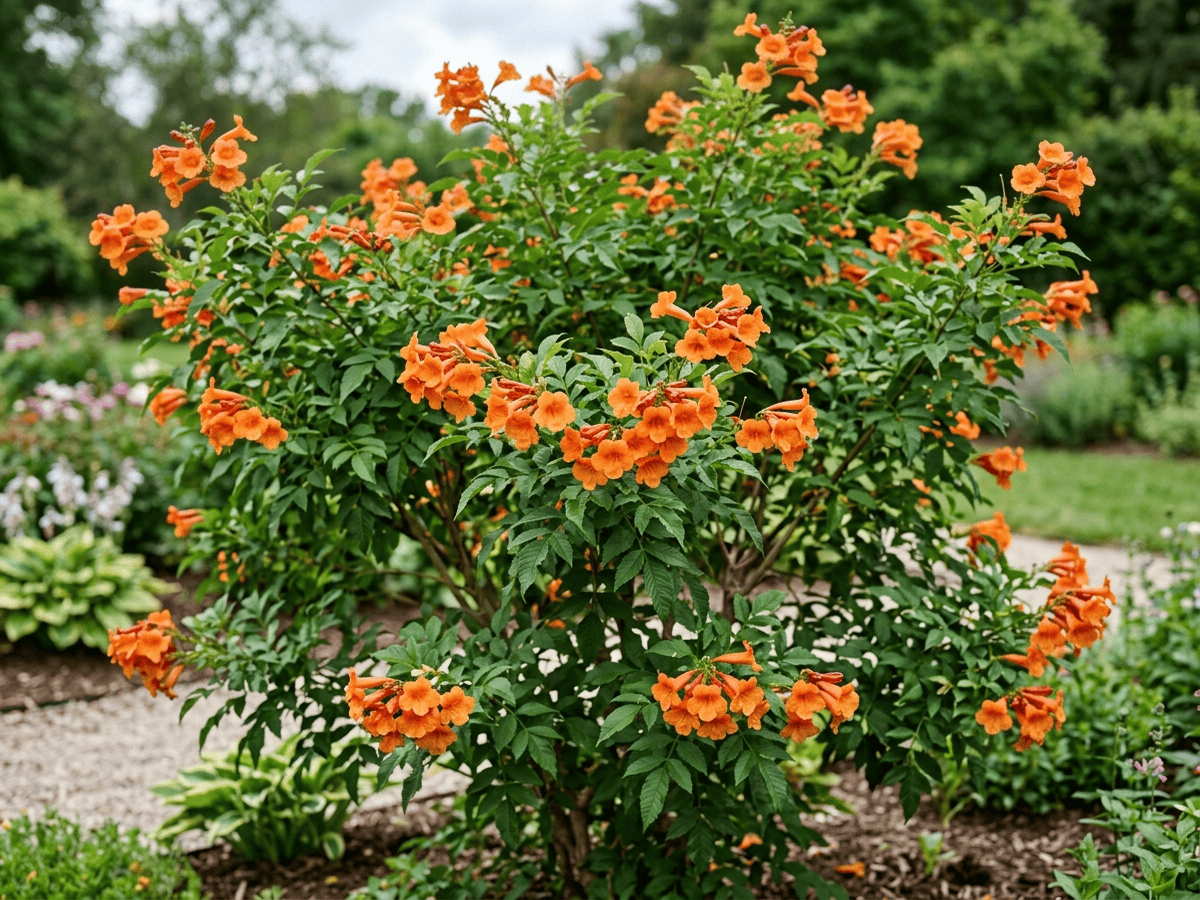
Tecoma stans, yellow bells or esperanza, is a fast-growing shrub or small tree native from the southern United States through Mexico and Central America into tropical South America. It carries airy pinnate leaves and clusters of bright yellow tubular flowers from late spring through fall, often nearly year-round in frost-free regions. Heat, drought, and poor soil barely slow it once established, making it a workhorse of arid and semi-arid landscapes. Hummingbirds and butterflies visit the nectar-rich flowers. Traditional uses in Latin America include leaf and bark preparations associated with blood-sugar management, a topic that has drawn pharmacological research, but the plant's landscape value is color and resilience. It is the official flower of the U.S. Virgin Islands and Oahu.
- Drought-tolerant
- Heat-tolerant
- Fast-growing
- Pollinator-friendly
How to care for Yellow Trumpet Flower
Watering
- Springevery 5 days
- Summerevery 4 days
- Fallevery 10 days
- Winterevery 30 days
Soil · Well-draining
- Top dressingPine bark mulch10%
- Main mixPotting soil + perlite 2:170%
- DrainageLECA / gravel20%
Never skip the drainage layer — standing water is the top cause of root rot.
FERTILIZER
Balanced Feed 14-14-14
An even feed covers all three needs at once, keeping leaves, roots and blooms moving together with nothing pushed out of balance.
- Nitrogen · Leaves
- Phosphorus · Roots + Blooms
- Potassium · Strength
- Springevery 45 days
- Summerevery 45 days
At a Glance
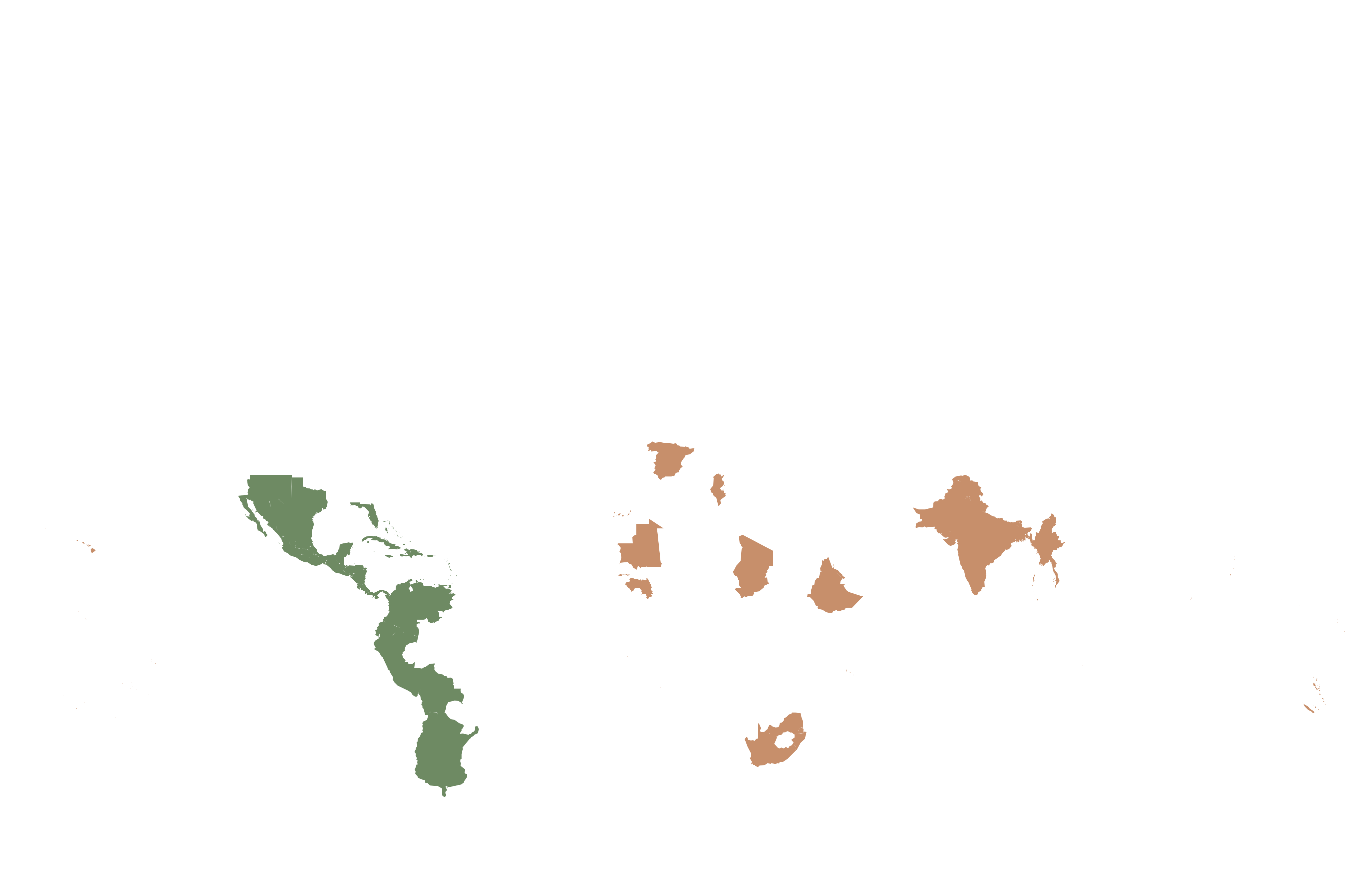
- NativeNorth America, South America
- Height10–25 ft (3–7.6 m)
- Spread8–20 ft (2.4–6.1 m)
- Flower colorYellow, Orange
- Foliage colorGreen
- SoilLoamy, Well-drained, Sandy
- LocationsYard
Bloom time
BLOOM CYCLE
Peak bloom
Mar–Nov
Bright yellow bell clusters from spring through fall; deadhead to prolong bloom
Fragrance
LIGHT FRAGRANCE
The flowers have a light sweet scent.
Toxicity
Humans Slight · Pets Slight
tecomanine (alkaloid) and iridoids
Slight
- Seed
- Leaf
- Ingestion
EXPOSURE Eating seeds and leaves.
EFFECT Seeds and leaves contain tecomanine alkaloid and seeds not generally consumed.
NOTE Documented concern for humans: Seeds and leaves contain tecomanine alkaloid and seeds not generally consumed.
Slight
- Seed
- Leaf
- Ingestion
EXPOSURE Eating seeds and leaves.
EFFECT Mild GI upset possible.
NOTE Not listed by ASPCA. Low to moderate concern.
Slight
- Seed
- Leaf
- Ingestion
EXPOSURE Eating seeds and leaves.
EFFECT Mild GI upset possible.
NOTE Not listed by ASPCA. Low to moderate concern.
Educational information, not medical or veterinary advice. If exposure is suspected, contact a doctor or veterinarian.
DISTRIBUTION

- Native
- Introduced
- North America
- South America
History

Tecoma stans, yellow bells or esperanza, is native from the southwestern United States through Mexico and Central America into tropical and subtropical South America. Its trumpet-shaped yellow flowers make it a signature heat-loving shrub for dry landscapes, especially in Arizona, New Mexico, Texas, and northern Mexico. The Spanish common name esperanza means hope, a fitting label for a plant that flowers through heat and drought.
Indigenous and traditional medicine systems used the root bark and leaves for diuretic and anti-diabetic remedies, and modern pharmacological studies have investigated hypoglycemic compounds in the leaves. In cultivation, compact forms such as 'Gold Star' made it a low-maintenance xeric garden staple, while in some disturbed tropical areas it has escaped and behaves as a weed. It is also the official flower of the United States Virgin Islands.
Symbolism & meaning
What It Symbolizes
Yellow Trumpet Flower is hope made golden — known across Latin America as esperanza, the very Spanish word for hope, for it bright optimistic blooms that flag the dry country with cheer. It is also resilience, thriving through extreme heat and drought where lesser plants collapse. It is the desert shrub that flowers like an answer when you most needed one, in the language of color.
- Hope — Named esperanza (hope) in Spanish for its bright, optimistic golden blooms
- Resilience — Thrives in extreme heat and drought, symbolizing endurance through adversity
Where the Name Comes From
The name Yellow Trumpet Flower describes its trumpet-shaped flowers. Tecoma is an abbreviation of the Aztec Nahuatl name 'tecomaxochitl.' Stans means 'upright' in Latin, describing the shrub's growth habit.
Uses & Fun Facts
- Yellow trumpet bells feed hummingbirds and large butterflies
- Roots used in traditional Latin American antidiabetic remedies
- Fast-growing tall flowering screen for warm Southwest yards
Related plants
More Tecoma plants
Plants with similar care
 Chinese AbeliaAbelia chinensis
 Fragrant AbeliaAbelia mosanensis
 Large-Flowered AbeliaAbelia uniflora
 Glossy AbeliaAbelia x grandiflora
Frequently asked questions
How often should I water Yellow Trumpet Flower?
In summer, water about every 4 days; in winter, about every 30 days. Adjust for heat, pot size and drainage.
How much light does Yellow Trumpet Flower need?
Full sun: 6+ hrs direct. Watch the leaves — scorching or stretching means the light needs adjusting.
Is Yellow Trumpet Flower toxic to cats or dogs?
Pets Slight (Dogs Slight · Cats Slight) Educational information, not medical or veterinary advice. If exposure is suspected, contact a doctor or veterinarian.
Is Yellow Trumpet Flower easy to grow?
Yes — it is considered an easy, beginner-friendly plant.
When does Yellow Trumpet Flower bloom?
It typically blooms Mar–Nov in the Northern Hemisphere.
YardMate
Identify any plant in seconds
Snap a photo — YardMate names the plant, diagnoses problems, and reminds you when to water.
Download on the App Store