 YardMate

Lavender Mist Meadowrue
Thalictrum rochebrunianum
Easy · Beginner friendlyAbout Lavender Mist Meadowrue
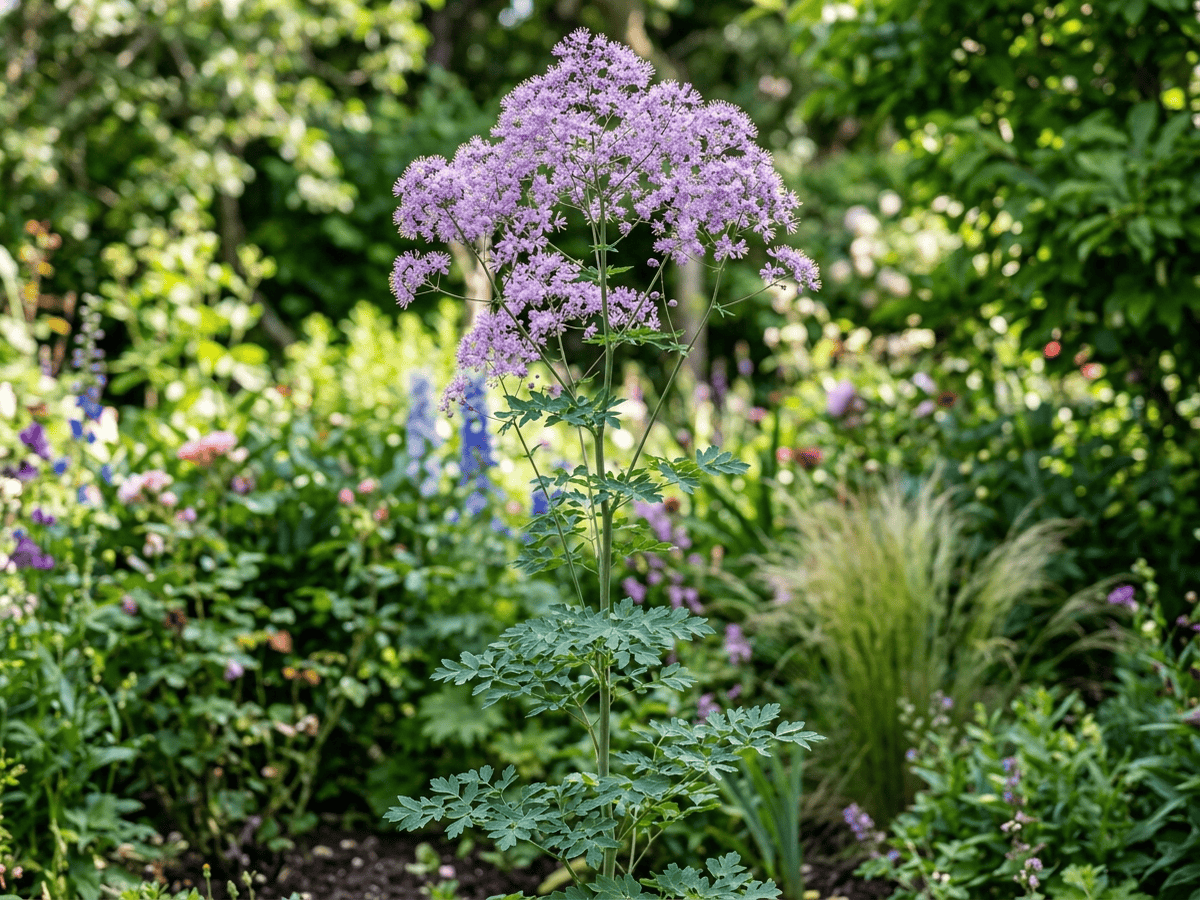
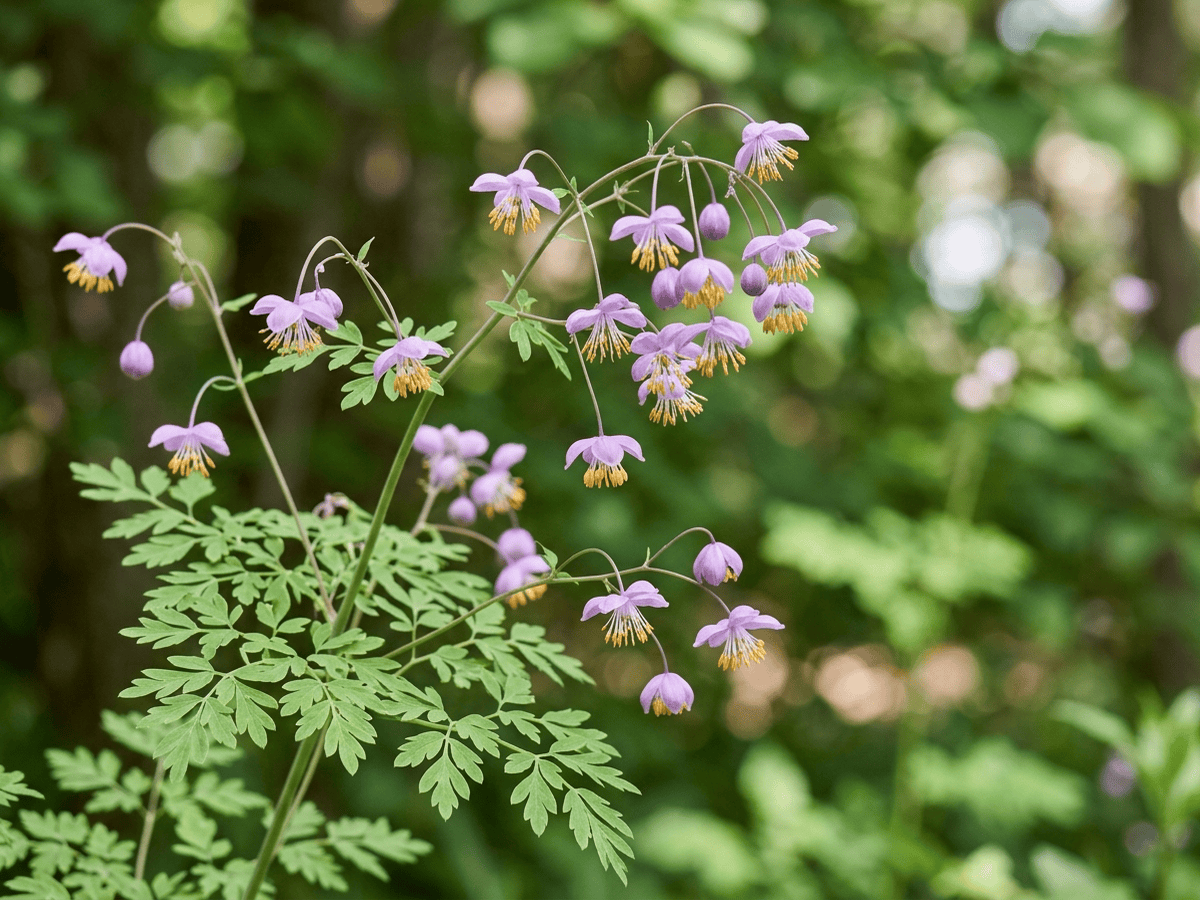
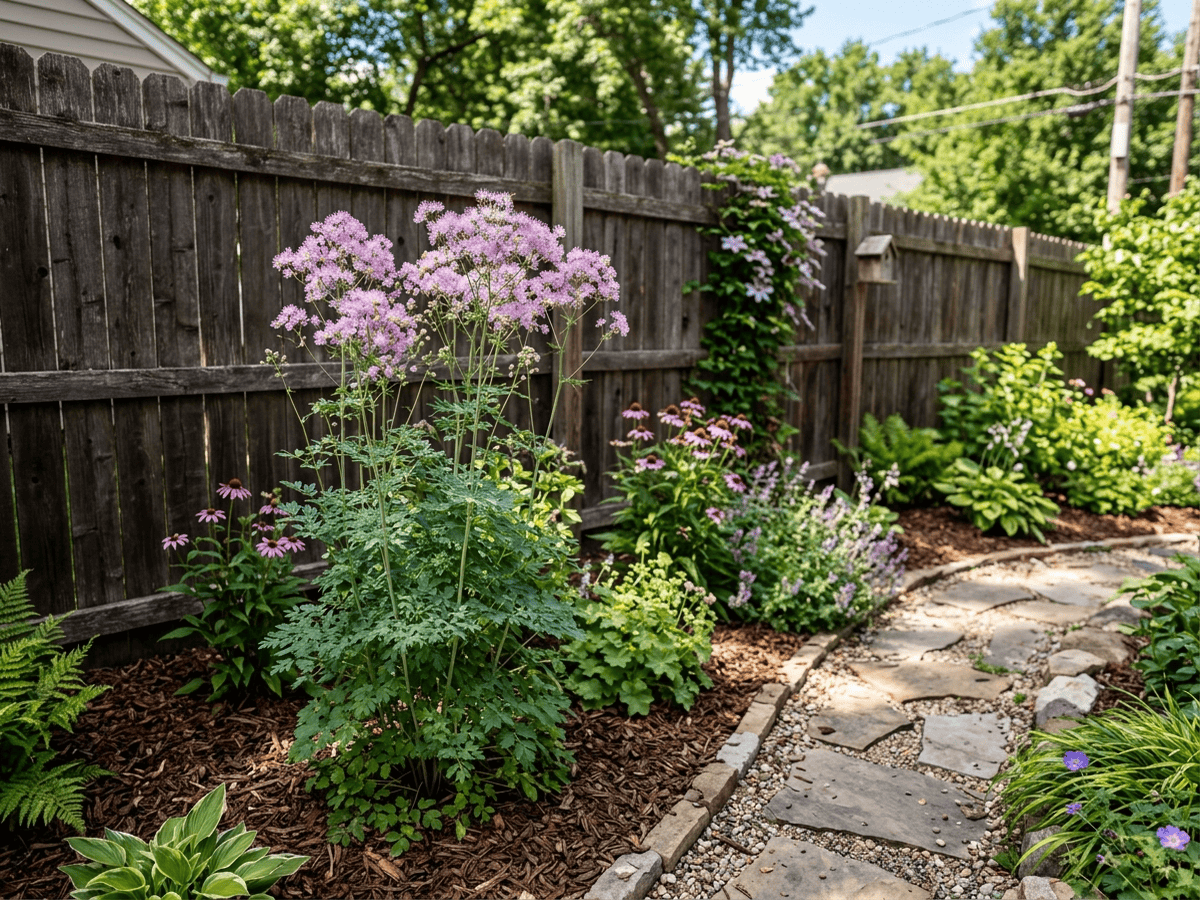
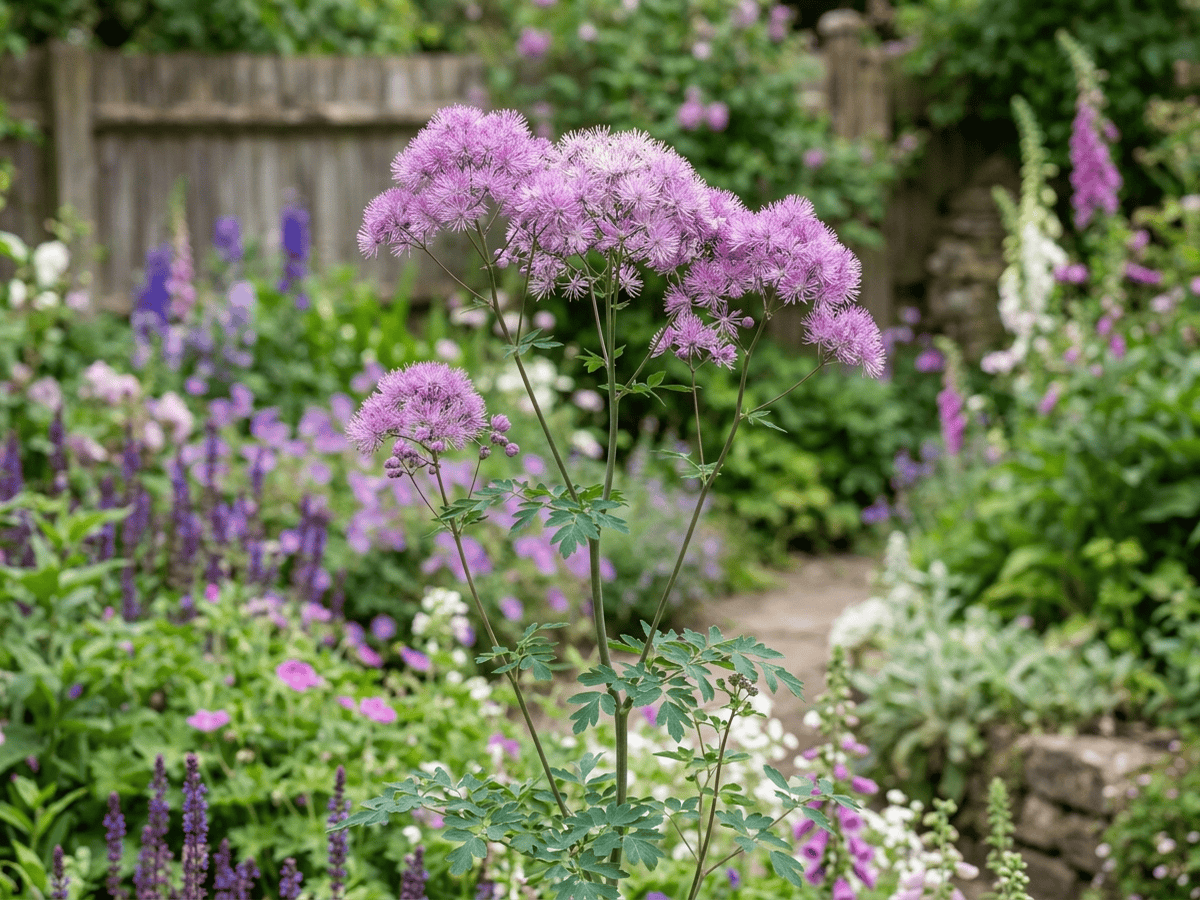
Lavender Mist Meadow-rue is a Japanese native perennial celebrated for its 5 to 7 foot tall airy stems topped with clouds of small lavender flowers with bright yellow stamens in midsummer. The blue-green columbine-like foliage is equally attractive, and the wiry stems rarely need staking despite their height. A back-of-border classic in American shade gardens and a 1994 Perennial Plant of the Year.
- Shade-tolerant
- Deer-resistant
- Architectural
- Pollinator-friendly
How to care for Lavender Mist Meadowrue
Watering
- Springevery 5 days
- Summerevery 3 days
- Fallevery 7 days
- Winterevery 14 days
Soil · Well-draining
- Top dressingPine bark mulch10%
- Main mixPotting soil + perlite 2:170%
- DrainageLECA / gravel20%
Never skip the drainage layer — standing water is the top cause of root rot.
FERTILIZER
Balanced Feed 14-14-14
An even feed covers all three needs at once, keeping leaves, roots and blooms moving together with nothing pushed out of balance.
- Nitrogen · Leaves
- Phosphorus · Roots + Blooms
- Potassium · Strength
- Springevery 45 days
- Summerevery 60 days
At a Glance
- NativeEast Asia
- Height5–8 ft (1.5–2.4 m)
- Spread2–3 ft (0.6–0.9 m)
- Flower colorPurple
- Foliage colorBlue-green, Green
- SoilLoamy, Moisture-retentive
- LocationsYard
Bloom time
BLOOM CYCLE
Peak bloom
Jul–Aug
Lavender flowers with yellow stamens July to August
Toxicity
Humans Slight · Pets Slight
protoanemonin and alkaloids
Slight
- All
- Contact
- Ingestion
EXPOSURE Touching any part of the plant. Eating any part of the plant.
EFFECT Skin irritation and mild GI upset.
NOTE Ranunculaceae; mildly irritating.
Slight
- All
- Ingestion
EXPOSURE Eating any part of the plant.
EFFECT Vomiting and drooling.
NOTE Ranunculaceae; mildly irritating.
Slight
- All
- Ingestion
EXPOSURE Eating any part of the plant.
EFFECT Vomiting and drooling.
NOTE Ranunculaceae; mildly irritating.
Educational information, not medical or veterinary advice. If exposure is suspected, contact a doctor or veterinarian.
DISTRIBUTION


- Native
- East Asia
History
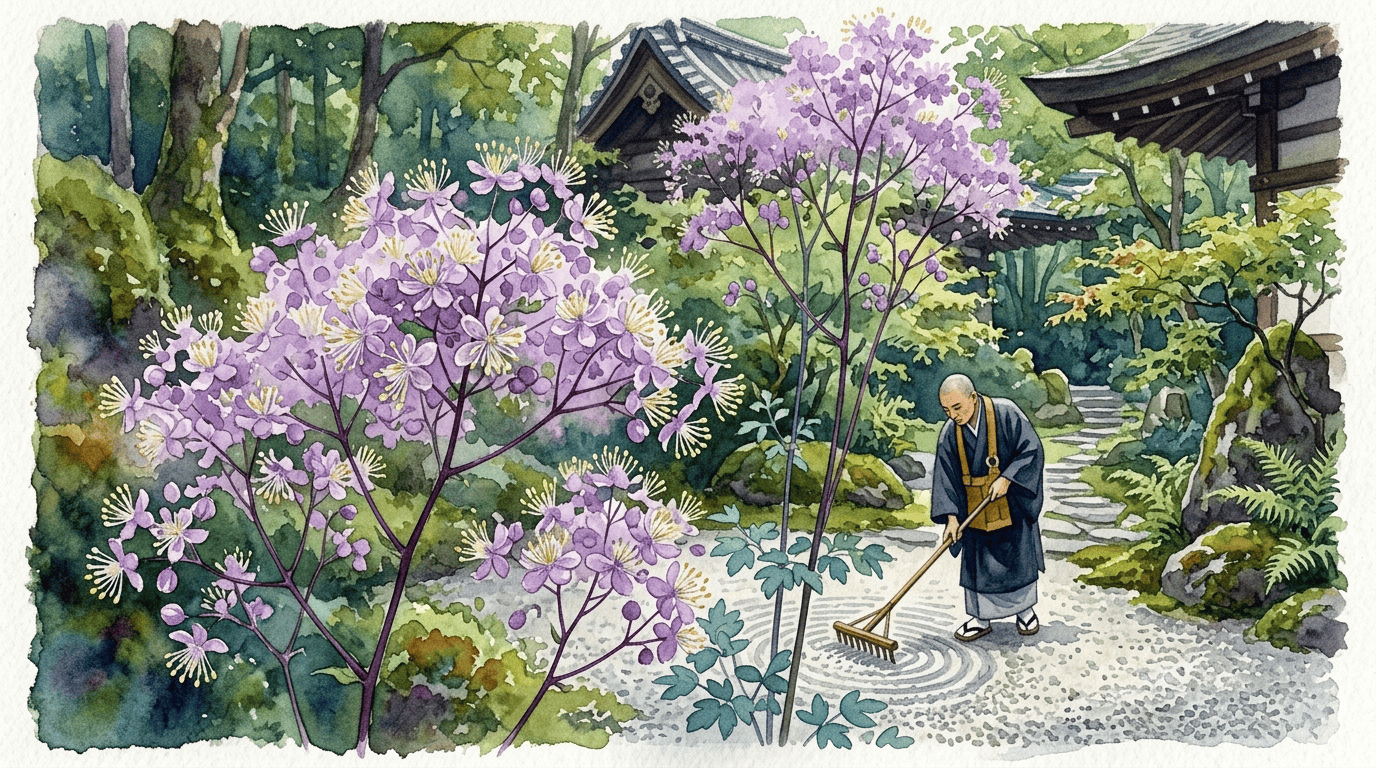
Thalictrum rochebrunianum grows in moist forest clearings and meadow edges of central and northern Japan. Franchet and Savatier described it in 1878 and named it for their colleague Alphonse Tremeau de Rochebrune of the Paris natural history museum. The plant was used ornamentally in Japanese temple and teahouse gardens before Western nurseries adopted it as a tall, airy perennial for shade and woodland edges.
Reaching 1.5 to 2 meters, it lifts small lavender flowers and cream stamens on slender, almost leafless upper stems, creating the floating effect behind the common name lavender mist. The cultivar 'Lavender Mist' remains standard, and related hybrids such as 'Splendide' extended the look. It became a favorite where gardeners wanted height without heaviness: a back-of-border plant that reads more like colored air than a wall.
Symbolism & meaning
What It Symbolizes
Lavender Mist Meadowrue evokes ethereal grace, clouds of small lavender flowers floating seven feet high on stems that barely seem to support them. Paired with effortless height, it self-supports without staking — a tall plant that carries itself with quiet confidence. It is the perennial of lifted softness, a presence that hangs in the garden air like a thought.
- Ethereal grace — clouds of flowers float 7 feet high
- Effortless height — self-supporting stems rarely need staking
Where the Name Comes From
The name Lavender Mist Meadowrue points to meadows. 'rochebrunianum' honors French botanist Alphonse Tremeau de Rochebrune (1834-1912).
Uses & Fun Facts
- Airy lavender flowers attract small bees and hoverflies
- Towering airy clouds of lavender flowers above blue-green foliage
- Tall sprays of small lavender blooms add airiness to bouquets
Related plants
More Thalictrum plants

Plants with similar care
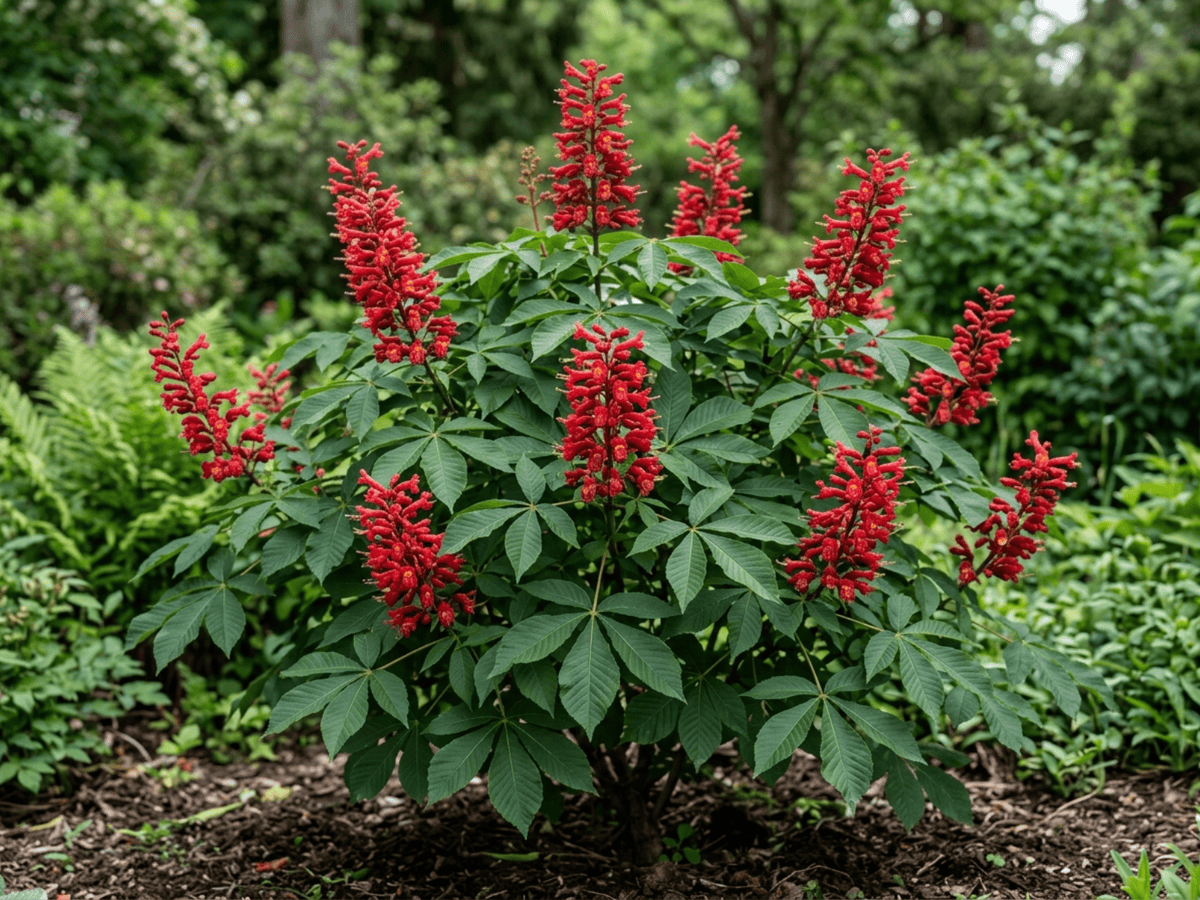 Red BuckeyeAesculus pavia
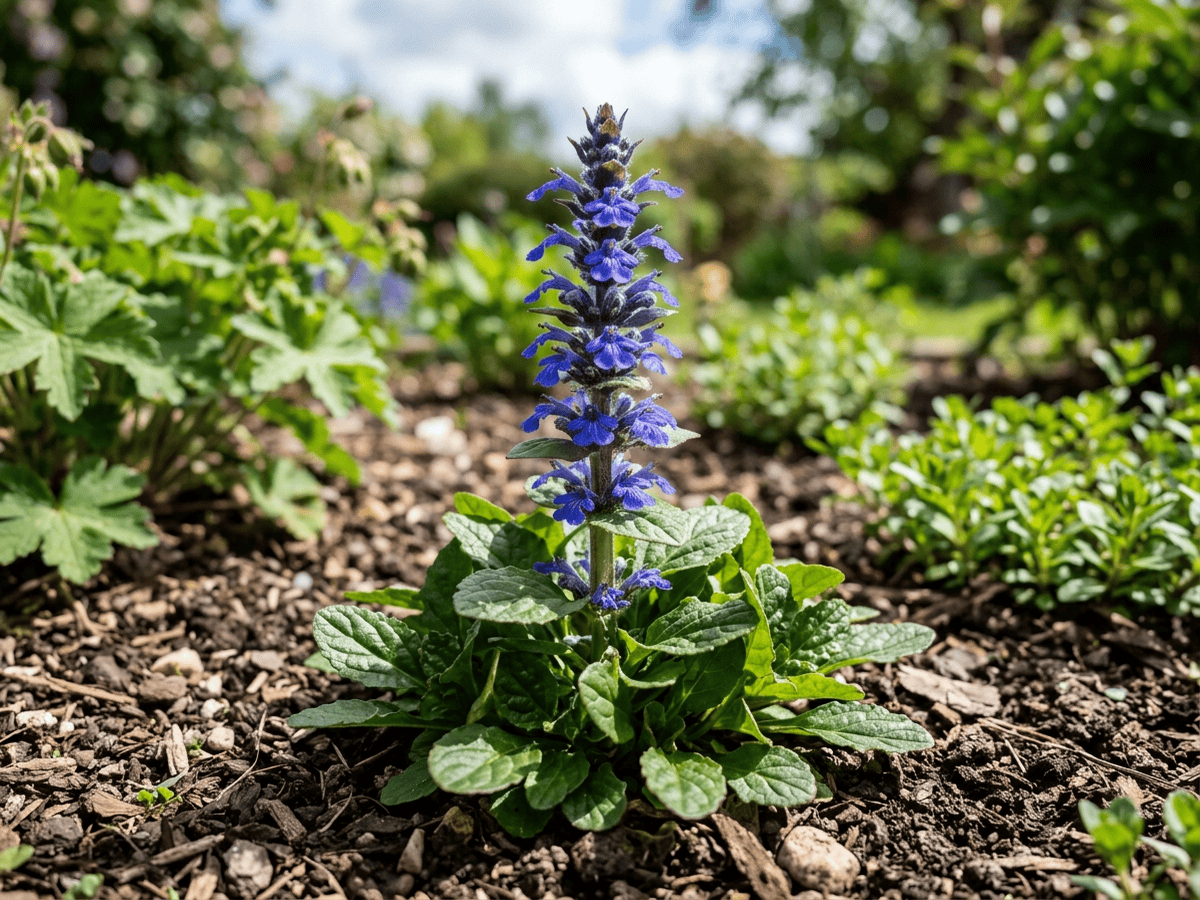 Blue BugleAjuga genevensis
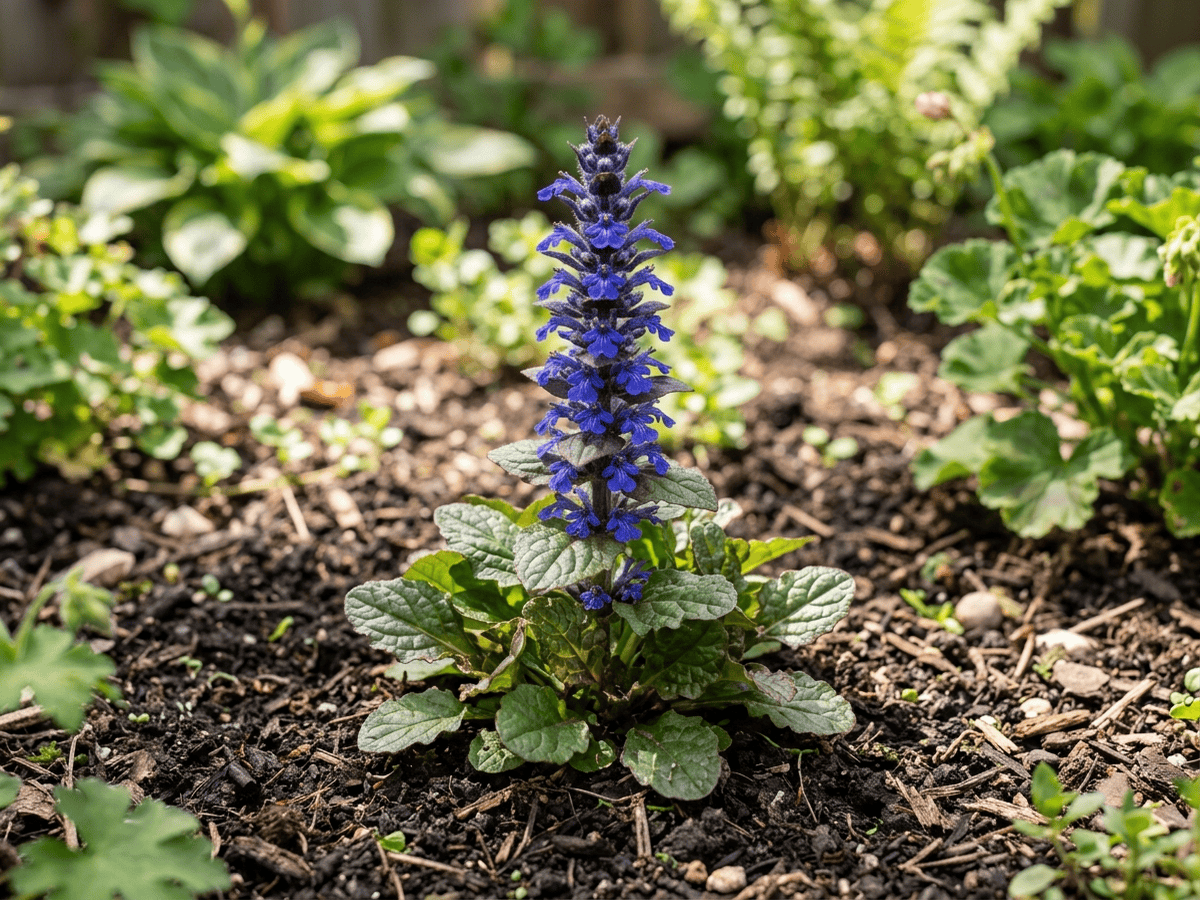 Pyramidal BugleAjuga pyramidalis
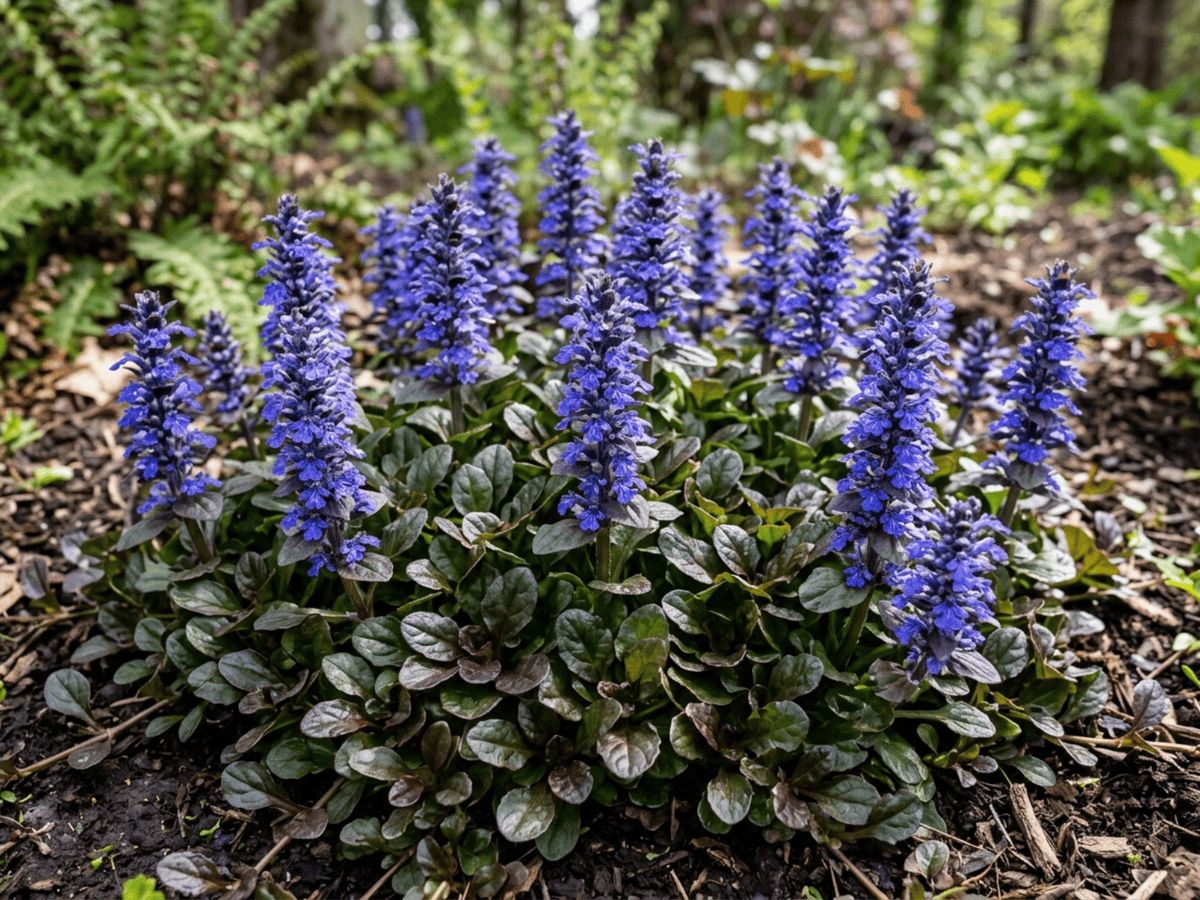 Carpet BugleAjuga reptans
Frequently asked questions
How often should I water Lavender Mist Meadowrue?
In summer, water about every 3 days; in winter, about every 14 days. Adjust for heat, pot size and drainage.
How much light does Lavender Mist Meadowrue need?
Part shade: 2–4 hrs direct. Watch the leaves — scorching or stretching means the light needs adjusting.
Is Lavender Mist Meadowrue toxic to cats or dogs?
Pets Slight (Dogs Slight · Cats Slight) Educational information, not medical or veterinary advice. If exposure is suspected, contact a doctor or veterinarian.
Is Lavender Mist Meadowrue easy to grow?
Yes — it is considered an easy, beginner-friendly plant.
When does Lavender Mist Meadowrue bloom?
It typically blooms Jul–Aug in the Northern Hemisphere.
YardMate
Identify any plant in seconds
Snap a photo — YardMate names the plant, diagnoses problems, and reminds you when to water.
Download on the App Store