 YardMate


Great Stinging Nettle
Urtica dioica
Easy · Beginner friendlyAbout Great Stinging Nettle
Stinging Nettle is a Eurasian perennial herbaceous weed naturalized throughout the US, infamous for the stinging hairs on stems and leaves that inject formic acid and histamine on contact. Growing 3 to 7 feet tall from spreading rhizomes with opposite serrated leaves, it produces drooping green flower clusters in summer. An aggressive weed of moist woodland edges, fencerows, and disturbed ground but also a valued wild food and traditional fiber source.
- Edible
How to care for Great Stinging Nettle
Watering
- Springevery 10 days
- Summerevery 7 days
- Fallevery 14 days
- Winterevery 30 days
Soil · Rich & well-draining
- Top dressingCompost10%
- Main mixPotting soil + compost 3:180%
- DrainageGravel10%
Top up the compost layer each season.
FERTILIZER
This plant needs little to no feeding.
At a Glance
- NativeNorth America
- Height3–6 ft (0.9–1.8 m)
- Spread2–4 ft (0.6–1.2 m)
- Flower colorGreen, White
- Foliage colorGreen
- SoilLoamy, Moisture-retentive, Rich
- LocationsYard
Bloom time
BLOOM CYCLE
Peak bloom
Jun–Aug
Drooping green flower clusters summer
Toxicity
Humans Slight · Pets Slight
histamine, serotonin, acetylcholine, and formic acid
Slight
- Leaf
- Stem
- Contact
EXPOSURE Touching leaves and stems.
EFFECT Burning, stinging rash, and wheals.
NOTE Stinging hairs cause temporary burning rash; cooking or drying eliminates the sting.
Slight
- Leaf
- Stem
- Contact
EXPOSURE Touching leaves and stems.
EFFECT Skin irritation and pawing at face.
NOTE Stinging hairs cause temporary burning rash; cooking or drying eliminates the sting.
Slight
- Leaf
- Stem
- Contact
EXPOSURE Touching leaves and stems.
EFFECT Skin irritation.
NOTE Stinging hairs cause temporary burning rash; cooking or drying eliminates the sting.
Educational information, not medical or veterinary advice. If exposure is suspected, contact a doctor or veterinarian.
DISTRIBUTION

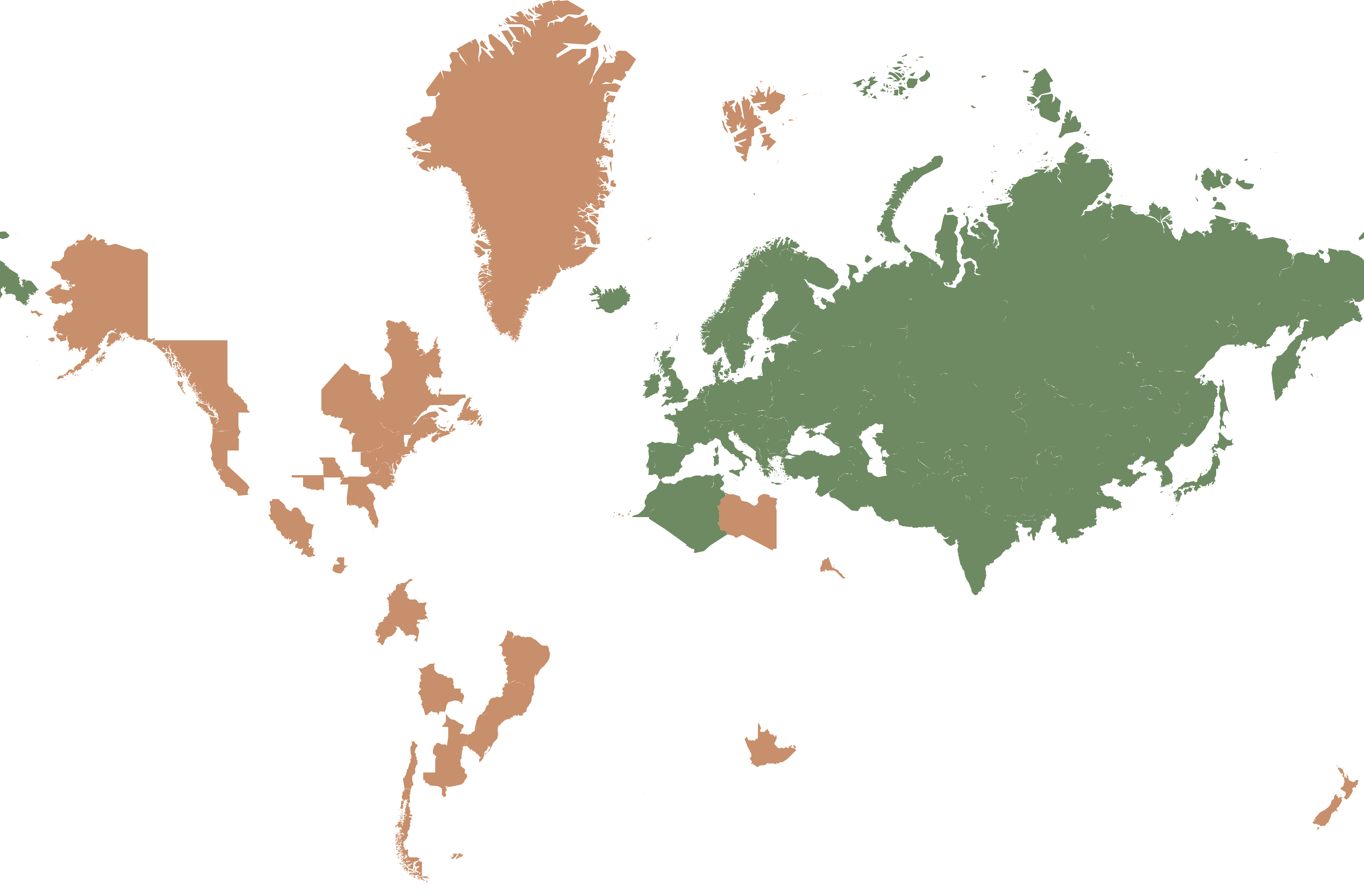
- Native
- Introduced
- North America
History
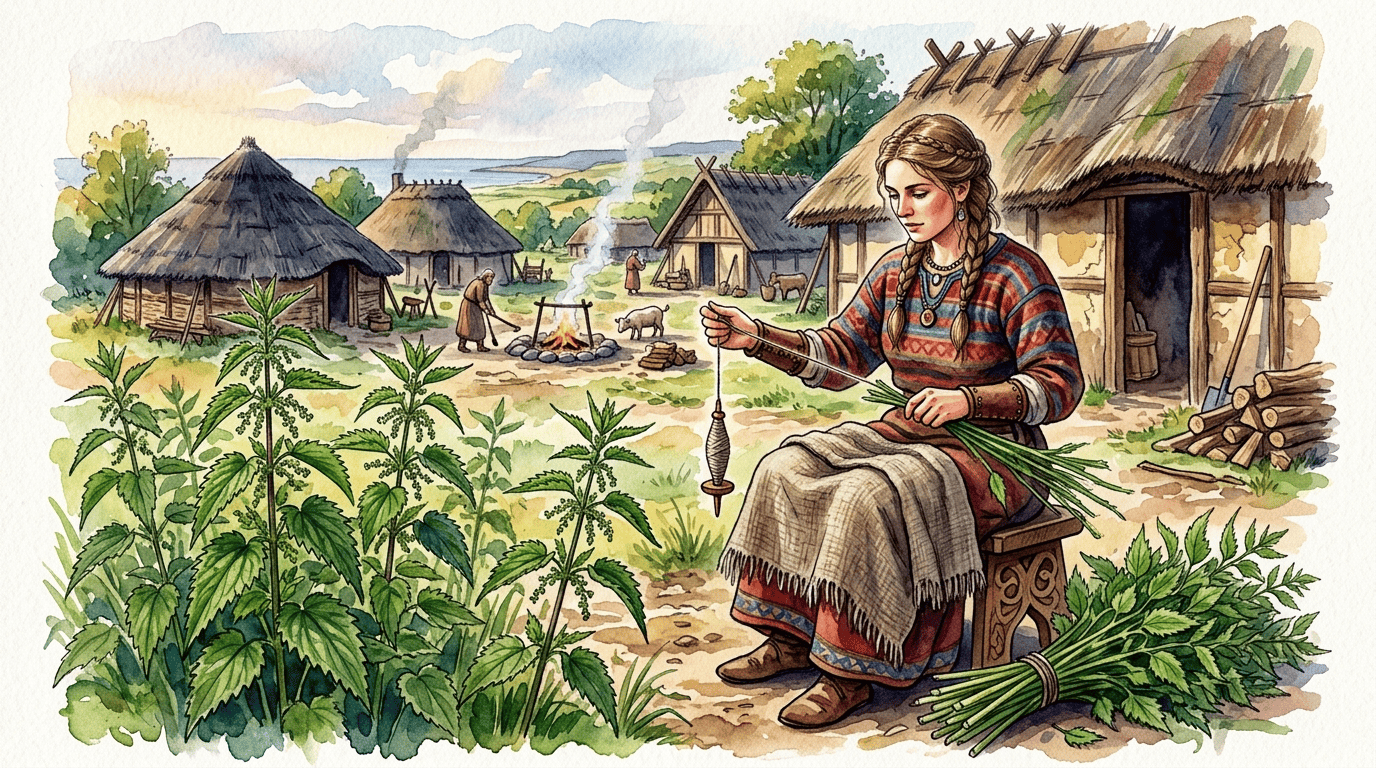
Urtica dioica, stinging nettle, is a rhizomatous perennial native across temperate Eurasia and widely naturalized in North America. Its defensive hairs, each a miniature hypodermic syringe, inject a cocktail of histamine, serotonin, acetylcholine, and formic acid into the skin. Despite the sting, humans have used the plant for millennia: Bronze Age burials in Denmark contained cloth woven from nettle fiber, medieval Europeans ate the young shoots as a purifying spring tonic, and twentieth-century shortages revived nettle-fiber textiles during both World Wars.
The leaves are rich in iron, vitamins, and minerals, and modern herbalism uses them for allergic rhinitis and urinary complaints. The cooked plant is entirely safe; only fresh contact stings.
Native to Europe, Asia, and North Africa, and likely also indigenous to parts of North America, Stinging Nettle has been used for at least 3,000 years as food, medicine, and textile fiber. In the US it is simultaneously a dreaded backyard weed and a beloved forager's spring green, now enjoying renewed popularity in artisan food and herbal medicine.
Symbolism & meaning
What It Symbolizes
Great Stinging Nettle is respect enforced by touch. Brush it carelessly and the plant answers at once; handle it knowingly and it becomes fiber, food, dye, and butterfly nursery. Its symbolism is reciprocity with teeth: nature offering much, but only to those who approach with skill.
- Painful gift — stings sharply but yields nutritious food
- Ancient textile — used for cloth for 3,000+ years
Where the Name Comes From
'Urtica' from Latin 'urere' meaning to burn, for the sting; 'dioica' from Greek means two houses, for separate male and female plants.
Uses & Fun Facts
- Young leaves cooked as spring greens once stings are deactivated
- Traditional herbal tonic for allergies, joint pain, and prostate
- Stem fibers historically spun into linen-like nettle cloth
- Larval host for red admiral and tortoiseshell butterflies
Related plants
Plants with similar care
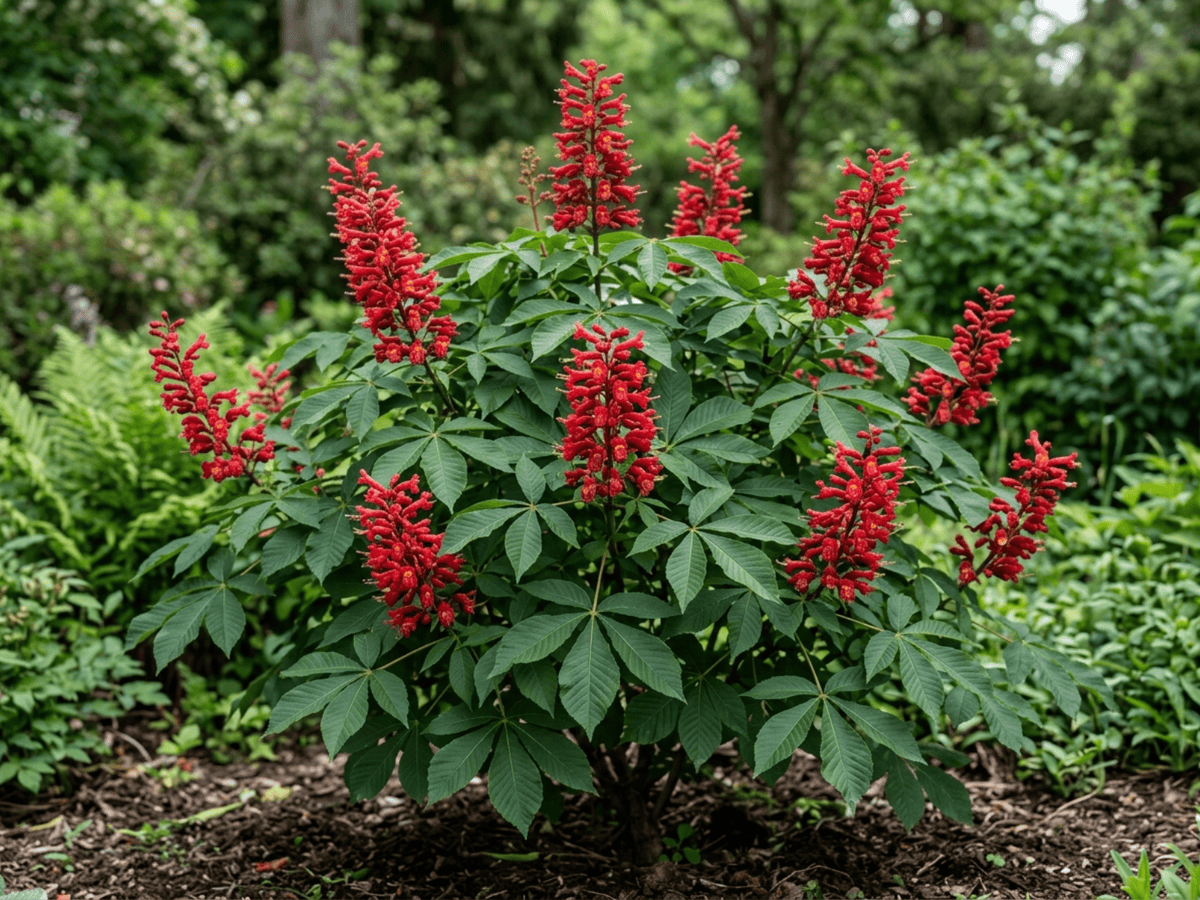 Red BuckeyeAesculus pavia
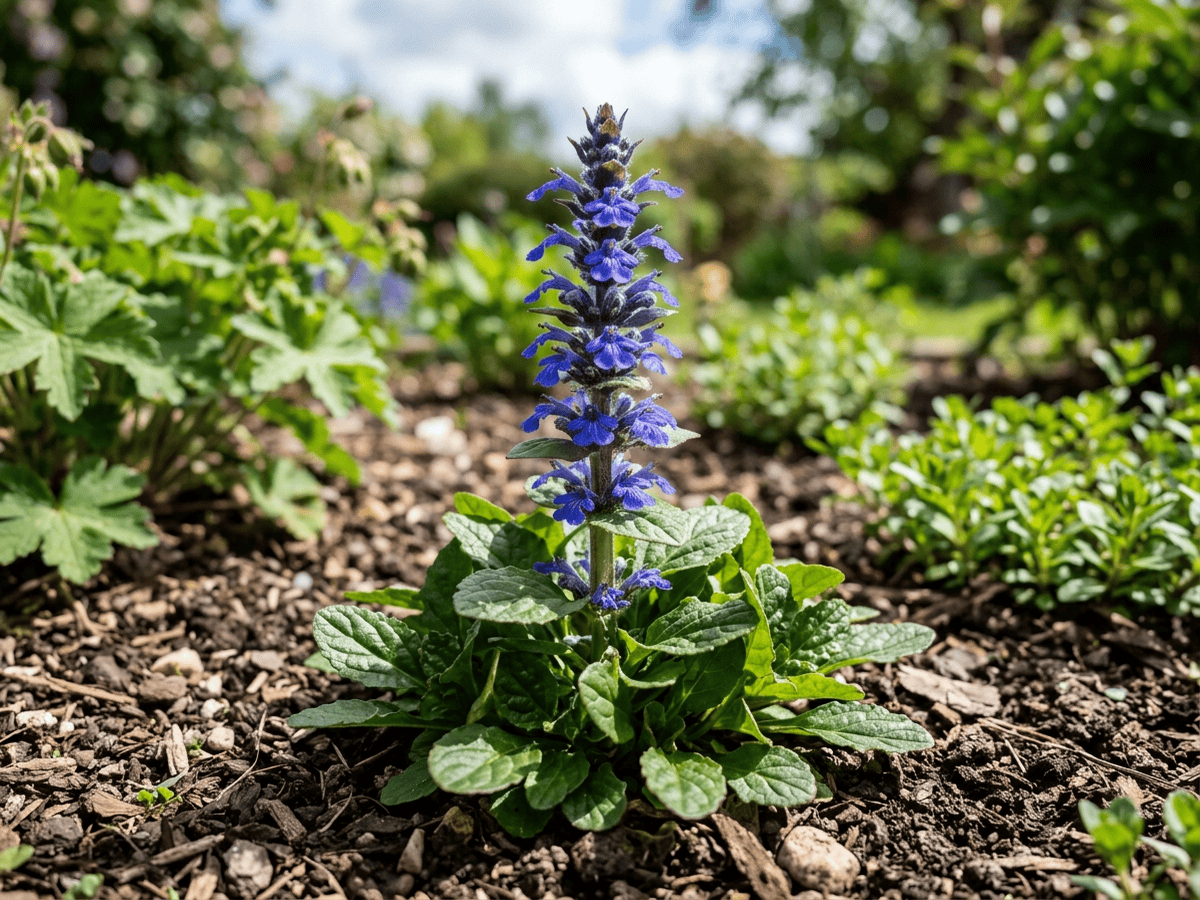 Blue BugleAjuga genevensis
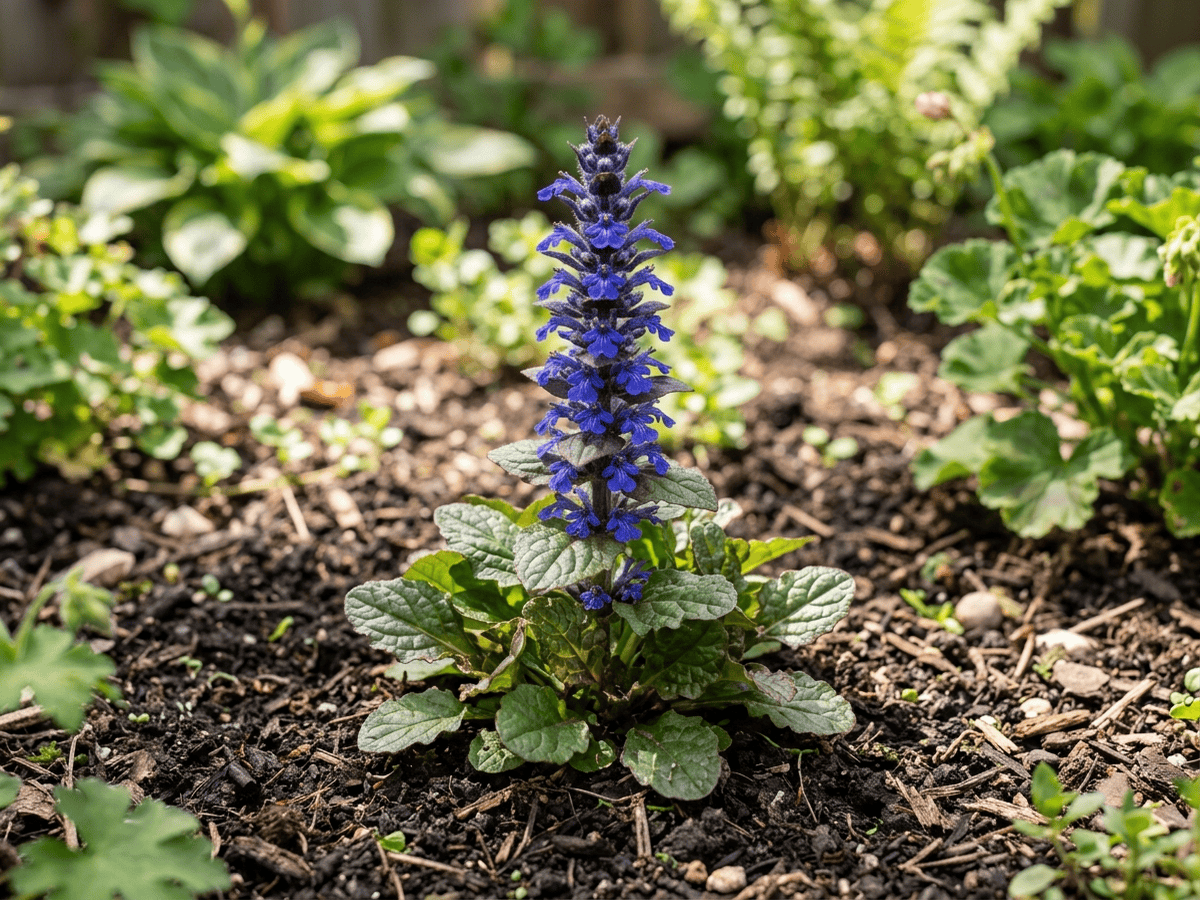 Pyramidal BugleAjuga pyramidalis
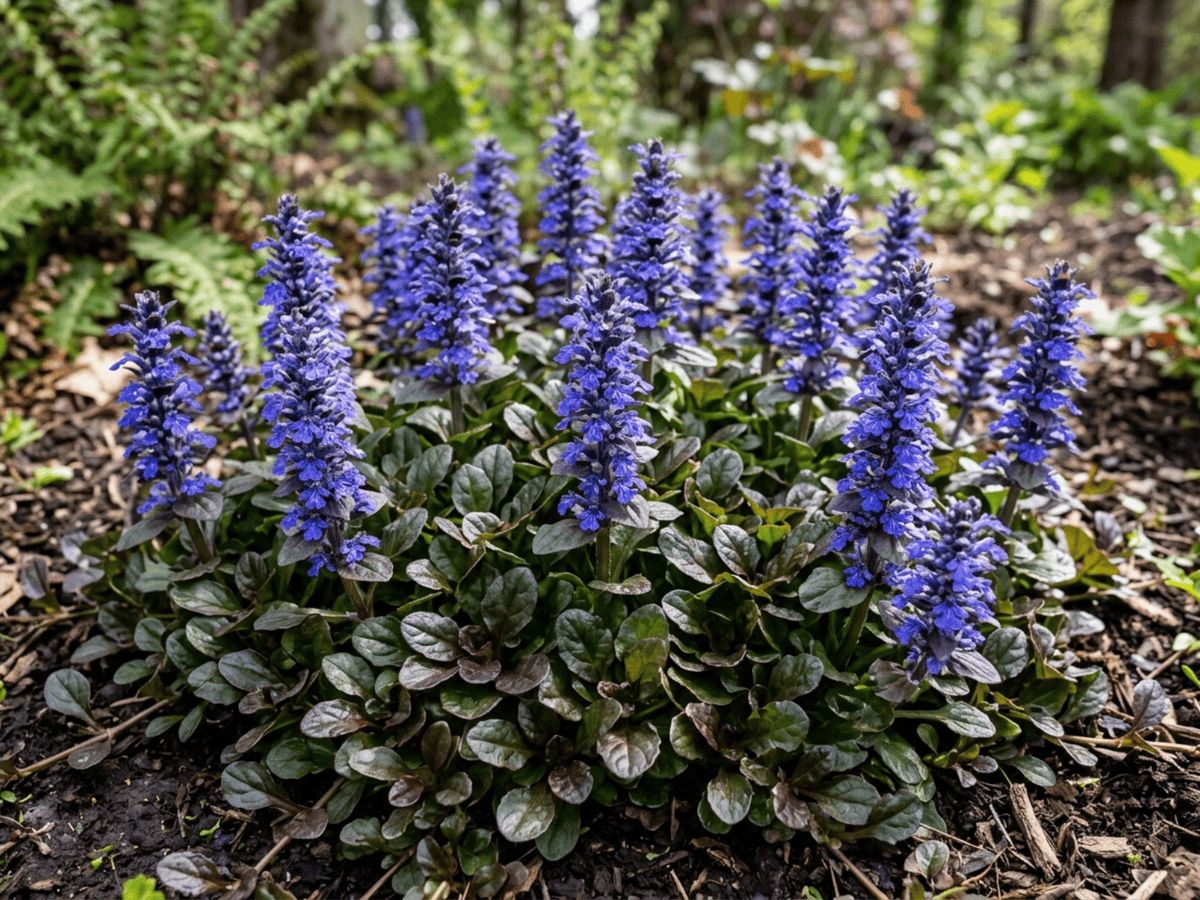 Carpet BugleAjuga reptans
Frequently asked questions
How often should I water Great Stinging Nettle?
In summer, water about every 7 days; in winter, about every 30 days. Adjust for heat, pot size and drainage.
How much light does Great Stinging Nettle need?
Part shade: 2–4 hrs direct. Watch the leaves — scorching or stretching means the light needs adjusting.
Is Great Stinging Nettle toxic to cats or dogs?
Pets Slight (Dogs Slight · Cats Slight) Educational information, not medical or veterinary advice. If exposure is suspected, contact a doctor or veterinarian.
Is Great Stinging Nettle easy to grow?
Yes — it is considered an easy, beginner-friendly plant.
When does Great Stinging Nettle bloom?
It typically blooms Jun–Aug in the Northern Hemisphere.
YardMate
Identify any plant in seconds
Snap a photo — YardMate names the plant, diagnoses problems, and reminds you when to water.
Download on the App Store