 YardMate


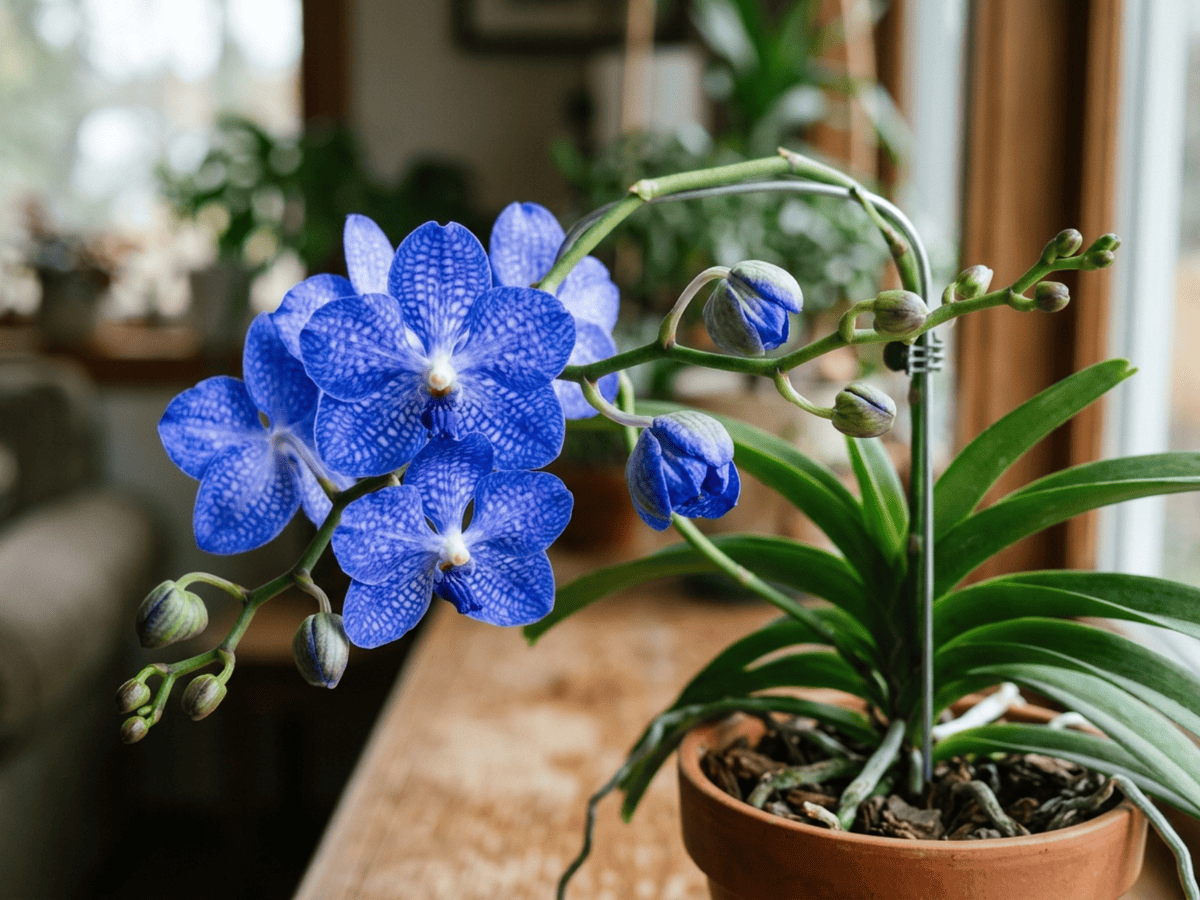

Blue Vanda
Vanda coerulea
Hard · Experienced growersAbout Blue Vanda
Vanda coerulea, the blue vanda or autumn lady's tresses orchid, is one of the few orchids that produce truly blue flowers — a rarity in the plant kingdom that has made it one of the most coveted orchid species in the world. Native to the montane forests of northeastern India, Myanmar, Thailand, and Yunnan at elevations of 800–1,700 meters, it grows as an epiphyte with thick aerial roots and leathery strap-shaped leaves. The flowers, appearing in autumn, are a breathtaking pale to deep blue with a darker tessellated (checkered) pattern, growing up to 12 cm across in racemes of 5–20 blooms. Over-collection and habitat loss drove it to near-extinction in the wild, and it is now listed under CITES Appendix I, the highest level of international protection. It was instrumental in breeding the blue Vanda hybrids now popular in the orchid trade.
- Tropical
- Cut-flower
- Long-blooming
How to care for Blue Vanda
Watering
- Springevery 2 days
- Summerevery 1 days
- Fallevery 3 days
- Winterevery 5 days
Soil · Airy & open
- Single layerOrchid bark + charcoal100%
No soil at all — orchid roots need air moving around them.
FERTILIZER
Balanced Feed 14-14-14
An even feed covers all three needs at once, keeping leaves, roots and blooms moving together with nothing pushed out of balance.
- Nitrogen · Leaves
- Phosphorus · Roots + Blooms
- Potassium · Strength
- Springevery 7 days
- Summerevery 7 days
- Fallevery 14 days
- Winterevery 21 days
At a Glance
- NativeSouth Asia, Southeast Asia, East Asia
- Height2–4 ft (0.6–1.2 m)
- Spread1–2 ft (0.3–0.6 m)
- Flower colorBlue, Purple
- Foliage colorGreen
- SoilWell-drained
- LocationsIndoor · Yard
Bloom time
BLOOM CYCLE
Peak bloom
Sep–Nov
Blue tessellated flowers in autumn; needs bright indirect light, high humidity, and excellent air circulation
Fragrance
LIGHT FRAGRANCE
Very faint or no fragrance.
Toxicity
No toxicity has been reported for this plant. Still, it is wise to keep pets from chewing on any houseplant.
Educational information, not medical or veterinary advice. If exposure is suspected, contact a doctor or veterinarian.
DISTRIBUTION


- Native
- South Asia
- Southeast Asia
- East Asia
History

Vanda coerulea is an epiphytic orchid native to montane forests of northeastern India (particularly Assam, Meghalaya, and Nagaland), northern Myanmar (Burma), and southwestern China (Yunnan), growing at 800-1700 meters elevation on tree branches in forests with pronounced seasonal temperature variation. The species was discovered for Western science by Irish botanist William Griffith in the Khasi Hills of Assam in 1837; introduction to English cultivation in the 1840s created a Victorian-era horticultural sensation because the species produces one of the purest true-blue flowers in the entire orchid family — true blue being exceptionally rare among flowers of any kind (most so-called "blue" flowers are actually purple, violet, or magenta). Flowers are 8-10 cm across, flat-faced, with a distinctive blue-tessellated checkerboard pattern on pale blue ground.
The 19th-century popularity of the species led to systematic Victorian-era collecting, and wild populations were severely depleted by decades of commercial export; the species is now listed under CITES Appendix I (highest level of international trade protection) and Indian national law since 1991. Modern horticulture is supplied entirely by laboratory seed-grown and mericloned plants.
V. coerulea is the parent of the famous "Vanda Rothschildiana" hybrid (V. coerulea x V. sanderiana, registered 1931), which won worldwide popularity and is one of the most widely grown vandaceous orchids in tropical horticulture today. Vanda coerulea was first described by John Lindley in 1847 after specimens arrived in England from the Khasi Hills of northeastern India. India, Thailand, and Myanmar have since banned wild collection, and it was placed on CITES Appendix I in 1981.
Symbolism & meaning
What It Symbolizes
The Blue Vanda can symbolize rarity, one of nature's few true blue flowers and so the precious, near-mythical exception in the orchid world. Another layer is conservation, for its near-extinction in the wild and ongoing recovery efforts make it a quiet emblem of hope for endangered species more broadly. In the language of orchids, vanda coerulea is the blue jewel that once almost vanished, a flower whose every modern bloom carries the long story of botanic gardens, traders and quiet rescue.
- Rarity — one of nature's few true blue flowers, symbolizing the precious and uncommon
- Conservation — its near-extinction and recovery represent hope for endangered species
Where the Name Comes From
'Vanda' from Sanskrit 'vandaka,' the Indian name for epiphytic orchids. 'Coerulea' is Latin for 'sky blue,' describing the flower color.
Uses & Fun Facts
- Rare Blue Vanda orchid prized by hobbyist growers
- Source of many blue hybrid orchid breeding lines
Related plants
Plants with similar care
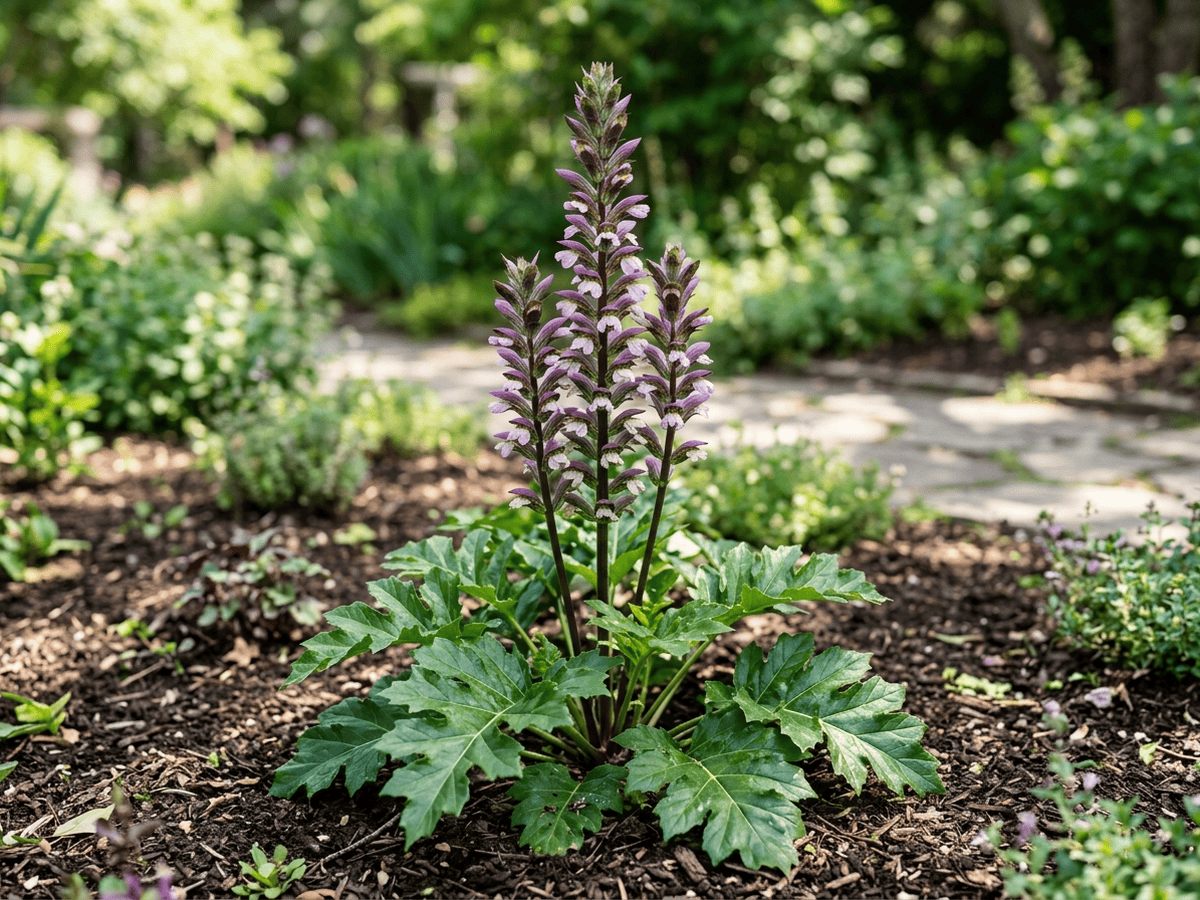 Bear's BreechesAcanthus mollis
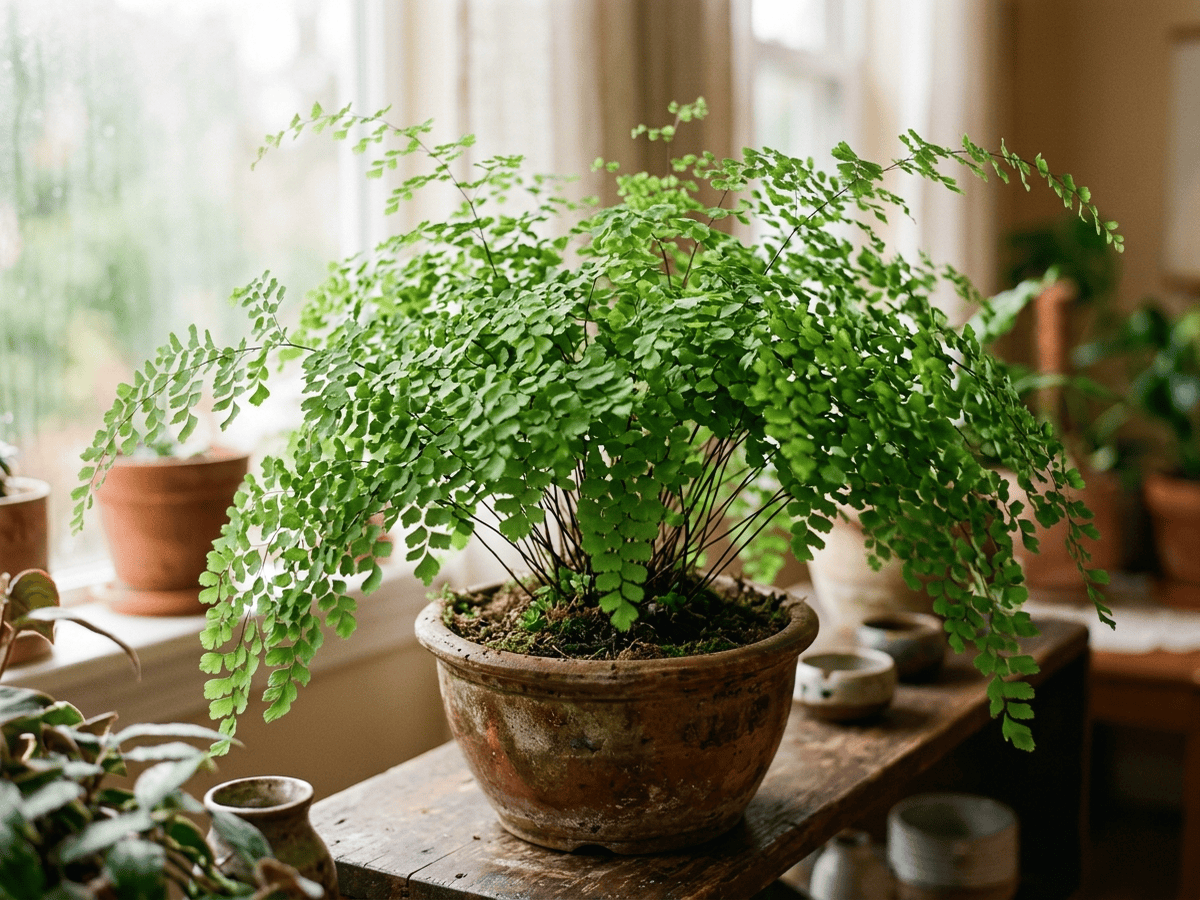 Delta Maidenhair FernAdiantum raddianum
 African Mask PlantAlocasia amazonica
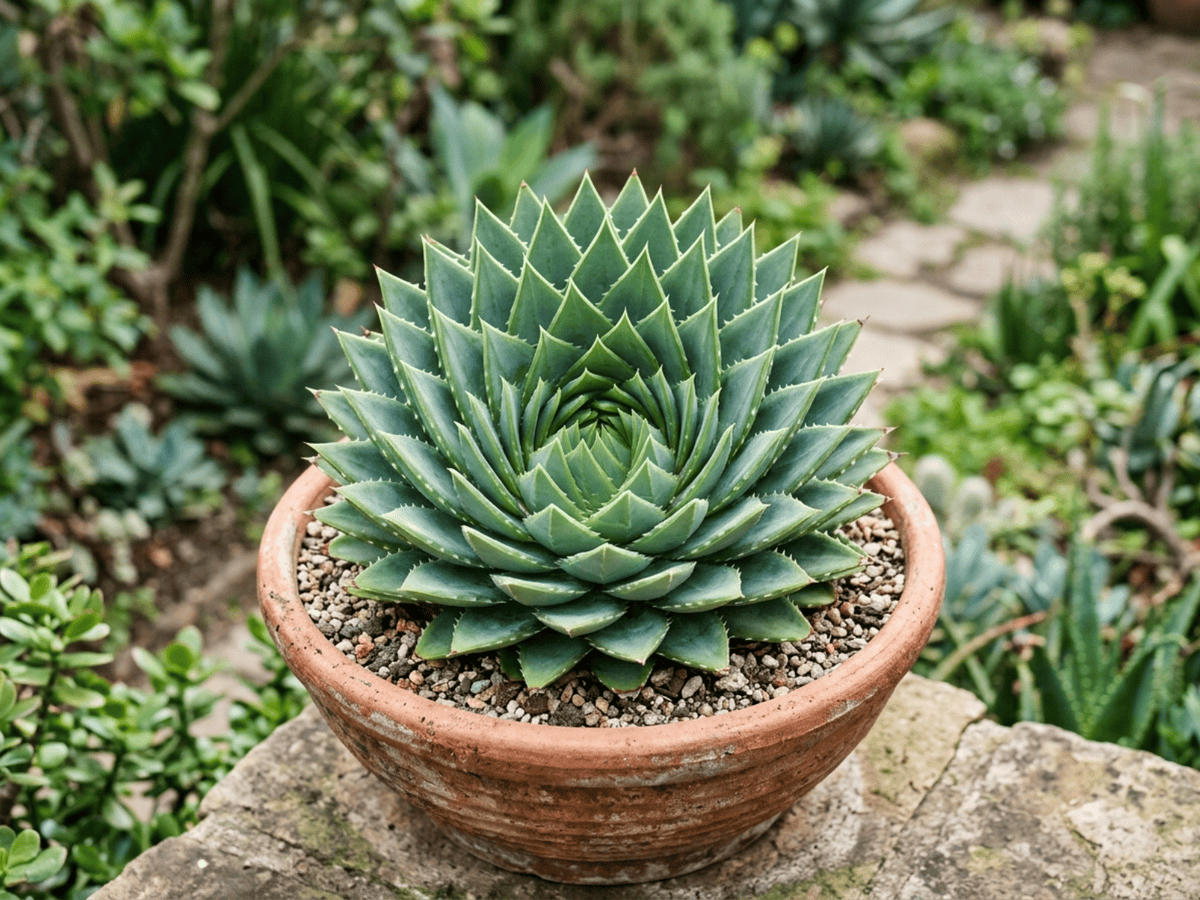 Spiral AloeAloe polyphylla
Frequently asked questions
How often should I water Blue Vanda?
In summer, water about every 1 days; in winter, about every 5 days. Adjust for heat, pot size and drainage.
How much light does Blue Vanda need?
Part shade: 2–4 hrs direct. Watch the leaves — scorching or stretching means the light needs adjusting.
Is Blue Vanda toxic to cats or dogs?
No toxicity has been reported for this plant. Still, it is wise to keep pets from chewing on any houseplant. Educational information, not medical or veterinary advice. If exposure is suspected, contact a doctor or veterinarian.
Is Blue Vanda easy to grow?
It is considered challenging and rewards experienced growers.
Can Blue Vanda be grown indoors?
Yes, it adapts well to indoor growing given the right light.
When does Blue Vanda bloom?
It typically blooms Sep–Nov in the Northern Hemisphere.
YardMate
Identify any plant in seconds
Snap a photo — YardMate names the plant, diagnoses problems, and reminds you when to water.
Download on the App Store