 YardMate


Korean Weigela
Weigela subsessilis
Easy · Beginner friendlyAbout Korean Weigela
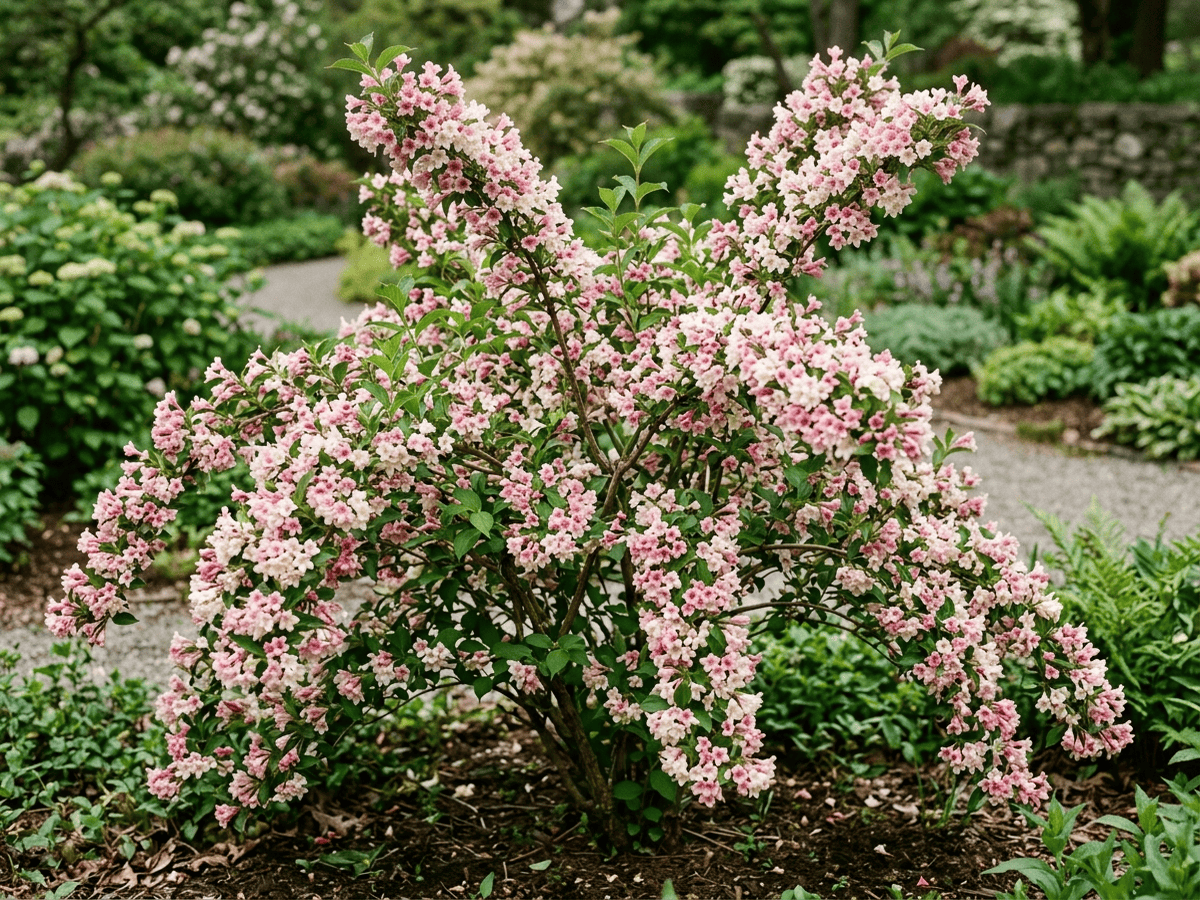
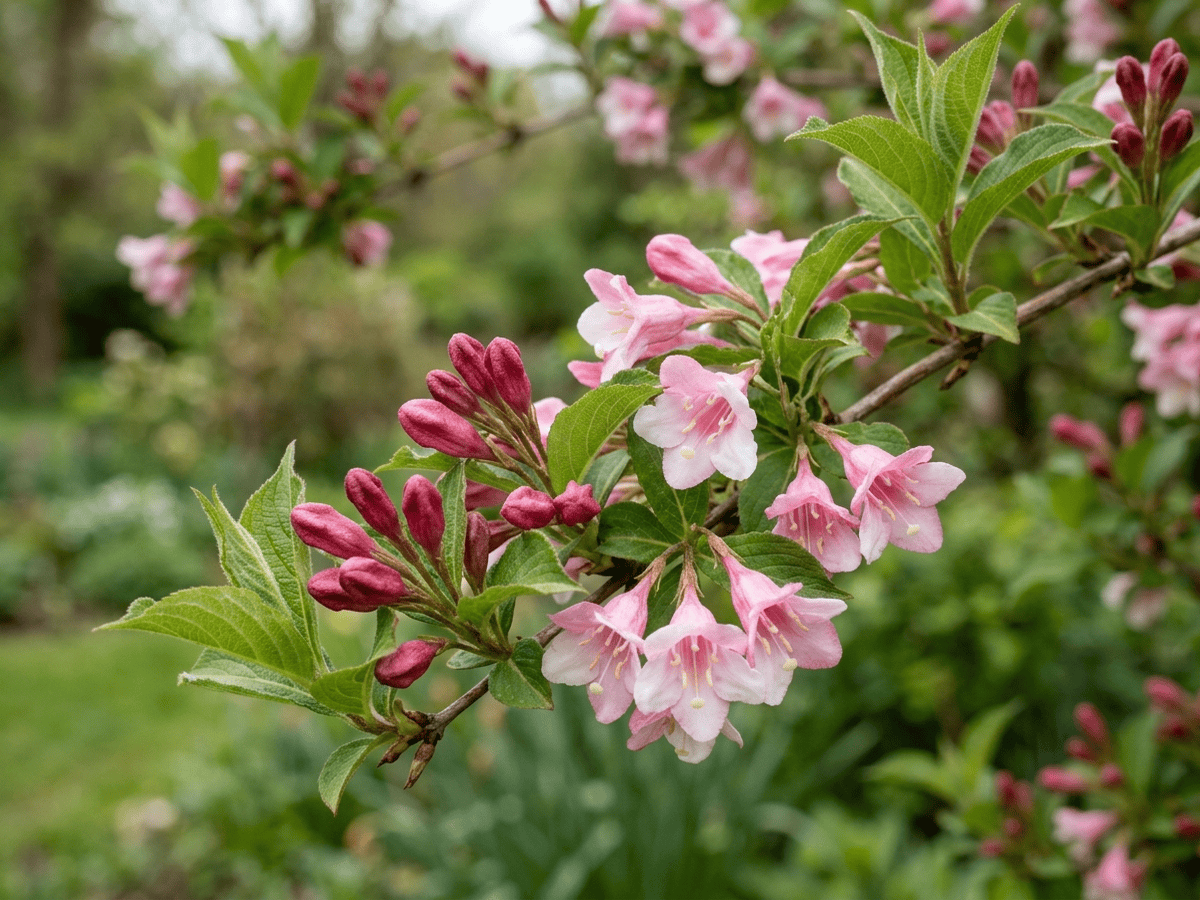
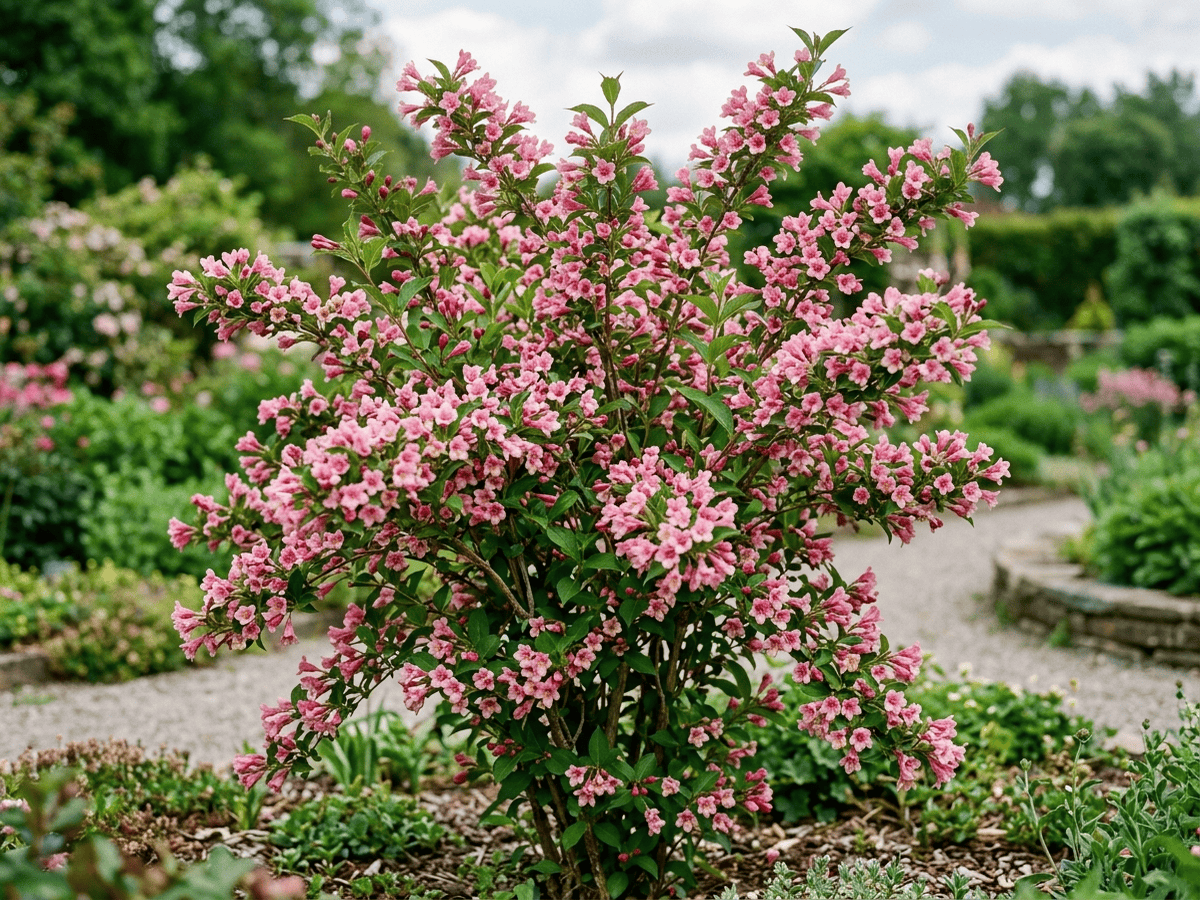
Korean Weigela is a Korean endemic deciduous shrub growing 4 to 6 feet tall, producing profuse tubular flowers that open pale yellow and age through pink to deep rose on the same plant, creating a multicolored effect in late spring. Less common than Weigela florida in American gardens but gaining attention for its unique color-changing flowers and compact habit.
- Deer-resistant
- Cold-hardy
- Compact
How to care for Korean Weigela
Watering
- Springevery 5 days
- Summerevery 3 days
- Fallevery 7 days
- Winterevery 14 days
Soil · Rich & loamy
- Top dressingBark mulch15%
- Main mixRich loam + compost 3:170%
- DrainageGravel15%
Use fully finished compost — fresh compost burns roots.
FERTILIZER
Balanced Feed 14-14-14
An even feed covers all three needs at once, keeping leaves, roots and blooms moving together with nothing pushed out of balance.
- Nitrogen · Leaves
- Phosphorus · Roots + Blooms
- Potassium · Strength
- Springevery 45 days
- Summerevery 60 days
At a Glance
- NativeEast Asia
- Height4–6 ft (1.2–1.8 m)
- Spread4–6 ft (1.2–1.8 m)
- Flower colorYellow, Pink
- Foliage colorGreen
- SoilLoamy, Well-drained
- LocationsYard
Bloom time
BLOOM CYCLE
Peak bloom
May–Jun
Flowers open yellow, age through pink to rose, May to June
Fragrance
LIGHT FRAGRANCE
The flowers have a lightly scented scent.
Toxicity
No toxicity has been reported for this plant. Still, it is wise to keep pets from chewing on any houseplant.
Educational information, not medical or veterinary advice. If exposure is suspected, contact a doctor or veterinarian.
DISTRIBUTION


- Native
- East Asia
History

Weigela subsessilis grows wild only in Korea, where it inhabits mountain forest edges and rocky slopes. The prolific Japanese botanist Takenoshin Nakai described it in 1909 during his surveys of the Korean flora while a faculty member at Tokyo Imperial University. Korean gardeners had long grown the shrub under the common name byeongggot-namu for its pale yellow to pink funnel-shaped flowers that open from April to June.
US and European arboreta acquired material through the Morris Arboretum's Korean expedition of 1984 and later Seoul National University exchanges. Unlike the widely grown W. florida from China, W. subsessilis tolerates partial shade well.
It remains a specialty shrub in Western gardens but is commonly used in Korean landscape plantings. Endemic to the Korean Peninsula, introduced to American arboreta in the 20th century through Korean plant collection expeditions. Rarely found in mainstream nurseries but an emerging choice for collectors and Korean-heritage gardeners in America who prize its unique color-shifting blooms.
Symbolism & meaning
What It Symbolizes
Korean Weigela embodies transformation, its flowers shifting through yellow, pink, and rose as each bloom matures over a few short days. Endemic to the Korean Peninsula, it carries a quiet regional heritage uncommon in Western gardens. To plant this weigela is to keep a small calendar of color change in the spring border — a shrub that demonstrates, in three colors at once, that stillness in beauty is far rarer than we imagine.
- Transformation — flowers shift through yellow, pink, and rose
- Korean heritage — endemic to the Korean Peninsula
Where the Name Comes From
The name Korean Weigela points to Korea. 'subsessilis' from Latin means nearly sessile, referring to the short flower stalks.
Uses & Fun Facts
- Tubular pink blooms bring hummingbirds and bees to spring shrub borders
Related plants
More Weigela plants
 Old Fashioned WeigelaWeigela florida
 Weigela middendorffianaWeigela middendorffiana
 Old Fashioned WeigelaWeigela praecox
Plants with similar care
 Chinese AbeliaAbelia chinensis
 Fragrant AbeliaAbelia mosanensis
 Large-Flowered AbeliaAbelia uniflora
 Glossy AbeliaAbelia x grandiflora
Frequently asked questions
How often should I water Korean Weigela?
In summer, water about every 3 days; in winter, about every 14 days. Adjust for heat, pot size and drainage.
How much light does Korean Weigela need?
Full sun: 6+ hrs direct. Watch the leaves — scorching or stretching means the light needs adjusting.
Is Korean Weigela toxic to cats or dogs?
No toxicity has been reported for this plant. Still, it is wise to keep pets from chewing on any houseplant. Educational information, not medical or veterinary advice. If exposure is suspected, contact a doctor or veterinarian.
Is Korean Weigela easy to grow?
Yes — it is considered an easy, beginner-friendly plant.
When does Korean Weigela bloom?
It typically blooms May–Jun in the Northern Hemisphere.
YardMate
Identify any plant in seconds
Snap a photo — YardMate names the plant, diagnoses problems, and reminds you when to water.
Download on the App Store