 YardMate


Japanese Wisteria
Wisteria floribunda
Medium · Some experienceAbout Japanese Wisteria
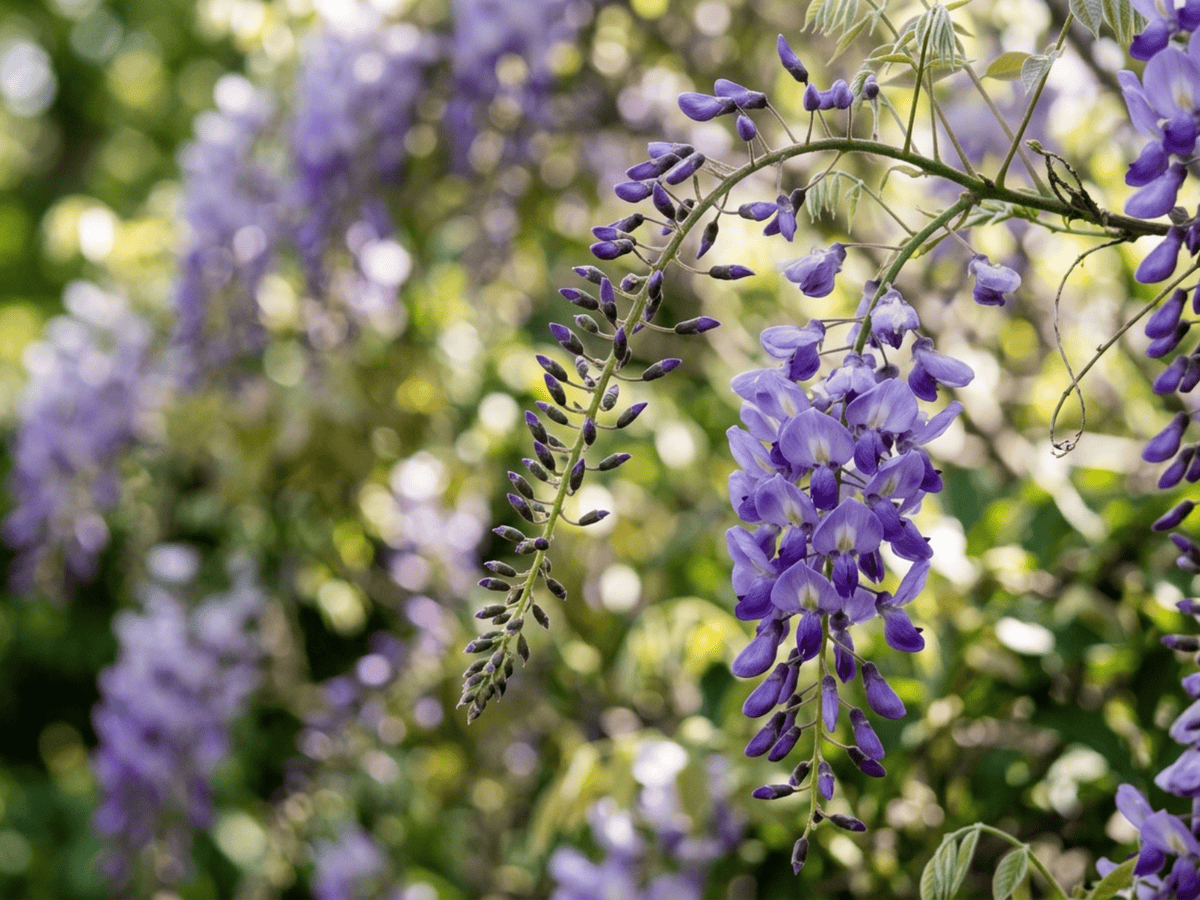
Wisteria floribunda, the Japanese wisteria, produces the longest flower clusters of any wisteria — racemes can reach 90 cm to over 1 meter on the cultivar 'Macrobotrys.' Unlike Chinese wisteria, its flowers open gradually from top to bottom, extending the display over several weeks. It twines clockwise. The color range includes violet, blue, pink, and white. Native to Japan, it is the more refined, slower-growing counterpart to Chinese wisteria, better suited for controlled garden settings. The Ashikaga Flower Park's ancient specimen is one of Japan's most visited attractions.
- Fragrant
- Climbing
How to care for Japanese Wisteria
Watering
- Springevery 7 days
- Summerevery 5 days
- Fallevery 10 days
- Winterevery 21 days
Soil · Well-draining
- Top dressingPine bark mulch10%
- Main mixPotting soil + perlite 2:170%
- DrainageLECA / gravel20%
Never skip the drainage layer — standing water is the top cause of root rot.
FERTILIZER
Balanced Feed 14-14-14
An even feed covers all three needs at once, keeping leaves, roots and blooms moving together with nothing pushed out of balance.
- Nitrogen · Leaves
- Phosphorus · Roots + Blooms
- Potassium · Strength
This plant needs little to no feeding.
At a Glance
- NativeEast Asia
- Height15–25 ft (4.6–7.6 m)
- Spread15–30 ft (4.6–9.1 m)
- Flower colorPurple, Pink, White, Blue
- Foliage colorGreen
- Fruit colorBrown
- SoilLoamy, Well-drained
- LocationsYard
Bloom time
BLOOM CYCLE
Peak bloom
May
Longest flower clusters of any vine; opens gradually top to bottom; needs twice-yearly pruning
Fragrance
STRONG FRAGRANCE
Sweet grape-honeysuckle fragrance; stronger than W. sinensis in most cultivars.
Toxicity
Humans Moderate · Pets Moderate
wisterin and lectins
Moderate
- Seed
- Pod
- Ingestion
EXPOSURE Eating seeds and pod.
EFFECT Vomiting, diarrhea, dehydration and children at risk from pod ingestion.
NOTE Documented concern for humans: Vomiting, diarrhea, dehydration and children at risk from pod ingestion.
Moderate
- Seed
- Pod
- Ingestion
EXPOSURE Eating seeds and pod.
EFFECT Vomiting, diarrhea, dehydration.
NOTE ASPCA lists Wisteria as toxic to dogs, cats, horses.
Moderate
- Seed
- Pod
- Ingestion
EXPOSURE Eating seeds and pod.
EFFECT Vomiting, diarrhea, dehydration.
NOTE ASPCA lists Wisteria as toxic to dogs, cats, horses.
Educational information, not medical or veterinary advice. If exposure is suspected, contact a doctor or veterinarian.
DISTRIBUTION


- Native
- Introduced
- East Asia
History
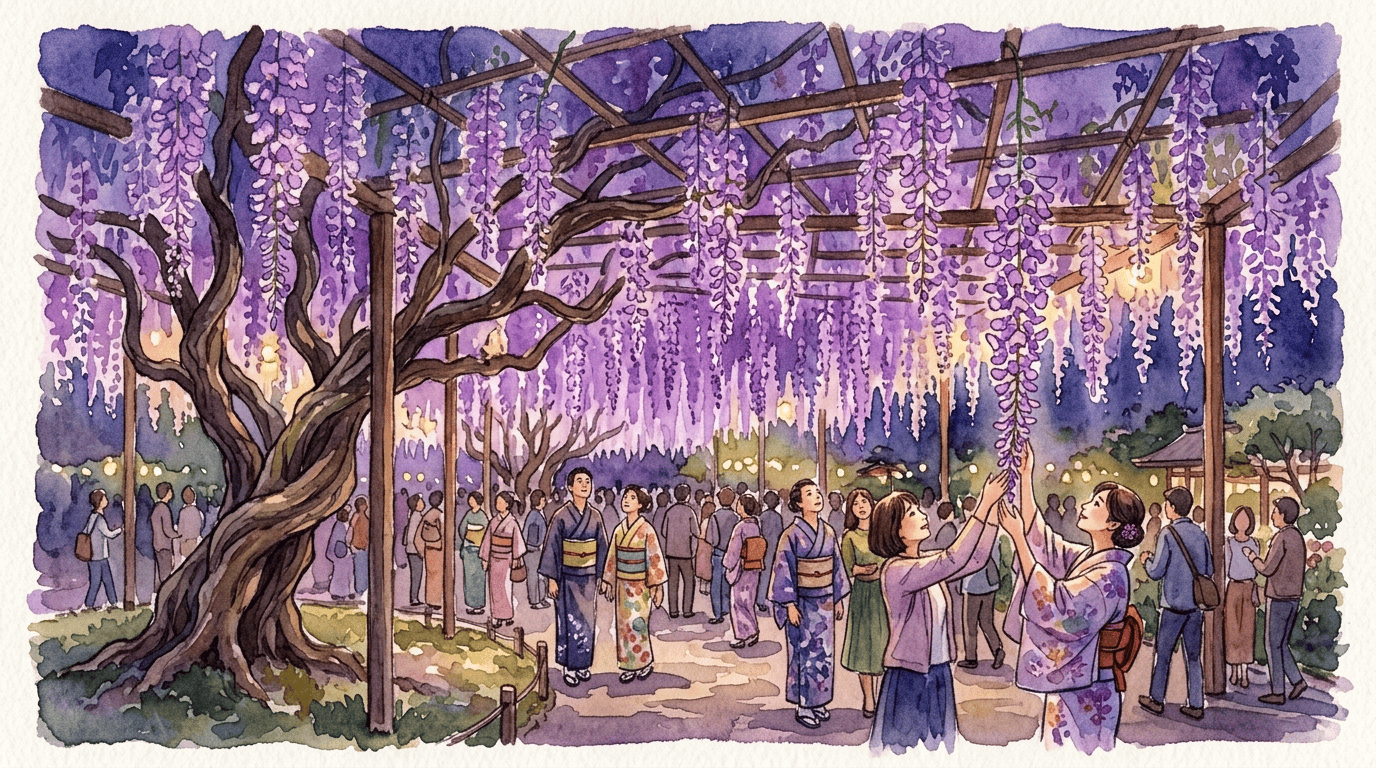
Wisteria floribunda is native to Honshu, Japan, where it has been cultivated for more than a thousand years under the name fuji. It appears in Heian court poetry, noh and kabuki theater, and samurai family crests; the Fujiwara clan name literally means wisteria field. Philipp Franz von Siebold introduced it to Europe through his Leiden nursery in the 1830s.
Japanese wisteria differs from Chinese wisteria by its longer racemes, sometimes more than a meter, its clockwise-twining stems, and its flowers that open sequentially along each hanging chain. The roughly 150-year-old Great Miracle wisteria at Ashikaga Flower Park, trained over a vast trellis, is one of the world's most photographed flowering plants.
Wisteria festivals have been part of Japanese seasonal culture for centuries, and modern night illuminations turn the plant into a living ceiling of violet light. Few vines make time feel so visible.
Symbolism & meaning
What It Symbolizes
Japanese Wisteria embodies longevity, with specimens at temples in Japan flourishing for centuries — vast woody trunks supporting cascades of flower season after season. Its long racemes drip like purple rain over old courtyards where generations of visitors have stood beneath them. To plant one is to begin a relationship measured not in years but in lifetimes, an emblem of enduring life and grace.
- Longevity — Specimens living centuries in Japanese temples represent enduring life and grace
Where the Name Comes From
Wisteria for Caspar Wistar. Floribunda means 'abundantly flowering.'
Uses & Fun Facts
- Long lavender flower racemes release sweet pea-like spring perfume
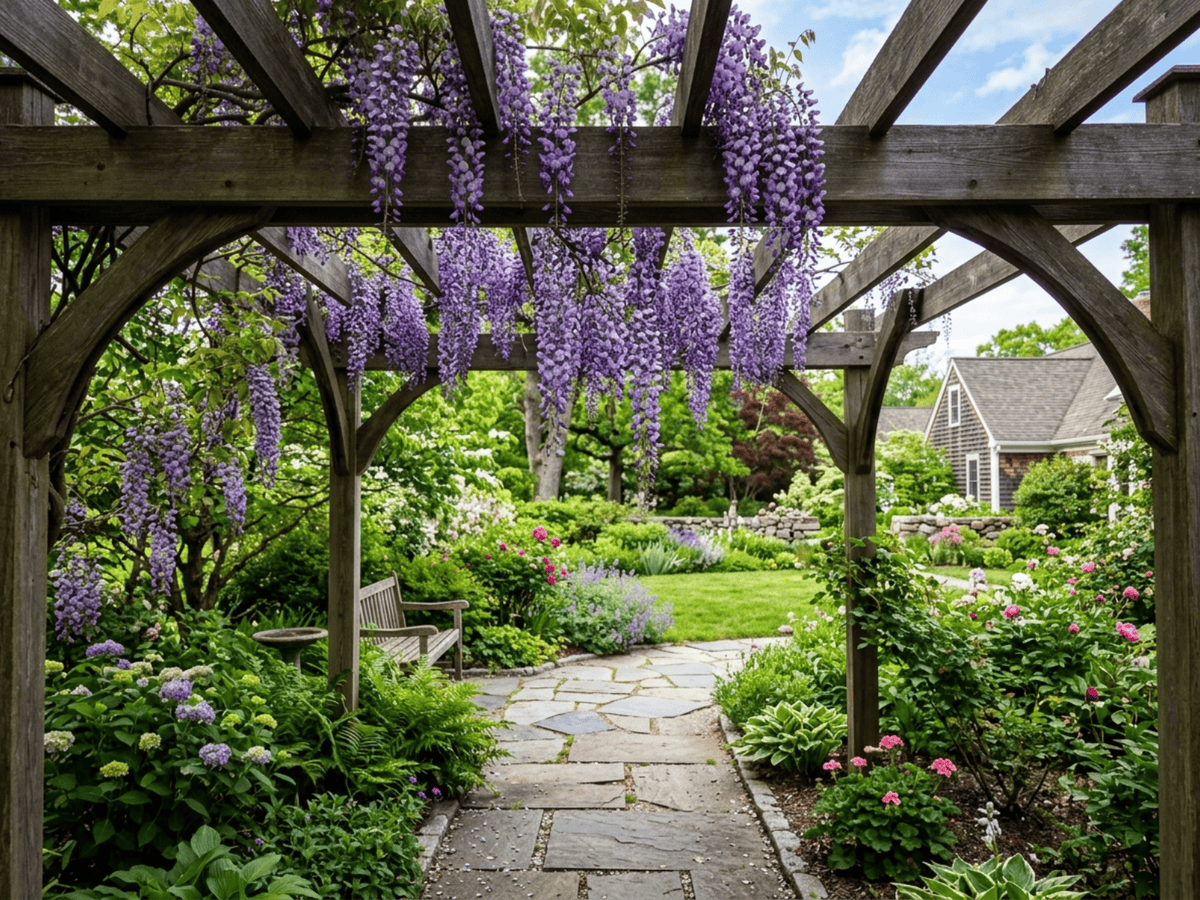
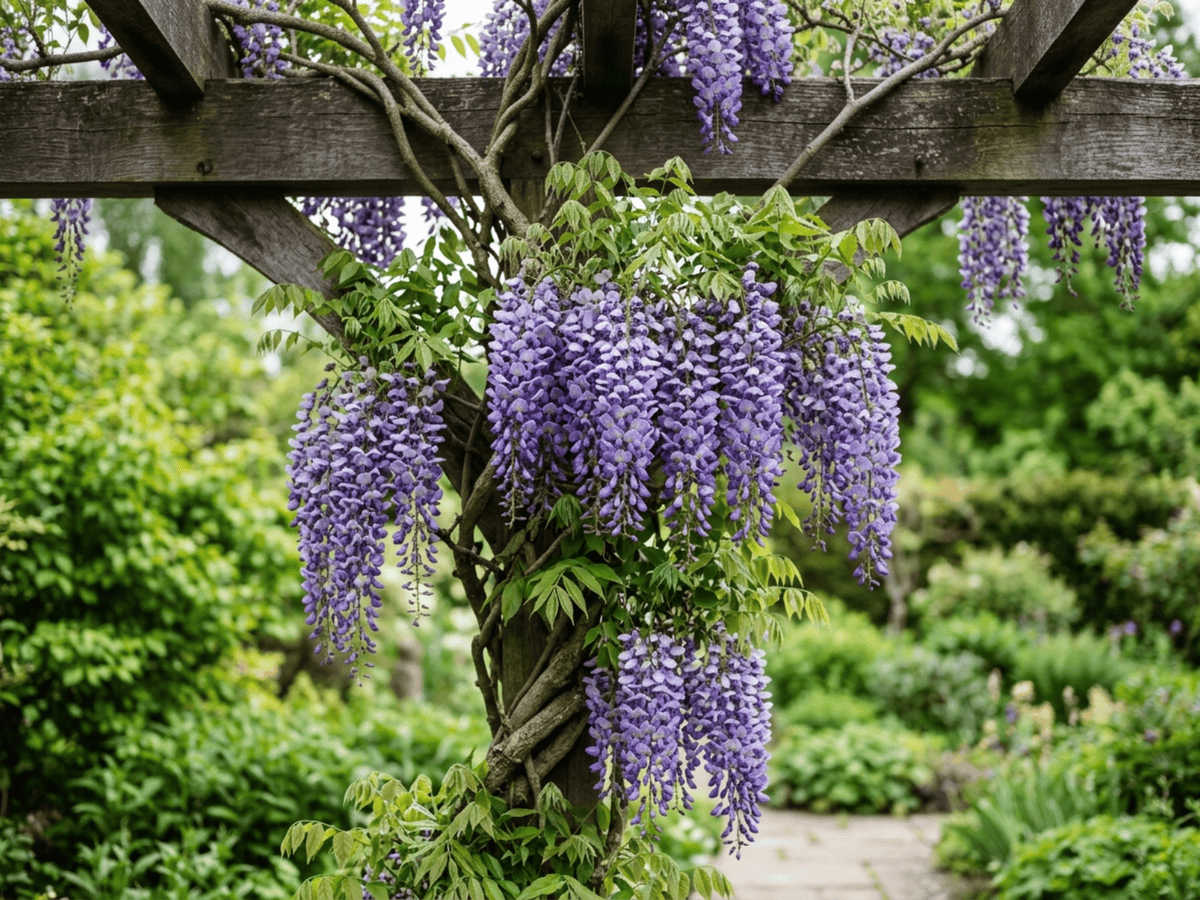
- Heavy twining woody vine drapes sturdy pergolas and arbors
- Mature trained wisteria stuns as cascading spring centerpiece
- Iconic spring flower of Japanese gardens and tea-house arbors
Related plants
More Wisteria plants
Plants with similar care
 Mexican AbeliaAbelia floribunda
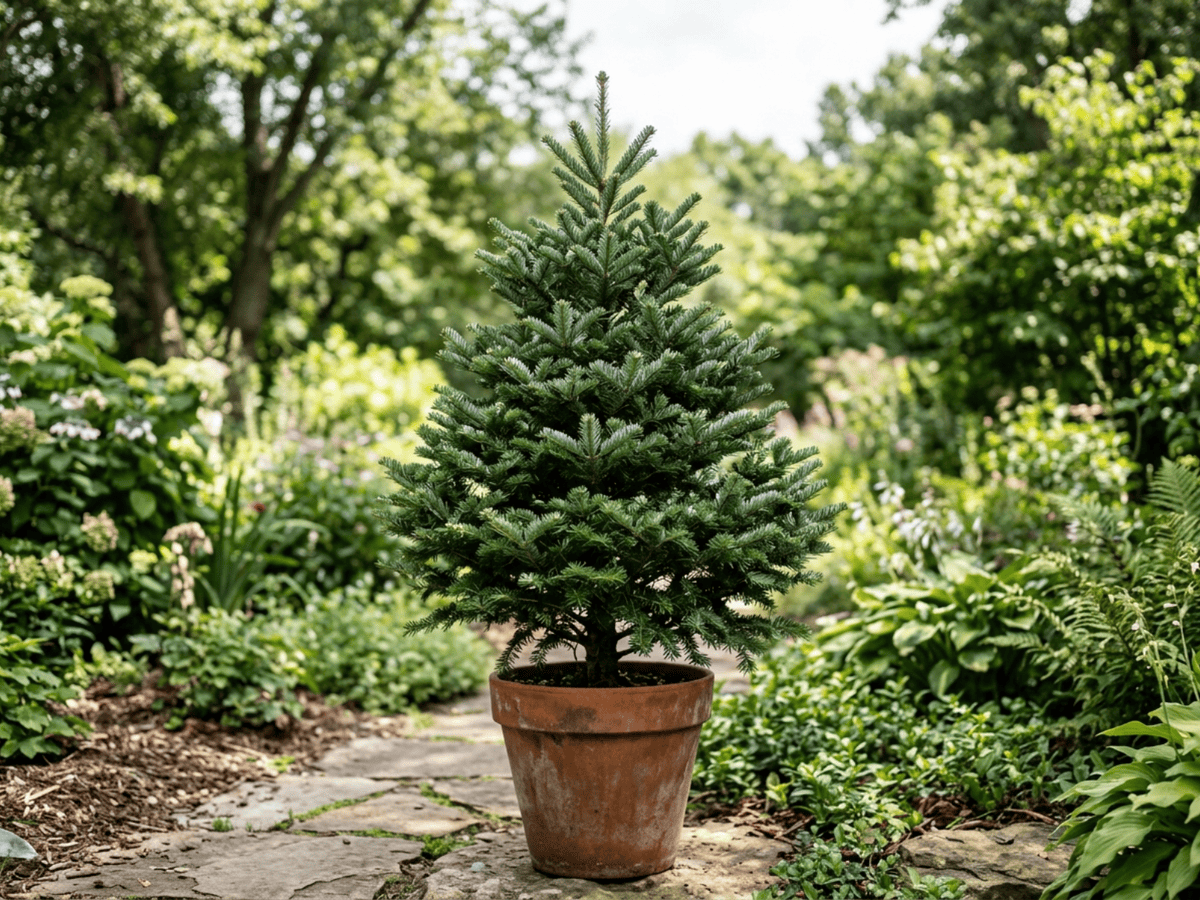 Fraser FirAbies fraseri
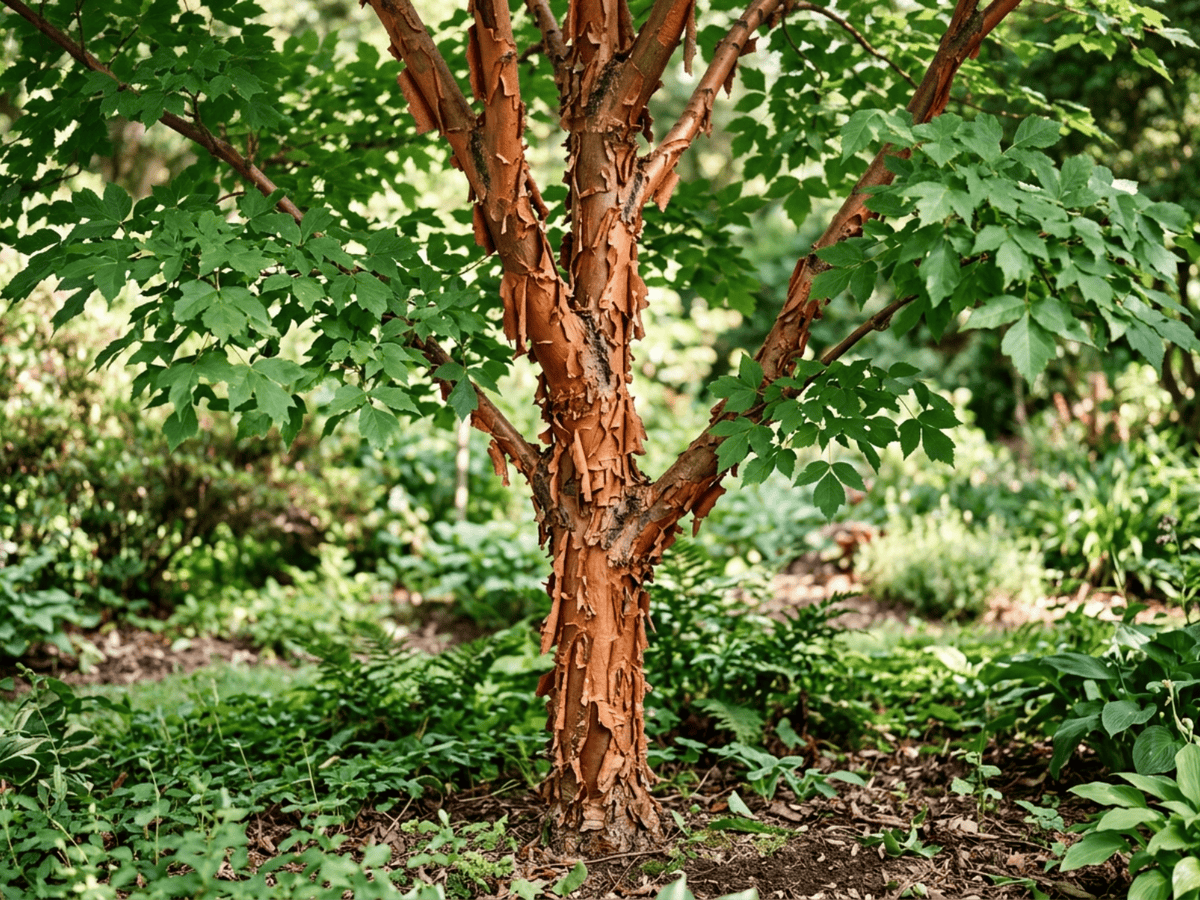 Paperbark MapleAcer griseum
 Sugar MapleAcer saccharum
Frequently asked questions
How often should I water Japanese Wisteria?
In summer, water about every 5 days; in winter, about every 21 days. Adjust for heat, pot size and drainage.
How much light does Japanese Wisteria need?
Full sun: 6+ hrs direct. Watch the leaves — scorching or stretching means the light needs adjusting.
Is Japanese Wisteria toxic to cats or dogs?
Pets Moderate (Dogs Moderate · Cats Moderate) Educational information, not medical or veterinary advice. If exposure is suspected, contact a doctor or veterinarian.
Is Japanese Wisteria easy to grow?
It is moderately demanding: a good choice once you have a little experience.
When does Japanese Wisteria bloom?
It typically blooms May in the Northern Hemisphere.
YardMate
Identify any plant in seconds
Snap a photo — YardMate names the plant, diagnoses problems, and reminds you when to water.
Download on the App Store