 YardMate
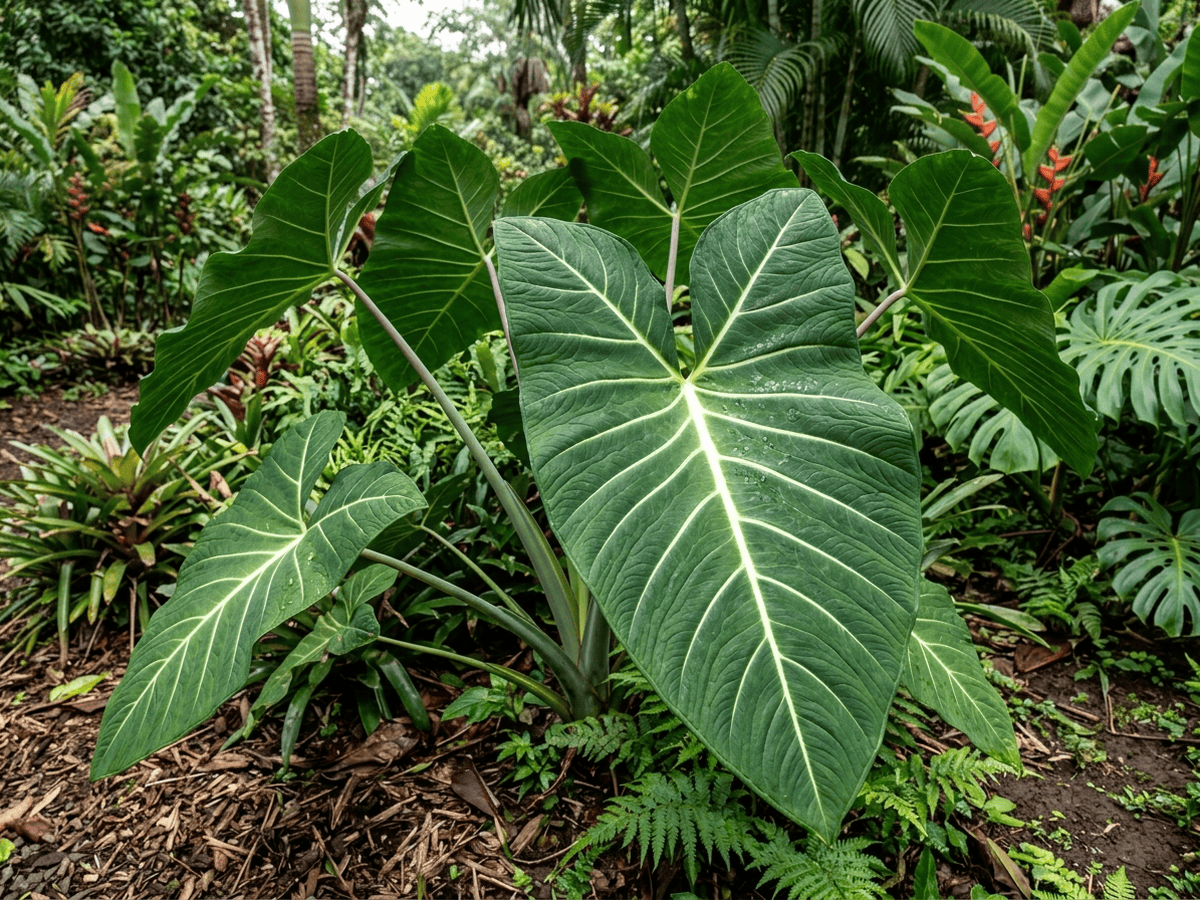
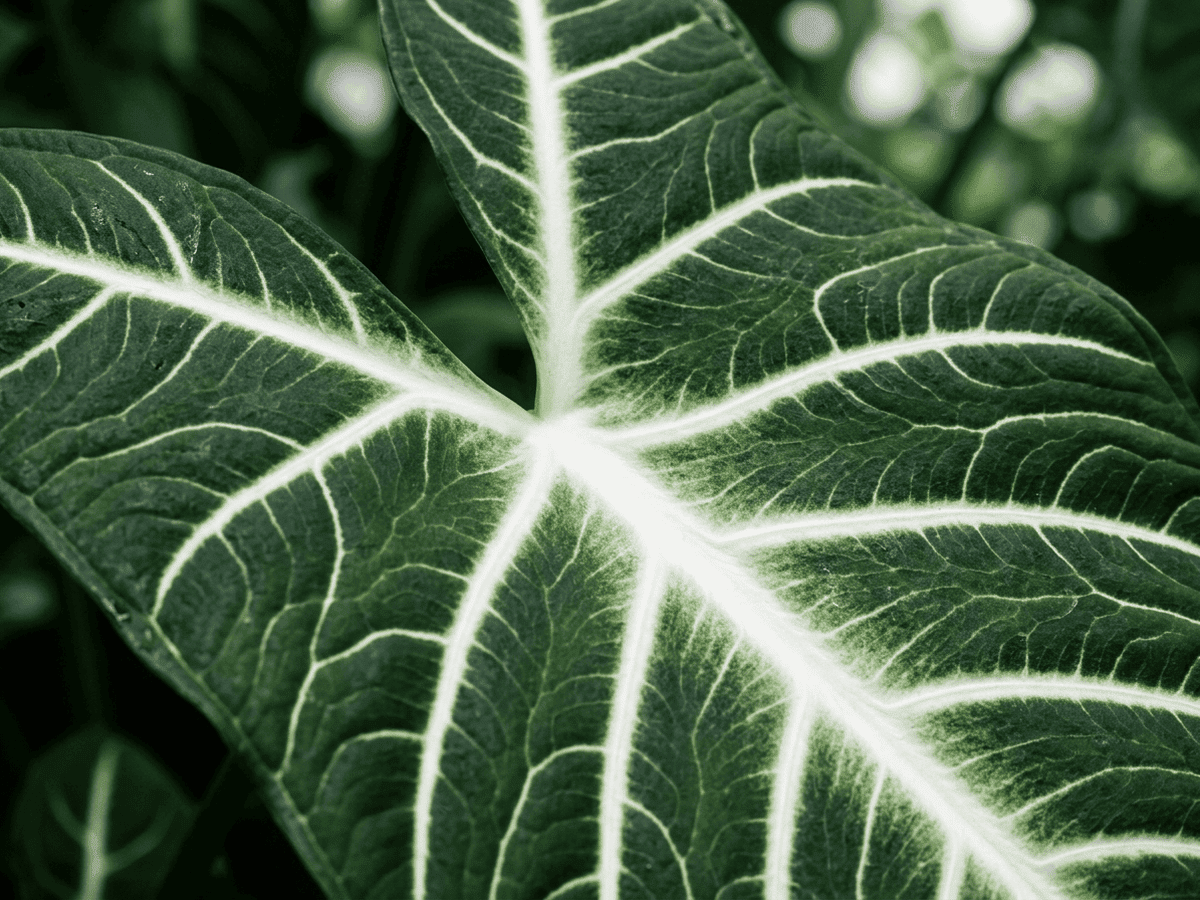
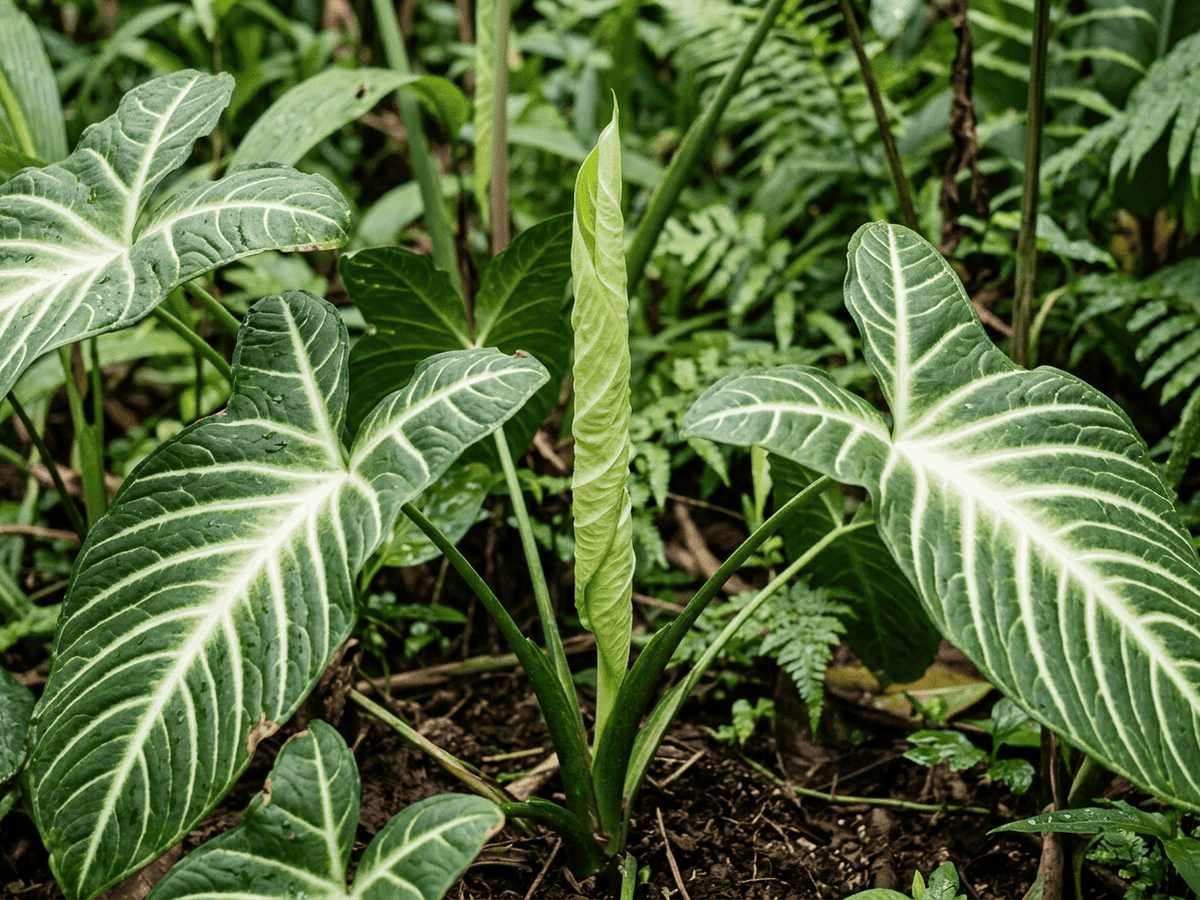
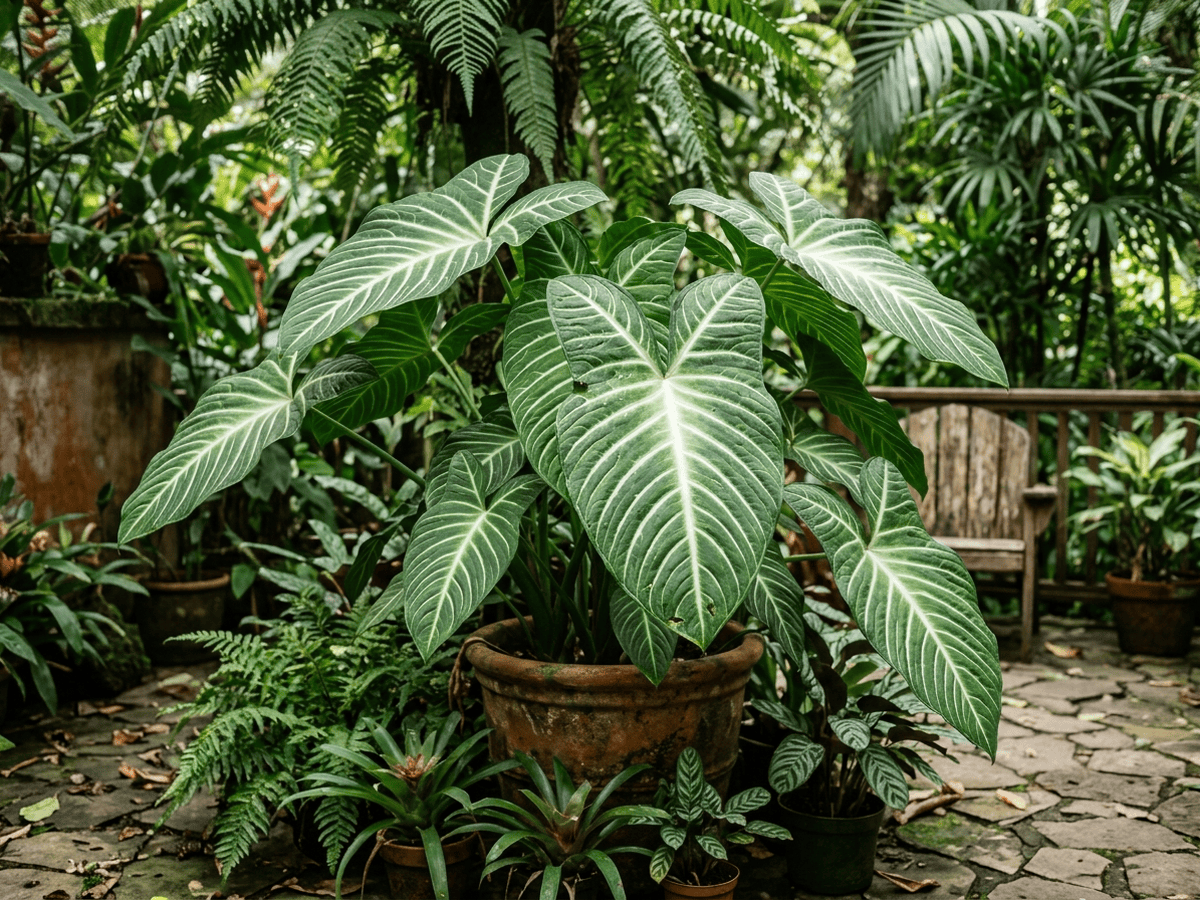
Wendland Elephant Ear
Xanthosoma wendlandii
Hard · Experienced growersAbout Wendland Elephant Ear
Xanthosoma wendlandii, the Wendland Elephant Ear, is a bold tropical perennial native to Costa Rica and neighboring Central America, prized for its dramatic architectural foliage. The enormous dark-green arrow-shaped leaves—reaching 3 feet long—are strikingly veined in white or pale green, creating a vivid graphic pattern that makes it one of the most distinctive foliage plants in tropical and subtropical gardens. Growing 4–6 feet tall in clumps, it thrives in warm, humid conditions with part shade and makes a statement specimen or container plant.
- Fast-growing
- Container-friendly
- Shade-tolerant
- Edible
How to care for Wendland Elephant Ear
Watering
- Springevery 10 days
- Summerevery 7 days
- Fallevery 20 days
- Winterevery 30 days
Soil · Chunky & airy
- Top dressingBark chips10%
- Main mixBark + potting soil + perlite 1:1:170%
- DrainageLECA20%
Chunky pieces hold air pockets open so thick roots don't suffocate.
FERTILIZER
Foliage Feed 24-8-16
Nitrogen leads so the plant spends its energy on dense green growth. Phosphorus and potassium follow just far enough to keep roots and stems up to speed.
- Nitrogen · Leaves
- Phosphorus · Roots + Blooms
- Potassium · Strength
- Springevery 30 days
- Summerevery 30 days
At a Glance
- NativeCentral America, South America
- Height4–6 ft (1.2–1.8 m)
- Spread3–5 ft (0.9–1.5 m)
- Foliage colorGreen
- SoilLoamy, Well-drained
- LocationsYard · Balcony
Fragrance
NO FRAGRANCE
Not fragrant.
Toxicity
Toxicity unknown
None reported
Unknown
EXPOSURE No exposure route is reported.
EFFECT No toxic effect is reported.
NOTE Toxicity for humans is not well documented; use caution until verified.
Unknown
EXPOSURE No exposure route is reported.
EFFECT No toxic effect is reported.
NOTE Toxicity for dogs is not well documented; use caution until verified.
Unknown
EXPOSURE No exposure route is reported.
EFFECT No toxic effect is reported.
NOTE Toxicity for cats is not well documented; use caution until verified.
Educational information, not medical or veterinary advice. If exposure is suspected, contact a doctor or veterinarian.
DISTRIBUTION


- Native
- Central America
- South America
History
Xanthosoma wendlandii is native to the humid lowland forests of Costa Rica and adjacent Central America, where it grows in the rich, moist soils of forest understories and stream banks. The genus Xanthosoma, from the Greek for 'yellow body,' encompasses about 70 species, many of which are staple food crops in tropical America—including cocoyam (Xanthosoma sagittifolium), a corm vegetable widely eaten across the Caribbean, West Africa, and the Pacific Islands where it was introduced as a crop plant.
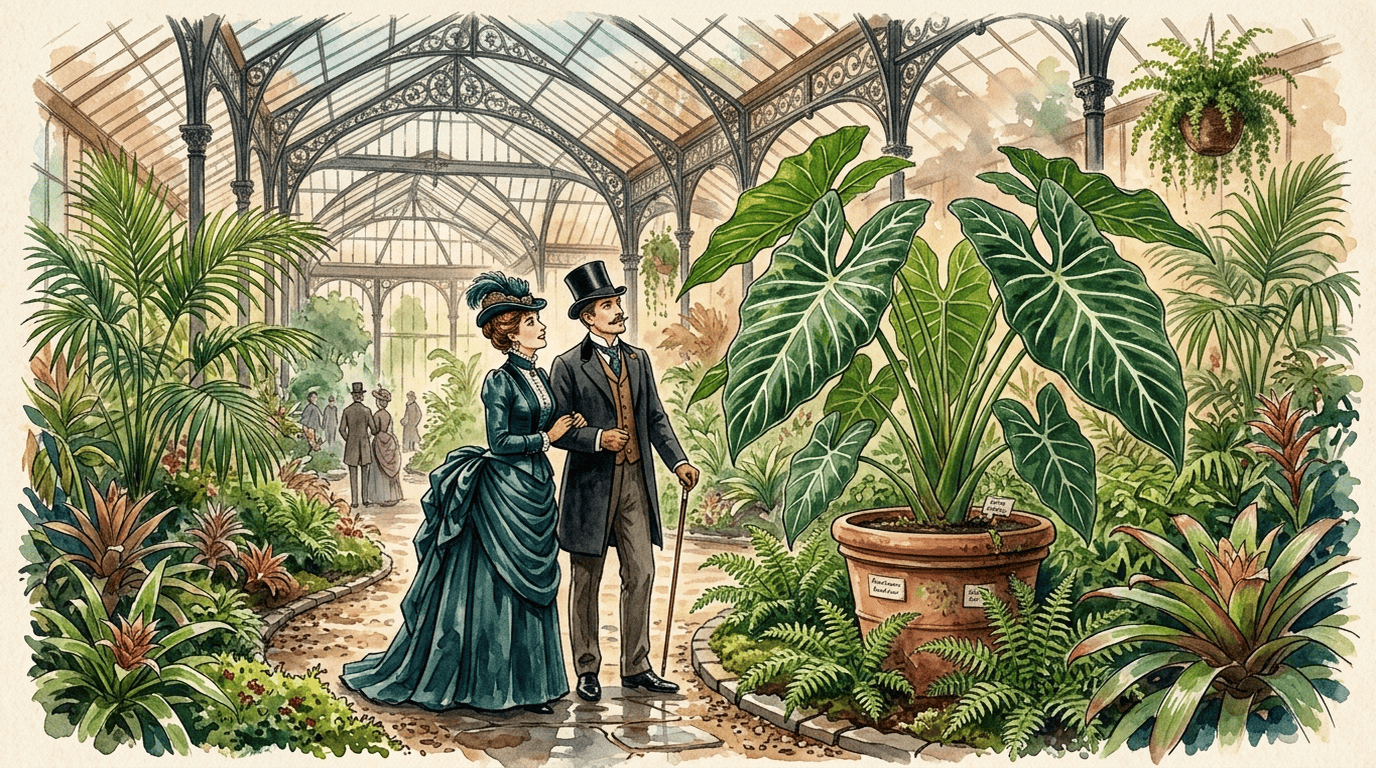
Xanthosoma wendlandii was named in honor of Hermann Wendland (1825–1903), a German botanist and horticulturalist who served as director of the Royal Gardens of Herrenhausen in Hanover and made significant contributions to the study of tropical palms and aroids. Victorian botanical collectors brought specimens of this striking plant to European hothouses, where its bold white-veined foliage created a sensation among plant enthusiasts. The Wardian case revolution—which allowed plants to survive long sea voyages for the first time—opened the floodgates for tropical foliage plants like Xanthosoma to reach European conservatories in the mid-19th century.
In the 20th century, elephant ears in general became staple plants of tropical-themed gardens in warm climates and of container gardening in temperate regions, prized for creating instant jungle atmosphere. X. wendlandii remains one of the most dramatically patterned of all elephant ear species, its white-veined leaves giving it a more architectural quality than many relatives.
Symbolism & meaning
What It Symbolizes
The elephant ear leaves of Xanthosoma wendlandii do not suggest subtlety—they announce themselves. In tropical gardens they create an immediate sense of lushness and scale, transforming a corner of a temperate garden into something that feels genuinely exotic. Victorian plant hunters understood this power; a single Wardian case containing one of these plants could make a conservatory famous.
- grandeur — The vast arching leaves—some reaching 3 feet—embody tropical abundance and the overwhelming scale of rainforest nature.
- boldness — The striking white vein pattern on deep green leaves represents a confident, graphic beauty that does not ask to be overlooked.
Where the Name Comes From
The genus name Xanthosoma derives from the Greek 'xanthos' (yellow) and 'soma' (body), referring to the yellow interior of its tubers. The species epithet wendlandii honors Hermann Wendland (1825–1903), director of the Royal Gardens of Herrenhausen in Hanover, a leading 19th-century horticulturalist and botanist specializing in tropical plants.
Uses & Fun Facts
- Bold architectural foliage plant for tropical gardens, shaded borders, and large containers; enormous white-veined leaves create dramatic visual impact
- Closely related Xanthosoma species yield cocoyam corms, a staple starchy vegetable across tropical America, West Africa, and the Pacific Islands
Related plants
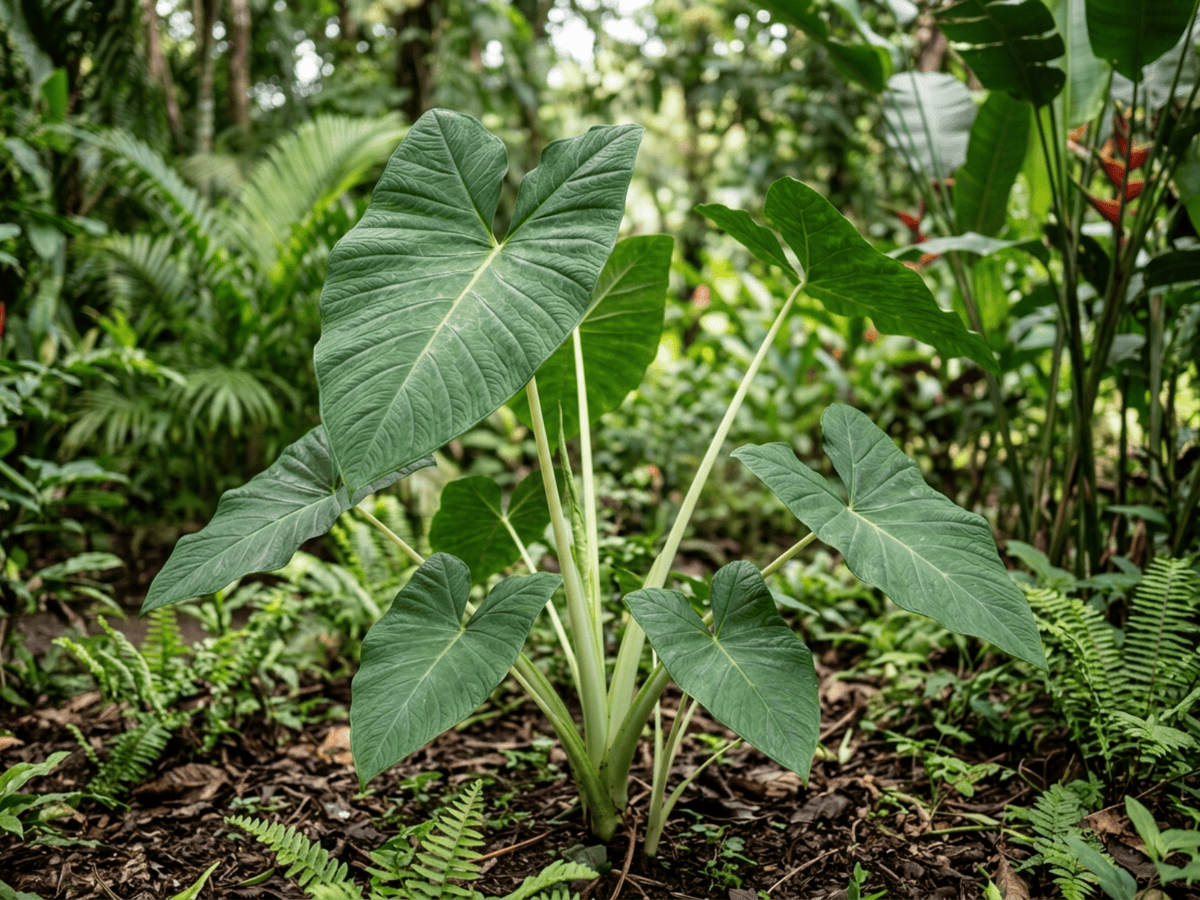
More Xanthosoma plants
Plants with similar care
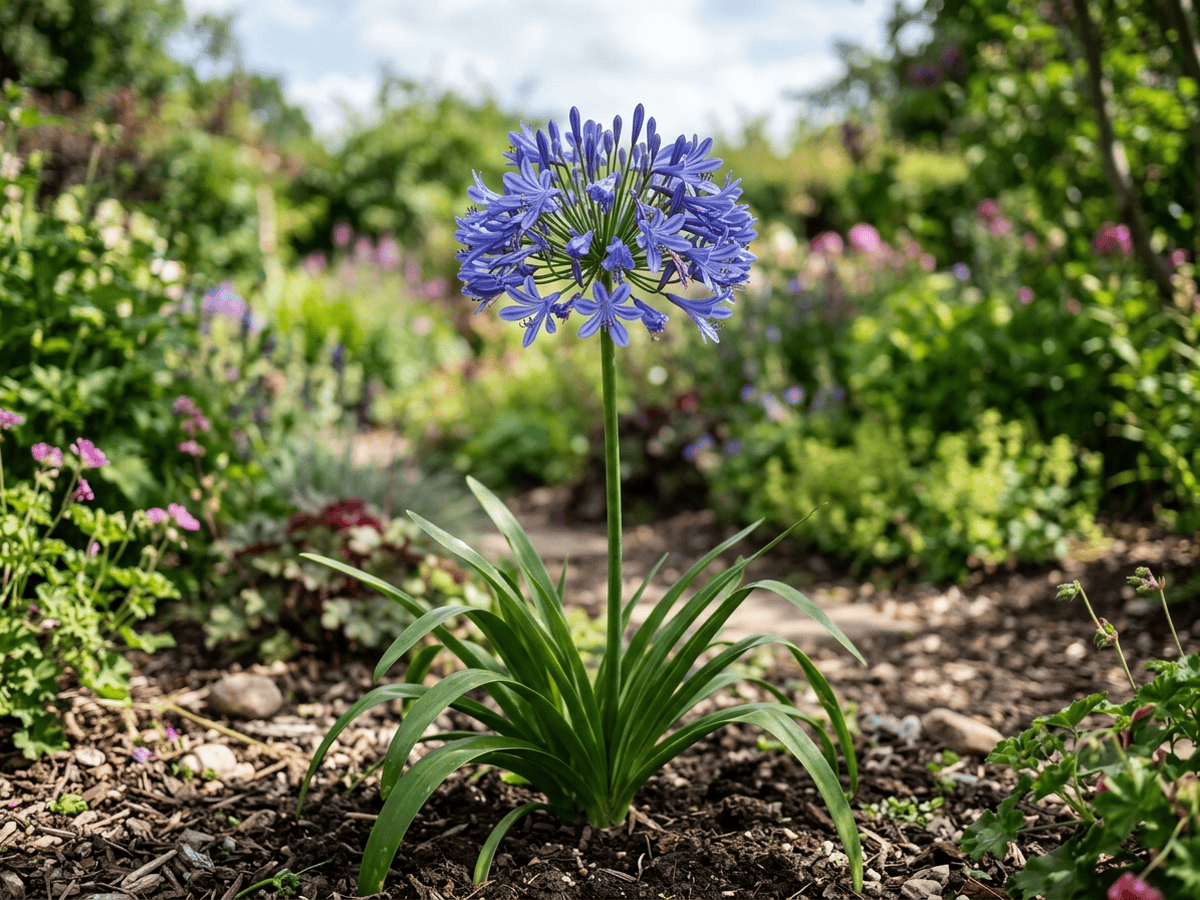 African LilyAgapanthus africanus
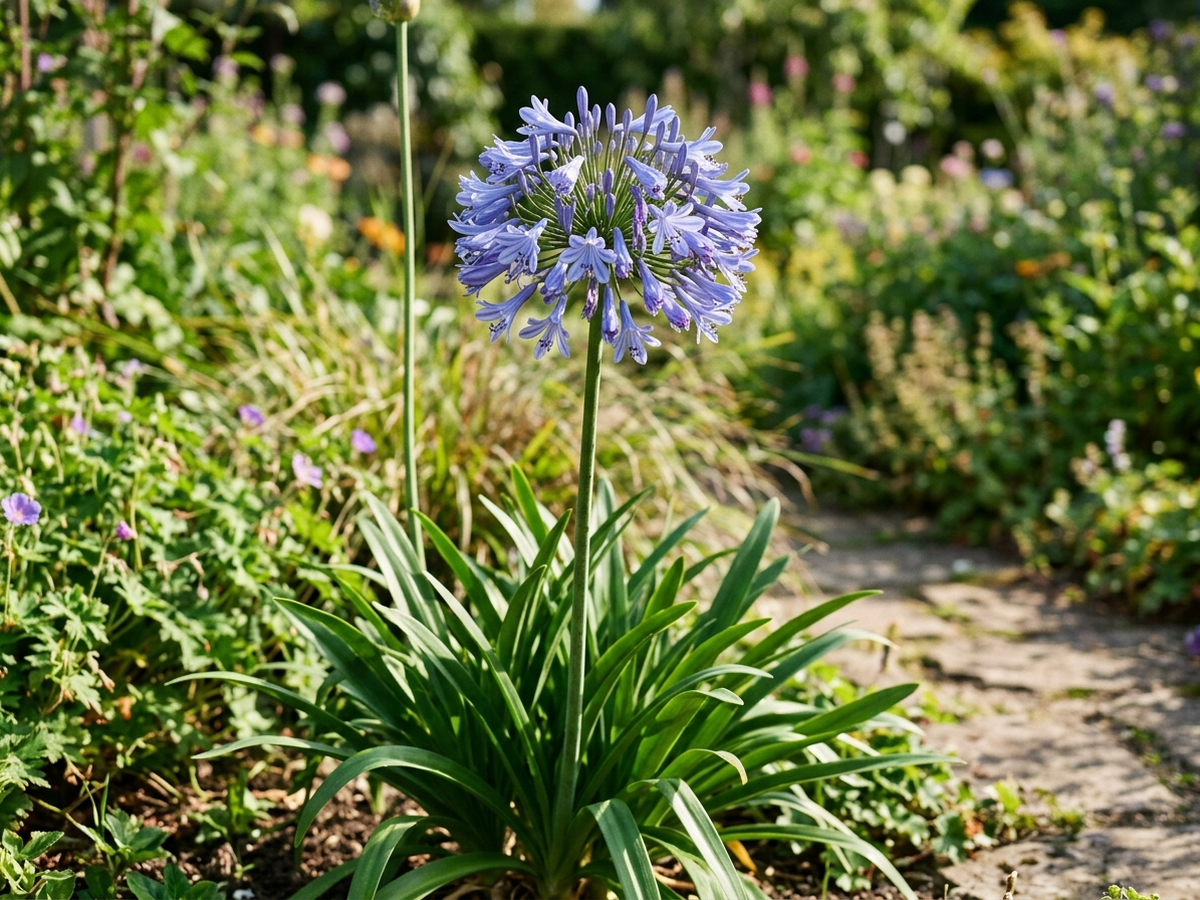 Bell AgapanthusAgapanthus campanulatus
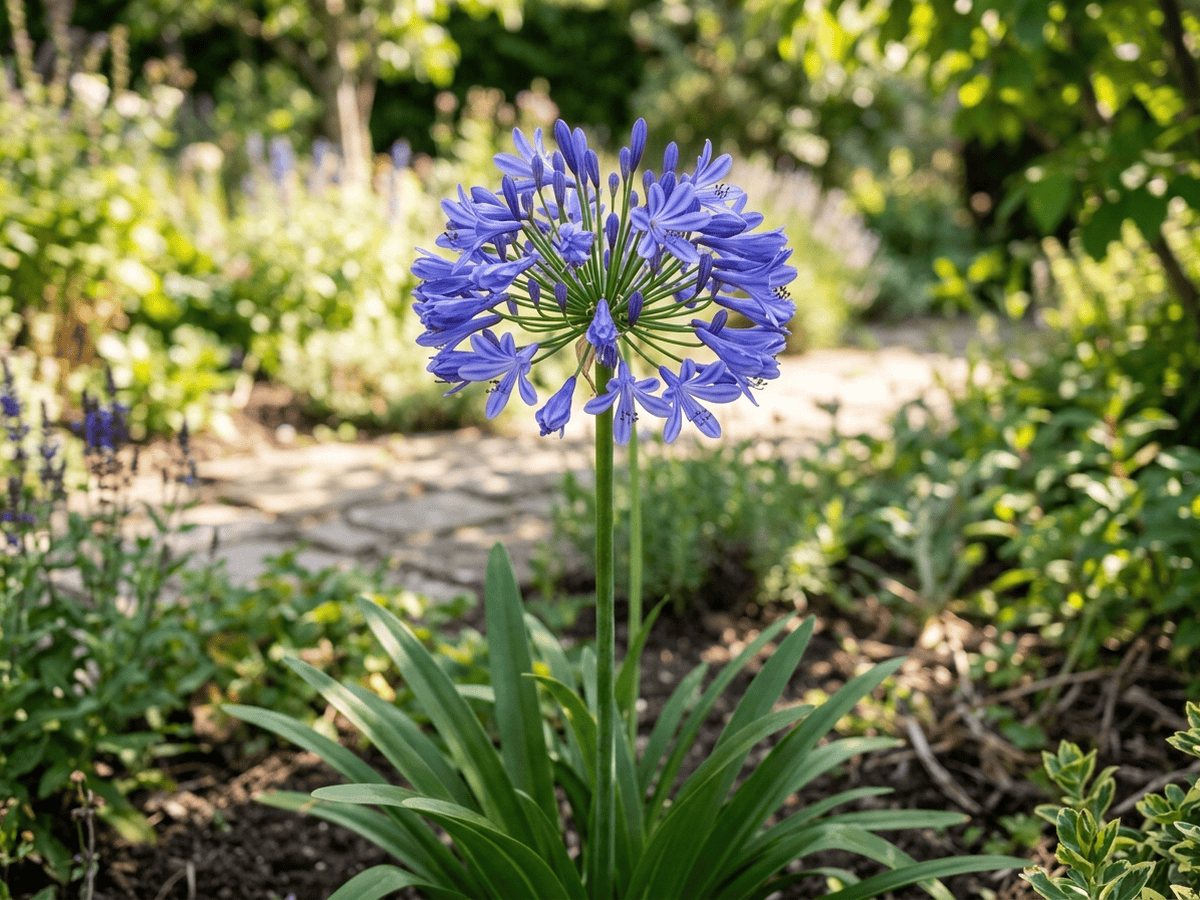 Common AgapanthusAgapanthus praecox
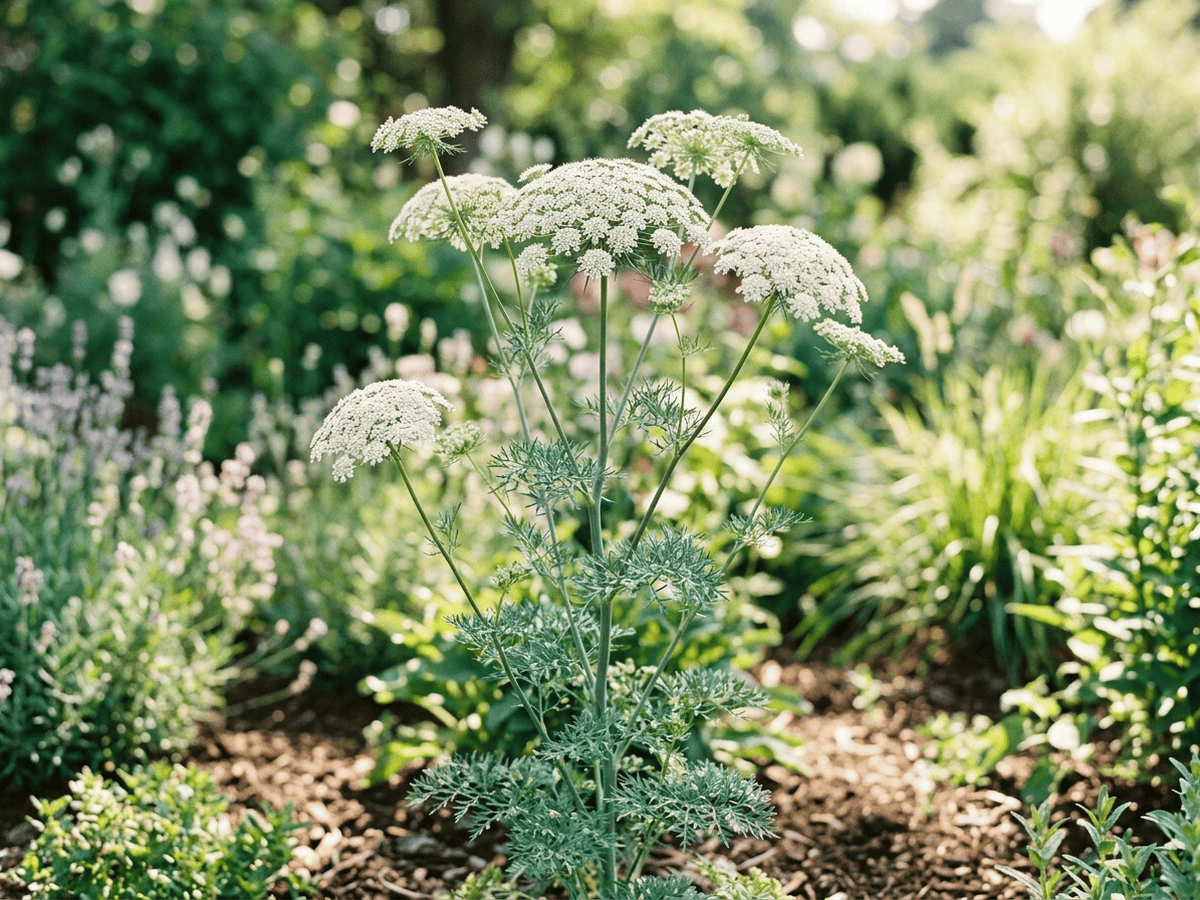 False Queen Anne's LaceAmmi majus glaucifolium
Frequently asked questions
How often should I water Wendland Elephant Ear?
In summer, water about every 7 days; in winter, about every 30 days. Adjust for heat, pot size and drainage.
How much light does Wendland Elephant Ear need?
Part sun: 4–6 hrs direct. Watch the leaves — scorching or stretching means the light needs adjusting.
Is Wendland Elephant Ear toxic to cats or dogs?
Pets Unknown (Dogs Unknown · Cats Unknown) Educational information, not medical or veterinary advice. If exposure is suspected, contact a doctor or veterinarian.
Is Wendland Elephant Ear easy to grow?
It is considered challenging and rewards experienced growers.
YardMate
Identify any plant in seconds
Snap a photo — YardMate names the plant, diagnoses problems, and reminds you when to water.
Download on the App Store