 YardMate
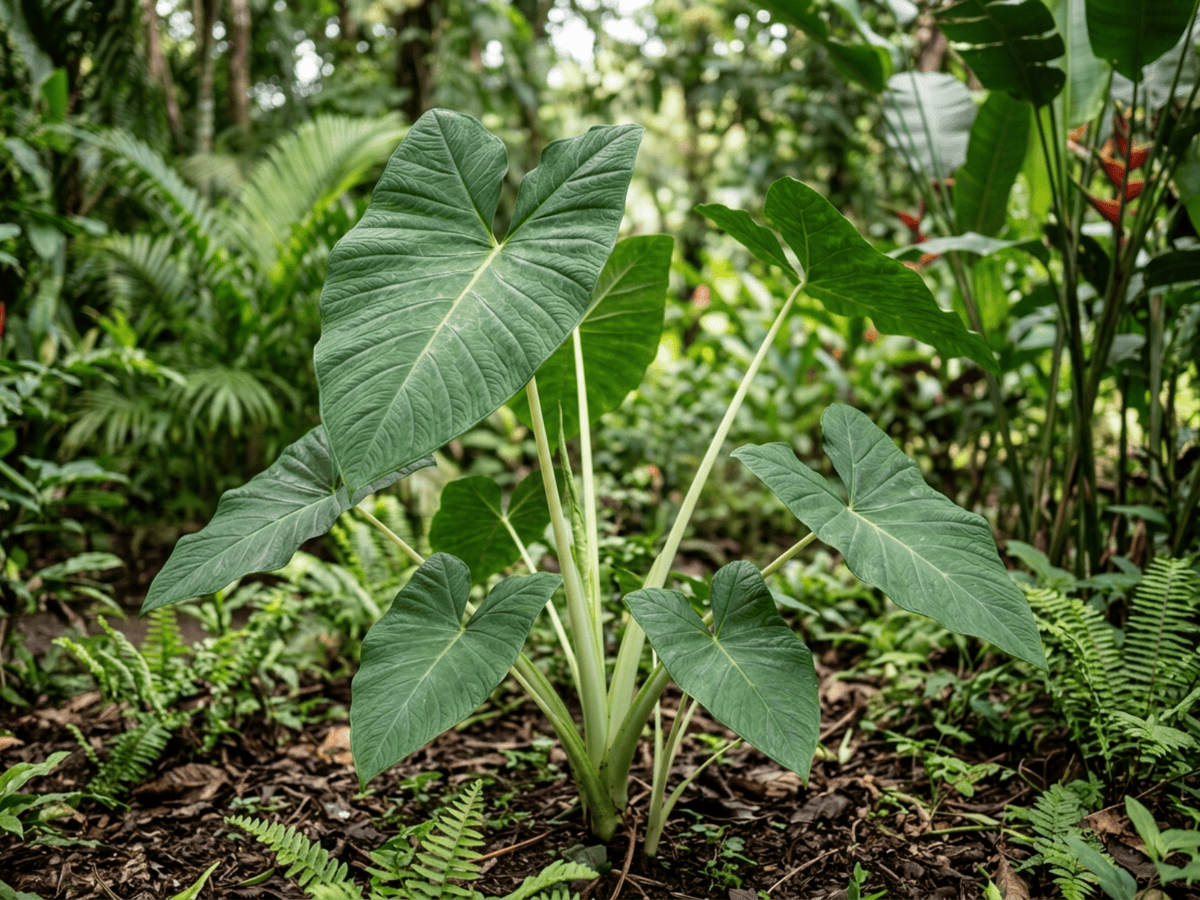


Arrowleaf Elephant's Ear
Xanthosoma sagittifolium
Medium · Some experienceAbout Arrowleaf Elephant's Ear
Arrowleaf Elephant Ear, also called Malanga or Tannia, is a large tropical aroid native to Central and South America and widely cultivated as a food crop throughout the tropics. It grows 4 to 6 feet tall with large, arrow-shaped leaves on long petioles emerging from a central corm. The starchy corms and cormels are an important carbohydrate source in the Caribbean, West Africa, and the Pacific Islands, valued for their nutty, earthy flavor when cooked. Unlike taro, Xanthosoma tolerates more shade and is often intercropped beneath tree canopies. The plant is the second most important tropical root crop in the aroid family after taro. Ornamentally, it creates bold tropical foliage effects and is increasingly used in temperate gardens as a seasonal specimen. It requires rich, moist soil and warm temperatures to produce well. All parts contain calcium oxalate crystals and must be thoroughly cooked before eating. The young leaves are also eaten as a cooked green vegetable in many tropical cultures.
- Edible
- Shade-tolerant
- Tropical
How to care for Arrowleaf Elephant's Ear
Watering
- Springevery 1 days
- Summerevery 1 days
- Fallevery 3 days
- Winterevery 14 days
Soil · Chunky & airy
- Top dressingBark chips10%
- Main mixBark + potting soil + perlite 1:1:170%
- DrainageLECA20%
Chunky pieces hold air pockets open so thick roots don't suffocate.
FERTILIZER
Balanced Feed 14-14-14
An even feed covers all three needs at once, keeping leaves, roots and blooms moving together with nothing pushed out of balance.
- Nitrogen · Leaves
- Phosphorus · Roots + Blooms
- Potassium · Strength
- Springevery 30 days
- Summerevery 30 days
- Fallevery 30 days
At a Glance
- NativeCentral America
- Height4–8 ft (1.2–2.4 m)
- Spread3–6 ft (0.9–1.8 m)
- Flower colorWhite, Green, Yellow
- Foliage colorGreen
- SoilRich, Moisture-retentive, Loamy
- LocationsYard
Bloom time
BLOOM CYCLE
Peak bloom
Jun–Aug
Pale yellow spadix similar to other aroids; grown mainly for foliage and corms
Fragrance
NO FRAGRANCE
No notable fragrance.
Toxicity
Humans Moderate · Pets Moderate
insoluble calcium oxalate raphides
Moderate
- All (raw)
- Ingestion
EXPOSURE Eating all (raw).
EFFECT Calcium oxalate raphides — oral burning and irritation when raw and destroyed by proper cooking.
NOTE Similar Araceae toxicity profile; raw plant painful to mucous membranes, cooked corms and leaves are safely eaten.
Moderate
- All
- Ingestion
EXPOSURE Eating any part of the plant.
EFFECT Oral pain, drooling, swelling.
NOTE Similar Araceae toxicity profile; raw plant painful to mucous membranes, cooked corms and leaves are safely eaten.
Moderate
- All
- Ingestion
EXPOSURE Eating any part of the plant.
EFFECT Same as dogs.
NOTE Similar Araceae toxicity profile; raw plant painful to mucous membranes, cooked corms and leaves are safely eaten.
Educational information, not medical or veterinary advice. If exposure is suspected, contact a doctor or veterinarian.
DISTRIBUTION

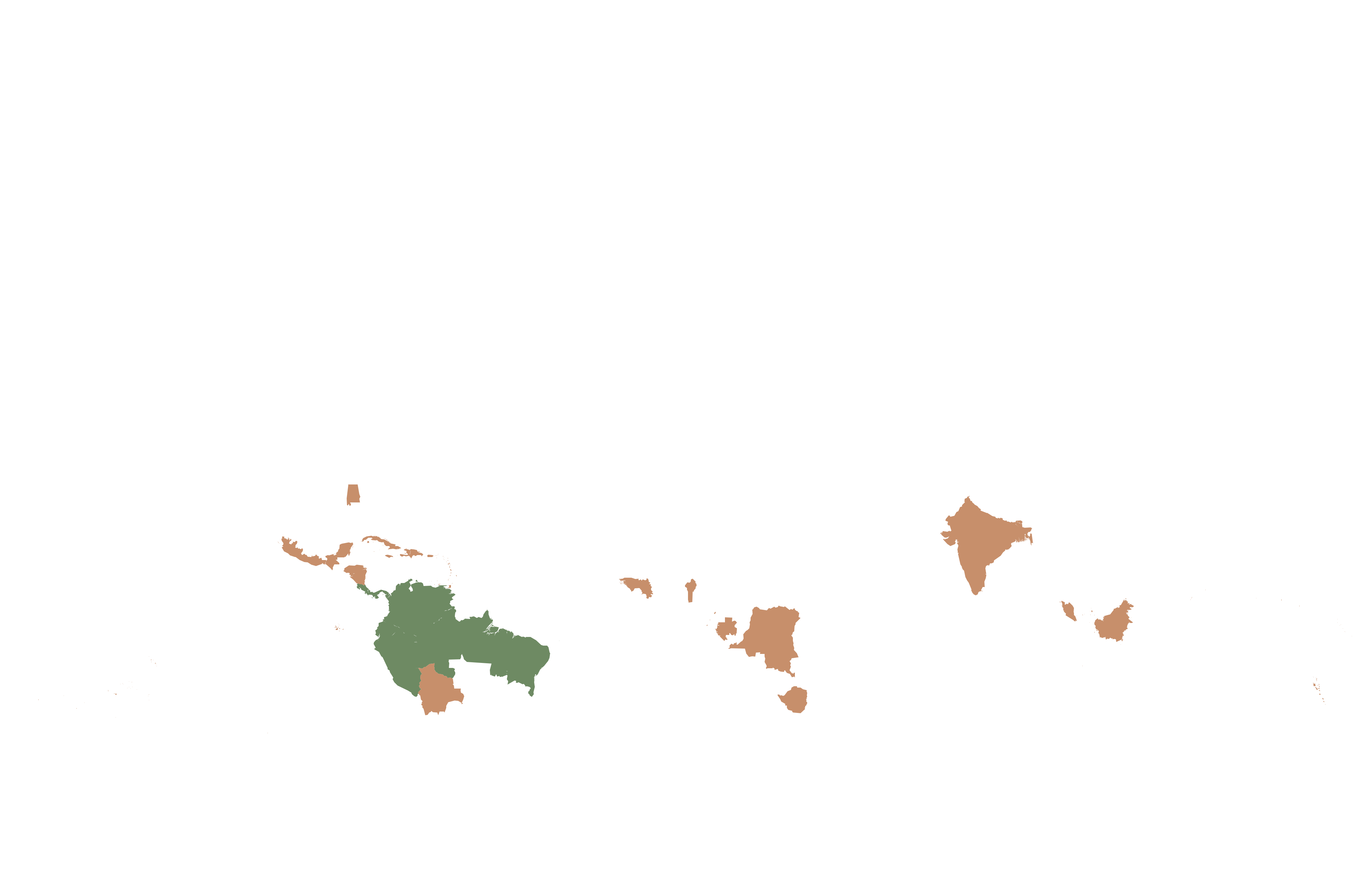
- Native
- Introduced
- Central America
History
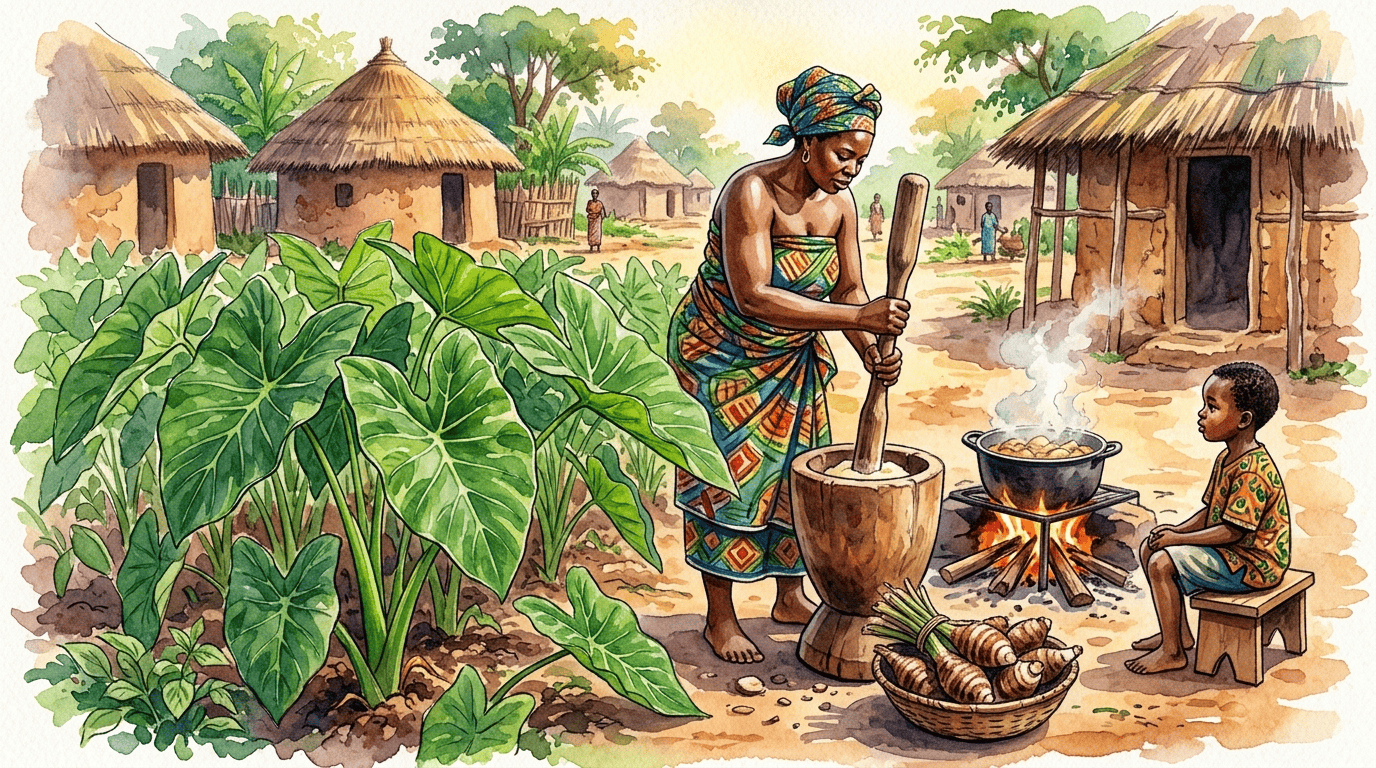
Xanthosoma sagittifolium is native to northern South America and the Caribbean, where it was cultivated by pre-Columbian peoples for its edible starchy corms. Unlike the Old World taro (Colocasia esculenta, called "old cocoyam" in West Africa), Xanthosoma is a New World aroid — a distinct genus — sometimes called "new cocoyam" to mark the contrast. After Columbian contact, Xanthosoma was carried to West Africa (via the Atlantic slave trade era), where it substantially replaced Old World taro in many regions because it tolerates drier soils and has a more robust harvest profile; it is now a carbohydrate staple in Nigeria, Ghana, Cameroon, and neighboring countries, and has spread further to Southeast Asia and Pacific islands. In the Caribbean it is called "yautía" (Spanish) or "malanga" (Cuban Spanish) and is a staple ingredient of mofongo, callaloo, and many Afro-Caribbean dishes.
The large arrowhead-shaped leaves are used as wrapping in some West African and Caribbean cooking traditions; the young leaves are a leafy vegetable (called "kontomire" in Ghana, "callaloo" in parts of the Anglophone Caribbean) comparable to spinach. Like all Araceae, it contains calcium oxalate and must be cooked before consumption. Xanthosoma sagittifolium was domesticated by indigenous peoples of the Americas thousands of years before European contact.
It was carried to Africa during the slave trade era, where it became a vital food crop. Today it is grown across the tropics as a primary starch source, with major production in Nigeria, Ghana, and the Caribbean. The plant sustained many communities where other crops failed, earning it deep cultural importance in West African and Caribbean cuisine.
Symbolism & meaning
What It Symbolizes
Arrowleaf Elephant's Ear is nourishment in tropical form, a vital starchy crop sustaining communities across the Caribbean, West Africa, and South America. Endurance shapes its life — it thrives in challenging humid conditions where other crops falter, surviving floods and poor soils. Its meaning is steady provision through difficulty, a great-leaved plant that has fed households on three continents while quietly mastering the hardest growing conditions.
- Nourishment — a vital food crop symbolizing sustenance and provision
- Endurance — thrives in challenging conditions, representing resilience and survival
Where the Name Comes From
'Xanthosoma' comes from Greek 'xanthos' (yellow) and 'soma' (body), referring to the yellow inner tissue of some species. 'Sagittifolium' means arrow-leaved, describing the distinctive leaf shape.
Uses & Fun Facts
- Starchy tubers cooked as tropical staple known as malanga
- Huge arrowhead leaves give bold tropical effect
Related plants
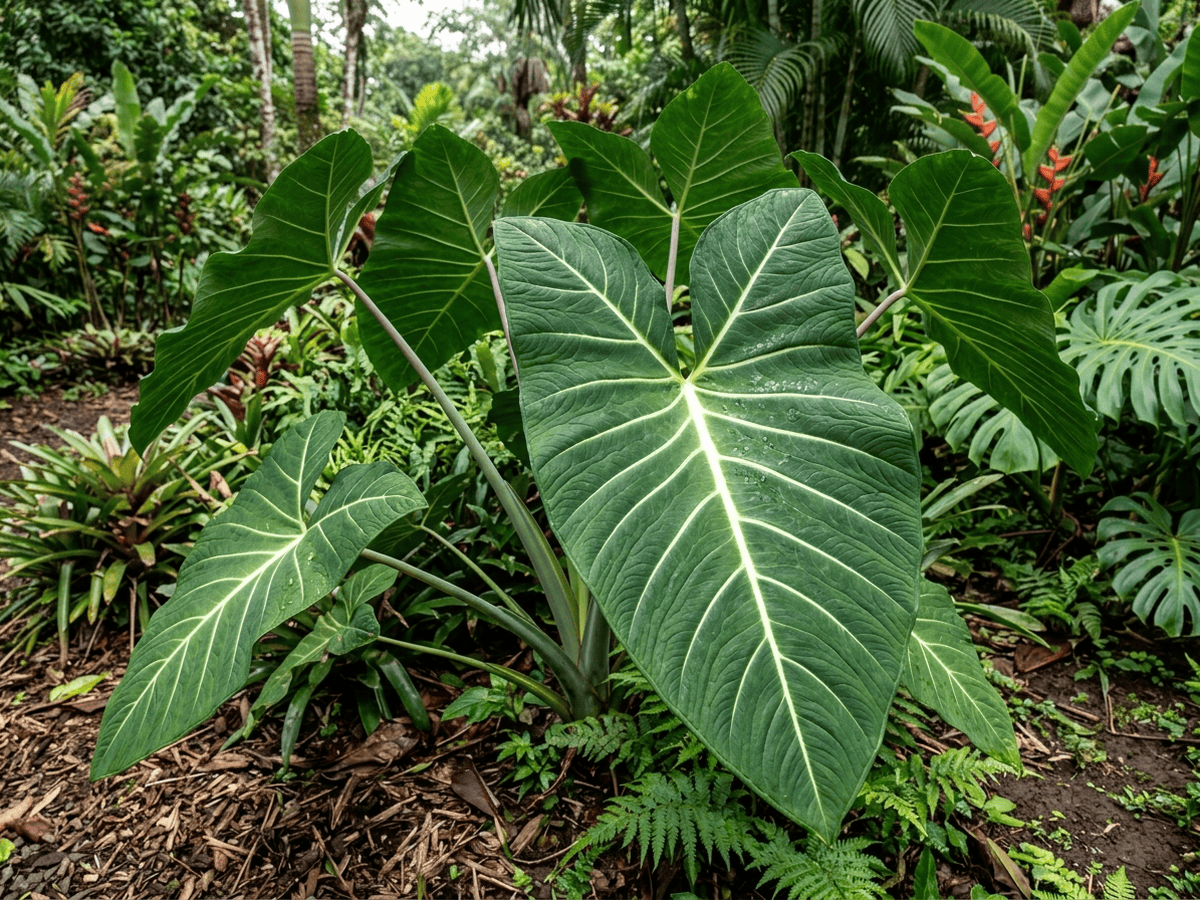
More Xanthosoma plants
Plants with similar care
 Japanese MapleAcer palmatum
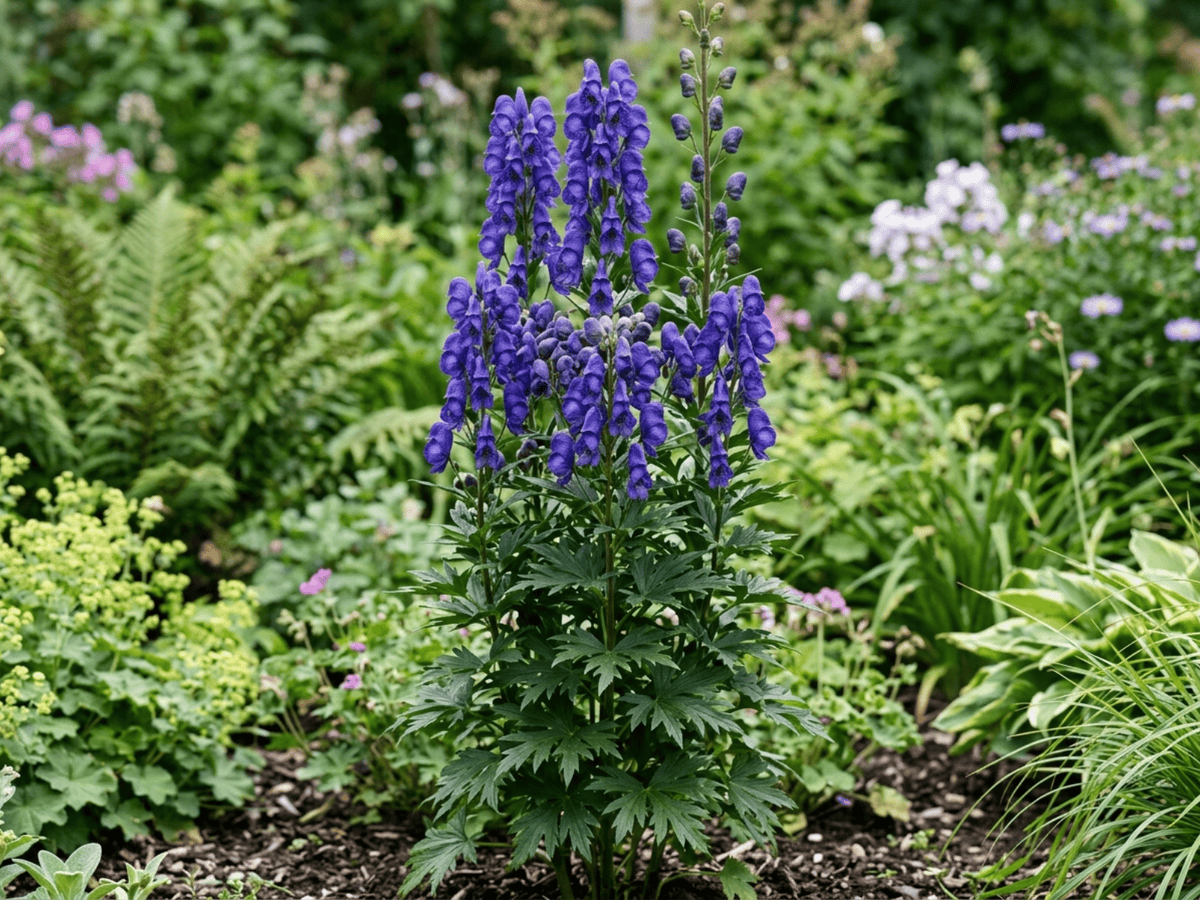 Azure MonkshoodAconitum carmichaelii
 Florida HobblebushAgarista populifolia
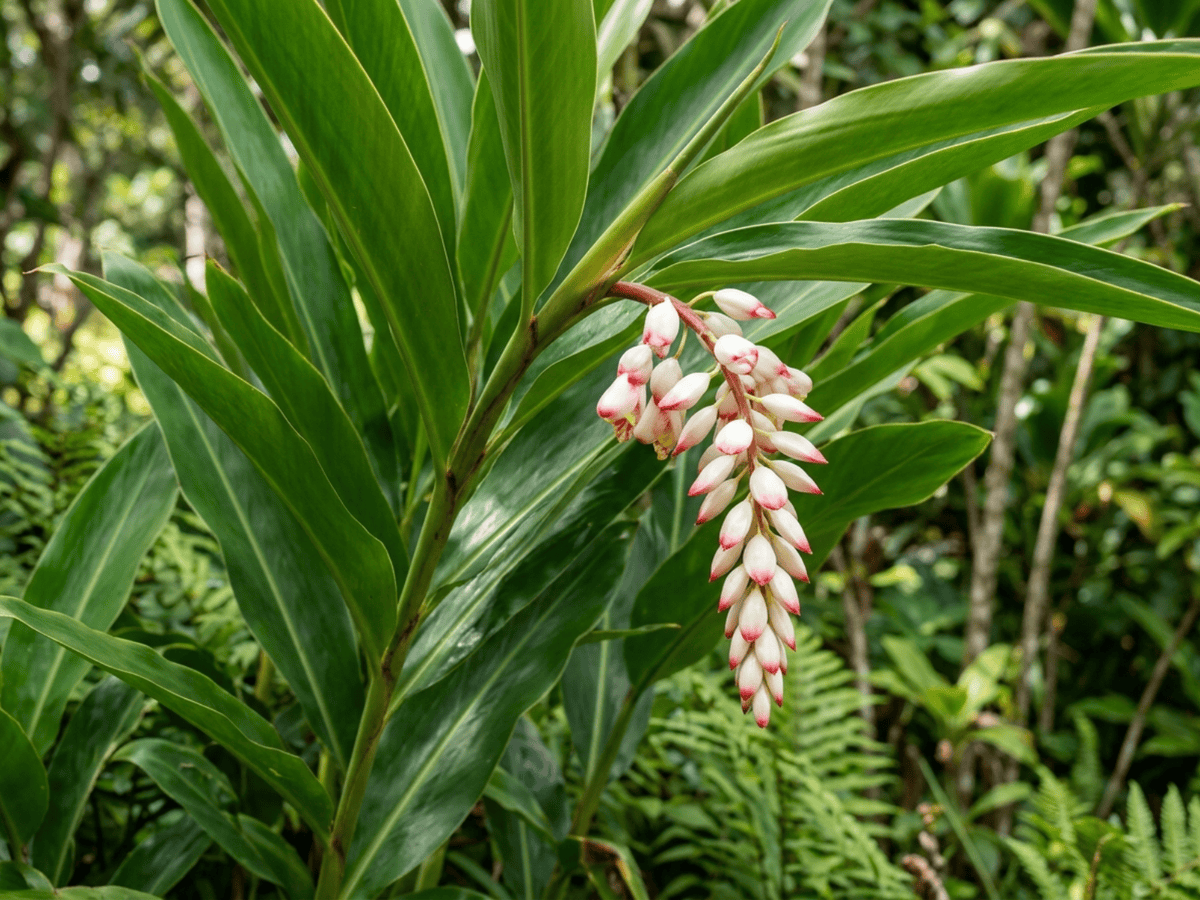 Shell GingerAlpinia zerumbet
Frequently asked questions
How often should I water Arrowleaf Elephant's Ear?
In summer, water about every 1 days; in winter, about every 14 days. Adjust for heat, pot size and drainage.
How much light does Arrowleaf Elephant's Ear need?
Part shade: 2–4 hrs direct. Watch the leaves — scorching or stretching means the light needs adjusting.
Is Arrowleaf Elephant's Ear toxic to cats or dogs?
Pets Moderate (Dogs Moderate · Cats Moderate) Educational information, not medical or veterinary advice. If exposure is suspected, contact a doctor or veterinarian.
Is Arrowleaf Elephant's Ear easy to grow?
It is moderately demanding: a good choice once you have a little experience.
When does Arrowleaf Elephant's Ear bloom?
It typically blooms Jun–Aug in the Northern Hemisphere.
YardMate
Identify any plant in seconds
Snap a photo — YardMate names the plant, diagnoses problems, and reminds you when to water.
Download on the App Store