 YardMate


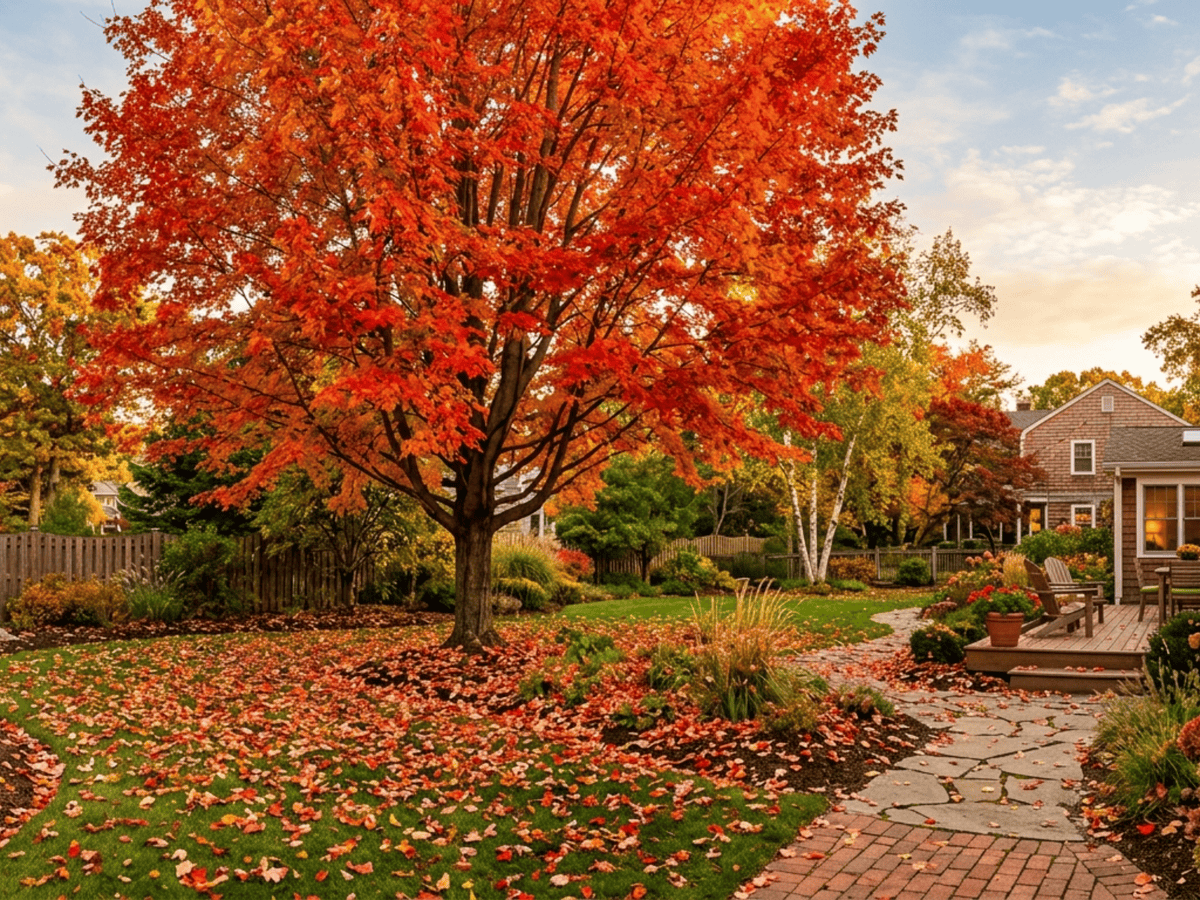
Red Maple
Acer rubrum
Easy · Beginner friendlyAbout Red Maple
Acer rubrum, the red maple, is a large deciduous tree in the Sapindaceae family native to eastern and central North America. Growing 18–25 m tall, it is one of the most common and widespread trees on the continent. True to its name, nearly everything about this tree has red highlights: red flower buds in winter, red flowers in early spring (before leaves), red-tinged samaras (winged seeds), and brilliant scarlet autumn foliage.
Red maple is extraordinarily adaptable, thriving in USDA zones 3–9 across a huge range of soil conditions—from swamps to dry ridges, acid to neutral soils. It tolerates urban pollution and compacted soil better than most large trees, making it popular for street planting. Named cultivars like 'October Glory' and 'Red Sunset' were selected for reliable autumn colour and improved form.
The red maple is one of the first trees to signal spring with its tiny red flowers and one of the first to colour in autumn—a tree that bookends the growing season. It provides crucial early-season nectar for bees emerging from winter dormancy. The wood is used in furniture and flooring ('soft maple'). Ecologically, red maple has been increasing its dominance in eastern forests due to fire suppression—it is shade-tolerant and sprouts vigorously after disturbance.
- Cold-hardy
- Native
- Pollinator-friendly
How to care for Red Maple
Watering
- Springevery 7 days
- Summerevery 5 days
- Fallevery 10 days
- Winterevery 30 days
Soil · Well-draining
- Top dressingPine bark mulch10%
- Main mixPotting soil + perlite 2:170%
- DrainageLECA / gravel20%
Never skip the drainage layer — standing water is the top cause of root rot.
FERTILIZER
Balanced Feed 14-14-14
An even feed covers all three needs at once, keeping leaves, roots and blooms moving together with nothing pushed out of balance.
- Nitrogen · Leaves
- Phosphorus · Roots + Blooms
- Potassium · Strength
- Springevery 60 days
At a Glance
- NativeNorth America
- Height40–70 ft (12.2–21.3 m)
- Spread30–50 ft (9.1–15.2 m)
- Flower colorRed
- Foliage colorGreen, Red
- SoilLoamy, Moisture-retentive, Acidic
- LocationsYard
Bloom time
BLOOM CYCLE
Peak bloom
Mar–Apr
Tiny red flowers among the first in spring, providing early nectar for bees. Predominantly dioecious — male and female flowers on separate trees.
Fragrance
NO FRAGRANCE
No notable fragrance.
Toxicity
Pets Safe
unidentified oxidant compound (horse-specific)
Not reported
EXPOSURE No exposure route is reported.
EFFECT No significant toxicity.
NOTE No human toxicity is reported in this catalog; avoid eating ornamental plants unless confirmed edible.
Safe
EXPOSURE No exposure route is reported.
EFFECT Not listed as toxic to dogs.
NOTE Listed as non-toxic for dogs; avoid eating ornamental plants unless confirmed edible.
Safe
EXPOSURE No exposure route is reported.
EFFECT Not listed as toxic to cats.
NOTE Listed as non-toxic for cats; avoid eating ornamental plants unless confirmed edible.
Educational information, not medical or veterinary advice. If exposure is suspected, contact a doctor or veterinarian.
DISTRIBUTION

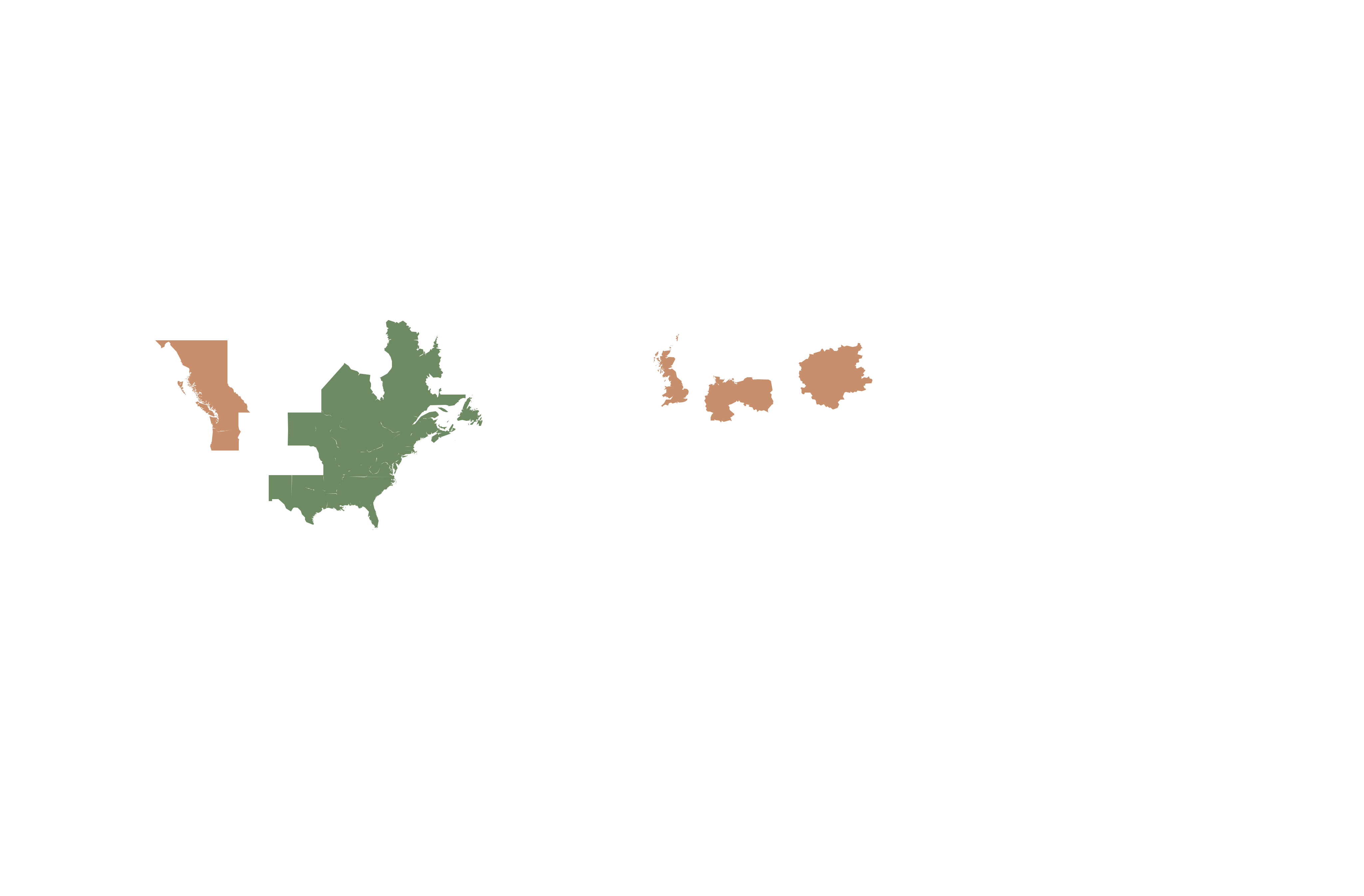
- Native
- Introduced
- North America
History

Acer rubrum is one of the most abundant and widely distributed native trees in eastern North America, ranging from Newfoundland south to Florida and west to eastern Texas. It was a key tree to many Indigenous Eastern Woodlands peoples for maple sugar production, medicinal bark, and wood. Red maple sap has lower sugar content than sugar maple (A. saccharum) but is still used in syrup production, particularly at the southern edge of the sugaring range where sugar maples don't grow.
Red maple is uniquely and severely toxic to horses — wilted or dried (but not fresh) leaves contain an uncharacterized compound causing acute hemolytic anemia and methemoglobinemia, often fatal. This toxicity was documented in the 1970s and has made red maple a tree that horse owners deliberately exclude from pastures. The species' brilliant scarlet fall color gives the Eastern deciduous forest its characteristic autumn display — "New England fall foliage" is driven substantially by Acer rubrum.
Modern commercial cultivars include "October Glory," "Red Sunset," and "Autumn Flame" selected for consistent fall color. Red maple is the most abundant tree in eastern North American forests. Native Americans used the bark medicinally and the sap for maple sugar (though sugar maple yields more). As a shade tree, it exploded in popularity after Dutch Elm Disease devastated elm-lined streets in the 1950s–70s.
Symbolism & meaning
What It Symbolizes
The Red Maple suggests adaptability, a quiet wisdom learned from thriving in swamps and on ridges, in cities and deep forests alike. When autumn arrives, its leaves ignite into brilliant scarlet, and that fiery foliage has long been read as the language of passion, intensity, and the sheer fire of life. To plant a red maple is to honour the strength that comes from bending with circumstance rather than breaking against it.
- Adaptability — Thriving in swamps and on ridges, in cities and forests, the red maple symbolizes flexible strength
- Passion — Brilliant scarlet autumn color represents intensity, emotion, and the fire of life
Where the Name Comes From
Acer is Latin for maple; 'rubrum' means red, describing the flowers, fruit, petioles, and autumn foliage.
Uses & Fun Facts
- Sap tapped alongside sugar maple for syrup production
- Early spring flowers feed emerging native bees
- Broad rounded canopy cools yards and streets
- Soft maple lumber used for furniture and pallets
Related plants
More Acer plants
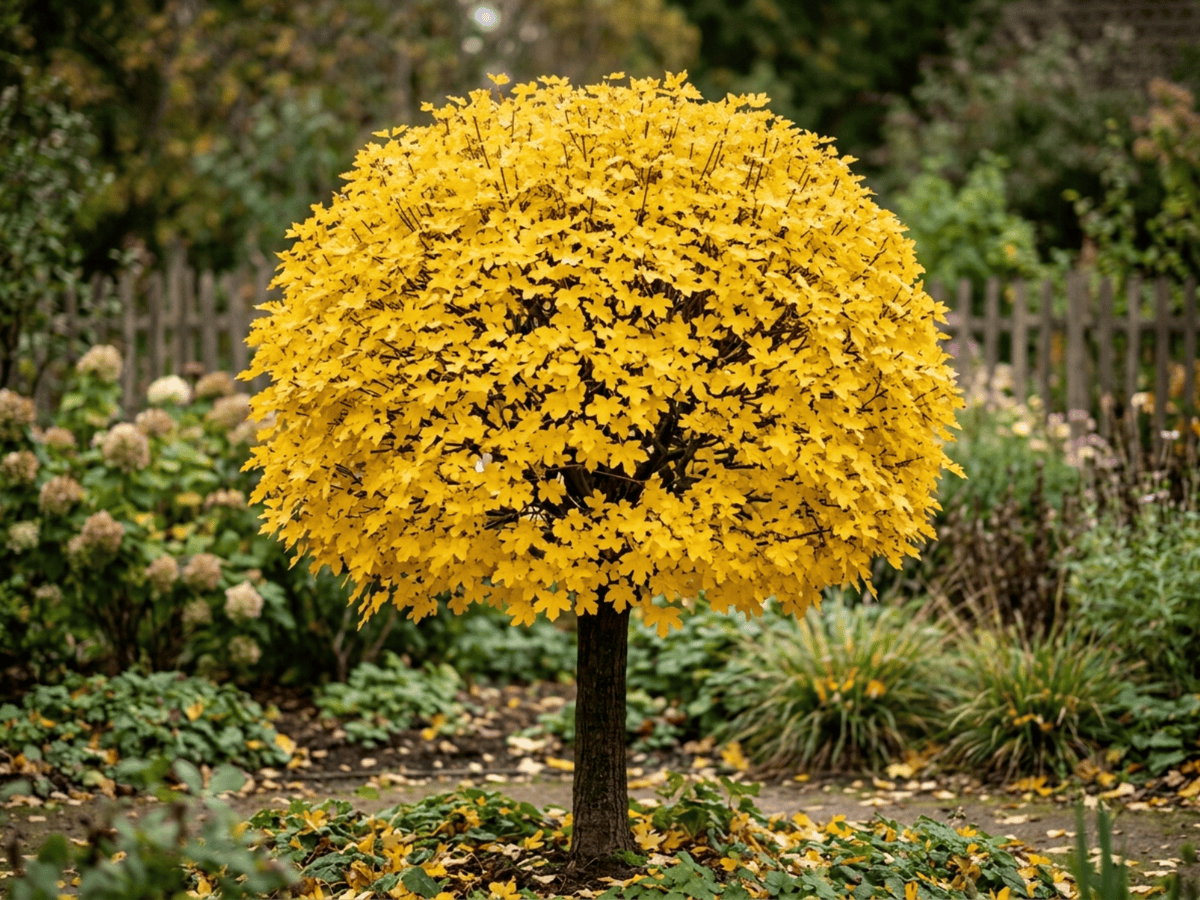 Field MapleAcer campestre
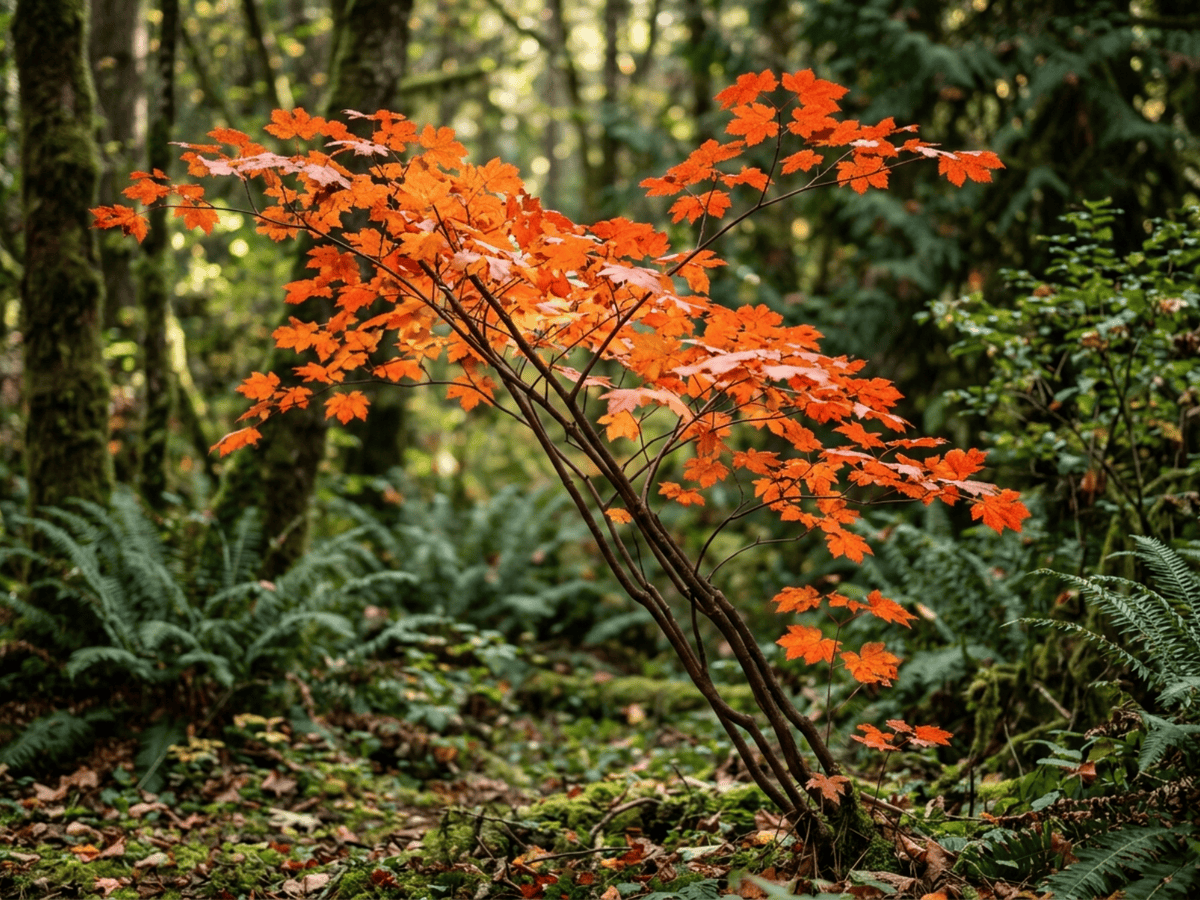 Vine MapleAcer circinatum
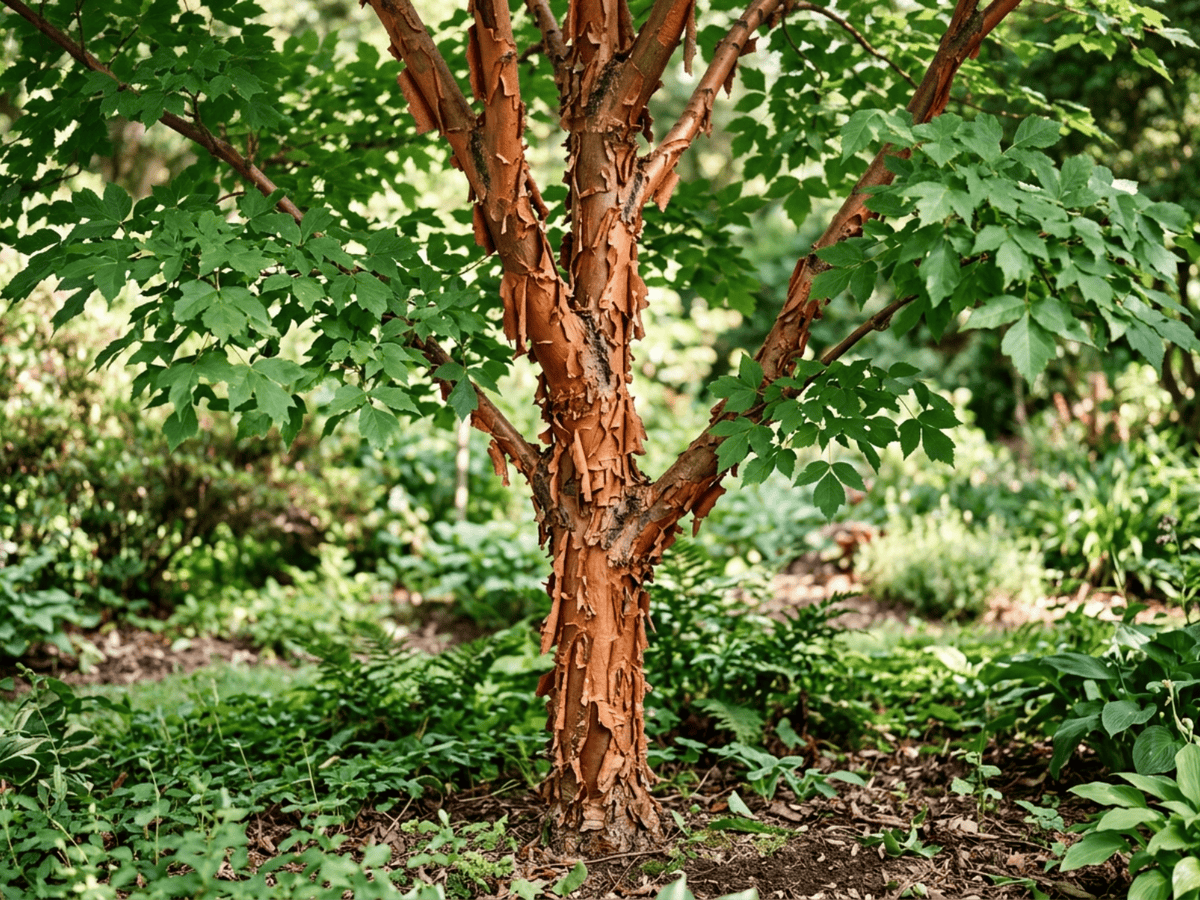 Paperbark MapleAcer griseum
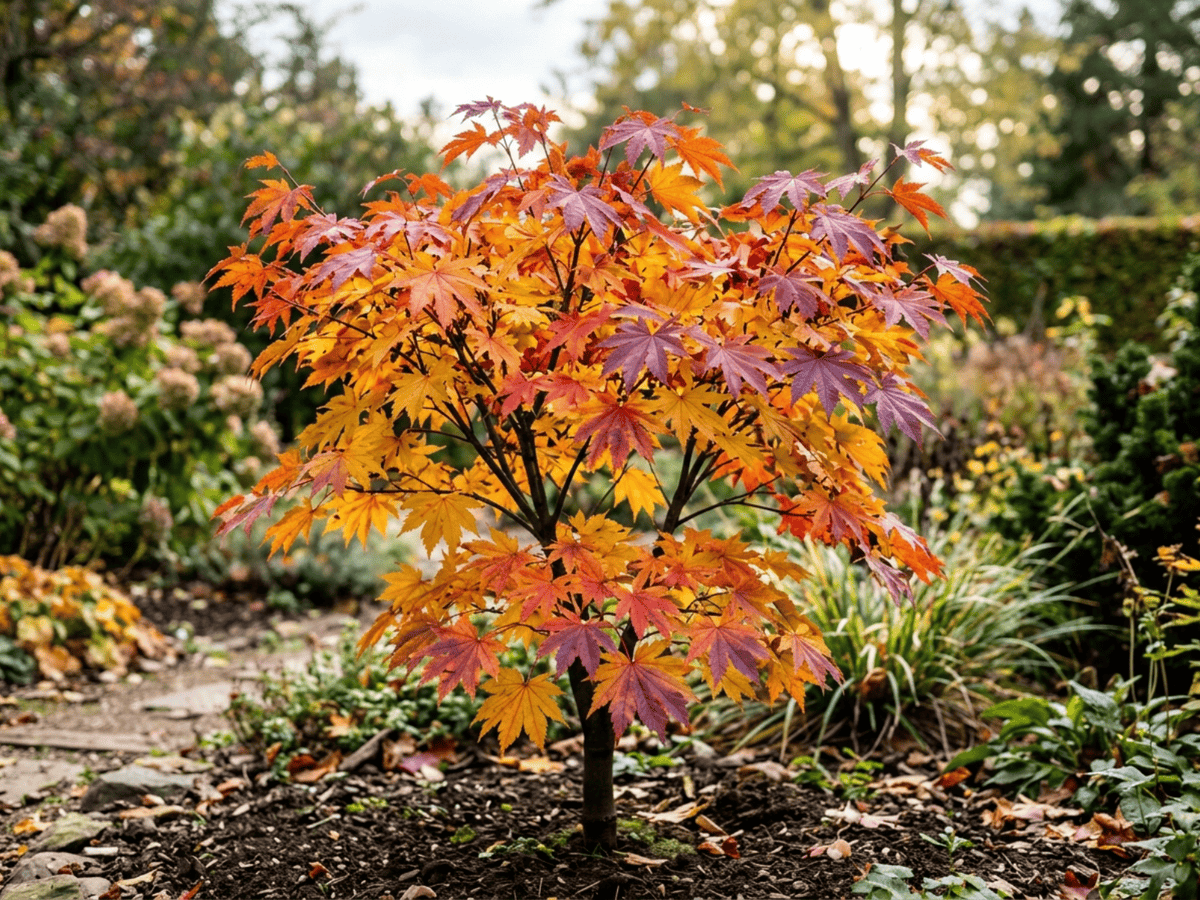 Downy Japanese MapleAcer japonicum
Plants with similar care
 Chinese AbeliaAbelia chinensis
 Fragrant AbeliaAbelia mosanensis
 Large-Flowered AbeliaAbelia uniflora
 Glossy AbeliaAbelia x grandiflora
Frequently asked questions
How often should I water Red Maple?
In summer, water about every 5 days; in winter, about every 30 days. Adjust for heat, pot size and drainage.
How much light does Red Maple need?
Full sun: 6+ hrs direct. Watch the leaves — scorching or stretching means the light needs adjusting.
Is Red Maple toxic to cats or dogs?
Pets Safe (Dogs Safe · Cats Safe) Educational information, not medical or veterinary advice. If exposure is suspected, contact a doctor or veterinarian.
Is Red Maple easy to grow?
Yes — it is considered an easy, beginner-friendly plant.
When does Red Maple bloom?
It typically blooms Mar–Apr in the Northern Hemisphere.
YardMate
Identify any plant in seconds
Snap a photo — YardMate names the plant, diagnoses problems, and reminds you when to water.
Download on the App Store