 YardMate

Kris-Plant
Alocasia sanderiana
Medium · Some experienceAbout Kris-Plant
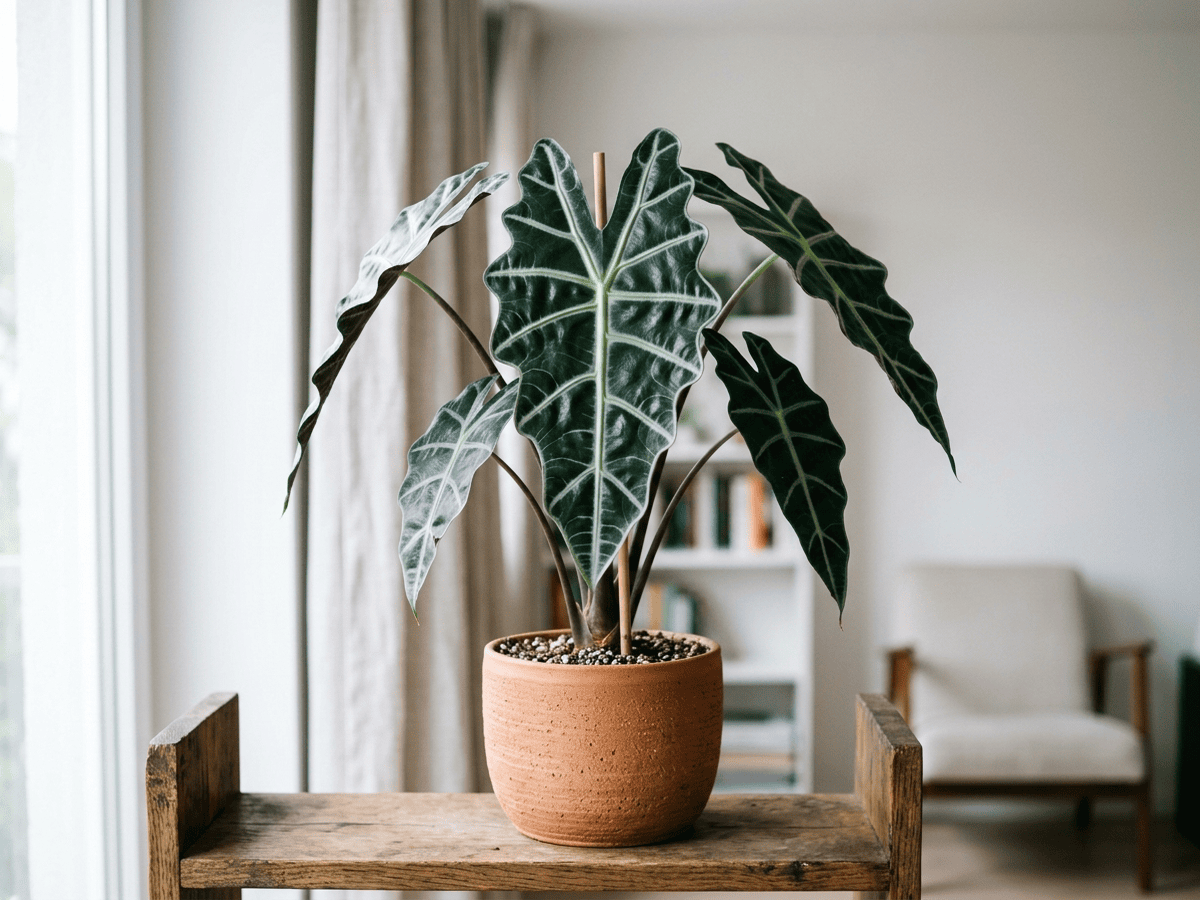
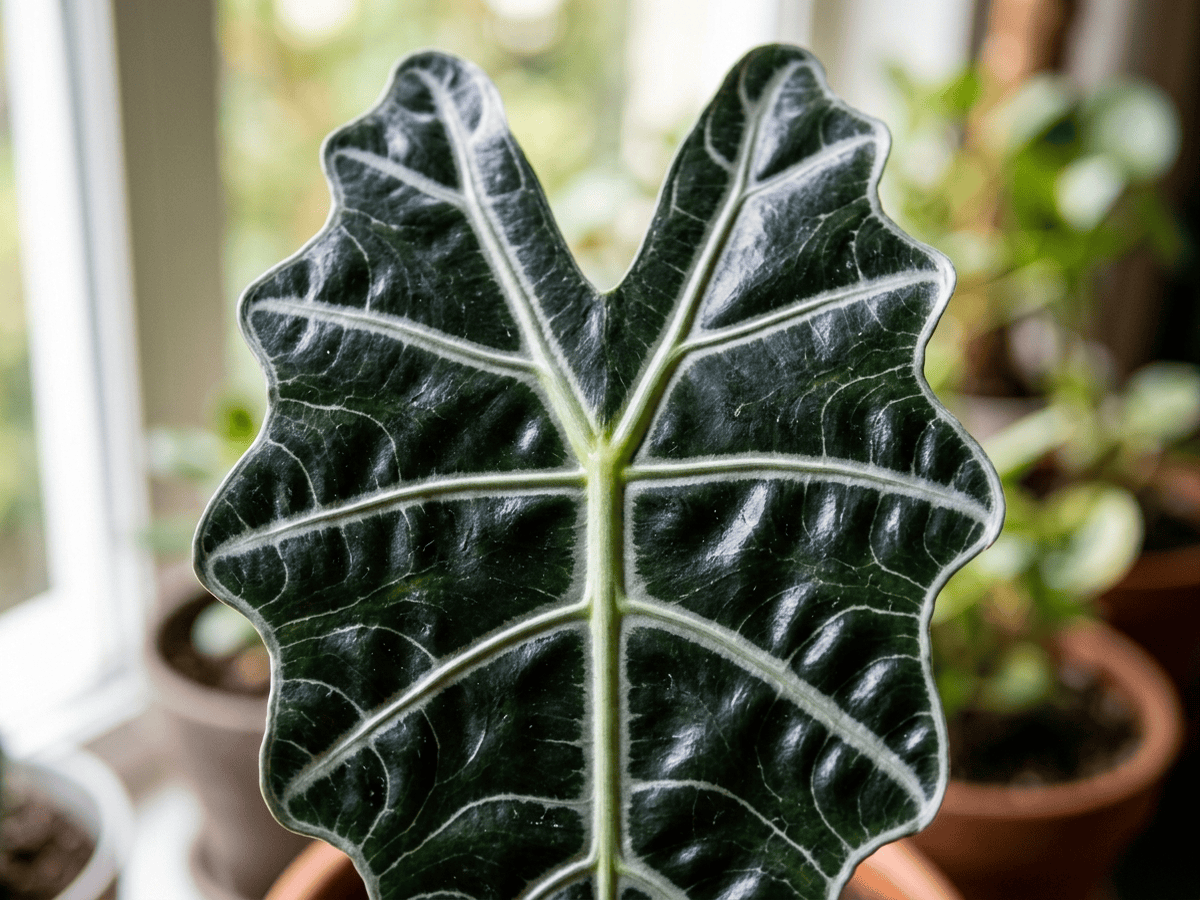
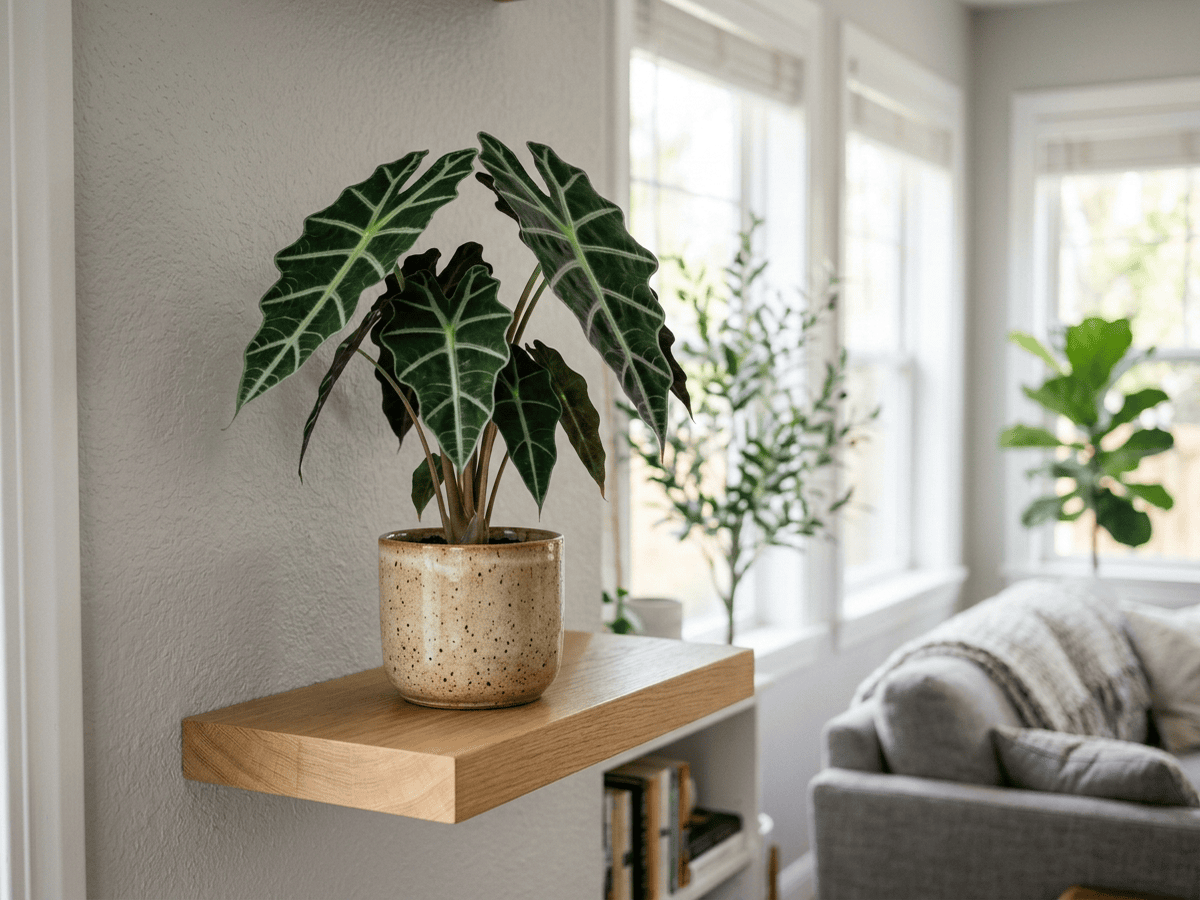
Kris Plant is a striking Philippine aroid with elongated arrow-shaped glossy dark-green leaves dramatically scalloped along the edges and boldly veined in silvery-white. Reaching 2-4 feet, its sword-like leaf shape resembles the wavy-bladed Indonesian kris dagger, giving the plant its common name. Critically endangered in the wild but widely cultivated, it has become an iconic statement houseplant of modern American interiors.
- Architectural
- Evergreen
How to care for Kris-Plant
Watering
- Springevery 5 days
- Summerevery 5 days
- Fallevery 7 days
- Winterevery 14 days
Soil · Chunky & airy
- Top dressingBark chips10%
- Main mixBark + potting soil + perlite 1:1:170%
- DrainageLECA20%
Chunky pieces hold air pockets open so thick roots don't suffocate.
FERTILIZER
Balanced Feed 14-14-14
An even feed covers all three needs at once, keeping leaves, roots and blooms moving together with nothing pushed out of balance.
- Nitrogen · Leaves
- Phosphorus · Roots + Blooms
- Potassium · Strength
- Springevery 30 days
- Summerevery 30 days
- Fallevery 60 days
At a Glance
- NativeSoutheast Asia
- Height2–3 ft (0.6–0.9 m)
- Spread1.5–2 ft (0.5–0.6 m)
- Flower colorCream, Green
- Foliage colorGreen, Silver, Purple
- SoilLoamy, Well-drained, Rich
- LocationsIndoor
Bloom time
BLOOM CYCLE
Peak bloom
Jun–Aug
Greenish spathe (rare indoors)
Toxicity
Humans Moderate · Pets Moderate
calcium oxalate raphides
Moderate
- Leaf
- Stem
- Ingestion
EXPOSURE Eating leaves and stems.
EFFECT Oral irritation and drooling.
NOTE Documented concern for humans: Oral irritation and drooling.
Moderate
- Leaf
- Stem
- Ingestion
EXPOSURE Eating leaves and stems.
EFFECT Oral irritation and vomiting.
NOTE ASPCA lists Alocasia as toxic.
Moderate
- Leaf
- Stem
- Ingestion
EXPOSURE Eating leaves and stems.
EFFECT Oral irritation and vomiting.
NOTE ASPCA lists Alocasia as toxic.
Educational information, not medical or veterinary advice. If exposure is suspected, contact a doctor or veterinarian.
DISTRIBUTION


- Native
- Introduced
- Southeast Asia
History

Alocasia sanderiana, commonly called Sander's alocasia or the kris plant, is a rhizomatous tropical aroid in the family Araceae endemic to a very restricted area on Mindanao Island, Philippines, where it is listed as critically endangered in the wild by the IUCN due to severe habitat loss and over-collection. English nurseryman William Bull formally described the species in 1894 in his trade catalog, honoring Frederick Sander of the renowned St. Albans orchid and tropical plant nursery. The plant forms 30-60 cm tall clumps of striking heavily-segmented arrow-shaped leaves 30-40 cm long with deeply scalloped margins evoking the wavy blade of a Filipino kris dagger.
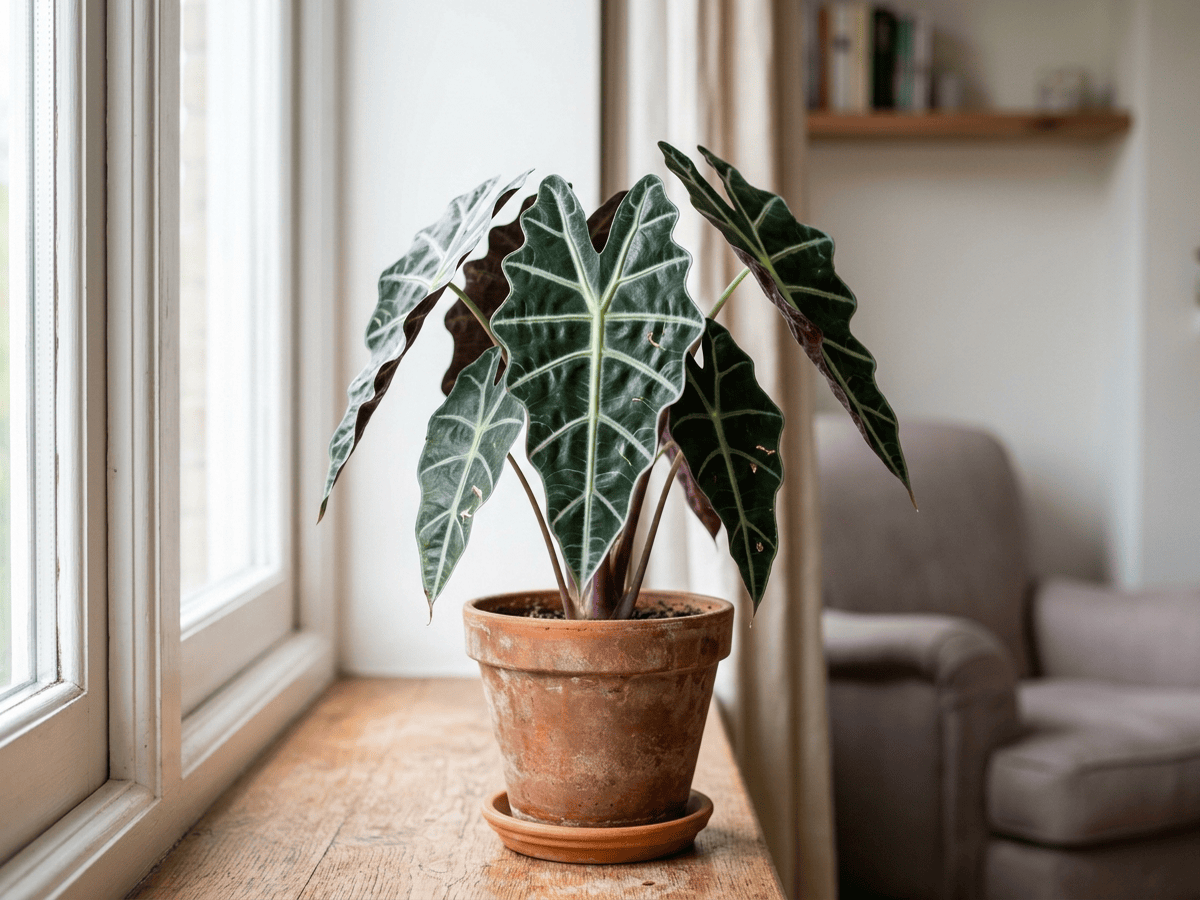
Upper leaf surfaces are deep glossy green, almost metallic, marked with bold silvery-white midrib and venation; undersides are purple-tinged. The similar and more common 'Polly' cultivar is actually a hybrid (A. × amazonica) and often mislabeled as A. sanderiana in trade. True A. sanderiana is now mostly produced through tissue culture for horticulture.
Toxic due to calcium oxalate. Named for German nurseryman Henry Sander, it has been in cultivation since the late 19th century. Today, virtually all plants in cultivation worldwide help preserve a species nearly extinct in the wild.
Symbolism & meaning
What It Symbolizes
The kris-plant takes its meaning from the dagger it resembles — each leaf cut into the wavy silhouette of the Filipino kris blade, a mark of distinction unlike anything else in the foliage world. Another layer is graver: preservation. Critically endangered in the wild forests of Mindanao, every cultivated specimen is a small act of safeguarding, the quiet work of growers keeping a vanishing species alive on living-room shelves.
- Distinction — dramatic kris-blade leaf shape
- Preservation — cultivation safeguards a critically endangered species
Where the Name Comes From
'Alocasia' is an alteration of related genus Colocasia; 'sanderiana' honors Henry F.C. Sander (1847-1920).
Uses & Fun Facts
- Glossy arrow-shaped leaves prized as humid-loving indoor pot plant
- Dramatic silver-veined dark foliage as houseplant focal point
Related plants
More Alocasia plants
 African Mask PlantAlocasia amazonica
 Giant TaroAlocasia macrorrhizos
 AlocasiaAlocasia polly
 Black Velvet AlocasiaAlocasia reginula
Plants with similar care
 Aglaonema AroidAglaonema pictum
 Aglaonema rotundumAglaonema rotundum
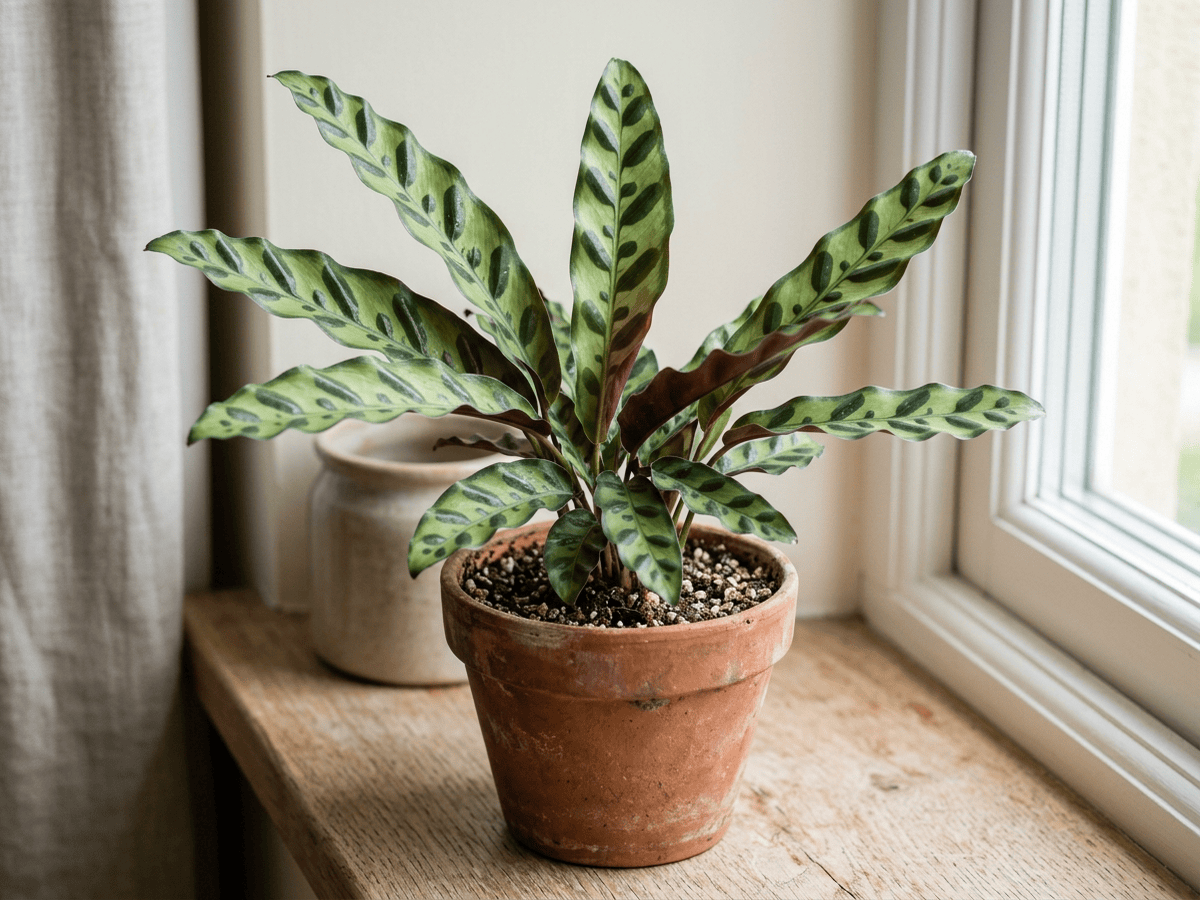 Rattlesnake-PlantCalathea lancifolia
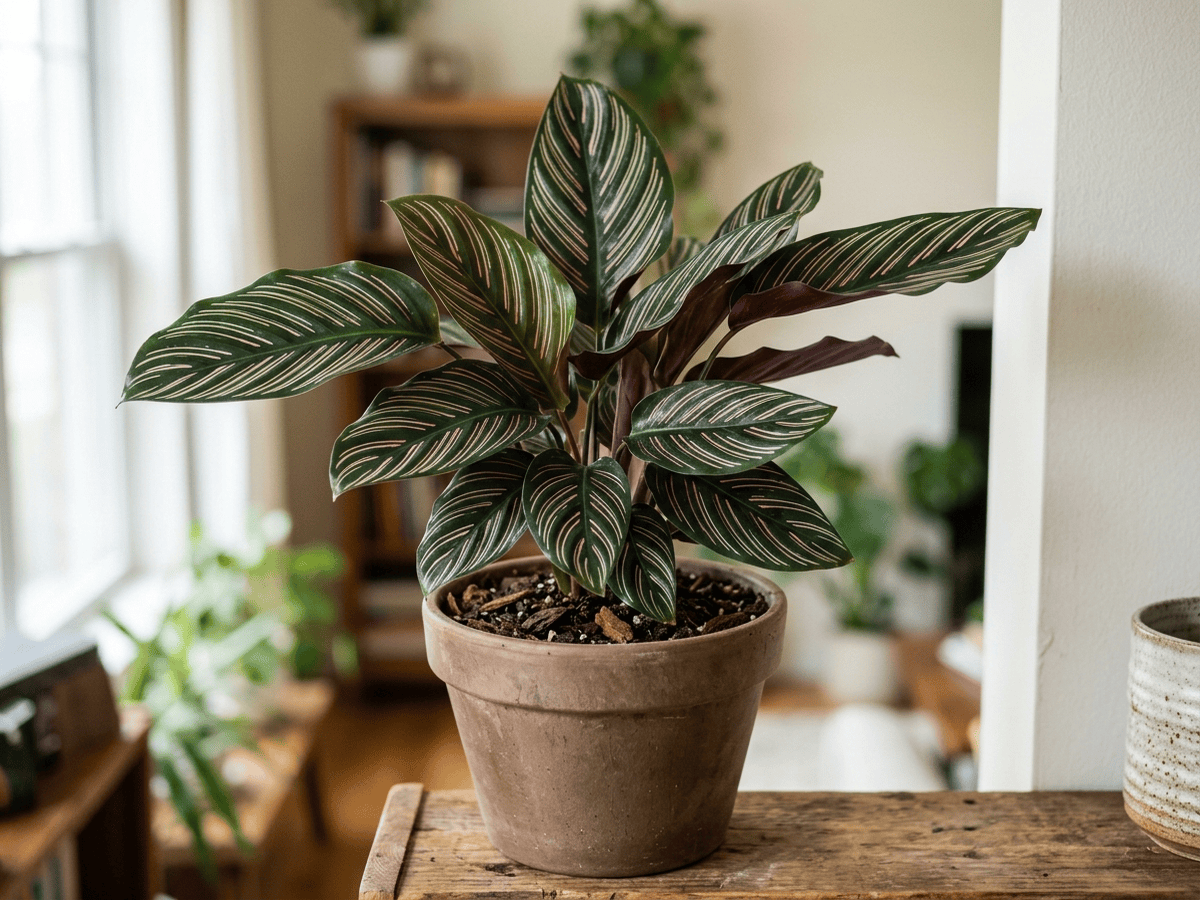 Pin-Stripe CalatheaCalathea ornata
Frequently asked questions
How often should I water Kris-Plant?
In summer, water about every 5 days; in winter, about every 14 days. Adjust for heat, pot size and drainage.
How much light does Kris-Plant need?
Indirect: Filtered light. Watch the leaves — scorching or stretching means the light needs adjusting.
Is Kris-Plant toxic to cats or dogs?
Pets Moderate (Dogs Moderate · Cats Moderate) Educational information, not medical or veterinary advice. If exposure is suspected, contact a doctor or veterinarian.
Is Kris-Plant easy to grow?
It is moderately demanding: a good choice once you have a little experience.
Can Kris-Plant be grown indoors?
Yes, it adapts well to indoor growing given the right light.
When does Kris-Plant bloom?
It typically blooms Jun–Aug in the Northern Hemisphere.
YardMate
Identify any plant in seconds
Snap a photo — YardMate names the plant, diagnoses problems, and reminds you when to water.
Download on the App Store