 YardMate
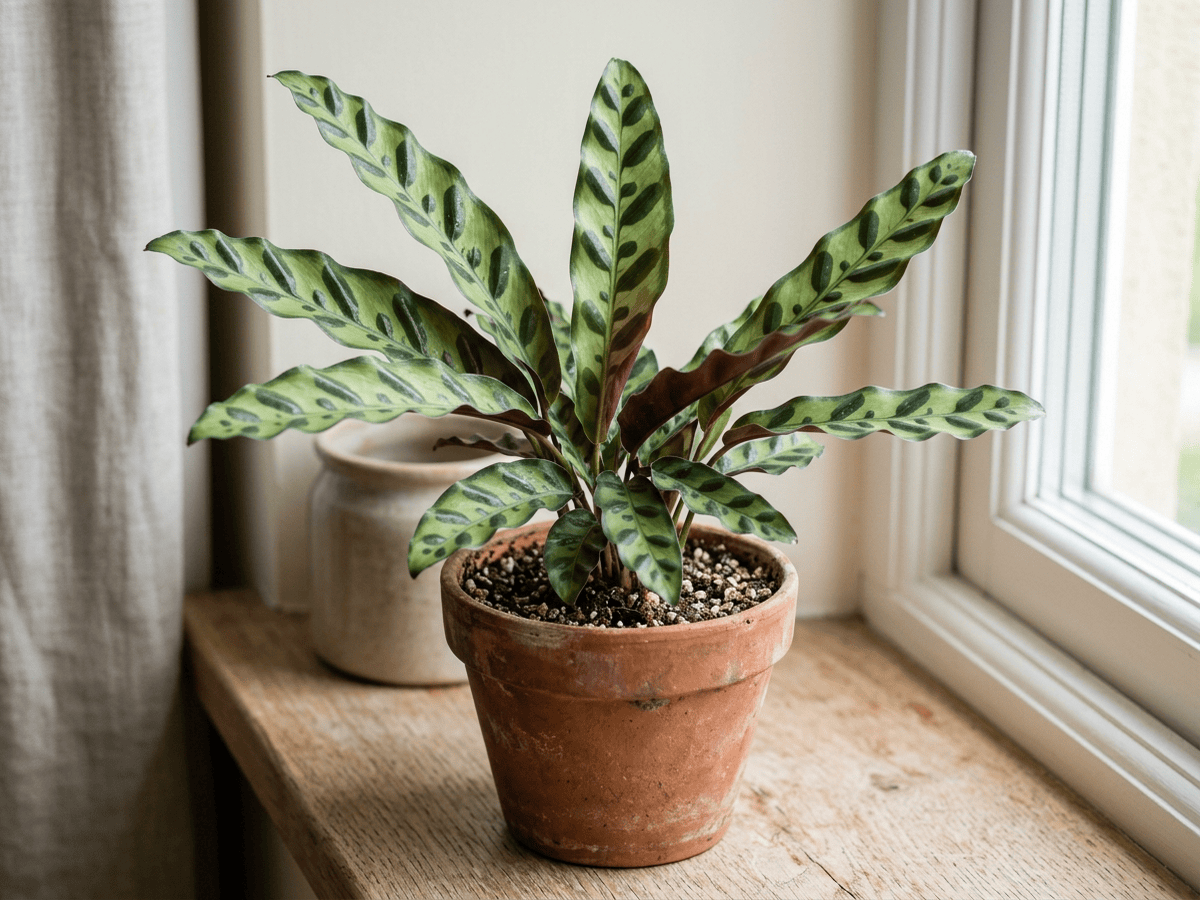


Rattlesnake-Plant
Calathea lancifolia
Medium · Some experienceAbout Rattlesnake-Plant
Rattlesnake Plant is a Brazilian rainforest perennial with long wavy lance-shaped pale-green leaves boldly painted with dark-green oval markings, with deep purple undersides. Reaching 18-30 inches, its leaves rise and fall daily following the sun in the famous 'prayer plant' movement. A favorite for tropical-effect houseplant displays, it requires high humidity and consistent moisture to thrive—rewarding attentive growers with one of the most ornate foliage patterns in cultivation.
- Evergreen
How to care for Rattlesnake-Plant
Watering
- Springevery 5 days
- Summerevery 5 days
- Fallevery 7 days
- Winterevery 10 days
Soil · Moisture-retentive
- Top dressingSphagnum moss10%
- Main mixPeat + coco coir 1:180%
- DrainagePerlite / gravel10%
Keep it evenly moist — but the drainage layer still matters.
FERTILIZER
Balanced Feed 14-14-14
An even feed covers all three needs at once, keeping leaves, roots and blooms moving together with nothing pushed out of balance.
- Nitrogen · Leaves
- Phosphorus · Roots + Blooms
- Potassium · Strength
- Springevery 30 days
- Summerevery 30 days
- Fallevery 60 days
At a Glance
- NativeSouth America
- Height2–3 ft (0.6–0.9 m)
- Spread1–2 ft (0.3–0.6 m)
- Flower colorYellow
- Foliage colorGreen, Dark-green, Red
- SoilLoamy, Moisture-retentive, Rich
- LocationsIndoor
Bloom time
BLOOM CYCLE
Peak bloom
Jun–Aug
Small yellow flowers (rare indoors)
Toxicity
Pets Safe
None reported
Not reported
EXPOSURE No exposure route is reported.
EFFECT No toxic effect is reported.
NOTE No human toxicity is reported in this catalog; avoid eating ornamental plants unless confirmed edible.
Safe
EXPOSURE No exposure route is reported.
EFFECT No toxic effect is reported.
NOTE Listed as non-toxic for dogs; avoid eating ornamental plants unless confirmed edible.
Safe
EXPOSURE No exposure route is reported.
EFFECT No toxic effect is reported.
NOTE Listed as non-toxic for cats; avoid eating ornamental plants unless confirmed edible.
Educational information, not medical or veterinary advice. If exposure is suspected, contact a doctor or veterinarian.
DISTRIBUTION


- Native
- South America
History
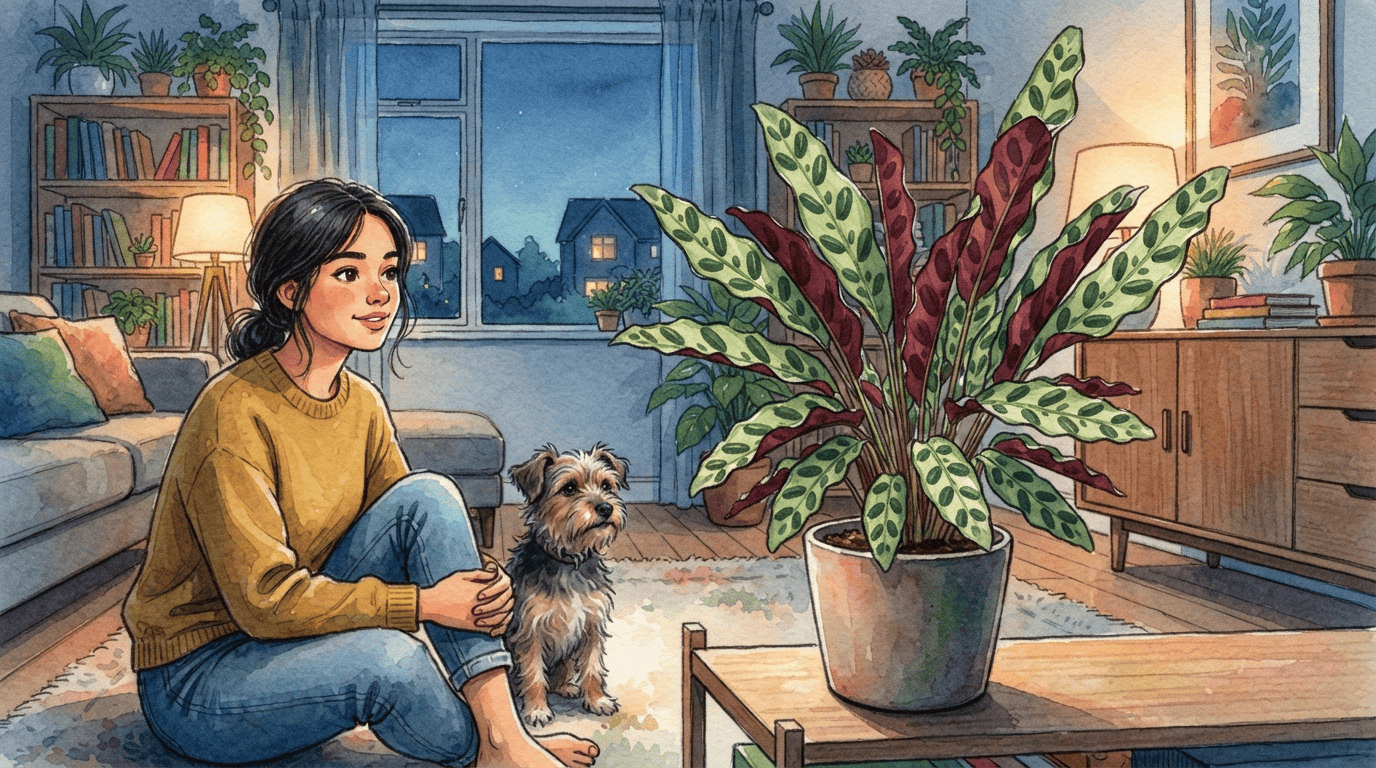
Calathea lancifolia, commonly called rattlesnake plant, is a clumping tropical foliage perennial in the prayer-plant family (Marantaceae) native to tropical rainforest understory of eastern Brazil. Belgian horticulturist Jean Jules Linden published the name in 1862 based on a validation by German botanist Friedrich August Körnicke. Following the 2012 phylogenetic revision of Marantaceae by Finn Borchsenius, L.M. Suárez, and Helen Kennedy, the majority of former Calathea species were transferred to the resurrected genus Goeppertia—this species is now formally Goeppertia insignis—although the horticultural trade continues to use Calathea lancifolia.
Plants form 60-75 cm tall upright clumps of elongated narrow lanceolate leaves 25-45 cm long with distinctive strongly wavy undulate margins. The upper leaf surface is pale green marked with alternating small and large dark-green oval spots along the midrib that evoke rattlesnake skin patterning; the undersides are burgundy-purple. Like other Calatheas, leaves fold upward at night in a prayer-like motion.
Non-toxic to pets per ASPCA. Native to Brazilian rainforests. Now reclassified by some botanists as Goeppertia insignis. Long popular as a tropical foliage houseplant in America, it has become a defining pet-safe option in the modern houseplant scene where Calathea species offer rare non-toxic alternatives to common aroids.
Symbolism & meaning
What It Symbolizes
Rattlesnake-Plant turns foliage into daily theater. Its patterned leaves rise and fold with the rhythm of light, like a living textile that wakes and rests on its own schedule. The symbolism is watchful vitality: movement, pattern, and domestic companionship in a plant grown as much for behavior as for color.
- Vitality — leaves rise and fall daily with the sun
- Safety — non-toxic patterned foliage for homes with cats and dogs
Where the Name Comes From
'Calathea' from Greek meaning basket (for woven leaves used in baskets); 'lancifolia' means lance-leaved.
Uses & Fun Facts
- Pet-safe houseplant for shaded indoor corners and bathrooms
- Wavy lance leaves with purple undersides perform daily prayer movement
Related plants
More Calathea plants
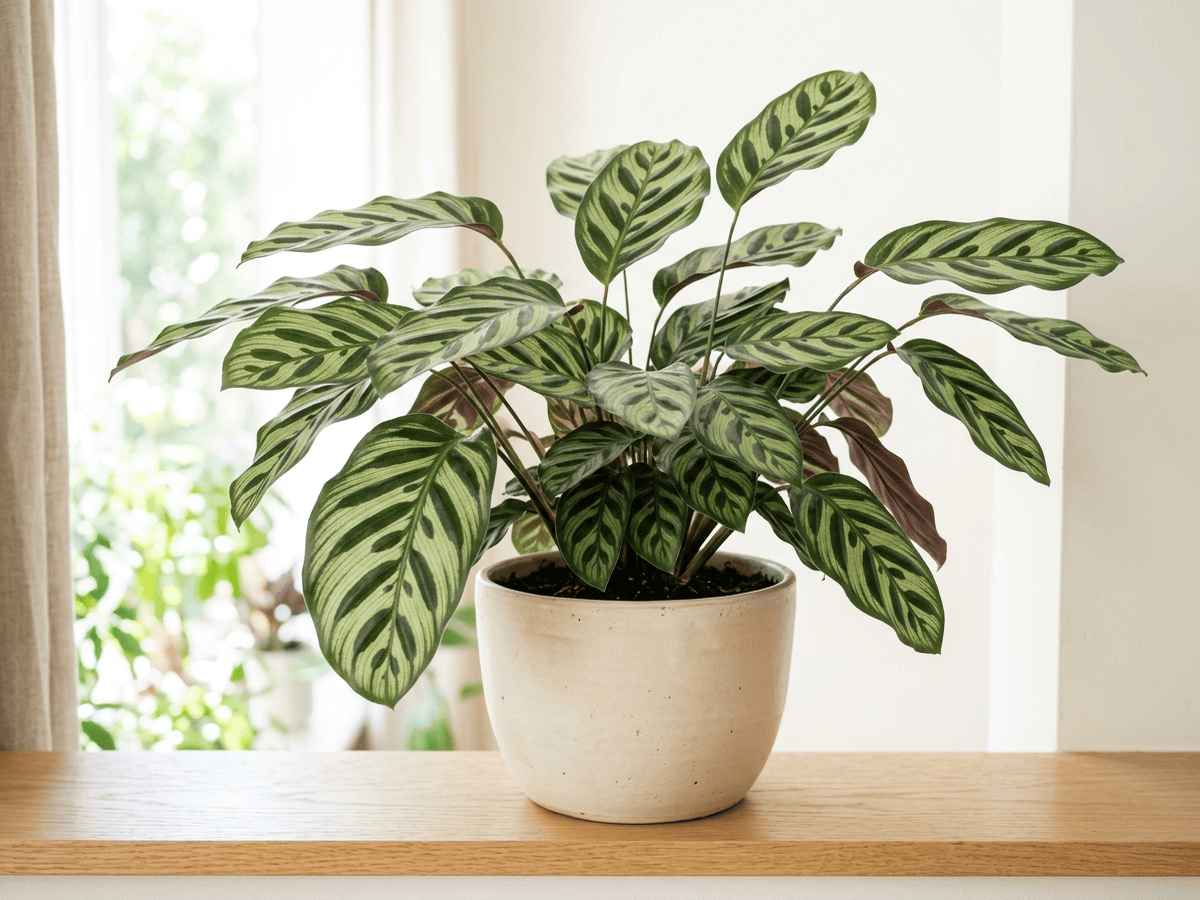 Peacock PlantCalathea makoyana
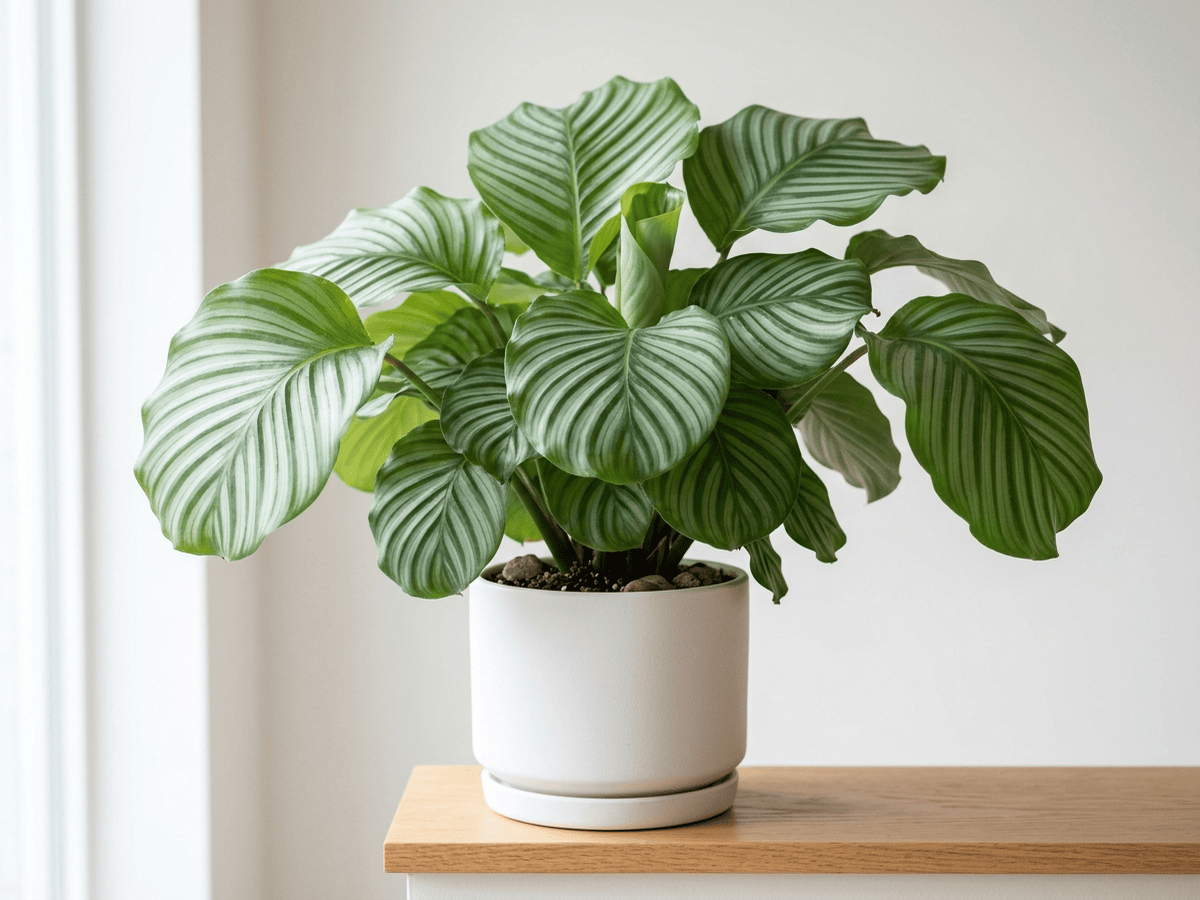 Goeppertia OrbifoliaCalathea orbifolia
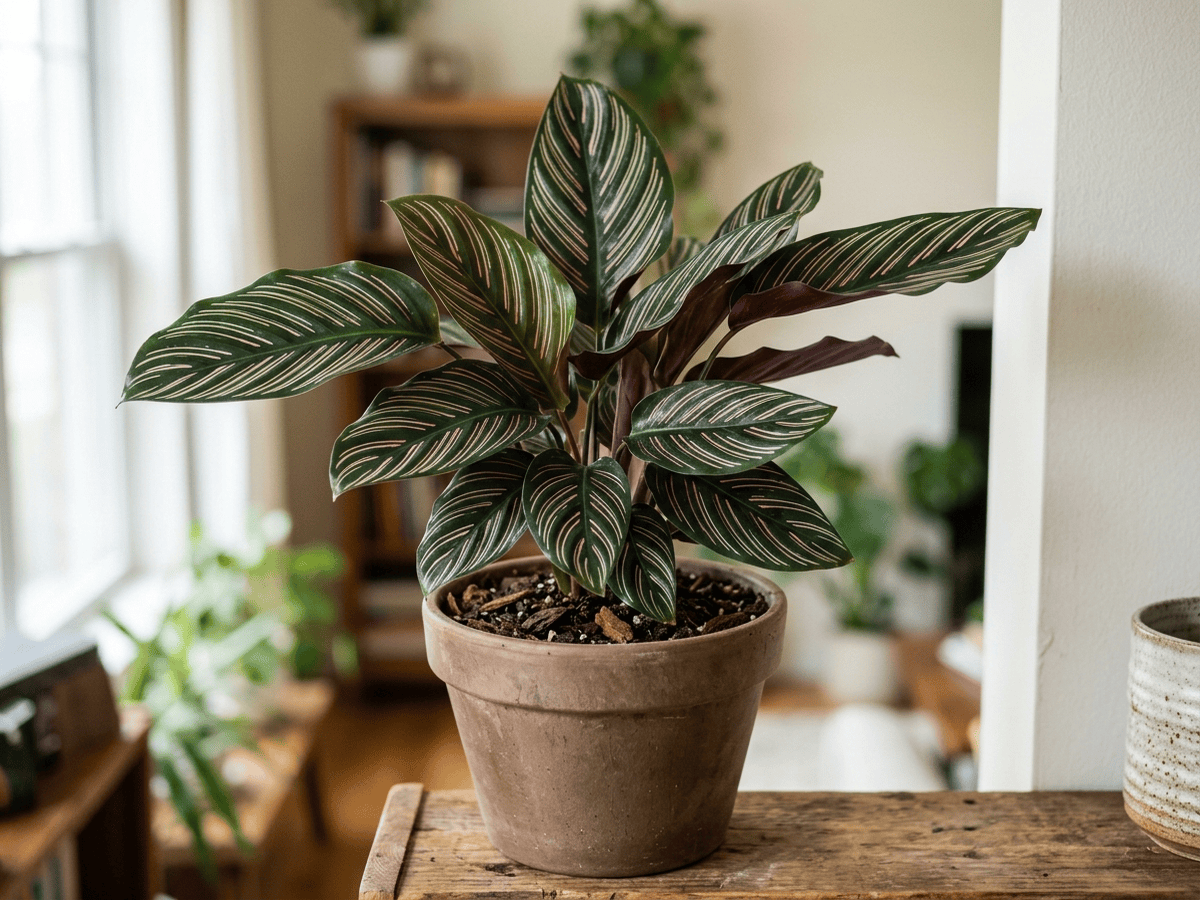 Pin-Stripe CalatheaCalathea ornata
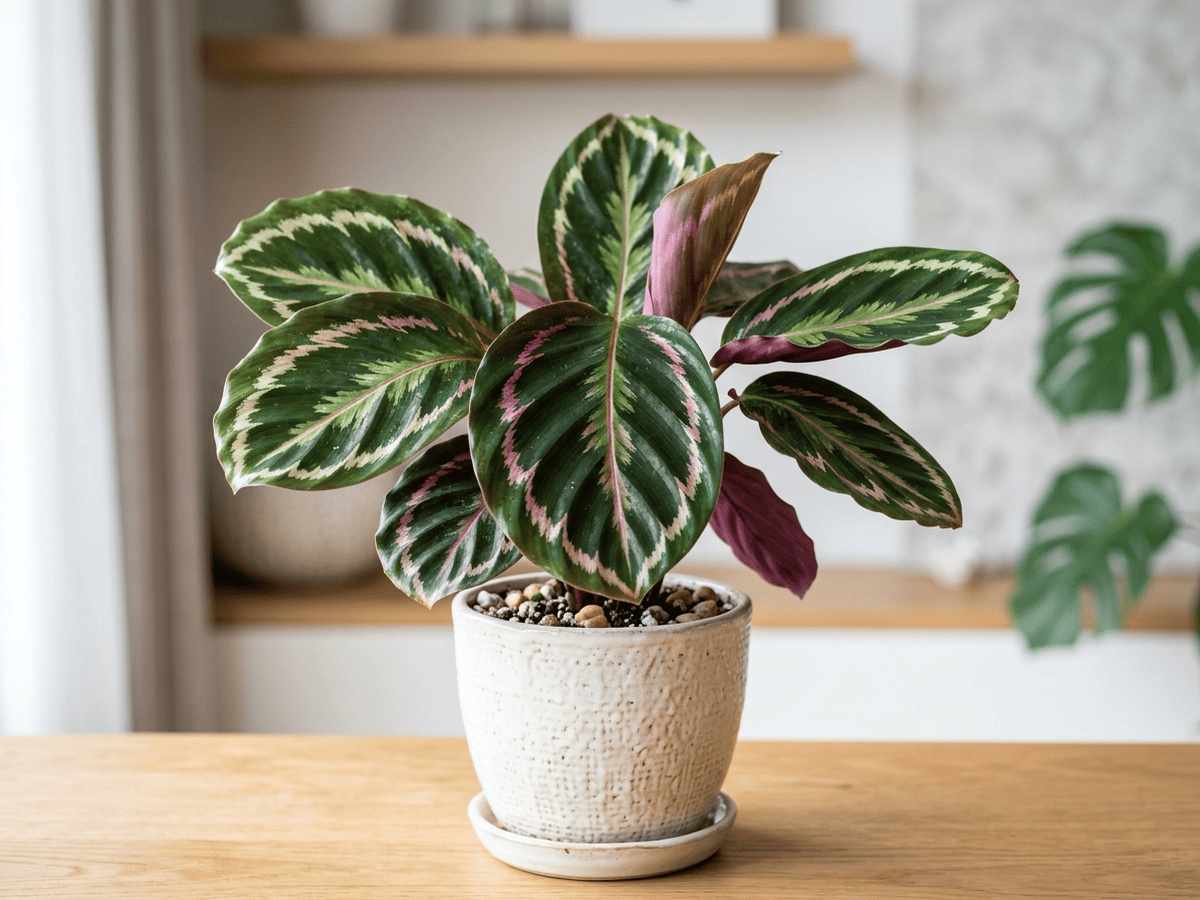 Goeppertia RoseopictaCalathea roseopicta
Plants with similar care
 Aglaonema AroidAglaonema pictum
 Aglaonema rotundumAglaonema rotundum
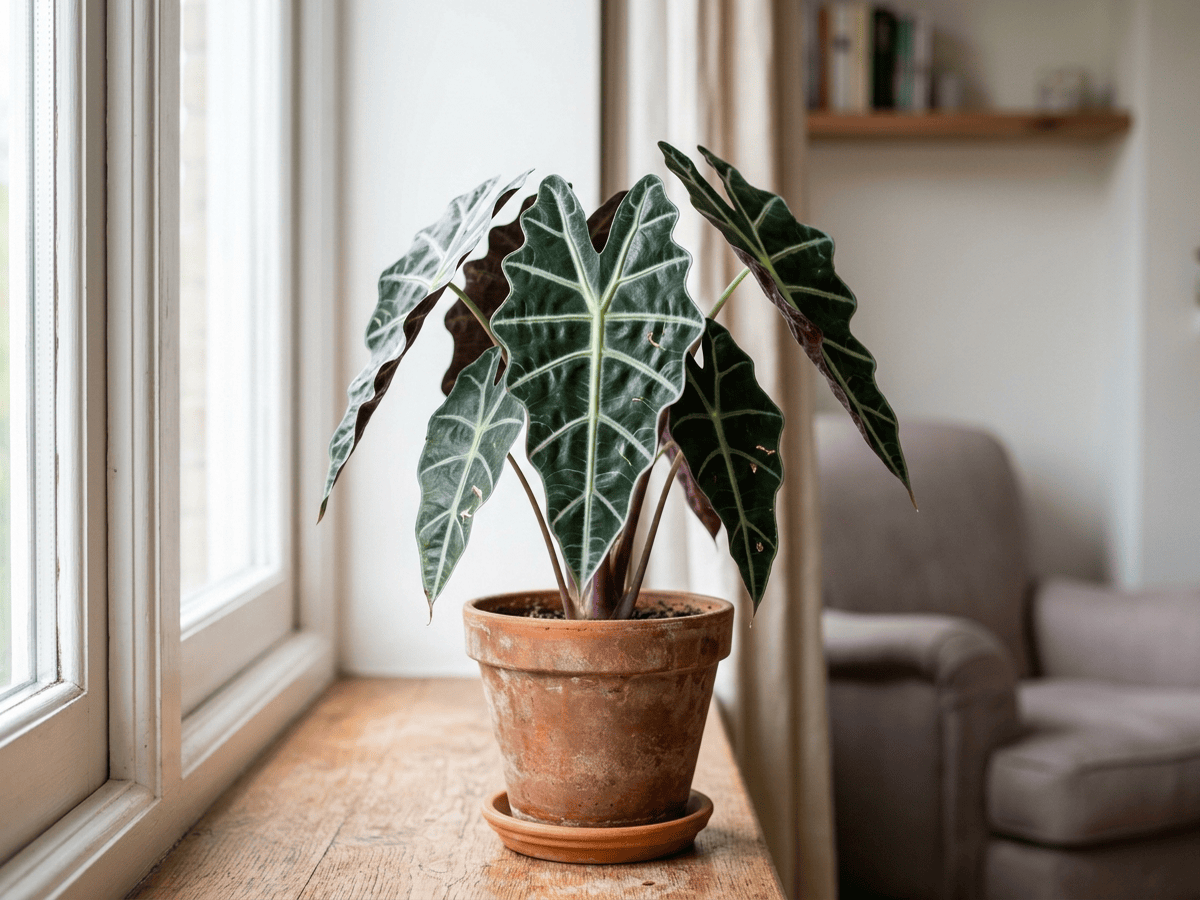 AlocasiaAlocasia polly
 Black Velvet AlocasiaAlocasia reginula
Frequently asked questions
How often should I water Rattlesnake-Plant?
In summer, water about every 5 days; in winter, about every 10 days. Adjust for heat, pot size and drainage.
How much light does Rattlesnake-Plant need?
Indirect: Filtered light. Watch the leaves — scorching or stretching means the light needs adjusting.
Is Rattlesnake-Plant toxic to cats or dogs?
Pets Safe (Dogs Safe · Cats Safe) Educational information, not medical or veterinary advice. If exposure is suspected, contact a doctor or veterinarian.
Is Rattlesnake-Plant easy to grow?
It is moderately demanding: a good choice once you have a little experience.
Can Rattlesnake-Plant be grown indoors?
Yes, it adapts well to indoor growing given the right light.
When does Rattlesnake-Plant bloom?
It typically blooms Jun–Aug in the Northern Hemisphere.
YardMate
Identify any plant in seconds
Snap a photo — YardMate names the plant, diagnoses problems, and reminds you when to water.
Download on the App Store