 YardMate


Bullwort
Ammi majus
Easy · Beginner friendlyAbout Bullwort
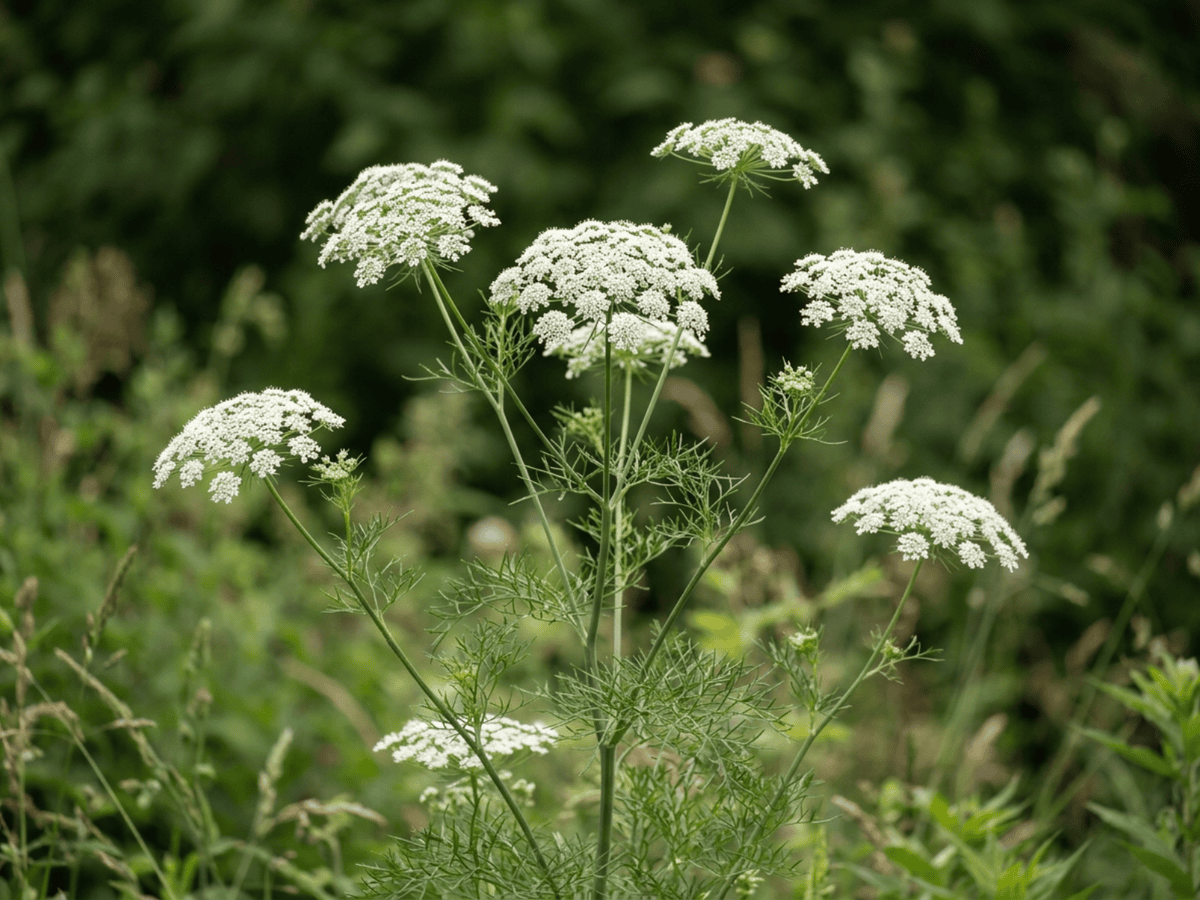
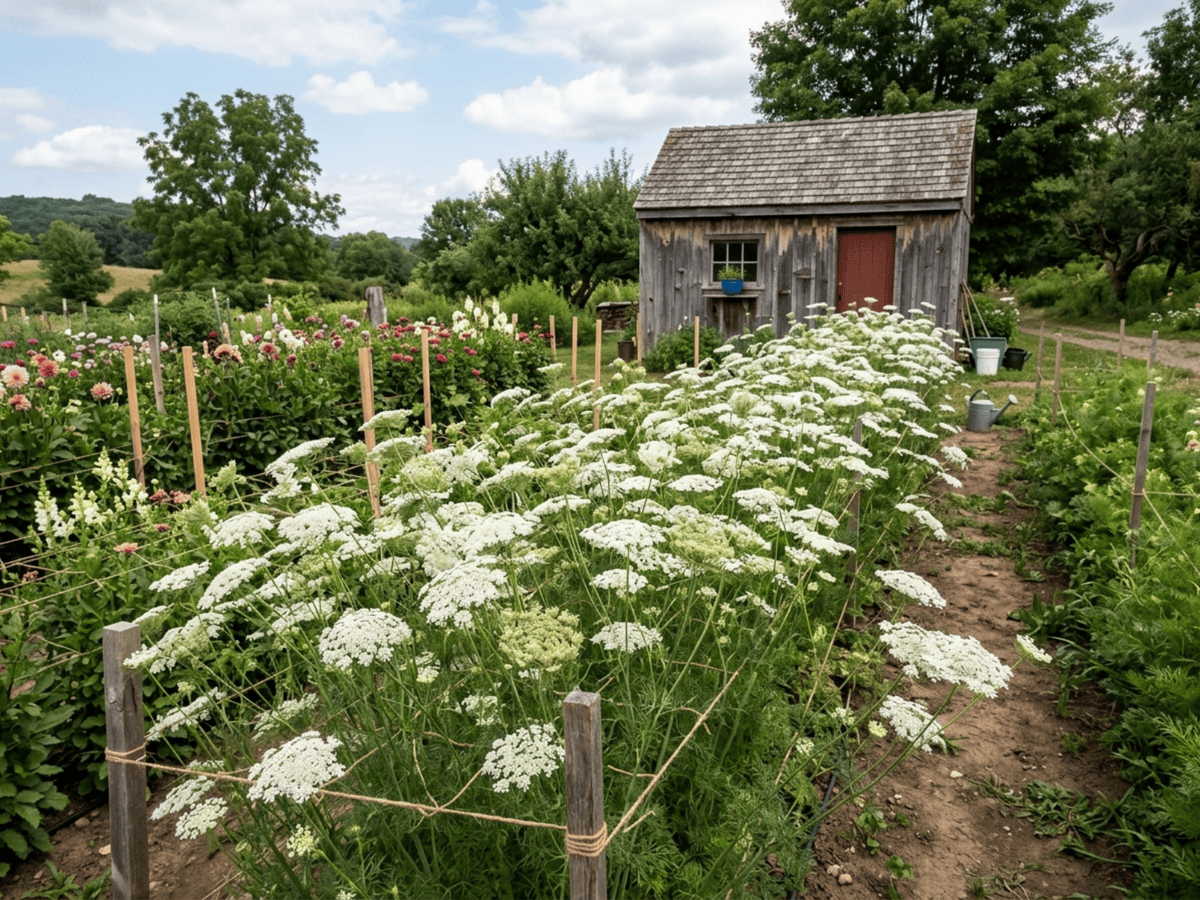
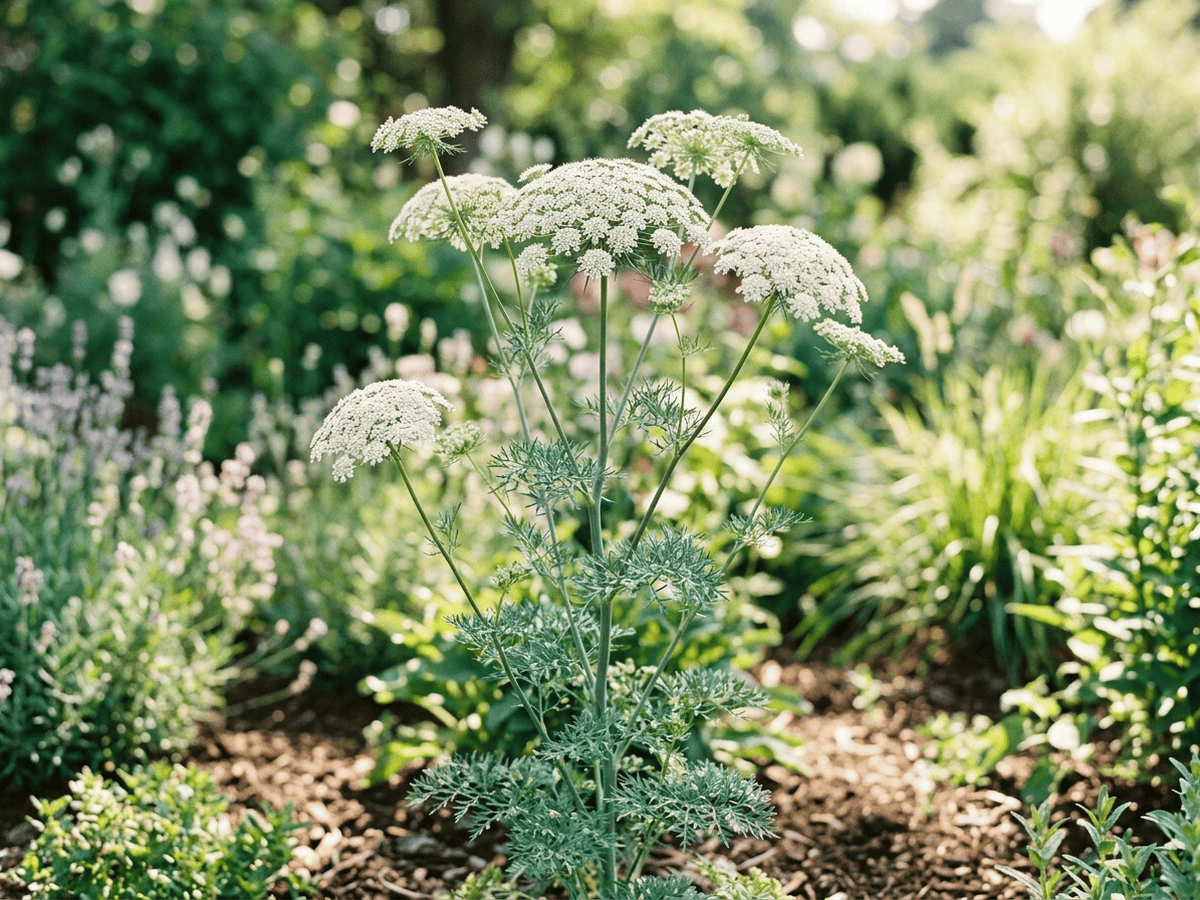
Bishop's Flower, or Bullwort, is a cool-season annual from the Mediterranean, 3–4 feet tall, producing large lacy white umbels similar to Queen Anne's lace but taller and more refined. A workhorse cutting-garden flower in American small-farm flower production, it is also a beloved cottage-garden and pollinator plant. Self-seeds reliably. Thrives in cool spring and early summer; fades with midsummer heat.
- Cut-flower
- Pollinator-friendly
How to care for Bullwort
Watering
- Springevery 5 days
- Summerevery 4 days
- Fallevery 7 days
- Winterpause watering
Soil · Well-draining
- Top dressingPine bark mulch10%
- Main mixPotting soil + perlite 2:170%
- DrainageLECA / gravel20%
Never skip the drainage layer — standing water is the top cause of root rot.
FERTILIZER
Balanced Feed 14-14-14
An even feed covers all three needs at once, keeping leaves, roots and blooms moving together with nothing pushed out of balance.
- Nitrogen · Leaves
- Phosphorus · Roots + Blooms
- Potassium · Strength
- Springevery 30 days
- Summerevery 30 days
At a Glance
- NativeMediterranean, Africa, Western Asia
- Height2–4 ft (0.6–1.2 m)
- Spread1–2 ft (0.3–0.6 m)
- Flower colorWhite
- Foliage colorGreen
- SoilLoamy, Well-drained, Neutral
- LocationsYard
Bloom time
BLOOM CYCLE
Peak bloom
Mar–Aug
Lacy white umbels late spring to midsummer
Fragrance
LIGHT FRAGRANCE
The flowers have a mild sweet scent.
Toxicity
Humans Moderate · Pets Moderate
xanthotoxin, bergapten, and psoralens
Moderate
- Leaf
- Stem
- Seed
- Sap
- Contact
- Ingestion
EXPOSURE Touching leaves, stems, seeds, and sap. Eating leaves, stems, seeds, and sap.
EFFECT Phytophotodermatitis, blistering, and skin burns.
NOTE Sap plus UV light causes severe blistering; wear gloves when handling.
Moderate
- All
- Contact
- Ingestion
EXPOSURE Touching any part of the plant. Eating any part of the plant.
EFFECT Skin irritation and photosensitivity.
NOTE Sap plus UV light causes severe blistering; wear gloves when handling.
Moderate
- All
- Contact
- Ingestion
EXPOSURE Touching any part of the plant. Eating any part of the plant.
EFFECT Skin irritation and photosensitivity.
NOTE Sap plus UV light causes severe blistering; wear gloves when handling.
Educational information, not medical or veterinary advice. If exposure is suspected, contact a doctor or veterinarian.
DISTRIBUTION

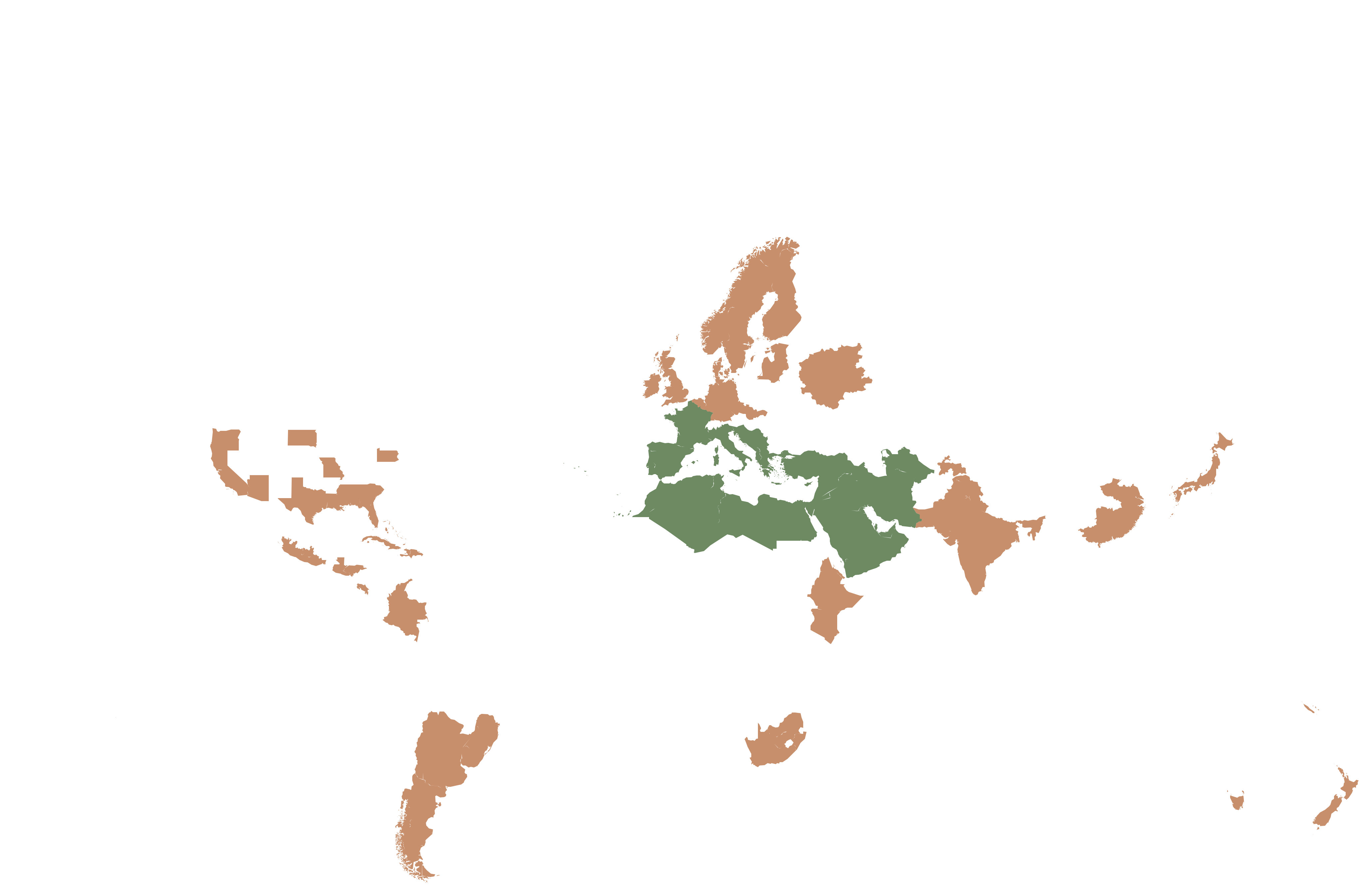
- Native
- Introduced
- Mediterranean
- Africa
- Western Asia
History
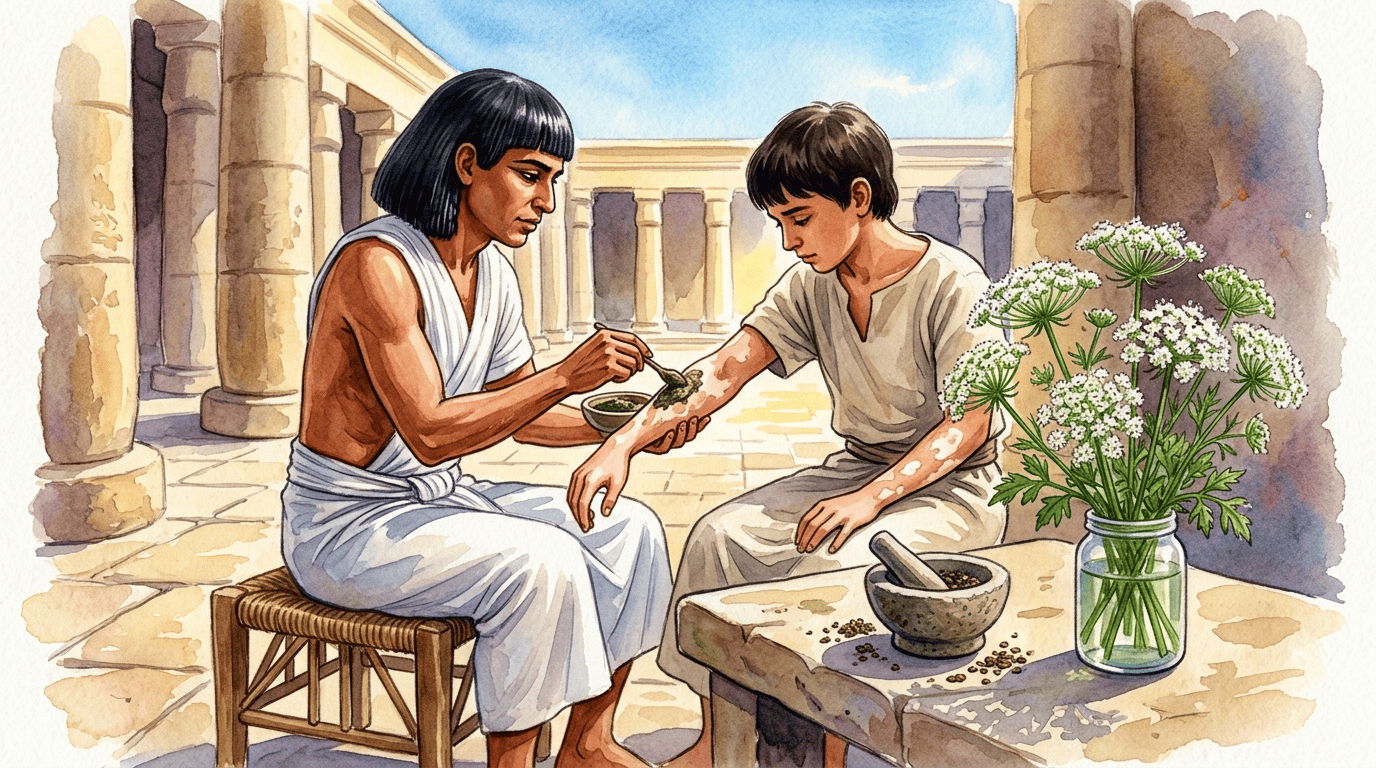
Native to the Nile Valley and Mediterranean, Ammi majus was used by ancient Egyptian physicians around 2000 BCE to treat vitiligo by combining seed extracts with sun exposure—an early form of photochemotherapy. The Ebers Papyrus (ca. 1550 BCE) records its use. Arab physicians including Ibn al-Bitar preserved this knowledge through the medieval period.
In 1947 Egyptian dermatologist Abdel Monem El Mofty reisolated the active psoralens (xanthotoxin, bergapten), founding modern PUVA therapy for psoriasis and vitiligo. Ornamentally, the plant gained popularity in 20th-century cottage gardens as a delicate white umbel for cut flowers.
It self-sows freely and is widely grown commercially for florist trade. Used medicinally in ancient Egypt (a treatment for vitiligo using the psoralen compounds). Reached American cottage gardens in the 20th century and became a cornerstone of the American specialty cut-flower movement led by farms like Floret and Three Sisters Farm.
Symbolism & meaning
What It Symbolizes
Bullwort embodies grace through its airy umbels of tiny white florets, lifting any bouquet with a lacework lightness. Considered more refined than true Queen Anne's lace, it carries an air of restrained elegance, the cottage flower welcomed even in formal arrangements. It marks the quiet refinement that comes from knowing how to take up space without crowding, beauty that lifts rather than dominates.
- Grace — airy form elevates any bouquet
- Refinement — classier than true Queen Anne's lace
Where the Name Comes From
Genus from Greek 'ammos' (sand) for its preferred habitat; 'majus' means 'larger'.
Uses & Fun Facts
- Lacy white umbels are florist cutting-garden staple
- Open umbels feed beneficial insects and bees
- Refined cool-season annual for cottage borders
Related plants
More Ammi plants
Plants with similar care
 Chinese AbeliaAbelia chinensis
 Fragrant AbeliaAbelia mosanensis
 Large-Flowered AbeliaAbelia uniflora
 Glossy AbeliaAbelia x grandiflora
Frequently asked questions
How often should I water Bullwort?
Water about every 5 days during the growing season, and always let excess water drain away.
How much light does Bullwort need?
Full sun: 6+ hrs direct. Watch the leaves — scorching or stretching means the light needs adjusting.
Is Bullwort toxic to cats or dogs?
Pets Moderate (Dogs Moderate · Cats Moderate) Educational information, not medical or veterinary advice. If exposure is suspected, contact a doctor or veterinarian.
Is Bullwort easy to grow?
Yes — it is considered an easy, beginner-friendly plant.
When does Bullwort bloom?
It typically blooms Mar–Aug in the Northern Hemisphere.
YardMate
Identify any plant in seconds
Snap a photo — YardMate names the plant, diagnoses problems, and reminds you when to water.
Download on the App Store